Inserts

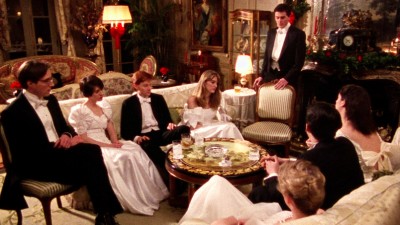
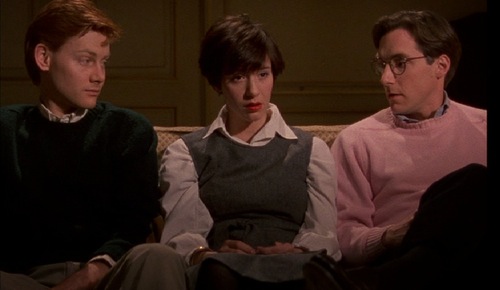
From the Chicago Reader (May 1, 1989). I can happily report that this expertly realized tour de force — a brilliant adaptation of what is essentially highly theatrical material, rehearsed and blocked to the nines — is now out on a Twilight Time Blu-Ray. For all its nervy desire to wear its sordidness, black comedy, and sheer roughness on its sleeve, which kept it from having a commercial success in the 70s  and may still alienate some viewers now, this is basically a comedy about sexual vulnerability and shifting power plays between jaded Hollywood types with more bark than bite, and a surprisingly sweet aftertaste shining through all the harsh pseudo-toughness. — J.R.

Inserts-min

inserts-3

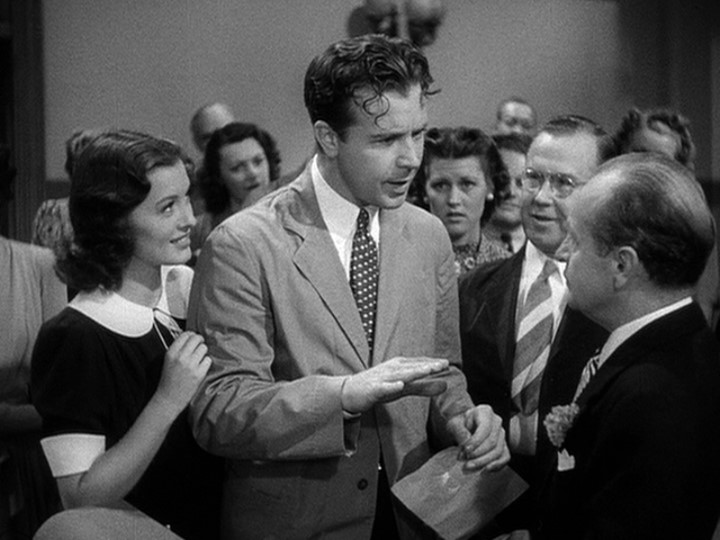
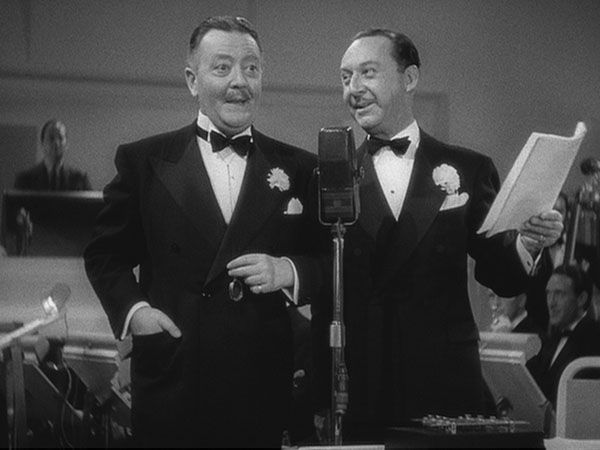
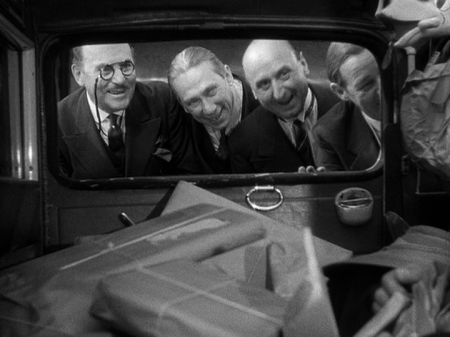
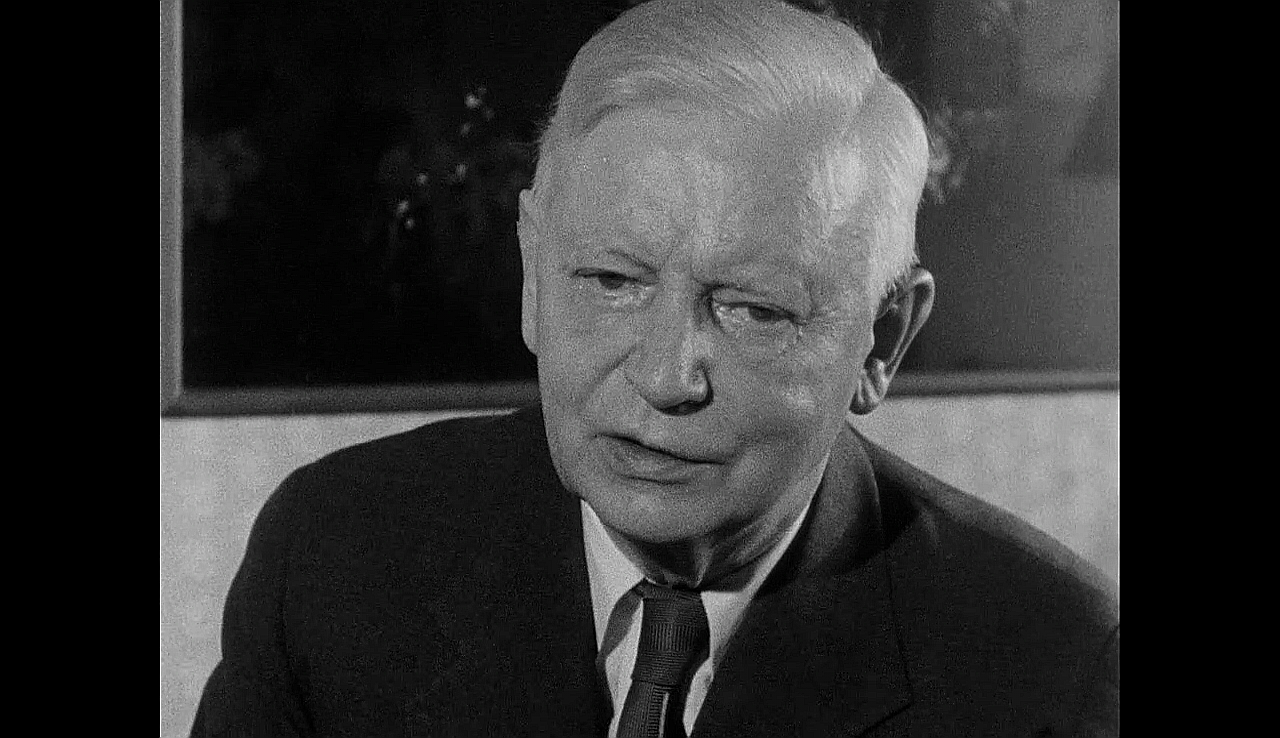
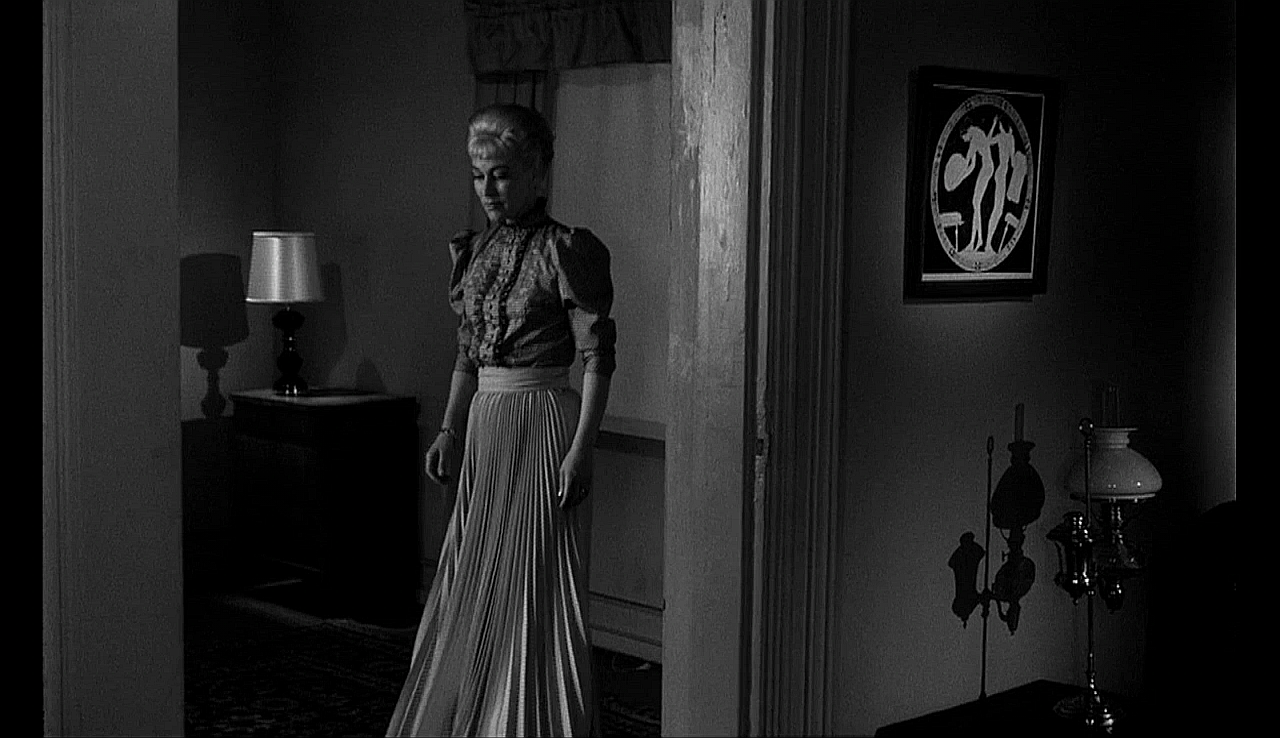
John Byrum’s controversial first feature, made in 1976, stars Richard Dreyfuss as a burned-out Hollywood genius director of the 20s, reduced in the 30s to making porn films in his own mansion. Wittily scripted and engagingly acted (by Dreyfuss, Jessica Harper, Veronica Cartwright, and Bob Hoskins), the film restricts all its action to a few hours in the director’s mansion, and is peppered liberally with inside movie references. Chances are you’ll either be bored stiff by the conceits or exhilarated; personally, I found it gripping throughout. (JR)

Inserts2

Inserts Read more

Parenthood

From the Chicago Reader (July 1, 1989). — J.R.

parenthood-poster

This movie has its share of laughs, but it’s also Ron Howard’s most personal film, and clearly his most ambitious — a multifaceted essay in fictional form about the diverse snares of child rearing. The movie tries for so many things in so many different registers — there are a number of fantasy interludes and raunchy gags along with an overflowing cast of characters (including Steve Martin, Tom Hulce, Rick Moranis, Martha Plimpton, Keanu Reeves, Jason Robards, Mary Steenburgen, and Dianne Wiest) — that the results are often unwieldy, but they’re certainly heartfelt: Howard’s grown-up sentimentality is the perfect antidote to the infantilism of Spielberg and Lucas and their disciples. The film never shies away from real problems, and the complex mix of comedy and seriousness in its treatment of the pitfalls of parenthood steadily grows in feeling and power. The movie may wind up being as messy as it argues that family life is, but it commands admiration and respect. The screenplay is by Lowell Ganz and Babaloo Mandel, based on a story that they wrote with Howard (1989). (JR)

PARENTHOOD Read more

When Harry Met Sally . . .

From the Chicago Reader (July 1, 1989). — J.R.

WhenHarry

Fans of Billy Crystal’s amphibian qualities may be amused, but the rest of us have to contend with a slavish Woody Allen imitation in this New York comedy scripted by Nora Ephron and directed by Rob Reiner (1989). Everything from the background music to the jogging dialogue strains to create the atmosphere of an Annie Hall or a Manhattan, with Meg Ryan in the Diane Keaton part, Carrie Fisher and Bruno Kirby as the best friends/other couple, and half a dozen elderly New York couples periodically discoursing cutely about how they met. The title couple meet on a drive from the University of Chicago to Manhattan in 1977, and the movie charts their gradual and grudging bonding up to the present. Very slickly and glibly put together, with a sharp eye for yuppie decor and accoutrements; even Woody’s habitual, fanciful vision of an all-white New York is respected. 95 min. (JR)

when-harry-met-sally-original Read more

Recommended Viewing: Travel Ban

Because everything that we call news qualifies in some ways as propaganda that seeks to entertain as well as engage us, what we’re usually seeking is entertaining propaganda. From this standpoint, one of the most watchable and entertaining things I’ve seen lately is Travel Ban: Make America Laugh Again, a lively documentary about Middle Eastern standup comedians in the U.S. It’s every bit as funny and as lively as Bill Maher’s Real Time, and it’s well worth an hour and a half of anyone’s time. [10/14/2018]

https://www.youtube.com/watch?v=WnT1sKFu7XM

Read more

The Jester And The Queen

From the Chicago Reader (May 1, 1989). — J.R.

jester-and-the-queen-1987-jaroslav-fiser-poster-001

66679-the-jester-and-the-queen-0-150-0-225-crop

Since the 1960s, when she did brilliant, radical work (Something Different, Daisies, Fruit of Paradise) that arguably made her the most inventive living Czech filmmaker, Vera Chytilova has had a checkered, uneven career. This is in part because, unlike such compatriots as Passer and Forman, she chose to remain in her country, where her work has ranged from bouncy sitcom (The Apple Game) to fairly unabashed state propaganda (Prague) to more ambitious fare (Prefab Story). This feature — adapted by her and Bolislav Polivka from a comic stage piece he wrote, and starring Polivka (a gifted mime) and his real-life wife Chantal Poulainova — is probably Chytilova’s best since the 60s. A quixotic custodian of a castle (Polivka) serves as a guide to a German tourist (Jiri Kodet) and his French fiancee (Poulainova); he imagines himself as a medieval court jester, with Poulainova as queen, and the film switches back and forth between the real characters and their fantasy counterparts. As eclectic and as aggressive a stylist as Charles Mingus, Chytilova employs wide-angle lenses, dizzying camera movements, and restless editing; as in Daisies, her fascination with power and gender roles projects a dangerous, Dionysian sexuality, and the trilingual dialogue spoken by the three leads adds complexity to the proceedings. Read more

A Note on the Demographics of My Web Site

According to Google Analytics, 81.8% of the 4,052 visitors to jonathanrosenbaum.net over the past week, who paid 6,035 visits to this site, were new visitors, and only 18.2% were returning visitors. Why is this the case?I have no idea. These visitors came from 139 countries, and I’m almost equally puzzled by the fact that most of them by far (almost 40% of the total) are between 25 and 34 years old, less than half my own age, and male (about 70%)–at least among the 32% that Google Analytics apparently knows about. The relevant charts showing this information are below. [10/12/2019]


  Read more

Sawdust And Tinsel

From the Chicago Reader (January 1, 1996). My capsule here doesn’t really do justice to this masterpiece, one of Bergman’s absolute achievements. — J.R.

Sawdust&Tinsel

A major early feature by Ingmar Bergman, also known as The Naked Night (though the Swedish title apparently means The Clown’s Night). This 1953 film is perhaps the most German expressionist of Bergman’s 50s works, as redolent of sexual cruelty and angst as Variety and The Blue Angel, but no less impressive for all that. The aging owner of a small traveling circus who left his wife for a young performer in his troupe tries to regain his lost family. Visually splendid, but you may find the masochistic plot pretty unpleasant. With Ake Gronberg and Harriet Andersson. In Swedish with subtitles. 92 min. (JR)

SawdustandTinsel Read more

Seven Brides For Seven Brothers

From the Chicago Reader (April 1, 1996). — J.R.

seven-brides-for-seven-brothers

Seven-Brides-Dancing

A profoundly sexist and eminently hummable 1954 CinemaScope musical — supposedly set in the great outdoors, but mainly filmed on soundstages — with some terrific athletic Michael Kidd choreography and some better-than-average direction by Stanley Donen. Based on a story by Stephen Vincent Benet (who took the plot from the rape of the Sabine women), it concerns six fur-trapping brothers who go to town to find wives after big brother Howard Keel marries Jane Powell; they wind up kidnapping them. A fascinating glimpse at the kind of patriarchal rape fantasies that were considered cute and good-natured at the time, performed to the music of Johnny Mercer and Gene DePaul. With Russ Tamblyn, Virginia Gibson, and Tommy Rall. 103 min. (JR)

Seven_Brides_for_Seven_Brothers-1954-MSS-1-142

SEVEN BRIDES FOR SEVEN BROTHERS Read more

Manifesto

From the Chicago Reader (April 1, 1988). — J.R.

Manifesto 09

Manifesto 10

Dusan Makavejev’s 1988 comedy, his first film to be shot in his native Yugoslavia in 18 years, is easily his most pleasurable work since WR: Mysteries of the Organism, albeit without the intellectual ambitions of that or any of his earlier Yugoslav works. The major premise here is that eastern Europe of the 20s is not something we know from history so much as from Hollywood — specifically the imaginary countries of Lubitsch and Million Dollar Legs during the 30s. The influence of Lubitsch (who once pointedly remarked that he preferred Paris, Paramount, to Paris, France) is apparent from the opening intertitle, and if the plot of Manifesto remains pretty inconsequential —  a network of sexual and political intrigues involving murders, numerous sexual liaisons, an insane asylum, assassination attempts, and garden parties that never leads to any satisfactory conclusion — the sexiness, wit, lush rural settings, and style keep it bubbling throughout. Camilla Soeberg (Twist and Shout) is especially good as a wealthy and promiscuous political schemer; others in the cast include Eric Stoltz, Alfred Molina, Simon Callow, and Lindsay Duncan. (JR)

manifesto-0-230-0-345-crop Read more

In The Cut

From the Chicago Reader (October 31, 2003). — J.R.

In-the-Cut-MHD

One can easily pick apart this Jane Campion adaptation of a thriller by Susanna Moore: it isn’t very satisfying as a thriller, and certain details — like the heroine assigning Virginia Woolf’s To the Lighthouse to her inner-city high school students — come across as just plain silly. But I still consider this the best (which also means the sexiest) Campion feature since The Piano, featuring Meg Ryan’s finest performance to date and an impressive one by Mark Ruffalo. Scripted by Moore and Campion, it takes on the unfashionable question of what sex means for a single woman drifting into middle age, and what it says on the subject veers from the obvious to the novel. Campion is better with moods than with plot, and her capable handling of some actors (including Jennifer Jason Leigh and an uncredited Kevin Bacon) ameliorates the hyperbolic characters they’re asked to play. R, 118 min. (JR)

in_the_cut_03 Read more

After Dark, My Sweet

From the Chicago Reader (August 24, 1990). — J.R.

afterdarkmysweetpatric1

Although there are times when one feels that the filmmakers have bitten off a little more than they can chew, this is a bold, watchable adaptation (by director James Foley and coproducer Robert Redlin) of a noirish thriller by Jim Thompson that comes surprisingly close to capturing the grisly, hard-boiled, and unstable world of that author — thanks in part to a sharp feeling for sensual detail that includes everything from wet, squishy kisses to a scummy unused swimming pool. (Cinematographer Mark Plummer works wonders with light and scenery in striking ‘Scope compositions.) Jason Patric, calling to mind a slightly heavier James Dean at a low flame, stars as a former boxer who has escaped from an insane asylum; whether he’s actually nuts or merely on the edge is one of the central ambiguities that keep the plot moving, and the fact that he narrates the story off-screen in classic noir fashion only complicates one’s uncertainty. He falls in with a salty, alcoholic English widow (Rachel Ward) and a small-time con man and ex-cop (Bruce Dern) in southern California who are plotting to kidnap a little boy from a wealthy family, and paranoia and other complications start to unravel the trio’s uneasy rapport. Read more

Poto And Cabengo

From the Chicago Reader (March 1, 1988). — J.R.

69891-poto-and-cabengo-0-230-0-345-crop

Jean-Pierre Gorin’s first solo effort as a filmmaker after a long period of collaboration with Jean-Luc Godard surpassed all of his previous work hands down. The putative subject is a pair of young female twins in southern California who have apparently invented their own language, and while this personal documentary explores this subject in some detail, it proves to be about a great deal more: Gorin’s own exile, the lower-income white culture of San Diego, the American Dream, and language itself. A memorable, innovative effort, packed with wonder and invention (1979). (JR)

A Second Look Read more

Penn & Teller Get Killed

From the Chicago Reader (October 1, 1989). — J.R.

PENN&

Whether this goofy 1989 black comedy is a total success is debatable, but you’ve got to admit it’s different. Postmodern comic magicians Penn Jillette and Teller play themselves in a script of their own devising, which is deftly delivered by director Arthur Penn (Bonnie and Clyde, Night Moves). After Jillette brazenly announces on national TV that his life would be more exciting if someone tried to kill him, a bizarre series of murder attempts ensues during an engagement in Atlantic City, and it becomes increasingly difficult to determine who’s pulling the strings. Deconstructing illusion, Penn and Teller’s stock in trade, becomes the modus operandi of the plot — like a farcical version of House of Games, with heaps of good-natured gore added and a literally unbelievable grand finale — and the dynamic duo make the most of it. With Caitlin Clarke, David Patrick Kelly, Leonardo Cimino, and Celia McGuire. (JR) 90 min.

P&TGK Read more

Dead Ringers

From the Chicago Reader (September 1, 1988). — J.R.

DeadRingers

David Cronenberg’s finely tuned psychological thriller (1988, 115 min.) explores the complex lives of two gynecologists, identical twins (both played by Jeremy Irons) who share everything from their lovers to their successful fertility clinic. Their close mutual ties become challenged when both are attracted to the same actress (Genevieve Bujold). A tour de force — especially for Irons, whose sense of nuance is so refined that one can tell almost immediately which twin he is in a particular scene — and the special effects involving both twins simultaneously are so well handled that one quickly forgets about the underlying illusion. But the sheer unpleasantness of the plot, inspired by a real-life case, guarantees that this isn’t a film for everyone, and people like myself who find the character played by Bujold (in one of her best performances) more interesting than either of the twins are bound to feel rather frustrated by the end. (JR)

dead-ringers Read more

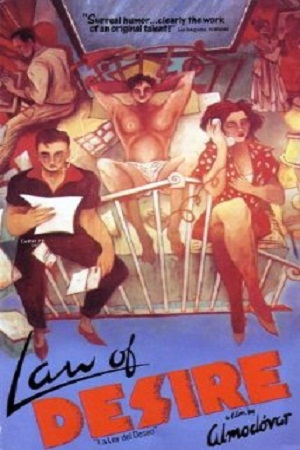
Law Of Desire

From the Chicago Reader (December 1, 1988). — J.R.
Law-of-Desire-19871

Pedro Almodovar’s vibrant treatment of gay life in post-Franco Madrid has a lot to recommend it, but little of this has to do with its contrived plot, which bears a queasy resemblance to the earlier Fatal Attraction and resorts to hackneyed devices such as amnesia. What keeps this 1987 movie alive are the characters: a porn director (Eusebio Poncela); his transsexual sister and onetime brother (the wonderful Carmen Maura), whom he casts as the lead in his stage production of Cocteau’s The Human Voice; a devout little girl (Manuela Velasco), whom the sister takes over from her lesbian ex-lover (Bibi Andersen) as her own; the director’s working-class lover (Miguel Molina); and the lover’s neurotic replacement (Antonio Banderas), who causes all the trouble. It’s typical of Almodovar’s wit that he casts a man as the little girl’s real mother and a woman as her false one. In Spanish with subtitles. NC-17, 97 min. (JR) Read more