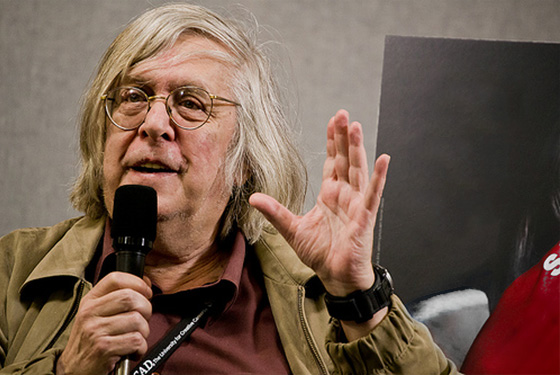
Part of an Exchange on CITIZEN KANE

From Cinema Journal 26, No. 4, Summer 1987. — J.R.

Dialogue

Jonathan Rosenbaum Responds to Robin Bates’s “Fiery Speech in a World of Shadows: Rosebud’s Impact on Early Audiences” (which appeared in Cinema Journal, Winter 1987)

Having been invited to respond briefly to Robin Bates’s “Fiery Speech in a World of Shadows: Rosebud’s Impact on Early Audiences” in the Winter 1987 Cinema Journal, I should stress at the outset my sympathy with the main objectives of this essay, particularly as they are expressed in the closing paragraph. While my own recent Welles-related research has concentrated more on films and scripts that are not yet part of the public record,’ readers of my book Moving Places (Harper & Row, 1980) will know that I am also deeply concerned with the personal and historical dimensions of reception. Arguing that Citizen Kane in general and Rosebud in particular had “healing powers” in 1941 which are less available to us now, and that “audiences of the past … were no less sophisticated than audiences of today,” Robin Bates affords us a number of valuable historical insights, but his argument also raises certain methodological issues which I would like to explore. Although Bates has a commendable desire to open us up to the potential wisdom of the past (as exemplified by a retrospective statement about Rosebud from his father, Scott Bates, which opens his article), his means of fulfilling that desire depend on various forms of closure which I find problematical. Read more

Global Discoveries on DVD: Diverse Displacements (6th column)

From Cinema Scope #19 (Summer 2004). This is obviously out of date in many respects, fourteen years later, but I repost it now a period piece. — J.R.

Joan Hawkins opens her book Cutting Edge: Art Horror and the Horrific Avant-garde (Minneapolis/London: University of Minnesota Press, 2000) with an interesting and useful observation:

“Open the pages of any horror fanzine —- Outré, Fangoria, Cinefantastique —- and you will find listings for mail-order video companies that cater to aficionados of what Jeffrey Sconce has called `para-cinema’ and trash aesthetics. Not only do these mail-order companies represent one of the fastest-growing segments of the video market, but their catalogs challenge many of our continuing assumptions about the binary opposition of prestige cinema (European art and avant-garde/experimental films) and popular culture. Certainly, they highlight an aspect of art cinema generally overlooked or repressed in cultural analysis: namely, the degree to which high culture trades on the same images, tropes, and themes that characterize low culture.”

As a direct illustration of Hawkins’ point, check out the web site www.xploitedcinema.com, a U.S. importer of overseas DVDs that also sells some domestic items and caters mainly to trash aesthetics, but among whose 86 pages of sex, horror, action, and gore items I also recently found an Italian two-disc set of my favorite Bernardo Bertolucci film, Prima della Rivoluzione/Before the Revolution (his second feature, 1964 — subtitled in English, along with all the extras), not to mention English-friendly Spanish and/or Mexican editions of my two favorite Alex Cox films (the 1987 Walker and the 1994 Highway Patrolman), a Spanish edition of Orson Welles’s Chimes at Midnight, a Korean edition of Sam Peckinpah’s scandalously underrated Bring Me the Head of Alfredo Garcia (1974), and Italian editions of Pier Paolo Pasolini’s The Gospel According to St. Read more

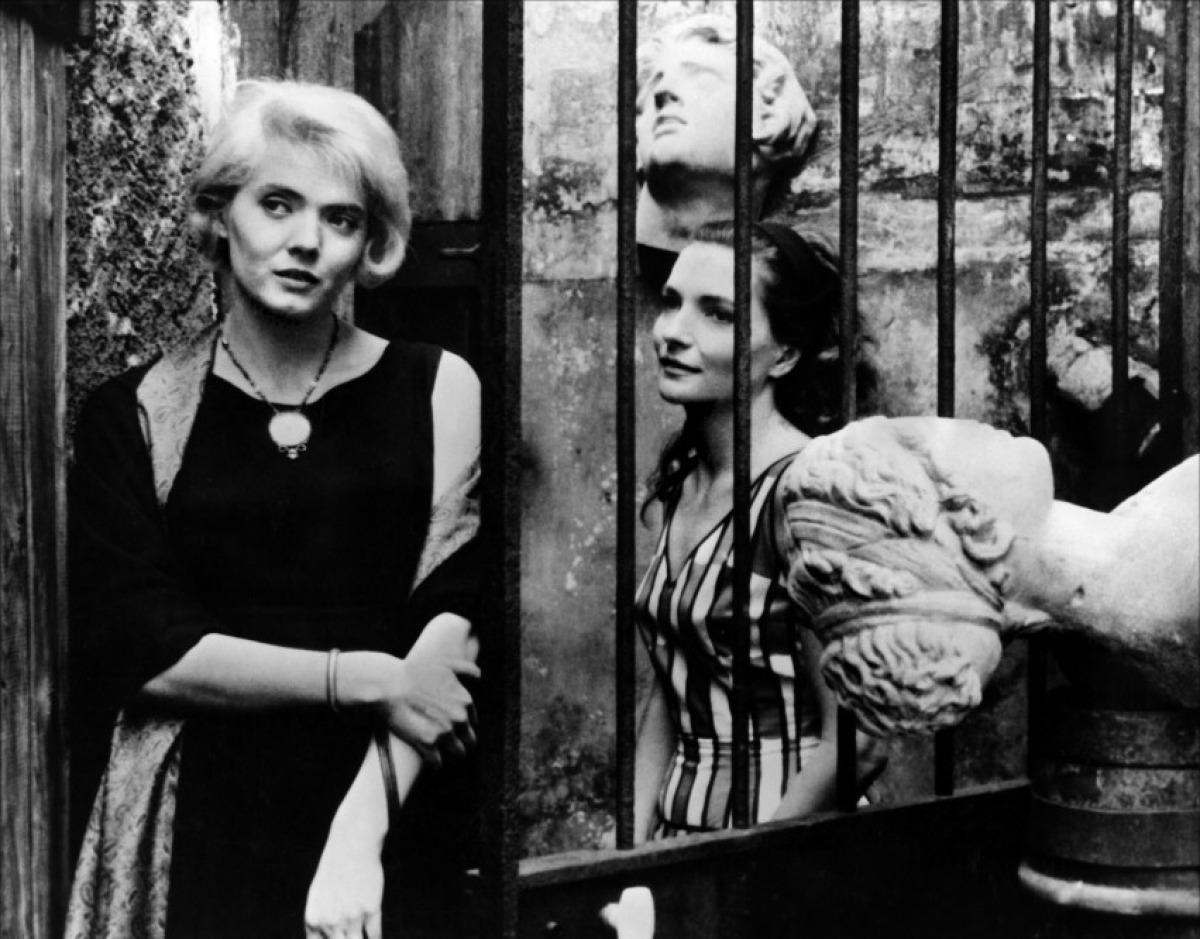
Judex (1964)

From the Chicago Reader (January 1, 1993). — J.R.

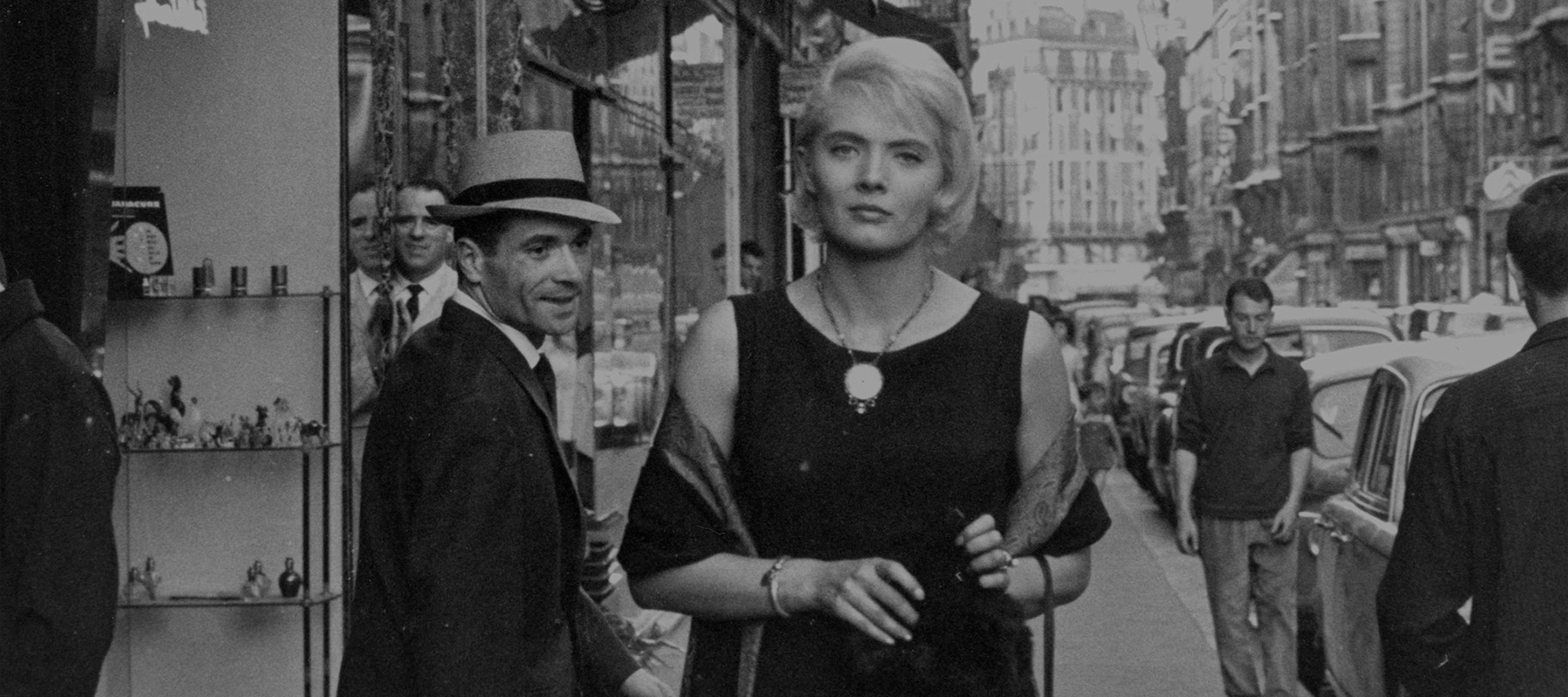
There’s a world of difference between the natural, “found” surrealism of Louis Feuillade’s lighthearted French serial (1914) and the darker, studied surrealism and campy piety of this 1964 remake by Georges Franju. Yet in Franju’s hands the material has its own magic (and deadpan humor), which makes this one of the better features of his middle period. Judex (Channing Pollack) is a cloaked hero who abducts a villainous banker to prevent the evil Diana (Francine Bergé in black tights) from stealing a fortune from the banker’s virtuous daughter. Some of what Franju finds here is worthy of Cocteau, and as he discovered when he attempted another pastiche of Feuillade’s work in color, black and white is essential to the poetic ambience. With Jacques Jouanneau and Sylva Koscina. In French with subtitles. 104 min.

Read more

The Thrill is Gone [SMILLA’S SENSE OF SNOW]

From the Chicago Reader (March 14, 1997). — J.R.

Smilla’s Sense of Snow

Rating ** Worth seeing

Directed by Bille August

Written by Ann Biderman

With Julia Ormond, Gabriel Byrne, Richard Harris, Robert Loggia, Vanessa Redgrave, Jim Broadbent, Peter Capaldi, Emma Croft, and Mario Adorf.

In a couple of memorably grouchy essays published in the mid-40s, critic Edmund Wilson expounded on his impatience with detective stories, confessing that “I finally got to feel that I had to unpack large crates by swallowing the excelsior in order to find at the bottom a few bent and rusty nails.” With a few honorable exceptions, such as Kiss Me Deadly and Cutter’s Way, conspiracy films have a similar drawback: the first half is more pleasurable than the second. I suspect the reason is that the thrill of sensing a vast, invisible network behind apparent chaos is more exciting and even satisfying than the prosaic explanation, which not only reduces possibilities and halts the imagination but, by creating closure, makes the whole experience seem rather disposable.

When conspiracy thrillers resemble detective thrillers — which is often — they have a built-in advantage, to my mind, because they typically approach the borders of fantasy or science fiction and play with the ambiguous line between the real and the fantastic. Read more

Comrades, Almost a Love Story

From the Chicago Reader  (April 22, 1997). — J. R.

ComradesAALS

Despite its sentimental aspects, this youthful, semitragic tale of two Chinese mainlanders in Hong Kong — the wonderful Maggie Cheung (Actress, Irma Vep) and pop star Leon Lai — and their fluctuating relationship as friends and lovers is the most moving film I’ve seen yet about that city’s last years under colonial rule (though the film’s final sections are set mainly in New York, where both characters emigrate). I suspect many Chinese viewers feel the same, because the film cleaned up at this year’s Hong Kong Film Awards, sweeping no less than nine categories (including best director, film, screenplay, and actress). Set between 1986 and 1996, and visualized by director Peter Chan with a great deal of inventiveness and lyricism, this movie is full of heart and humor, capturing the times we’re living in as no Western film could. Watch for a charming cameo by Christopher Doyle, the premier cinematographer of the Hong Kong new wave, as an English teacher. Film scholar and former Chicagoan Patricia Erens, now based at Hong Kong University, will introduce the Friday screening. Film Center, Art Institute, Columbus Drive at Jackson, Friday, August 22, 6:00; Saturday, August 23, 8:00; Sunday, August 24, 4:00; and Tuesday, August 26, 7:30; 312-443-3737. Read more

The Designated Mourner

From the Chicago Reader (October 6, 1997). — J.R.

TheDesignatedMourner

Another whimper from playwright Wallace Shawn about the fall of civilization — seen, as usual, more in terms of class than of intellect or aesthetics. References to such touchstones as John Donne and croquet contrive to suggest that maybe a little more than the takeover of the New Yorker by Tina Brown is at stake, but maybe not; the triumph of lowbrow vulgarity is perceived as the ultimate demise of mankind. Director David Hare films the play in its basic stage setting, three characters seated at a table, and trusts the pampered anguish of the material — the bemused and guilt-ridden but unquenchable sense of entitlement — to speak paradoxically for all of us. Mike Nichols, in his first screen performance, does a compelling job in the title role, his wide range of cartoon impersonations running the gamut from matinee-idol tics to scowls and nasal whines that evoke Shawn himself. Much flatter turns by Miranda Richardson and David de Keyser succeed only in flaunting the self-absorbed limitations of the play’s vision. If this is the way the world ends, I think I’d rather see it out with Schwarzenegger or Jim Carrey — anything but this dull pomposity. Read more

Blue Moon

From the Chicago Reader (October 1, 2000). MUBI has offered this film in the past. — J.R.

Blue-moon

Scripted and directed by Ko I-Chen — a member of the Taiwanese new wave best known as an actor outside of Taiwan, particularly for his role in Edward Yang’s Taipei Story — this exciting 1997 feature, Lan yue, consists of five 20-minute reels designed to be shown in any order, so that 120 versions of the film are possible. (Ko wrote all five scripts simultaneously, on different colored sheets of paper.) In most respects this is a conventional, even commercial narrative feature, which makes for what I like most about it — it demands the viewer’s creative participation at the same time that it pretends to satisfy all the usual expectations. All five reels feature more or less the same characters and settings — including a young woman, a writer, a film producer, and a restaurant owner, all of whom live in Taipei and belong to the same circle — but in each reel the woman is involved with one of two men. One can construct a continuous narrative by positing some reels as flashbacks, as flash-forwards, or as events that transpire in a parallel universe. Read more

My Own Private Idaho

Gus Van Sant’s 1990 feature, his best prior to Elephant, is a simultaneously heartbreaking and exhilarating road movie about two male hustlers (River Phoenix and Keanu Reeves) in the Pacific northwest. Phoenix, a narcoleptic from a broken home, is essentially looking for a family, while Reeves, whose father is mayor of Portland, is mainly fleeing his. The style is so eclectic that it may take some getting used to, but Van Sant, working from his own story for the first time, brings such lyrical focus to his characters and his poetry that almost everything works. Even the parts that show some strain — like the film’s extended hommage to Orson Welles’s Chimes at Midnight — are exciting for their sheer audacity. Phoenix was never better, and Reeves does his best with a part that’s largely Shakespeare’s Hal as filtered through Welles. 102 min. (JR)

Read more

A Moment Of Innocence

From the Chicago Reader (October 1, 1997). — J.R.

A Moment Of Innocence by Mohsen Makhmalbaf - 020

This 1996 film by Mohsen Makhmalbaf is one of his most seminal and accessiblea reconstruction of a pivotal incident during his teens that landed him in prison for several years during the shah’s regime. A fundamentalist and activist at the time, Makhmalbaf stabbed a policeman; as a consequence he was shot and arrested. Two decades later, while auditioning people to appear in his film Salaam Cinema, he encountered the same policeman, now unemployed, and the two wound up collaborating on this film about the incident involving them, trying (with separate cameras) to reconcile their versions of what happened. Though no doubt prompted in part by Abbas Kiarostami’s Close-Up (1990), this is a fascinating humanist experiment and investigation in its own right, full of warmth and humor as well as mystery. The original Persian title, incidentally, translates as Bread and Flower. In Farsi with subtitles. 78 min. (JR)

WEBA Moment Of Innocence by Mohsen Makhmalbaf - 009_0 Read more

POPSY POP (THE 21 CARAT SNATCH) (1974 review)

From Monthly Film Bulletin, December 1974 (Vol. 41, No. 491). — J.R.

Popsy Pop (The 21 Carat Snatch)

France/Italy, 1970
Director: Jean Herman

Guiana. Plateau, Venezuela. In a ramshackle ‘boom town’, occupied by the natives who work the local diamond mine, the glamorous Popsy Pop arrives –ostensibly to divert the workers with her sexy cabaret act, but actually in order to distract Silva, the mine-company inspector, from a two-million-dollar diamond heist planned for the night of her arrival. Masterminded by Marcou, an ageing criminal who loves Popsy Pop, and carried out with the help of his henchmen Tormenta, Blanchette and Freddy -– who pilots the getaway helicopter — the robbery proceeds as planned: Silva is knocked unconscious in the singer’s dressing room and the diamonds are taken from the company office. But Popsv Pop and Freddy betray the rest of the gang by leaving without them. The angry workers kill Blanchette and Tormenta, but Silva persuades them to spare Marcou in the interests of recovering the diamonds — and offers the latter a cut of the reward in addition to a chance to avenge Popsy Pop’s double-cross. She has meanwhile taken a plane to Santa Domingo with Freddy, and places the diamonds in a safe deposit box, hiding the key in a jar of cold cream. Read more

The Russia House

From the Chicago Reader (December 1, 1990). Twilight Time has recently released this on Blu-Ray. — J.R.

russia

Glasnost or no glasnost, the cold war still rages here for CIA officials, who manage to ensnare a British publisher and jazz musician (Sean Connery) in a plot to intercept a book by a distinguished Soviet scientist (Klaus Maria Brandauer); the scientist has spilled the beans about the Soviet defense program, and his book editor (Michelle Pfeiffer) becomes an unwitting pawn in the spy network. Part of what makes this a top-notch thriller (as well as a touching love story) is the literacy and intelligence of the dialogue, adapted by playwright Tom Stoppard from John Le Carre’s novel; another part is the taut professionalism of director Fred Schepisi, who knows precisely when to cut away to eavesdropping spies or fleeting flashbacks in order to add flavor or tension. But the film has many other virtues as well: the most thoroughgoing and effective use of Moscow and Leningrad locations ever in an American film, a good score by Jerry Goldsmith (with Branford Marsalis dubbing Connery’s soprano sax solos), first-rate performances from the leads (Pfeiffer is especially fine), and a well-trained secondary cast including Roy Scheider, James Fox, John Mahoney, Michael Kitchen, J.T. Read more

Le Bonheur

From the Chicago Reader (December 1, 1990). — J.R.

Le-Bonheur

A beautiful and disturbing 1965 feature by Agnes Varda about family happiness, full of lingering and creepy ambiguities. A happily married carpenter (Jean-Claude Drouot) with a beautiful wife (Claire Drouot) and two small children (Sandrine and Oliver Drouot) falls in love with a beautiful postal clerk (Marie-France Boyer), who becomes his mistress. After the wife dies for mysterious reasons (whether by accident or suicide isn’t clear), his idyllic family life continues with the postal clerk. Provocative and lovely to look at, this is one of Varda’s best and most interesting features (along with Cleo From 5 to 7 and Vagabond). (JR)

Le-Bonheur2 Read more

The Godfather Part III

From the Chicago Reader (December 21, 1990). — J.R.

Godfather-3

Francis Coppola’s tragic and worthy (if uneven) conclusion to his Godfather trilogy, which he wrote in collaboration with Mario Puzo, represents a certain moral improvement over its predecessors by refusing to celebrate and condemn violence and duplicity in the same breath, or at least to the same degree. For 161 minutes, Michael Corleone (Al Pacino at his best) seeks absolution for his past sins, and although a cardinal grants it at one point (in a powerful confession scene), the film itself refuses to. While some of the allegorical implications persist (crime equals capitalism, Mafia equals family, both equal America), the decline of America in a world market where both European money and the Vatican are made to seem as corrupt as the Corleones leads to an overall change of focus; it ultimately lands this film in a metaphysical realm where the very plot seems formalized into semiabstract rituals. The inflated sense of self-importance in part two — epitomized by the playing of Nino Rota’s ubiquitous waltz theme on a church organ during a communion — is somewhat muted here, although a virtuoso set-piece climax finally strains credulity when too many important events dovetail in a single sequence. Read more

New York, Paris, Taiwan: Interview with Serge Kaganski

This interview, conducted by phone, appeared in my favorite French weekly magazine, Les Inrockuptibles, in a special double issue devoted largely to American cinema (6-19 août 1997, no. 114); I have this text only in French. — J.R. 

Enfant de la balle du Sud profond, passionnant théoricien autodidacte, critique original qui préfère Jerry Lewis à Woody Allen, Jonathan Rosenbaum fait le lien cinéphile entre les Etats-Unis et le reste du monde : comment le cinéma mondial touche ­ ou ne touche pas ­ le public américain, comment le cinéma américain est ­ ou n’est pas ­ une émanation du système capitaliste.

De l’Alabama profond aux Straub : on pourrait résumer ainsi le parcours cinéphilique extraordinaire de Jonathan Rosenbaum. Né en 43 et élevé à Florence, petite ville de l’Alabama, Rosenbaum est ce qu’on peut appeler un ciné-fils, dans l’acception la plus prosaïque du mot de Serge Daney : son père et son grand-père géraient un petit circuit de salles à Florence et alentour. Rosenbaum est donc tombé dedans quand il était petit, voyant des films quotidiennement depuis l’âge de 6 ans, essentiellement le tout-venant de la production commerciale hollywoodienne. Une période qu’il a brillamment chroniquée dans sa biographie Moving places. Read more

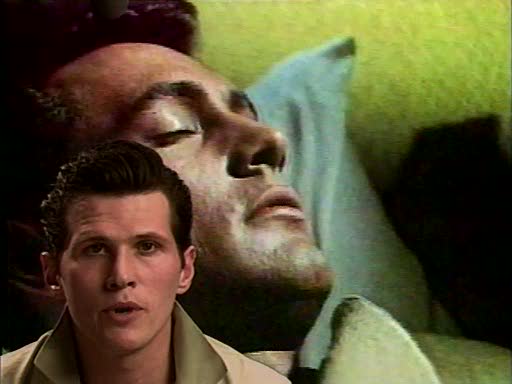
Rock Hudson’s Home Movies

From the Chicago Reader, November 1, 1992.

This brilliant hour-long video transferred to film (1992) by independent filmmaker Mark Rappaport (The Scenic Route) is in effect a subversive piece of film criticism that departs from the fictional conceit of Hudson himself (represented through clips from his films and by actor Eric Farr) speaking from beyond the grave about his homosexuality and what this did or didn’t have to do with his countless heterosexual screen roles. Part of what emerges, to hilarious effect, is the extraordinary amount of male cruising and number of barbed allusions to Hudson’s gayness that his movies of the 50s and 60s contain; what also emerges is the sexual ideology of the period. Though much of this essential work is extremely funny, it is also very much about death in relation to movies. 63 min. 
Read more