The Apostle

From the February 12, 1998 Chicago Reader.

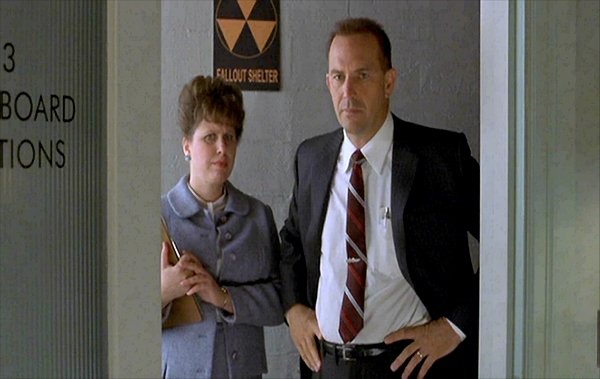
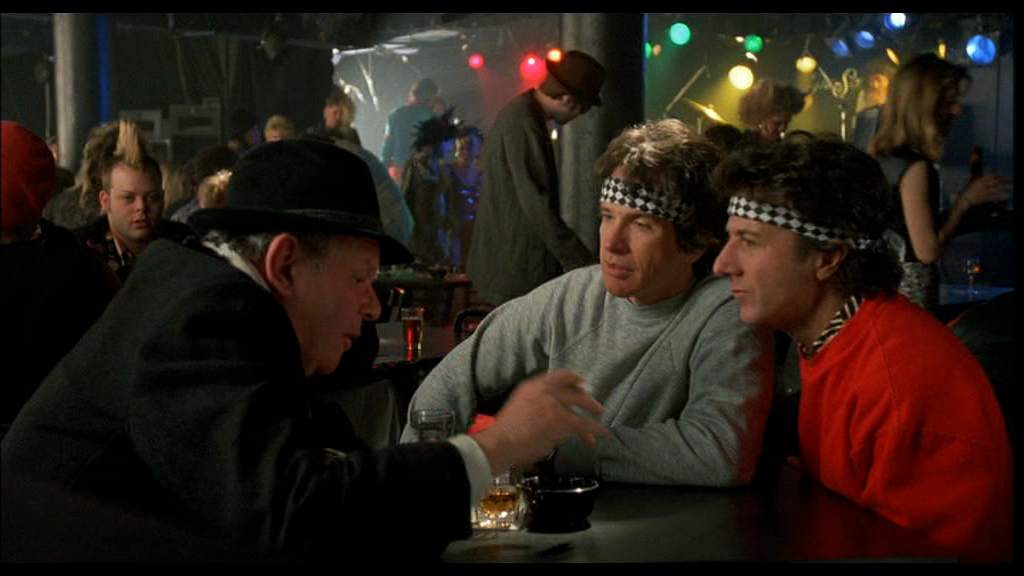
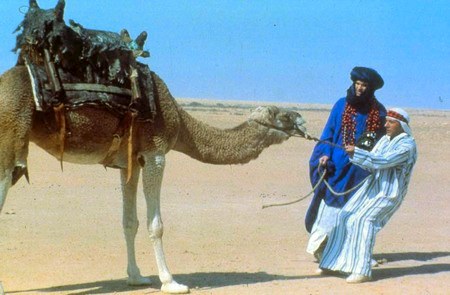
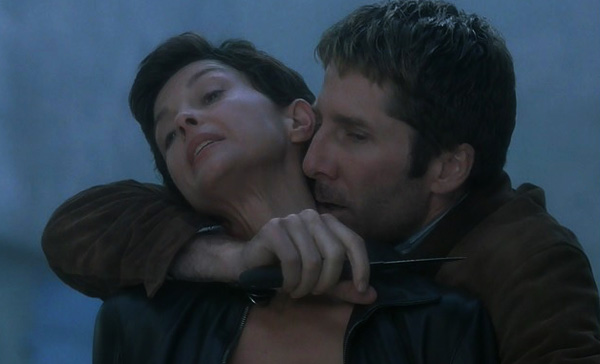
Robert Duvall is the writer, director, executive producer, and star of this commanding 1997 portrait of a southern Pentecostal preacher, but far from being any sort of one-man show, this feature is powerful mainly for what it has to say about a community and a way of life. Duvall’s character is a troubled and troubling scoundrel who critically assaults a younger preacher (Todd Allen) who’s taken his wife (Farrah Fawcett), then hightails it from Texas to Louisiana in flight from the law to start a new congregation. He remains a morally ambiguous figure throughout, but in defiance of the usual Elmer Gantry stereotype, the film never questions the sincerity of his religious beliefs. The fact that he’s inspired by black preachers and preaches to integrated (but mainly black) congregations only adds to the complicated response we’re invited to have, though Duvall’s direction of a mix of professional and nonprofessional actors, especially in the extended church sessions, is never less than masterful. His gifts for storytelling are more uneven but, under the circumstances, less relevant. A fresh and open-minded look at a major strain in American life that’s rarely depicted with any lucidity, this is an invigorating achievement. Read more

Truffaut on Hitchcock

Commissioned by Caboose Press for a forthcoming volume on Godard and posted here prematurely.      — J.R.

François Truffaut

‘Un Trousseau de fausses clés’, Cahiers du Cinéma 39 (October 1954): 45–52.


I have often wondered why my favourite piece of film criticism by François Truffaut — ‘Un trousseau de fausses clés’, the final essay devoted to Alfred Hitchcock that appears in Cahiers du Cinéma No. 39, in October 1954, the first special issue of that magazine devoted to Hitchcock. — has never been included in any of Truffaut’s books. The likeliest reason is that Truffaut begins his article by responding to André Bazin’s essay in the same issue — pointedly called ‘Hitchcock contre Hitchcock’, maintaining that Hitchcock tended to tell his interviewers whatever they wanted to hear — by conceding that Hitchcock was something of a liar. Given Truffaut’s cordial relations with Hitchcock that ultimately led to his book-length interview with him, reprinting an essay that began with and then pondered the implications of such an assertion was something to be avoided.

     Even so, the absence of this seminal essay from Truffaut’s ‘official’ critical oeuvre has been unfortunate, especially because it has obscured its importance as a major influence on Truffaut’s critical colleagues—most notably on Éric Rohmer and Claude Chabrol, in their pioneering 1957 book on Hitchcock, which alludes twice to this essay (without, however, providing a specific reference to it) and recapitulates much of its central analysis; on Jean-Luc Godard, in his own most ambitious and exhaustive critical analysis of a film, ‘Le Cinéma et son double’ (Cahiers du Cinéma issue no. Read more

The Crying Game

From the Chicago Reader (December 18. 1992). I was reminded of this capsule by Thom Andersen’s references to it when he reviewed The Crying Game  at length for the Reader, in an  essay reprinted in his excellent recent collection, Slow Writing. — J.R.

Crying_game_poster

An adroit piece of story telling from Irish writer-director Neil Jordan (Mona Lisa, The Miracle) that is ultimately less challenging to conventional notions about race and sexuality than it may at first seem. Like other Jordan features, this one centers on an impossible love relationship, and the covert agenda of the plot is to keep it impossible by any means necessary. The theories of literary critic Leslie Fiedler about the concealed and unconsummated lust of the white male for the nonwhite male in such American classics as Huckleberry Finn and Moby Dick seem oddly relevant to certain aspects of this tale about an IRA volunteer (Stephen Rea) who assists in the kidnapping of a black British soldier (Forest Whitaker) and subsequently becomes involved with his mulatto lover (Jaye Davidson) in London; the plot, held in place by a parable about a scorpion and a frog that’s filched from Orson Welles’s Mr Arkadin, features a startling twist about halfway through; among the cleverly concealed safety nets that hold this movie’s conceits in place is an implied misogyny that only becomes evident once the story is nearly over. Read more

Hard Eight

From the Chicago Reader (February 28, 1997). — J.R.

hardeight

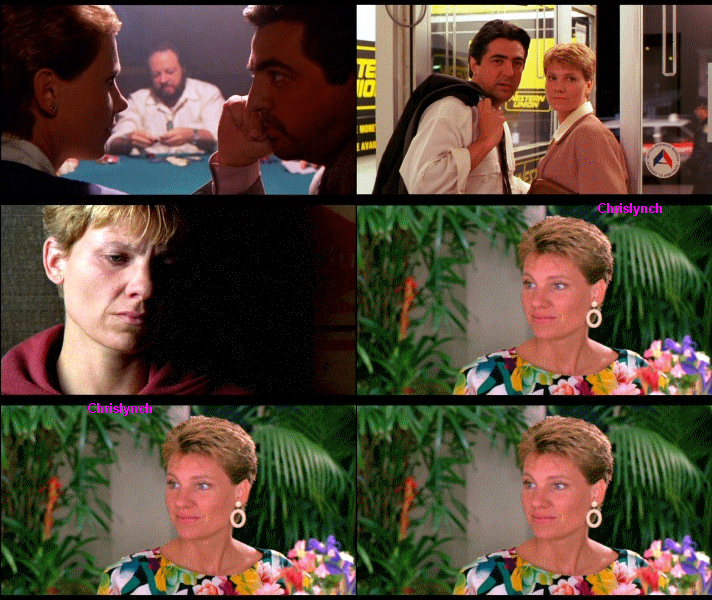
A pared-down crime thriller set mainly in Reno, this first feature by writer-director Paul Thomas Anderson is impressive for its lean and unblemished storytelling, but even more so for its performances. Especially good is Philip Baker Hall, a familiar character actor best known for his impersonation of Richard Nixon in Secret Honor; he’s never had a chance to shine on-screen as he does here. In his role as a smooth professional gambler who befriends a younger man (John C. Reilly), Hall gives a solidity and moral weight to his performance that evokes Spencer Tracy, even though he plays it with enough nuance to keep the character volatile and unpredictable. Samuel L. Jackson and Gwyneth Paltrow, both of whom have meaty parts, are nearly as impressive, and when Hall and Jackson get a good long scene together the sparks really fly. Pipers Alley. — Jonathan Rosenbaum

tumblr_inline_mxb05hplfT1qafciz

Hard-eight Read more

Piaf & German porn

From Oui (September 1974). –- J.R.

Piaf. In her life and in her music’ Edith Piaf is probably the closest thing France has had to a Billie Holiday. It shouldn’t come as a surprise, then, that a feature-length fiction film based on her life gives her the same kind of treatment that Lady Sings the Blues gave to Billie. We begin with Edith’s birth in 1915 in a red-light district of Paris. Abandoned by her mother, she grows up in a provincial whorehouse, Edith starts singing for centimes in street acts with her acrobat father. Then she goes independent and sings on the street while her half-sister, Momone, accompanies her on harmonica.Piaf is menaced by a Montmartre pimp who sells her “protection”. After she gives birth to a bastard daughter who dies in infancy, she gradually makes her way up the ladder from a dive in Pigalle to a Champs-Elysées niqht club. The plot is taken from a “fictionalized” biography by Simone Berteaut, the real-life Momone. Newcomer Brigitte Ariel plays Piaf, although the singing voice belongs to Betty Mars in both the French and English versions of the film. Guy Casaril, the director, serves it all up in something akin to the American bio-pic Style: Edith sings her heart out as the camera sails up into the sky. Read more

Cleo From 5 To 7

From the Chicago Reader (February 1, 1997). I had a great time talking to Varda about this film at Chicago’s Music Box on October 14, 2015. — J.R.

cleofrom5to7-header

Cleo-Swing

Agnes Varda’s 1961 New Wave feature — recounting two hours in the life of a French pop singer (Corinne Marchand) while she waits to learn from her doctor whether she’s terminally ill — is arguably her best work, rivaled only by her Vagabond (1985) and The Gleaners and I (2000). Beautifully shot and realized, this film offers an irreplaceable time capsule of Paris, and fans of Michel Legrand won’t want to miss the extended sequence in which he visits the heroine and rehearses with her. The film’s approximations of real time are exactly that — the total running time is 90 minutes — but innovative and thrilling nonetheless. Underrated when it came out and unjustly neglected since, it’s not only the major French New Wave film made by a woman, but a key work of that exciting period  — moving, lyrical, and mysterious. With Antoine Bourseiller. In French with subtitles. (JR)

cleo_de_5_a_7

cleo-park Read more

Family Plots (a story)

I no longer know when I wrote this story, although it was obviously written before I wrote digitally, because the typescript I recently came across, which I’ve revised here only slightly, clearly came from a typewriter. (I suspect that most or all of it was written in Santa Barbara in the mid-1980s, although I may have started it much earlier.) A few of the details are autobiographical in origin (e.g., I grew up with three brothers, but certainly without a nanny, and the description of the grandparents’ mansion mostly corresponds to my own grandparents’ home in Florence, Alabama, owned and occupied today by a local friend), but most of them obviously aren’t.

I’ve hesitated about publishing much of my fiction on this site because the responses to my stories so far have been fairly minimal — a likely result of “niche marketing” that tends to associate this site almost exclusively with film (or, to a lesser extent, jazz and reviews of prose fiction) — but I’ve decided to repost this with links on Facebook and Twitter just to see if this changes anything. — J.R.

Family Plots

1.

The restaurant was so crowded that they had to assign all six of us to separate tables, with careful instructions to deliver five of the checks to Daddy-Pop after the meal, reconvene, and then go to see a Marx Brothers double feature down the street. Read more

Rita, Sue And Bob Too

From the Chicago Reader (September 1, 1987). This film is now available on Blu-Ray from Twilight Time. — J.R.

rita-sue-and-bob-too

Rita (Siobhan Finneran) and Sue (Michelle Holmes), two teenagers in the north of England who are the best of friends, lose their virginity to Bob (George Costigan), a suburban husband they sometimes baby-sit for, and before long their amicable three-way relationship is scandalizing the neighbors and members of their families, including Bob’s wife Michelle (Lesley Sharp). Shot in and around the town of Bradford in long, loping takes, this sprightly comedy, adapted by Andrea Dunbar from her own play, has some of the energy that one associates with the better exploitation films that used to be produced by Roger Corman. Television director Alan Clarke has a fine time showing how the working-class white and Pakistani communities rub shoulders with the middle class, and although the plot has curious omissions — we never discover, for instance, what Bob does for a living — the spirited acting and direction turn this into something of a lark (1987). (JR)

  Read more

The Exorcist

theexorcist-poster

“Doubtless this tale of spirit possession in Georgetown packs a punch, but so does wood alcohol,“ wrote Reader critic Don Druker in an earlier review of this. I wouldn’t be quite so dismissive: as a key visual source for Mel Gibson’s depiction of evil in The Passion of the Christ as well as an early indication of how seriously pulp can be taken when religious faith is involved, this 1973 horror thriller is highly instructive as well as unnerving. William Friedkin, directing William Peter Blatty’s adaptation of his own novel, aims for the jugular, privileging sensation over sense and such showbiz standbys as vomit and obscenity over plodding exposition. This 2000 rerelease runs 132 minutes, 11 minutes longer than the original; with Ellen Burstyn, Max von Sydow, Jason Miller, Linda Blair, and Lee J. Cobb. R. (JR)

Exorcist Read more

A Thousand Words

Made for the unthinkable sum of $7,000, Paul E. Garstki’s independent black-and-white Chicago-based feature both profits and suffers from its impoverished budget. On the plus side, a largely postdubbed sound track allows the filmmakers to tell parts of the story through the ingenious economical device of using answering-machine messages and imaginary phone conversations offscreen. A thoughtful use of local talent (stage actors John Ellerton, Warren Davis, and Diana Zimmer as the three leads and lots of local independent filmmakers in secondary parts) and locations also makes the best use of William Holst’s somewhat minimalist script, adapted from a story by Garstki. A reclusive art critic hires a young protege, who moonlights as a surveillance photographer, to go to work on a young woman (an odd plot with faint echoes of The Draughtsman’s Contract and Paul Bartel’s The Secret Cinema, without much of the humor connected to either). The main budgetary drawback is the nearly nonexistent social context; the stilted art-world talk generally fails to convince because there isn’t enough of a world in the film to establish it as either parody or the genuine article, and the characters themselves seem at times excessively limited by the exigencies of the plot. The result, then, is uneven but singular–a quirky, rather disturbing little film about voyeurism and loneliness. Read more

Indiana Jones And The Kingdom Of The Crystal Skull

The unholy mix of George Lucas’s colonialist nostalgia and Steven Spielberg’s fluency with action becomes more self-conscious in this fourth Indiana Jones outing. In 1957, two decades after the events of Indiana Jones and the Last Crusade, the hero (Harrison Ford) joins forces with his old flame from Raiders of the Lost Ark (Karen Allen) and a young punk (Shia LaBeouf) to combat a Commie villain (Cate Blanchett, doing a variation on Garbo’s Ninotchka) in a remote corner of Peru. The character and plot contrivances are dumber than ever, but this is basically vaudeville, not narrative, and the thrills keep coming. (Once Indy has survived a nuclear blast early on, going over three waterfalls in a row without wetting his lighter is par for the course.) Spielberg’s extravagant action, much of it staged on what look like old sets from King Kong, includes pointed steals from The Naked Jungle (1954), Land of the Pharaohs (1955), The Ten Commandments (1956), and his own Close Encounters, E.T., and A.I. PG-13, 124 min. (JR) Read more

Austin Powers: International Man Of Mystery

From the Chicago Reader (May 1, 1997). — J.R.

austin-powers-international-man-of-mystery-13891

After 30 years of cryogenic preservation, the title hero (a spin-off of James Bond and his clones) and his archenemy Dr. Evil — both played by writer and coproducer Mike Myers (Wayne’s World) — emerge in the present to match wits all over again. What’s really fun about this silly but spirited comedy isn’t just the ribbing of swinging London fashion and social attitudes but the use of the compulsive zooms and split-screen mosaics of commercial movies of the 60s (some of the funniest gags derive from camera placement). There’s a bit of fudging when it comes to the romantic interest: sidekick Elizabeth Hurley initially blanches at Austin Powers’s advances but succumbs as soon as he treats her to a night on the town in Las Vegas, complete with champagne and Burt Bacharach. But 60s (and 50s) icons like Robert Wagner and Michael York (playing someone called Basil Exposition) make this exercise in historical relativity even funnier. Jay Roach directed with just the right amount of period tackiness. With Mimi Rogers, Seth Green, and Fabiana Udenio (as Alotta Fagina). (JR)

AP Read more

THEY CAUGHT THE FERRY (1976 review)

From Monthly Film Bulletin, September 1976, Vol. 43, No. 512. — J.R.

De Naede Faergen (They Caught the Ferry)

Denmark, 1948
Director: Carl Th. Dreyer

Dist–Guild Sound & Vision. p.c–Ministeriernes Filmudvalg. sc–Carl Th. Dreyer. Derived from a work by Johannes V. Jensen. ph–Jørgen Roos. ed–Carl Th. Dreyer. sd–Jorgen Roos. l.p–(not credited). 408 ft. 11 mins. (16 mm.).

Behind the credits, accompanied by the ominous sound of three beats on a kettledrum, a ferry arrives at the Assens-Aarøsund landing. After some reverse-angle cuts between ferry and landing, a motorcyclist on board asks the captain about the next departure of the ferry on the other side of the island. ToId that it leaves in forty-five minutes but that he’ll never make it — the other ferry being seventy-five kilometres away — the man replies, “I must get it” and, with a female companion clinging to his waist, drives off the boat behind a line of other cyclists.

He quickly accelerates from 40 to 80 km. per hour, and his race down a country road is illustrated by moving shots which alternate his viewpoint (passing trees, close-ups of speedometer) with ‘objective’ angles (shots behind or ahead of his bike, close-ups of wheels). After stopping at a petrol station, where he urges the female attendant to hurry and she replies that he’lI have to drive fast to make the ferry. Read more

Still Life

From the Chicago Reader (January 24, 2008). — J.R.

The fifth feature by Jia Zhang-ke, China’s greatest contemporary filmmaker, is set in the vicinity of China’s immense Three Gorges, where the ongoing construction of the world’s largest dam has already forced the relocation of almost two million people. Against this epic canvas, their paths crisscrossing but never intersecting, a coal miner and a nurse (both from Jia’s home province of Shanxi) search for their former mates. This 2006 drama may seem to be worlds apart from the surreal theme-park setting of Jia’s previous film, The World, but there are similarities of theme, style, scale, and tone: social and romantic alienation in a monumental setting, a daring poetic mix of realism and lyrical fantasy, and an uncanny sense of where our planet is drifting. In Mandarin and Shanxi with subtitles. 107 min. (JR)

Read more

Early Michael Snow Shorts (1976 reviews)

From Monthly Film Bulletin, December 1976 (Vol. 43, No. 515). — J.R.

One Second in Montreal
Canada, 1969

Director: Michael Snow

Dist–London Filmmakers’ Co-op/Cinegate. p.c /p/ph/ed–Michael Snow. 612 ft. (at 16 f.p.s.) 26 mins.; (at 24 f .p.s.) 17 mins.
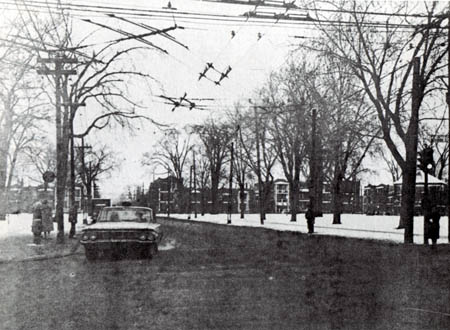
A series of thirty-odd black and white still photographs – all showing park sites for a projected monument in Montreal covered with blankets of snow — are rephotographed and shown in succession; the duration of each photograph on the screen progressively increases during the first section of the film, and progressively decreases during the second, which ends with a ‘flash’ repeat of the initial title card. A simple experiment in what might be described as the phenomenology of duration in relation to the viewer’s attention and grasp of detail, One Second in Montreal apparently owes its title to the fact that the combined exposure time of the original photographs adds up to only one second.

Praised somewhat hyperbolically as a “cinematic construction which plays upon the seriality of film images” (Annette Michelson) and a “snow film so silent you can hear the snow fall” (Jonas Mekas), the film is an ‘open’ work in the sense that it can be projected at either 16 or 24 frames per second. Read more