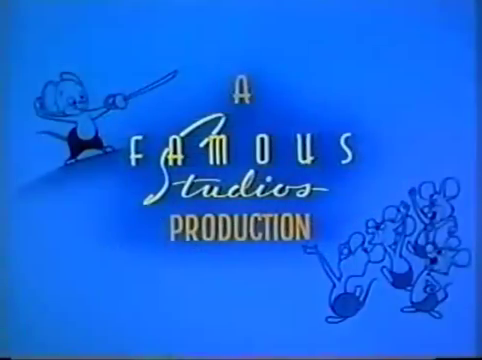
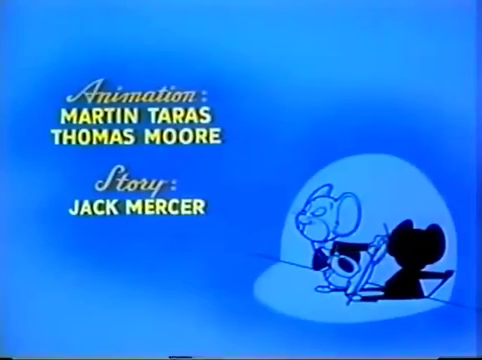
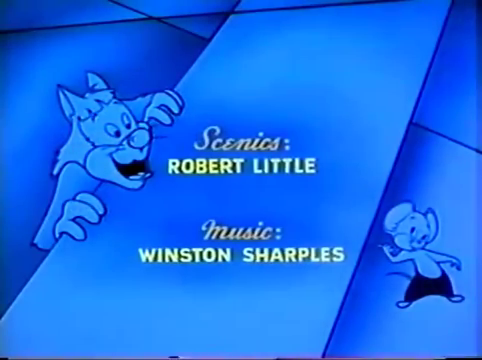
And which way is that? Surely not the gay way if it’s any way at all. All the characters in these awful 1950s Herman and Katnip cartoons, at least all the mice and the single predatory and macho cat, are male, and sex is the very last thing on their minds. The cat wants to eat the mouse and the mouse wants to torture the cat, but rightly or wrongly, neither eating nor torturing is being presented as a sexual activity. Territorial privilege and imperial dominance are what’s on the limited menu.
Fiddle-fiddle-dee, fiddle-diddle-dough,
He’s the bravest mouse we know,
Fiddle-diddle-dee, fiddle-diddle-die,
Herman’s quite a guy.
Can a mouse be a guy? If not, why not? tFiffle-diddle-dee, fiddle-diddle-day,
It’s just like a holiday,
Fiddle-diddle-dee, fiddle-diddle day,
Herman’s come to stay.
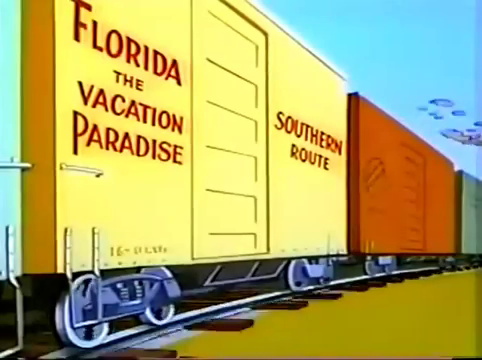
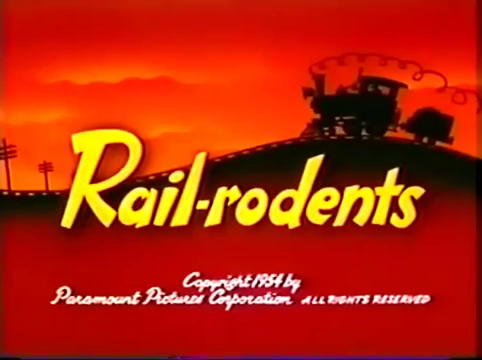
Come to stay where, exactly? In this episode, he and the other mice are actually on a train bound for Florida, “the vacation paradise,” on the “southern route” (Indeed, this particular cartoon is called “Rail-rodents”.)
Katnip, now bagless, but stretched out with a pillow on a slat directly below the mice’s RR car, is still in pursuit. So if he’s left the house, so has his prey.Read more
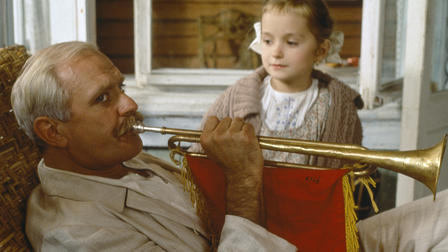
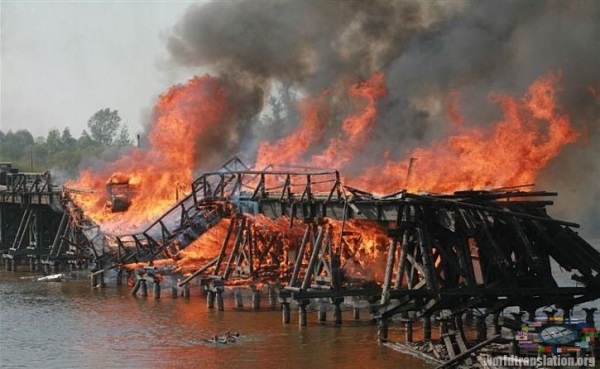
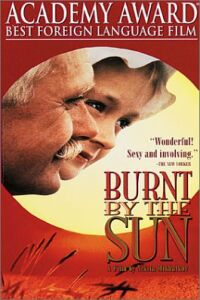
Trying to figure out why this interminable, hammy piece of Russian nostalgia by Nikita Mikhalkov (director, cowriter, associate producer, and star) won the Oscar for best foreign film of 1994 and the grand jury prize at Cannes, I came up with four hypotheses: (1) there are no Asians in it; (2) set over one long summer day in the country in 1936, it provides a wake-up call about the dangerously underhanded doings of Joseph Stalin; (3) the hero appears to be well over 60; and (4) the elegiac Chekhovian style recalls Ingmar Bergman by way of Woody Allen, thus making the film seem trebly familiar. Indeed, apart from intermittent bursts of Edouard Artemiev’s bombastic music, this 134-minute period piece offers the ideal opportunity for a long, peaceful snooze. With Oleg Menchikov, Ingeborga Dapkounaite, and Nadia Mikhalkov. In Russian with subtitles. (JR)
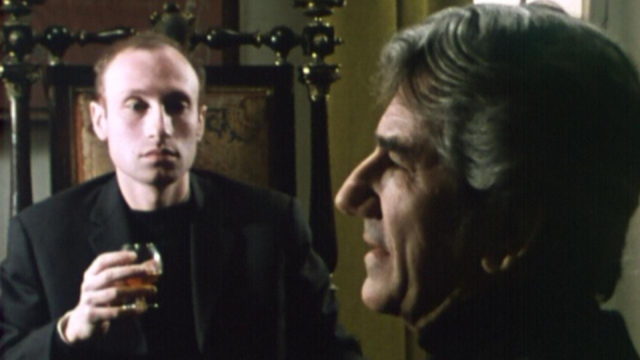
One of Raul Ruiz’s earliest French features — an adaptation of Pierre Klossowski’s autobiographical novel about the conflict between rival doctrinal factions within the Catholic Church — this is also one of his most intractable, though some critics regard it as one of his best. It takes the form of a film within a film, involving the making of a film in 1971 that is an amalgamation of two earlier unfinished films made in 1942 and 1962. Alternating between black and white and color, and shot through with Ruiz’s deadpan humor and his taste for labyrinthine structures, it addresses the quintessentially Ruizian theme of institutions — how they function and how they survive (1977). (JR)
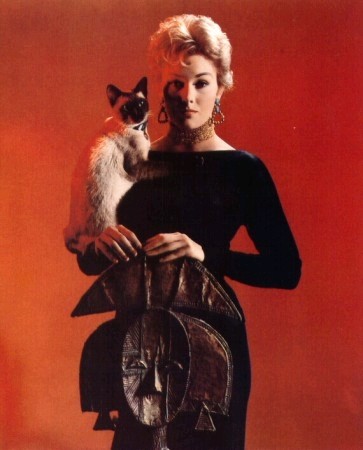
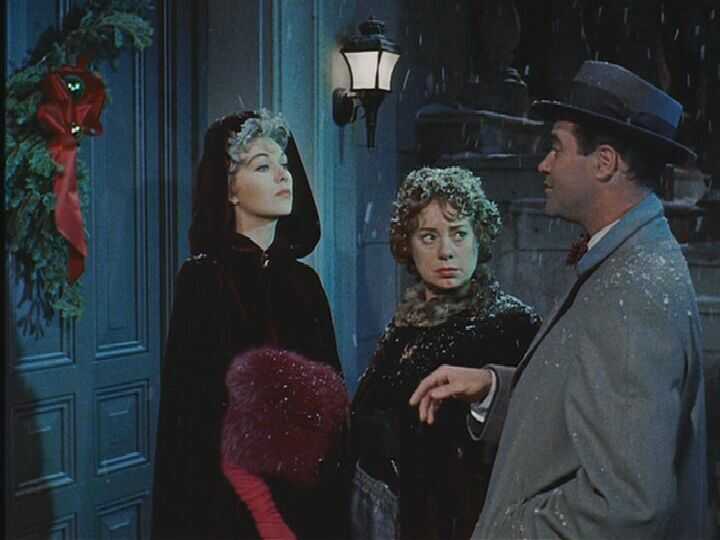
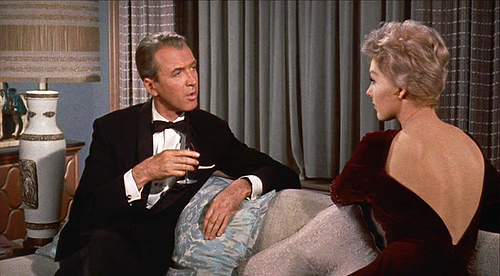
This charming 1958 comedy about witches is never quite as good as you want it to be, but it’s still a lot more entertaining than its director (Richard Quine) and its reputation suggest. Kim Novak is at her most luminous as a good witch who seduces publisher James Stewart away from the woman he expects to marry, and Jack Lemmon, Ernie Kovacs, Hermione Gingold, and Elsa Lanchester all manage to shine as well. Adapted by John Van Druten from his own play; the Candoli brothers, Pete and Conte, provide some dreamy, muted trumpet jazz in a nightclub. If memory serves, and clearly thinking of the two leads, French writer Bernard Eisenschitz once called this an optimistic Vertigo. 103 min. (JR)
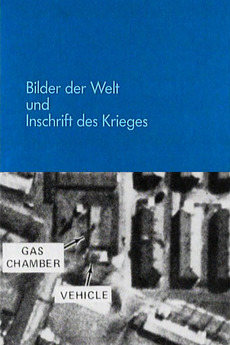
A fascinating 1988 film essay about photography by Harun Farocki. One of Germany’s most interesting independent filmmakers, he combines the freewheeling imagination of a Chris Marker with the rigor of an Alexander Kluge, and has a materialist approach to editing sound and image that suggests both Fritz Lang and Robert Bresson. Central to the argument of this film are some aerial photographs of Auschwitz taken by American bombers looking for factories and power plants and missing the lines of people in front of the gas chambers — which are contrasted with Nazi photographs and images drawn by an Auschwitz prisoner, Alfred Kantor. Farocki’s provocative reflections on these and related matters and his highly original fragmentization and manipulation of music make this an excellent beginning to a long-overdue retrospective of his work, which until now has not been available in the U.S. Farocki will be present for a discussion; cosponsored by the Goethe-Institut. (Chicago Filmmakers, 1229 W. Belmont, Wednesday, February 12, 7:30,281-8788)
Originally posted online in Moving Image Source, December 3, 2010. — J.R.
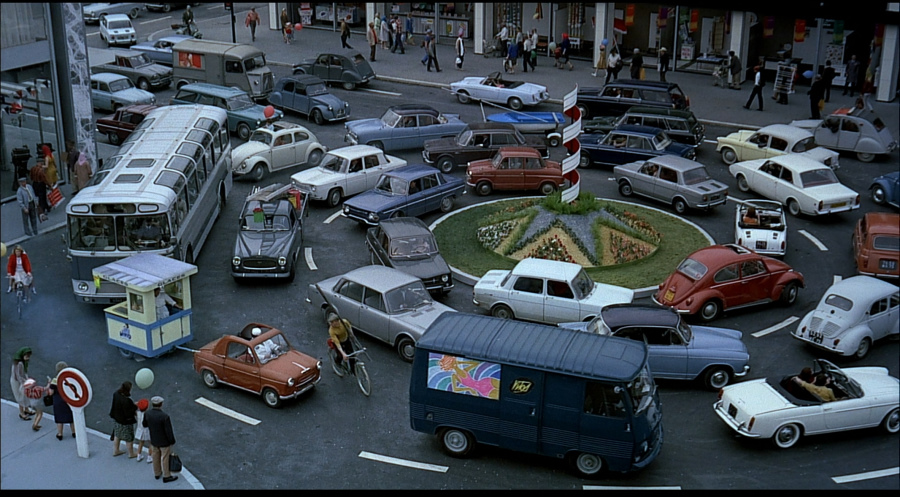
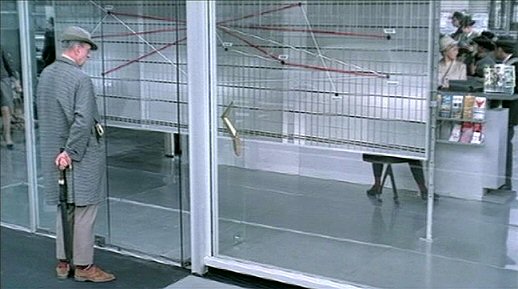
Jacques Tati’s Playtime, a contemporary comedy chronicling a day spent by American tourists and various locals in a studio-built Paris, premiered in 70 mm (or, more precisely, according to Criterion, 65 mm) in Paris on December 16, 1967; at the time it was 152 minutes long, and over the next two months — under pressure from exhibitors, and to avoid an intermission — Tati reduced the length by 15 minutes.
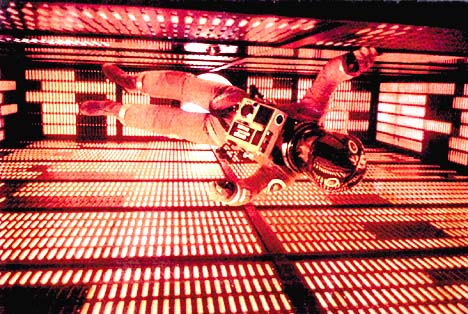
Stanley Kubrick’s 2001: A Space Odyssey, a science fiction adventure that stretches roughly from East Africa in the year 4 billion B.C. to the outskirts of Jupiter around 2002, first opened in Cinerama in Washington, D.C., on April 2, 1968, and then, in the same format, in New York the following day and in Los Angeles on April 4, during which time it was 158 minutes long; over the following week, based on his own responses to audience reactions, Kubrick in New York reduced its length by 19 minutes, making it only two minutes longer than the shortened Playtime.
Large-format restorations of both these films, along with David Lean’s 1962 Lawrence of Arabia, are coming this month to the TIFF Bell Lightbox in Toronto for extended runs. Read more
With Brendan Fraser, Leslie Mann, Thomas Haden Church, Holland Taylor, Richard Roundtree, Greg Cruttwell, Abraham Benrubi, and the voice of John Cleese.
GEORGE OF THE JUNGLE 2, Christopher Showerman, Angus T. Jones, Julie Benz, 2003. (c) Walt Disney Pictures.
There’s no getting around it: George of the Jungle is an amiable, highly ingratiating piece of lowbrow entertainment, and the audience of mainly young children and parents I saw it with on Saturday night clearly had a ball. So did I, for that matter. If consumer advice on where to take your kids is what’s needed, change “worth seeing” into “a must-see.” On the other hand, if I — a nonparent — had to choose between seeing it a second time and seeing the black-and-white Tarzan’s New York Adventure (1942) for the third or fourth time on video, I wouldn’t blink before selecting the latter. Both movies, as it happens, are comedies — though klutzy George, who swings on vines directly into trees, is an even more ironic version of the noble savage — but there are also major differences between them that I suspect are generational. Read more
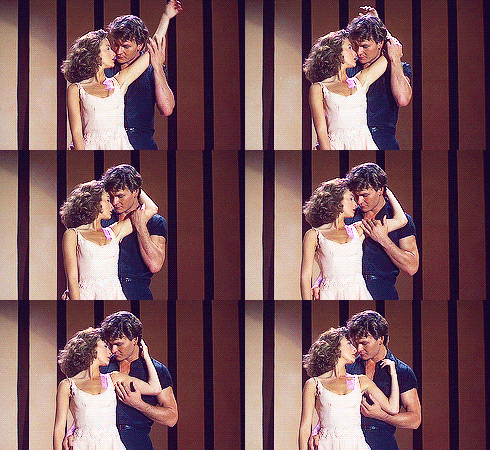
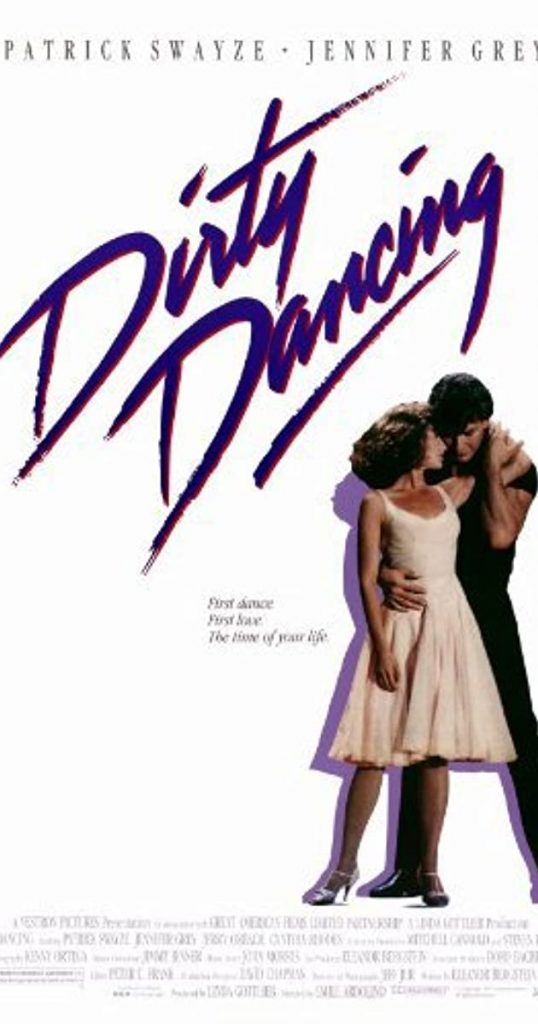
A rather novel Flashdance spin-off, this coming-of-age dancing romance (1987) is set in a Catskills resort during the summer of 1963. What sets it apart from others of its ilk is that some of the leads — notably Jennifer Grey, who achieves her apotheosis by learning the mambo, and Jerry Orbach — actually resemble real people rather than actors. The plot hinges on class differences between resort customers and staff members (dirty dancing is what the latter do at their own parties), and before the movie collapses into the utopian nonsense that seems obligatory to this subgenre, a surprising amount of sensitivity and satirical insight emerges from Eleanor Bergstein’s script and Emile Ardolino’s direction. There’s also a memorable use of the resort location, and while the music on the soundtrack is predictably overloud, the period detail is refreshingly soft-pedaled. PG-13, 97 min. (JR)
From the Chicago Reader (November 25, 1988). — J.R.
SCROOGED
* (Has redeeming facet)
Directed by Richard Donner
Written by Mitch Glazer and Michael O’Donoghue
With Bill Murray, Karen Allen, John Forsythe, Bobcat Goldthwait, Carol Kane, Robert Mitchum, Michael J. Pollard, and Alfre Woodard.
It must have been in the late 50s or early 60s when, as a teenager, I happened across a story in a movie fan magazine, probably Photoplay, about the pop/movie star Fabian. Fabian, the magazine explained, was getting so popular that he couldn’t go out on a date without being besieged by reporters and photographers. Recently, however, he’d eluded them and been able to take out a lovely lady; the magazine was celebrating the event — I swear I’m not making this up — with a two-page spread of photos and captions that chronicled the evening from beginning to end, from the moment he called on his date to the good-night kiss on her doorstep. “An intimate look,” I think they called it.
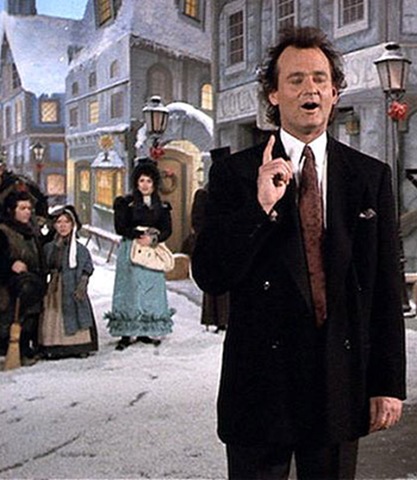
A comparable game for the gullible is performed by Scrooged, which attempts to obfuscate its own apparatus as thoroughly as that magazine did 20-odd years ago. I know we’re all supposed to be more knowledgeable and therefore more cynical about the media today. Read more
From the Chicago Reader (February 1, 1988). — J.R.
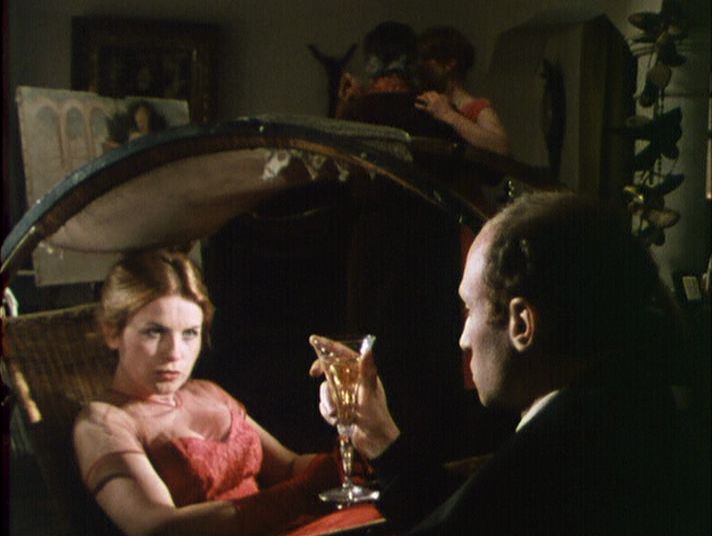
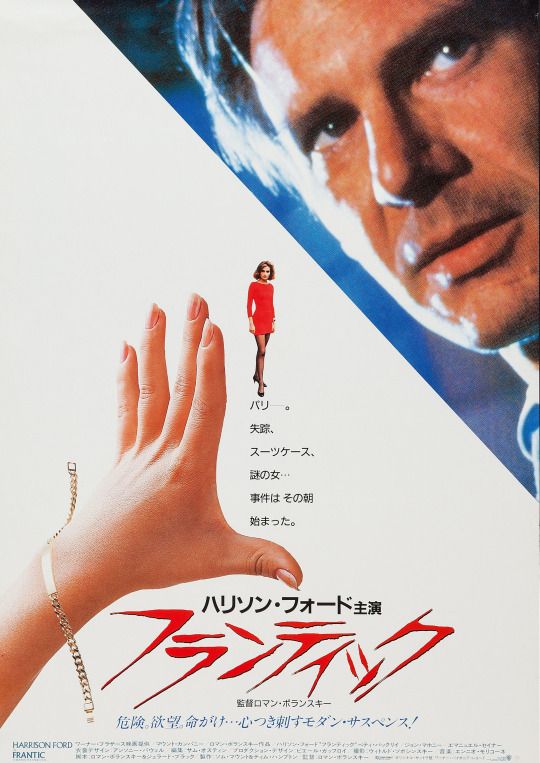
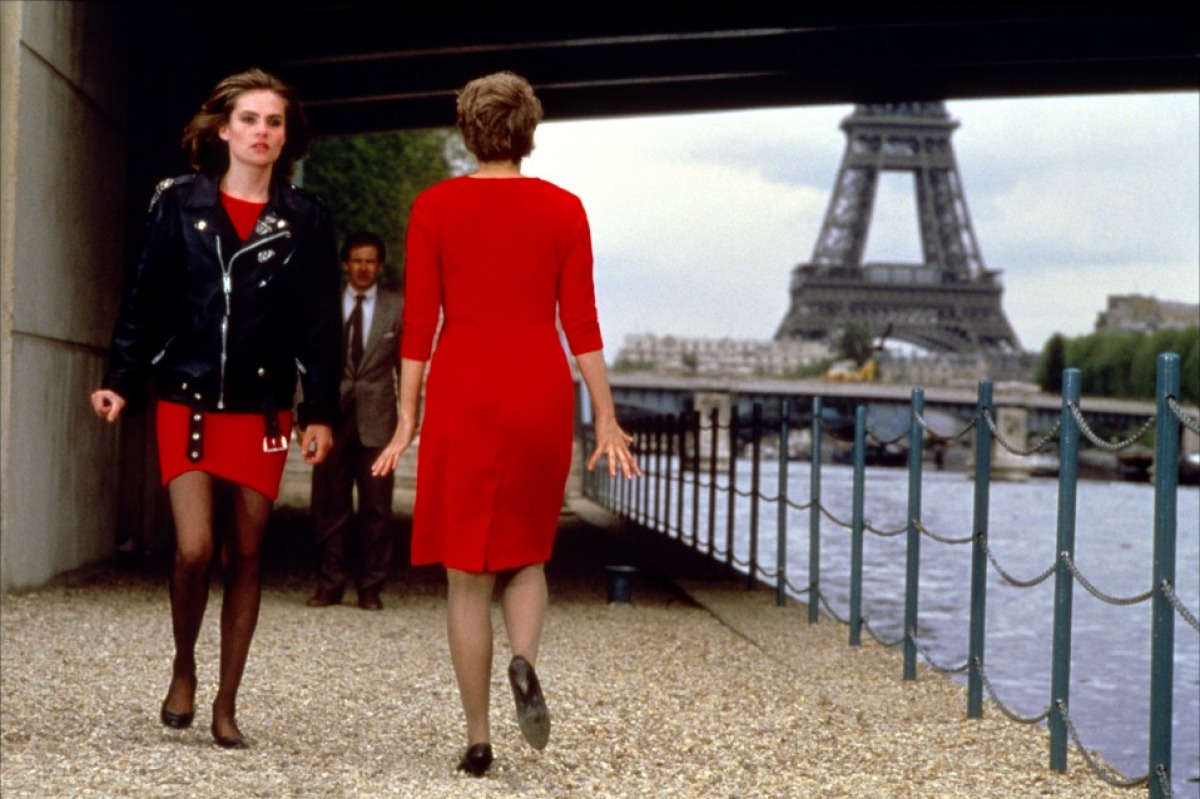
Roman Polanski’s first thriller after Chinatown — set in Paris, and cowritten with Polanski’s usual collaborator, Gerard Brach — describes the puzzling adventures of Dr. Richard Walker (Harrison Ford) after his wife Sondra (Betty Buckley) disappears from their hotel room. It opens promisingly, with a fine sense of the disorientation of a monolingual tourist abroad and in trouble. But instead of things building from there, the energy gradually dissipates, and by the time the mystery is solved, it’s difficult to care very much. Polanski seems to have something in mind about American innocence and international power (the Statue of Liberty is used as a significant icon), but his usual surrealism is almost completely absent, and most of the visual motifs — the collection of garbage in the morning, the matching red dresses of Sondra and Walker’s loyal sidekick Michele (Emmanuelle Seigner) at the climax — register mainly as empty signifiers (1988). 120 min. (JR)
This is excerpted from my “Paris-London Journal” in the November-December 1974 Film Comment, written in August when I was starting work at the British Film Institute after living for five years in Paris.
I can’t recall now whether it was this review or my inclusion of Cockfighter on my ten-best list in Sight and Sound — or could it have been both? — that led eventually to Charles Willeford sending me a note of thanks, along with his a copy of his self-published book A Guide for the Undehemorrhoided, a short account of his own hemorrhoid operation. Not knowing Willeford’s work at the time — today I’m a big fan, especially of his four late Hoke Mosley novels — I’m sorry to say that I didn’t keep this book, which undoubtedly has become a very scarce collector’s item.
But first, before reprinting the Film Comment review, here is my capsule review of Cockfighter for the Chicago Reader, written almost three decades later and published in mid-August 2003: “Except for Iguana, which is almost completely unknown, this wry 1974 feature is probably the most underrated work by Monte Hellman (Two-Lane Blacktop).Read more
From the Chicago Reader (January 3, 1992). A 2020 postscript to my remarks on For the Boys has been added. — J.R.
Looking at the big-time U.S. studio releases of 1991 — most of which enjoyed free supplements to their hefty advertising budgets from every branch of the media — we’d have to conclude that this was a year without enduring masterpieces. The best are intelligent entertainments, most of which faded quickly from memory. If I had to choose the ten best from this group, they’d be (in alphabetical order): Barton Fink, Beauty and the Beast, Bugsy, Defending Your Life, The Fisher King, For the Boys, Jungle Fever, Once Around, Rambling Rose, and Thelma and Louise. Equally good or even better are some new American pictures that didn’t get anything like the same national attention: Chameleon Street, City of Hope, The Deadman (only 37 minutes long, but better than most features I saw), Hangin’ With the Homeboys, A Little Stiff, My Own Private Idaho, Poison, Reunion, and Trust. The best American documentaries that come to mind are Butoh: Body at the Edge of Crisis, Inside Life Outside, Lines of Fire, Paris Is Burning, Private Conversations on the Set of Death of a Salesman, Sex, Drugs, Rock & Roll, and the videos of Sadie Benning. Read more
Name: Jonathan Rosenbaum Job title: film critic, teacher Country: USA
Your votes
Greed Year: 1924 Director: Erich von Stroheim
M Year: 1931 Director: Fritz Lang
Spring in a Small Town Year: 1948 Director: Fei Mu Comment: The most neglected great film on my list, at least in the Western world.
Ordet Year: 1955 Director: Carl Dreyer
A Man Escaped Year: 1956 Director: Robert Bresson
Ivan the Terrible, Part II Year: 1958 Director: Sergei Eisenstein
Comment: Like Welles’ equally worthy Touch of Evil, a monument to hyperbolic excess.
PlayTime Year: 1967 Director: Jacques Tati
Vagabond Year:1985 Director: Agnès Varda
Comment: Like Resnais’ Providence and Françoise Romand’s Mix-up, a masterpiece of magisterial juxtapositions.
Satantango Year: 1994 Director(s): Bela Tarr
A.I. Artificial Intelligence Year: 2000 Director: Steven Spielberg
Comment: Not only Spielberg’s best picture but also Kubrick’s; a collaboration between a dead director and a friend who survived him seems appropriate for a meditation on the differences between human and nonhuman, living and dead that comprises a searing allegory about cinema itself.
Further remarks: I’ve omitted Chaplin (City Lights, Monsieur Verdoux) Hitchcock (Rear Window, North by Northwest), and Welles (Touch of Evil, Chimes at Midnight) as “goes without saying”. Read more
A Consumers/Producers Guide-in-Progress to Four Recent Avant-Garde Films
The role of a work of art is to plunge people into horror. If the artist has a role, it is to confront people — and himself first of all — with this horror, this feeling that one has when one learns about the death of someone one has loved.
— Jacques Rivette interview, circa 1967
For interpersonal communication, [the modernist text] substitutes the idea of collective production; writer and reader are indifferently critics of the text and it is through their collaboration that meanings are collectively produced . . .
The text then becomes the location of thought, rather than the mind. The mind is the factory where thought is at work, rather than the transport system which conveys the finished product. Hence the danger of the myths of clarity and transparency and of the receptive mind; they present thought as prepackaged, available, given, from the point of view of the consumer . . .Within a modernist text, however, all work is work in progress, the circle is never closed.Read more
I am reprinting the entirety of my first and most ambitious book (Moving Places: A Life at the Movies, New York: Harper & Row, 1980)in its second edition (Berkeley: University of California Press, 1995) on this site ineleven consecutive installments. This is the fifth.
Note: The book can be purchased on Amazon here, and accessed online in its entirety here.— J.R.
2— On Moonlight Bay as Time Machine
A small Midwestern town in 1916, possibly in June. Behind a succession of pink and green credits that they will never see, acknowledge, or understand—a list of names and functions that fasten themselves to a Warner Brothers release, On Moonlight Bay , dated 1951—a family is seated in the dark parlor of a Booth Tarkington house, watching slides of themselves on a screen.
Taste it if you can: 1916. Tarkington’s Penrod and Sam, a sequel to his very popular Penrod, has either just appeared in hardcover or is about to. Germany has declared war on Portugal, Russia has invaded Persia, 8,636 English and German sailors have perished in a naval battle off Jutland, and Gordon MacRae—whom we hear with Doris Day singing the title tune over the credits, but haven’t yet seen—has just completed his junior year at the University of Indiana, and is deeply shaken by all this strife in Europe. Read more