The Return

From the Chicago Reader (April 30, 2004). It’s great to catch up with Andrey Zvyagintsev again a decade later, thanks to his wrenching and politically caustic Leviathan. — J.R.

thereturn

Beautifully structured and emotionally wrenching, this 2003 debut feature immediately establishes Russian filmmaker Andrey Zvyagintsev as a master. It charts a father’s uneasy return to his wife and two adolescent sons after a long and unexplained absence, a reunion capped by his ill-fated fishing trip with the two boys. A former actor, Zvyagintsev elicits first-rate performances from his male leads, but what registers most is the sharpness and intensity of his vision of nature and childhood experience. Nominated for an Oscar and winner of the Golden Lion at the Venice film festival, this has been described by the director as “a mythological look [at] human life,” as accurate a description as any I’ve encountered. In Russian with subtitles. 106 min. Music Box.

TheReturn Read more

Jeanne Dielman, 23 Quai Du Commerce, 1080 Bruxelles

jeanne-dielman

Chantal Akerman’s greatest film — made in 1975 and running 198 minutes — is one of those lucid puzzlers that may drive you up the wall but will keep you thinking for days or weeks. Delphine Seyrig, in one of her greatest performances, plays Jeanne Dielman, a Belgian woman obsessed with performing daily rounds of housework and other routines (including occasional prostitution) in the flat she occupies with her teenage son. The film follows three days in Dielman’s regulated life, and Akerman’s intense concentration on her daily activities — monumentalized by Babette Mangolte’s superb cinematography and mainly frontal camera setups — eventually sensitizes us to the small ways in which her system is breaking down. By placing so much emphasis on aspects of life and work that other films routinely omit, mystify, or skirt over, Akerman forges a major statement, not only in a feminist context but also in a way that tells us something about the lives we all live. In French with subtitles. (JR) Read more

Eye Candy [THE VERTICAL RAY OF THE SUN]

From the Chicago Reader (September 14, 2001). — J.R.

theverticalrayofthesunpic

The Vertical Ray of the Sun ***

Directed and written by Tran Anh Hung

With Tran Nu Yen-khe, Nguyen Nhu Quynh, Le Khanh, Ngo Quang Hai, Tran Manh Cuong, and Chu Ngoc Hung.

Last spring I was in Austin, Texas, on a film-festival panel about film festivals with the editor of a film magazine who’s also the author of a book on film festivals. “I don’t like foreign films or academic films,” he told me, a declaration that stumped me at first because it raised two vexing questions: (1) Why link “foreign films” and “academic films” as if the two had something intrinsic in common? (2) Had he seen at least one film from every foreign country in the world that produced movies and made his judgment on that basis?

After pondering other things he said, I came up with what I believe were the correct answers to both questions. (1) Foreign films and academic films were linked for him because both obliged him to think. (2) Of course not; what he meant by “foreign” was simply “not American.” Put these premises together and it’s clear he was saying he didn’t like movies that made him think, which is what non-American movies did — apparently even Bavarian porn, Italian splatter fests, and Crouching Tiger, Hidden Dragon. Read more

The Lady Without Camelias

Perhaps the most unjustly neglected of Michelangelo Antonioni’s early features, La Signora Senza Camelie (1953) is a caustic Cinderella story about a Milanese shop clerk (Lucia Bose) who briefly becomes a glamorous movie star. One of the cruelest and most accurate portraits of studio filmmaking and the Italian movie world that we have, it’s informed by a visually and emotionally complex mise en scene that juggles background with foreground elements in a choreographic style recalling Welles at times. Though it’s only Antonioni’s third feature, and its episodic structure necessitates a somewhat awkward expositional method, this is mature filmmaking that leaves an indelible aftertaste. In Italian with subtitles. 105 min. (JR) Read more

A Moment of Innocence

From the Chicago Reader (April 4, 1997). — J.R.

Mohsen Makhmalbaf A Moment of Innocence DVD Review PDVD_011

This is one of the best features (1996) of the prolific and unpredictable Iranian filmmaker Mohsen Makhmalbaf, a dozen of whose films are showing at the Film Center this month. It’s also one of his most seminal and accessible — a reconstruction of a pivotal incident during his teens. At the time the shah was in power, and Makhmalbaf was a fundamentalist activist. He stabbed a policeman, was shot and arrested, and spent several years in prison. Two decades later, his politics quite different, Makhmalbaf was auditioning people to appear in his film Salaam Cinema, and among them was the policeman, now unemployed. The two of them wound up collaborating on this film, which tries to reconcile their separate versions of what happened with separate cameras. No doubt it was prompted in part by Abbas Kiarostami’s remarkable Close-up (1990), another eclectic documentary that reconstructs past events — a hoax that involved Makhmalbaf himself — with two cameras (showing at the Film Center on April 24). But this is no mere imitation; it’s a fascinating humanist experiment and investigation in its own right, full of warmth and humor as well as mystery. The original Persian title, incidentally, translates as “Bread and Flower.” Read more

Dogma

From the Chicago Reader (November 1, 1999). — J.R.

dogma

Not to be confused with the Danish publicity stunt Dogma 95, this all-American publicity stunt, a comedy about Catholicism by New Jersey yahoo Kevin Smith (Clerks, Chasing Amy), can be recommended to 11-year-olds of all denominations. Older folks who want to kid themselves that they’re engaging important issues by provoking intolerant believers will undoubtedly get plenty of kicks too. But I couldn’t care less whether Smith’s metaphysical conceits about the war between Good and Evil are those of a devout believer or an atheist. The bottom line is that they’re puerile and that people repeatedly saying things like What the fuck is this shit? doesn’t make Smith either a satirist or a disciple of Preston Sturges. And his clodhopper handling of actors Linda Fiorentino, Alan Rickman, Matt Damon, Ben Affleck, Salma Hayek, and Jason Mewes — only Chris Rock comes out more or less unscathed — makes this 125-minute movie seem interminable. (JR) Read more

Leda

From the Chicago Reader (August 1, 1999). — J.R.

Leda

a-double-tour

Claude Chabrol’s first color feature (1959), also known as À double tour and Web of Passion, adapts a Stanley Ellin thriller in which a bourgeois family’s oedipal conflicts lead to murder. The beautiful color cinematography of Aix-en-Provence is by Henri Decae, and the film is plotted with a mise en scène that suggests Alfred Hitchcock. The lively if uneven cast includes Jean-Paul Belmondo, the creepy André Jocelyn, Madeleine Robinson, Bernadette Lafont, and nouvelle vague axiom Laszlo Szabo. It’s not a total success, but it was one of the first pictures to translate the French New Wave’s genre interests into mainstream terms, and it’s full of sexy and irreverent (as well as brightly irrelevant) details. (JR)

Leda-Lafont1

leda-lafont2 Read more

Hamlet

From the Chicago Reader (August 17, 2001). — J.R.

  1. Hamlet

Critic Robin Wood recently cited this stunning 1964 Russian version of Shakespeare’s tragedy as the only one that “could be claimed as having the stature, as film, that the play has as theatre,” and it’s easy to see what he means. Shot in black-and-white ‘Scope, in dank interiors and seaside exteriors every bit as atmospheric as those in Orson Welles’s Othello, this runs 140 minutes but feels more stripped-down for brisk action than such vanity productions as Laurence Olivier’s and Kenneth Branagh’s, and consequently may be more compelling as narrative. Director Grigori Kozintsev (The New Babylon, The Youth of Maxim) adapted a translation by Boris Pasternak, and Dmitri Shostakovich contributed the score. Playing the title role, Innokenti Smoktunovsky isn’t as likable as some other Hamlets, but his struggles seem more evenly matched with those of the other characters. Facets Multimedia Center, 1517 W. Fullerton, Thursday, August 23, 6:30, 773-281-4114.

Hamlet Read more

All The Vermeers In New York

From the Chicago Reader (April 1, 1992). This masterpiece about  money, love,and art looks even better today, over three decades after it was made.  Catch it now on MUBI before it leaves! — J.R.

ATV

Jon Jost’s ravishing independent feature about art, money, and loneliness in Manhattan — beautifully shot in ‘Scope by Jost himself and with a wonderful, Gil Evans-ish big-band jazz score by Jon A. English — can be viewed as a kind of companion piece to Jost’s earlier Rembrandt Laughing (1988), which dealt with several friends and acquaintances over several months in San Francisco. The main characters here are three young women who share a spacious apartment — Emmanuelle Chaulet (from Rohmer’s Boyfriends and Girlfriends), Katherine Bean, and Grace Phillips — and a Wall Street broker (Stephen Lack) who loves the Vermeers in the Metropolitan Museum. As in Jost’s other features, the narrative is elliptically constructed — the film seems more concerned with evoking a place, time, and milieu than with a dramatically shaped story — but there’s still a lot of lyrical passion and drama in the sounds, images, and characters themselves (1990). (JR)

ATV2 Read more

Hoodlum Soldier

From the Chicago Reader. I’ve lost track of when this was published, but I know it wasn’t in October 1985, which is listed on the Reader’s web site — over two years before I joined the staff there.  I would guess this probably appeared around fourteen years later. — J.R.

hoodlum-soldier

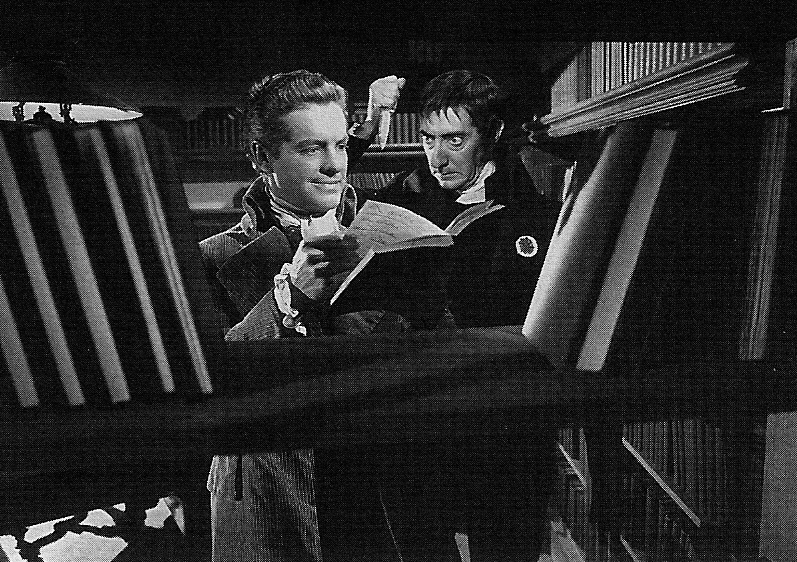
I’ve seen about a dozen of the 57 features directed by the fascinating and criminally neglected Yasuzo Masumura (1924-1986), and while no two are alike in style, many are socially subversive and most skirt the edges of exploitation filmmaking. This 1965 black-and-white ‘Scope comedy is also known as Yakuza Soldier; Shintaro Katsu, star of the popular Zatoichi films, plays an amiable, earthy yakuza thug drafted into Japan’s war with Manchuria prior to World War II, during which his main companion, the story’s narrator, is an intellectual with a similarly jaundiced view of military discipline. Made a year before the even more remarkable violent antiwar film Red Angel, this film features a lot of slapping and bone crunching, all of it administered by Japanese against other Japanese; significantly, the violence involving Manchurians is ignored. The irreverent ambience at times suggests Mister Roberts, with the pertinent difference that desertion is regarded as a sane and reasonable response to a soldier’s life. Read more

The Adventures Of Baron Munchausen

From the August 1, 1989 Chicago Reader. — J.R.

Adventures_of_Baron_Munchau

Terry Gilliam’s third fantasy feature (1989) may not achieve all it reaches for, but it goes beyond Time Bandits and Brazil in its play with space and time, and as a children’s picture offers a fresh and exciting alternative to the Disney stranglehold on the market. The famous baron (John Neville) sets off with a little girl stowaway (Sarah Polley) on an epic journey to save a city in distress; among the other actors are Oliver Reed, Eric Idle, Jonathan Pryce, Valentina Cortese, and Robin Williams in a wonderful uncredited cameo as the Moon King. PG, 126 min. (JR)

adventures_of_baron_munchausen2 Read more

Days Of Being Wild

From the July 1, 1991 Chicago Reader. — J.R.

Wong Kar-wai’s idiosyncratic style first became apparent in this gorgeously moody second feature (1991), whose romantic vision of 1960 Hong Kong as a network of unfulfilled longings would later echo through In the Mood for Love. Leslie Cheung, Hong Kong’s answer to James Dean (in fact the movie appropriates its Cantonese title of Rebel Without a Cause), plays a heartless ladies’ man, raised by a prostitute, who eventually leaves for the Philippines in search of his real mother. Maggie Cheung is a waitress whom he woos with his philosophical ruminations on a wall clock, and Andy Lau is a lonely cop who yearns for her. This was conceived as the first of two movies, and its puzzling coda was intended as a teaser for the second part; the box-office failure of Days of Being Wild precluded a sequel and delayed its stateside release for years, though its lack of dramatic closure now seems almost appropriate. As critic Tony Rayns has noted, it’s the first film to rhyme nostalgia for a half-imaginary past with future shock. In Cantonese with subtitles. 94 min. (JR)

Read more

The Eddy Duchin Story

From the Chicago Reader, August 1, 1989. — J.R.

theeddyduchinstory0

Tyrone Power and Kim Novak star in this biopic and musical melodrama, directed by George Sidney in 1956, about the life and career of the celebrated pianist and bandleader during the 30s and 40s. It’s not a movie that gets revived often, but it’s certainly one of the best Hollywood weepies of the 50s, comparable to the best of Douglas Sirk in both its imaginative mise en scene and its strong feeling. Carmen Cavallaro dubbed all the keyboard solos, and Victoria Shaw and James Whitmore are the main secondary players. (JR)

eddieduchinstory Read more

Henry: Portrait Of A Serial Killer

From the Chicago Reader (April 1, 1989). — J.R.

henry_portrait

This gory slasher movie was made in Chicago in 1986 but held in limbo until 1989 because of its disturbing content. Very capably acted (by Michael Rooker, Tracy Arnold, and Tom Towles), written (by Richard Fire and John McNaughton), and directed (by McNaughton), this, like every other slasher movie, has its roots in Psycho. The tensions developed here are more behavioral and psychological than those essayed by Hitchcock, though the insights into the personality of a compulsive killer are at best partial and perfunctory. What mainly registers is the nihilism of the warped ex-con (Rooker) and his dim-witted friend and accomplice (Towles), who joins him in a string of senseless murders, which the film makes chillingly believable. Certainly not for everyone, but if slasher movies are your cup of tea this is a lot better than most, and the use of Chicago locations is especially effective. 90 min. (JR) Read more

Roger Corman’s Frankenstein Unbound

From the Chicago Reader (March 22, 1991). — J.R.
FrankensteinUnbound

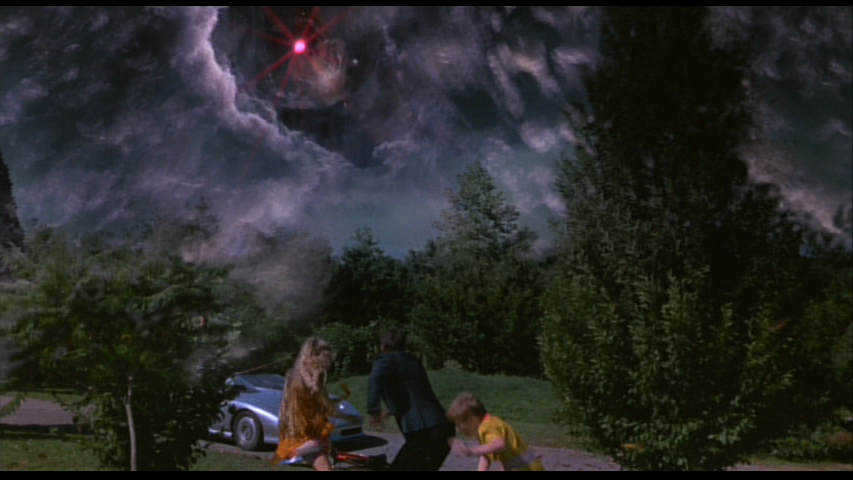
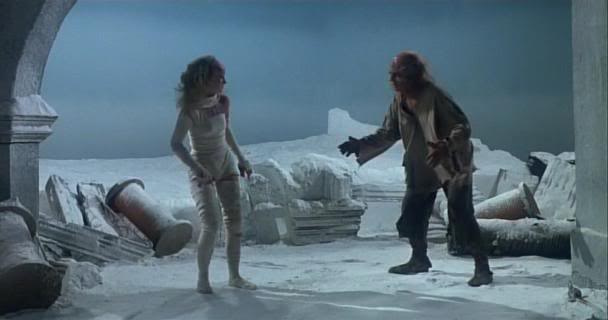
One of the most underrated films of 1990, representing Corman’s directorial comeback after 19 years, adapts Brian Aldiss’s intellectually ambitious novel about a 21st-century scientist (John Hurt) who finds himself in Geneva in 1816, where he meets Mary Shelley (Bridget Fonda) and her famous fictional creations, Frankenstein and his monster. Far from a total success (and apparently hampered by some studio recutting), this metaphysical reflection on technology with SF and monster-movie trimmings is packed with wit, originality, and eccentricity. If you missed it the first time around — which wasn’t hard to do, given its perfunctory promotion and distribution — you should definitely catch it. With Raul Julia and Michael Hutchence. (Music Box, Monday, March 25)
FrankensteinUnbound Read more