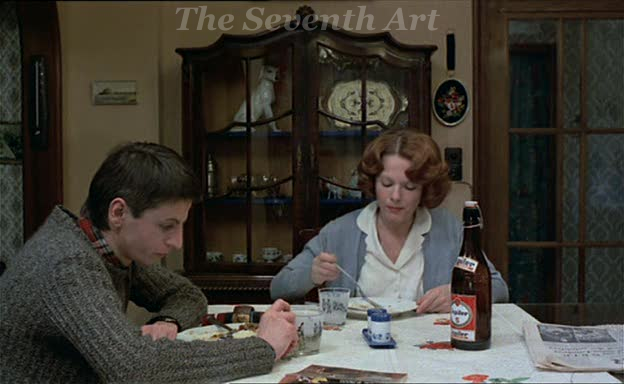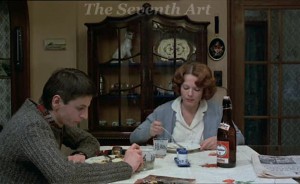
Chantal Akerman’s greatest film — made in 1975 and running 198 minutes — is one of those lucid puzzlers that may drive you up the wall but will keep you thinking for days or weeks. Delphine Seyrig, in one of her greatest performances, plays Jeanne Dielman, a Belgian woman obsessed with performing daily rounds of housework and other routines (including occasional prostitution) in the flat she occupies with her teenage son. The film follows three days in Dielman’s regulated life, and Akerman’s intense concentration on her daily activities — monumentalized by Babette Mangolte’s superb cinematography and mainly frontal camera setups — eventually sensitizes us to the small ways in which her system is breaking down. By placing so much emphasis on aspects of life and work that other films routinely omit, mystify, or skirt over, Akerman forges a major statement, not only in a feminist context but also in a way that tells us something about the lives we all live. In French with subtitles. (JR) Read more
From the Chicago Reader (September 14, 2001). — J.R.
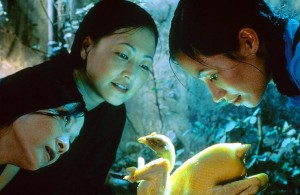
The Vertical Ray of the Sun ***
Directed and written by Tran Anh Hung
With Tran Nu Yen-khe, Nguyen Nhu Quynh, Le Khanh, Ngo Quang Hai, Tran Manh Cuong, and Chu Ngoc Hung.
Last spring I was in Austin, Texas, on a film-festival panel about film festivals with the editor of a film magazine who’s also the author of a book on film festivals. “I don’t like foreign films or academic films,” he told me, a declaration that stumped me at first because it raised two vexing questions: (1) Why link “foreign films” and “academic films” as if the two had something intrinsic in common? (2) Had he seen at least one film from every foreign country in the world that produced movies and made his judgment on that basis?
After pondering other things he said, I came up with what I believe were the correct answers to both questions. (1) Foreign films and academic films were linked for him because both obliged him to think. (2) Of course not; what he meant by “foreign” was simply “not American.” Put these premises together and it’s clear he was saying he didn’t like movies that made him think, which is what non-American movies did — apparently even Bavarian porn, Italian splatter fests, and Crouching Tiger, Hidden Dragon. Read more
Perhaps the most unjustly neglected of Michelangelo Antonioni’s early features, La Signora Senza Camelie (1953) is a caustic Cinderella story about a Milanese shop clerk (Lucia Bose) who briefly becomes a glamorous movie star. One of the cruelest and most accurate portraits of studio filmmaking and the Italian movie world that we have, it’s informed by a visually and emotionally complex mise en scene that juggles background with foreground elements in a choreographic style recalling Welles at times. Though it’s only Antonioni’s third feature, and its episodic structure necessitates a somewhat awkward expositional method, this is mature filmmaking that leaves an indelible aftertaste. In Italian with subtitles. 105 min. (JR) Read more
From the Chicago Reader (April 4, 1997). — J.R.
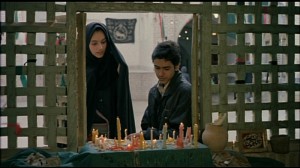
This is one of the best features (1996) of the prolific and unpredictable Iranian filmmaker Mohsen Makhmalbaf, a dozen of whose films are showing at the Film Center this month. It’s also one of his most seminal and accessible — a reconstruction of a pivotal incident during his teens. At the time the shah was in power, and Makhmalbaf was a fundamentalist activist. He stabbed a policeman, was shot and arrested, and spent several years in prison. Two decades later, his politics quite different, Makhmalbaf was auditioning people to appear in his film Salaam Cinema, and among them was the policeman, now unemployed. The two of them wound up collaborating on this film, which tries to reconcile their separate versions of what happened with separate cameras. No doubt it was prompted in part by Abbas Kiarostami’s remarkable Close-up (1990), another eclectic documentary that reconstructs past events — a hoax that involved Makhmalbaf himself — with two cameras (showing at the Film Center on April 24). But this is no mere imitation; it’s a fascinating humanist experiment and investigation in its own right, full of warmth and humor as well as mystery. The original Persian title, incidentally, translates as “Bread and Flower.” Read more
From the Chicago Reader (November 1, 1999). — J.R.
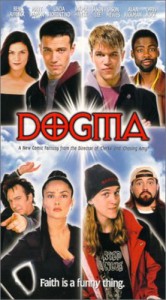
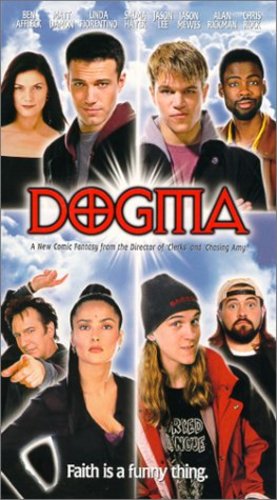
Not to be confused with the Danish publicity stunt Dogma 95, this all-American publicity stunt, a comedy about Catholicism by New Jersey yahoo Kevin Smith (Clerks, Chasing Amy), can be recommended to 11-year-olds of all denominations. Older folks who want to kid themselves that they’re engaging important issues by provoking intolerant believers will undoubtedly get plenty of kicks too. But I couldn’t care less whether Smith’s metaphysical conceits about the war between Good and Evil are those of a devout believer or an atheist. The bottom line is that they’re puerile and that people repeatedly saying things like What the fuck is this shit? doesn’t make Smith either a satirist or a disciple of Preston Sturges. And his clodhopper handling of actors Linda Fiorentino, Alan Rickman, Matt Damon, Ben Affleck, Salma Hayek, and Jason Mewes — only Chris Rock comes out more or less unscathed — makes this 125-minute movie seem interminable. (JR) Read more
From the Chicago Reader (August 1, 1999). — J.R.
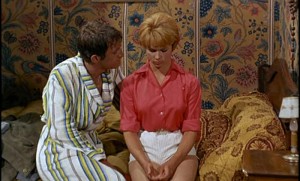
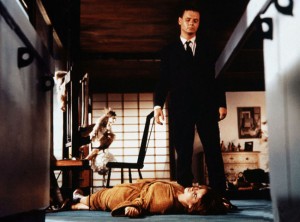
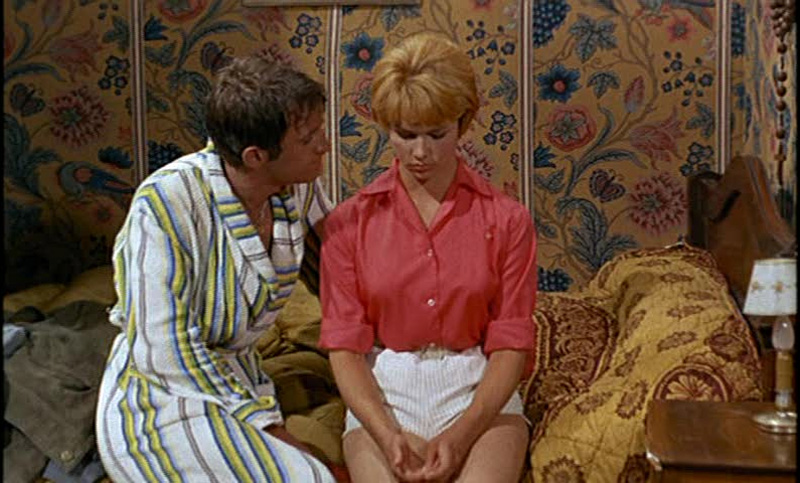
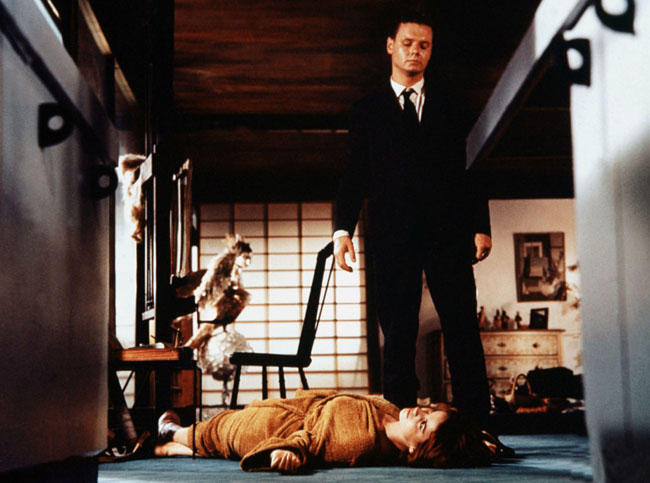
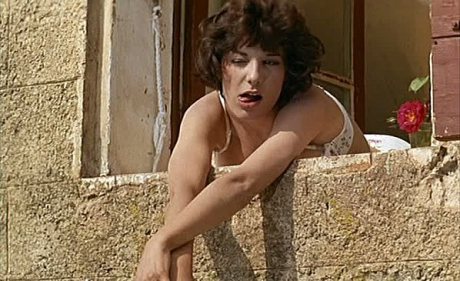
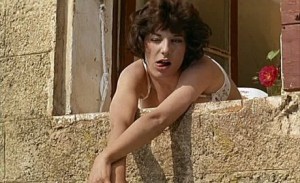
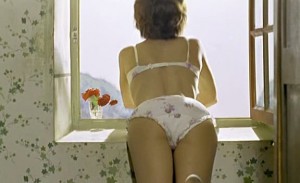
Claude Chabrol’s first color feature (1959), also known as À double tour and Web of Passion, adapts a Stanley Ellin thriller in which a bourgeois family’s oedipal conflicts lead to murder. The beautiful color cinematography of Aix-en-Provence is by Henri Decae, and the film is plotted with a mise en scène that suggests Alfred Hitchcock. The lively if uneven cast includes Jean-Paul Belmondo, the creepy André Jocelyn, Madeleine Robinson, Bernadette Lafont, and nouvelle vague axiom Laszlo Szabo. It’s not a total success, but it was one of the first pictures to translate the French New Wave’s genre interests into mainstream terms, and it’s full of sexy and irreverent (as well as brightly irrelevant) details. (JR)
 Read more