My 25 Favorite Films of the 21st Century (so far, four years ago)

Not so long ago, A.O. Scott and Manohla Dargis decided to name their 25 favorite films of this millennium so far. More recently, J. Hoberman decided to play the same game.

I’ve decided to play as well. My only rule in this game, not followed by Hoberman, was to restrict my favorite filmmakers on the list to only one film each –- not always easy, and sometimes downright agonizing. (How, for instance, could I have left out Costa’s Where Lies Your Hidden Smile?, Jarmusch’s Coffee and Cigarettes, Jia’s Platform and Still Life, Linklater’s Waking Life?)

I haven’t provided links here to my writing about these films, but using this site’s search engine should turn up texts about practically all of them. (The only exception that comes to mind is The Clock.)


The order below is alphabetical.


A.I. Artificial Intelligence (Spielberg/Kubrick)

Bernie (Linklater)

Certified Copy (Kiarostami)

The Circle (Panahi)

The Clock (Marclay)

*Corpus Callosum (Snow)

The Day I Became a Woman (Meshkini)

Down There (Akerman)

Down with Love (Reed)

Farewell to Language (Godard)

Horse Money (Costa)

Howl’s Moving Castle (Miyazaki)

Inland Empire (Lynch)

Los Angeles Plays Itself (Andersen)

The Mad Songs of Fernanda Hussein (Gianvito)

Operai, Contadini (Straub-Huillet)

Paterson (Jarmusch)

Pistol Opera (Suzuki)

RR (Benning)

The Silence Before Bach (Portabella)

Son of Saul (Nemes)

The Trap (Curtis)

The Turin Horse (Tarr)

The World (Jia)

You Ain’t Seen Nothin’ Yet (Resnais) [6/21/17] Read more

Notes on a Conversation with Welles (1972)

The following notes appeared in the same issue of Film Comment (November–December 1972) as “The Voice and the Eye,” at the end of my regular column, titled “Paris Journal,” which typically dealt with several different topics. Though these notes largely replicate things said elsewhere by Welles, two details for me stand out as significant additions to the record: that Welles regarded his Don Quixote as nearly completed in 1972 -— which corresponds fairly closely to the conclusions of “Don Quixote: Orson Welles’s Secret” by Audrey Stainton (who worked “on and off” as Welles’s secretary in the late 1950s) in the Autumn 1988 Sight and Sound — and that he remained convinced that the deleted footage of Ambersons was destroyed by RKO (a belief I regretfully share, though legends continue to circulate about another copy of the longer cut that may survive somewhere in Brazil).

2014 footnote: The information that The Deep was “completed” by 1972 seems contradicted by the apparent fact that Jeanne Moreau never dubbed her part. -– J.R.

In the course of a conversation with Orson Welles about his Heart of  Darkness script, which is detailed elsewhere in this issue, I asked Welles about his more recent projects. Read more

Orson Welles’ TOO MUCH JOHNSON is downloadable now, for free!

http://www.filmpreservation.org/preserved-films/screening-room/too-much-johnson-work-print

My only (minor) quarrel with Scott Simmon’s excellent accompanying essay is his speculation about the reason or reasons why the film wasn’t screened at the Connecticut stage preview. According to the late Richard Wilson, who worked on the editing of the film, the summer theater had an inadequate throw for film projection. (See This is Orson Welles, p. 344 — which also includes the erroneous information that the only copy of the work print was destroyed in a fire at Welles’ Madrid villa in 1970). [8/21/14]

TooMuchJohnson

too-much-johnson-1938

tmj_09 Read more

Global Discoveries on DVD: Niche Market Refugees (Spring 2016)

My column for the Spring 2016 issue of Cinema Scope. — J.R.

Let me start with a correction and adjustment to the final entry in my last column, furnished by Chris Fujiwara and relating to the appearance of Joseph L. Mankiewicz’s 131-minute The Honey Pot (1967) on a Kino Lober Blu-ray:

the-honey-pot

“When I did my stint at the Frieda Grafe favorite films series at Arsenal in Berlin two or three years ago, they showed a good 35mm print of The Honey Pot that ran about 150 minutes. It had a BBFC [British Board of Film Censors] card on it and it came from Park Circus. (By the way I took detailed notes of the differences from the DVD version, which I had recently watched several times.)….The cutting that was done to the film to get it down to 131 minutes was quite extensive and elaborate. In a few cases whole scenes were cut out (including scenes with the three ex-lovers, and a scene showing Cliff Robertson at work as a male escort). But a good deal of the shortening was done by cutting out individual shots or parts of shots from scenes that are otherwise kept in. Not only the rhythm but also the tone and the thematic content of these scenes are changed, sometimes drastically….It’s Read more

Working-Class America in American Cinema of the Depression and New Deal

Written in May 2014 for De Lumière a Kaurismäki: La clase obrera en el cine, coedited by Carlos F. Heredero and Joxean Fernández and published by Colección Nosferatu in 2014. — J.R.

blondecrazy

Writing about the reception of Brecht’s Threepenny Opera in pre-Hitler [1928] Germany, Hannah Arendt noted (in The Origins of Totalitarianism) that “The play presented gangsters as respectable businessmen and respectable businessmen as gangsters.  The irony was somewhat lost when respectable businessmen in the audience considered this a deep insight into the ways of the world and when the mob welcomed it as an artistic sanction of gangsterism. The theme song in the play, “Erst kommt das Fressen, dann kommt die Moral  [First comes food, then comes morals],” was greeted with frantic applause by exactly everybody, though for different reasons. The mob applauded because it took the statement literally; the bourgeoisie applauded because it had been fooled by its own hypocrisy for so long that it had grown tired of the tension and found deep wisdom in the expression of the banality by which it lived; the elite applauded because the unveiling of hypocrisy was such superior and wonderful fun. The effect of the work was exactly the opposite of what Brecht had sought by it.” Read more

Brightness (Yeleen)

From the Chicago Reader (January 4, 2002). — J.R.

Souleymane Cissé’s extraordinarily beautiful and mesmerizing fantasy is set in the ancient Bambara culture of Mali (formerly French Sudan) long before it was invaded by Morocco in the 16th century. A young man (Issiaka Kane) sets out to discover the mysteries of nature (or komo, the science of the gods) with the help of his mother and uncle, but his jealous and spiteful father contrives to prevent him from deciphering the elements of the Bambara sacred rites and tries to kill him. Apart from creating a dense and exciting universe that should make George Lucas green with envy, Cissé has shot breathtaking images in Fujicolor and has accompanied his story with a spare, hypnotic, percussive score. Conceivably the greatest African film ever made, sublimely mixing the matter-of-fact with the uncanny, this wondrous work won the jury prize at the 1987 Cannes festival, and it provides an ideal introduction to a filmmaker who is, next to Ousmane Sembène, probably Africa’s greatest director. Not to be missed. 105 min. A new 35-millimeter print will be shown. Gene Siskel Film Center, 164 N. State, Friday, January 4, 6:15 and 8:15; Saturday, January 5, 4:15, 6:15, and 8:15; Sunday, January 6, 4:15 and 6:15; and Monday through Thursday, January 7 through 10, 6:15 and 8:15; 312-846-2800. Read more

Films by Michaelangelo Antonioni

The Film Center’s ongoing retrospective of the work of Italy’s greatest living filmmaker, Michelangelo Antonioni, offers two noteworthy programs this Friday night. First is perhaps the most unjustly neglected of Antonioni’s early features, Lady Without Camelias (La signora senza camelie, 1953), a caustic Cinderella story about a Milanese shop clerk (Lucia Bose) who briefly becomes a glamorous movie star. One of the cruelest and most accurate portraits of studio moviemaking and the Italian movie world that we have, it’s informed by a visually and emotionally complex mise en scene that juggles background with foreground elements in a choreographic style recalling Welles at times. Though it’s only Antonioni’s third feature, and it’s episodic structure necessitates a somewhat awkward expositional method, this is mature filmmaking that leaves an indelible aftertaste.

Then comes a program of shorts made between 1947 and 1953, mainly “apprentice” works, though no less impressive and commanding for all that; the only conventional and fairly forgettable one is the last in the program, The Villa of Monsters (1950)–to be shown, unlike the others, only with French and German subtitles. Perhaps the most significant stylistic trait to be found in most of the work here is the pan suddenly linking foreground with background, the animate with the inanimate. Read more

Best Seller

From the Chicago Reader (September 25, 1987). — J.R.

Image result for Best Seller 1987

While it may not add up to anything very profound, this paranoid thriller is put together with so much craft and economy that a significant part of its pleasure is seeing how tightly and cleanly every sequence is hammered into place. Brian Dennehy is Dennis Meechum, an incorruptible police detective who doubles as a successful crime writer; James Woods is Cleve, a hit man who doubles as a corporate executive, and who wants Meechum to write a nonfiction best seller exposing his ruthless and respectable former boss — a philanthropist tycoon who has stealthily slaughtered his way to the top. Dennehy’s square and skeptical cop is an adroit reading of a dull part, but he makes a wonderful straight man for Woods’s fascinatingly creepy yet sensitive killer — modeled in part on Robert Walker’s Bruno Anthony in Strangers on a Train, with a comparable homoerotic tension between the two men. Tautly and cleverly scripted by Larry Cohen, crisply shot by Fred Murphy, and directed by John Flynn without a loose screw in sight, this is first-class action story telling, stripped to its essentials: no shot is held any longer than is needed to make its narrative point, and the streamlining makes for a bumpless ride. Read more

THE MOVIEGOER WHO KNEW TOO MUCH

I’ve already blurbed this book, both on this site for its French edition and on Amazon for its e-book Kindle edition (where you can also read a couple of perceptive five-star reviews from other fans), so let me just reiterate here that if you haven’t yet checked this sucker out, you’ve got a lot of unhealthy fun awaiting you. [4/17/13] Read more

Matewan

From the September 1, 1987 Chicago Reader. Criterion has released this film on a Blu-Ray with many extras.   –J.R.

Matewan-1987-e1326212785830

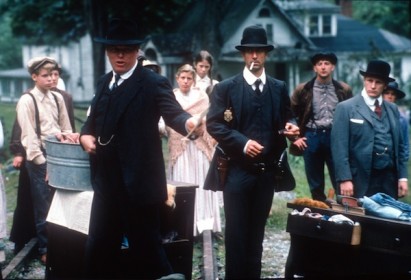
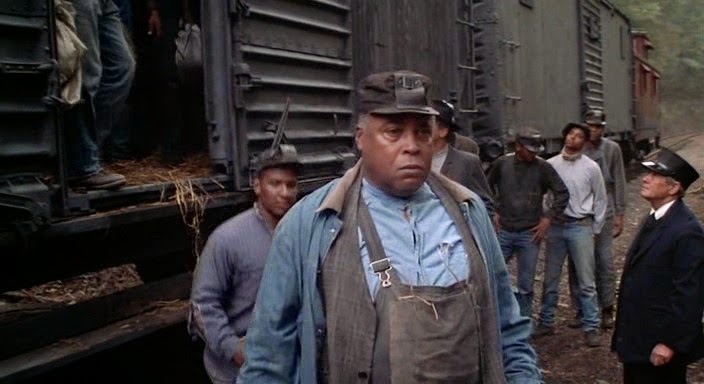
Try as he might, writer John Sayles has never been a natural filmmaker. But this sincere 1987 account of a coal miner strike and subsequent massacre in West Virginia in 1920 is so conscientiously detailed and so keenly felt and imagined — as well as attractively shot, by Haskell Wexler — that he deserves at the very least an A for effort. Simpleminded yet stirring, his depiction of a community of local whites, migrant blacks from the Deep South, and immigrant Italians gradually joining forces against the company bosses and their henchmen, under the leadership of a pacifist organizer, offers a bracing alternative to complacent right-wing as well as liberal claptrap. If Sayles’s bite were as lethal as his bark, he might have given this a harder edge and a stronger conclusion. But the performances are uniformly fine: Chris Cooper, Mary McDonnell, Kevin Tighe (perfect in dress and physiognomy, but strictly one-dimensional as scripted), James Earl Jones, and Sayles; the regional accents are especially well-handled. 133 min. (JR)

matewan-4 Read more

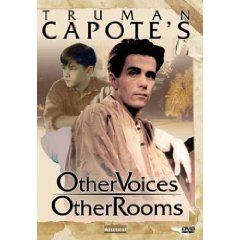
High Infidelity [OTHER VOICES, OTHER ROOMS]

This review of Other Voices, Other Rooms appeared in the February 13, 1998 issue of the Chicago Reader. I’m not positive that the second image I’ve used to represent Sokurov’s Oriental Elegy actually comes from that video and not from another Sokurov work, but it evokes my memory of that video so well that I hope I can be granted poetic license for this. — J.R.

Other Voices, Other Rooms

0 (worthless)

Directed by David Rocksavage

Written by Sara Flanigan and Rocksavage

With Lothaire Bluteau, Anna Thomson, David Speck, April Turner, and Frank Taylor.

By Jonathan Rosenbaum

I cannot tell a lie: my first exposure to two great tragic novels, Nathanael West’s Miss Lonelyhearts (1933) and William Faulkner’s The Sound and the Fury (1929), was the dreadful Hollywood adaptations released during my teens, both of which had happy endings. As silly as these movies were — Vincent J. Donehue’s Lonelyhearts (1958) and Martin Ritt’s The Sound and the Fury (1959) — they piqued my interest in the original novels, and I discovered, among many other things, the blatant inadequacy of the movie versions.

The same thing could happen to a teenager attending the dreadful film adaptation of Truman Capote’s first published novel, Other Voices, Other Rooms (1948) — not a novel of the same caliber as West’s and Faulkner’s, though still a work of real distinction, from his best period — but the odds are slim. Read more

Mia Farrow on Spielberg and Riefenstahl (Chicago Reader blog post, 2007)

Mia Farrow on Spielberg and Riefenstahl

Posted By on 04.10.07 at 07:55 PM

Mia_Farrow

Steven Spielberg Wallpaper @ Go4Celebrity.com

I’m almost two weeks late in hearing about this, but I’m assuming other latecomers will be interested as well in the op-ed piece published by Mia Farrow and her son Ronan in the March 28 issue of the Wall Street Journal. Titled “The Genocide Olympics,” the Farrows’ article attacks Steven Spielberg for his friendliness in agreeing to help stage the Olympics ceremonies in Beijing, thereby implicitly putting some kind of seal of approval on China’s complicity in the Darfur genocide, which the Farrows have recently been observing firsthand. “Is Mr. Spielberg, who in 1994 founded the Shoah Foundation to record the testimony of survivors of the holocaust, aware that China is bankrolling Darfur’s genocide?” they ask. And a bit later: “Does Mr. Spielberg really want to go down in history as the Leni Riefenstahl of the Beijing Games?”

leniriefenstahl-old

Various web sites have been having a field day with this, on the right [2014: this link, at http://www.libertyfilmfestival.com/libertas, has subsequently been removed] as well as the left. The right, of course, is taking particular pleasure in drawing attention to the hypocrisy of a liberal like Spielberg.

Read more

Vietnam: Long Time Coming

A Critic’s Choice from the April 9, 1999 Chicago Reader. Seeing Luigi Zampa’s wonderful To Live in Peace (1947) yesterday, for the first time, at Il Cinema Ritrovato in Bologna, I discovered the same theme attached to an earlier and more “popular” war, expressed largely in comic and even farcical terms. — J.R.

vietnam_ltc

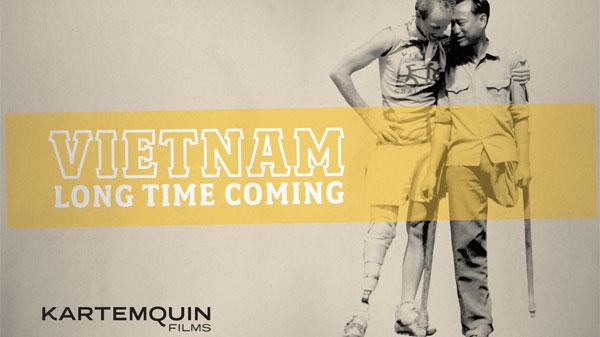
Essential viewing. This documentary about a group of American and Vietnamese war veterans, many of them disabled, bicycling 1,200 miles from Hanoi to Ho Chi Minh City is many things at once — act of witness, account of a multicultural exchange, sports story, journalistic investigation, and mourning for the devastation of war. Ultimately it may be too many things to yield a cumulative effect, yet its scenes of former soldiers struggling with the meaning of the war are the most moving ones on the subject since Winter Soldier (a wartime agitprop film in which Vietnam veterans confessed their “war crimes”). The corporate sponsorship of the bicycle marathon adds many ironic layers, but the emotional encounters it permitted seem more important than anything else I’ve seen about our involvement in Vietnam. Coproduced by Chicago’s Kartemquin Films and directed by Jerry Blumenthal, Gordon Quinn, and Peter Gilbert (Hoop Dreams). Read more

Searching For Bobby Fischer

From the Chicago Reader (August 1, 1993). — J.R.

Searchingfbf

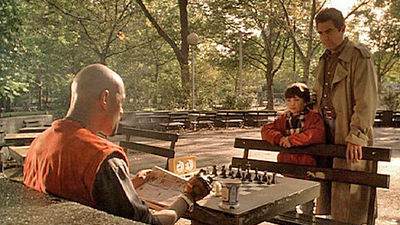
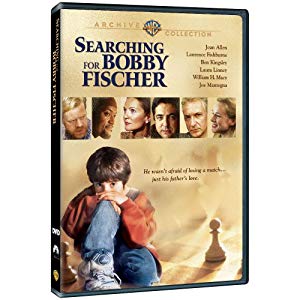
One of the craftiest and most satisfying pieces about gender politics to come along in ages (1993) — all the more crafty because audiences are encouraged to see it simply as a movie about a seven-year-old chess genius, based on Fred Waitzkin’s nonfiction book about his son Josh. Very well played (with Max Pomeranc especially good as Josh), shot (by Conrad Hall), and written and directed (by Steven Zaillian, who also scripted Schindler’s List), it gradually evolves into a kind of parable about how a gifted kid learns to choose his role models and choose what he needs from them. The part played by gender in all this is both subtle and complex, relating not only to chess strategy (e.g., when to bring your queen out) and the personality of Bobby Fischer, but also to the varying attitudes toward competition taken by his parents (Joe Mantegna and Joan Allen) and two teachers (Laurence Fishburne and Ben Kingsley). It makes for a good old-fashioned inspirational story, absorbing and pointed. (JR)

SFBF Read more

The Way We Laughed

From the Chicago Reader (March 1, 2002). — J.R.

The_Way_We_Laughed_

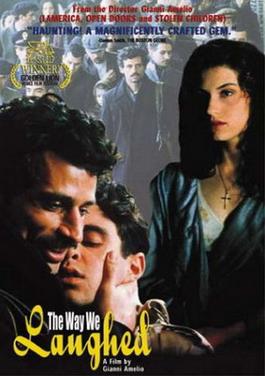
Winner of the Golden Lion at the Venice film festival, this 1998 feature by Gianni Amelio (Stolen Children, Lamerica) wears its art, as well as its heart, on its sleeveso much so that I feel guilty for not liking it more. It explores the idealized love of an illiterate Sicilian worker (Enrico Lo Verso, who has the eyes of a rain-soaked basset hound) for his literate kid brother (Francesco Giuffrida) after they immigrate to Turin, but that love is supposed to spell out the meaning of his entire life, with other details (work, parents, wife and kids) made to seem strictly incidental. The same sense of hyperbole extends to Amelio’s arty and gloomy evocations of the period (1958-’64), though the literary way this is split up into six sections, each focusing on a single day and bearing its own one-word title, is rather elegant. In Italian with subtitles. 128 minutes. (JR) Read more