
This review in the January 31, 1997 issue of the Chicago Reader provoked a fire-storm of angry letters. I was attending the Rotterdam International Film Festival while many of these were arriving, and I can recall having to write a reply to some of them from there. The main point of disputation was whether or not Lucas had in fact appended the subtitle “Episode IV: A New Hope” to Star Wars when it first premiered in 1977; I knew he hadn’t, because I vividly remember attending a first-day showing in Los Angeles (and subsequently writing about it for Sight and Sound in an essay, “The Solitary Pleasures of Star Wars,'” that was reprinted in my 1997 collection Movies as Politics). But quite a few of my indignant readers were convinced that George Lucas in his wisdom had already foreseen that the film would be so successful that it would launch three prequels and were eager to set me straight. The Reader’s facts checkers eventually confirmed my claim by phoning Fox, and I was left musing about the chilling ease with which the Star Wars industry had seemingly managed to rewrite its own history, at least in the minds of many viewers who, having bonded with their parents and/or siblings over the blissful spectacle of mass annihilation at a later date, either weren’t there to see the premiere in 1977 or else were somehow persuaded afterwards to re-imagine what they saw. Read more
Lancelot du Lac
From Oui (October 1974). — J.R.
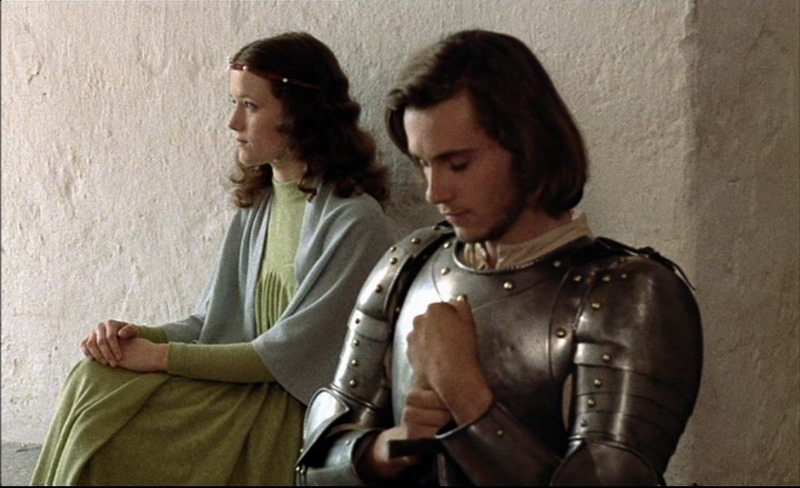

Lancelot du Lac. Robert Bresson has wanted to make this film for 20 years, and now we know that the wait was worth it. The unique vision of the director of A Man Escaped, Balthazar, and Four Nights of a Dreamer has been slow in reaching American audiences, but his treatment of the legend of Sir Lancelot may be the widest door yet into the hermetic beauty of his special world. As usual, Bresson’s actors are all non-professionals: Lancelot is Luc Simon, an abstract painter; Queen Guinevere is Laura Duke Condominas, daughter of sculptress Niki de St. Phalle; Gawain is l9-year-old Humbert Balsan, a former economics student. At the center of the story is Lancelot’s adulterous affair with Guinevere, set in the twilight years of King Arthur’s rule. Around the edges are scenes of violent action — nightmare battles of clanking arrnor in a dark forest, a climactic jousting tournament. Bresson makes us watch the tournament as though it were visible only out of the corner of one eye — an elliptical rush of horses’ feet and lances striking shields. The crowd is heard much more than seen. In his striking medieval tapestry, love in a hayloft and death in the afternoon become interlocking parts of the same spiritual drama. Read more
Films of the Year [2015]
From the January 2015 issue of Sight and Sound. — J.R.
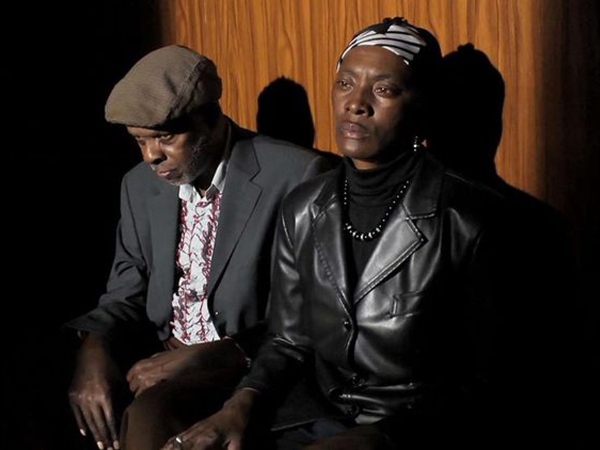
Horse Money
Director(s): Pedro Costa
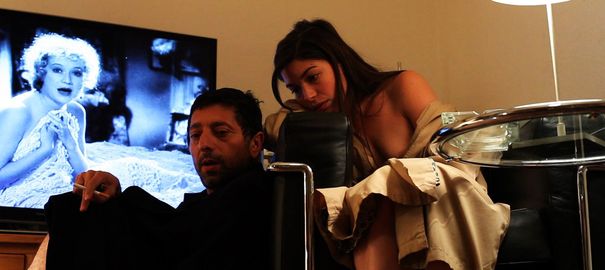
Adieu au langage
Director(s): Jean-Luc Godard
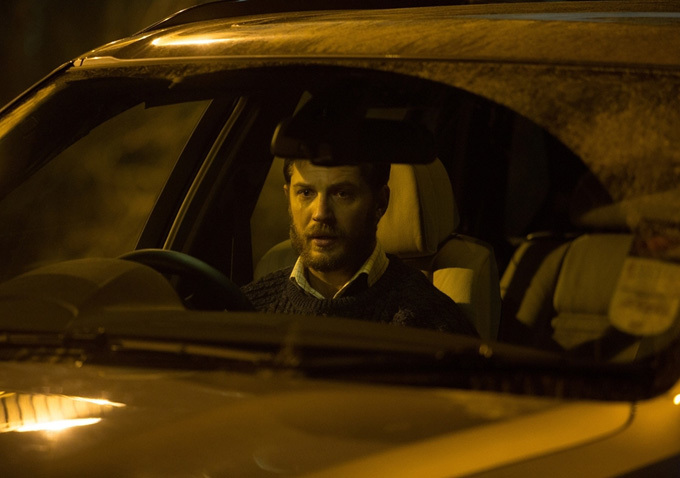
Locke
Director(s): Steven Knight

The Owners
Director(s): Adilkhan Yerzhanov
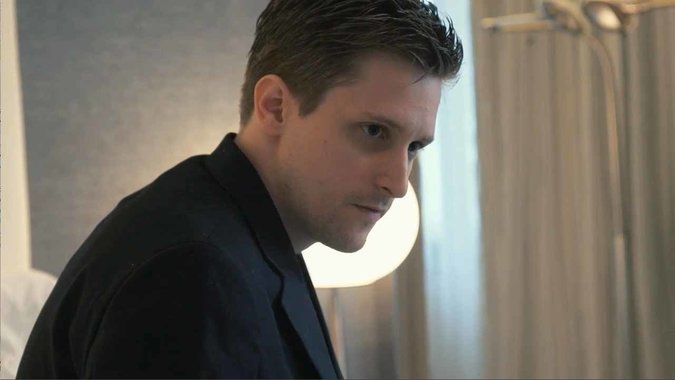
Citizenfour
Director(s): Laura Poitras
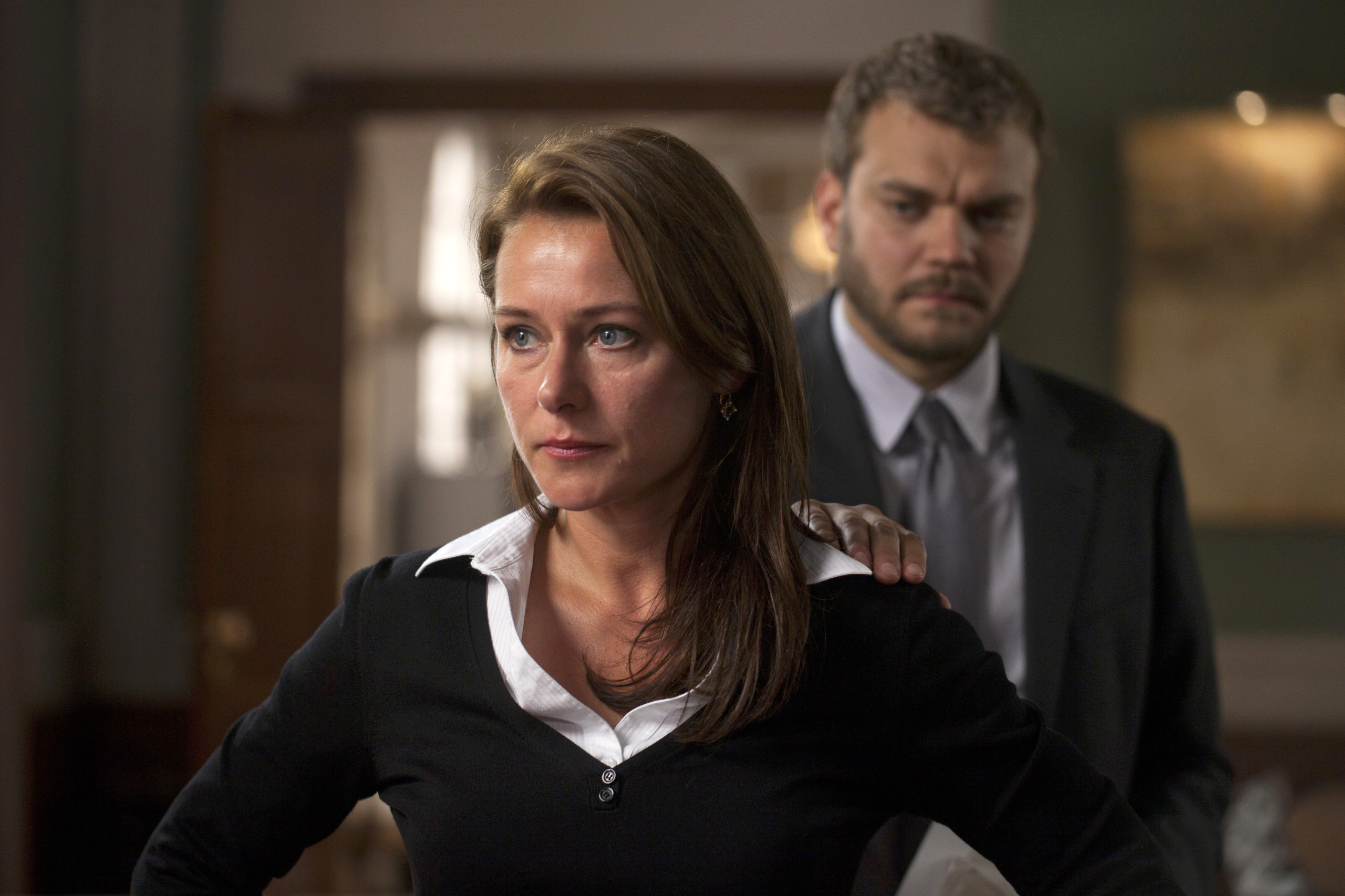
TV vote
Borgen
Director(s): several
***
Remarks:
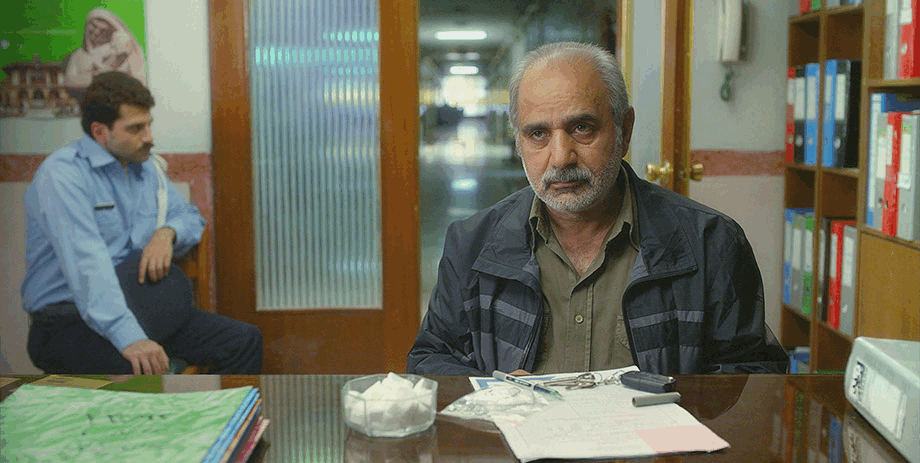
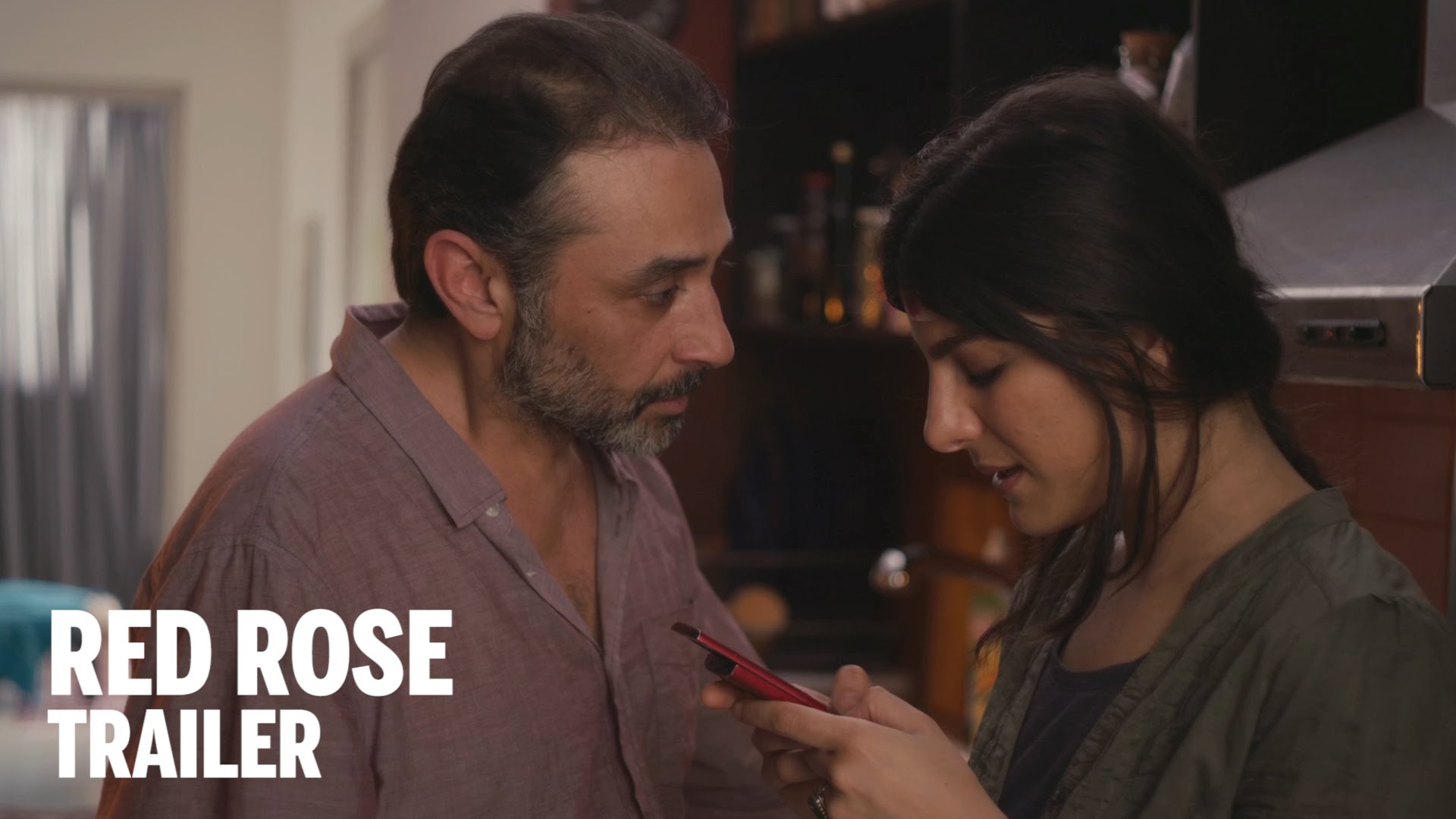
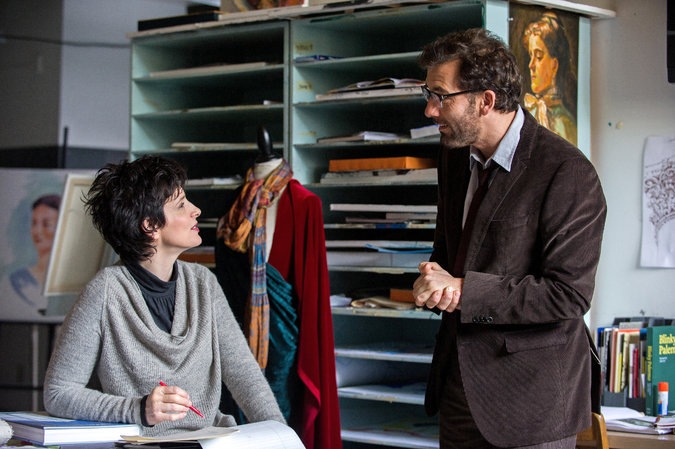
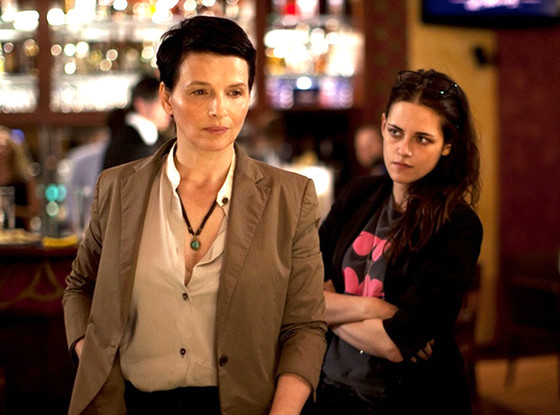
Sadly, I’ve had to omit two exceptional Iranian films (Reza Mirkarimi’s Today, Sepideh Farsi’s Red Rose), two exceptional performances by Juliette Binoche (Fred Schepisi & Gerald Di Pego’s Words and Pictures, Olivier Assayas’s Clouds of Sils Maria), Alain Resnais’ final feature (Life of Riley), and the belated appearance of Orson Welles’ unfinished and ancient but still-sprightly Too Much Johnson. But my top five continue to provoke and expand. Horse Money and The Owners need to travel more, and Locke, which feels like a classic heroic Western, deserves to be recognized as more than just a stunt or tour de force. Adieu au language re-invents 3-D and cinema, and Horse Money, like The Owners, Citizenfour, and Today (not to mention Borgen, in its own fashion). re-invents both the world and its moral prerogatives.
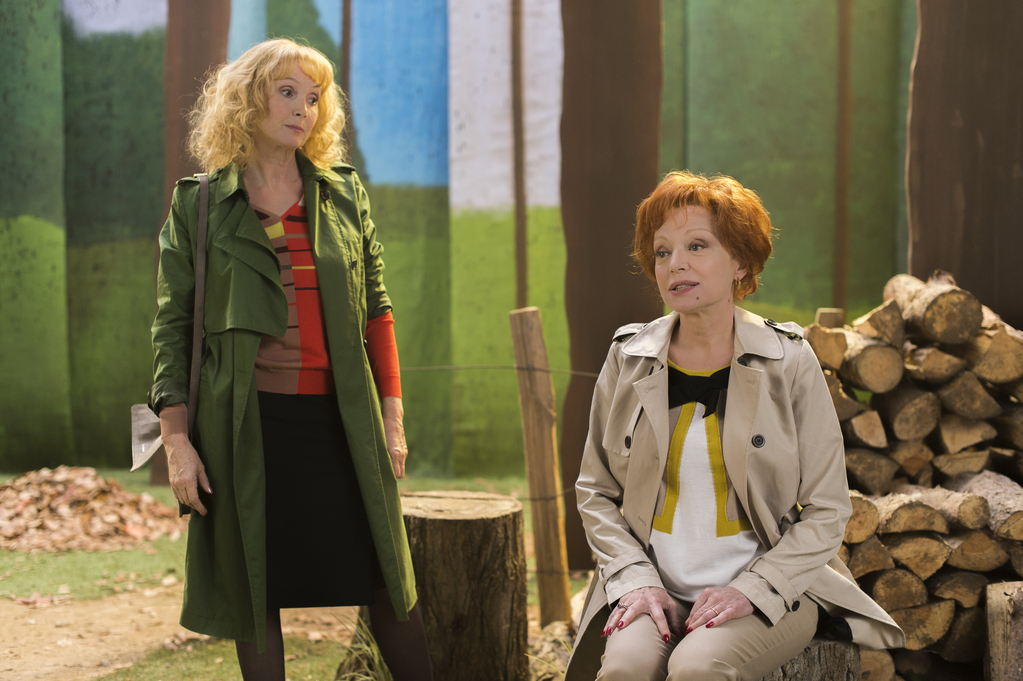
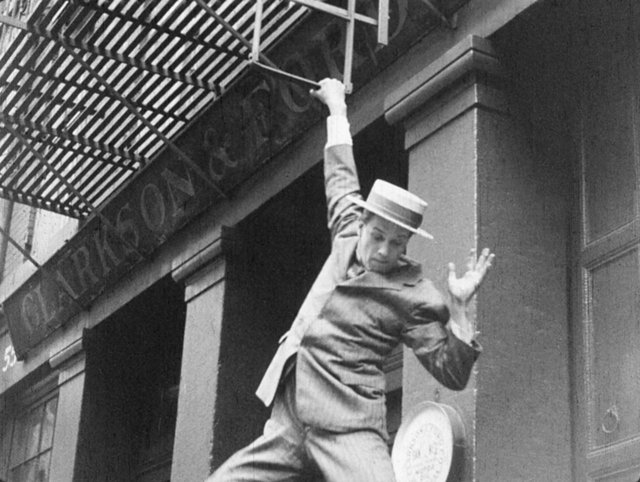
Into Barbarism
I’ve taken this text and these photographs from The Point‘s web site, correcting the grammar of their transcript in a couple of places to clarify my meanings. — J.R.
The following is an edited transcript of remarks delivered by Jonathan Rosenbaum at High Concept Laboratories in Chicago on June 5, 2014. Mr. Rosenbaum and the other two panelists were asked to respond to The Point’s issue 8 editorial on the new humanities.
I’m the odd person out in this gathering because I’m not an academic, although I teach periodically in various, most often relatively unacademic, situations. And plus, I could be described as a failed academic. Before I came to Chicago I was teaching for four years at the University of California, Santa Barbara, but prior to that I actually began my failed academic career in the U.S. where Robert Pippin had his background, at UC San Diego. And in between I was an adjunct at NYU and at the School of Visual Arts, etc.
My academic background, actually, was in English. I was an English major as an undergraduate and in graduate school I did everything but a dissertation in English and American literature. But then I went to Europe and ended up being a journalist.
The Hit Parade
By Jonathan Rosenbaum
I’ve been getting increasingly suspicious of ten-best lists–maybe because the studios have been treating them as increasingly important. I’ve always regarded such list making as a critical activity, a form of stocktaking that benefits critics and audiences alike. But it’s becoming obvious that studios value the lists only as a part of their ad campaigns, and they seem to arrange their multiple end-of-the-year screenings and mail out their numerous “screener” videos for the press accordingly. Why else are so many reviewers implausibly claiming that most of the best movies of 2000 came out during the last two weeks of the year or haven’t even surfaced yet? Are they suffering from amnesia? Or are they simply going for the bait?
The studios define the year according to when movies open in New York and Los Angeles, where they’re often first screened in November and December so that they qualify for that year’s Oscars. As a consequence, critics in what the studios see as the hinterlands, including Chicago, are being encouraged to put movies on their ten-best lists that their readers can’t see for some time.
If studios cared about the services performed by criticism–which range from providing background information and an overall context for new releases to launching discussions about their subjects and explaining why these movies matter–they’d try to let critics see films shortly before they have to review them. Read more
MY PLEASURE IS MY BUSINESS (1975 review)
From Monthly Film Bulletin, April 1975 (Vol. 42, No. 495). — J.R.
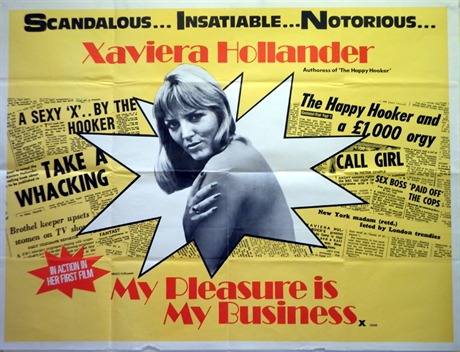
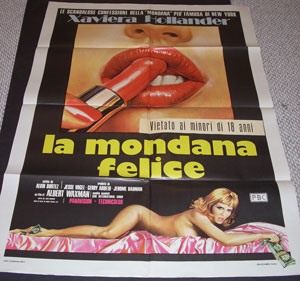
My Pleasure Is My Business
Canada, 1974 Director: Albert S. Waxman
Deported from America by a U.S. senator who wants to keep her
away from his son-in-law, Gabrielle, a promiscuous movie star and
sexual liberationist, is flown to the country of Gestalt. After
confering with his aides, the corrupt Prime Minister decides to admit her
into the country, thereby hoping to deflect some of the charges of
immorality laid against the government. Gabrielle is accorded a
luxurious suite by a North African hotel manager in exchange for
the promise of sexual favors, and applies for a job as sexual
therapist with pudgy psychiatrist Freda Schloss, who turns out to
want the therapy herself. While the Prime Minister and his
henchmen plot ways-of arresting her for prostitution,
Gabrielle picks up an artist in a cafe and makes love with
him in his flat, looks up an old French girlfriend who acts
in porn films (along with the local police chief), and attends
a wild costume party given by another old friend. Cornered
by the police when she returns to her hotel, Gabrielle
persuades them to drop the charges by reminding the
police chief of his skin-flick activity. Read more
From a Far Country (Review of Burch’s TO THE DISTANT OBSERVER)
From American Film (July-August 1979). Incidentally, Criterion’s recent Blu-Ray of Ugetsu is ravishing, regardless of what Burch says (or, rather, doesn’t say).– J.R.
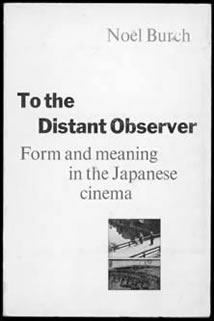
To the Distant Observer: Form and Meaning in the Japanese Cinema by Noël Burch. Revised and edited by Annette Michelson. University of California Press, $19.50.
The most ambitious and detailed study of Japanese cinema since Joseph L. Anderson and Donald Richie’s pioneering history appeared twenty years ago, Noël Burch’s To the Distant Observer adopts an overall approach that is radically different from that of its predecessor. Modernist and materialist in orientation where other critics have been realist and transcendental, Burch argues for a nearly total revision of the way we perceive Japanese film — proposing a new set of criteria as well as an alternate canon of masterpieces.
To call his book controversial would almost be an understatement. Copies of a draft were circulated among a few film scholars in London more than four years ago, sparking a heated debate that has raged ever since. For Burch is arguing that “the most fruitful, original period” the Japanese film history coincided with the years between 1934 and 1943, when the Japanese people embraced “a national ideology akin to European fascism”. Read more
Feast From the East [Oshima’s GOHATTO]
This originally appeared in the January 10, 2001 issue of the Chicago Reader. It seems worth reprinting as a kind of adjunct to my overview piece about Oshima, written for Artforum in 2008 and also available on this site. –J.R.
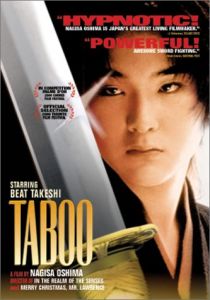
Taboo
****
Directed and written by Nagisa Oshima
With Beat Takeshi (Takeshi Kitano), Ryuhei Matsuda, Shinji Takeda, Tadanobu Asano, and Yoichi Sai.
By Jonathan Rosenbaum
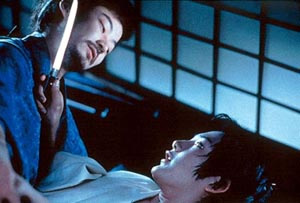
Mark your calendars. Over the next six weeks, the Music Box is offering three eye-popping masterpieces from Asia. This is a welcome sign–-as is the popularity of the breezy Crouching Tiger, Hidden Dragon in the multiplexes–-that American theaters and audiences are finally recognizing that a lot of the best movies come from the other side of the planet and that there’s as much diversity among them as there is among ours.
Yi Yi, which opens March 2, is a three-hour feature set in contemporary Taiwan. It was just voted best picture of the year by the National Society of Film Critics, the first foreign-language picture to receive this honor since Akira Kurosawa’s Ran 15 years ago. Its writer-director, Edward Yang, is one of the two or three undisputed masters of Taiwanese cinema, and the Film Center gave us a full retrospective of his work in 1997. Read more
Made in Hoboken
I am reprinting the entirety of my first and most ambitious book (Moving Places: A Life at the Movies, New York: Harper & Row, 1980) in its second edition (Berkeley: University of California Press, 1995) on this site in eleven installments. This is the tenth.
Note: The book can be purchased on Amazon here, and accessed online in its entirety here. — J.R.
5—
Made in Hoboken
Douglas, Wyoming, 1914—three states away from where our old friend Gordon MacRae is still only a radical freshman or a freethinking sophomore at the University of Indiana—Bo is operating his very first movie theater, at the age of twenty-seven. Think of it: when Jonathan’s the same age, in 1970, he’s working fitfully on his second yet-to-be unpublished novel, completing his first yet-to-be unpublished book as an editor (a collection of film criticism he was commissioned to do), still living on the dregs of Bo’s inheritance, and dividing the first three months of the year among three countries: pursuing a heavy love affair in New York, having his appendix removed in London (and smoking hash with his brother Michael’s friends in a room called the Box), and taking acid all alone one beautiful spring afternoon in Paris, where he moved last fall, acid that suddenly prompts him to buy red paint, a roller, and brushes, and to go to work on his bedroom closets—a conversation with the wood, red saying one thing, grain saying another—and later sends him out the door and up rue Mazarine to the Odéon métro stop, a little after 6:30, to take the Porte de Clignancourt train as far as Châtelet and then the Mairie des Lilas train to République. Read more
Morality Movies (BROADCAST NEWS & WALL STREET)
This was published at the end of my first year at the Reader, in their Christmas issue. –J.R.
BROADCAST NEWS *** (A must-see)
Directed and written by James L. Brooks
With Holly Hunter, Albert Brooks, William Hurt, Robert Prosky, Lois Chiles, Joan Cusack, and Jack Nicholson.

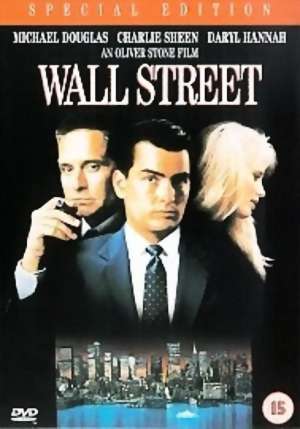
WALL STREET ** (Worth seeing)
Directed by Oliver Stone
Written by Stone and Stanley Weiser
With Charlie Sheen, Michael Douglas, Martin Sheen, Daryl Hannah, Terence Stamp, Hal Holbrook, and Sylvia Miles.
Both Broadcast News and Wall Street score as punchy, energetic movies that are designed to feel as contemporary as possible without taking place in the literal present, and both pivot around a moral reckoning that accompanies economic cutbacks -– as if to remind us that this country’s Reagan-inspired spending spree, which tripled our trillion-dollar national debt, seems to be drawing to a fearful close. Apart from offering behind-the-scenes glimpses of their all-encompassing, hothouse professional turfs, both movies are built around the mise en scene of a moral crisis that splits the major characters apart –- each one charting a mutual seduction that leads to recriminations and the characters isolated in opposing moral camps. Yet the undisputed effectiveness of these films as entertainment seems at least partially predicated on fudging or at least mystifying the moral issues that they are bold enough to raise. Read more
Babette’s Feast
From the Chicago Reader (March 1, 1989). — J.R.

Gabriel Axel’s Danish feature, the 1987 Oscar winner for best foreign film, is based on an Isak Dinesen tale. On the whole, the adaptation is faithful but some of the qualities of Dinesen’s language are lost in translation or through abridgment, and the politics have been needlessly simplified. The plot concerns a French servant in a strict Lutheran household in Denmark — Norway in the original — whose family has perished in the French Commune uprising. The acting is impeccable and the ambience suffused with delicate charm, but overall this doesn’t aim at anything higher than Masterpiece Theatre or a Merchant-Ivory film. Aside from the elaborate serving of the eponymous meal, which expands greatly on the original, few of the additions constitute improvements. With Stephane Audran, Jean-Philippe Lafont, Jarl Kulle, Bodil Kjer, and Birgitte Federspiel (Ordet). In Danish with subtitles. 102 min. (JR)

Ghost World
From the August 1, 2001 Chicago Reader. — J.R.


If, like me, you’ve been wondering how Terry Zwigoff, the brilliant documentary filmmaker who made Crumb, would negotiate his shift to fiction filmmaking, here’s your answer: brilliantly. Ghost World, a very personal adaptation of the Daniel Clowes comic book that Zwigoff wrote with Clowes, either captures with uncanny precision what it’s like to be a teenage girl in this country at this moment or fooled me utterly into thinking it does. Thora Birch (American Beauty) plays Enid, a comic book artist (her notebook was actually drawn by Sophie Crumb, Robert’s daughter) who plans to share an apartment with her best friend Rebecca (Scarlett Johansson). Enid befriends Seymour (Steve Buscemi), a lonely, much older collector of rare blues and jazz 78s, shortly after she almost graduates from high school. To get a diploma, she has to take an art course over the summer, and our glimpses of this add up to the funniest portrait of American “art appreciation” I’ve ever seen, with Illeana Douglas, as the teacher, rivaling Elaine May as a satirist. Never predictable, this movie is often hilarious as well as touching, subtly adapting the mise en scene of Clowes’s original without being fancy or obtrusive about it. Read more
The Good, the Bad, and the Future
From the Chicago Reader (October 29, 1987). — J.R.
I. Good Things About the Chicago Film Festival
1. Quite apart from aesthetic considerations, any film festival that can boast films from 35 countries and encompass 70 years of filmmaking is performing an invaluable cultural service. The xenophobic and antihistorical cast of most pop culture in this country is such that the more the media expand, the narrower our sense of reality generally becomes, and any institution that can allow us glimpses of cultures and eras other than our own is bound to teach us something more than the average TV news broadcast. (The sharp moral distinction that we usually make between news and fiction–designating the first as “serious” and the second as “entertainment”–overlooks the fact that both are usually designed as narrative entertainment, offering consumable, hence disposable, stories with larger-than-life characters.)
2. Out of the 20 films in the festival that I’ve so far managed to see, more than half are eminently worth seeing, and roughly a third qualify as first-rate. If that’s a somewhat lower batting average than either Facets or the Film Center, it’s still a much higher one than what is achieved by the usual run of commercial mainstream releases. Read more
American Pimp
From the July 11, 2000 Chicago Reader. — J.R.

What’s so disturbing yet provocative about this documentary by Allen and Albert Hughes (Menace II Society, Dead Presidents) is that it essentially celebrates as well as interrogates its chosen subject. More precisely, it allows the pimps in interviews to celebrate themselves, offering them the equivalent of their own music videos in which to strut their stuff. Even if one disapproves of the results — it’s hard not to, given the countless obfuscations and omissions ensured by such an approach — there’s also more understanding of a certain kind than would come from a holier-than-thou polemic. One has to weigh the lift against the mystifications. There isn’t the sort of analysis one would hope to find (the Hugheses even sidestep the issue of whether pimps are as important to prostitution as they once were), but at least one gets a pungent look at what makes being a pimp look attractive to some people in certain circumstances. Check it out for yourself; I’ve felt at least as conflicted about the Hughes brothers’ other movies, but this one arguably accomplishes and says the most. 87 min. (JR)

Menace II Society
From the June 4, 1993 Chicago Reader. — J.R.

Don’t let the silly styling of the title put you off, this is a powerful, convincing, and terrifying look at teenage crime in contemporary Watts. Directed by 20-year-old twin brothers Allen and Albert Hughes from a script they wrote with coproducer Tyger Williams, this shocking, violent, and unsentimental (albeit sensationalized) drama about a second-generation drug dealer (Tyrin Turner) and the callous world he lives in, produced by To Sleep With Anger’s Darin Scott, is terrifically acted, as much by the newcomers (Jada Pinkett, Larenz Tate, Erin Leshawn Wiley, Vonte Sweet, MC Eiht, and Too $hort) as by the old pros (Samuel L. Jackson, Bill Duke, Charles S. Dutton), who are around for cameos. Bel-Air Drive-In, Double Drive-In, Hyde Park, Norridge, Pipers Alley, Ford City.
