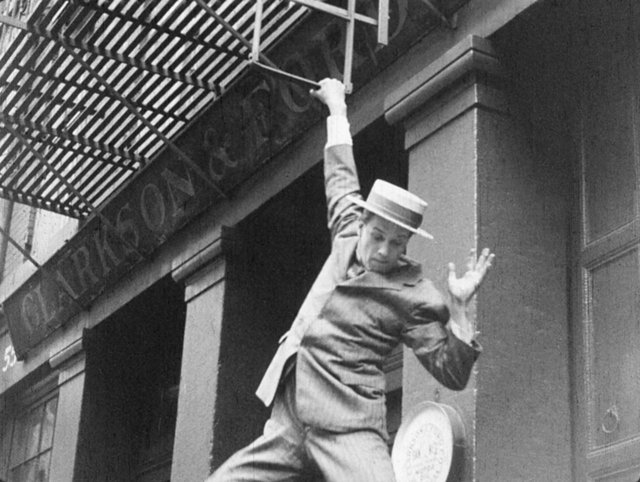
From Oui (March 1975). I no longer recall whether or not the editors changed the wording of some of my questions; I suspect that in many cases they did. Because of the length of this interview, I’m posting it in two parts. -– J.R.

Excerpted from the Introduction [obviously not by me]:
“Jonathan Rosenbaum interviewed Morrissey in Paris, shortly after the director had completed his latest films [Flesh for Frankenstein and Blood for Dracula aka Andy Warhol’s Frankenstein and Andy Warhol’s Dracula (sic, sic), only the second of which I’ve ever seen, then or since. -– J.R.] He described being greeted at the door by Nico, of the original and most durable Factory regulars:

“Nico entertained me with comparisons of Paris and Los Angeles, while Morrissey served me orange soda from his refrigerator,” he said. “Morrissey enjoys talking –– the interview was nearly a monologue –- and he speaks in a slightly nasal tone, a cross between Brando and the Bronx.”
OUI: Let’s talk about political content. Your films are usually much more poignant and compassionate than you yourself are reputed to be. In some quarters of the film world, you have a political reputation that might be compared to Ronald Reagan’s. Read more
From Oui (March 1975). I no longer recall whether or not the editors changed the wording of some of my questions; I suspect that in many cases they did. Because of the length of this interview, I’m posting it in two parts. -– J.R.
Excerpted from the Introduction [obviously not by me]:
“Jonathan Rosenbaum interviewed Morrissey in Paris, shortly after the director had completed his latest films [Flesh for Frankenstein and Blood for Dracula aka Andy Warhol’s Frankenstein and Andy Warhol’s Dracula (sic, sic), only the second of which I’ve ever seen, then or since. -– J.R.] He described being greeted at the door by Nico, of the original and most durable Factory regulars:
“Nico entertained me with comparisons of Paris and Los Angeles, while Morrissey served me orange soda from his refrigerator,” he said. “Morrissey enjoys talking –- the interview was nearly a monologue –- and he speaks in a slightly nasal tone, a cross between Brando and the Bronx.”
OUI: There’s a noticeable difference between your early movies, such as Trash, and your latest ones, Andy Warhol’s Frankenstein and Andy Warhol’s Dracula. Is it true, as some critics contend, that you’ve gone from the underground to the surface? Read more
Published by Chicago’s a cappella press in 2000. The jacket reproduced below, which I prefer, belongs to the English edition published by Wallflower Press in 2002; the full title is Movie Wars: How Hollywood and the Media Limit What Films We Can See. — J.R.
To refer to a producer’s oeuvre is, at least to me, as ignorant as to refer to the oeuvre of a stockbroker.
— David Mamet
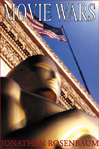
There are a lot of complaints these days about the declining quality of movie fare, and the worsening taste of the public is typically asked to shoulder a good part of the blame.
Other causes are cited as well. The collapse of the old studio system meant the loss of studio heads who lent their distinctive stamp to each of their pictures — often vulgar and overblown, to be sure, but also personal and engaged — to be replaced largely by cost accountants and corporate executives with little flair, imagination, or passion. The exponential growth of video has made home viewing more popular than theatrical moviegoing and has therefore helped to diminish everyone’s sense of what a movie is, so that the size and definition of the image, a clear sense of its borders, the quality and direction of light, and the notions of film as community event, theatrical experience, or “something special,” have all suffered terrible losses. Read more
This review in the January 31, 1997 issue of the Chicago Reader provoked a fire-storm of angry letters. I was attending the Rotterdam International Film Festival while many of these were arriving, and I can recall having to write a reply to some of them from there. The main point of disputation was whether or not Lucas had in fact appended the subtitle “Episode IV: A New Hope” to Star Wars when it first premiered in 1977; I knew he hadn’t, because I vividly remember attending a first-day showing in Los Angeles (and subsequently writing about it for Sight and Sound in an essay, “The Solitary Pleasures of Star Wars,'” that was reprinted in my 1997 collection Movies as Politics). But quite a few of my indignant readers were convinced that George Lucas in his wisdom had already foreseen that the film would be so successful that it would launch three prequels and were eager to set me straight. The Reader’s facts checkers eventually confirmed my claim by phoning Fox, and I was left musing about the chilling ease with which the Star Wars industry had seemingly managed to rewrite its own history, at least in the minds of many viewers who, having bonded with their parents and/or siblings over the blissful spectacle of mass annihilation at a later date, either weren’t there to see the premiere in 1977 or else were somehow persuaded afterwards to re-imagine what they saw. Read more
From Oui (October 1974). — J.R.
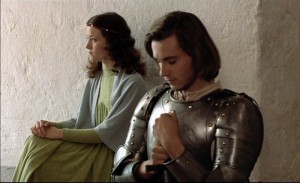
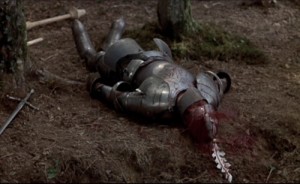
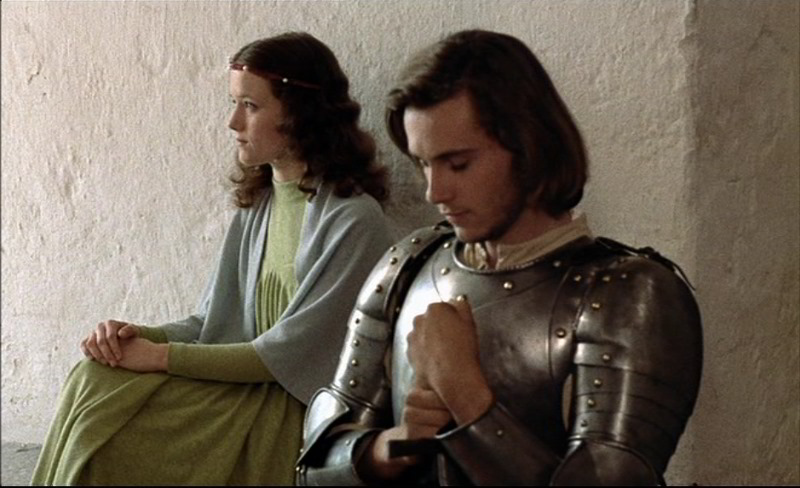
Lancelot du Lac. Robert Bresson has wanted to make this film for 20 years, and now we know that the wait was worth it. The unique vision of the director of A Man Escaped, Balthazar, and Four Nights of a Dreamer has been slow in reaching American audiences, but his treatment of the legend of Sir Lancelot may be the widest door yet into the hermetic beauty of his special world. As usual, Bresson’s actors are all non-professionals: Lancelot is Luc Simon, an abstract painter; Queen Guinevere is Laura Duke Condominas, daughter of sculptress Niki de St. Phalle; Gawain is l9-year-old Humbert Balsan, a former economics student. At the center of the story is Lancelot’s adulterous affair with Guinevere, set in the twilight years of King Arthur’s rule. Around the edges are scenes of violent action — nightmare battles of clanking arrnor in a dark forest, a climactic jousting tournament. Bresson makes us watch the tournament as though it were visible only out of the corner of one eye — an elliptical rush of horses’ feet and lances striking shields. The crowd is heard much more than seen. In his striking medieval tapestry, love in a hayloft and death in the afternoon become interlocking parts of the same spiritual drama. Read more
From the January 2015 issue of Sight and Sound. — J.R.
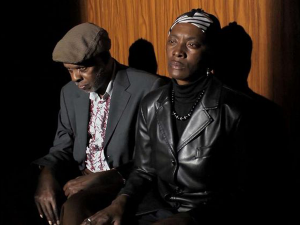
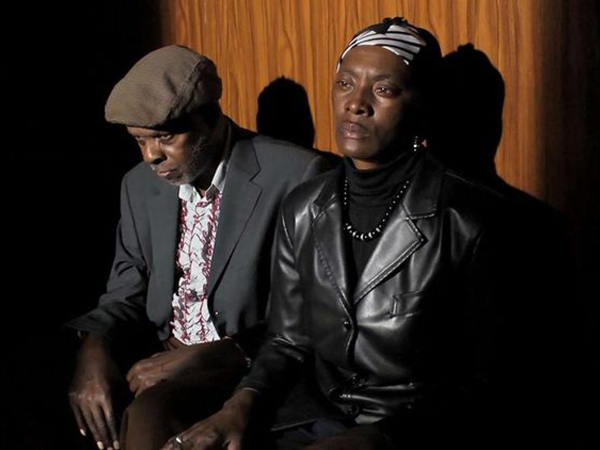
Horse Money
Director(s): Pedro Costa
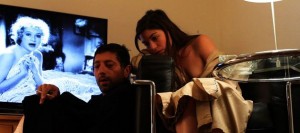
Adieu au langage
Director(s): Jean-Luc Godard
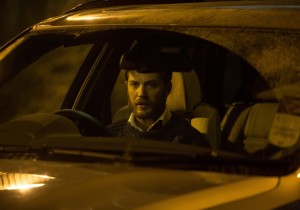
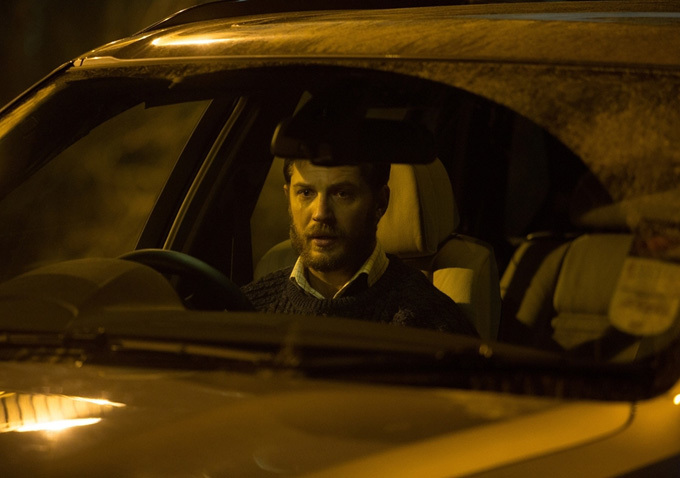
Locke
Director(s): Steven Knight

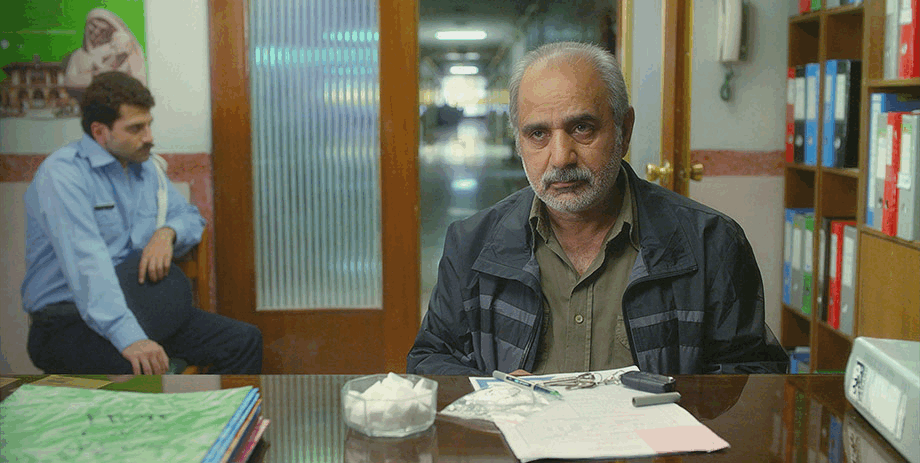
The Owners
Director(s): Adilkhan Yerzhanov
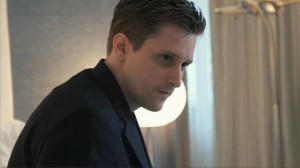
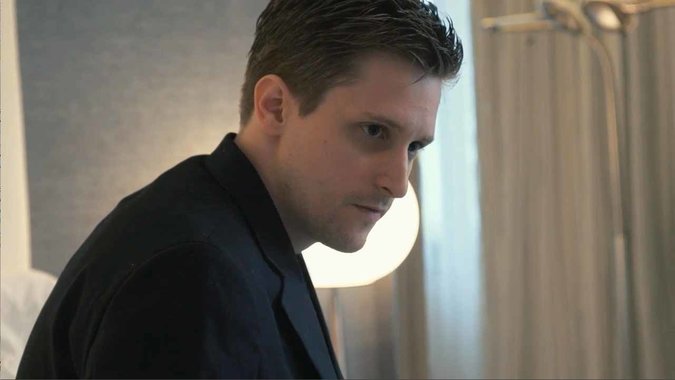
Citizenfour
Director(s): Laura Poitras
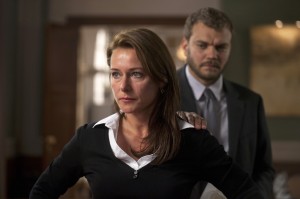
TV vote
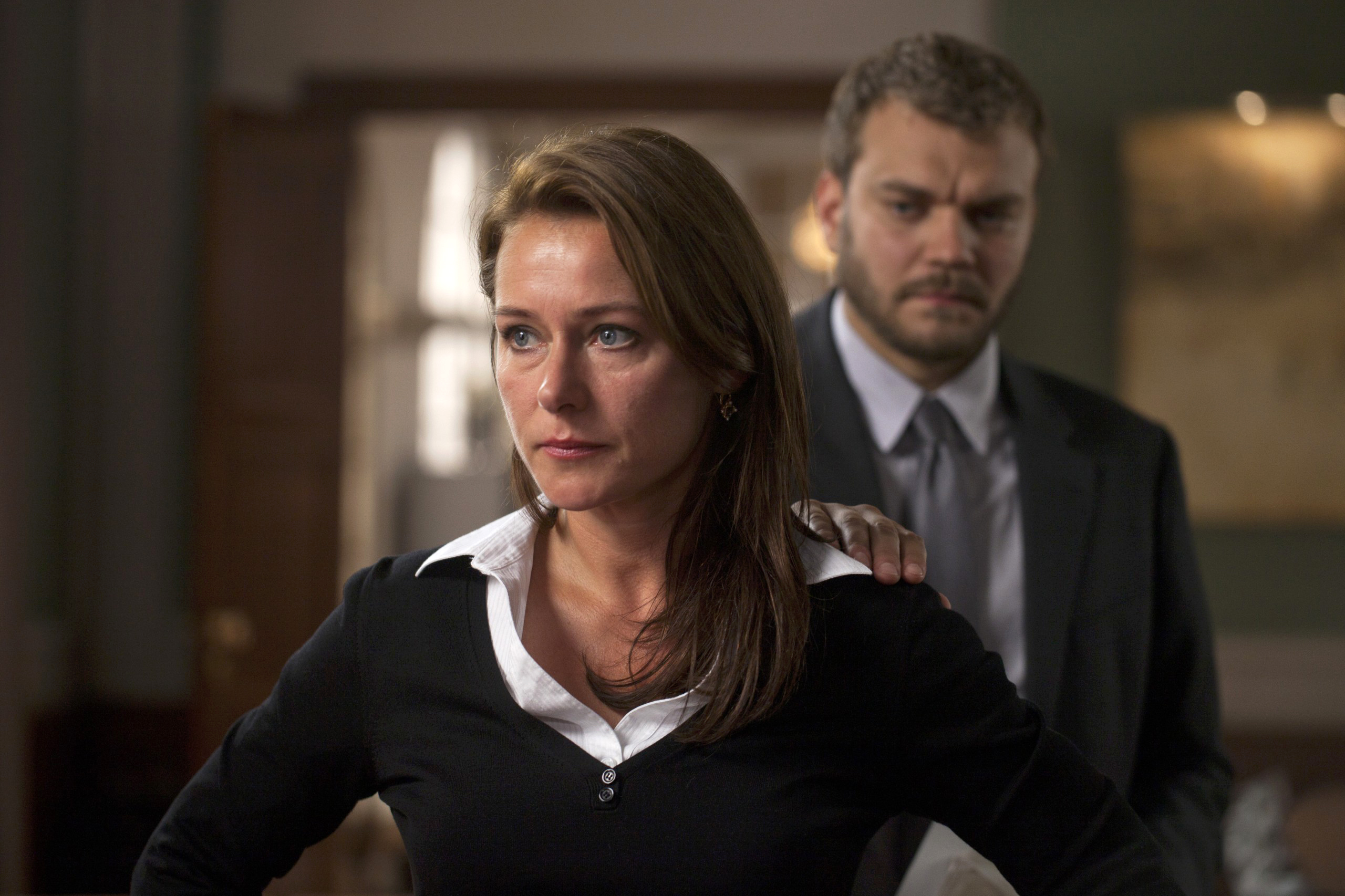
Borgen
Director(s): several
***

Remarks:
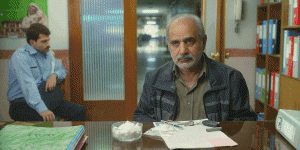
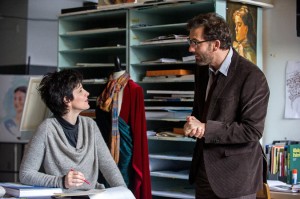
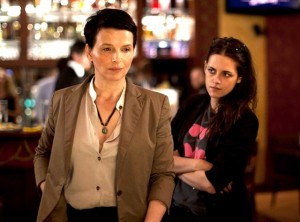
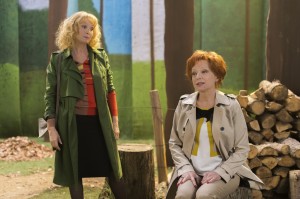
Sadly, I’ve had to omit two exceptional Iranian films (Reza Mirkarimi’s Today, Sepideh Farsi’s Red Rose), two exceptional performances by Juliette Binoche (Fred Schepisi & Gerald Di Pego’s Words and Pictures, Olivier Assayas’s Clouds of Sils Maria), Alain Resnais’ final feature (Life of Riley), and the belated appearance of Orson Welles’ unfinished and ancient but still-sprightly Too Much Johnson. But my top five continue to provoke and expand. Horse Money and The Owners need to travel more, and Locke, which feels like a classic heroic Western, deserves to be recognized as more than just a stunt or tour de force. Adieu au language re-invents 3-D and cinema, and Horse Money, like The Owners, Citizenfour, and Today (not to mention Borgen, in its own fashion). re-invents both the world and its moral prerogatives.
 Read more
I’ve taken this text and these photographs from The Point‘s web site, correcting the grammar of their transcript in a couple of places to clarify my meanings. — J.R.
The following is an edited transcript of remarks delivered by Jonathan Rosenbaum at High Concept Laboratories in Chicago on June 5, 2014. Mr. Rosenbaum and the other two panelists were asked to respond to The Point’s issue 8 editorial on the new humanities.
I’m the odd person out in this gathering because I’m not an academic, although I teach periodically in various, most often relatively unacademic, situations. And plus, I could be described as a failed academic. Before I came to Chicago I was teaching for four years at the University of California, Santa Barbara, but prior to that I actually began my failed academic career in the U.S. where Robert Pippin had his background, at UC San Diego. And in between I was an adjunct at NYU and at the School of Visual Arts, etc.
My academic background, actually, was in English. I was an English major as an undergraduate and in graduate school I did everything but a dissertation in English and American literature. But then I went to Europe and ended up being a journalist.
Read more
By Jonathan Rosenbaum
I’ve been getting increasingly suspicious of ten-best lists–maybe because the studios have been treating them as increasingly important. I’ve always regarded such list making as a critical activity, a form of stocktaking that benefits critics and audiences alike. But it’s becoming obvious that studios value the lists only as a part of their ad campaigns, and they seem to arrange their multiple end-of-the-year screenings and mail out their numerous “screener” videos for the press accordingly. Why else are so many reviewers implausibly claiming that most of the best movies of 2000 came out during the last two weeks of the year or haven’t even surfaced yet? Are they suffering from amnesia? Or are they simply going for the bait?
The studios define the year according to when movies open in New York and Los Angeles, where they’re often first screened in November and December so that they qualify for that year’s Oscars. As a consequence, critics in what the studios see as the hinterlands, including Chicago, are being encouraged to put movies on their ten-best lists that their readers can’t see for some time.
If studios cared about the services performed by criticism–which range from providing background information and an overall context for new releases to launching discussions about their subjects and explaining why these movies matter–they’d try to let critics see films shortly before they have to review them. Read more
From Monthly Film Bulletin No. 507, April 1976. –- J.R.
The Man Who Fell To Earth
Great Britain, 1976 Director: Nicolas Roeg
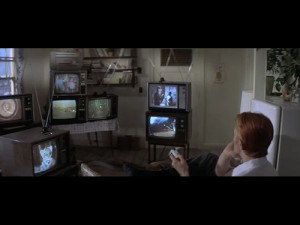
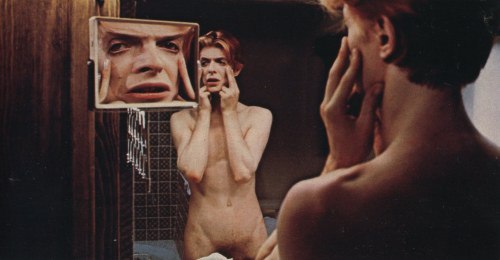
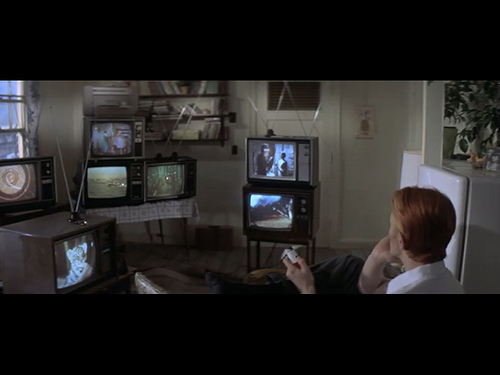
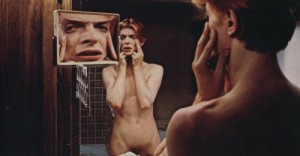
A stranger from another planet lands in New Mexico; calling himself Thomas Jerome Newton, he sells a series of rings to various jewellery stores and soon amasses a small fortune. He approaches Oliver Farnsworth, a homosexual lawyer in New York specializing in patents, shows him his plans for nine inventions destined to transform the communications industry, and concludes an agreement whereby Farnsworth supervises Newton’s World Enterprises Corporation and communicates with Newton, who wishes to maintain his privacy, chiefly by phone. Dr. Nathan Bryce, a chemical engineering professor, becomes intrigued by the corporation and decides to learn more about its master-mind. When Newton faints in an elevator, unaccustomed to the acceleration, the attendant, Mary-Lou, nurses him back to health and becomes his lover, tempting him into a taste for gin. After building a house on the lake where he landed and inaugurating a private space program, Newton hires Bryce as a consultant, and the latter discovers with a hidden X-ray camera that Newton s metabolism is not human. Newton intimates that he came to Earth because his race was dying from a lack of water and that his space program is designed to return him to his wife and children. Read more
From Monthly Film Bulletin, April 1975 (Vol. 42, No. 495). — J.R.
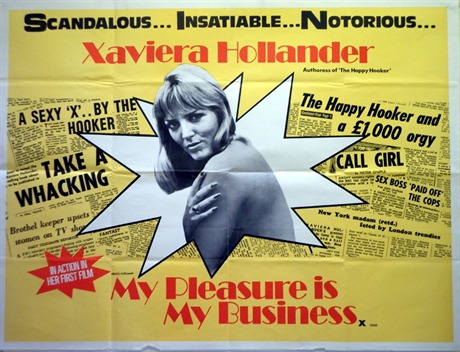
My Pleasure Is My Business
Canada, 1974 Director: Albert S. Waxman
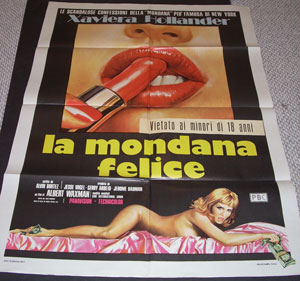
Deported from America by a U.S. senator who wants to keep her
away from his son-in-law, Gabrielle, a promiscuous movie star and
sexual liberationist, is flown to the country of Gestalt. After
confering with his aides, the corrupt Prime Minister decides to admit her
into the country, thereby hoping to deflect some of the charges of
immorality laid against the government. Gabrielle is accorded a
luxurious suite by a North African hotel manager in exchange for
the promise of sexual favors, and applies for a job as sexual
therapist with pudgy psychiatrist Freda Schloss, who turns out to
want the therapy herself. While the Prime Minister and his
henchmen plot ways-of arresting her for prostitution,
Gabrielle picks up an artist in a cafe and makes love with
him in his flat, looks up an old French girlfriend who acts
in porn films (along with the local police chief), and attends
a wild costume party given by another old friend. Cornered
by the police when she returns to her hotel, Gabrielle
persuades them to drop the charges by reminding the
police chief of his skin-flick activity. Read more
From American Film (July-August 1979). Incidentally, Criterion’s recent Blu-Ray of Ugetsu is ravishing, regardless of what Burch says (or, rather, doesn’t say).– J.R.
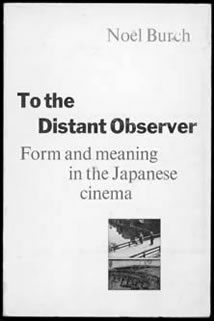
To the Distant Observer: Form and Meaning in the Japanese Cinema by Noël Burch. Revised and edited by Annette Michelson. University of California Press, $19.50.
The most ambitious and detailed study of Japanese cinema since Joseph L. Anderson and Donald Richie’s pioneering history appeared twenty years ago, Noël Burch’s To the Distant Observer adopts an overall approach that is radically different from that of its predecessor. Modernist and materialist in orientation where other critics have been realist and transcendental, Burch argues for a nearly total revision of the way we perceive Japanese film — proposing a new set of criteria as well as an alternate canon of masterpieces.
To call his book controversial would almost be an understatement. Copies of a draft were circulated among a few film scholars in London more than four years ago, sparking a heated debate that has raged ever since. For Burch is arguing that “the most fruitful, original period” the Japanese film history coincided with the years between 1934 and 1943, when the Japanese people embraced “a national ideology akin to European fascism”. Read more
This originally appeared in the January 10, 2001 issue of the Chicago Reader. It seems worth reprinting as a kind of adjunct to my overview piece about Oshima, written for Artforum in 2008 and also available on this site. –J.R.
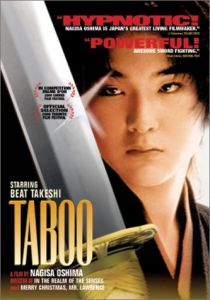
Taboo
****
Directed and written by Nagisa Oshima
With Beat Takeshi (Takeshi Kitano), Ryuhei Matsuda, Shinji Takeda, Tadanobu Asano, and Yoichi Sai.
By Jonathan Rosenbaum
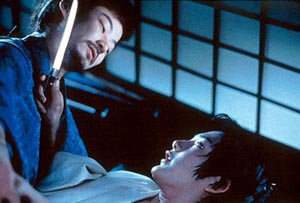
Mark your calendars. Over the next six weeks, the Music Box is offering three eye-popping masterpieces from Asia. This is a welcome sign–-as is the popularity of the breezy Crouching Tiger, Hidden Dragon in the multiplexes–-that American theaters and audiences are finally recognizing that a lot of the best movies come from the other side of the planet and that there’s as much diversity among them as there is among ours.
Yi Yi, which opens March 2, is a three-hour feature set in contemporary Taiwan. It was just voted best picture of the year by the National Society of Film Critics, the first foreign-language picture to receive this honor since Akira Kurosawa’s Ran 15 years ago. Its writer-director, Edward Yang, is one of the two or three undisputed masters of Taiwanese cinema, and the Film Center gave us a full retrospective of his work in 1997. Read more
I am reprinting the entirety of my first and most ambitious book (Moving Places: A Life at the Movies, New York: Harper & Row, 1980) in its second edition (Berkeley: University of California Press, 1995) on this site in eleven installments. This is the tenth.
Note: The book can be purchased on Amazon here, and accessed online in its entirety here. — J.R.
5—
Made in Hoboken
Douglas, Wyoming, 1914—three states away from where our old friend Gordon MacRae is still only a radical freshman or a freethinking sophomore at the University of Indiana—Bo is operating his very first movie theater, at the age of twenty-seven. Think of it: when Jonathan’s the same age, in 1970, he’s working fitfully on his second yet-to-be unpublished novel, completing his first yet-to-be unpublished book as an editor (a collection of film criticism he was commissioned to do), still living on the dregs of Bo’s inheritance, and dividing the first three months of the year among three countries: pursuing a heavy love affair in New York, having his appendix removed in London (and smoking hash with his brother Michael’s friends in a room called the Box), and taking acid all alone one beautiful spring afternoon in Paris, where he moved last fall, acid that suddenly prompts him to buy red paint, a roller, and brushes, and to go to work on his bedroom closets—a conversation with the wood, red saying one thing, grain saying another—and later sends him out the door and up rue Mazarine to the Odéon métro stop, a little after 6:30, to take the Porte de Clignancourt train as far as Châtelet and then the Mairie des Lilas train to République. Read more
This was published at the end of my first year at the Reader, in their Christmas issue. –J.R.
BROADCAST NEWS *** (A must-see)
Directed and written by James L. Brooks
With Holly Hunter, Albert Brooks, William Hurt, Robert Prosky, Lois Chiles, Joan Cusack, and Jack Nicholson.

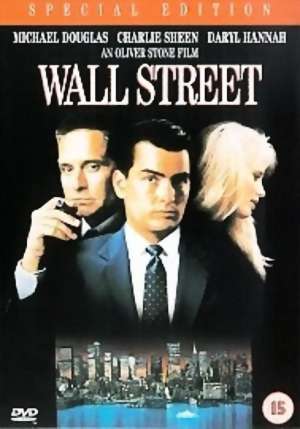
WALL STREET ** (Worth seeing)
Directed by Oliver Stone
Written by Stone and Stanley Weiser
With Charlie Sheen, Michael Douglas, Martin Sheen, Daryl Hannah, Terence Stamp, Hal Holbrook, and Sylvia Miles.
Both Broadcast News and Wall Street score as punchy, energetic movies that are designed to feel as contemporary as possible without taking place in the literal present, and both pivot around a moral reckoning that accompanies economic cutbacks -– as if to remind us that this country’s Reagan-inspired spending spree, which tripled our trillion-dollar national debt, seems to be drawing to a fearful close. Apart from offering behind-the-scenes glimpses of their all-encompassing, hothouse professional turfs, both movies are built around the mise en scene of a moral crisis that splits the major characters apart –- each one charting a mutual seduction that leads to recriminations and the characters isolated in opposing moral camps. Yet the undisputed effectiveness of these films as entertainment seems at least partially predicated on fudging or at least mystifying the moral issues that they are bold enough to raise. Read more