New Rose Hotel

From the Chicago Reader (July 23, 1999). — J.R.

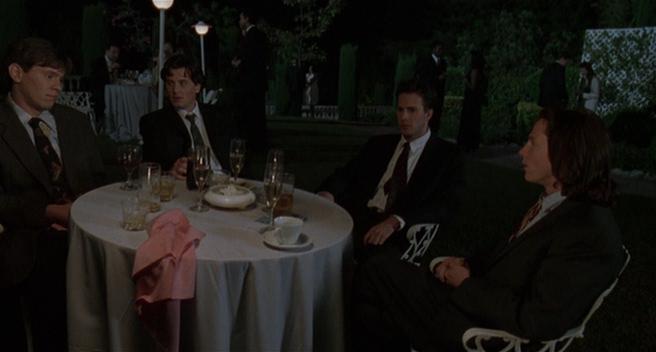
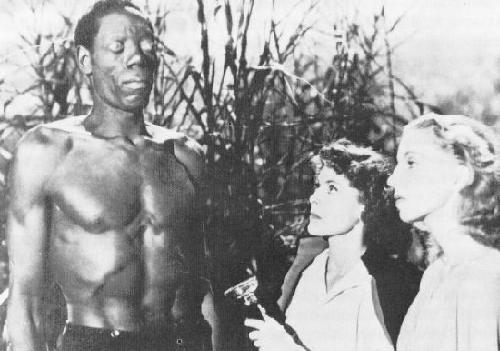
It’s not at all surprising that Abel Ferrara’s most recent feature (1998) has failed to find an American distributor or that some of his most eloquent defenders have labeled this transgressive adaptation of a William Gibson story the collapse of a major talent. A murky and improbable tale about prostitution, industrial espionage, and manufactured viruses, it works on the very edge of coherence even before the final 20 minutes or so, during which earlier portions of the film are replayed with minor variations and additions. On the other hand, few American films in recent years have been so beautifully composed and color coordinated shot by shot, and the overall experience of an opium dream is so intense that you might stop making demands of the narrative once you realize that none of the usual genre expectations is going to be met. Almost all the principal action occurs offscreen, and most of Ferrara and Christ Zois’s script concentrates on scenes between a corporate raider named Fox (Christopher Walken); his deputy, X (Willem Dafoe); and Sandii (Asia Argento, daughter of cult horror director Dario Argento), an Italian prostitute hired to seduce a Japanese scientist. Read more

Sound Thinking

From Film Comment, September-October 1978. — J.R.

Sound Thinking

6308159101_59eaae8862

#1. The bias against sound thinking is so deeply ingrained that it shapes and invades the most casual parts of our speech. Whenever we ask “What movie did you see?”, or discuss film as a visual medium, or refer to viewers or spectators, we participate in a communal agreement to privilege one aspect of a film text by masking another, identifying the part as a whole. Some might argue that this bias is a carryover from the silent era; yet once we acknowledge that silence is as integral to sound as empty space is to image – not so much a neutral terrain as a variable to be defined and/or filled in relation to  an infinite variety of contexts – we can’t really claim that the problem started with the “talkies.” Indeed, we can’t even allude to “talkies” without agreeing to privilege speech over silence, sound effects and music, thereby participating in a related form of suppression.

#2. The point is that none of the terms we use are innocent, and the ones we have for discussing sound still aren’t far removed from Neanderthal grunts. Consider the brutal inadequacy of “sound effects”: it would seem barbaric if we spoke of visual composition in Eisenstein or Renoir as “visual effects,” if only because we perceive composition as a complex of interrelated decisions.

Read more

Print the Legend: Media Manipulation in American Films: Try & Get Me, Ace in the Hole, Sweet Smell of Success

The following was written to accompany a film series put together by Ehsan Khoshbakht, Imogen Sara Smith, and myself for a tour in Turkey in late 2018 sponsored by the American Embassy. I don’t know if it was used in this form.  — J.R.

“Fake news”, the term paradoxically used by Donald Trump for journalism that exposes his own lies and corruption, evokes what George Orwell called New-speak in 1984, whose slogans included “war is peace” and “ignorance is strength”. Trump’s cleverness as a media manipulator consists of appropriating the very term that describes his own practice while reversing its meaning so that his opponents — including the people who put together this film program about “fake news,” my colleagues and myself — can no longer use it without speaking on Trump’s behalf. This is surely manipulation with a vengeance, where control over both language and presence becomes another form of class inequality. So when TV executives remark that Trump is bad for America but good for television, they’re only suggesting that these two latter entities have separate agendas and even separate owners, neither of which happens to be the American public.

Feeding public fears with worst-case scenarios is the principal form of press manipulation found in Try and Get Me! Read more

International Sampler (GHOST DOG: THE WAY OF THE SAMURAI)

From the Chicago Reader (March 17, 2000). I’m delighted that Criterion invited me to retool this review for a new edition of this film in 2020. In some ways, I like Ghost Dog more now than I did 23 years ago. — J.R.

Ghost Dog: The Way of the Samurai

Rating *** A must see

Directed and written by Jim Jarmusch

With Forest Whitaker, John Tormey, Cliff Gorman, Frank Minucci, Richard Portnow, Tricia Vessey, Henry Silva, Isaach de Bankolé, and Camille Winbush.

Jim Jarmusch’s seventh narrative feature, Ghost Dog: The Way of the Samurai, which I’ve seen three times, may be a failure, if only because most of its characters are never developed far enough beyond their mythic profiles to live independently of them. But if it is, it’s such an exciting, prescient, moving, and noble failure that I wouldn’t care to swap it for even three or four modest successes.

Compared with a masterpiece like its controversial predecessor, the 1995 Dead Man, Ghost Dog seems designed to get Jarmusch out of the art-house ghetto, at least in this country, and into something closer to the mainstream. It’s full of familiar elements reconfigured in unfamiliar ways: Ghost Dog (Forest Whitaker), whose life was once saved by Louie, a New Jersey hoodlum, becomes Louie’s samurai hit man, communicating with him exclusively with homing pigeons. Read more

The Chiseler Interviews Jonathan Rosenbaum

Posted May 18, 2020. — J.R.

The Chiseler Interviews Jonathan Rosenbaum

image


The Chiseler’s Daniel Riccuito discusses pre-Code talkies, noir and leftist politics with one of America’s leading film critics.

DR: We share a common enthusiasm for early talkies. Do you have any favorite actors, writers or storylines relating to the period’s ethnic, often radically left-wing, politics? I’m thinking of the way that, say, The Mayor of Hell suddenly busts into a long Yiddish monologue. Or movies like Counsellor at Law and Street Scene present hard Left ideas through characters with Jewish, Eastern European backgrounds.

JR: Both Counsellor at Law and Street Scene are plays by Elmer Rice (1892-1967) that Rice himself adapted, and both are terrific films with very good directors (William Wyler and King Vidor, respectively). It’s too bad that Rice’s plays aren’t revived more often today, although a few years ago, the TimeLine theater company in Chicago put on a fantastic, neo-Wellesian production of The Adding Machine. I also had the privilege of knowing Rice’s two children with actress Betty Field, John and Judy, who attended the same boarding school in Vermont, both of whom I remember quite fondly.

image

Although it isn’t as politically subversive as the Rice plays, the delightful Jewel Robbery (William Dieterle, 1932) is still a more radical comedy in its treatment of class and sex — specifically, the sexual lure of being robbed as another way of being sexually possessed and enjoyed — than Ernst Lubitsch’s Trouble in Paradise, released a little later the same year. Read more

“Stranger Than Paradise” in One Shot

Written for MUBI Notebook on May 11, 2020. — J.R.

“Stranger Than Paradise” in One Shot

“We can bet that this film will be a flop,” blurbed Jean Eustache about his fellow post-New-Wave underachiever and pal Luc Moullet’s Anatomy of a Relationship (1975), an early exercise in self-scrutiny coauthored by Moullet’s partner Antoinetta Pizzorno. “That’s the best for me: I’ll plunder it more easily.” In comparable fashion, a 1964 commercial flop made by one of the masters of both Eustache and Moullet, Jean-Luc Godard — who incidentally had helped to launch the careers of both of these disciples — was successfully plundered by Jim Jarmusch twenty years later in Stranger Than Paradise. More specifically, Jarmusch appropriated a black-on-white principle exploited by Godard mostly in interiors to depict a deadbeat trio of two male lowlifes secretly smitten by a foreign female while planning their inept capers in drab surroundings — Claude Brasseur, Sami Frey, and Anna Karina (a Dane in France) in Band of Outsiders; John Lurie, Richard Edson, and Eszter Balint (a Hungarian in the U.S.) in Stranger Than Paradise. The white void seen here by Jarmusch’s trio in a suburban Ohio snowscape, subsequently replicated by a white void in a suburban Florida seascape, is mostly physical — unlike the metaphysical void faced by Godard’s trio in a Paris suburb, who have only movie clichés to fill their plans and imaginations.

Read more

Just About Four: The American Spirit

Just About Four and the American Spirit

TBOJR

For most of my life, I’ve been both haunted and baffled by a line in a popular song of the 50s (https://www.youtube.com/watch?v=-4X2RVm8R4Q), one of those just-plain-folks outbursts in which the male vocalist, nostalgically and wistfully reflecting on his wife in particular and his life in general, notes at one point that “our children numbered just about four”. Apart from the obvious need of a lyricist to fill out a line, I’ve been wondering for decades now what this could possibly mean. Virtually all the plausible explanations have dark implications: That the narrator never learned how to count up to four with any confidence; that he used to know how until either senility robbed him of that talent or Alzheimer’s gutted his memory; that he and his beloved actually birthed five children, two of whom were only half formed when they emerged (leading to his uncertainty about the precise number). All the possible answers to this query are decidedly grim, yet the song itself is indefatigably cheerful. [7-8-2020] Read more

Two Questions for Marta Mateus

An exchange done via email for MUBI in November 2020. — J.R.

Jonathan Rosenbaum: What were the personal (or autobiographical) aspects of your film Farpões Baldios (Barbs, Wastelands), and what were the less personal aspects?


Marta Mateus: In any art, everything’s autobiographical, isn’t it? This film is based, first, on the experience and history of the people I grew up with, on the stories they shared with me since my childhood. These stories are in their hands, their gazes, in what binds us together, perhaps also in our blood and in our dreams. Landscapes also participate in it: it’s the source, the roots, a matter of fertility, hope, grief, shadow, solitude, birth, rebirth, joy, struggle. Therefore, there is also collective experience, historical memory and the landscape has its marked wounds, just like us. Thousands of years of exploitation, of nature and of man by man. There was a very clear route to follow, for us all, but no need to be spoken. Filming was a form of communion, in search of our other selves and each other–maybe a ritual, not “recreation” or narration but action. It was a very long process but made in a state of emergency; we only became aware of some things afterwards. Read more

Bram Stoker’s Dracula

From the November 20, 1992 Chicago Reader. — J.R.

A good reason for including the name of the original author in the title of Francis Ford Coppola’s ambitious version of the famous vampire story is that most previous film versions have been based not on the 1897 novel but on Hamilton Deane and John Balderston’s 1927 stage adaptation. This version, written by coproducer James V. Hart, brings back the multiple narrators of the novel, leading to a somewhat dispersed and overcrowded story line that remains fascinating and often affecting thanks to all its visual and conceptual energy. (Some of this derives from the filmmakers’ musings about what was going on culturally in Europe at the turn of the century, including the decadent art of people like Beardsley, Klimt, and Huysmans and the birth of both movies and psychoanalysis.) Still the overreacher, Coppola suffers at times from a surfeit of ideas (rather than a dearth, like most of his colleagues); there are times when he squanders his effects (as he did in Rumble Fish), or finds some of them in unlikely places. (Murnau’s Faust has apparently exerted more of an influence than his Nosferatu, for instance.) But this is still the best vampire movie in ages — a visual feast with ideas, more disturbing than scary, though a rich experience in many other respects. Read more

Missing the Target

From the Chicago Reader, June 18, 1993. (This is also reprinted in my 1997 collection Movies as Politics.) — J.R.

Who is correct? Are we becoming better off or worse off? Where are we heading? It depends on whom you mean by “we.” — Robert B. Reich, The Work of Nations

“Men never get this movie,” a woman says to her friend in Nora Ephron’s Sleepless in Seattle, referring to Leo McCarey’s 1957 An Affair to Remember, with Cary Grant and Deborah Kerr, which is showing on TV. In fact, we’re told this again and again. Another woman tearfully describes the last scene of An Affair to Remember to the hero, who remarks, “That’s a chick’s movie.” To clinch the point, female characters in this romantic comedy are repeatedly shown watching this movie and sobbing (as if the TV stations in Seattle and Baltimore, where most of the action takes place, showed little else), and men are never seen watching it at all. And just in case we’re left with any doubts about the matter, the review of Sleepless in Seattle in Variety assures us that An Affair to Remember‘s “squishy romantic elements appeal to women more than men.” Read more

Dream Masters I: Walt Disney (Part Two)

This is the second and final part of an article published in the January-February 1975 Film Comment. — J.R.

angry donald duck GIF

/wp-content/uploads/1975/01/engel01a_Fantasia-hippo_gat.jpg

Towards an aesthetic evaluation. For critics of the Thirties and the early Forties, Disney was an essential figure in the arts. Eisenstein declared him to be the most interesting filmmaker in America, and over the decade that followed, Erwin Panofsky praised the early cartoons and “certain sequences” in the later ones as “a chemically pure distillation of cinematic possibilities”; Gilbert Seldes offered many sympathetic critiques; and even E.M. Forster published a brief tribute to Mickey Mouse. Lewis Jacobs’ assessment of Disney in The Rise of the American Film is certainly more likely to raise eyebrows today than it was in 1939:

“In the realm of films that combine sight, sound, and color Disney is still unsurpassed. The wise heir of forty years of film tradition, he consummates the cinematic contributions of Méliès, Porter, Griffith, and the Europeans [sic]. He has done more with the film medium since it added sound and color than any other director, creating a form that is of great and vital consequence not only for what it is but for what it portends. Read more

Dream Masters I: Walt Disney (Part One)

From Film Comment (January-February 1975). Although this is obviously dated in many respects, and most likely contains some errors, I’ve made only a few revisions while transcribing it. Given the length, I’ve decided to post this in two parts, with the second part to be posted later today.

This is a much-expanded entry written originally for Richard Roud’s two-volume Cinema: A Critical Dictionary (1980). It was mainly researched while I was still living in Paris in the mid-1970s, and I can recall having had lots of difficulties attending various kids-only screenings of Disney cartoon features, and convincing various theater managers that my interests were strictly scholarly and I wasn’t a dirty old man. — J.R.

http://www.sitcomsonline.com/photopost/data/2860/waltdisney_moon.jpg

In some respects, there may be no cultural figure in the West as potentially controversial as Walt Disney,  even though love and hatred for what Disney represents are frequently felt by the same people. At the same time, there is certainly no other filmmaker whose aesthetic and ideological preoccupations have permeated so much of modern life that, paradoxically, his omnipresence verges on invisibility. Even beyond the grave, continuing manifestations of his vision have become some integral to American society that they are commonly regarded as natural and relatively unquestioned parts of the landscape, like a salt shaker or a babysitter or a place to go on vacation. Read more

RED DESERT’s Inconceivable Values

This essay was commissioned in fall 2018 for an exhibition devoted to Michelangelo Antonioni in Tehran curated by Sami Astan. — J.R.

https://vialepsius.files.wordpress.com/2014/06/deseerto-rosso.jpg

[Antonioni’s] trilogy was concerned with differing aspects of love as the medium of hope in our world. This film [Red Desert] is stripped to naked essence — hope or nonhope unadorned: the prospect of human life in the midst of whirling changes. We live,  as we know, in the age of the swiftest transition in history, and all indications are that the speed of change will increase: in everything from household appliances to concepts in philosophy, the whole architecture of thought. Antonioni seems to be saying, without effervescent cheeriness, that what was valuable can be preserved or can be transmuted  to a new viability: that the future may contain new,  at present inconceivable, values.                                                          — Stanley Kauffmann, The New Republic, March 23, 1963

There seems little doubt that Red Desert (1964) represented a major turning point in both the art and the career of Michelangelo Antonioni, and not only because it was his first film in color. Read more

Malcolm Cowley’s Mixed Blessings

An unfortunate danger of the journalistic mission to
make radical art accessible through simplification is the possible removal of what makes it radical. Malcolm Cowley probably did more for William Faulkner’s reputation (with The Portable Faulkner in 1946) than anyone else did, but the occasional distortions this entailed also had some lasting and lamentable effects.

I haven’t yet read Gerald Howard’s The Insider: Malcolm Cowley and the Triumph of American Literature, which just arrived in the mail, but I’m astonished to discover that the novel I regard as Faulkner’s greatest, Light in August (1932 ) — in

part because it has the most to say about Southern racism — doesn’t appear even once in The Insider’s index. Back in my graduate school days in the mid-1960s, I discovered that Cowley’s excerpting of the murder and castration of Joe Christmas in The Portable Faulkner entailed identifying Christmas as a “negro” [sic], which Faulkner never does, because a central aspect of Christmas’s tragedy is that neither he nor the reader could ever know his racial identity, even though his murder and castration is motivated by a supposition that Cowley opted to share for the sake of journalistic “clarity” (i.e. simplification). This is one among many changes and editorial decisions Cowley submitted for Faulkner’s approval in a single letter, and Faulkner’s tacit acceptance was clearly an oversight, as evidenced by his subsequent statements about Joe Christmas to college students in Virginia. Read more

Anti-Tribalism in SON OF SAUL

Commissioned by a Hungarian art museum.

Arguably, one of the more questionable and limited practices of film historians is the classifying of films and filmmakers according to a certain form of tribalism known as nationality. The problem with this admittedly convenient and obvious method of cataloging is that important elements–perhaps even essential ones–that elude or defy tribalism may get lost in the shuffle.

For starters, many of our greatest filmmakers – Chaplin, Dreyer, Hitchcock, Jancsó, Murnau, Renoir, Sirk, Stroheim, Welles — can’t be tied to a single country or tribe without being drastically oversimplified in the process. And even though most of what we call neorealism is Italian, this tends to overlook the fact that comparable examples can be found elsewhere in the world, not only in the 20th century but in the new millennium as well.

In the two short films that Nemes Jeles László made for the Inforg studio in 2007 and 2009, Try a Little Patience and The Counterpart, one can already find not only the same camera techniques, themes, and even emotions that will characterize his 2015 masterpiece Son of Saul — such as a mise en scène constructed in relation to close-ups, the experiences of a war prisoner, and a male adult’s feeling of tenderness towards a boy — but also, even more fundamentally, a sense of universality that goes beyond nationalism and tribalism. Read more