From DVD Beaver (posted December 2007). — J.R.
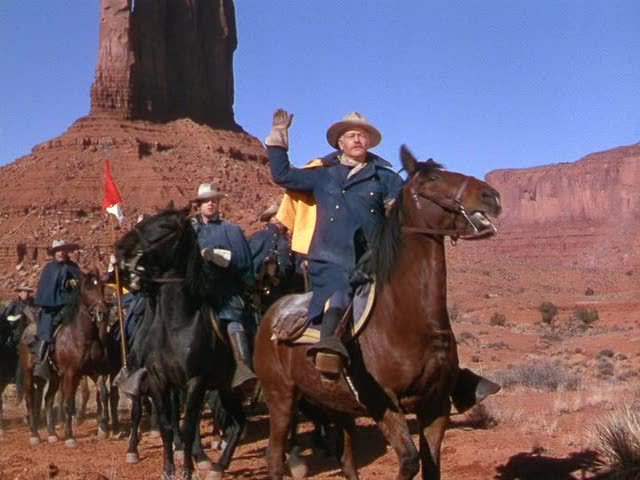
The first John Ford film I can remember seeing, probably encountered around the time I was in first grade, was archetypal: She Wore a Yellow Ribbon (1949). Apart from its uncommonly vibrant colors, this had just about everything a Ford movie was supposed to have: cavalry changes, drunken brawls, Monument Valley, and such standbys as John Wayne, Ben Johnson, Harry Carey Jr., Victor McLaglen, and Ford’s older brother Francis; only Maureen O’Hara and Ward Bond were missing.
Ford was one of the very first auteurs I was aware of, along with Cecil B. De Mille, Walt Disney, and Alfred Hitchcock, and what made him especially distinctive was that he was apparently less restricted than the others to a single genre. De Mille made spectaculars, Disney did cartoons, and Hitchcock specialized in thrillers, but a Ford movie could be a western, a war movie, or something else.
The ten relatively neglected Ford movies I’ve singled out here include a few that still can’t be found on DVD. I might well have selected some others if I’d seen them more recently (I’m currently looking forward to re-seeing the 1945 They Were Expendable, for instance), but I’d none the less argue that all of these are well worth hunting down. Read more
From the May 6, 2005 Chicago Reader. –J.R.
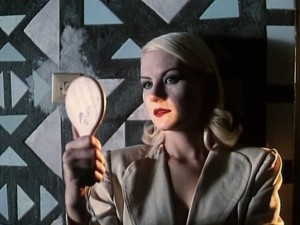
Take No Prisoners: The Bold Vision of Kira Muratova
at the Gene Siskel Film Center
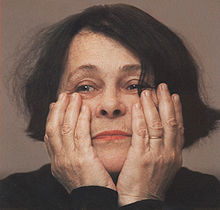
The most original filmmakers working today tend to be identified more with their respective national cultures than with the world at large. The work of directors such as James Benning, Luc and Jean-Pierre Dardenne, Hou Hsiao-hsien, Jia Zhang-ke, Abbas Kiarostami, Kira Muratova, Jafar Panahi, Béla Tarr, Tsai Ming-liang, and Edward Yang is seen as specialized, local, and esoteric. But I’d argue that what they have to say about their countries is secondary to their larger concern: the bewildering, tragicomic, and often disastrous effects of modernity on traditional modes of life and thought.
The dozen obstinately weird and wild films of Kira Muratova, seven of which are playing this month at the Gene Siskel Film Center, are described by some critics as Russian to the core, and I wouldn’t hesitate to call her the greatest living Russian filmmaker. (I’d link Alexander Sokurov’s work to the 19th century rather than to the 20th or the 21st.) Yet I’m not entirely sure what “Russian” means these days or how it applies to her.
Born in 1934 in Romania to a Romanian mother and a Russian father, Muratova went to both Romanian and Russian schools, often hiding her Russian identity at the former and her Romanian identity at the latter. Read more