Written for Moving Image Source and posted online November 6, 2009. Thanks to Francois Thomas for correcting a few particulars in July 2022.– J.R.
It’s fascinating to consider the possibility that the essential film oeuvres of both Alain Resnais and Chris Marker commence with the same remarkable, rarely seen essay film from 1953 — a film whose direction is co-signed in the credits by Resnais (also credited for editing), Marker (script and conception), and Ghislain Cloquet (cinematography). (Cloquet [1924-1981], who went on to shoot most of Resnais’s other major films until his own camera assistant, Sacha Vierny, basically replaced him, also subsequently shot major films by Jacques Becker, Robert Bresson, André Delvaux, Jacques Demy, Marguerite Duras, Louis Malle, and Roman Polanski.) And it’s no less fascinating (and significant) to ponder the implications of the fact that the only Oscar-winning film of Resnais’s career came five years before this neglected early peak. The film in question was the 1948 documentary Van Gogh, and in keeping with the Academy’s procedures, the Oscar went not to Resnais, again the director and editor, but to the producer, Pierre Braunberger. Largely because I prefer to look at paintings from static vantage points and with my own itineraries, I’ve never felt entirely comfortable with Resnais’s exploratory camera movements here and in Paul Gauguin and Guernica (both 1950). Read more
From the Chicago Reader (November 18, 2005). Click on the second photo below. — J.R.
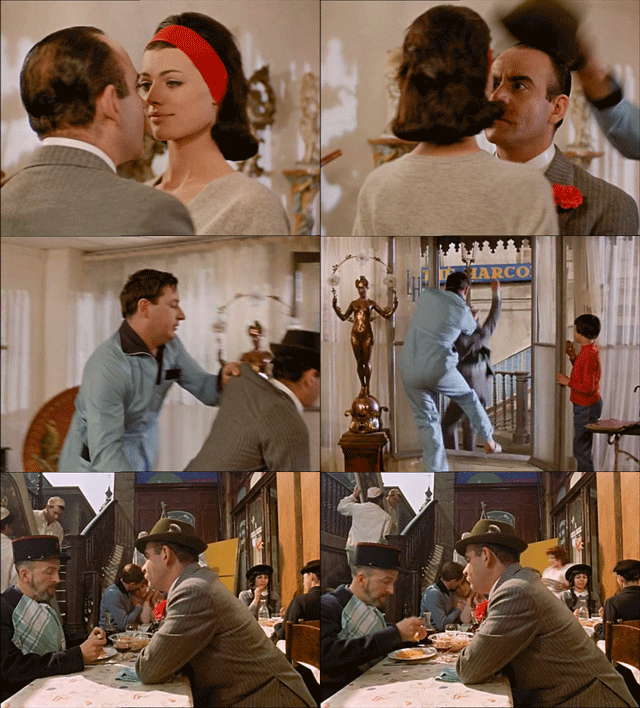
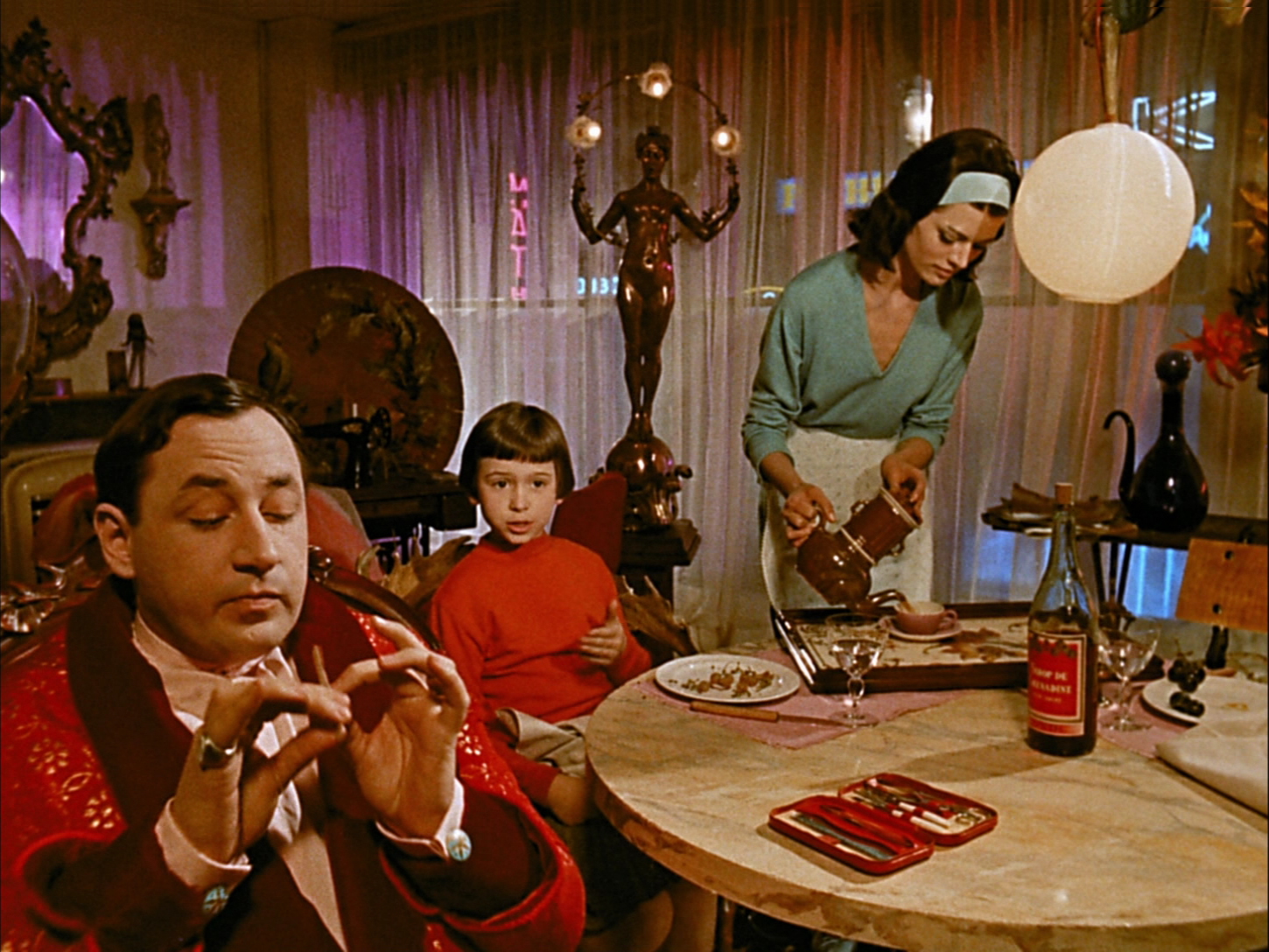
Arguably Louis Malle’s best work (1960). Based on Raymond Queneau’s farcical novel about a little girl (Catherine Demongeot) left in Paris for a weekend with her decadent uncle (Philippe Noiret), this wild spree goes overboard reproducing Mack Sennett-style slapstick, parodying various films of the 1950s, and playing with editing and color effects (Henri Decae’s cinematography is especially impressive), though gradually it becomes a rather disturbing nightmare about fascism. Forget the preposterous claim by a few critics that the movie’s editing influenced Alain Resnais, but there’s no doubt that Malle affected Richard Lester — and was clearly influenced himself by William Klein, whom he credited on the film as a visual consultant. A rather sharp, albeit soulless, film, packed with ideas and glitter and certainly worth a look. In French with subtitles. 93 min. Sun 11/20, 3 and 5 PM, Facets Cinematheque.
Adapted from a lecture given at the Filmmuseum Pottsdam, July 6, 2016.
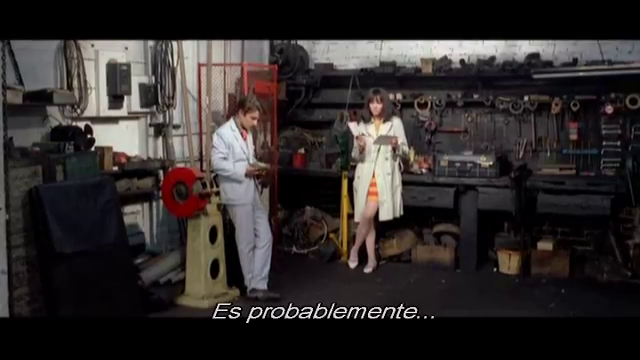
It’s unfortunate that Agnès Varda only began to assume the status of a major filmmaker after her husband died and she became known as the custodian of Jacques Demy’s precious legacy. Prior to that, she was mainly known, affectionately but somewhat condescendingly, as a sort of mascot of the French New Wave whose public profile remained almost as superficial as that of her eponymous heroine in Cleofrom 5 to 7 (1962). And the troubling, ironic sting at the end of La Bonheur (1965) tended to be either misunderstood or ignored. Thanks to the diversity of her films, stylistic and otherwise, she was easy to overlook due to her reluctance to brand herself, unlike her male colleagues.
One fascinating trait that Varda shared with her late husband, however, was the compulsion to become a tireless indexer and cross-referencer of her own work. But instead of bringing back her fictional characters in subsequent films, as Demy did, she more often brought back her locations and her interview subjects. And she went far beyond Demy in becoming her own explicator and analyst, in effect telling her audience what to look for and even how to find it. Read more
In memory of Dušan Makavejev (1932-2019). Commissioned and originally published by Criterion for their DVD of WR: Mysteries of the Organism in 2007. I was occasionally reminded of this film while recently watching Radu Jude’s no less brilliant and equally singular time capsule of 2021, Bad Luck Banging or Loony Porn.— J.R.
Between the mid-1960s and the mid-1970s, it was generally felt among Western intellectuals and cinephiles that cutting-edge, revolutionary cinema came from Western Europe, Latin America, and the United States. Among the touchstones were Jean-Luc Godard’s films in France, Newsreel’s agitprop documentaries and their spin-offs (like Robert Kramer’s Ice and Milestones) in the United States, such diverse provocations as Lindsay Anderson’s If…. and Godard’s 1+1 in the United Kingdom, and, in Latin America, films like Lucía (Cuba), The Hour of the Furnaces (Argentina), and Antonio das Mortes (Brazil).
By contrast, the wilder politicized art movies coming out of Eastern Europe at the time — such as those of Vera Chytilová, Miklós Jancsó, and Dušan Makavejev — were treated as curiosities, aberrations that wound up getting marginalized by default. The fact that they came from Communist countries made them much harder for Westerners to place, process, and understand; in most cases, an adequate sense of context was lacking. Read more
Written in July 2008 for an issue of Stop Smiling devoted to Washington, D.C. 2022: In a way, the recent Arrival might be said to qualify as a mystical remake of The Day the Earth Stood Still, and I found it every bit as gripping. — J.R.
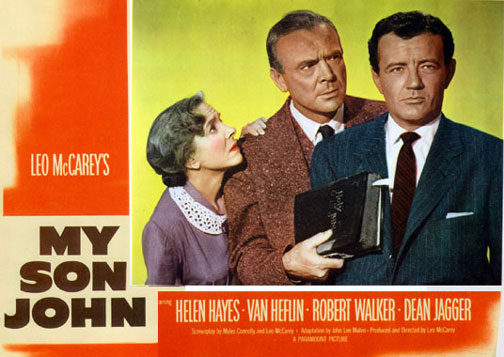
To get the full measure of what Cold War paranoia was doing
to the American soul, two of the best Hollywood A-pictures
of the early 50s, each of which pivots around its Washington,
D.C. locations – The Day the Earth Stood Still (1951) and My
Son John (1952) — still speak volumes about their shared zeitgeist,
even though they couldn’t be further apart politically.
An archetypal liberal parable in the form of a science fiction
thriller and an archetypal right-wing family tragedy (with deft
slapstick interludes) that’s even scarier, they’re hardly equal in
terms of their reputations. Leo McCarey’s My Son John, widely
regarded today as an embarrassment for its more hysterical elements,
has scandalously never come out on video or DVD [2014 footnote, it’s
now available from Olive Films], though in its own era it garnered
even more prestige than Robert Wise’s SF thriller, having received
an Academy Award nomination for best screenplay. Read more
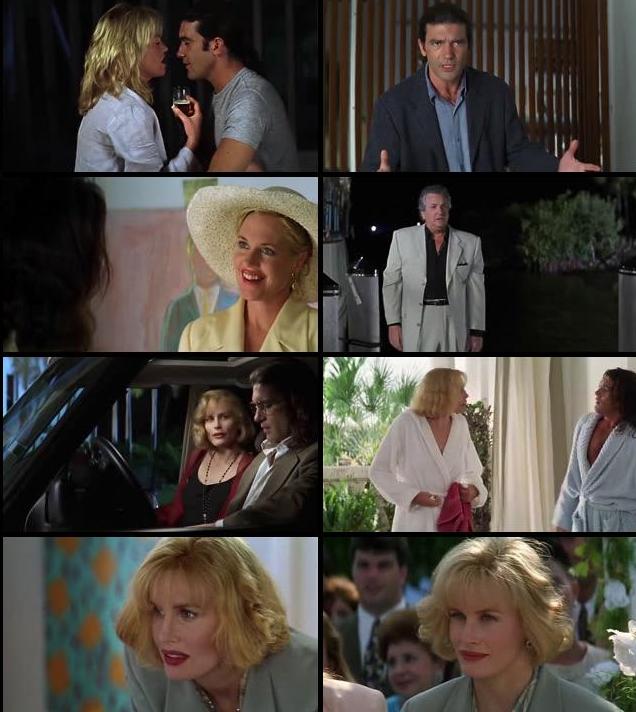
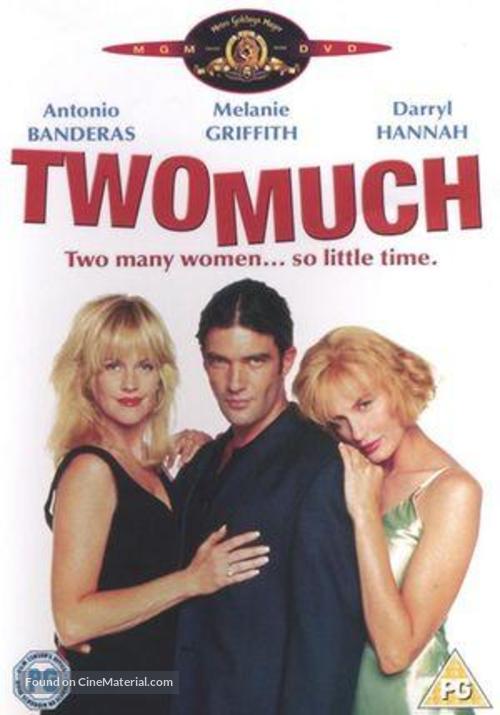
Or should we say knot enough? Antonio Banderas plays a frustrated painter and crooked art dealer who pretends to be twin brothers while romancing wealthy sisters played by Melanie Griffith and Daryl Hannah. Spanish director Fernando Trueba, who with his brother David Trueba has adapted a Donald E. Westlake novel, easily surpasses his comic work on the overrated and Oscar-winning Belle Epoque; but he fails to take the knots — which might also be called the flabby stretches — out of an overextended farce. I could live with this movie because the cast (which also includes Danny Aiello, Joan Cusack, and Eli Wallach) is so agreeable, but Banderas, for one, has to strain too hard and too long for his laughs, and the relatively lackadaisical pacing forces him to do so. (JR)
Written for the December 2022 issue of Caimán Cuadernos de Cine. — J.R.
I’ve recently been working on a book that collects my uncollected film, literary, and jazz criticism, ordering all my inclusions chronologically so that they’re allowed to commingle, meanwhile exploring ways that all three of these art forms (film, literature, music) can inform and reflect one another. Because this project rejects the “targeting” mentality ruling academic presses and their all-powerful publicists—which follows the Reaganite economic principle of exploiting and exhausting markets that already exist, not proposing new ones—it took me some time to find a publisher.
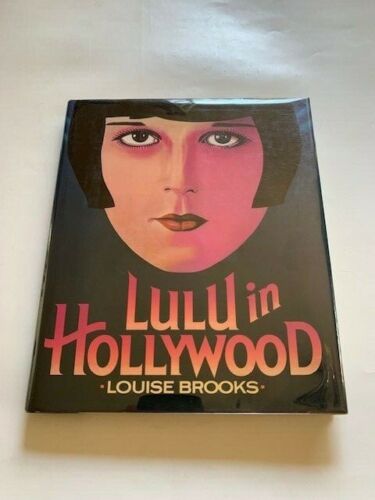
Still more recently, I’ve been rereading Louise Brooks’ informative, thoughtful, and beautifully written Lulu in Hollywood, a collection of essays combining autobiography with criticism, film history with social and fashion history, and even a certain kind of fiction with non-fiction.
The latter combination requires some explanation. While recounting her memories of her own acting in films (especially Beggars of Life and Pandora’s Box) and of Humphrey Bogart, Charlie Chaplin, W.C. Fields, Greta Garbo, Lillian Gish, the neglected director Edmund Goulding, and the even lesser known Pepi Lederer (lesbian niece of Marion Davies, older sister of screenwriter Charles Lederer, and close friend of Brooks who committed suicide at the age of 25), Brooks renders scenes in such fulsome and intricate detail—extended dialogue, facial expressions and gestures, locations, furnishings, clothes, food and drink at meals—that it quickly becomes apparent that she must be fleshing out whatever she can remember with imagined specifics. Read more
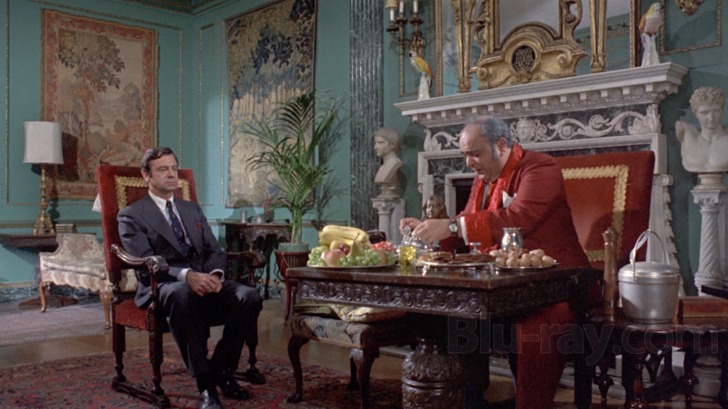
Elaine May’s hilarious, edgy first feature is her only one that differs substantially from what she intended. Her three-hour rough cut included two murders committed by the antihero (Walter Matthau), of a blackmailer and a crooked lawyer (Jack Weston), that the studio excised, yet A New Leaf registers with audiences as her sweetest, most tender picture. The irony is that Matthau’s character — a self-absorbed idler who exhausts his inheritance, then goes looking for a wealthy bride he can murder in order to keep his luxuries (and finding a clueless, clumsy botanist, deftly played by May) — is hardly the sort one expects to solicit such emotions, even without his two murders. But a specialist in creating lovable monsters, predators and innocents alike, May is clearly up to the challenge.
Reading Jack Ritchie’s short story “The Green Heart” that she adapted, included with the Olive Films Blu-Ray, clarifies the much blacker comedy she had in mind, achieving her sweet finale only after more challenging discomforts en route. And what she added to this story — such as the antihero’s Ferreri, butler, and uncle, and two potential brides preceding the botanist — may matter as much as what the studio removed. Read more
This appeared Cinema Scope no. 11 (summer 2002).Thanks to Francois Thomas in helping me clean up my German and French. — J.R.
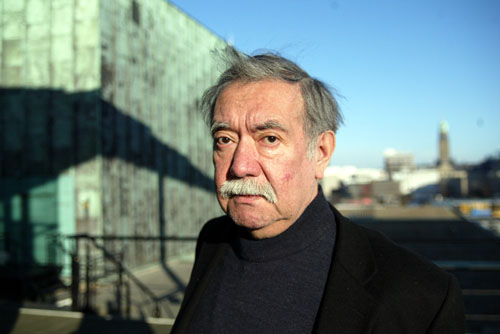
“You can’t smell email,” Raúl Ruiz insisted to me the night before we had this interview at the 2002 Rotterdam Film Festival, explaining to me why he didn’t have any truck with the Internet. He added that lately he’s been collecting various first editions, excommunications, and death sentences, many of them from the 19th century and earlier, and he can smell all of them.
At first I was surprised by this old-fashioned form of resistance, but then the more I thought about it, the more I realized that Raúl is basically a 19th century figure. His largely Borgesian canon of 19th and early 20th century English and American writers (Chesterton, Stevenson, Wells, Harte, Hawthorne, Melville, et al) and his taste for rambling narratives and tales within tales smacks of a Victorian temperament.
I first encountered Ruiz’s work during my first trip to the Rotterdam Film Festival, in 1983, and it was there where we first became friends three years later —- as well as where we had this interview on January 26, in the lobby of the hotel where we were both staying. Read more
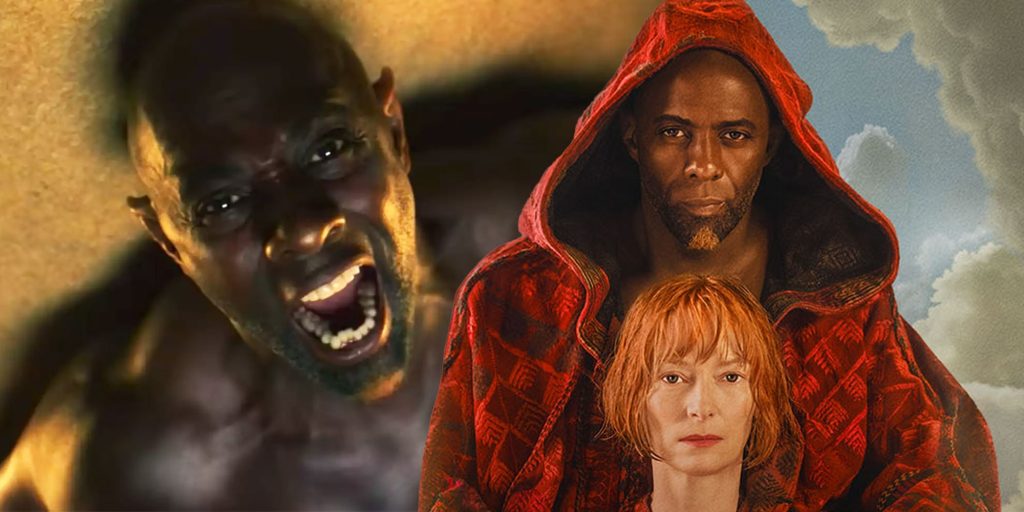
A.S. Byatt’s novella “The Djinn in the Nightingale’s Eye, adapted by Australian filmmaker George Miller (Babe: Pig in the City, Happy Feet, Mad Max: Fury Road) with his daughter Augusta Gore, is a contemporary fantasy about a solitary academic narratologist (Tilda Swinton) who encounters a genie (Idris Elba) while attending a conference in Turkey, Many fairy tales-within-tales follow as flashbacks, cross-referencing A Thousand and One Nights, the myth of Cybele, and The Epic of Gilgamesh as well as Chaucer and Shakespeare. This not only juxtaposes today’s world with the kind of “timeless” language we associate with ancient sorceries. It also juxtaposes the enigma of how to arrive at the three wishes granted by a genie freed from three millennia inside a bottle with the issue of what it’s like to be that genie before, during, and after his entrapment. Because the narratologist knows that the three wishes granted usually end badly, she endeavors to learn more about the granter before she proceeds. What the ambidextrous Miller brings to this material is not only his two charismatic lead actors but a banquet of thrilling digital effects, arguably far more conducive to today’s consumer tastes than Byatt’s fancy prose.Read more
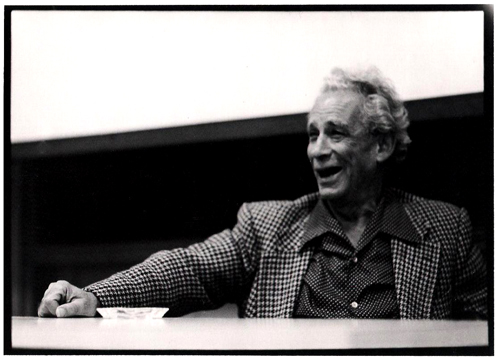
My first meeting with Samuel Fuller is chronicled in this interview/essay published in the July 9, 1980 issue of The Soho News and was reprinted in my recent collection Cinematic Encounters: Interviews and Dialogues. Seven years later, while concluding my academic career at the University of California, Santa Barbara, where I was placed in charge of running the film studies summer school program, I was still crazy about Fuller, and invited him to serve as our “visiting artist”, which led to our becoming friends from that summer until his death a decade later. I did my best to try to capture his singular way of talking in this article. For my title, I’m using the headline on that issue’s front page, not the title given inside (“Sam Fuller Reshoots the War”). — J.R.
When I enter his suite at the plaza, he’s finishing lunch, expressing his regret about missing Godard at Cannes, remarking on the absurdity of prizes at film festivals, asking me what Soho News and Soho are. (The one he knows about is in London — he fondly recalls a cigar store on Frith Street.)
It isn’t hard to figure out why Mark Hamill affectionately calls him Yosemite Sam, or why Lee Marvin simply says he’s D.W. Read more
Who could have guessed that Frederick Wiseman’s second fiction feature –- a mesmerizing, meditative masterpiece made at age 92, only two months after the death of his wife of 66 years, Zipporah Batshaw Wiseman (whose first name has served as the name of his production company) –- would resemble in some particulars some of the late works of Jean-Marie Straub? It’s an audiovisual fugue consisting of (a) a monologue performed by Nathalie Boutefeu, adapted by Boutefeu and Wiseman from diary entries and letters written by Leo Tolstoy’s wife Sophia about her estrangement from her husband and (b) the vibrant settings she wanders through, a lush seaside garden on the French island Belle-Île off the coast of Brittany. It even features “the wind in the trees” that D.W. Griffith found missing from modern cinema but which Straub has placed front and center in his own landscape art. But of course the differences from Straub are every bit as pertinent as the similarities: a devastating personal autocritique by a documentarist who has devoted his career to what he has called “reality fictions”, his ravishing widescreen compositions, and the services of a skilled professional actress (whose credits include Irma Vep and Kings and Queens). Read more
My column for the Spring 2022 issue of Cinema Scope. — J.R.
My pandemic home-viewing choices are invariably and inescapably matters of chance and accident—basically, what turns up and when. In different ways, all of the dozen items discussed below are examples of what I mean.
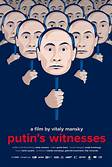
On its own initiative, Icarus Video sends mePrisms and Portraits: The Films of Rosine Mbakam, a four-disc DVD box set. Three of the four discs fall out of the box as soon as I open it, and I decide to start with Prism (2021). But the disc turns out to be a 2018 documentary by Vitaly Mansky, Putin’s Witnesses, a different Icarus release that has been accidentally affixed with a Prism label, so I watch that instead.
I’m glad that I did. Mansky was an official videographer of Putin’s during the latter’s first year in power, and this lesson in statecraft is valuable not only for its use of outtakes, but also for Mansky’s retrospective and critical voiceovers attached to some of the material he was expected to shoot. The most striking (apparent) outtakes consist of Mansky’s dialogues with Putin about his understandable objections to Putin reinstating the Soviet national anthem to replace the Russian one, and Putin about a year later expressing to Mansky a seemingly sincere preference for democracy over monarchy and autocracy, saying that he foresees and even looks forward to eventually becoming a private citizen again. Read more
From the Chicago Reader (November 1, 1996). — J.R.
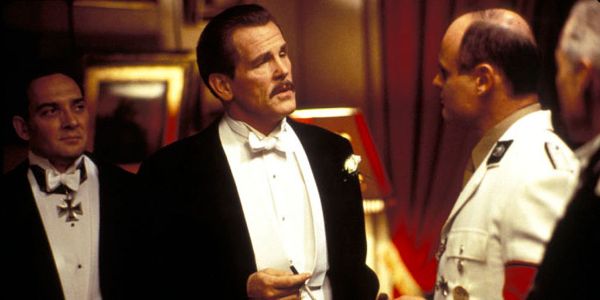
An honorable failure, this intelligent adaptation of one of Kurt Vonnegut’s best early novels falters in part because it rejects Vonnegut’s narrative structure of alternating several time frames for more chronological flashbacks. This plays havoc at times with the book’s delicate ordering of facts about Howard W. Campbell Jr. (Nick Nolte) — a successful German-American playwright living in Germany who decides during the rise of Nazism to work as an American spy, knowing that for security reasons his masquerade as a Nazi can never be revealed. The invaluable moral of the novel, placed in the first paragraph of the introduction, is We are what we pretend to be, so we must be careful about what we pretend to be. By placing it less prominently in the narration, director Keith Gordon and adapter Robert B. Weide grant it a lesser function, so that the powerful literary irony established in the film’s first half — all the more valuable in the context of Schindler’s Listand its suggestion that there were good ways of being a Nazi — is eventually dissipated, and the improbabilities of the original become much more vexing without the author’s exquisite expositional strategies.Read more