From Film Comment (January-February 1975). (January 23, 2012 update: Thanks, once again, to the ever-vigilant Ehsan Khoshbakht for spotting a few typos here and thus enabling me to correct them.)– J.R.
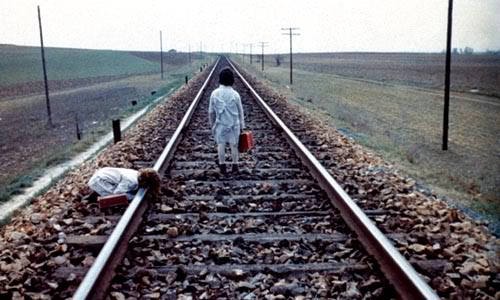
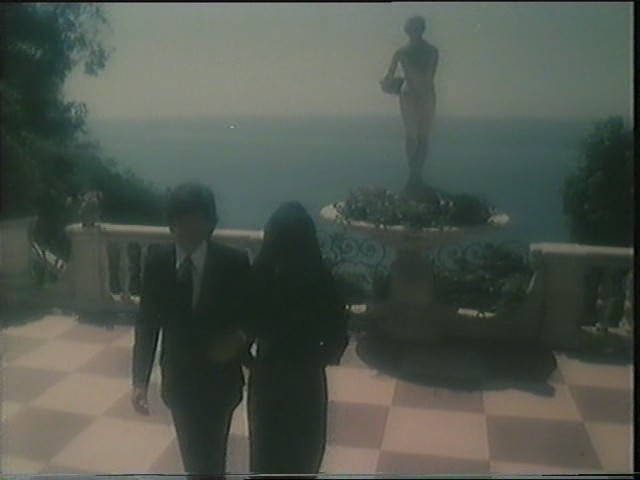
October 8: Victor Erice’s EL ESPIRITU DE LA COLMENA (THE SPIRIT OF THE BEEHIVE). I’ve been trying all weekend to come up with an adequate description of this lovely Spanish film, but I can’t get anywhere. A colleague recently spoke of the film as “beguiling,” which seems like an honest start. Two remarkably expressive little girls, Ana Torrent and Isabel Telleria, see James Whale’s FRANKENSTEIN at a traveling film show that stops in their village in Castille. Afterwards, Isabel explains to her sister that the monster is still alive — and indeed, he makes a brief appearance in the final reel. The girls’ father is a bee-keeper who broods over Maeterlinck, while the mother writes unexplained letters to someone in France. Isabel plays dead for a bit, and Ana believes her. Ana befriends a fugitive soldier who is eventually killed.
I don’t know what sense to make of either the plot or Erice’s beautiful honey-tone colors and honeycomb compositions, but I find the film haunting and rather spellbinding in a muted way, and emotionally it all seems to add up to something. Read more
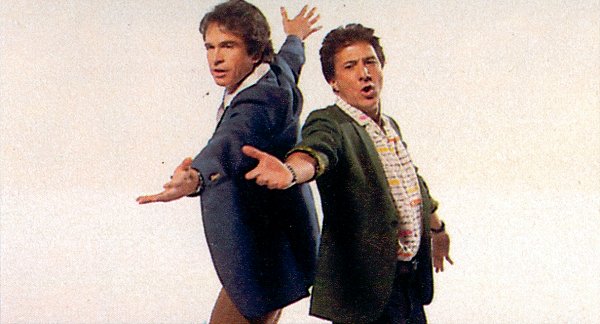
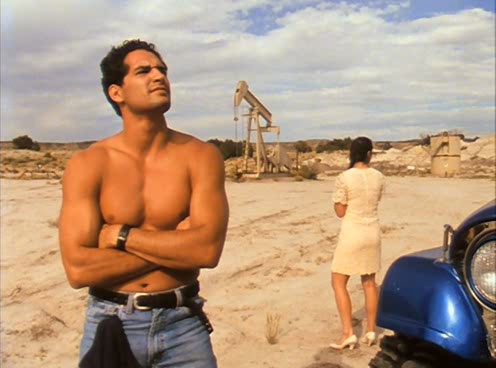
In contrast to the relative timelessness of Elaine May’s first three features, Ishtar (1987) is a satirical farce plainly grounded in the era of Ronald Reagan, where a peace settlement between a North African dictator and his rebellious populace can be negotiated by a cynical American show-biz agent (Jack Weston) on behalf of his talentless songwriter clients. These are Warren Beatty and Dustin Hoffman, both cast against type as a gauche Texan without sexual confidence and a self-styled stud calling himself The Hawk.
Yet the most striking thing about the disastrous U.S. reception of this comedy was the blindness of its audience to its political target — American stupidity in the Middle East, whether innocent (Beatty and Hoffman) or corrupt (Charles Grodin’s CIA agent), years before our dimwitted American assaults on Kuwait, Iraq, and Afghanistan yielded much bad music of their own. May’s unique capacity to make all her monstrous characters (along with Isabelle Adjani’s “leftist” rebel) weirdly lovable is what keeps this movie tender even when its ridicule is at its most corrosive. And the fact that May, Beatty, and Hoffman all collaborated with Paul Williams on composing their awful/wonderful songs only proves how much competitive team spirit prevails. Read more
My 1973 Cannes coverage for London’s Time Out (which ran in their June 8-14 issue, about a year before I moved to London from Paris), slightly tweaked. I’m pretty sure I submitted something longer and more detailed (judging from my penultimate sentence, my account of Jerry Schatzberg’s Scarecrow must have been one of the several things that was cut), but I no longer have the original version to verify this. — J.R.
May 11: Discounting Godspell, the opening film, which I avoided seeing yesterday both for its sake and for mine, the festival got off to a rousing start today with two strong and absorbing films.
Joseph Losey’s A Doll’s House -– shown in the official festival, out of competition — cannot however be considered a successful embodiment of the Ibsen play. The authorial agendas of Ibsen, Losey, and [Jane] Fonda ultimately diverge more than combine, and we arrive at an abrupt impasse – a torso of the play that’s still missing a head.
‘To waken the sleeping beauty,’ says a carnival barker in James B. Read more
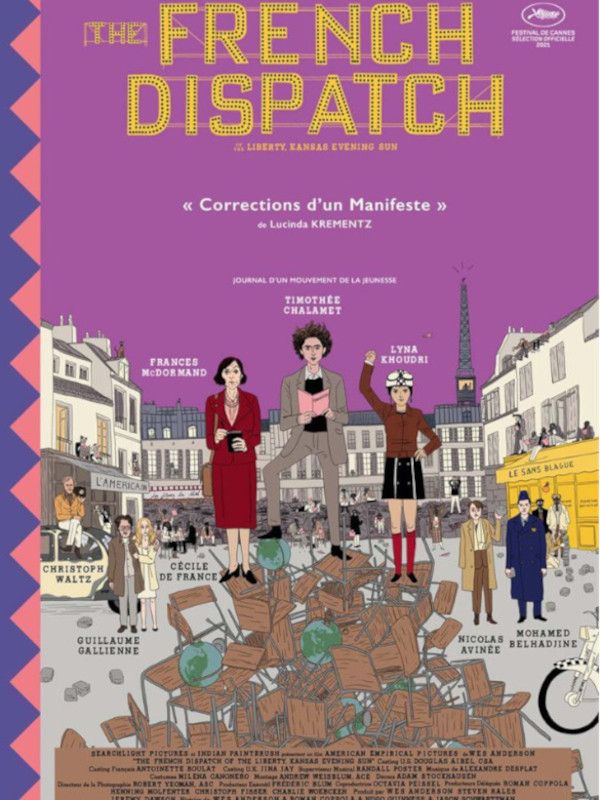
What I find most disconcerting about Wes Anderson’s new formalist feature is its attitude towards France, which somehow manages to come across as derisive yet disinterested at the same time: not angry or witty enough to be effective as satire yet not observant enough to seem accurate, at least to a onetime resident of that country such as myself. According to all the American reviews I’ve read, it’s not really about France at all but about the American journalists and critics who report from France about France and the French. But because the movie is basically about them and not about the French, it strikes me as being only half-witted much of the time. The material for a knowing send-up of French culture is present yet unexplored and underdeveloped because the movie doesn’t really seem to care much about French people — only about French movies, French food, and other exports.
I never bothered to read Mavis Gallant in The New Yorker about May 1968 because I was living in Paris that year from June through August, before moving to that city in the fall of 1969 for five more years. So maybe I and the people of France are the last people on earth this movie was designed for. Read more
From the Chicago Reader (December 22, 1995). — J.R.
Nixon
* (Has redeeming facet)
Directed by Oliver Stone
Written by Stephen J. Rivele,
Christopher Wilkinson, and Stone
With Anthony Hopkins, Joan Allen, James Woods, J.T. Walsh, Paul Sorvino, Powers Boothe, David Hyde Pierce, E.G. Marshall, Madeleine Kahn, David Paymer, and Mary Steenburgen.
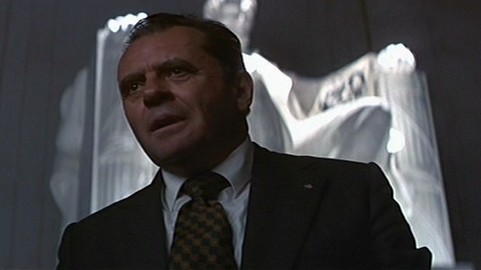
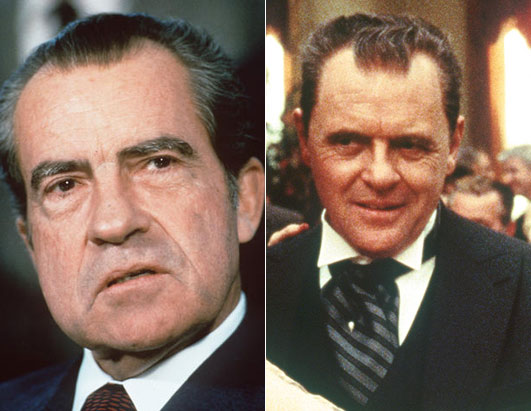
Did we really win the cold war? I know that capitalism prevailed on the economic front, but I’m less sure about the cultural front. I suspect a capitalist version of Stalinist culture has triumphed rather than any sort of democracy: Stalinist culture meaning calcified, state-supported art built around solemn, hulking father figures — something like Oliver Stone’s latest two-ton Christmas turkey, Nixon. If we recognize that Disney has effectively become the federal government, the rest of the scenario falls into place. Just as Stalin’s flunkies had to praise the official “masterpieces” of Stalinist art no matter how inert or uninventive they were, Nixon‘s producers (who’ve spent millions promoting the movie) have guaranteed that media savants are already describing Stone’s Nixon as a figure of Shakespearean proportions rather than the poorly cast, two-dimensional numskull decked out with a few grade-Z horror-movie traits that he is.
Toddlers have been treated a lot more like adults by the movies this year than grown-ups have. Read more
As a lifelong film buff who became a professional filmcritic in my late twenties, I’ve spent much of my life eversince trying to reconcile these two distinct and in somerespects conflicting identities. Many of my colleagues seem to regard criticism and fandom as reverse sides of the same commercial coin–compatible and mutually reinforcing facets of the same impulses, sometimes blissfully fusing into a sincere form of advertising. (A perfect example of this in action is Andrew Sarris’s rapturous and well-informed two-part review of Resnais’ Muriel, which has recently become my favorite piece of Sarris prose, thinking and feeling with equal amounts of passion.)
For me they’re periodically in conflict with one another, philosophically, and aesthetically. Giving a mixed review to Gjon Mili’s Jammin’ the Blues in 1944, James Agee seems to have felt this way about his former taste as an indiscriminate jazz buff, maintaining that the short “is too full of the hot, moist, boozy breath of the unqualified jazz addict, of which I once had more than enough in my own mouth…”
Although we often overlook the religious piety and thereverence—arguably another form of addiction–that accompanied the politique des auteurs as it developed in France in the 1950s, the degree to which it was informed by such protocols is difficult to deny.Read more
From the Chicago Reader (February 17, 1995). — J.R.
One of the strangest things about the elusive career of Otto Preminger (1905-1986) is that it remains elusive not because of the man’s invisibility but because of his relative omnipresence in the public eye. Though never as familiar as Alfred Hitchcock, he cut an imposing figure in the media, registering much more than either John Ford or Howard Hawks. Preminger was well known for his Nazi roles in Margin for Error (1943) and Stalag 17 (1953), for appearing in TV guest spots on Batman and Laugh-In and numerous talk shows, as a colorful player in Tom Wolfe’s Radical Chic, and for grabbing headlines as the man who defied the Production Code of the 50s and the lingering Hollywood blacklist of the 60s while grandly mounting well-publicized movie versions of best-sellers like Anatomy of a Murder, Exodus, Advise and Consent, and The Cardinal. Since he was one of the first of the high-profile American independents after the heyday of Griffith and Chaplin and moved from Hollywood to New York in the early 50s and never shifted his home base later, in most people’s minds he was more producer than director. Read more
From The Unquiet American: Transgressive Comedies from the U.S., a book-length catalogue for a retrospective I put together for the Viennale in 2009, adapted and expanded from a catalogue entry for Il Cinema Ritrovato the same year. — J.R,.
LAUGHTER
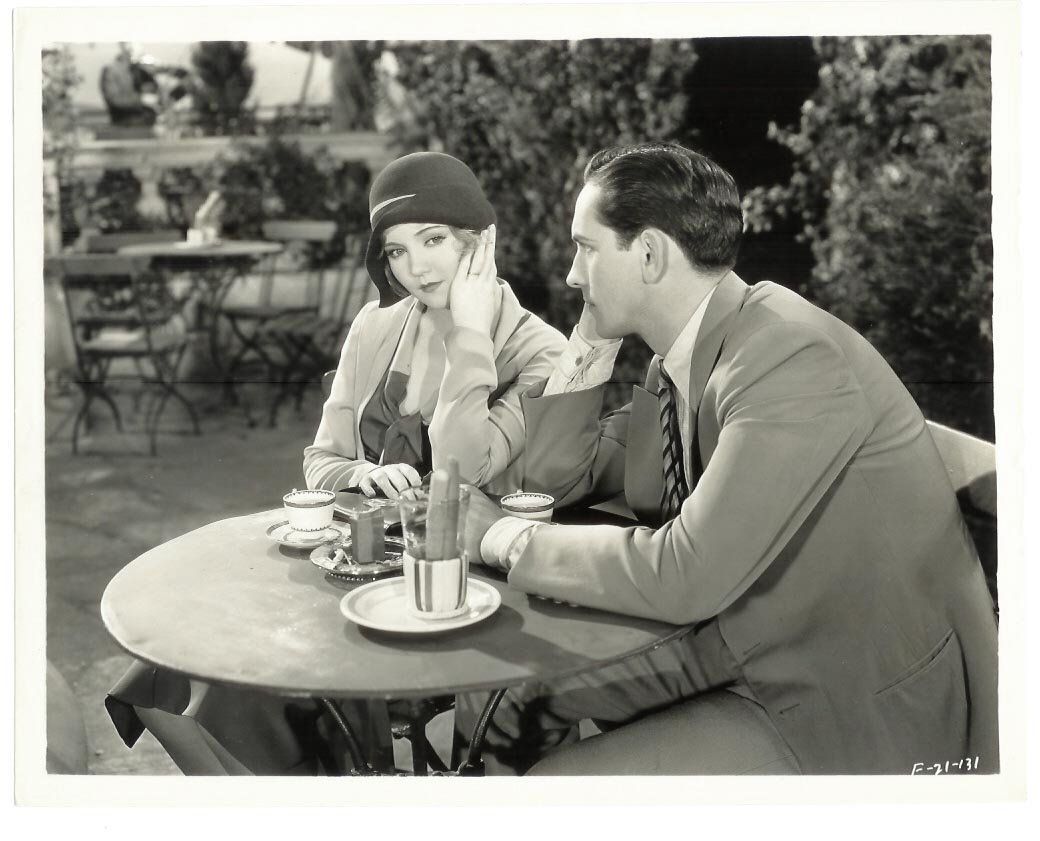
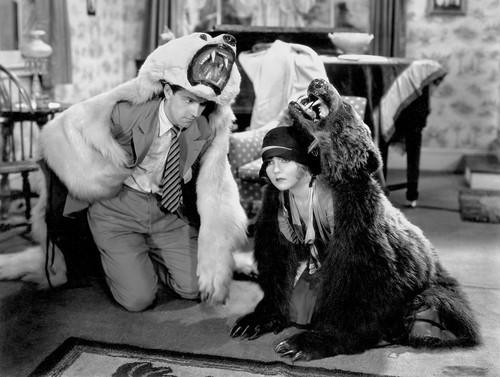
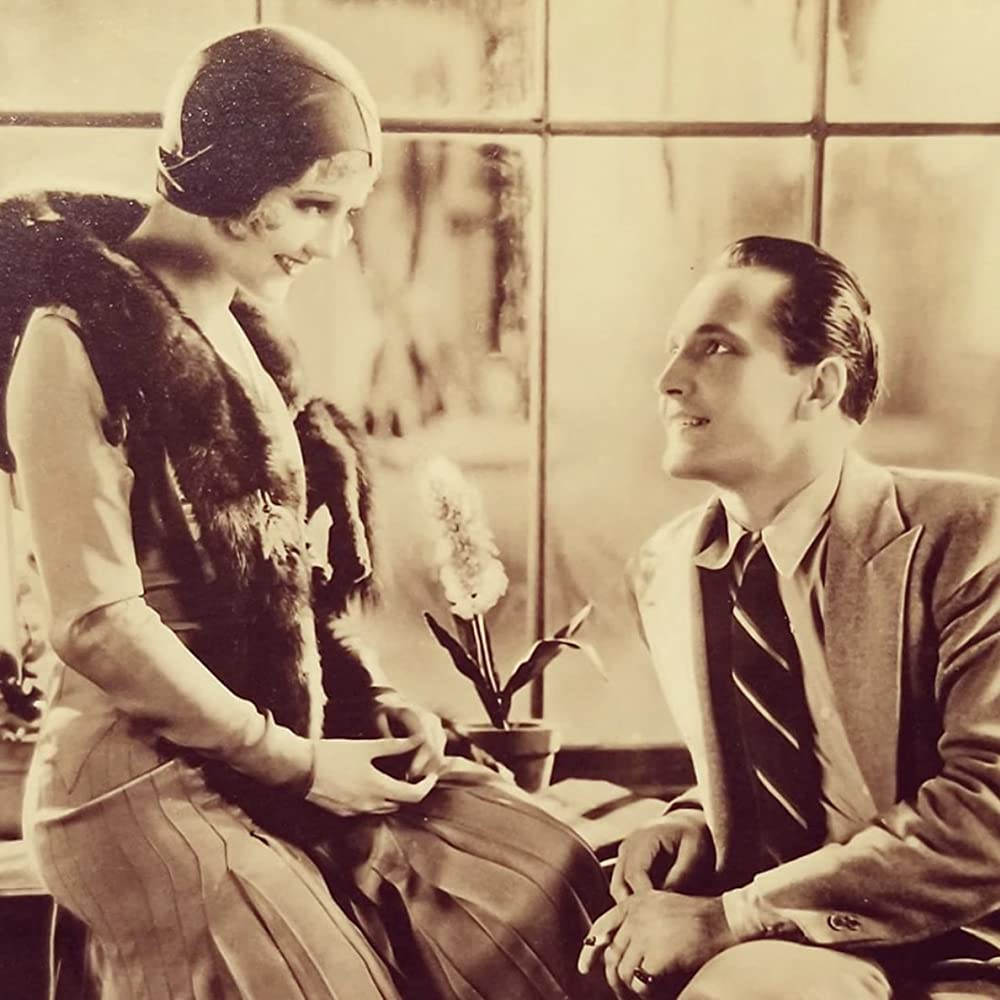
Harry d’Abbadie d’Arrast (1897-1968) – a French-Basque aristocrat who was born in Buenos Aires and died in Monte Carlo – made eight films, all between 1927 and 1935, and apparently many of these are lost. (He was fired from the early talkie Raffles –which seems to retain a few d’Arrastian qualities – and replaced by George Fitzmaurice, and reportedly he also did some uncredited work on Wings. It appears that he also had a lot to do with the preparation of one of my favorite musicals, Hallelujah, I’m a Bum!(1933), according to the late Pierre Rissient, which wound up being directed by Lewis Milestone.)
I’ve seen only three of his films – A Gentleman of Paris(1927), Laughter (1930), and Topaze (1933) –and all of these are pretty remarkable. (The latter is a Pagnol adaptation with one of John Barrymore’s most touching performances.) As far as I know, the only one who ever wrote about this figure in any detail was Herman G.Weinberg Read more
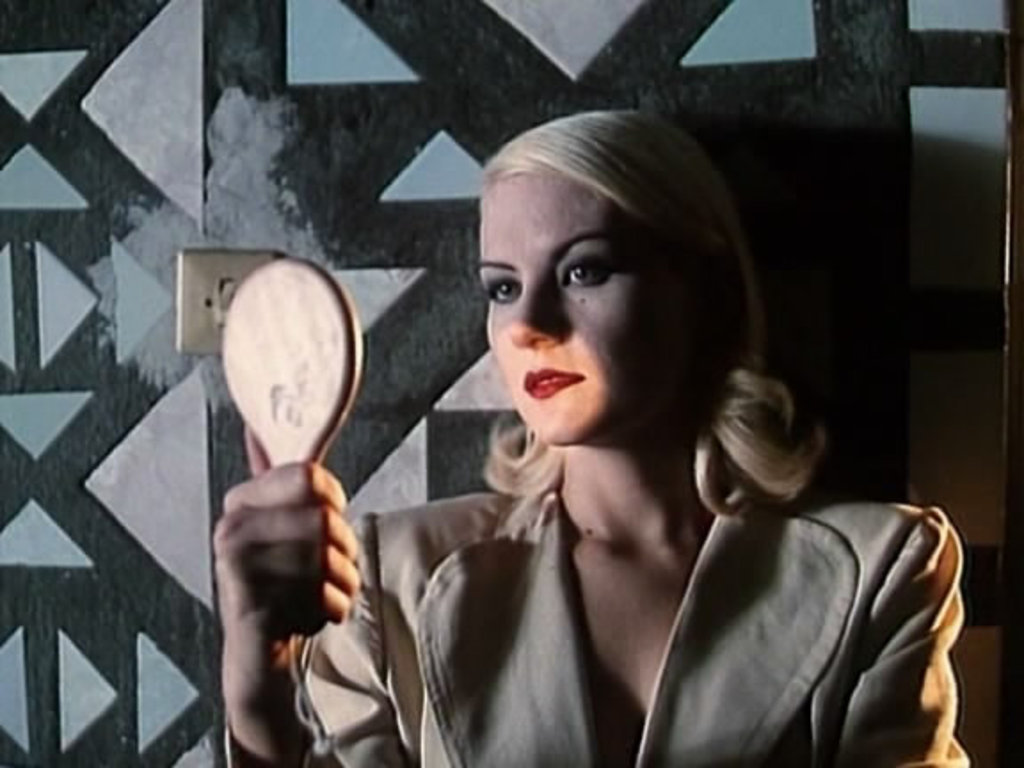
Commissioned by DVD Beaver, and published by that site in February 2010. I’ve updated or added a few links, delighted to report that all the unavailable items can now be accessed in some form or another.I was inspired to repost this after just reseeing Sternberg’s sublime Dishonored in Criterion’s handsome new Dietrich and Von Sternberg in Hollywood box set. I’ve also just reseen the lovely if politically incoherent Shanghai Express in the same package, and I wonder if it’s possible that the relative neglect accorded to Dishonored, by cinephiles and academics alike, may have something to do with the fact that it’s the Hollywood feature of Dietrich and Von Sternberg that has the most to say about the real world — not only because it begins and ends in Vienna, but also because, as an antiwar statement that a prostitute can do more for her countryman than a female spy can do for her country, it has the most effective strategies for combining genre elements with personal fantasies and moral convictions, in part through its diverse metaphors regarding art (Dietrich’s piano playing as it serves both passion and state) and glamor (a sword blade used as a makeup mirror in the final scene).
A catalog entry for Il Cinema Ritrovato in 2021, put together from three other texts of mine. — J.R.
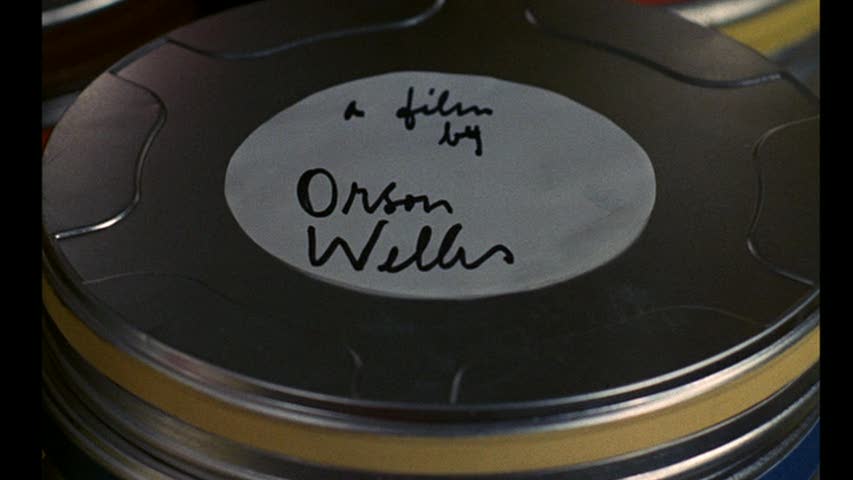
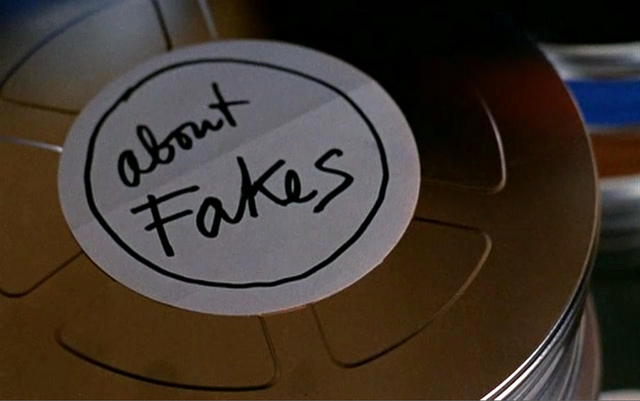
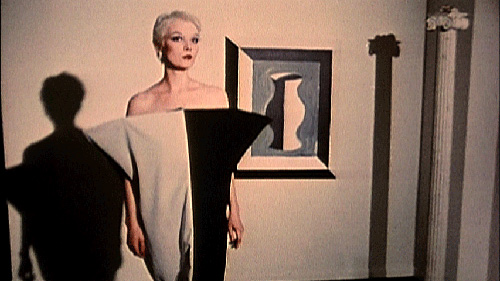
F FOR FAKE
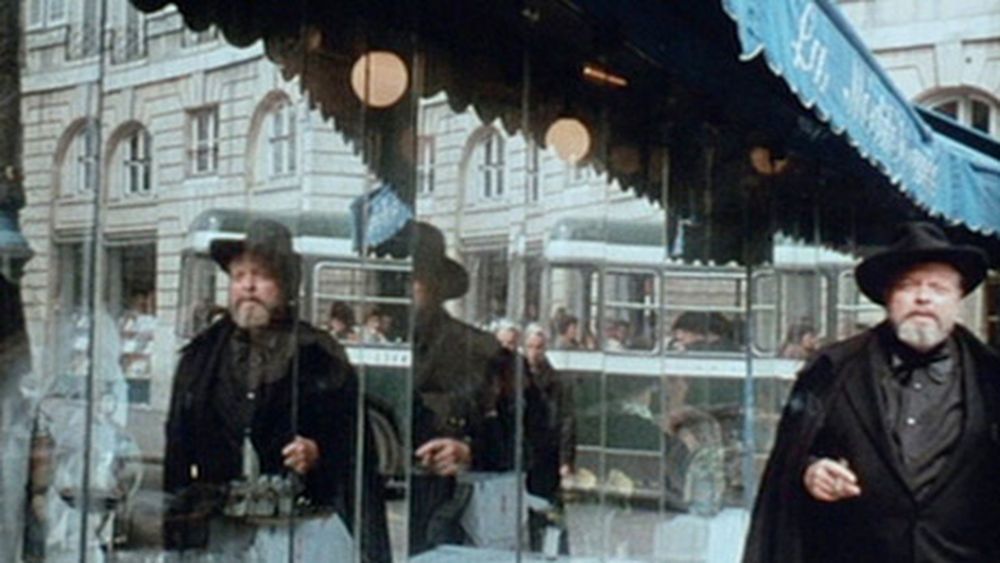
The first of Orson Welles’s two essay films to be completed and released during his lifetime (the lesser-known 1979 Filming ‘Othello’ was the second), this breezy, low-budget montage – put together from discarded documentary footage by Francois Reichenbach as well as new material filmed by Welles – forms a kind of dialectic with Welles’s never-completed It’s All True; as Welles himself implied, an equally accurate title for this playful cat-and-mouse game might have been It’s All Lies.
The main subjects here are art forger Elmyr de Hory, Clifford Irving, Howard Hughes, Pablo Picasso, and Welles himself; and the name of the game is the practice and meaning of deception. Some commentators have speculated that this film was Welles’s indirect reply to Pauline Kael’s subsequently disproven contention that he didn’t write a word of the Citizen Kane script; his sly commentary here – seconded by some of the trickiest editing anywhere – implies that authorship is a pretty dubious notion anyway, a function of the even more dubious art market. For a filmmaker who studiously avoided repeating himself and sought always to remain a few steps ahead of his audience’s expectations, thereby rejecting any obvious ways of commodifying his status as an auteur, Welles arguably found a way in F for Fake to contextualize large portions of his career while undermining many cherished beliefs about authorship and the means by which “experts,” “God’s own gift to the fakers,” validate such notions. Read more
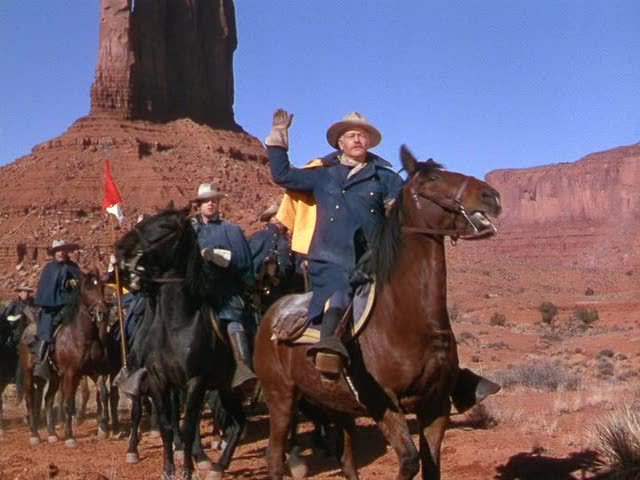
The first John Ford film I can remember seeing, probably encountered around the time I was in first grade, was archetypal: She Wore a Yellow Ribbon (1949). Apart from its uncommonly vibrant colors, this had just about everything a Ford movie was supposed to have: cavalry changes, drunken brawls, Monument Valley, and such standbys as John Wayne, Ben Johnson, Harry Carey Jr., Victor McLaglen, and Ford’s older brother Francis; only Maureen O’Hara and Ward Bond were missing.
Ford was one of the very first auteurs I was aware of, along with Cecil B. De Mille, Walt Disney, and Alfred Hitchcock, and what made him especially distinctive was that he was apparently less restricted than the others to a single genre. De Mille made spectaculars, Disney did cartoons, and Hitchcock specialized in thrillers, but a Ford movie could be a western, a war movie, or something else.
The ten relatively neglected Ford movies I’ve singled out here include a few that still can’t be found on DVD. I might well have selected some others if I’d seen them more recently (I’m currently looking forward to re-seeing the 1945 They Were Expendable, for instance), but I’d none the less argue that all of these are well worth hunting down. Read more
Take No Prisoners: The Bold Vision of Kira Muratova
at the Gene Siskel Film Center
The most original filmmakers working today tend to be identified more with their respective national cultures than with the world at large. The work of directors such as James Benning, Luc and Jean-Pierre Dardenne, Hou Hsiao-hsien, Jia Zhang-ke, Abbas Kiarostami, Kira Muratova, Jafar Panahi, Béla Tarr, Tsai Ming-liang, and Edward Yang is seen as specialized, local, and esoteric. But I’d argue that what they have to say about their countries is secondary to their larger concern: the bewildering, tragicomic, and often disastrous effects of modernity on traditional modes of life and thought.
The dozen obstinately weird and wild films of Kira Muratova, seven of which are playing this month at the Gene Siskel Film Center, are described by some critics as Russian to the core, and I wouldn’t hesitate to call her the greatest living Russian filmmaker. (I’d link Alexander Sokurov’s work to the 19th century rather than to the 20th or the 21st.) Yet I’m not entirely sure what “Russian” means these days or how it applies to her.
Born in 1934 in Romania to a Romanian mother and a Russian father, Muratova went to both Romanian and Russian schools, often hiding her Russian identity at the former and her Romanian identity at the latter. Read more
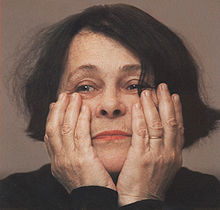
It’s been almost two decades since I first discovered the fiercely independent, passionately committed, and poetically inflected cinema of John Gianvito via his 168-minute The Mad Songs of Fernanda Hussein (2001). Later that year, I headed a jury at the Buenos Aires Festival of Independent Film that gave it our jury prize, but it’s mainly had an uphill struggle ever since being seen and recognized, most likely due to both its subject matter and its running time. John points out that I may have previously seen his 1983 feature The Flower of Pain, but if I did, I no longer remember it; ditto his portion of a 1986 episodic feature that he originated, Address Unknown.
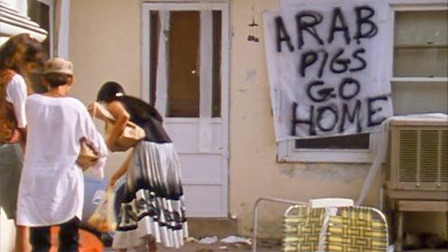
The Mad Songs remains my favorite film of his, yet even though it was available for a spell on DVD, it currently lacks a distributor. A powerful act of witness about some of the tragic stateside consequences of the first Gulf War, it was made over a seven-year period, including two years of shooting in New Mexico — despite the fact that Gianvito is a Bostonian, where he currently teaches film at Emerson College and was formerly a curator for five years at the Harvard Film Archive.
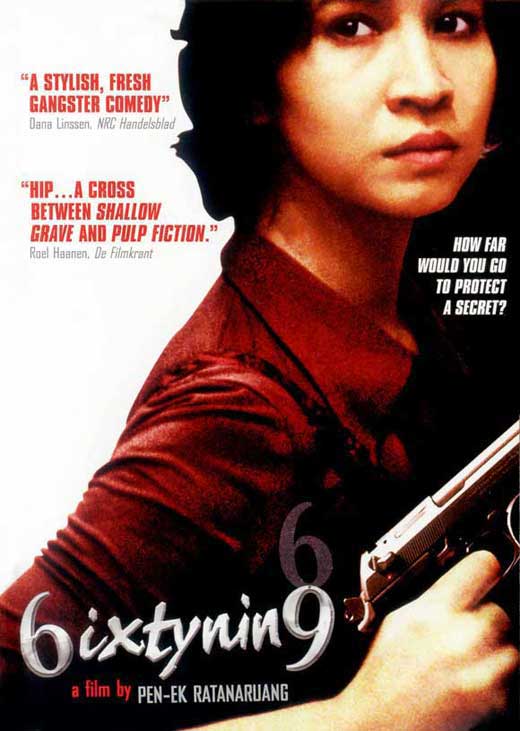
I was the head of the critics’ jury at the Hong Kong film festival last spring that awarded half its first prize to this macabre comedy-thriller from Thailand (1999, 114 min.) It’s as commercial as anything from Hollywood — as was writer-director Pen-ek Ratanaruang’s previous feature, which I liked even more, a crazed Tarantino spinoff called Fun Bar Karaoke (1997). Ratanaruang spent eight years in New York studying at the Pratt Institute and working as a freelance illustrator and designer, so his mastery of American-style entertainment obviously owes something to a prolonged absorption in this culture –though I find the Thai and global traits on view here no less striking. This picture might be described broadly as a clever version of Hitchcock lite, but that doesn’t mean that it doesn’t also have pertinent things to say about the present Asian economic crisis. (JR)