Written for Filmkrant‘s “Slow Criticism”, February 2010 (no. 318). — J.R.
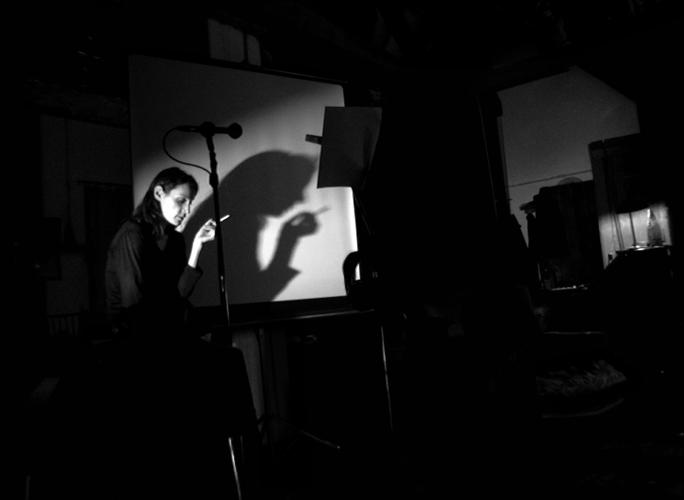
There’s a personal reason why Ne Change Rien comes together for me in a way that few music documentaries do. Eight years ago, I was approached by Rick Schmidlin, the producer of the 1998 re-edit of Touch of Evil (on which I’d served as consultant), about writing or directing — in any case, helping to conceptualize — a documentary about jazz pianist McCoy Tyner. This led to a lengthy conversation with Tyner in Chicago and then a three-page treatment that I prepared with cinematographer John Bailey via phone and email, which concluded, “Any film that’s about listening, as this one will be, will also be about looking — predicated on the philosophy that the way one looks at musicians already helps to determine the way one listens to them.”
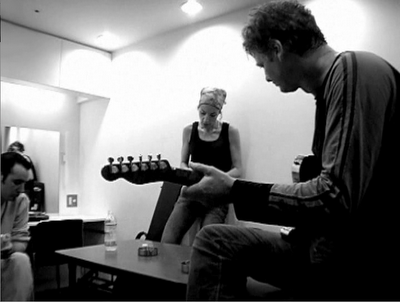
For me one of the ruling ideas was that few jazz films, apart from a handful of the very best, focused enough on the spectacle of jazz musicians listening to one another. And I saw (and heard) the whole thing as a two-way process — the way one listens should dictate the way one looks, as well as vice versa. Read more
This essay about Noah Baumbach’s first feature was commissioned by Criterion for their DVD of Kicking and Screaming, and was written around May 2006. — J.R.
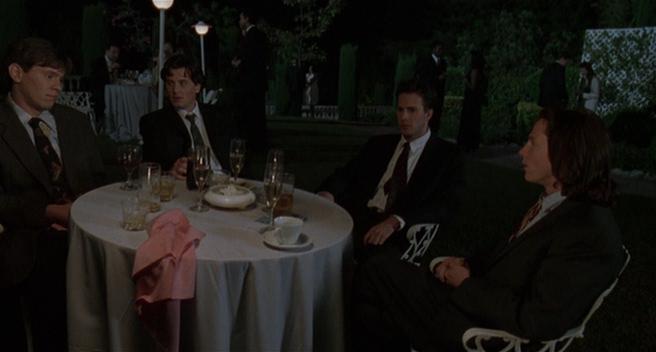
“There’s plenty of wit on the surface,” I wrote in my capsule review of Kicking and Screaming when it was released a little over a decade ago, “but the pain of paralysis comes through loud and clear.” Having voluntarily spent five years as an undergraduate myself, I could and still can find plenty of reasons to identify with the four desperate antiheroes of this brittle comedy, who graduate from college and then proceed to spend the next half year on or around campus, doing as little as possible.
Grover (Josh Hamilton), expecting to live in Brooklyn with his girlfriend, Jane (Olivia d’Abo), is so dumbstruck and angry when she accepts a scholarship to study in Prague that he won’t reply to any of her phone messages, and can only brood over their past in five strategically placed flashbacks, each one heralded by a black-and-white snapshot of her. Otis (Carlos Jacott) finds himself incapable of flying to grad school in Milwaukee, only one time zone away, and reverts to living with his mother. Max (Chris Eigeman), who’d rather label broken glass as such on the floor than sweep it up, finds nothing better to do than chide Otis, do crossword puzzles, and have sex with Miami (Parker Posey), the girlfriend of Skippy (Jason Wiles). Read more