Daily Archives: February 13, 2026

The Director’s Cut

From the Chicago Reader (March 9, 2006). — J.R.
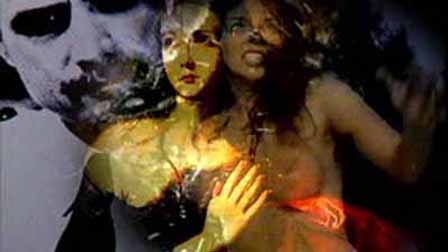
Moments Choisis des Histoire(s) du Cinéma

**** (Masterpiece)

Directed and written by Jean-Luc Godard

Ironically, the two greatest works by the two most innovative filmmakers of the French New Wave, Jean-Luc Godard and Jacques Rivette, were originally designed as TV series. Rivette’s 760-minute, 16-millimeter serial Out 1 (1971) was rejected by French state TV, and he spent most of a year editing it down to a 255-minute version to show in theaters, Out 1: Spectre (1972). Less a digest than a perverse variant — some shots were rearranged so that they had radically different meanings and contexts, and much of the comedy was turned into psychodrama — it’s the only version that’s ever shown in the U.S., though it hasn’t been screened for years. The original — almost certainly the best film ever made by anyone about the 60s counterculture and its demise — still shows periodically in Europe.

Godard’s eight-part, 264-minute video Histoire(s) du Cinéma (1998), conceived and made over 20 years, has fared better, but it’s still pretty hard to come by. The only version ever sold in France is a lousy mono video transfer; a package of CDs and books in several languages transcribing major portions of the stereo sound track came out here years ago. Read more
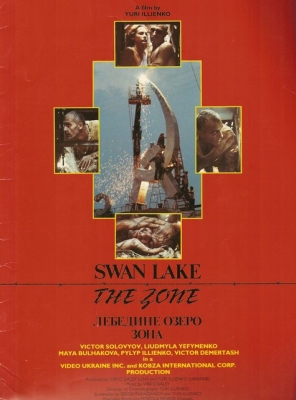
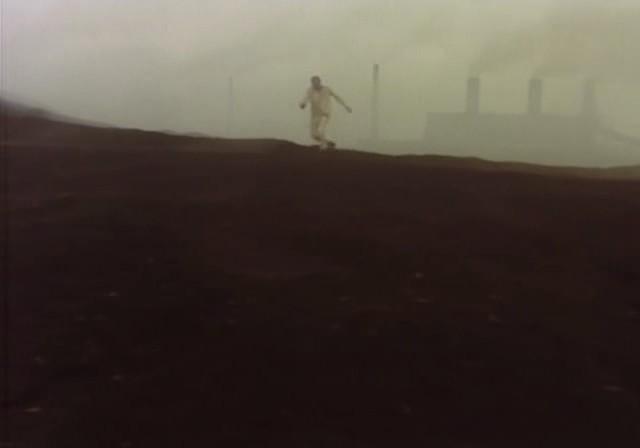
Symbol Life [SWAN LAKE — THE ZONE]

From the Chicago Reader (June 14, 1991). — J.R.

SWAN LAKE — THE ZONE

*** (A must-see)

Directed by Yuri Illienko

Written by Sergei Paradjanov and Illienko

With Victor Solovyov, Liudmyla Yefymenko, Maya Bulhakova, Pylyp Illienko, and Victor Demertash.

One of the most fascinating things about Russian cinema is that we still know next to nothing about it. There are the socialist realist holdovers (Little Vera, for example, and Freeze — Die — Come to Life) and wannabe American releases (Taxi Blues), but the rest of the recent Soviet pictures that have made it to Chicago are interesting mostly because of what remains obscure and intractable about them — their refreshingly and, at times, bewilderingly different views of life and art.

The films that constitute the most obvious reference points in Soviet film history — a few key classics by Eisenstein, Pudovkin, Dovzhenko, Kuleshov, Vertov, and closer to the present, the films of Paradjanov and Tarkovsky — have practically nothing to do with what ordinary Soviet moviegoers see most of the time. Even worse, we can’t take it for granted that these avant-garde works necessarily represent the best that innovative Soviet cinema has to offer, or that what we see of the Soviet mainstream is necessarily the best either. Read more