From the Chicago Reader (June 5, 2008). — J.R.
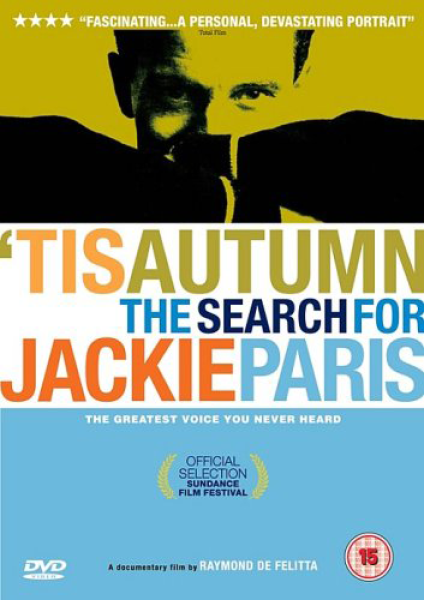
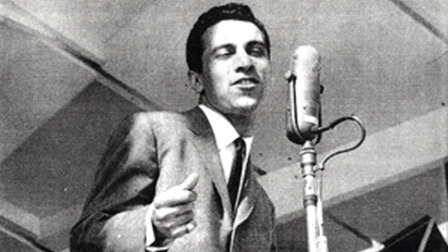
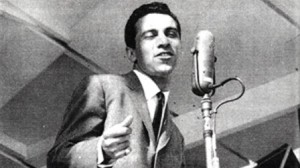
A director and writer of fiction films (The Thing About My Folks, Two Family House) as well as a jazz pianist, Raymond De Felitta tracked down the great, forgotten bebop singer Jackie Paris, befriended him, and in this documentary tries to get to the bottom of why his promising career never clicked, despite tours with Charlie Parker and Lenny Bruce. What emerges is inconclusive and sometimes awkward — especially when Peter Bogdanovich, Frank Whaley, and Nick Tosches get enlisted to recite news stories and reviews — yet also haunting and heartbreaking for what it shows about the scuffling disorder of some jazz careers. When the voice-overs don’t compete with the music, Paris is a spellbinder even at 79 (though I didn’t learn as much as I wanted to about his guitar playing and tap dancing), and his classic singing of Skylark sent shivers up my spine (2006). 100 min. (JR)
 Read more
This article was originally published in Stop Smiling no. 27 (“Ode to the Midwest”) in 2006. It’s also reprinted in my collection Goodbye Cinema, Hello Cinephilia. — J.R.
Kim Novak as Midwestern Independent
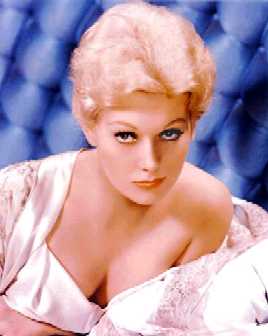
It’s possible that the star we know as Kim Novak was partially the invention of Columbia Pictures —- conceived, as the Canadian critic Richard Lippe puts it, both as a rival/spinoff of Marilyn Monroe and as a replacement for the reigning but at that point aging Rita Hayworth. At least this was the favored cover story of Columbia studio head Harry Cohn, whom Time magazine famously quoted in 1957 as saying, “If you wanna bring me your wife and your aunt, we’ll do the same for them.” It was also the treasured conceit of the American press at the time, which was all too eager to heap scorn on Novak for presuming to act — just as they were already gleefully deriding Monroe for presuming to think. But Monroe, as we know today, was considerably smarter than most or all of the columnists who wrote about her. And Kim Novak — a major star if not a major actress — had something to offer that was a far cry from updated Hayworth or imitation Monroe (even if the latter was precisely what Columbia attempted to do with her in one of her first screen appearances, in the 1954 Judy Holliday vehicle Phffft! Read more