Eyes Wide Shut

From the Chicago Reader (July 30, 1999). — J.R.
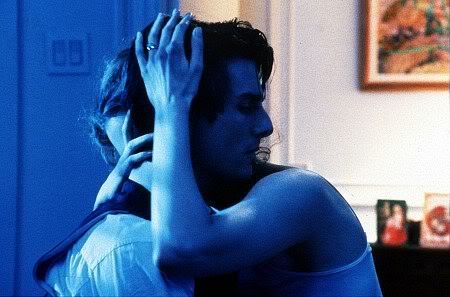
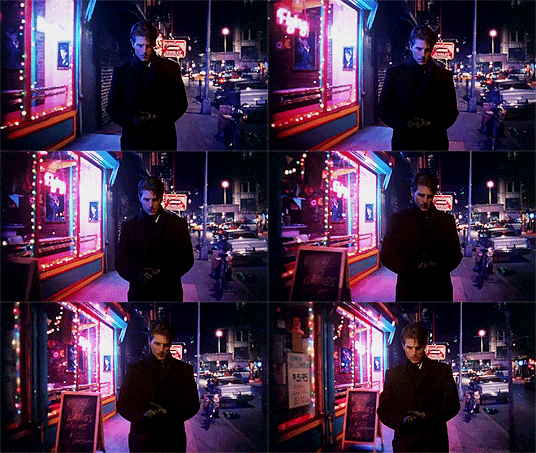
Initial viewings of Stanley Kubrick’s movies can be deceptive because his films all tend to be emotionally convoluted in some way; one has to follow them as if through a maze. A character that Kubrick might seem to treat cruelly the first time around (e.g., Elisha Cook Jr.’s fall guy in The Killing) can appear the object of tender compassion on a subsequent viewing. The director’s desire to avoid sentimentality at all costs doesn’t preclude feeling, as some critics have claimed, but it does create ambiguity and a distanced relationship to the central characters. Kubrick’s final feature very skillfully portrays the dark side of desire in a successful marriage; since the 60s he’d been thinking about filming Arthur Schnitzler’s brilliant novella “Traumnovelle,” and working with Frederic Raphael, he’s adapted it faithfully — at least if one allows for all the differences between Viennese Jews in the 20s and New York WASPs in the 90s. Schnitzler’s tale, about a young doctor contemplating various forms of adultery and debauchery after discovering that his wife has entertained comparable fantasies, has a somewhat Kafkaesque ambiguity, wavering between dream and waking fantasy (hence Kubrick’s title), and all the actors do a fine job of traversing this delicate territory. Read more

A Note on “Welles’ Career: A Chronology”

When This is Orson Welles, which I edited, was originally published in 1992, the section of the book which elicited the most comments was the 131-page summery of Welles’ career, an attempt at an exhaustive account that I had taken over and expanded from Welles and Peter Bogdanovich’s original manuscript. People were awed by the size of this section, but ever since the book’s publication, I’ve been periodically reminded of how incomplete it actually was and is.

My latest reminder was coming across Welles’ 19-minute radio adaptation/performance of Alexander Pushkin’s “The Queen of Spades,” introduced by Laurence Olivier and available for free at

https://www.audible.com/pd/The-Queen-of-Spades-Audiobook/B011J042XK?ref=a_library_t_c5_libItem_&pf_rd_p=80765e81-b10a-4f33-b1d3-ffb87793d047&pf_rd_r=87W16ZWVNQ3BJXCWR4TH

I have no idea when this was recorded or broadcast, but Audible has posted it alongside other audio adaptations of other Russian literary works performed by Olivier, Michael Redgrave, Trevor Howard, and an apparently unidentified actress in the same series, which aren’t free. [4/25/2022]

Read more

Three Seats For The 26th

From the Chicago Reader (June 1, 1990). — J.R.

3PLACES

trois-places-pour-le-265edf26c8e3f2a

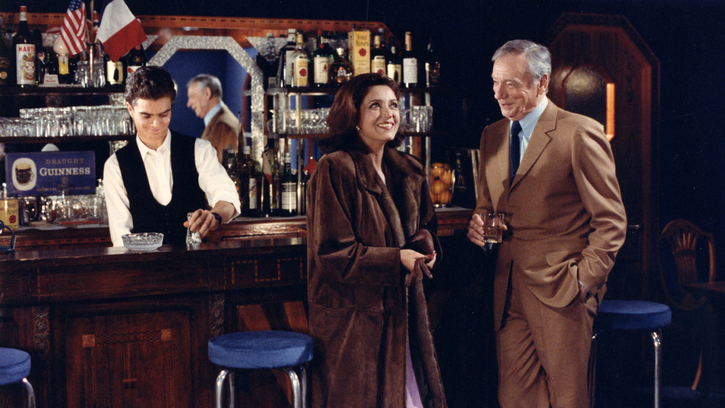
For viewers like me who harbor passionately fond memories of Jacques Demy’s 1967 tribute to the American musical, The Young Girls of Rochefort, Demy’s 1988 musical (his last film) is clearly worth seeing, even if the recommendation has to come with reservations. While Michel Legrand’s score for The Young Girls of Rochefort is one of the greatest for any musical, his comparably jazzy and airy work for the this one is only a pale reflection of his best. Similarly, the references to touchstones such as Silk Stockings, Singin’ in the Rain, and The Band Wagon are all too fleeting, in striking contrast to the full-scale tributes in the earlier film to West Side Story, An American in Paris, and Gentlemen Prefer Blondes. The difference between the two is partly a matter of scale and budget, and partly that the more recent film centers on Yves Montand, an eminence grise who looks more and more like Milton Berle. Playing himself, Montand arrives in Marseilles to launch an autobiographical musical revue that he plans to take on a world tour. He spends his spare time looking for an old lover, a onetime prostitute now a baroness (Francoise Fabian), whose husband is in jail for theft and whose 22-year-old daughter (Mathilda May), who knows nothing of her mother’s past, has a burning desire to make it in show biz. Read more

Two to Tangle

Written for an Arbelos Films Blu-Ray in 2024.

Two to Tangle
By Jonathan Rosenbaum

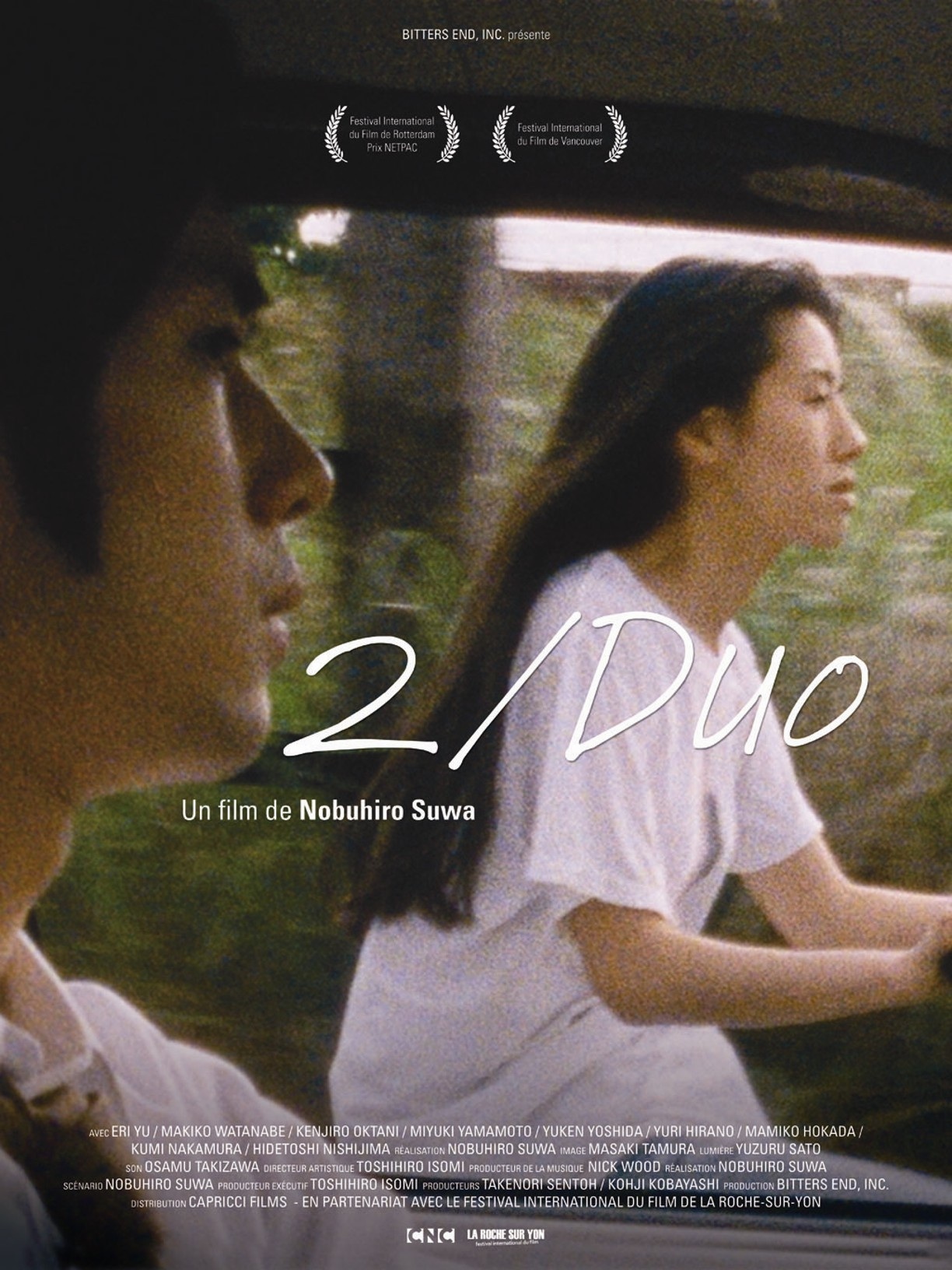
One of the most striking attributes of experimental art is the way it commonly forces us to rethink certain basics that we normally take for granted. In Nobuhiro Suwa’s 2/Duo (1996), the filmmaker’s first foray into fiction after making several TV documentaries, the vicissitudes of a young couple trying to live together — an unsuccessful actor named Kei (Hidetoshi Nishijima) and a boutique shop assistant named Yu (Eri Yu) — are so unfixed that even so seemingly simple a matter as what causes their rifts isn’t clearly spelled out. Their scenes together are vivid and sometimes violent, but seldom legible in the terms we normally accept from narrative fiction.

In an early scene, Kei suddenly proposes marriage to Yu, and she seems too startled by this suggestion to respond. In a subsequent scene, an offscreen interviewer (Is it Suwa or someone else? Does it matter?) asks her character why she didn’t respond, and she promises to ask Kei why he proposed to her. But when she finally does this, he can only shout, like a beleaguered Hamlet, “I don’t know!” Indeed, lack of certainty becomes the only certainty in much of what follows. Read more

LOVE ME TONIGHT and MULHOLLAND DRIVE

Both of these very short pieces were written in 2002 for Understanding Film Genres, a textbook that for some unexplained reason was never published. Steven Schneider commissioned them.  — J.R.

Love Me Tonight

Love Me Tonight Love Me Tonight2 Love Me Tonight3

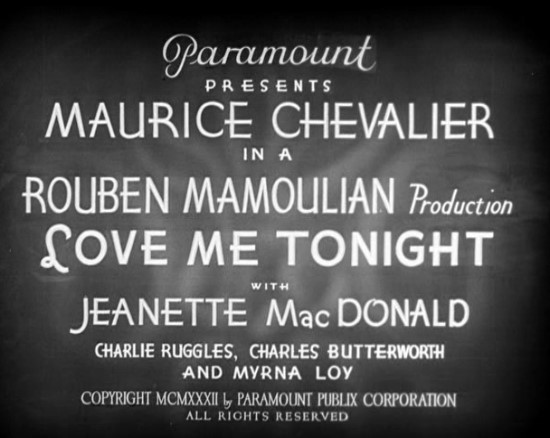
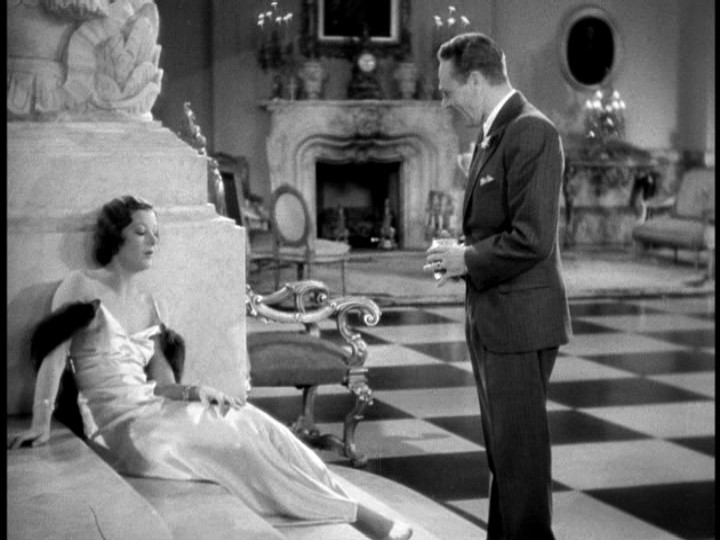
There are two distinct aesthetics for movie musicals, regardless of whether they happen to be Hollywood or Bollywood, from the 1930s or the 1950s, in black and white or in color. According to one aesthetic– exemplified by Al Jolson (as in The Jazz Singer) or the team of Fred Astaire and Ginger Rogers (as in The Gay Divorcee or Top Hat–a musical is a showcase for talented singers and/or dancers showing what they can do with a particular song or a number. According to the second aesthetic, exemplified by Guys and Dolls —- the two leads of which, Marlon Brando and Jean Simmons, aren’t professional singers or dancers — the musical is a form for showing the world in a particular kind of harmony and grace and for depicting what might be called metaphysical states of being. The leads are still expected to sing in tune, of course, but notions of expertise and virtuosity in relation to their musical performances are no longer the same. Read more

The Unknown Statue

Written for Moving Image Source and posted online November 6, 2009. Thanks to Francois Thomas for correcting a few particulars in July 2022.– J.R.

It’s fascinating to consider the possibility that the essential film oeuvres of both Alain Resnais and Chris Marker commence with the same remarkable, rarely seen essay film from 1953 — a film whose direction is co-signed in the credits by Resnais (also credited for editing), Marker (script and conception), and Ghislain Cloquet (cinematography). (Cloquet [1924-1981], who went on to shoot most of Resnais’s other major films until his own camera assistant, Sacha Vierny, basically replaced him, also subsequently shot major films by Jacques Becker, Robert Bresson, André Delvaux, Jacques Demy, Marguerite Duras, Louis Malle, and Roman Polanski.) And it’s no less fascinating (and significant) to ponder the implications of the fact that the only Oscar-winning film of Resnais’s career came five years before this neglected early peak. The film in question was the 1948 documentary Van Gogh, and in keeping with the Academy’s procedures, the Oscar went not to Resnais, again the director and editor, but to the producer, Pierre Braunberger. Largely because I prefer to look at paintings from static vantage points and with my own itineraries, I’ve never felt entirely comfortable with Resnais’s exploratory camera movements here and in Paul Gauguin and Guernica (both 1950). Read more

Zazie in the Metro

From the Chicago Reader (November 18, 2005). Click on the second photo below. — J.R.

ZAZIE_DANS_LE_METRO

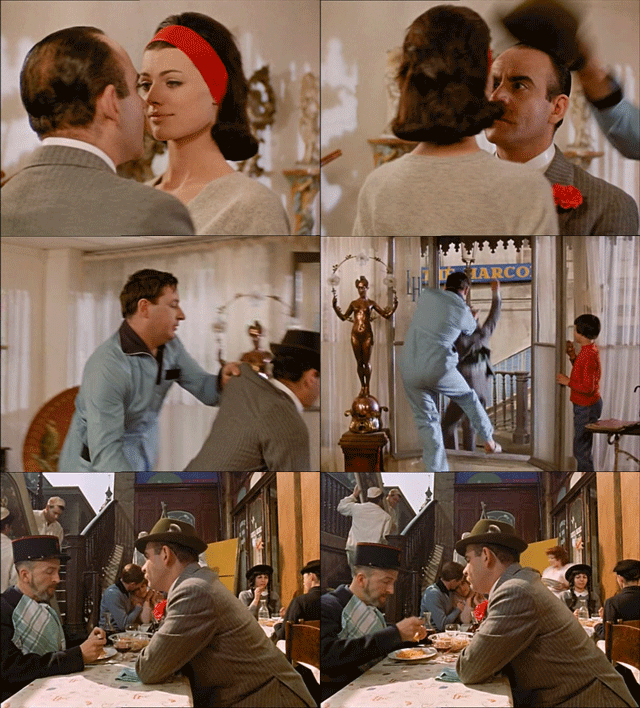
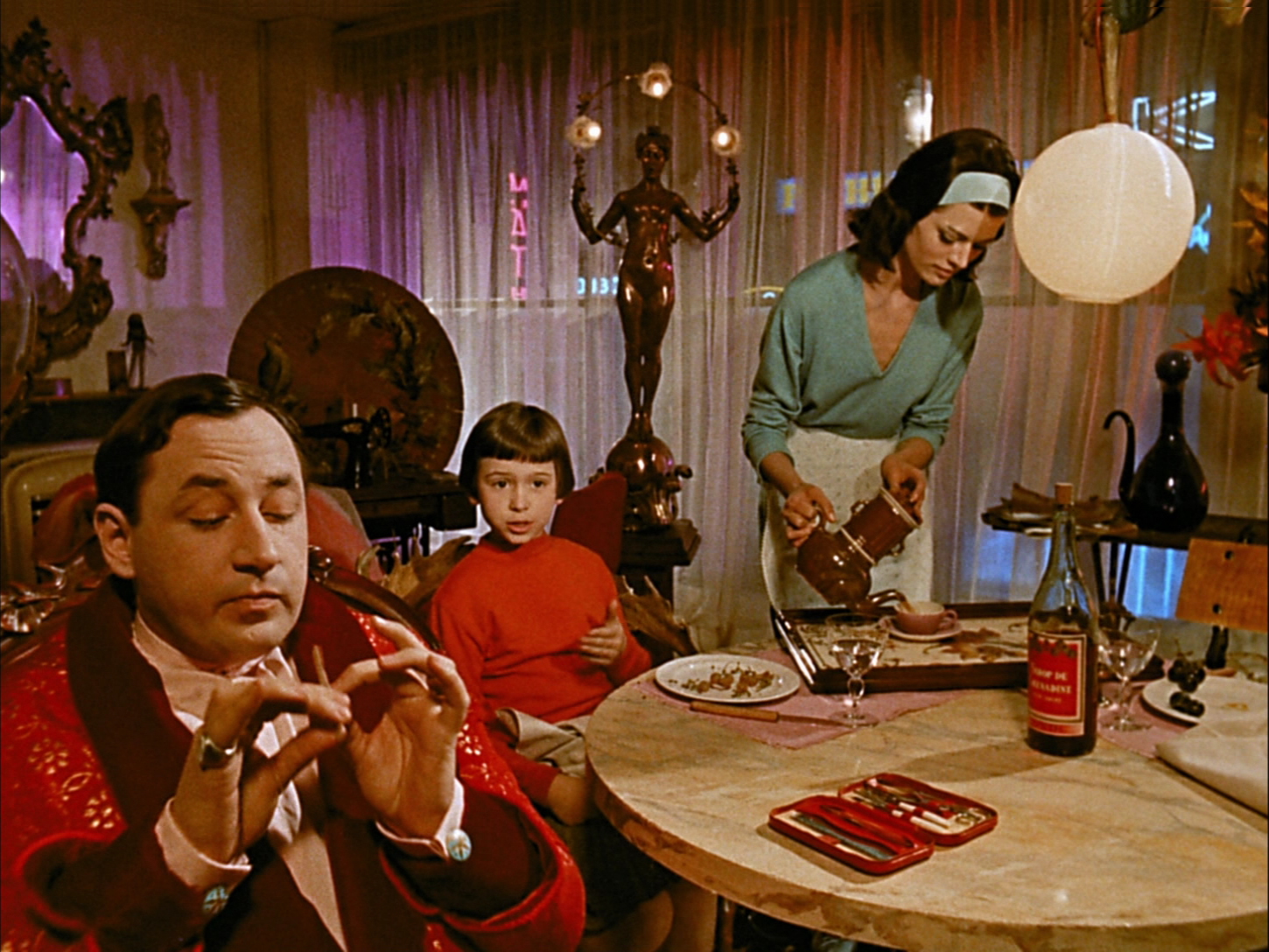
Arguably Louis Malle’s best work (1960). Based on Raymond Queneau’s farcical novel about a little girl (Catherine Demongeot) left in Paris for a weekend with her decadent uncle (Philippe Noiret), this wild spree goes overboard reproducing Mack Sennett-style slapstick, parodying various films of the 1950s, and playing with editing and color effects (Henri Decae’s cinematography is especially impressive), though gradually it becomes a rather disturbing nightmare about fascism. Forget the preposterous claim by a few critics that the movie’s editing influenced Alain Resnais, but there’s no doubt that Malle affected Richard Lester — and was clearly influenced himself by William Klein, whom he credited on the film as a visual consultant. A rather sharp, albeit soulless, film, packed with ideas and glitter and certainly worth a look. In French with subtitles. 93 min. Sun 11/20, 3 and 5 PM, Facets Cinematheque.

zazie2big

Read more

Self-Indexing and Shifting Spectators in Varda’s VAGABOND

Adapted from a lecture given at the Filmmuseum Pottsdam, July 6, 2016.

It’s unfortunate that Agnès Varda only began to assume the status of a major filmmaker after her husband died and she became known as the custodian of Jacques Demy’s precious legacy. Prior to that, she was mainly known, affectionately but somewhat condescendingly, as a sort of mascot of the French New Wave whose public profile remained almost as superficial as that of her eponymous heroine in Cleo from 5 to 7 (1962). And the troubling, ironic sting at the end of La Bonheur (1965) tended to be either misunderstood or ignored. Thanks to the diversity of her films, stylistic and otherwise, she was easy to overlook due to her reluctance to brand herself, unlike her male colleagues.

One fascinating trait that Varda shared with her late husband, however, was the compulsion to become a tireless indexer and cross-referencer of her own work. But instead of bringing back her fictional characters in subsequent films, as Demy did, she more often brought back her locations and her interview subjects. And she went far beyond Demy in becoming her own explicator and analyst, in effect telling her audience what to look for and even how to find it. Read more

WR, Sex, and the Art of Radical Juxtaposition

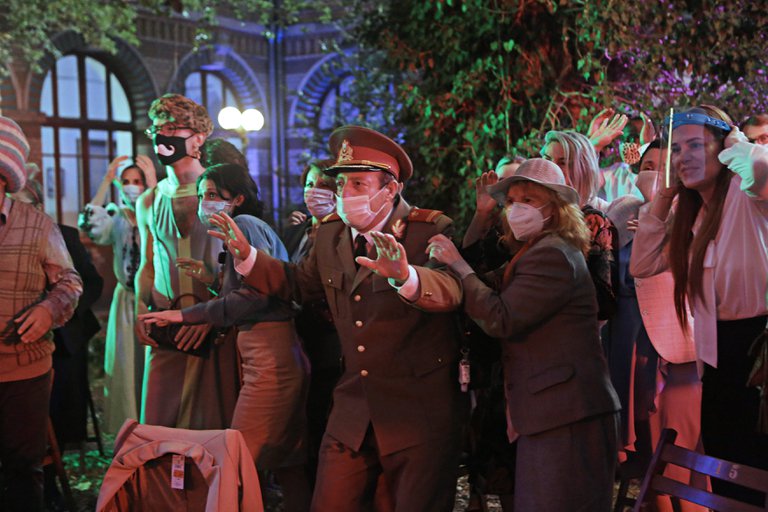
In memory of Dušan Makavejev (1932-2019). Commissioned and originally published by Criterion for their DVD of WR: Mysteries of the Organism in 2007. I was occasionally reminded of this film while recently watching Radu Jude’s no less brilliant and equally singular time capsule of 2021, Bad Luck Banging or Loony Porn.— J.R.

This image has an empty alt attribute; its file name is BadLuckBanging.jpg.jpeg

Between the mid-1960s and the mid-1970s, it was generally felt among Western intellectuals and cinephiles that cutting-edge, revolutionary cinema came from Western Europe, Latin America, and the United States. Among the touchstones were Jean-Luc Godard’s films in France, Newsreel’s agitprop documentaries and their spin-offs (like Robert Kramer’s Ice and Milestones) in the United States, such diverse provocations as Lindsay Anderson’s If…. and Godard’s 1+1 in the United Kingdom, and, in Latin America, films like Lucía (Cuba), The Hour of the Furnaces (Argentina), and Antonio das Mortes (Brazil).

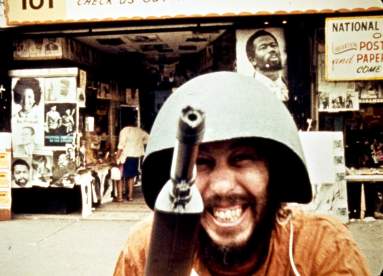
By contrast, the wilder politicized art movies coming out of Eastern Europe at the time — such as those of Vera Chytilová, Miklós Jancsó, and Dušan Makavejev — were treated as curiosities, aberrations that wound up getting marginalized by default. The fact that they came from Communist countries made them much harder for Westerners to place, process, and understand; in most cases, an adequate sense of context was lacking. Read more

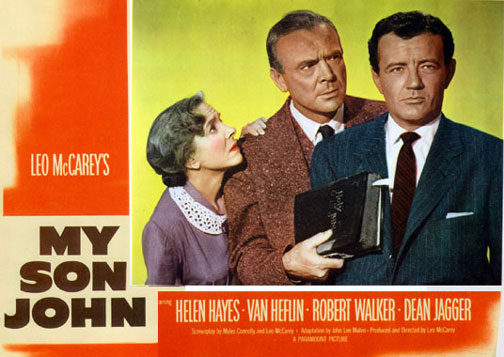
Washington Paranoia from the Left and Right: THE DAY THE EARTH STOOD STILL & MY SON JOHN

Written in July 2008 for an issue of Stop Smiling devoted to Washington, D.C. 2022: In a way, the recent Arrival might be said to qualify as a mystical remake of The Day the Earth Stood Still, and I found it every bit as gripping. — J.R.

To get the full measure of what Cold War paranoia was doing

to the American soul, two of the best Hollywood A-pictures

of the early 50s, each of which pivots around its Washington,

D.C. locations – The Day the Earth Stood Still (1951) and My

Son John (1952) — still speak volumes about their shared zeitgeist,

even though they couldn’t be further apart politically.

An archetypal liberal parable in the form of a science fiction

thriller and an archetypal right-wing family tragedy (with deft

slapstick interludes) that’s even scarier, they’re hardly equal in

terms of their reputations. Leo McCarey’s My Son John, widely

regarded today as an embarrassment for its more hysterical elements,

has scandalously never come out on video or DVD [2014 footnote, it’s

now available from Olive Films], though in its own era it garnered

even more prestige than Robert Wise’s SF thriller, having received

an Academy Award nomination for best screenplay. Read more
Two Much

From the March 6 1996 Chicago Reader. — J.R.

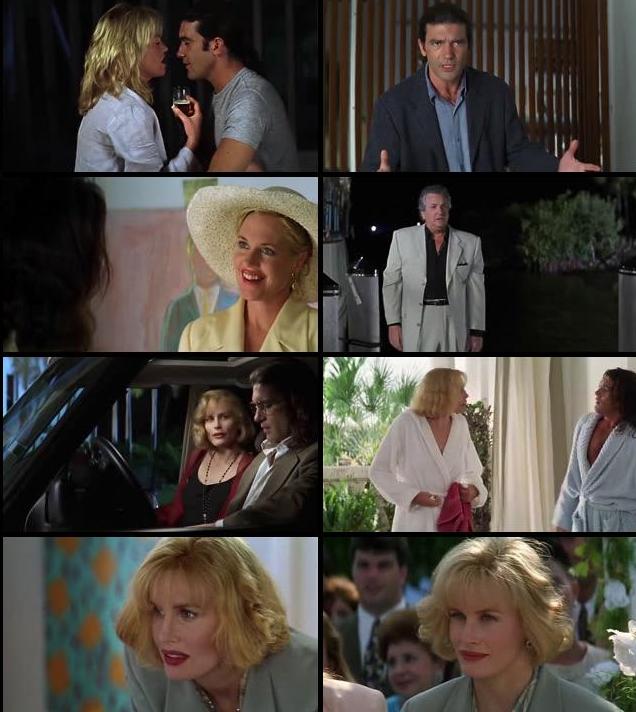
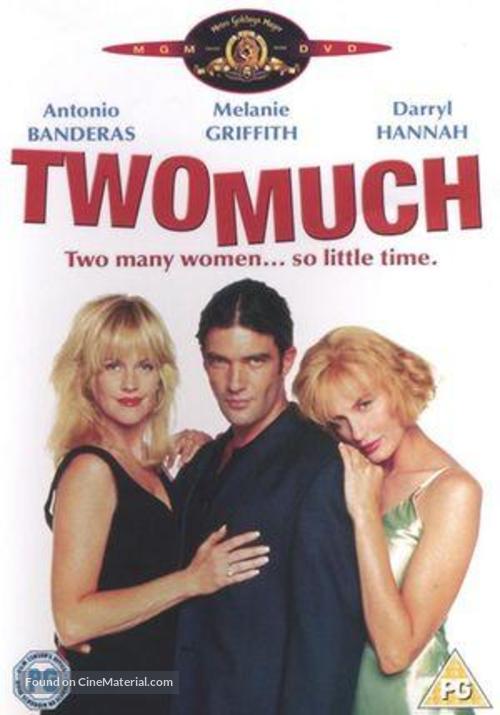
Or should we say knot enough? Antonio Banderas plays a frustrated painter and crooked art dealer who pretends to be twin brothers while romancing wealthy sisters played by Melanie Griffith and Daryl Hannah. Spanish director Fernando Trueba, who with his brother David Trueba has adapted a Donald E. Westlake novel, easily surpasses his comic work on the overrated and Oscar-winning Belle Epoque; but he fails to take the knots — which might also be called the flabby stretches — out of an overextended farce. I could live with this movie because the cast (which also includes Danny Aiello, Joan Cusack, and Eli Wallach) is so agreeable, but Banderas, for one, has to strain too hard and too long for his laughs, and the relatively lackadaisical pacing forces him to do so. (JR)

Read more

En movimiento: Louise Brooks’ Multifunctional Film Criticism, Writing as Make-Believe

Written for the December 2022 issue of Caimán Cuadernos de Cine. — J.R.

I’ve recently been working on a book that collects my uncollected film, literary, and jazz criticism, ordering all my inclusions chronologically so that they’re allowed to commingle, meanwhile exploring ways that all three of these art forms (film, literature, music) can inform and reflect one another. Because this project rejects the “targeting” mentality ruling academic presses and their all-powerful publicists—which follows the Reaganite economic principle of exploiting and exhausting markets that already exist, not proposing new ones—it took me some time to find a publisher.

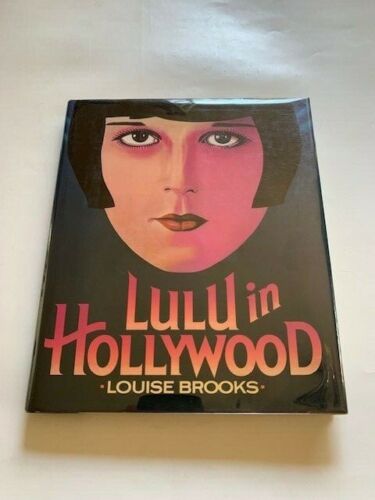
Still more recently, I’ve been rereading Louise Brooks’ informative, thoughtful, and beautifully written Lulu in Hollywood, a collection of essays combining autobiography with criticism, film history with social and fashion history, and even a certain kind of fiction with non-fiction.

The latter combination requires some explanation. While recounting her memories of her own acting in films (especially Beggars of Life and Pandora’s Box) and of Humphrey Bogart, Charlie Chaplin, W.C. Fields, Greta Garbo, Lillian Gish, the neglected director Edmund Goulding, and the even lesser known Pepi Lederer (lesbian niece of Marion Davies, older sister of screenwriter Charles Lederer, and close friend of Brooks who committed suicide at the age of 25), Brooks renders scenes in such fulsome and intricate detail—extended dialogue, facial expressions and gestures, locations, furnishings, clothes, food and drink at meals—that it quickly becomes apparent that she must be fleshing out whatever she can remember with imagined specifics. Read more
Two Death Scenes of Jean-Pierre Léaud

Commissioned by MUBI (I forget when).

Given the size and variety of Jean-Pierre Léaud’s filmography, 

there must be other memorable death scenes of his apart

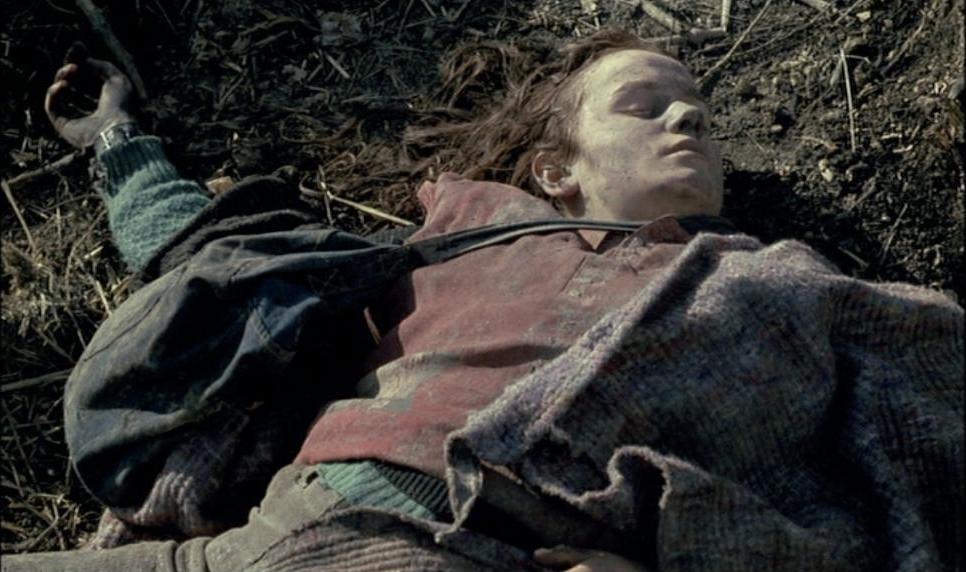
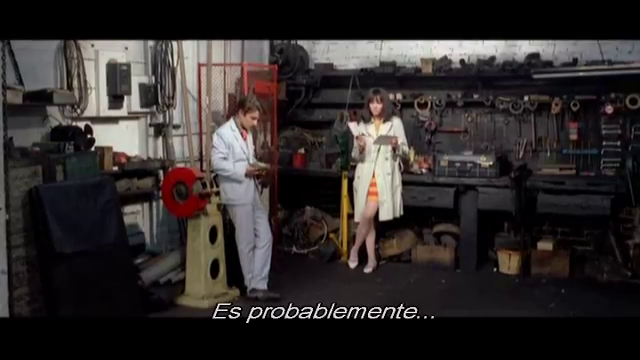
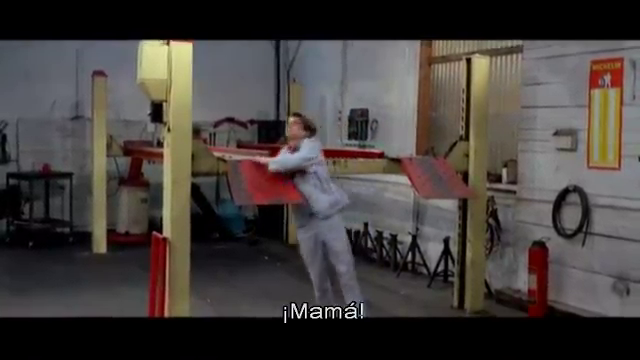
from those in Jean-Luc Godard’s Made in USA (1966) and 

Albert Serra’s La mort de Louis XIV (2016), half a century 

apart. My reason for settling on these two is that they 

demonstrate his prodigious range. In the first — a very bizarre 

piece of anamorphic Pop Art self-described as “a political film, 

meaning Walt Disney plus blood” — he plays “Donald Siegel”, 

the abused sidekick of gangster “Richard Widmark” (Laszlo 

Szabo), comically sporting a button that declares “Kiss me I’m 

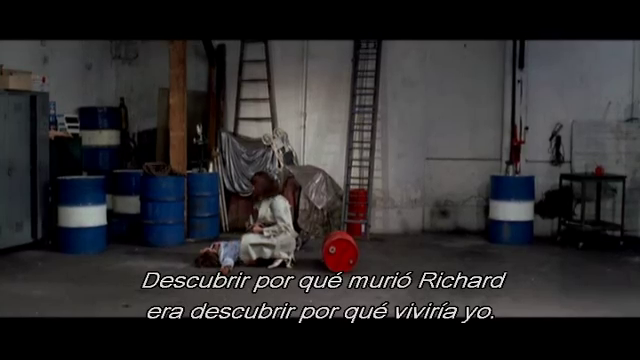
Italian”. He’s dispatched in a garage by Paula Nelson (Anna 

Karina), a detective investigating her lover’s murder. After 

Siegel pantomimes committing murders of his own and other 

criminal adventures as they’re being recounted by Nelson in 

voiceover, she asks him, “If you had to die, would you rather 

be warned or die suddenly?” He selects the latter and as soon 

as she obligingly plugs him, he shouts out “Mama!” and staggers 

extravagantly in long shot across most of the garage floor before 

finally expiring. It all takes a little over twelve seconds, whereas the 

less showy, more minimalistic and iconic finale as the eponymous 

Louis XIV, shown mainly in regal close-ups, lasts for virtually all of 

the film’s 116 minutes.  –Jonathan Read more

A NEW LEAF

A catalogue entry for the 2022 Viennale. –J.R.

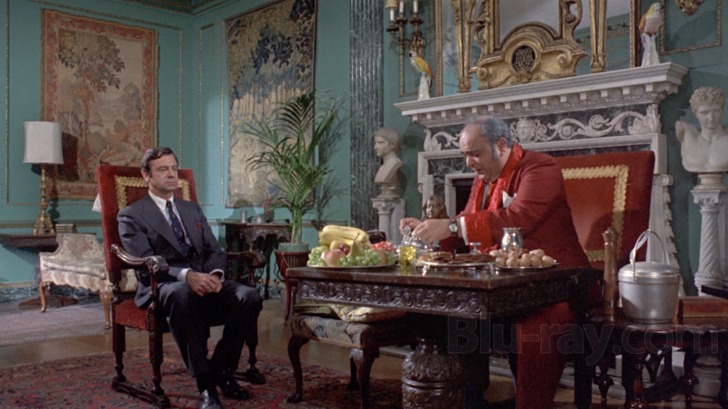
Elaine May’s hilarious, edgy first feature is her only one that differs substantially from what she intended. Her three-hour rough cut included two murders committed by the antihero (Walter Matthau), of a blackmailer and a crooked lawyer (Jack Weston), that the studio excised, yet A New Leaf registers with audiences as her sweetest, most tender picture. The irony is that Matthau’s character — a self-absorbed idler who exhausts his inheritance, then goes looking for a wealthy bride he can murder in order to keep his luxuries (and finding a clueless, clumsy botanist, deftly played by May) — is hardly the sort one expects to solicit such emotions, even without his two murders. But a specialist in creating lovable monsters, predators and innocents alike, May is clearly up to the challenge.

Reading Jack Ritchie’s short story “The Green Heart” that she adapted, included with the Olive Films Blu-Ray, clarifies the much blacker comedy she had in mind, achieving her sweet finale only after more challenging discomforts en route. And what she added to this story — such as the antihero’s Ferreri, butler, and uncle, and two potential brides preceding the botanist — may matter as much as what the studio removed. Read more

Trying To Catch Up With Raúl Ruiz: A Conversation with Jonathan Rosenbaum

This appeared Cinema Scope no. 11 (summer 2002).Thanks to Francois Thomas in helping me clean up my German and French. — J.R.

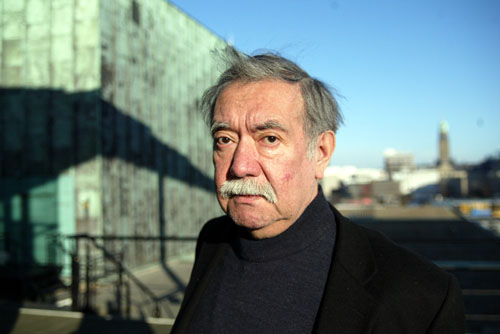
“You can’t smell email,” Raúl Ruiz insisted to me the night before we had this interview at the 2002 Rotterdam Film Festival, explaining to me why he didn’t have any truck with the Internet. He added that lately he’s been collecting various first editions, excommunications, and death sentences, many of them from the 19th century and earlier, and he can smell all of them.

At first I was surprised by this old-fashioned form of resistance, but then the more I thought about it, the more I realized that Raúl is basically a 19th century figure. His largely Borgesian canon of 19th and early 20th century English and American writers (Chesterton, Stevenson, Wells, Harte, Hawthorne, Melville, et al) and his taste for rambling narratives and tales within tales smacks of a Victorian temperament.

I first encountered Ruiz’s work during my first trip to the Rotterdam Film Festival, in 1983, and it was there where we first became friends three years later —- as well as where we had this interview on January 26, in the lobby of the hotel where we were both staying. Read more