Far and away the best SF movie of the 80s, Ridley Scott’s visionary look at Los Angeles in the year 2019a singular blend of grime and glitter that captures both the horror and the allure of Reagan-era capitalism with the claustrophobic textures of a Sternberg filmwas a critical and commercial flop when it first appeared (1982). Loosely adapted from Philip K. Dick’s Do Androids Dream of Electric Sheep?, the film follows the hero (Harrison Ford) as he tracks down and kills replicants, or androids. Much of the film’s erotic charge and moral and ideological ambiguity stems from the fact that these characters are very nearly the only ones we care about. (We never know for sure whether the hero is a replicant himself; in the director’s cut version that uncertainty is even greater.) The grafting of 40s hard-boiled detective story with SF thriller creates some dysfunctional overlaps, and the movie loses some force whenever violence takes over, yet this remains a truly extraordinary, densely imagined version of both the future and the present, with a look and taste all its own. With Rutger Hauer, Edward James Olmos, Joe Turkel, and William J. Sanderson. R, 112 min. (JR) Read more
From the Chicago Reader (July 30, 1999). — J.R.
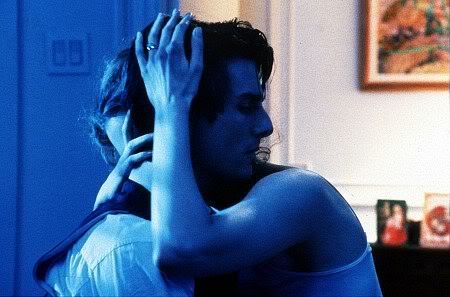
Initial viewings of Stanley Kubrick’s movies can be deceptive because his films all tend to be emotionally convoluted in some way; one has to follow them as if through a maze. A character that Kubrick might seem to treat cruelly the first time around (e.g., Elisha Cook Jr.’s fall guy in The Killing) can appear the object of tender compassion on a subsequent viewing. The director’s desire to avoid sentimentality at all costs doesn’t preclude feeling, as some critics have claimed, but it does create ambiguity and a distanced relationship to the central characters. Kubrick’s final feature very skillfully portrays the dark side of desire in a successful marriage; since the 60s he’d been thinking about filming Arthur Schnitzler’s brilliant novella “Traumnovelle,” and working with Frederic Raphael, he’s adapted it faithfully — at least if one allows for all the differences between Viennese Jews in the 20s and New York WASPs in the 90s. Schnitzler’s tale, about a young doctor contemplating various forms of adultery and debauchery after discovering that his wife has entertained comparable fantasies, has a somewhat Kafkaesque ambiguity, wavering between dream and waking fantasy (hence Kubrick’s title), and all the actors do a fine job of traversing this delicate territory. Read more