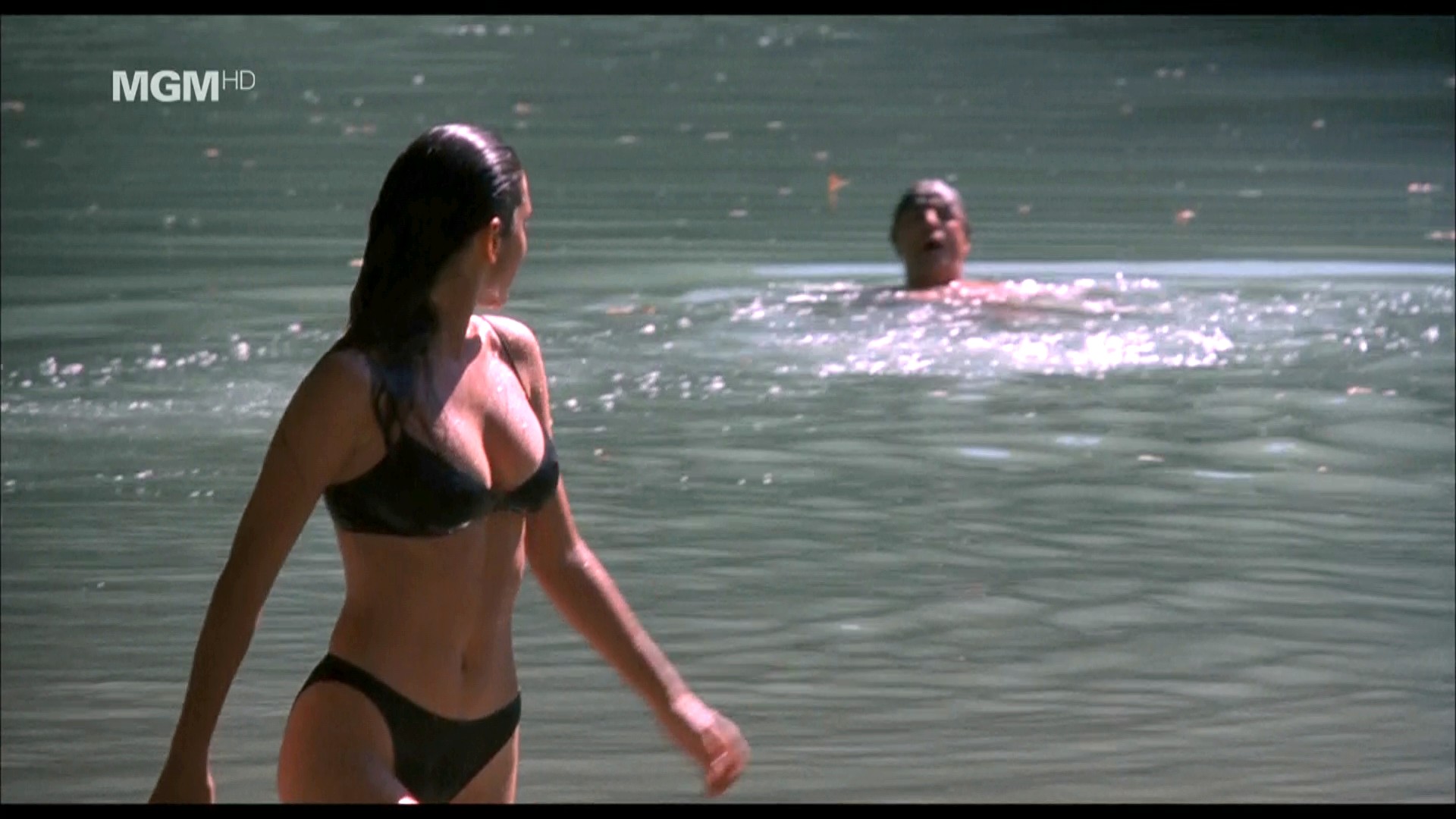
Considering that the script for this 1990 movie (by the late Charles Williams and his wife Nora Tyson, adapted from Williams’s novel Hell Hath No Fury) was in development for about 30 years and that the film is Dennis Hopper’s worst as a director, this is still pretty enjoyable as a piece of campy sleaze — especially for the first half hour, before the storytelling starts to dawdle. There’s a score by John Lee Hooker and Miles Davis, who pursue waspy duets, and Hopper’s eye for color and composition is as sharp as ever. But even if one overlooks the noirish misogyny (no easy matter), the story is still an overheated hoot. Just when one hopes that the scumbag characters — including a footloose hustler (Don Johnson) who sidles into a job as a car salesman in a sleepy Texas town, his boss’s sexpot wife (Virginia Madsen), and a seedy, bemused banker (Jack Nance) — will develop beyond their cliches, they become even sillier. And the apparently innocent accountant (Jennifer Connelly) who becomes entangled in the morass isn’t any more believable. Some may view the film’s liabilities (e.g. the inexpressive Johnson filling the foreground like a block of wood) as assets and coast along with the steamy sex, but it’s still pretty slim pickings from the man who once made Out of the Blue. Read more
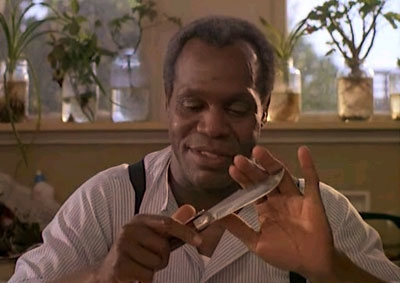
With Morgan Freeman, Brad Pitt, Gwyneth Paltrow, Richard Roundtree, R. Lee Ermey, John McGinley, Julie Araskog, Mark Boone Junior, and Kevin Spacey.
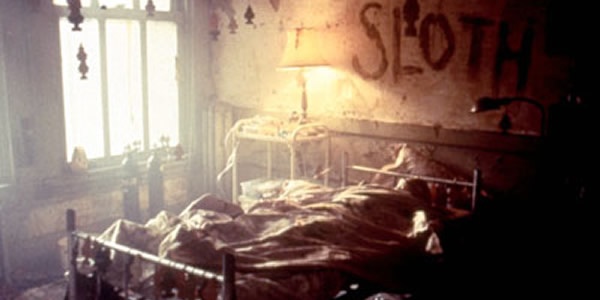
Since when have designer vomit, mannerist rot, and other chic signifiers of gloom, doom, and decline become such comforting mainstays of movies? I’m thinking not only about Hollywood but about Western cinema generally. What brings on all the driving, dirty rain in Satantango (Bela Tarr’s seven-hour Hungarian black comedy, which showed at last year’s Chicago International Film Festival) as well as in Seven, a stylish and affecting (albeit gory) metaphysical serial-killer movie? The facile solution would be to trace the gloom back to Blade Runner, film noir, maybe even to Prague school surrealism, though this would omit the Calvinist/expressionist vision of urban filth and the post-Vietnam psychopathology of Taxi Driver. In point of fact, it’s much more important to figure out the reasons for the strange allure of this grim sensibility than to worry pedantically about where it came from.
I’d ascribe at least part of this taste to the current inability to believe in or try to effect political change — a form of paralysis that in America is related to an incapacity to accept that we’re no longer number one. Read more
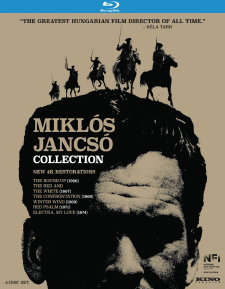
Apart from those few who managed to escape from totalitarian regimes and occupied countries, most North Americans know as little about living under a dictatorship and/or in an occupied territory and what that entails as I do. For the past two decades, I’ve been periodically arguing that progressively minded Yank cinephiles missed the boat in the ’60s and ’70s by focusing too exclusively on Godard, Bertolucci, and similarly oriented Western leftists while ignoring the far more politically and formally radical inventions of Eastern European cinema by Chytilová, Jancsó, and Makevejev, among others — an avoidance that largely came about because we didn’t know more about what was happening in those parts of the world. A comparable limitation in the 1930s and 1940s led critics such as Dwight Macdonald to focus far more on Eisenstein and Pudovkin than on Dovzhenko, and as I’ve argued elsewhere, even a passionate Dovzhenko fan such as James Agee was fairly clueless about the political difficulties this Ukrainian filmmaker was having with the Russians.
Bearing this shared ignorance in mind, all of the most striking releases I’ve encountered this spring —Serge Loznitsa’s Donbass (2018), on DVD from Salzgeber & Co. Read more
What attracted me to sign up in advance for a symposium called “Television/Society/Art,” put on at the Kitchen and NYU last weekend, was the opportunity to see and hear some old friends, encounter some new people, and maybe even get some new ideas (about what I should be reading and seeing, if nothing else): a bargain for the $10 registration fee.
Presented by the Kitchen and the American Film Institute and organized by Ron Clark, a senior instructor at the Whitney Museum’s Independent Study Program, the three-day event inevitably threatened a few dead spots — particularly to a virtual videophobe like me, who largely regards the medium as a kind of wicker basket holding a few magazines that I’m neither interested in reading nor quite ready to throw away. On the other hand, the fact that some of the invited panelists seemed to share the same bias made me suspect that I’d feel right at home.
The symposium got off to a somewhat inauspicious start with the presentation of a lumbering keynote paper entitled “Television Images, Codes and Messages” by Douglas Kellner, a teacher of philosophy at the University of Texas’s Austin campus. Read more
An “En movimiento” column for Caimán Cuadernos de Cine. This is the original, longer version, before I had to trim it down to suit the magazine’s new design and format — J.R.
It’s logical and inevitable that the meanings of films change over time. After all, we’re the ones who determine, discover, and/or describe those meanings, and it’s obvious that we and our understandings change over time. At some point during my first decade, I saw a film in which poisoned biscuits played some role in the plot, and during a trip with my parents soon afterwards, I refused to eat biscuits in a hotel restaurant. I’ve subsequently been unable to remember or otherwise pinpoint the title of this film, even after several Google searches, but I’m sure that if I could resee it today, I wouldn’t take it as a practical warning about consuming biscuits.
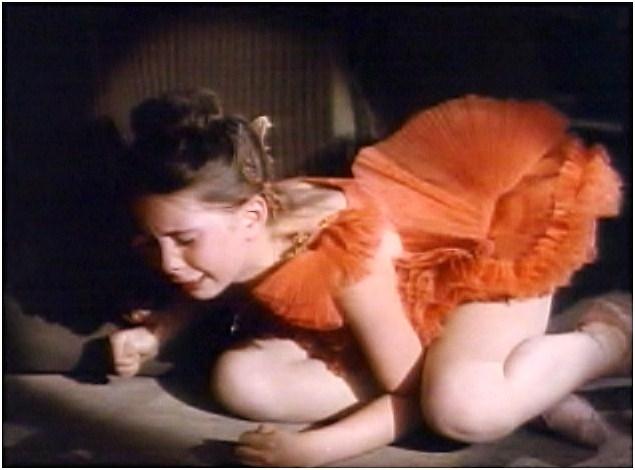
I’ve had better luck in finding and revisiting another film that upset me during my early childhood. A protracted search in this case eventually yielded The Unfinished Dance (Henry Koster, 1947), which I most likely saw at a revival in my hometown in Alabama circa 1949 or 1950, when I was six or seven, and didn’t see again until over six decades later, after ordering a DVD. Read more
I’ve never thought that Nunnally Johnson’s Black Widow (1954), a New York whodunit in 2.55:1 CinemaScope, was a masterpiece, either at the age of 11 when I saw it in first-run or tonight, when I saw it on Twilight Time’s Blu-Ray, even if it held my interest both times, and even moved me at times (especially Reginald Gardiner’s character and performance). But I have to admit that the single thing I found most memorable about it in 1954 — the brassy yet awkward sort of intermission grinding the story to a halt in the eleventh hour in order to dare or challenge the audience to solve the mystery before the movie itself does — is oddly missing from the Blu-Ray.
Is this because 20th Century-Fox decided to delete this intertitle at some later date, or because Twilight Time decided it was too corny to keep? I hope it’s the former, because this label is usually pretty scrupulous about history and sticking to original versions, and indeed, part of what makes this movie watchable now (if not then) is how outlandishly dated it all is — its embarrassment about an unmarried woman’s pregnancy (which oddly places her boyfriend of roughly the same age completely beyond suspicion when she winds up murdered), its totally implausible bitch-goddess mythology (which Peggy Ann Garner can’t be blamed for, given the lines that writer-director Johnson handed her), its equally overdone diva misogyny (which Ginger Rogers arguably makes even worse than it has to be), the bored indifference of both script and direction shown towards Gene Tierney as the dutiful spouse, the goody two-shoes rectitude of Van Heflin playing Van Heflin, and the sheer palatial breadth of its Manhattan apartments (cf. Read more
Written for the catalogue of Il Cinema Ritrovato in Bologna (June-July 2017). — J.R.
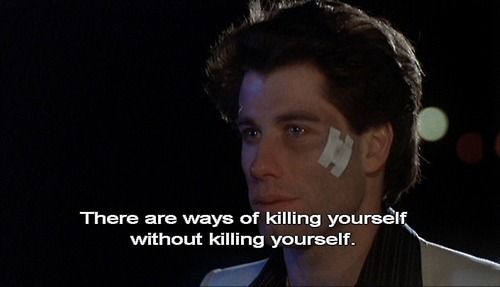
Dave Kehr has aptly described it as a “1977 update of Rebel Without a Cause” and a “small, solid film, made with craft if not resonance”. But it’s also a dance musical and the hit that catapulted John Travolta to stardom after a brief career in theater and on television (notably on Welcome Back, Kotter).
There’s a manic-depressive side to most musicals—a tendency to navigate mood swings from depression to exhilaration and back again–that’s observable in everything from Swing Time to The Band Wagon to La La Land. Saturday Night Fever takes that pattern to an unusual extreme in the way it oscillates between a view of Brooklyn’s Bay Ridge neighborhood as a version of hell on earth whose residents devote all their waking hours to humiliating one another and the heavenly, utopian lift and glory of dancing at one of its discotheques called 2001 Odyssey. Most people who fondly remember this movie are likely to focus on the latter and think less about the former, but it’s the relation between these two registers that gives the movie its energy.
The screenplay by Norman Wexler (Joe,Serpico,Mandingo) is derived from an article in New York magazine (“Tribal Rites of the New Saturday Night”) whose author, British rock critic Nik Cohn, admitted two decades later was more invented than observed. Read more
“We are more alike, my friend, than we are unalike.” A noble sentiment, especially to a liberal universalist like me, simply and honestly expressed. So I don’t mind when I hear it spoken by the same black woman two or three times within the same public service announcement on MSNOW; I even enjoy it.
But when that same commercial or its shorter variant gets repeated endlessly on that liberal news network so that it’s played and heard dozens or hundreds of times on a daily, weekly, and monthly basis, I start to wonder if it’s being addressed to me as a friend, as an enemy, as a customer, or as arobot. Is MSNOW being friendly or indifferent towards me when it turns a worthy sentiment into an unfeeling barrage and a heedless insult? A mechanical form of overkill, a nice thought converted into a thoughtless mantra, an irritating drone as devoid of meaning as a buzzing fly, designed to be endured rather than appreciated?
If, indeed, the only motive behind this onslaught is a network’s desire to fill up empty space, then assuming that some form of human communication is taking place seems to be utterly beside the point.
From Cinema Scope No. 50, Winter 2012, as part of a feature, “50 Best Filmmakers Under 50”. — J.R.
Many reviewers of Azazel Jacobs’ four features understandably place them in a direct lineage from his father Ken’s work. Both filmmakers are clearly preoccupied with interactions and crossovers between fiction and nonfiction — although the same could be said of everyone from Lumière, Méliès, and Porter to Costa, Hou, and Kiarostami. And both are remarkable directors of actors/performers, even though, in the case of Ken, projectors and found footage have performative roles along with people. The dialectics forged by opposite coasts and mindsets — corporate Hollywood vs. flaky New York Underground, claustrophobic obsession/fixation versus airy and uncontrollable street theatre — are equally constant.
Most reviewers are quick to point out that Azazel is more committed to narrative than his father. It’s easy to see what they mean, but some of their assumptions are worth questioning. If part of what we mean by “narrative” is plot and incident, there may be more of both contained in the intertitles of Ken’s The Whirled (1956-63) than there is in the main action of Azazel’s second feature The GoodTimes Kid (2005). If part of what we mean is “character,” then the work of both filmmakers is overflowing with it, from Jack Smith’s manic cavorting in many of Ken’s films to Diaz’s exhilarating dance in The GoodTimes Kid, not to mention John C. Read more
With Michel Simon, Dita Parlo, Jean Dasté, Gilles Margaritis, and Louis Lefevre.
“What was Vigo’s secret? Probably he lived more intensely than most of us. Filmmaking is awkward because of the disjointed nature of the work. You shoot five to fifteen seconds and then stop for an hour. On the film set there is seldom the opportunity for the concentrated intensity a writer like Henry Miller might have enjoyed at his desk. By the time he had written twenty pages, a kind of fever possessed him, carried him away; it could be tremendous, even sublime. Vigo seems to have worked continuously in this state of trance, without ever losing his clearheadedness.” — François Truffaut, 1970
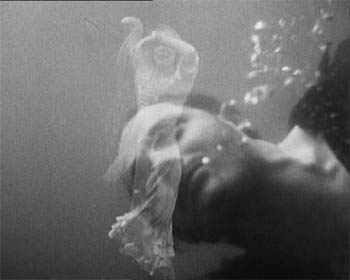
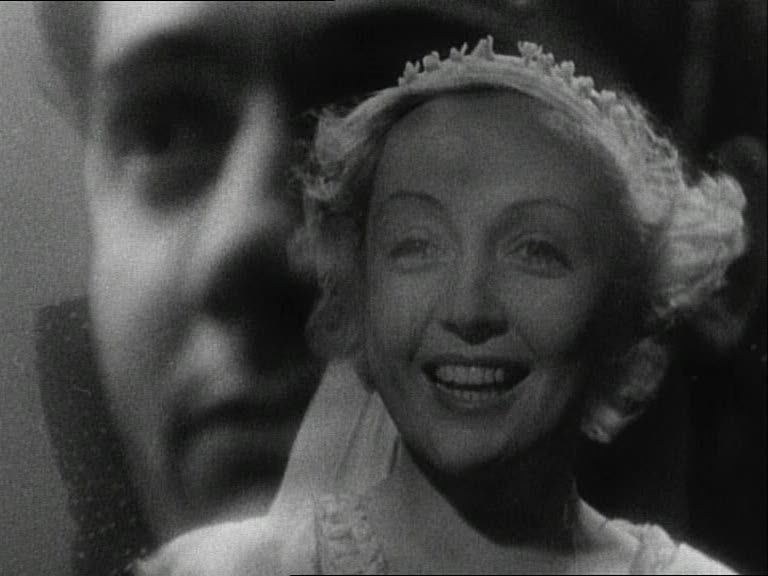
L’Atalante is one of the supreme achievements in the history of cinema, and its recent restoration, playing this week at the Music Box, offers what is surely the best version any of us is ever likely to see. Yet the conditions that made this masterpiece possible were anything but auspicious.
When Jean Vigo started to work on his first and only feature in July 1933, he had no say over either the script or the two lead actors. Read more
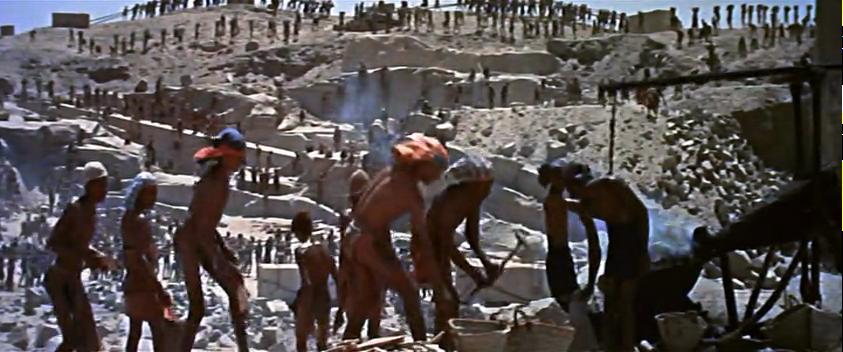
Mea culpa: How could I have excluded Howard Hawks’ masterpiece Land of the Pharaohs from the list of my thousand favorite films in Essential Cinema? Clearly I had better taste in recognizing the film’s greatness in 1955, at age 12, before being brainwashed by such factoids as the movie’s commercial failure or complaints about the contemporary-sounding dialogue in a film set in ancient Egypt (“the feeling is mutual”), amplified later by Hawks and/or his screenwriter William Faulkner saying “I didn’t know how a Pharaoh talked.” But surely the ruse of having Jack Hawkins speak with an English accent and allowing Dewey Martin in his slave part not to lose his American accent wasn’t the worst of solutions. In any case, did anyone ever fault Rio Bravo because Hawks, Jules Furthman, and Leigh Brackett didn’t know how 19th century cowboys talked? I’d rather praise Land of the Pharaohs for its contemporary relevance 68 years later, with Hawkins as its ruthless Pharaoh and Joan Collins as his equally greedy Queen and successor epitomizing the dog-in-the-manger capitalism of Donald and Melania that currently rules the Republican Party. Or for Alexandre Trauner’s spectacular set design and the film’s intricately choreographed movements and layers of extras.Read more
From the online Australian web site Senses of Cinema, November 2001. Some of this piece recycles some bits from “Make No Mistake: The Day the Towers Fell“, commissioned but not published by the Chicago Reader a couple of months earlier. — J.R.
Like many other Americans lately, I’ve been scared -– but like only some Americans, I’ve been scared both of Middle Eastern terrorists and those whom I regard as American terrorists, almost in equal measure. For what can be truly terrifying on occasion is how alike these two kinds of myopic, intolerant individuals can seem to be: not just religious fanatics, but ordinary Americans who all of a sudden start thinking of the vanished World Trade Center as their own private property and the terrorist attacks of September 11 as simply and unambiguously an “attack on America” –- thereby allowing the Middle Eastern terrorists and their assumed positions to set the terms of the discussion and automatically dismissing the many non-Americans who were destroyed in the attacks as irrelevant.
Three disparate yet characteristic examples of everyday American “terrorism”: (1) A headline recently blazoning Chicago’s only tabloid (Roger Ebert’s paper), the Sun-Times, announcing that the Taliban was poisoning U.S. Read more
From the Chicago Reader (October 12, 1990). — J.R.
The 26th Chicago International Film Festival includes, at the latest count, 110 features and ten additional programs, spaced out over 15 days in two locations –a somewhat more modest menu than last year’s. Apart from this streamlining, it would be a pleasure to report some major improvements in the overall selection, but I’m afraid wanting isn’t having, and from the looks of things, this year’s lineup is not very inspiring.
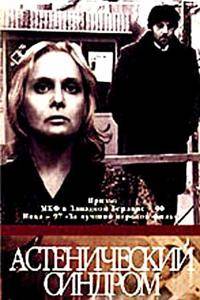
About six weeks ago, when the festival issued a list of about 100 “confirmed and invited” films, I was hopeful. Based on what I’d already seen or heard about, the list was, barring some omissions, a fair summary of what was going on in world cinema, which is more than one could say for previous Chicago festival lineups. I pointed this out to a colleague, who replied, “Yeah, but let’s see how many of these actually turn up,” and I’m sorry to say his skepticism was warranted. Gradually, irrevocably, over half of the hottest titles were dropped from the list, including Kira Muratova’s remarkable The Asthenic Syndrome, Jean-Luc Godard’s La nouvelle vague, Nanni Moretti’s Palombella Rosa, Pavel Lounguine’s Taxi Blues, Charles Burnett’s soon-to-open To Sleep With Anger, Aki Kaurismaki’s The Match Factory Girl, Bertrand Tavernier’s Daddy Nostalgy, Otar Iosseliani’s Et la lumiere fut, and Patrice Leconte’s The Hairdresser’s Husband. Read more
Written for the July-August 2017 Film Comment. This is the unedited version of my review. — J.R.
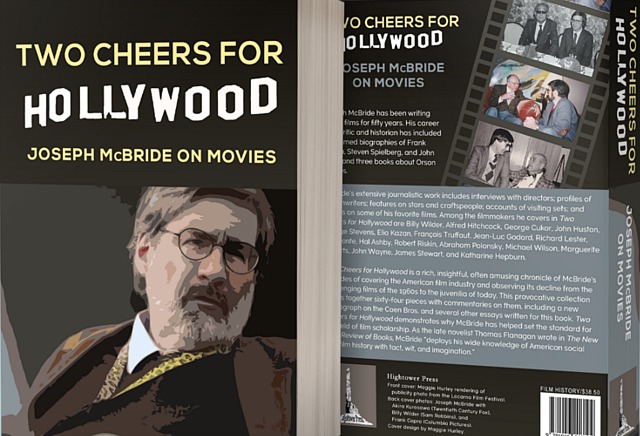
Two Cheers for Hollywood: Joseph McBride on Movies
By Joseph McBride, Hightower Press, $38.50.
Anyone who’s read his astute critical biographies of Capra, Ford, Spielberg, and Welles knows that Joseph McBride is one of our most invaluable film historians. No less ambitious but more personal are his three most recent books, all brought out expertly under his own imprint and available from Amazon: his hefty Into the Nightmare: My Search for the Killers of President John F. Kennedy and Officer J. D. Tippit (2013), his very moving and painfully candid The Broken Places: A Memoir (2015), and now an even heftier volume collecting half a century’s worth of his film journalism and criticism, encompassing 56 separate items and almost 700 large-format pages. It’s the sort of old-fashioned bedside compendium and browser’s paradise that we seldom get nowadays from academic publishers—with a few rare exceptions, such as Greil Marcus and Werner Sollors’ delightful 2009 New Literary History of America (which included one of the better McBride essays reprinted here, “The Screenplay as Genre,” about Citizen Kane). McBride prefaces each piece with a contextualizing introduction, and part of what makes this volume fun is the informal history it offers of McBride’s own taste and career. Read more
[2017 Preface: I’m reposting this article less than a month after its last posting on this site because Powerhouse Films in the U.K. has just sent me, at my request, its impressive “Limited Dual Format Edition” of this remarkable movie, and so far, the only complaint I have relevant to its riches is that they didn’t access this 1978 article about it any sooner. If they had, some of the uncertainties and/or wrong guesses made by Glenn Kenny and Nick Pinkerton in their often informative audiocommentary probably wouldn’t be there. For the record then–to cite only a couple of matters not covered in the article below that conflict with their suppositions (apart from the mispronounciation of La Jolla)–in 1953, at age ten, I already knew who Dr. Seuss was because many of his books were already widely available but, even as a devoted radio listener, I didn’t know who Peter Lind Hayes and Mary Healy were.]
The principal source of this article — written for American Film, and published in their October 1978 issue — was a fairly lengthy phone conversation I once had with Theodor Seuss Geisel (1904-1991), better known as Dr. Seuss, when I was living in San Diego.Read more