Daily Archives: March 1, 2026

Two to Tangle

Written for an Arbelos Films Blu-Ray in 2024.

Two to Tangle
By Jonathan Rosenbaum

One of the most striking attributes of experimental art is the way it commonly forces us to rethink certain basics that we normally take for granted. In Nobuhiro Suwa’s 2/Duo (1996), the filmmaker’s first foray into fiction after making several TV documentaries, the vicissitudes of a young couple trying to live together — an unsuccessful actor named Kei (Hidetoshi Nishijima) and a boutique shop assistant named Yu (Eri Yu) — are so unfixed that even so seemingly simple a matter as what causes their rifts isn’t clearly spelled out. Their scenes together are vivid and sometimes violent, but seldom legible in the terms we normally accept from narrative fiction.

In an early scene, Kei suddenly proposes marriage to Yu, and she seems too startled by this suggestion to respond. In a subsequent scene, an offscreen interviewer (Is it Suwa or someone else? Does it matter?) asks her character why she didn’t respond, and she promises to ask Kei why he proposed to her. But when she finally does this, he can only shout, like a beleaguered Hamlet, “I don’t know!” Indeed, lack of certainty becomes the only certainty in much of what follows. Read more
LOVE ME TONIGHT and MULHOLLAND DRIVE

Both of these very short pieces were written in 2002 for Understanding Film Genres, a textbook that for some unexplained reason was never published. Steven Schneider commissioned them.  — J.R.

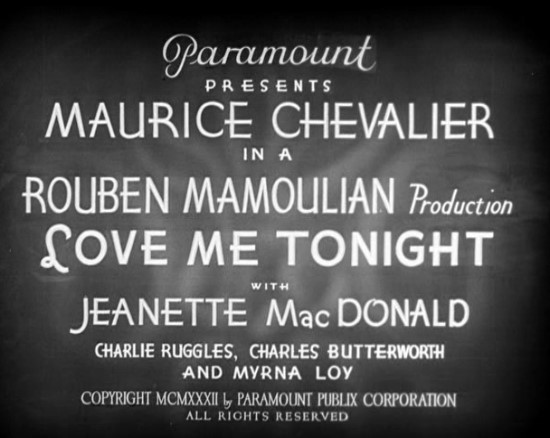
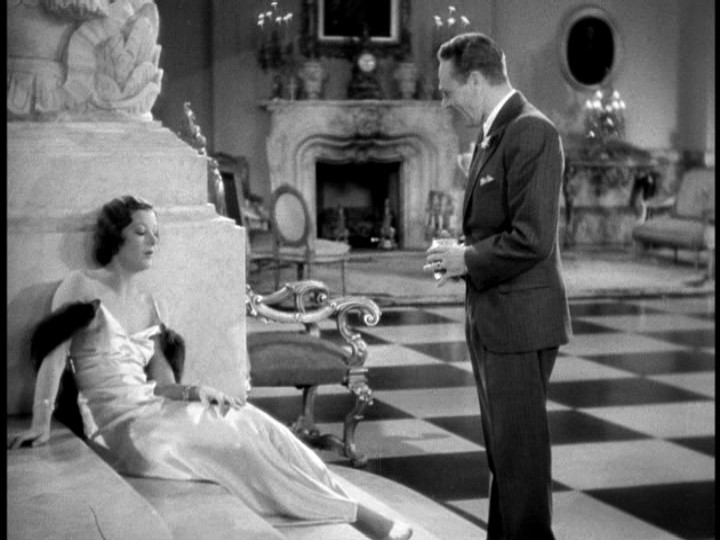
Love Me Tonight

Love Me Tonight Love Me Tonight2 Love Me Tonight3

There are two distinct aesthetics for movie musicals, regardless of whether they happen to be Hollywood or Bollywood, from the 1930s or the 1950s, in black and white or in color. According to one aesthetic– exemplified by Al Jolson (as in The Jazz Singer) or the team of Fred Astaire and Ginger Rogers (as in The Gay Divorcee or Top Hat–a musical is a showcase for talented singers and/or dancers showing what they can do with a particular song or a number. According to the second aesthetic, exemplified by Guys and Dolls —- the two leads of which, Marlon Brando and Jean Simmons, aren’t professional singers or dancers — the musical is a form for showing the world in a particular kind of harmony and grace and for depicting what might be called metaphysical states of being. The leads are still expected to sing in tune, of course, but notions of expertise and virtuosity in relation to their musical performances are no longer the same. Read more