Ethereal Girl [WHO’S THAT GIRL]
This was the first long review I wrote for the Chicago Reader after I started working there, but its publication was delayed for almost a couple of months until October 30, 1987 because the film was pulled from distribution just before we were going to press. — J.R.
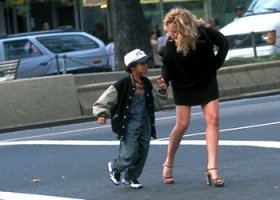
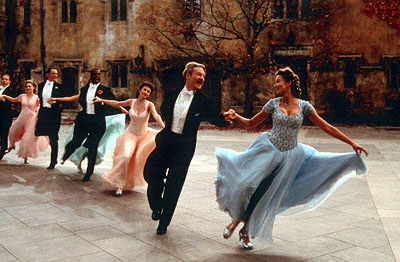
WHO’S THAT GIRL
** (Worth seeing)
Directed by James Foley
With Madonna, Griffin Dunne, Haviland Morris, John McMartin, and John Mills.
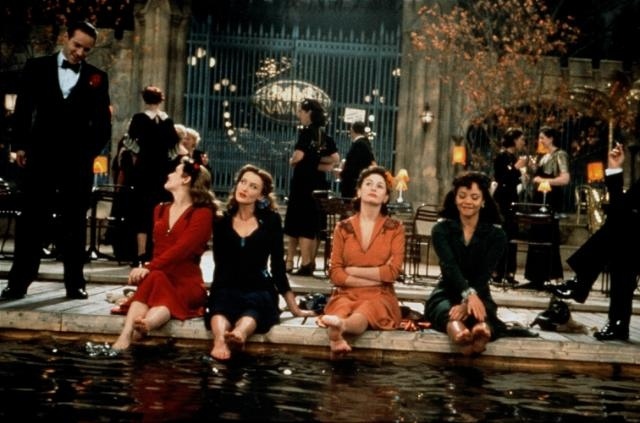
The current spate of recycled movies is only the latest stage in a process that has been in force for almost three decades, ever since the French New Wave launched the idea of a self-devouring cinema. Broadly speaking, the movement started out as esoteric polemical criticism (in print and on-screen) in the 60s, gravitated toward name-dropping and flag-waving testimonials in the 70s, and has finally degenerated in the 80s to an insidious kind of self-censorship that uses the past — and a severely delimited version of it at that — as a kind of stopper to prevent too much of the present from leaking through.
It’s a cynical truism of journalism that any story with 100 percent new information is virtually unusable. In order to provide the reader or spectator with a safety net, most of the story has to be based on old information, even if much of that old news turns out to be out of date or false. Read more
Masumura’s Madness + sidebar (Among the Missing: 10 Key Masumura Features)
This was written for Film Comment in 2002, but only the first part was published in their September-October issue that year, under the title “Enlightened Madness”. This was designed to be accompanied by a sidebar highlighting ten of Masumura’s films, but the editor, Gavin Smith, after proposing the sidebar and thereby getting me to revise the first piece accordingly, subsequently decided to place the sidebar only on the magazine’s website, thereby sabotaging my plan for the two pieces to work together, as a two-part unit, and reducing much of the sidebar, as a stand-alone unit, to gibberish.
Much of both parts got recycled years later in an essay included in Movie Mutations, a collection I coedited with Adrian Martin. — J.R.
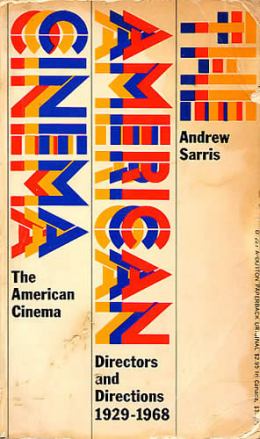
To appropriate one of the categories of Andrew Sarris’s The American Cinema, Yasuzo Masumura (1924-1986) is a “subject for further research.” Considering that he made 58 films between 1957 and 1982, none of which has ever had a normal commercial run in this country, that may even be putting it mildly. But so far I’ve managed to see 38, all but one over the past four years, and though the range in quality is enormous, I’d swear by at least half of them. Read more
Sade, Resnais, Lubitsch, MGM
The following is a text commissioned by film critic and scholar Francois Thomas for an ongoing online series, “Les Papiers Alain Resnais,” devoted to items in the Alain Resnais archives and individual commentaries about them (https://www.imec-archives.com/matieres-premieres/papiers/alain-resnais). Rather than post my original English text, which Thomas translated into French, and which appeared on the site in French and English last week, I’ve slightly revised the web site’s English translation of his French text to make it both more idiomatic and closer to what I had in mind. And I begin with his “hasty” English translation (with explanatory glosses in brackets) of Resnais’ letter, which he did for me, reproduced here in bold. (Francois told me that Resnais hated to write letters and wrote very few of them; this one was mostly typewritten.)
Letter from Alain Resnais to Richard Seaver on the Délivrez-nous du bien project , October 20, 1970:
Dear Dick,
Your letter of October 10 from Southampton [New York] arrived last night. Probably intersected with the one I sent on the 8th, containing answers to several questions you asked me. But — is it a feeling — you don’t seem to be aware of the one I sent you on September 9 (and I remember that you didn’t seem to have received one of the notes I sent from London at the end of July either).
Prospero’s Books
From the Chicago Reader (May 1, 1992). — J.R.
Poor John Gielgud tried for years to set up a film version of The Tempest that would record his performance of Prospero; he finally had to settle for director Peter Greenaway. Gone is any sense of drama or character; the cluttered spectacle yields no overriding design but simply disconnected MTV-like conceits or mini-ideas every three seconds. Don’t expect to enjoy Shakespeare’s poetry: aural distractions constantly intrude, from sound effects, echo chambers, and Michael Nyman’s neoclassical Muzak. And don’t expect to enjoy Sacha Vierny’s exquisitely lit cinematography: double exposures, ugly rectangular overlays, graceless quick cutting, and lots of nude or semiclad extras cavorting in clunky modernist choreography drain all the pleasure from that as well. On the other hand, if you share Greenaway’s misanthropy, you might get some kicks out of watching a cherub piss on everyone in sight. With Michael Clark, Michel Blanc, Erland Josephson, and Isabelle Pasco (1991). R, 124 min. (JR)
I Am A Sex Addict
From the December 31, 1989 Chicago Reader.
Shortly before his third marriage Caveh Zahedi recounts and restages events from his life showing how his addiction to prostitutes doomed his first two. This deconstructive, minimalist comedy, like his 1990 A Little Stiff (codirected by Greg Watkins) and 1994 I Don’t Hate Las Vegas Anymore, re-creates events with the vain self-deprecation of one of his role models, Woody Allen. Here he adds critical commentary, animation, and playful asides about the perils and vicissitudes of low-budget filmmaking, and his offbeat intelligence and low-burning wit recall his inspired rap on film theory in Waking Life. 90 min. (JR) Read more
Beautifully Fake and Just Plain Phony
From the Chicago Reader (February 23, 2007). — J.R.
NAT TURNER: A TROUBLESOME PROPERTY ****
DIRECTED BY CHARLES BURNETT | WRITTEN BY BURNETT, FRANK CHRISTOPHER, AND KENNETH S. GREENBERG
WITH CARL LUMBLY, TOM NOWICKI, TOMMY HICKS, JAMES OPHER, WILLIAM STYRON, ERIC FONER, MARY KEMP DAVIS, OSSIE DAVIS, EKEWUEME MICHAEL THELWELL, AND BURNETT
THE ASTRONAUT FARMER *
DIRECTED BY MICHAEL POLISH | WRITTEN BY MARK AND MICHAEL POLISH
WITH BILLY BOB THORNTON, VIRGINIA MADSEN, BRUCE DERN, MAX THIERIOT, TIM BLAKE NELSON, BRUCE WILLIS, KIERSTEN WARREN, AND RICHARD EDSON
Very little is known about Nat Turner, the black slave in Virginia’s Southampton County who led a revolt by more than 50 other black slaves in August 1831. Over two days they slaughtered 57 white men, women, and children, and after the rebellion was suppressed, 60 to 80 slaves were summarily executed and mutilated. As one historian notes in Charles Burnett’s hour-long TV documentary, Nat Turner: A Troublesome Property (2003), screening Sunday at the DuSable Museum of African American History, we have precise information about Turner’s victims but know almost nothing about the slaughtered blacks.
Most of what’s known about Turner is based on his unverifiable “confession” to a white lawyer, Thomas Gray, before he was executed. Read more
Forrest Gump
From the July 1, 1994 Chicago Reader.
Robert Zemeckis, combining his taste for brittle comedy (Used Cars), mutilated bodies (Death Becomes Her), and recycled history (Back to the Future and Who Framed Roger Rabbit), won an Oscar for this tear-jerking 1994 comedy about a slow-witted southerner (Tom Hanks) living through an absurdist half century of American great events. Zemeckis banks on the innocence of two parties, Gump and the spectator, homogenizing culture and politics into a safe, sweet, palatable nugget. Judging by the the movie’s enduring popularity, the message that stupidity is redemption is clearly what a lot of Americans want to hear. With Robin Wright, Gary Sinise, Mykelti Williamson, and Sally Field; Eric Roth and Zemeckis adapted a novel by Winston Groom. PG-13, 142 min. (JR) Read more
25th Hour
From the Chicago Reader (January 10, 2003). — J.R.
Spike Lee’s best feature since Do the Right Thing. Though none of the major characters is black, it’s one of Lee’s most personal and deeply felt works, and the fact that it’s based on someone else’s material — David Benioff’s adaptation of his novel — makes the film all the more impressive. The narrative follows a former drug dealer (Edward Norton) spending his last 24 hours in Manhattan before beginning a seven-year prison term, though it’s also very much about the people closest to him: his girlfriend (Rosario Dawson), two best friends (Barry Pepper and Philip Seymour Hoffman), and father (Brian Cox). The film persuades us to think long and hard about what prison means, and Lee has shaped it like a poem that builds into an epic lament, especially in a beautiful and tragic closing that risks absurdity to achieve the sublime. With Anna Paquin. 134 min. (JR)
Turnabout: The Story of the Yale Puppeteers
From the Chicago Reader (July 12, 1993).
A fascinating and highly entertaining hour-long video (1992) by Dan Bessie about a trio of puppeteers12 who toured America for more than seven decades with their satirical musical revues: Bessie’s 92-year-old uncle, puppeteer Harry Burnett; Burnett’s cousin Forman Brown; and Brown’s lover, Roddy Brandon. (Their LA theater–which counted Charlie Chaplin and Albert Einstein among its fans–was called the Turnabout because it had a puppet stage at one end, a cabaret stage at the other, and seats that swiveled.) Burnett and Brown, both still alive, perform entertainingly, and we also get fascinating archival footage of some of their shows. Brown, who wrote songs, also talks about his recently republished 1934 novel Better Angel, originally published under a pseudonym, perhaps the only gay novel of its period with a happy ending. A fascinating piece of show-business history, this also offers many interesting comments about what it meant to be gay in the early part of this century. On the same Gay & Lesbian Film Festival program, four short films by Sandi DuBowski, Ruth Scovill, and Iara Lee; one of Lee’s films features Allen Ginsberg narrating, the other features Matt Dillon reading T.S. Eliot’s “The Love Song of J. Read more
Lost In Translation
From the August 29, 2003 Chicago Reader. — J.R.
The Virgin Suicides (2000) revealed writer-director Sofia Coppola to be a genuine original, and now that she’s working with her own material the freshness of her vision is even more apparent. This second feature traces the brief romantic friendship between a jaded movie star and family man (Bill Murray), who’s in Tokyo shooting a whiskey commercial, and a bored young newlywed less than half his age (Scarlett Johansson), who’s waiting for her photographer husband (Giovanni Ribisi) to return from a trip. Coppola does a fair job of capturing the fish-tank ambience of nocturnal, upscale Tokyo and showing how it feels to be a stranger in that world, and an excellent job of getting the most from her lead actors. Unfortunately, I’m not sure she accomplishes anything else. R, 105 min. (JR)
How the West Was Butchered [PAT GARRETT AND BILLY THE KID]
From the Chicago Reader (March 16, 1990). — J.R.
PAT GARRETT AND BILLY THE KID
** (Worth seeing)
Directed by Sam Peckinpah
Written by Rudolph Wurlitzer
With James Coburn, Kris Kristofferson, Bob Dylan, Jason Robards, John Beck, Barry Sullivan, Slim Pickens, Katy Jurado, Jack Elam, Harry Dean Stanton, and Chill Wills.
Sometimes it’s hard to know if the film you’re seeing is the one its director intended you to see. Some recent foreign-language releases are cases in point. In fact, if there’s anyone left who takes the Academy Awards seriously — as an indication of a film’s quality rather than its capacity to turn coin — it’s worth pointing out that at least two of the foreign-language features nominated for Oscars aren’t being shown in their original forms in this country. The version of Camille Claudel showing here now is 21 minutes shorter than the original one shown in Europe. This apparently means that the edited-down version — presumably the one that Academy members were shown as well — is worthy of an Oscar while the complete version is not, and the same strictures seem to apply to Cinema Paradiso, opening this week, which has been reduced by about an hour from the two-part version originally shown in Italy, apparently on the assumption that American audiences are more fidgety than their European counterparts. Read more
The Unobserved Life [KILLER OF SHEEP]
From the August 3, 2007 Chicago Reader. — J.R.
KILLER OF SHEEP ****
DIRECTED AND WRITTEN BY CHARLES BURNETT
WITH HENRY GAYLE SANDERS, KAYCEE MOORE, CHARLES BRACY, EUGENE CHERRY, JACK DRUMMOND, AND ANGELA BURNETT
WHEN Opens Fri 8/3
WHERE Music Box, 3733 N. Southport
INFO 773-871-6604
Thanks to the excellent restoration work of the UCLA Film and Television Archive and the patient heroism of Milestone Films’ Dennis Doros — who has spent years acquiring the music rights for a film largely built around pieces of music — Charles Burnett’s monumental first feature, Killer of Sheep (1977), is finally getting its first commercial release. Shot by Burnett himself in black-and-white 16-millimeter for less than $10,000 — as his master’s thesis at UCLA — this portrait of everyday life in Watts has steadily grown in resonance and reputation over the past 30 years. It’s centered on the melancholy off time of the title hero — a weary abattoir worker (the wonderful Henry Gayle Sanders) — with his family and friends. The slow burn and slow drip of this off time while he stews in his own juices is essential to the movie’s experience.
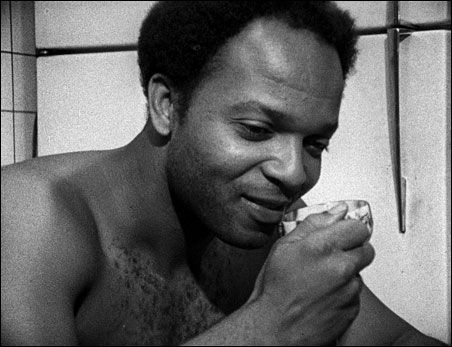
We also catch a few glimpses of the hero at his job, but most of what we know about his work and how he feels about it comes from seeing his general alienation and exhaustion when he’s at home: repairing the kitchen sink or laying out linoleum, sluggishly dancing with his wife in the living room, berating his son for addressing her in a “country” fashion as “dear,” refusing to participate in a robbery being planned by a couple of neighbors, or trying to fix a broken down car. Read more
The Mattei Affair (1975 review)
From Monthly Film Bulletin, June 1975 (Vol. 42, No. 497). — J.R.
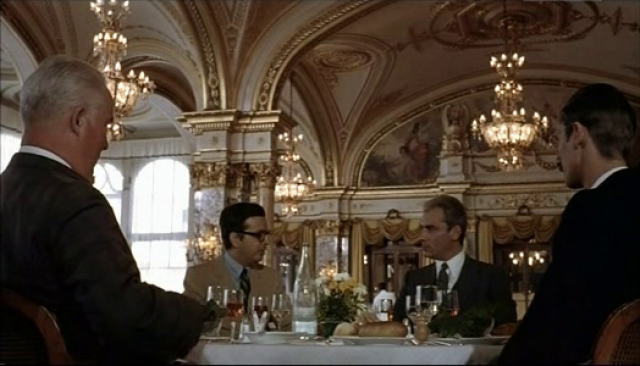
Caso Mattei, Il (The Mattei Affair) Italy, 1972
Director: Francesco Rosi
27 October, 1962. The private plane of Enrico Mattei, president of ENI (Ente Nazional Idrocarburi), flying from Sicily to Milan, crashes in Bascape, killing the pilot Bertuzzi, the Time-Life reporter McHale and Mattei himself. An account follows of both the investigation into the causes of this accident (a mystery that remains unsolved) and of Mattei’s public career, revealing that diverseindividuals and organizations (from the Mafia to the CIA) had reasons for wanting to see him dead. His controversial position grew out of his efforts to use his state oil organization, AGIP, to compete with private individuals, and to deal with Third World oil-producing countries (Algeria, Egypt, Iran, Libya, Morocco, Saudi Arabia, Tunisia) in terms more advantageous than the 50-50 arrangement offered by the major oil companies. This project began in April 1946, when a small methane deposit was discovered in the village of Caviaga, and Mattei decided to exaggerate and exploit its value as a coal substitute in order to create his organization and gain an economic and political foothold. In the investigation running parallel to a re-enactment of his career (the latter culminating in his visit on the day of his death to Gagliano, Sicily, where he is acclaimed as a popular hero), Mauro De Marro, a Sicilian journalist reconstructing the last day of Mattei’s life for the purposes of the present film, suddenly disappears, apparently kidnapped — another unsolved mystery. Read more
Sights and Smells and…
From The Soho News (July 2, 1980). This was my first encounter with the delightful and inspired couple Yervant Gianikian and Angela Ricci Lucchi, subsequently known for their wonderful found-footage films, e.g. From the Pole to the Equator (1987) and Prisoners of War (1995). — J.R.
One interesting thing about aesthetic hybrids — movies with smells, or jazz posing as film criticism — is that nobody knows what to do with them, critics included. Whether these unusual and unlikely yokings represent examples of useful, exploratory or merely wishful thinking is essentially a matter of personal taste. In the two instances under review, a crucial factor in determining one’s taste is packaging, pure and simple — how and where an audience gets placed.
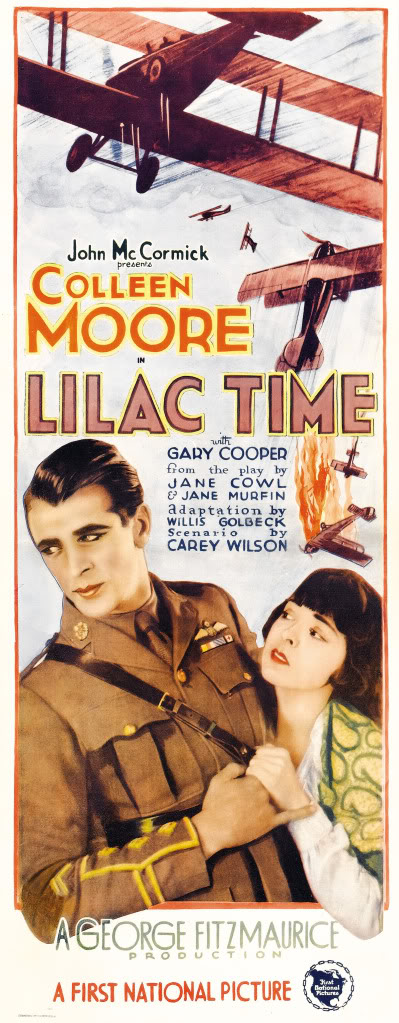
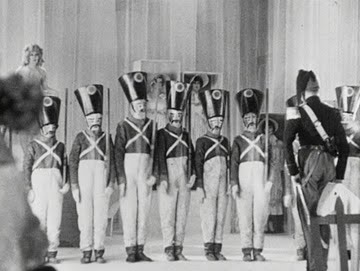
Apart from isolated experiments — including a recent one by Les Blank, reportedly utilizing the odors of red beans and rice — it seems that commercial efforts to link smells with movies have mainly come in two separate, pungent waves. A couple of early talkies, Lilac Time and The Hollywood Revue, played around with the idea in a few theaters; the latter, a plotless musical, climaxed with a snoutful of orange scent to go with “Orange Blossom Time,” performed by Charles King and the Albertina Rasch ballet company. Read more