Bigger Than Life

From the April 1999 Chicago Reader.– J.R.
biggerthanlife4

biggerthanlife3

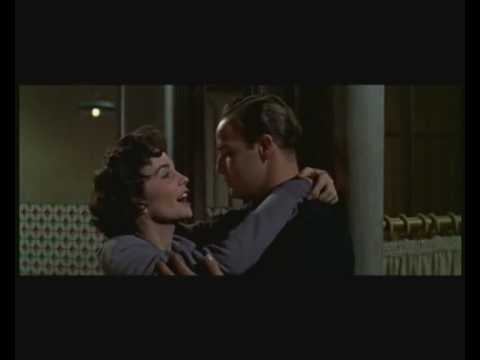
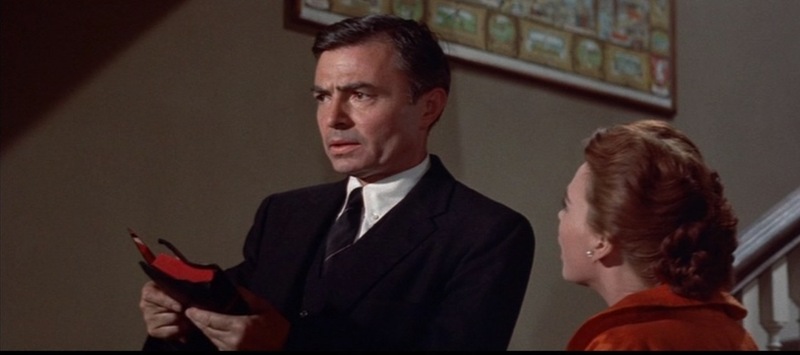
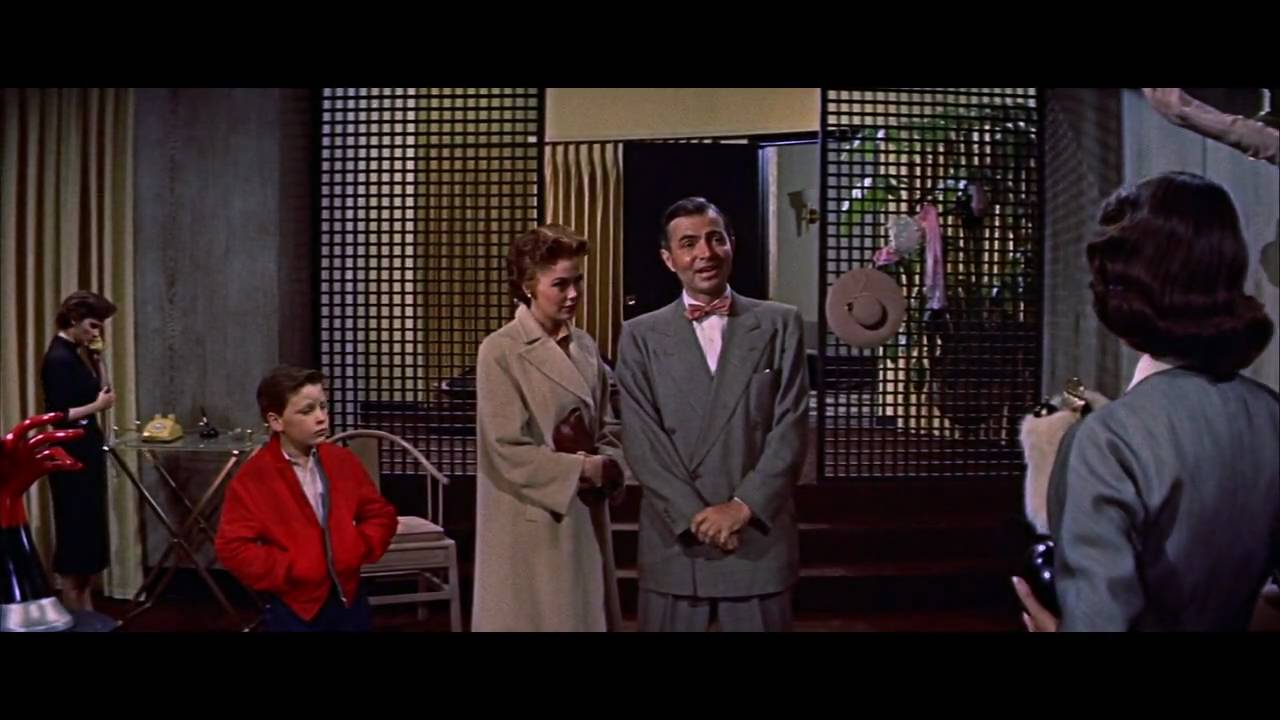
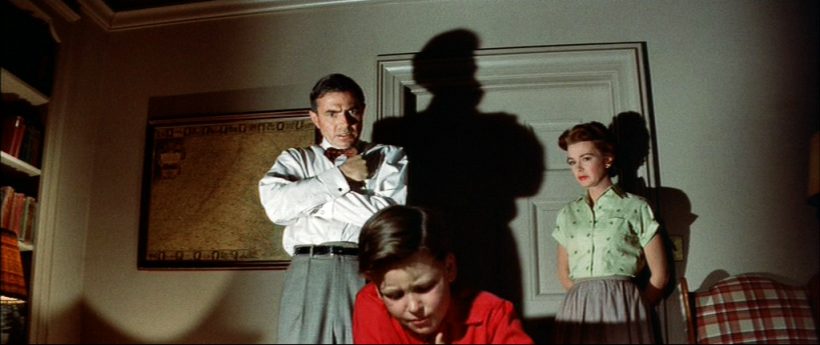
Nicholas Ray’s potent 1956 CinemaScope melodrama dealt with the ill effects of cortisone on a frustrated middle-class grammar-school teacher (James Mason) at about the same time that the first wave of wonder drugs hit the market. But the true subject of this deeply disturbing picture is middle-class valuesabout money, education, culture, religion, patriarchy, and getting ahead. These values are thrown into bold relief by the hero’s drug dependency and resulting megalomania, which leads to shocking and tragic results for his family (Barbara Rush and Robert Simon) as well as himself. Ray’s use of ‘Scope framing and color to delineate the hero’s dreams and dissatisfactions has rarely been as purposeful. (It’s hard to think of another Hollywood picture with more to say about the sheer awfulness of normal American family life during the 50s.) With Walter Matthau in an early noncomic role as the hero’s best friend; scripted by Cyril Hume, Richard Maibum, and an uncredited Clifford Odets. 95 min. (JR)
biggerthanlife

bigger-than-life-1956-sc01-max Read more

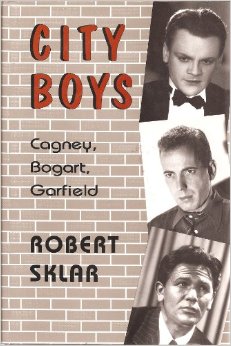
Angels with Dirty Faces (review of Robert Sklar’s CITY BOYS)

 Published in New York Newsday (Sunday, May 31, 1992). -– J.R.

CityBoys

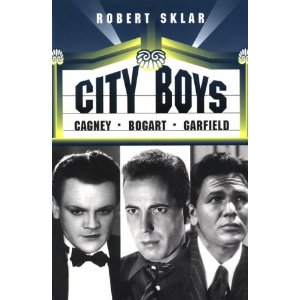
CITY BOYS: Cagney, Bogart, Garfield, by Robert Sklar. Princeton University Press, 311 pp., $27.50.

CityBoys2

BY JONATHAN ROSENBAUM

Perhaps the most refreshing thing about this comparative study of the Hollywood careers of James Cagney, Humphrey Bogart and John Garfield is that it lacks the deference to the film industry that one has come to expect nowadays from movie books, journalistic as well as academic. Eschewing the puffery of popular star biographies and the equally dubious (and self-serving) idealism of such academic buzz terms as “the classical Hollywood cinema” and “the genius of the system,” Robert Sklar, professor of cinema studies at New York University, writes with the vernacular ease of a journalist without sacrificing the analytical rigor one expects from a prestigious university press. While he hasn’t always spread his net as widely as one might hope, he still offers a plausible portrait of three city boys and how they grew -– or didn’t.  

A social historian at heart, Sklar is basically interested in charting the diverse forces that molded and altered the screen images of Cagney, Bogart and Garfield. Their overlapping careers offer many instructive parallels: New York origins, theatrical training, evolving hard-boiled screen personalities, leftist sympathies, artistic and economic exploitation by the studios, struggles for independence (including the formation of their own production companies) with mixed results and elaborate enforced recantations of former political allegiances during the Hollywood witch hunts. Read more

Letter to VIDEO WATCHDOG (1992)

This was (mainly) published in Video Watchdog‘s July/August 1992 issue, with an accidentally deleted passage included in the errata section of their September-October 1992 issue.  -– J.R.

 arkadin-report-on-bed

arkadin-snow-opening


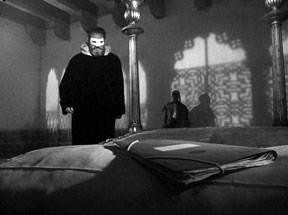
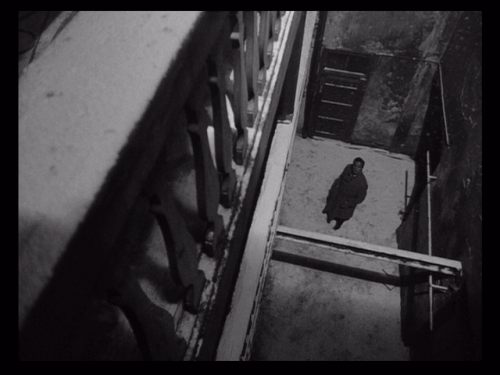
A brief note of clarification about my liner notes to the Criterion laserdisc of CONFIDENTIAL REPORT -– cited and questioned by Tim Lucas at the beginning of his excellent article [VW 10: 42-60]. The only reason why I failed to mention a third and (in my opinion) better version of MR. ARKADIN in these notes –- a version discussed by Lucas elsewhere in this issue –- is that I was under strict instructions from Criterion not to bring this matter up. I reluctantly agreed to this suppression of information only because I knew I would be writing about this version elsewhere (in [the January-February 1992 issue of] Film Comment), and I’m mentioning this anecdote now because I think it dramatizes the thin line separating criticism from publicity in most liner notes -– a general problem that readers of this magazine should be alerted to.

I don’t wish to denigrate the often fine work done by Criterion in making many important works available, but I do believe that the level of scholarship that’s attainable in commercial enterprises of this sort varies considerably from case to case. Read more

En movimiento: Big History, Mixed Signals

Written in September 2014  for my December “En movimiento” column in Caimán Cuadernos de Cine. — J.R.

BigHistory-title

Big-History-Complexity-still

Last September, I ordered from Amazon a three-disc DVD box set released by Lionsgate called Big History consisting of 17 episodes lasting almost seven and a half hours.  My curiosity was spurred by an article by Andrew Ross Sorkin in the New York Times Magazine about billionaire Bill Gates enthusiastically discovering this package — a college course taught by Australian professor David Christian — while working out in his private gym, and then deciding to use this TV series to try to revolutionize the teaching of history in both American high schools and colleges.

Locke

Adieu-au-langage-Jean-Luc-Godard

horsemoney-ventura

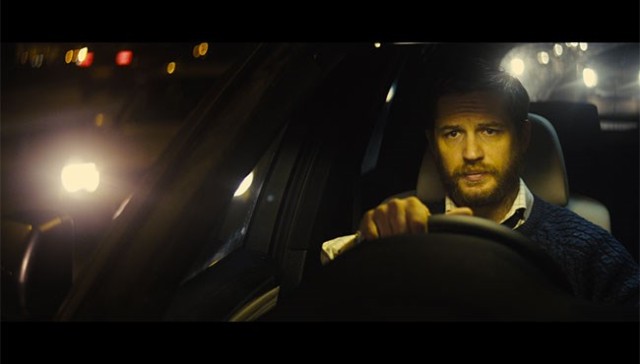
To my amazement, and in spite of all my qualms, Big History proves to be one of the most exciting things I’ve seen this year — not as moral instruction or as a technical tour de force (unlike Steven Knight’s Locke, which resurrects the heroism  of the great Westerns, or Godard’s Adieu au langage, which reinvents 3-D) and not as distilled and hallucinatory poetry (unlike Pedro Costa’s Horse Money), but as a series of lucid pedagogical lessons, especially welcome for someone like me who has always been weak in science. Read more

Does Choosing “The Year’s Best” Compromise the Truth? (Slate post)

Posted on Slate, December 27, 2005. — J.R.


Does Choosing “The Year’s Best” Compromise the Truth?

By Jonathan Rosenbaum

Dec 27, 2005 2:13 PM

Holiday Greetings, David, Scott, and Tony,

David, I appreciate your invitation to “shake hands and come out punching,” though I suspect our disagreements this time around may wind up having more to do with Steven Spielberg and Munich than they do with Terrence Malick and The New World. (See Edelstein’s top-20 list of 2005 films here.) Just to be contrary, however, let me start off with four agreements. Me and You and Everyone We Know, The Three Burials of Melquiades Estrada, William Eggleston and the Real World, and Homecoming all belong somewhere on my own extended list of favorites — and I’d need an asterisk of my own for the penultimate title, David, because Michael Almereyda is a friend whom we share.

To be contrary in another way, I haven’t yet composed my full list for Slate —although I’ve already filed separate lists for the Chicago Reader (which will appear online on Jan. 6) and the Village Voice (which has already appeared online). With your patience and indulgence, I’d like to delay this ritual for another day or so, concentrating for the moment on the issue of what the four of us actually do for a living. Read more

Global Discoveries on DVD: Tips for Landlocked Yanks and Monolinguists (my 10th column)

From Cinema Scope No. 34, Summer 2005. — J.R.

As an avid collector of Hollywood musicals, I’ve recently been checking out which items in my collection with optional French dialogue also have French versions of the songs. My father used to teach himself foreign languages by reading translations of some of his favorite English and American novels (e.g., Light in August in German). It’s recently occurred to me that watching favorite Anglo-American movies with foreign subtitles —- something closer to reading a bilingual text —- might also be helpful, though watching a foreign-dubbed version undoubtedly helps even more when it comes to improving one’s speaking knowledge of a particular language. This is one of the many resources afforded by DVDs that most people ignore, myself included. Just as it never occurs to most North American DVD watchers to spend the minimal amounts of time and money needed to acquire a multiregional player and order DVDs from abroad, the linguistic extras available on a good many DVDs slip past most people’s ken because taking advantage of them lies outside their usual habit patterns.

In any case, once I started examining the fine print on the boxes of the musicals in my collection, I discovered that optional French dialogue is fairly common, though whether this includes French versions of the songs is something one can only learn by playing the DVD. Read more

FOR THE LOVE OF MOVIES: THE STORY OF AMERICAN FILM CRITICISM

Full disclosure: Gerald Peary’s 80-minute documentary accords me two sound bites — one near the beginning (about Manny Farber), the other towards the end (about internet criticism) — and one lingering look at this web site (specifically, my 2005 essay about Susan Sontag).

Overall I’m fundamentally in agreement with David Bordwell’s verdict about this film on his own web site, after seeing it recently in Hong Kong: “In all, For the Love of Movies offers a concise, entertaining account of mass-market movie criticism, and I think a lot of universities would want to use it in film and journalism courses.”

I’m writing this in one-sentence paragraphs because that’s pretty much Gerry’s discursive style and manner here, largely carried by the narration (delivered by Patricia Clarkson), for better and for worse. So — to expand my own discursive style here into two sentences, one of them fairly long — in the two or three minutes devoted to Manny Farber, unless you’ve already read and digested a couple of his key articles, you might wind up concluding that “termite art” has something directly to do with “low-budget crime melodrama,”  even though snippets of Farber’s prose and a couple of lines from a late onstage interview are also included. Read more

On the New Renaissance (Philippe Grandrieux)

This was written in early 2003 at the invitation of Nicole Brenez for a French collection that she edited, La Vie nouvelle/nouvelle vision: à propos d’un film de Philippe Grandrieux (Éditions Léo Scheer, 2005), and she uses the French translation of it by Aïcha Bahcelioglu to lead off the book; the volume also includes a DVD of the film. — J.R.

I’ve witnessed and partly experienced two massive surges of interest in avant-garde cinema during my lifetime. The first, centered on North American films during the 1960s, was spearheaded by Jonas Mekas and P. Adams Sitney in New York; the second, centered on films in both Europe and North America around the turn of the century, has been masterminded as well as celebrated by, among others, Simon Field at the Rotterdam Film Festival and Nicole Brenez at the Cinémathèque Française.

I was slow in appreciating the first of these movements, in part because it tended to draw up battle lines between believers and atheists and was not very hospitable towards agnostics; for all that it accomplished, it was somewhat alienating to anti-institutional types such as Jack Smith and more pluralistic cinéphiles such as myself, who had trouble understanding why Marcel Hanoun was the only French avant-garde figure since the 20s admitted into Anthology Film Archives, which also managed to exclude such figures as Godard, Resnais, Rivette, and Straub-Huillet —- not to mention Lang and Mizoguchi — from its pantheon. Read more

Response to a PEN E-Mail Forum (2004)

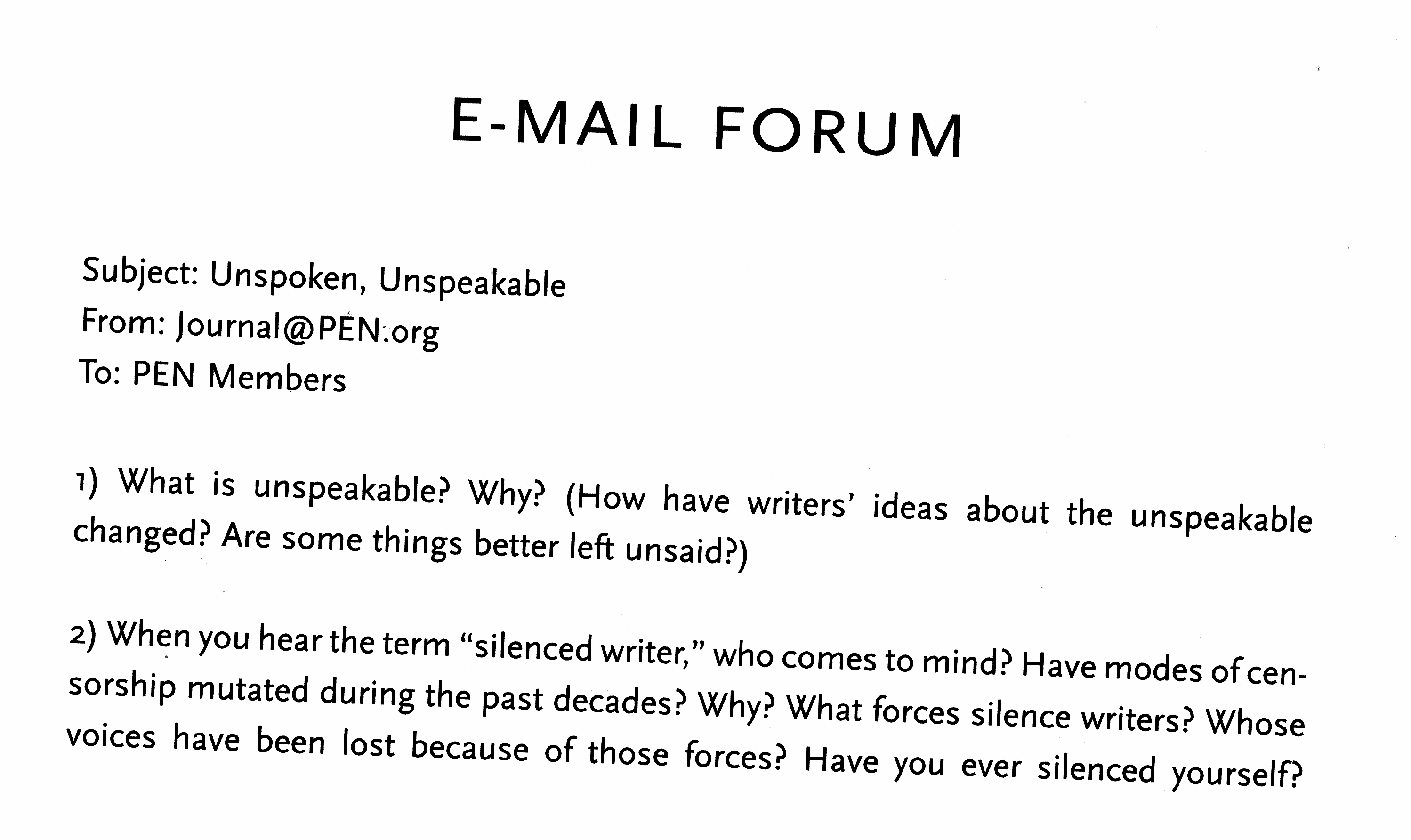
As a long-standing member of PEN, I’m periodically invited to participate in their “forums” for their occasional publication PEN America. This is my response to Issue 5 (volume 3) in 2004, devoted to “Silences”. –- J.R.

Read more

Global Discoveries on DVD: Mixed Blessings (5th column, 2004)

From Cinema Scope #18 (Spring 2004). — J.R.

First of all, the good news:

centerstage2

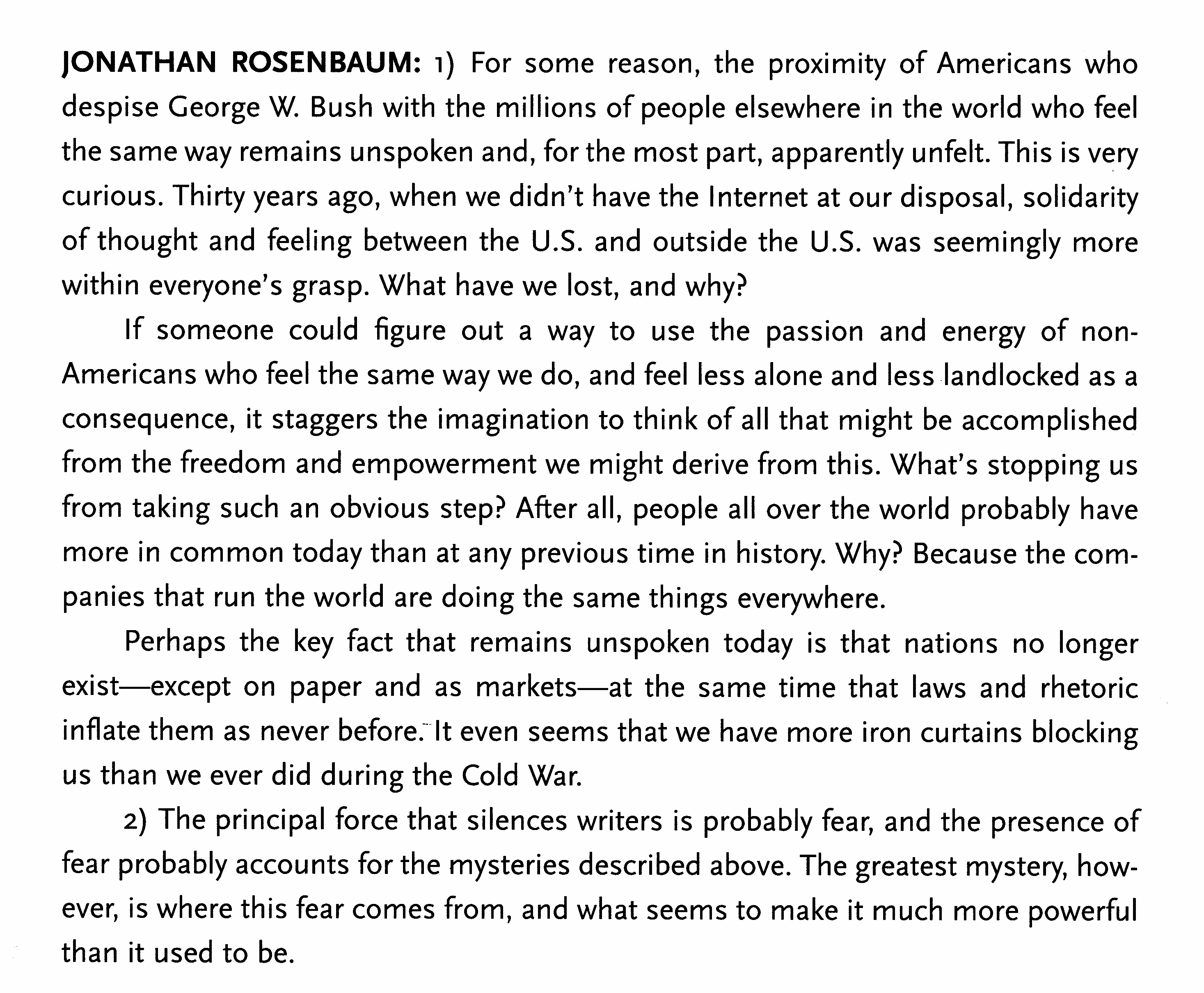
After my announcement in this magazine three years ago that the original negative of my all-time favorite Hong Kong feature (1992) was destroyed, and that the two-and-a-half-hour original version was virtually lost (see “Stanley Kwan’s Actress: Writing History in Quicksand,” Cinema Scope issue 7, spring 2001 —- about to be reprinted in my collection Essential Cinema, with the same misinformation), this ideal version has just come out on DVD in France, under the title Center Stage, in a lovely two disc-set distributed by Universal Pictures Video.

Ruan_Lingyu_funeral

Ruan Lingu funeral

The bad news? It’s subtitled only in French — although an interview with Kwan comprising the only bonus, on the second disc, is conducted in English and can easily be followed that way.

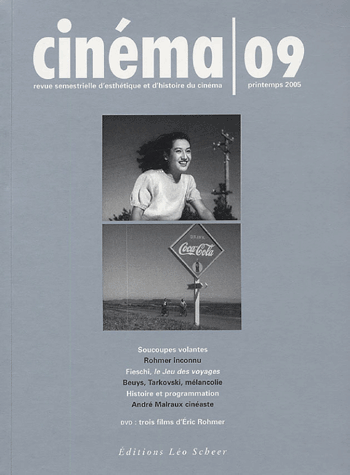
Cinema09

Also subtitled in French —- or in French without subtitles —- are invaluable DVDs included in the last three issues of Bernard Eisenschitz’s indispensable, lavishly illustrated (and therefore pricey) two-issue-a-year journal Cinéma, published by www.leoscheer.com. Issue 05 (printemps 2003) has a restoration of a surviving fragment from Kenji Mizoguchi’s La marche de Tokyo (1929); 06 has two late TV documentaries by Jean Eustache, Offre d’emploi (1980) and Le jardin des délices de Jerôme Bosch (1979); and 07, scheduled to appear this spring, will have my all-time favorite Iranian film, Forough Farrokhzad’s 1962 La maison est noire, as well as Ebrahim Golestan’s 1959 Un feu, which she edited. Read more

The Manchurian Candidate (2004)

From the Chicago Reader (March 3, 2004). — J.R.

The_Manchurian_Candidate_2004

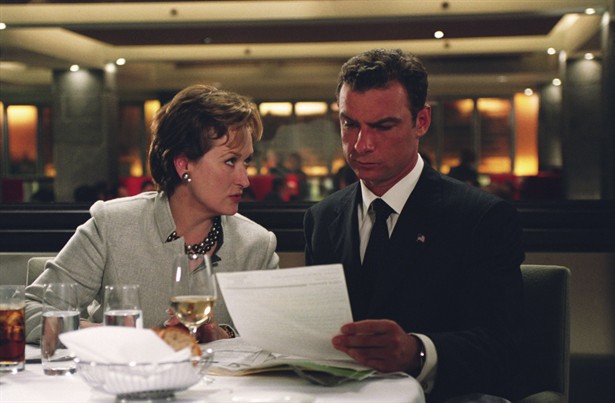
I don’t get it. As Dave Kehr has noted, the 1962 original was an audacious mix of cold war paranoia and twisted cabaret humor. Any remake that scuttles both had better have something good to replace them with; this offers only a vague retread of anticorporate thrillers from the 70s. The story’s been updated to the first gulf war (Manchurian is now just the name of an evil conglomerate) and deprived of its major shocks (involving formal inventiveness, over-the-top dialogue, and the way the incest is presented). Oddly, it does retain some of the original’s political murkiness — the right-wing villainess (Meryl Streep) resembles Hillary Clinton — but there’s no mythic or comic payoff. If you don’t care much about the first version, or what director Jonathan Demme’s name once meant, the cast does an OK job with Daniel Pyne and Dean Georgaris’s routine thriller script. But the bite found in the best recent political documentaries is missing. With Denzel Washington, Liev Schreiber, Jon Voight, and Jeffrey Wright. R, 135 min. (JR) Read more

Brother Outsider: The Life Of Bayard Rustin

An eye-opening documentary (2003) by Nancy Kates and Bennett Singer about the most sophisticated and charismatic of the civil rights leaders, enhanced by insights about why he became the most neglected. A onetime singer in Josh White’s quartet, the Carolinians, a communist between 1938 and ’41, and a conscientious objector imprisoned during World War II, Rustin (1912-’87) helped to school Martin Luther King in pacifismand persuaded him at an early stage not to own guns. Ultimately Rustin was driven to the margins of the movement for being outspokenly gay and refusing (on tactical grounds) to oppose the war in Vietnam. Without overemphasizing either of these factors, this intelligently balanced account offers a complex and nuanced portrait of a complex and nuanced individual. 84 min. (JR) Read more

The Magical Life Of Long Tack Sam

This fascinating personal essay (2003) by Canadian filmmaker Ann Marie Fleming investigates the life of her great-grandfather, the Chinese vaudeville performer Long Tack Sam (1895-1961) — one of the greatest magicians in the world (and one of the key mentors of Orson Welles), who was also an acrobat, though he’s mainly forgotten today. In fact, he circled the globe so many times and experienced so much that recounting his life in many ways means recounting the 20th century. Fleming, an animator and storyteller as well as a documentarian, draws extensively on her own varied talents to approach this elusive topic from many different angles, and her speculations are often as interesting as her findings. Indeed, the way Long Tack Sam keeps sliding out of her and our grasp, even though we wind up feeling that we know him in some fashion, is part of this film’s magic. 90 min. (JR) Read more

Les Modeles De “Pickpocket”

In this personal and poetic 2003 video documentary, Babette Mangolte—possibly the best cinematographer now working in experimental cinema  (she’s also shot major films by Chantal Akerman, Richard Foreman, Jean-Pierre Gorin, Marcel Hanoun, Sally Potter, Jackie Raynal, Yvonne Rainer, and Michael Snow)—interviews the three leading performers from Robert Bresson’s wondrous 1959 Pickpocket. Bresson wanted to convey directly, without acting, the spiritual essence of individuals, which is why he called his performers interpreters or models. These three were clearly marked by the experience of working for him, and as Mangolte moves from France to Austria to Mexico meeting them she seems as responsive to their self-aware vibrancy and as respectful of their mysteries as Bresson was. 89 min. (JR) Read more

ROME OPEN CITY: History as Adventure

Commissioned by BFI Video for an April 2015 release. — J.R.

OPENCITY-Pina

Charlie Chaplin, the late Gilbert Adair liked to assert, doesn’t simply belong to film history; he belongs to history. And the same might be said for Roberto Rossellini’s first major feature, Roma città aperta. Even though it’s routinely regarded as a landmark in film history — the film that decisively put Italian Neorealism on the global map — one could argue that its lasting importance owes far more to the major role it  played in humanizing the Italian population for the rest of the world after  it emerged from over two decades of Fascist rule under Benito Mussolini.

We don’t hear much about that Fascist rule in Rome Open City, an omission that entails a historical simplification, albeit an understandable as well as an expedient one — not so much an expression of “first things first” as an expression of “second things first,” viewed by most audiences around the world from the vantage point of the war’s end. A project that was first conceived in August 1944, only two months after the Allies had forced the Nazis out of Rome, the film was driven primarily by a desire to expose the brutalities and indignities suffered by Romans under the German occupation as well as the discovery of a common purpose between the Communist and Catholic partisans who had opposed it. Read more