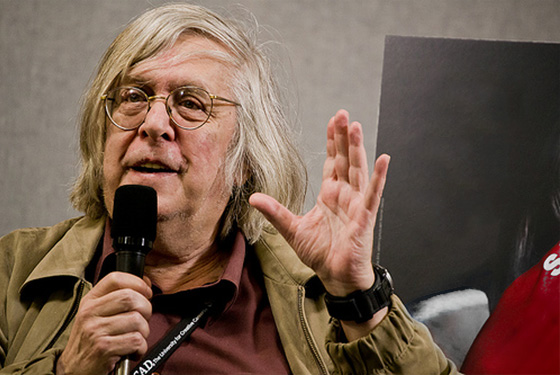
These two short articles were written for the catalogue of the fifth edition of the Buenos Aires Festival of Independent Film in 2004. Both are about neglected filmmakers who are or were also longtime friends of mine–although neither, to the best of my knowledge, has ever seen any films by the other, and they met for the first time at the festival, where complete retrospectives of both filmmakers were being presented. (I first met Eduardo in Paris in 1973, shortly after he’d finished working as a screenwriter on Jacques Rivette’s Céline et Julie vont en bateau, and I first met Sara about ten years later in New York, shortly before I saw her first major film, You Are Not I, and decided to devote a chapter to her in my book Film: The Front Line 1983.) Her complete works apart from her 2017 Boom for Real: The Late Teenage Years of Jean-Michel Basquiat are now available in a wonderful two-disc package, which can be found here.
When I was asked to write these two pieces for the BAFICI catalogue, I opted to make them each exactly the same length (942 words) and to make them rhyme with one another in various other ways. Read more
This was written exactly one week after September 11, 2001, at the invitation of the Chicago Reader‘s editor, but the first time it was published was on this web site on March 11, 2010. — J.R.

I was having breakfast in the restaurant of my Toronto hotel on September 11 when I heard President Bush on TV making his first statement of that day, from Florida. I saw the World Trade Center towers in flames, but it wasn’t until I resumed watching the coverage in the film festival’s press office a few blocks away that I actually saw them fall. It was an event that registered in increments for the remainder of the day and the remainder of the week — something that’s still going on. And evaluating whether the prospects of adjusting to the shock and horror are grim or hopeful seems largely a matter of thinking in short or long terms.
***


“Pearl Harbor” as a reference point is a good example of the grimmest and least helpful short-term thinking, literally predicated on a world that hasn’t existed for 60 years. (One variation, sadly coming from one of my brightest and most progressive friends: to compare what we’d like to do to Osama bin Laden and other terrorists to what we did to the Japanese, by dropping Atomic bombs on Hiroshima and Nagasaki — i.e., Read more
From the Chicago Reader (August 14, 1997). — J,R.
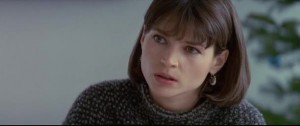
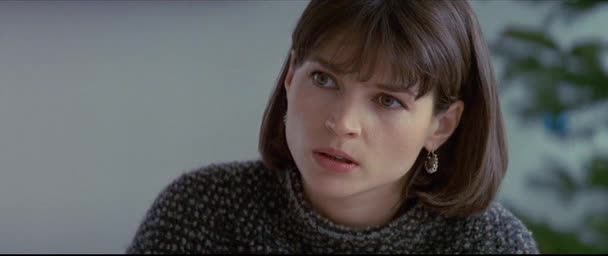
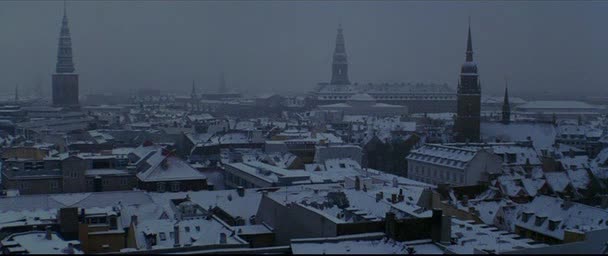
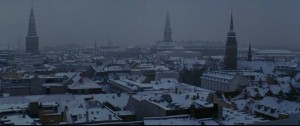
Adapted by Ann Biderman from the popular Peter Hoeg novel and directed by Bille August (Pelle the Conqueror, The Best Intentions), this is a watchable conspiracy thriller, but, as with most conspiracy thrillers, the first half is a lot more watchable than the second: the more one discovers, the less interested one becomes. Playing a troubled and not very likable loner who’s half Greenlandic Inuit and half American, Julia Ormond—a lot more interesting here than she’s been on previous star outings—plays a spiky recluse obsessed with solving the mystery of the allegedly accidental death of a six-year-old Inuit neighbor. This leads to a complex investigation whose facts become steadily more outlandish. Others in the cast include Gabriel Byrne, Richard Harris, Robert Loggia, and, in a cameo, Vanessa Redgrave. Jorgen Persson’s ‘Scope cinematography is handsome; the imitation Bernard Herrmann score is by composer-by-the-yard Hans Zimmer, working with Harry Gregson Williams.
 Read more
From the Chicago Reader (March 1, 1993). — J.R.
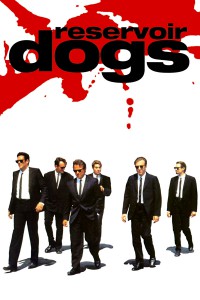
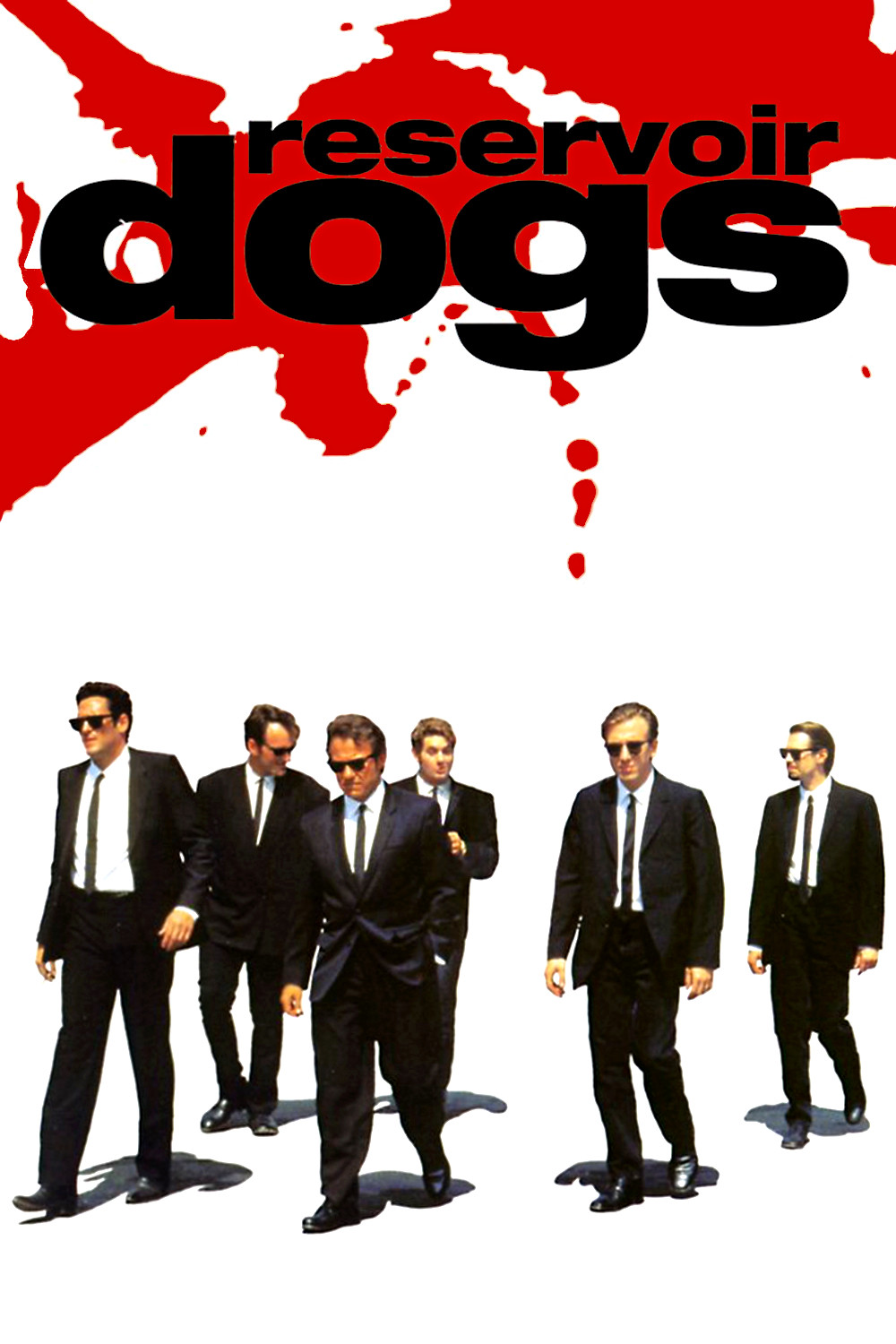
A stunning debut (1992) from writer-director Quentin Tarantino, though a far cry from Stanley Kubrick’s 1956 The Killing, to which it clearly owes a debt. Like The Killing, it employs an intricate flashback structure to follow the before and after of a carefully planned heist and explores some of the homoerotic allegiances, betrayals, and tensions involved; unlike The Killing, it never flashes back to the heist itself and leaves a good many knots still tied at the end. The hoods here — including Harvey Keitel, Tim Roth, Michael Madsen, Steve Buscemi, and (in a bit) Tarantino himself — are all ex-cons hired by an older ex-con (Lawrence Tierney) who conceals their identities from one another by assigning them the names of colors. Our grasp of what’s going on is always in flux, and Tarantino’s skill with actors, dialogue, ‘Scope framing, and offbeat construction is kaleidoscopic. More questionable are the show-offy celebrations of brutality: buckets of blood, racist and homophobic invective, and an excruciating sequence of sadistic torture and (offscreen) mutilation that’s clearly meant to awe us with its sheer unpleasantness. It’s unclear whether this macho thriller does anything to improve the state of the world or our understanding of it, but it certainly sets off enough rockets to hold and shake us for every one of its 99 minutes. Read more
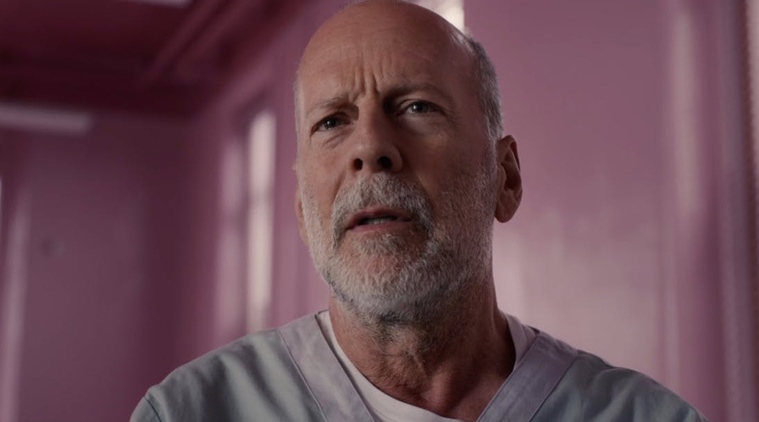
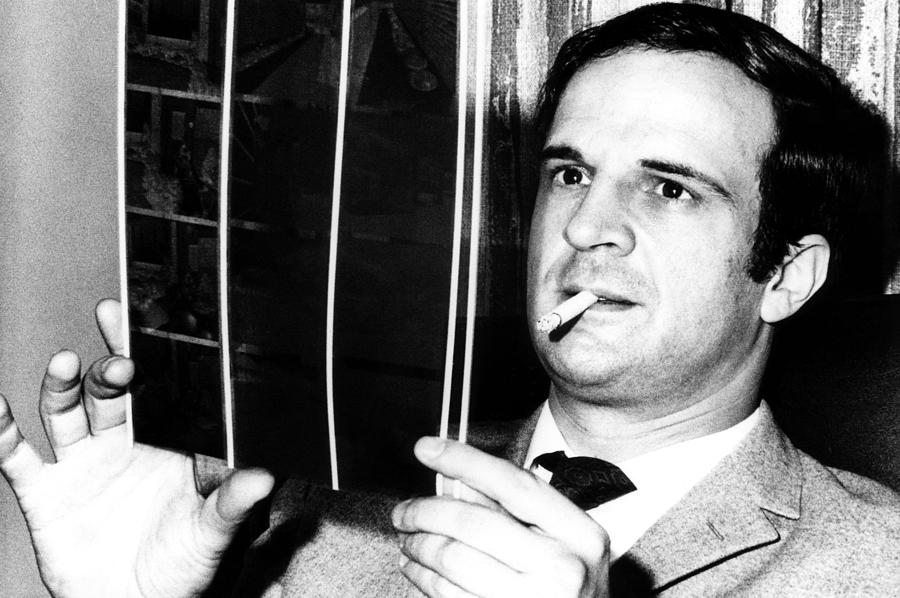
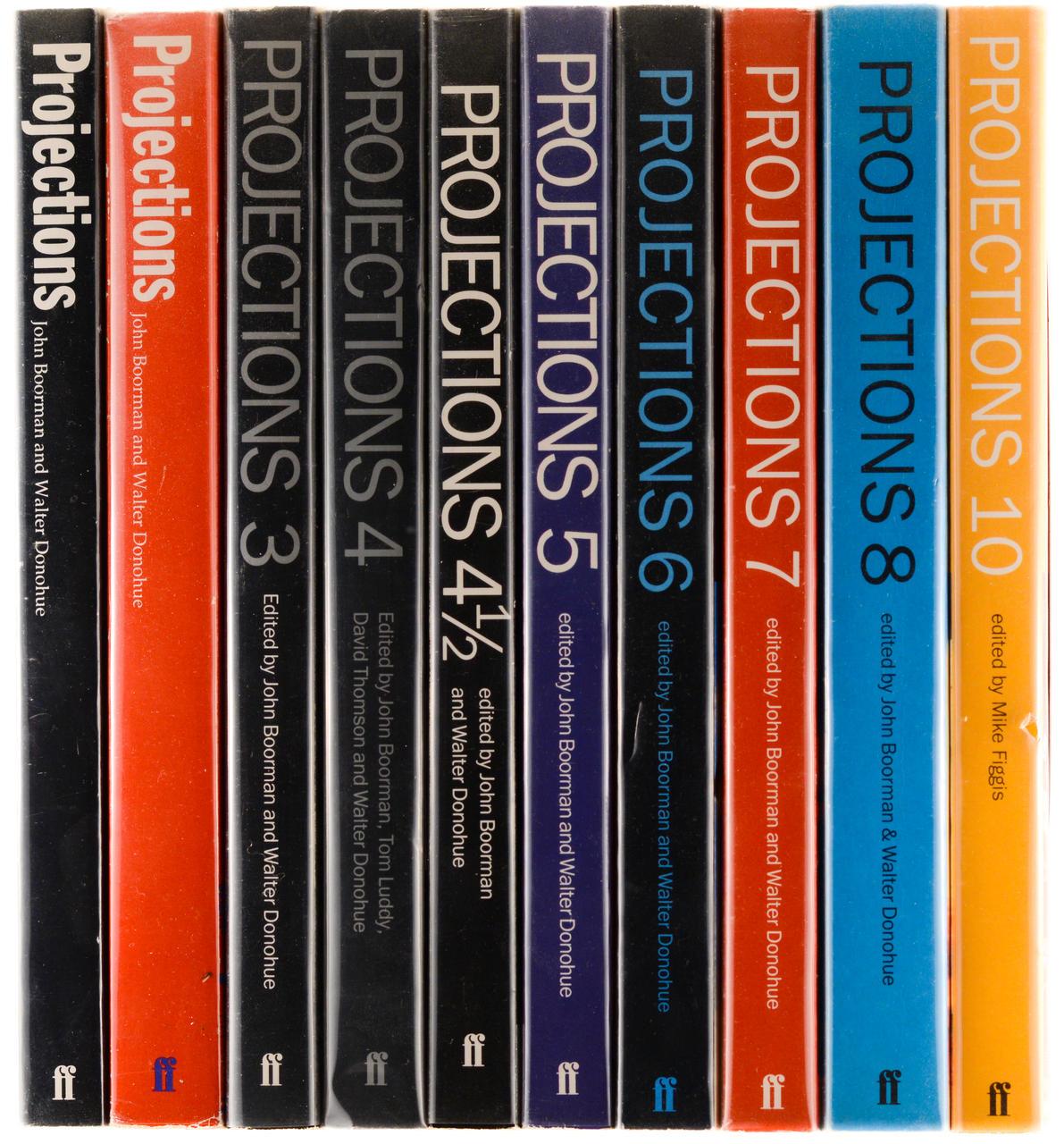
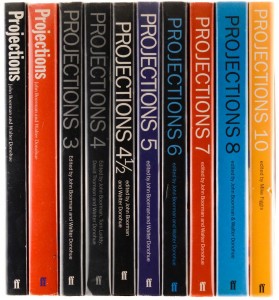
From Projections 8, edited by John Boorman and Walter Donohue, 1998. Subtitled Film-makers on Film-makers, this issue of the periodic Faber and Faber publication was devoted specifically to what it called ‘criticism,’ spurred jointly by a brief declaration by Bruce Willis at Cannes in 1997 (‘Nobody up here pays attention to reviews…most of the written word has gone the way of the dinosaur’) and a lengthy essay by François Truffaut, ‘What Do Critics Dream About?’, introducing his 1974 collection The Films of My Life. As nearly as I can remember, I was one of the nine critics (along with Gilbert Adair, Geoff Andrew, Michel Ciment, Peter Cowie, Kenneth Turan, Alexander Walker, Armond White, and Jonathan Romney) asked to respond to these two declarations of principles. (I haven’t been able to find Truffaut’s essay online, but an excerpt from it can be found here: https://www.lostinthemovies.com/2009/04/what-do-critics-dream-about.html.)
If my comments about the Truffaut essay sound harsh, I hasten to add that I still regard his early criticism as seminal — perhaps even the most seminal that was written by Bazin’s younger disciples, as Godard, among others, has suggested. -– J.R.


I welcome the prospect of an issue of Projections devoted to `the art and practice of film criticism’, though given the present climate that circulates around film discourse in general — a climate at once pre-critical and post-critical in which the static produced by commerce tends to drown out most of the murmurs associated with criticism — I’m more than a little fearful about what results such an inquiry is likely to yield. Read more
Written for Sight and Sound (March 2017). — J.R.
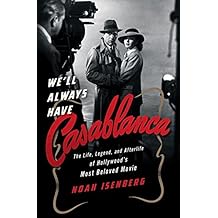
WE’LL ALWAYS HAVE CASABLANCA
The Life, Legend, and Afterlife of Hollywood’s Most Beloved Movie
_________________________________________________________________________________________________
By Noah Isenberg. W.W. Norton & Co., 334 pp. US$27.95. ISBN 9780393243123.
_________________________________________________________________________________________________
Reviewed by Jonathan Rosenbaum
I’ve never been asked to select my favourite ‘guilty pleasures’ in movies, but I suspect that if I were, Gone With the Wind and Casablanca — two highly accomplished and engrossing pieces of dubious Hollywood hokum — could easily head the list. Yet it’s one of the signal virtues of Noah Isenberg’s We’ll Always Have Casablanca to suggest that the true sources of Casablanca’s popularity place it well beyond the racial and racist subtexts of Gone With the Wind.
In the case of the latter film, we have the benefit of Molly Haskell’s Frankly, My Dear (2009), a superb critical and ideological unpacking of both the Margaret Mitchell novel and the David O. Selznick blockbuster. Isenberg, an academic and a scholar more than a critic — director of screen studies and professor of culture and media at New York’s New School, and best known among cinephiles as an Edgar G. Ulmer specialist — hasn’t given us the same sort of book as Haskell, although he’s produced a volume that’s equally accessible and nearly as valuable in explaining the appeal of a popular classic. Read more
From the Chicago Reader (October 5, 2007). — J.R.
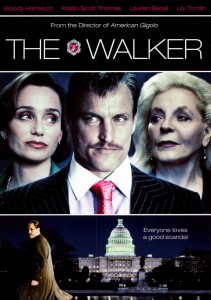
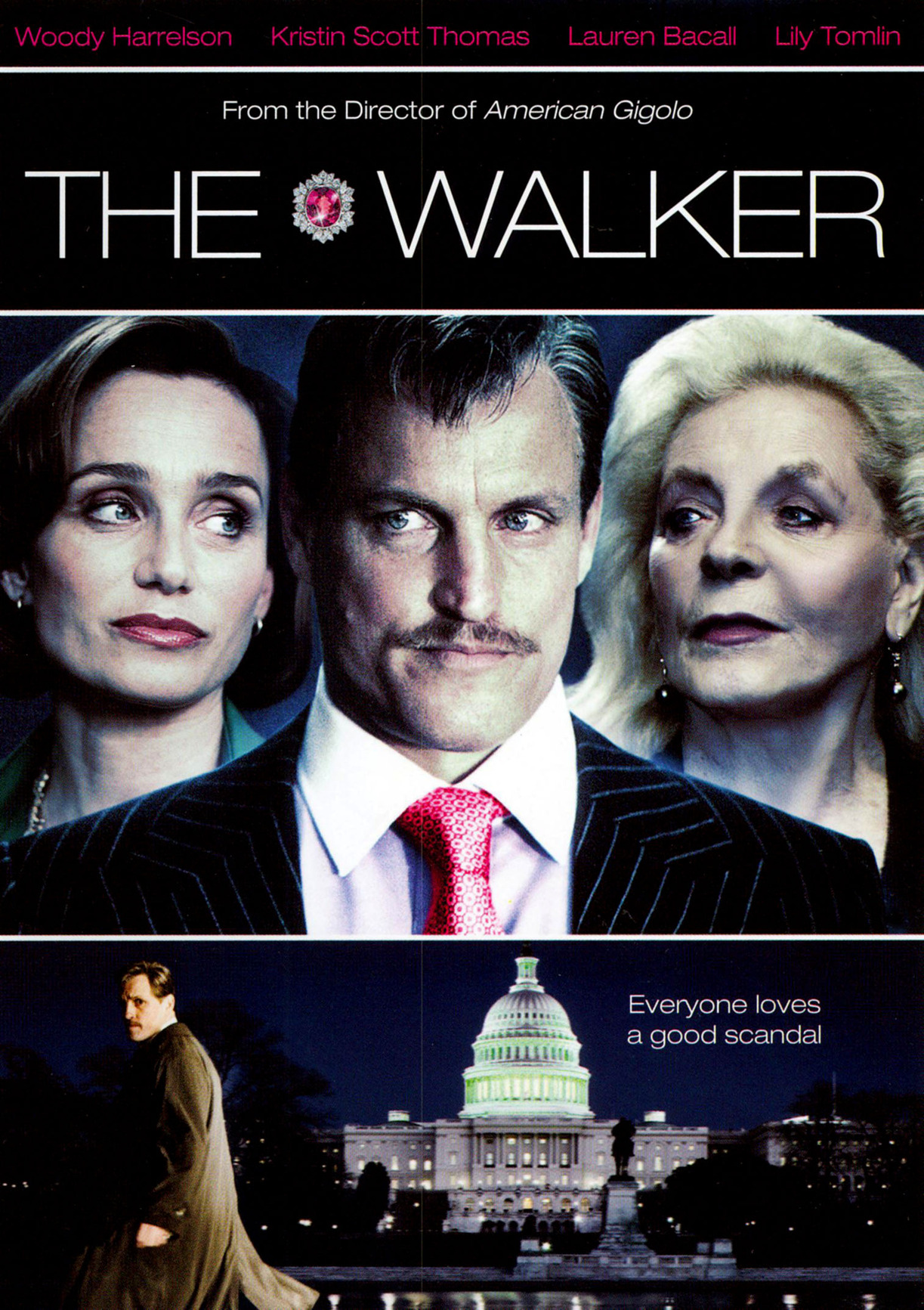
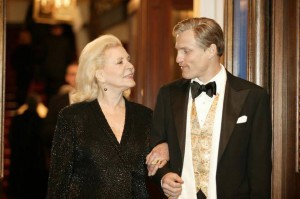
“Has there ever been a good Paul Schrader film?” a colleague asked me on my way into the press screening for this feature, the director’s 16th. I haven’t seen quite all of them, but I couldn’t come up with a single title, even though some have their compensations (Patty Hearst, Light Sleeper). As does this weak thriller, about a gay southern dandy (Woody Harrelson) who escorts aging society ladies around Washington, D.C., and becomes the prime suspect when the lover of one gets murdered. The main compensation is Harrelson’s well-judged and finely shaded performance; the secondary ones are the ladies he hangs out with — Lauren Bacall, Lily Tomlin, and Kristin Scott Thomas. But the rest of this mainly drifts. R, 107 min.
 Read more
From Film Quarterly (Winter 2008-09: Volume 62, Number 2). — J.R.
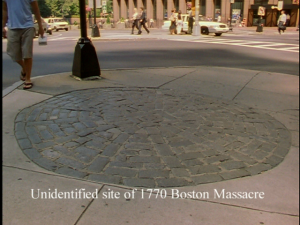

It’s been gratifying to see the almost instant acclaim accorded to John Gianvito’s beautiful, 58-minute Profit Motive and the Whispering Wind (2007), especially after the relative neglect of his only previous feature-length film, the 168-minute The Mad Songs of Fernanda Hussein (2001).
The more recent film — a meditative, lyrical, and haunting documentary about grave sites that won the grand prix at the Entervues Film Festival in Belfort in 2007 and both a Human Rights Award and a special mention at the Buenos Aires Festival of Independent Film in 2008 —- also received an award at the Athens International Film and Video Festival in Ohio and was named the year’s best experimental film by the National Society of Film Critics. (Full disclosure: I nominated Profit Motive for the last of these awards, and headed the jury of the same Buenos Aires film festival in 2001, which gave The Mad Songs its top prize.)
The Mad Songs focuses on the irreparable effects of the first Gulf war in 1991 on three separate powerless people in New Mexico (which is where the film in its entirety was shot). Profit Motive focuses on the grave sites of several dozen heroes of progressive struggles throughout American history. Read more
From Jean-Luc Godard: Son-Image 1974-1991 (New York: Museum of Modern Art, 1992). -– J.R.

“Jean-Luc cultists,” complains Judith Crist in the World Journal Tribune. God bless them! They constitute a line of defense against every manipulative insult the entertainment business throws out, there are more of them each year, and they may even be winning. — Roger Greenspun (1)
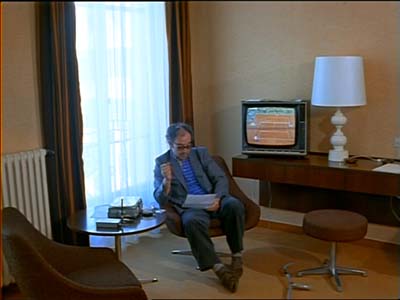
Greenspun’s rallying cry of a quarter of a century ago testifies to the passion and debate that used to be stirred up in the United States when Godard’s name was mentioned. The gradual phasing out of that debate and the depletion of that passion cannot be explained simply, and to understand it at all requires some careful thought about how American culture as a whole has itself changed in the interim. For a director still closely identified with the sixties in American film criticism, Godard is regarded today with much of the same fear, skepticism, suspicion, and impatience that greet many other contemporary responses to that decade. And his status as an intellectual with a taste for abstraction may make him seem even more out of place in a mass culture that currently has little truck with movie experiences that can’t be reduced to sound bites. Read more
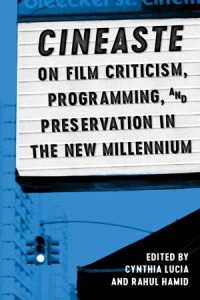
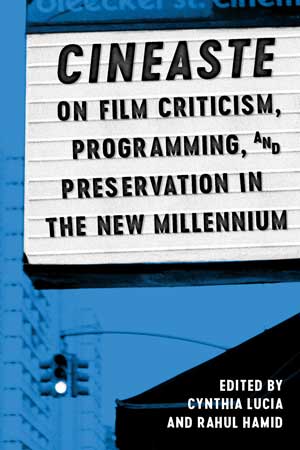
Can I help promote a collection of symposia, two of which I participated in, as well as several interviews? Why not? This is fun to browse and useful as well as instructive to read. The symposia are conducted with exemplary breadth and thoroughness (the one on international film criticism, for instance, takes in no less than twenty countries), and although the interviews are mostly with critics (Pauline Kael, John Bloom, Peter von Bagh, Mark Cousins), a good many programmers and film preservationists are also surveyed. Editors Cynthia Lucia and Rahul Hamid have done a careful and conscientious job and produced a very handsome book. Need I say more? [12/16/17] Read more
From the Chicago Reader (February 10, 1995). –J.R.

Latcho Drom
Rating **** Masterpiece
Directed and written by Tony Gatlif.
If you haven’t heard of Latcho Drom — an exuberant and stirring Gypsy musical, filmed in CinemaScope and stereophonic sound in eight countries on three separate continents — you shouldn’t be surprised. Although the movie has been wending its way across the planet for the past couple of years and picking up plenty of enthusiasts en route, it has at least three commercial strikes against it, any one of which would probably suffice to keep it out of the mainstream despite its accessibility. The first two of these are the words “Gypsy” and “musical”; the third is the fact that it qualifies as neither documentary nor fiction, thereby confounding critics and other packagers.
These “problems,” I hasten to add, are what make the picture pleasurable, thrilling, and important; but media hype to the contrary, sales pitches and audience enjoyment aren’t always on the same wavelength. Though this movie is so powerful you virtually have to force yourself not to dance during long stretches of it, that fact doesn’t translate easily into a 30-second prime-time spot or a review in a national magazine (though CNN did devote a four-minute feature to Latcho Drom some time ago). Read more
From the Chicago Reader (April 15, 1988).Reprinted in my first collection, Placing Movies: The Practice of Film Criticism (1995). — J.R.

MÉLO
****
Directed by Alain Resnais
Written by Henry Bernstein
With André Dussollier, Sabine Azema, Pierre Arditi,
and Fanny Ardant
The exquisite art of MÉLO, like the art of Alain Resnais in general, bears a certain resemblance to sculpture: it needs to be seen from several different vantage points if one is to fully appreciate its shapeliness and the powerful multiplicity of its meanings. The following selection of vantage points can’t pretend to be exhaustive; at best, it presents only a few starting points for sounding the bottomless depths of this deceptively simple movie. The first six points are provided by the film’s title and the names listed in the heading above. The last four — theater, mise en scène, symmetry, and mystery — offer more general and abstract perspectives.
1. MÉLO.
The title is an abbreviation for mélodrame or melodrama, which derive from the Greek word melos, music, and the French word drame, drama. What do we usually mean by melodrama? “Sensational dramatic piece with violent appeals to emotions” and “extravagantly theatrical play in which action and plot predominate over characterization” are two relevant dictionary definitions, among others. Read more
This appeared in the March 20, 1998 issue of the Chicago Reader. —J.R.
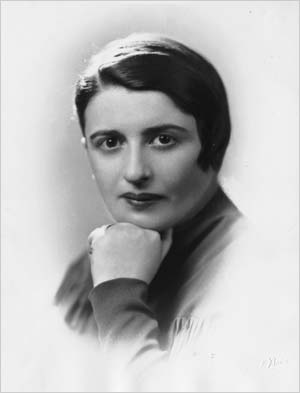
Ayn Rand: A Sense of Life
Rating ** Worth seeing
Directed and written by Michael Paxton
Narrated by Sharon Gless.
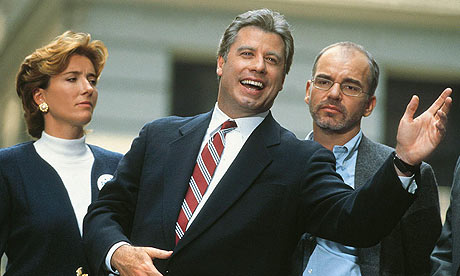
Primary Colors
Rating *** A must see
Directed by Mike Nichols
Written by Elaine May
With John Travolta, Emma Thompson, Adrian Lester, Kathy Bates, Billy Bob Thornton, Larry Hagman, and Maura Tierney.
By Jonathan Rosenbaum
Two highly partisan political movies are opening this week, a right-wing independent documentary and a left-wing Hollywood feature — though it’s not clear that the filmmakers of either would categorize their work in this way. Certainly it wouldn’t be any exaggeration to call both films the efforts of special interest groups — a movie about Bill Clinton put together by people who mainly qualify as his supporters and friends and a sincere hagiography of novelist and philosopher Ayn Rand fashioned by many of her disciples and acolytes. How far they actually carry their respective loyalties is a different matter, however. Ultimately both movies flounder as well as triumph because of their insider points of view, though not always for the same reasons.

Whenever Ayn Rand’s name comes up, I have an impulse to scoff, an impulse I think is shared by many others. Read more
I just heard the very upsetting news that the great Iranian filmmaker Jafar Panahi (The White Balloon, The Circle, Crimson Gold, Offside) was deprived today of his passport in Tehran, now making it impossible for him to leave Iran — reminding me, alas, of what happened to Pere Portabella in Franco Spain roughly half a century ago.
The two following short essays were commissioned by the Jeonju international Film Festival in February and March, 2009 and published in a bilingual catalog to accompany a Portabella retrospective held there in May.
It’s hard to keep up with all of Portabella’s activities these days, but his wonderful web site — which one can access in English, and which grows periodically in leaps and bounds — makes it somewhat easier to try. My most recent visit reveals that it’s now apparently possible to download several of his films on the Internet, directly from this site. I’m still eagerly anticipating the DVD box set that’s still apparently in the works, for which I wrote a commissioned essay (to be printed or reprinted in my next collection, Goodbye Cinema, Hello Cinephilia: Film Culture in Transition: see Publications and Events on this site), but meanwhile here are a couple of commentaries about two of his early films — one of which, Cuadecuc, Vampir, remains my favorite of his works to date. Read more
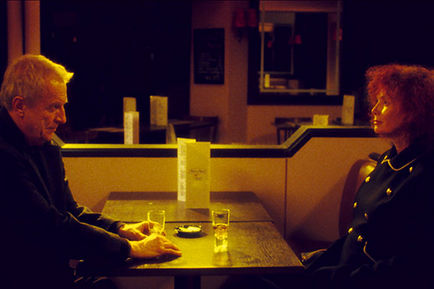
Not so much a fantasy as a fantasia, Alain Resnais’ first novel adaptation, his second adaptation (after Mélo) and, unless my memory fails me, his fifth film in CinemaScope (after Le chant du styrène, Last Year at Marienbad, L’amour à mort, and Private Fears in Public Places), this brittle comedy may also be the most purely surrealist of all his films, especially in its emphasis on irrational impulses (as well as its non-sequitur final shot). And the fact that it’s often creepy (as well as very personal) is surely more of a plus than a minus; it hasn’t been acknowledged nearly enough that Resnais’ best and most beautiful films — including Statues Also Die, Toute la mémoire du monde, Le chant du styrène, Night and Fog, Hiroshima mon amour, Marienbad, Muriel, Providence, Mon oncle d’Amérique, Mélo, and Not on the Lips, among others — usually turn out to be his creepiest. (An exception to this rule is L’amour à mort, which is exceptionally creepy but also far from Resnais’ best.)
Seen twice on Friday at the New York Film Festival — first at a press screening, then at the $40 opening — this is a film whose pastel hues and intricate color coding (e.g., Read more