From the March 25, 2005 Chicago Reader. — J.R.
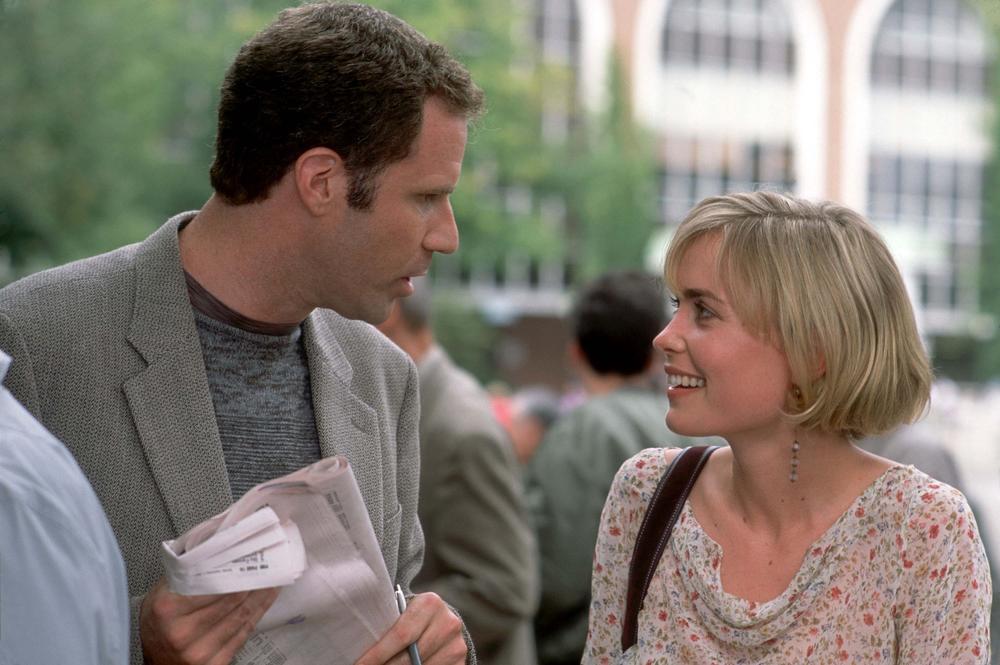
Melinda and Melinda
* (Has redeeming facet)
Directed and written by Woody Allen
With Radha Mitchell, Will Ferrell, Chloe Sevigny, Chiwetel Ejiofor, Jonny Lee Miller, Brooke Smith, Wallace Shawn, and Larry Pine

Brainteaser movies have been enjoying a certain vogue in the past few years. The taste for them can be traced back to at least 1994 and the jigsaw-puzzle narrative of Pulp Fiction. But the trend got started in earnest in 2000, with the release of Memento, which tells a complicated story backward, and it gained further momentum two years later when the same gimmick was combined with sex and violence in Irreversible. Eternal Sunshine of the Spotless Mind and Kill Bill have more substantial characters than either of those films, yet part of their appeal lies in the challenge of putting scrambled narrative pieces together.
There are people who say they don’t like to read or write but spend plenty of time doing both on the Internet. Similarly, there are people who say they don’t like to think while watching movies yet don’t mind using their brains when it comes to “puzzle” movies. But there are different kinds of thinking. Read more
My contribution to MUBI Notebook’s Fantasy Double Features of 2019 (posted in late December). — J.R.

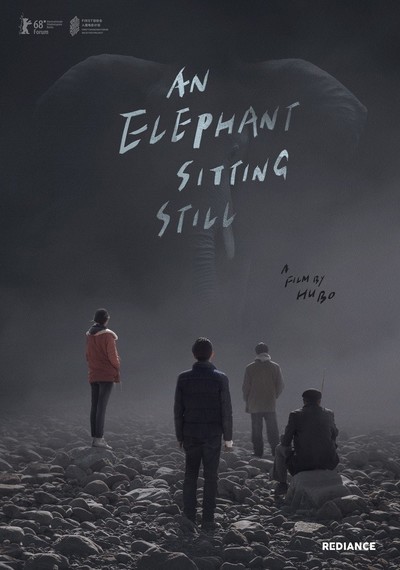
NEW: An Elephant Sitting Still (Hu Bo, China)
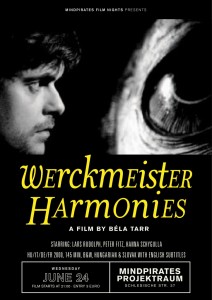
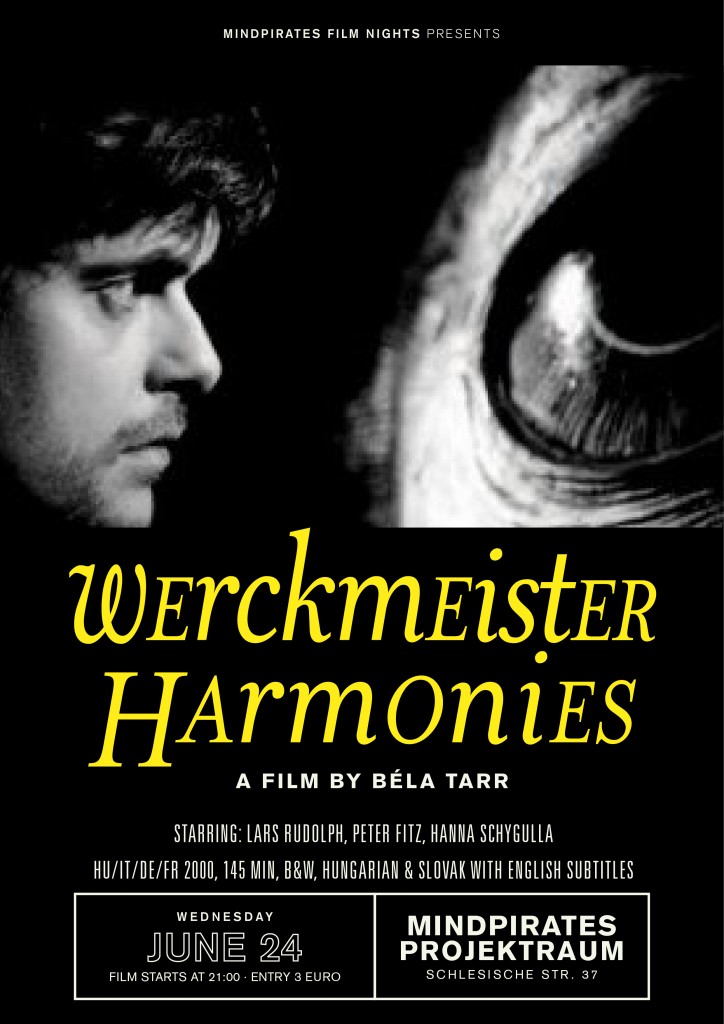
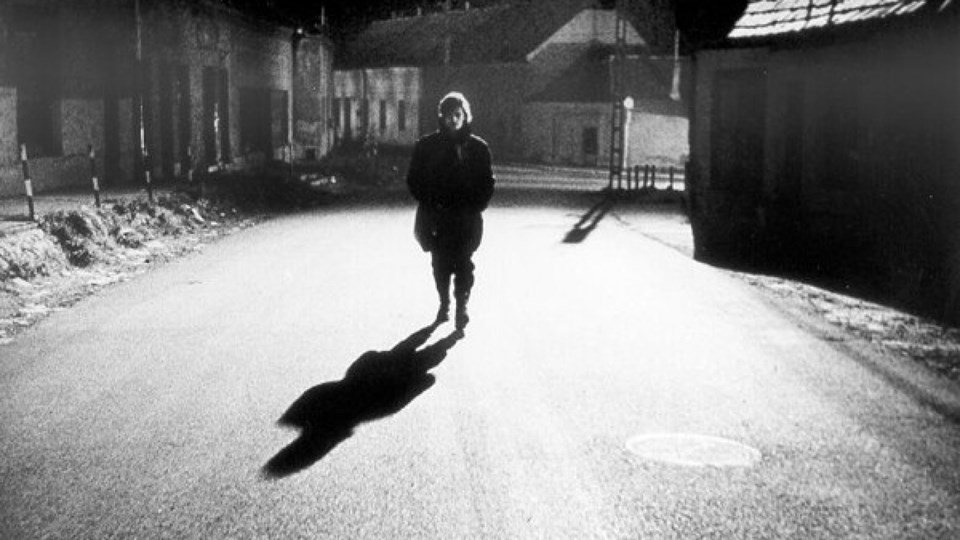
OLD: Werckmeister Harmonies (Béla Tarr, 2000)
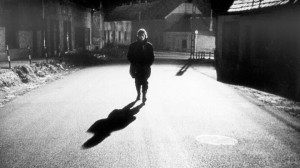

Some of the differences between the late Hu Bo (1988-2017) and his mentor Béla Tarr may be just as important as their similarities. The latter made black comedies whereas An Elephant Sitting Still, Hu’s only feature, doesn’t find anything to laugh about. Even though the metaphysical and novelistic cast of both artists allows them to treat a group of lost individuals as a cosmos, with Tarr’s visible whale carcass in Werckmeister Harmonies apparently rhyming with Hu’s offscreen elephant, the compulsion of Tarr to follow his characters isn’t the same thing as Hu’s compulsion to embrace his own by moving ahead of them in the process of encircling them. Both ultimately offer blistering sociopolitical critiques of their respective societies in spite of their metaphysical trappings. The task of making blighted, hateful, and mean-tempered fools lovable is an essential part of both Satantango and Elephant, but what makes the latter fools slightly more redeemable is the degree to which they try to connect with one another, even if the results are futile. Read more
From the Chicago Reader (October 12, 2017). — J.R.
Faces Places

In this French road movie, whose original title juxtaposes faces with villages, 89-year-old filmmaker Agnès Varda follows 33-year-old photographer and installation muralist JR across the countryside as he and his team photograph working people, enlarge these shots into monumental black-and-white likenesses, and paste them onto the sides of the buildings where the subjects live and work. From the opening-credit animation onward, this delightful, digressive, breezy collaboration, staged to look more spontaneous than it possibly could be, celebrates and enhances both artists, repeatedly finding the extraordinary in the ordinary and growing more reflective and melancholy only in its Swiss epilogue. For Varda, this is a spinoff of sorts to The Gleaners and I (2000) and The Beaches of Agnès (2008); for me it’s a welcome introduction to the work of JR. —Jonathan Rosenbaum
 Read more
Written for the FIPRESCI website in February 2004. For more on the original Shadows, go here.

To the best of my recollection, the first time I ever met Simon Field, the departing artistic director of the Rotterdam International Film Festival, was in the early 1970s — either 1970 or 1973 — when he was programming a festival of experiment filmmaking at the National Film Theatre in London (something he informs me he did both of those years). From the beginning of his eight years at the Rotterdam Festival, a major part of Simon’s special contribution has been not simply an emphasis on experimental film but also a kind of investment in that branch of cinema that perceives and highlights its interconnections with the other arts as well as with other kinds of cinema. There has always been something refreshing about his pluralistic and nonsectarian way of defining film experiment, and one can see this in the range exhibited by Afterimage, the invaluable magazine he coedited in England with Ian Christie for many years — an occasional publication which found room for Raoul Ruiz as well as Michael Snow, Noël Burch as well as Steve Dwoskin, and Jean-Luc Godard as well as Stan Brakhage. Read more
From the April 2017 issue of Sight and Sound. — J.R.
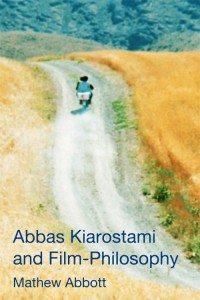
ABBAS KIAROSTAMI AND FILM-PHILOSOPHY _____________________________________________________
By Mathew Abbott. Edinburgh University Press. 167 pp. UK£70.00. ISBN 9780393243123.
__________________________________________________________
Reviewed by Jonathan Rosenbaum
It isn’t only the hefty price that makes this volume look forbidding to most readers of this magazine. However inviting it might seem to regard the features of Abbas Kiarostami as genuine works of philosophy—not merely as philosophical statements but as brazen acts that challenge viewers into making them rethink and reformulate many of their assumptions about both life and cinema—the academic etiquette of tracing this concept through a labyrinth of other philosophers and other Kiarostami critics may often prove to be less user-friendly to the lay reader. And it must be admitted that for readers more accustomed to journalistic paraphrase than to the rigours of scholarly hair-splitting and jargony word-spinning, a bumpy ride is in store. Mathew Abbott’s Introduction pivots on page 4 from Kiarostami to Stanley Cavell, but by this time the author has already had recourse to the philosophy of Jean-Luc Nancy on the previous page, and he will be chasing after Wittgenstein, Heidegger, and Descartes soon afterwards
Even so, this book is after much bigger game than a daunting bibliography. Read more
Written for the Viennale’s catalogue accompanying its Jerry Lewis retrospective in October 2013, where it appears in German translation. — J.R.
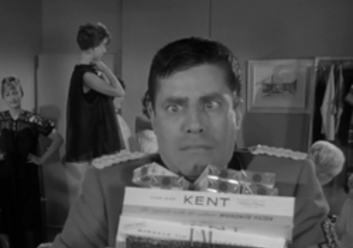
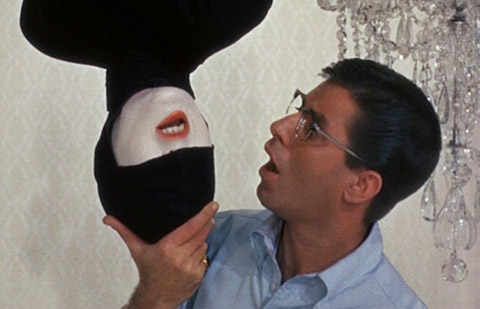
1. Why Did — and Do — the Americans Love Jerry Lewis So Much?
…Jerry Lewis’s face, where the height of artifice blends at times with the nobility of true documentary. — Jean-Luc Godard on Hollywood or Bust, July 1957 (1)
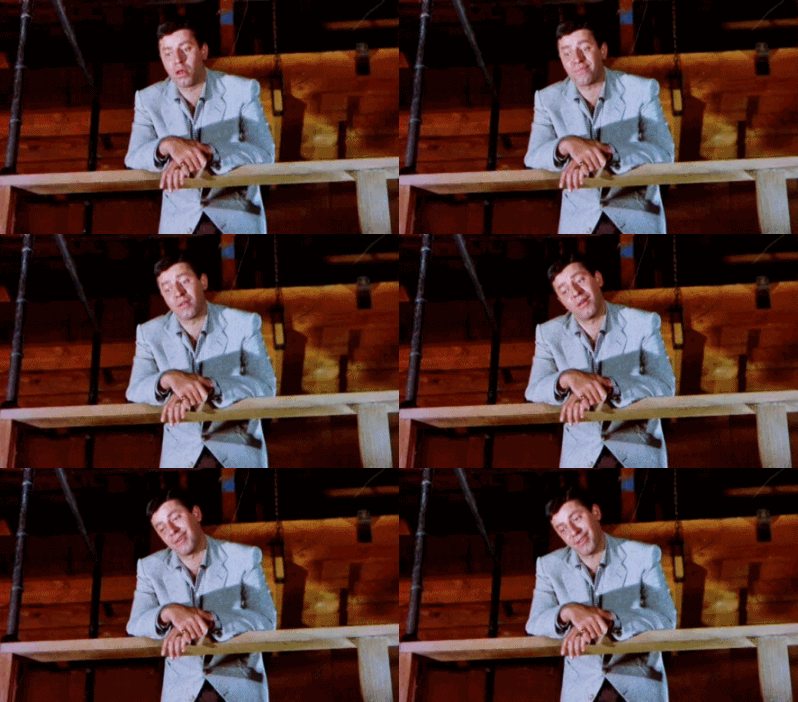


The usual question — and by now a completely tiresome one — is, “Why do the French love Jerry Lewis so much?” People have been asking this question — mainly rhetorically rather than with any genuine curiosity about the answer — for over half a century, yet if it was ever worth asking in the first place, this was only for roughly the first two decades of that period. As far as I can tell, this was a love that was first fully declared in detail (though it was far from being universally accepted even in France, then or later) in December 1957, when Robert Benayoun published an article in Positif entitled “Simple Simon ou l’anti-James Dean”, although earlier appreciations, Godard’s among them, had already appeared by then.
This was only about a month before Lewis, having ended his partnership with Dean Martin a year and a half earlier, and subsequently become his own producer on Rock-a-Bye Baby, purchased a mansion in Bel Air that had formerly been owned by the late Louis B. Read more
Posted on the Film Comment web site, October 16, 2017. A French translation of this essay by Jean-Luc Mengus has recently been published in Trafic. — J.R.
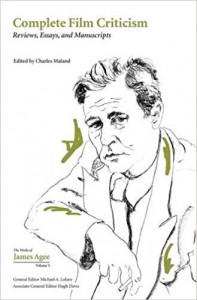
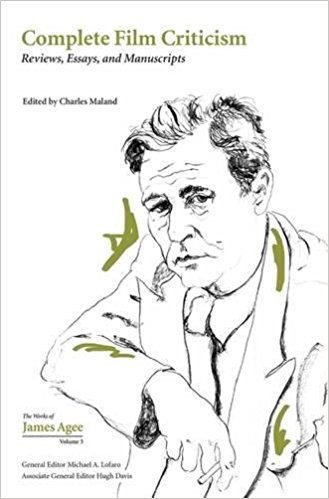
My late father was never a cinephile, not even remotely, but he managed and programmed a small chain of movie theaters in northwestern Alabama for about a quarter of a century, from the mid-’30s to 1960. And during most or all of that period, he read Time magazine every week, from cover to cover. This means that from September 1942, half a year before I was born, until early November 1948, and not counting all the press books that passed through his office and the various trade journals he subscribed to, just about everything he read and knew about movies came from the so-called Cinema pages of Time, and most of these were written by James Agee.
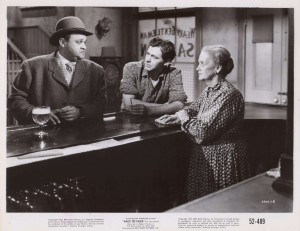
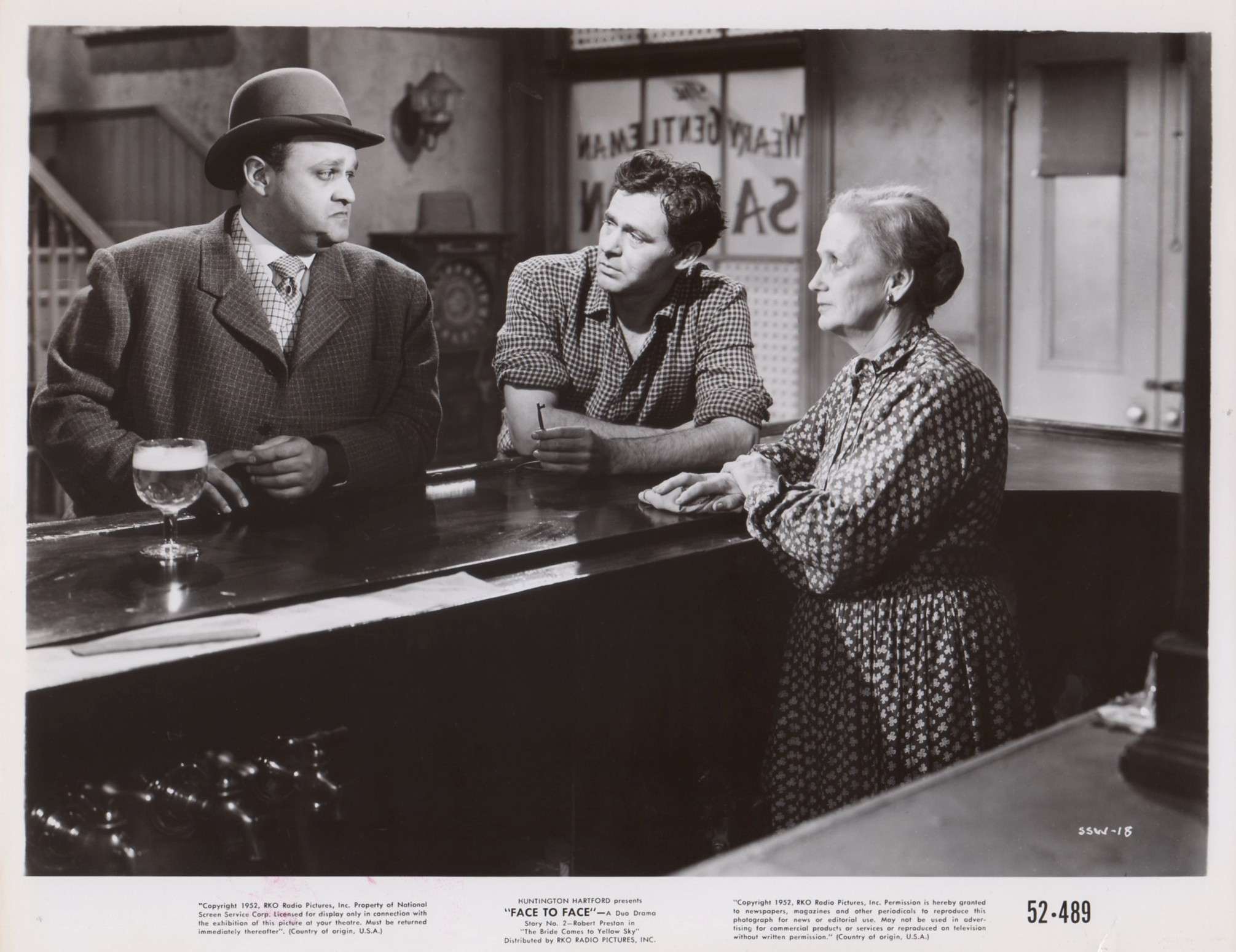
But he probably had little or no idea who Agee was during this period, even though their stints at Harvard had overlapped, because none of Agee’s writing for Time was signed and my father usually didn’t read The Nation while Agee was concurrently writing his film column there. It’s unlikely that he saw Abraham Lincoln, the Early Years on Omnibus in 1952 because we didn’t have a TV set then, and more probable that he saw The Bride Comes to Yellow Sky in Face to Face the following year at one of his theaters. Read more
From the April 2017 Sight and Sound. — J.R.
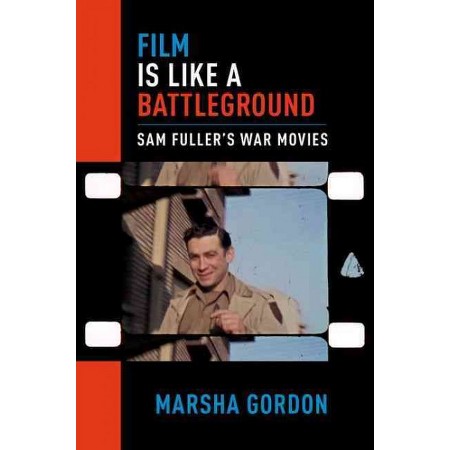
FILM IS LIKE A BATTLEGROUND
Sam Fuller’s War Movies
_________________________________________________________________________________________________
By Marsha Gordon. Oxford University Press, 314 pp. £24.07, ISBN 9780190269753
Reviewed by Jonathan Rosenbaum
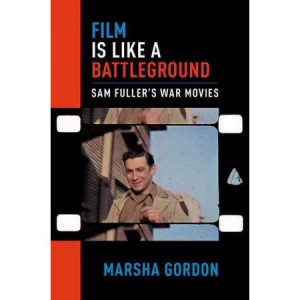
Some Samuel Fuller fans may find it surprising that
the two most substantial academic studies of him so
far have both been by women—Lisa Dombrowski’s 2008
The Films of Samuel Fuller: If You Die, I’ll Kill You! and
now Marsha Gordon’s more specialised volume. But for
anyone lucky enough to have known Fuller personally,
isn’t surprising at all. An unabashed feminist whose
feisty mother remained a key figure for him, Fuller
confounded macho stereotypes as much as those
associated with familiar ideological and Hollywood
patterns, even while remaining a feverish self-mythologizer.
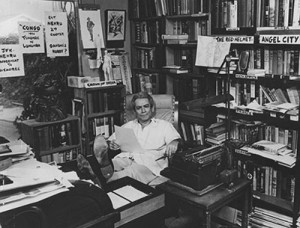
Gordon’s principal strength is as a researcher, and her access to such items as Fuller’s letters home and diaries during his wartime service and some of his lesser-known publications, productions, and projects (such as a 1944 magazine story, an unsold 1959 TV pilot called Dogface with some striking anticipations of his White Dog, and his subsequent unrealized screenplay The Rifle) allows her to treat her elected subject with a great deal of thoroughness. Read more
From the Chicago Reader (October 26, 1992). The Reader‘s web site claims this was published in 1985 — two years before I moved to Chicago and seven years before the film was made. — J.R.
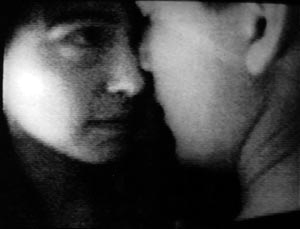
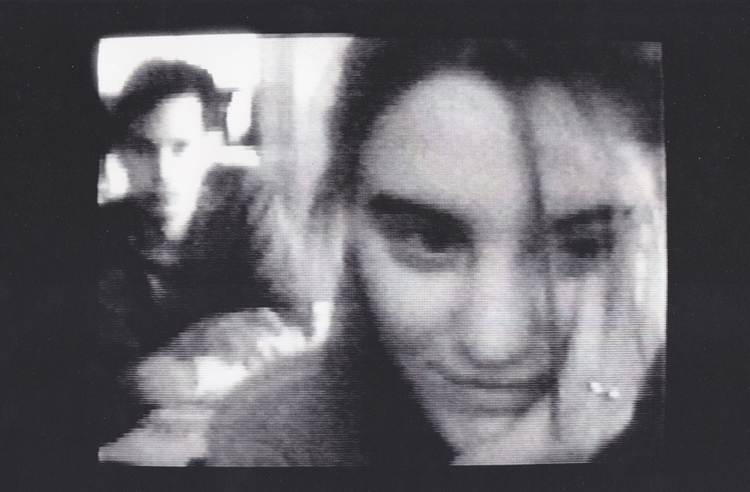
Michael Almereyda, the writer-director of Twister, was sufficiently inspired by Sadie Benning’s highly personal black-and-white videos — all made with a $45 toy camera — that he used the same kind of camera to shoot this highly personal hour-long feature (1992), a fictional work inspired by his own (mainly love) life in New York’s East Village, with his downstairs neighbor (Nic Ratner) playing himself. Like Twister, this is charming, quirky, poetic, and original — maybe even more so — and Almereyda’s use of the toy camera creates a fuzzy, intimate kind of space that actually seems to resemble the inside of someone’s head. With Barry Sherman, Mary Ward, Isabel Gilles, and Elina Lowensohn (Simple Men). (JR)
 Read more
From the Chicago Reader (February 12, 1988). — J.R.
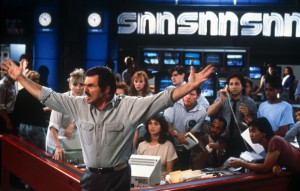
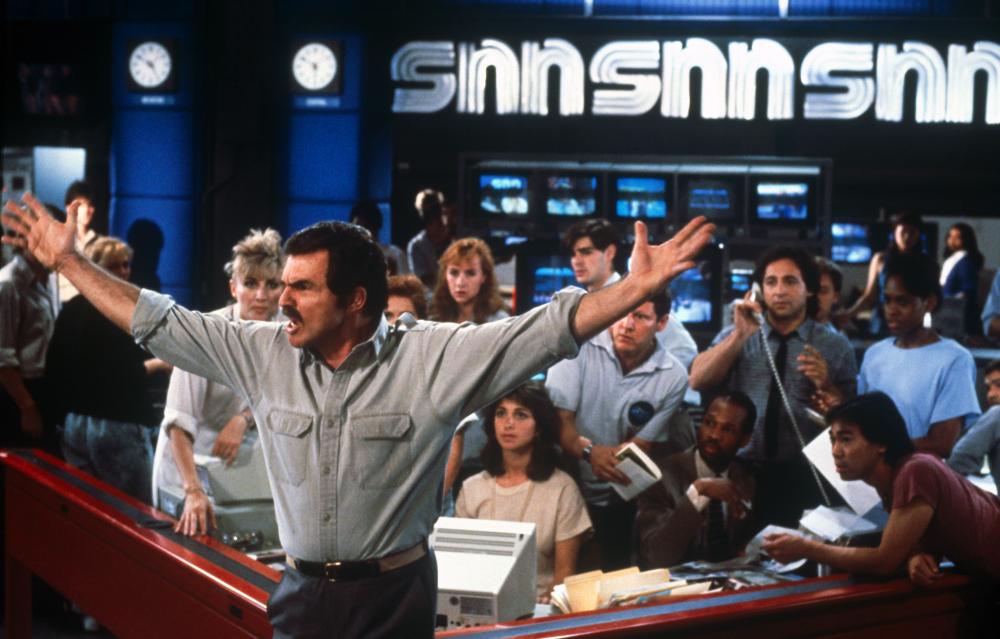
The fourth and least successful movie version — after Lewis Milestone’s (1931), Howard Hawks’s (1940), and Billy Wilder’s (1974) — of Ben Hecht and Charles MacArthur’s by now overrated farcical play The Front Page. In fact, by following Hawks’s His Girl Friday in making the leading character a woman, this updating by screenwriter Jonathan Reynolds and director Ted Kotcheff qualifies as a remake of a remake. The setting is now a cable news network instead of a big city newspaper, and there are many smaller substitutions (e.g., a copy machine in place of a rolltop desk). But despite a lot of overstrenuous efforts, the grafting of an 80s context onto a 40s adaptation of a play from the 20s mainly adds up to incoherence; the original’s treatment of journalistic behavior and ethics isn’t so much rethought as clumsily transposed, depriving it of any polemical bite and placing it miles away from the knowing details of Broadcast News. Burt Reynolds, Kathleen Turner, and Christopher Reeve are the leads; Henry Gibson is the hapless victim slated to die in the electric chair; and Ned Beatty is the corrupt politician who wants him to fry. Read more
Written for the Fipresci web site on September 18 2017. — J.R.

Adapting a novella of the same title by Javier Cercas (available in English in the 2006 volume The Tenant and the Motive, translated by Anne McLean for Bloomsbury Publishing), writer-director Manuel Martín Cuenca’s black comedy about the lures and potential perils of yarn-spinning focuses on a hapless and naïve bureaucrat in Seville named Álvaro (Javier Gutiérrez) working as a notary clerk and longing to be a serious and successful novelist, unlike his author wife Amanda (Maria Léon), who writes best-selling but unserious novels (at least according to her husband).

Curiously, the Spanish title of both the novella and the film, El Autor, means “the author,” not “the motive” (the English title of both). But it must be conceded that Álvaro is a highly, even willfully and monomaniacally motivated author as well as a rather stupid sociopath. Taking a writing course from a testy and critical teacher named Juan (Antonio de la Torre), who berates his clichéd prose, he leaves his wife after he discovers via their pet dog that she’s having an affair and, after his boss, noticing his distractedness, urges him to take an extended vacation, moves into a flat of his own to concentrate full-time on writing his first novel. Read more

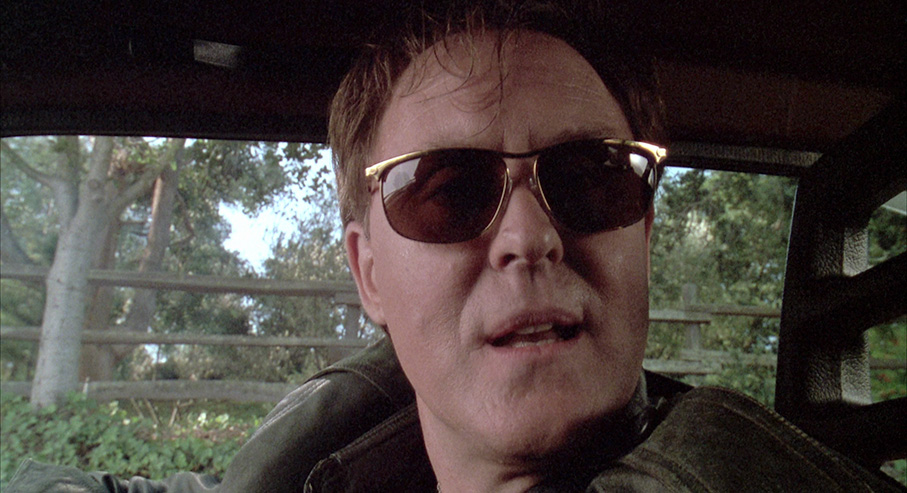
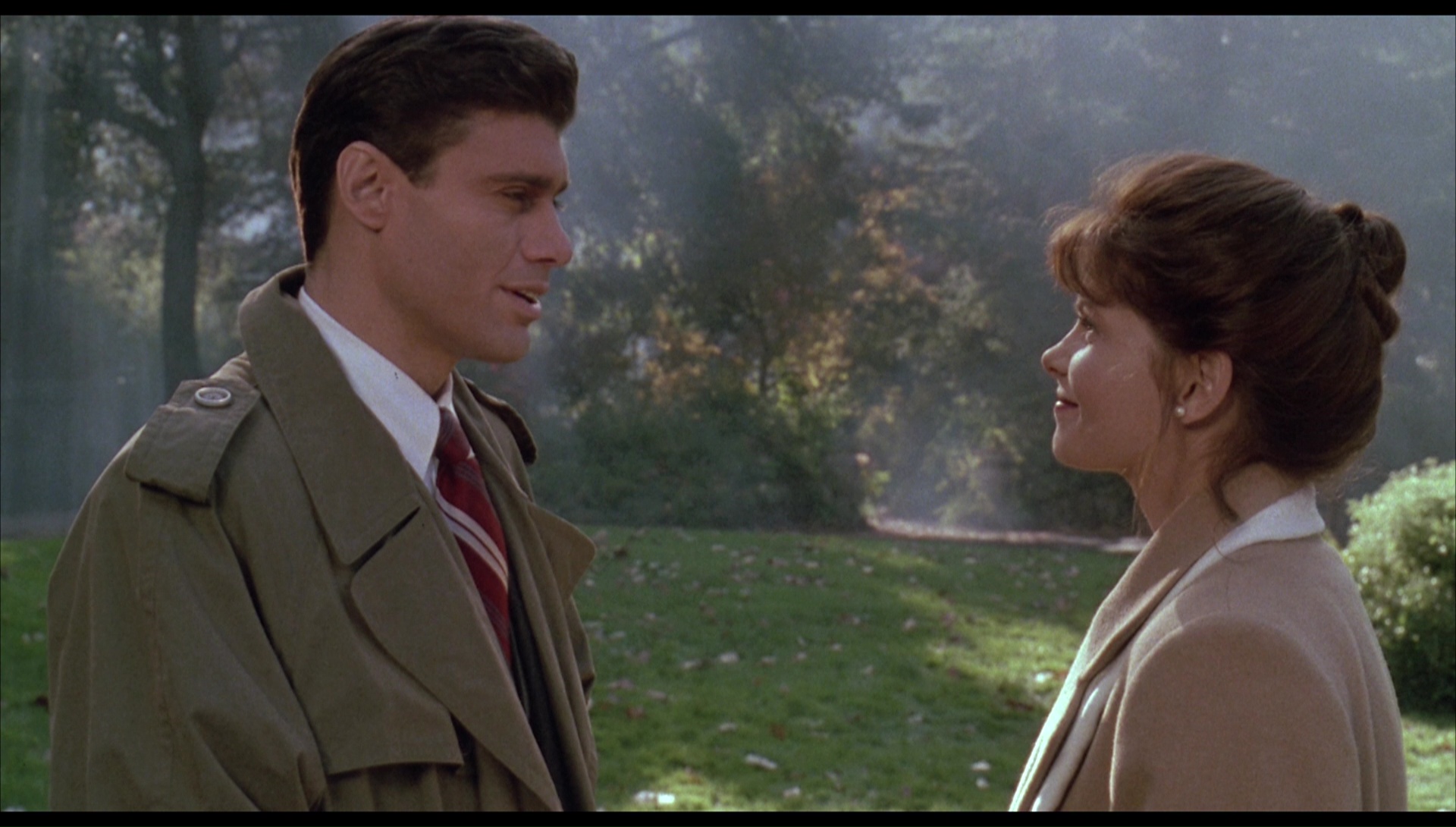
I’m of two minds about Brian De Palma’s Raising Cain (1992), thanks to
Arrow Video’s spiffy three-disc dual format edition—specifically, about
what’s called Raising Cain: The Director’s Cut on disc #3 (“limited edition
Blu-Ray exclusive”), “a De Palma-endorsed recreation of the film by Peet
Gelderblom, re-ordered as originally planned”.
One of my minds agrees with Gelderblom that this is a
(slightly) more satisfying edit of a film I reviewed in the
Chicago Reader as follows: “Brian De Palma’s 1992 thriller
perform stylistic pirouettes around a void, it’s full of sleek
and pleasurable moments. If I’m right about the story,
which is mainly composed out of loose pieces of Psycho
and Peeping Tom, a warped child psychologist (John
Lithgow) kidnaps his own granddaughter to avenge the
adultery of his son’s wife (Lolita Davidovich), and
frames her lover (Steven Bauer) for the crime. But
maybe I’ve got it all wrong and it’s the son’s evil twin
who’s doing the kidnapping; Lithgow also plays this
character, along with the son and other personalities
too numerous and obscure to fathom. Produced by
De Palma’s wife Gale Anne Hurd (The Abyss); with
Frances Sternhagen, Gregg Henry, Tom Bower, and
Mel Harris. Read more
Written for the catalogue of Il Cinema Ritrovato in Bologna (June-July 2017). — J.R.
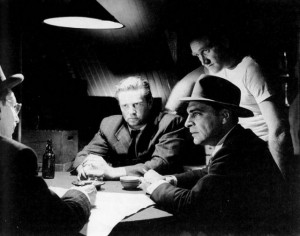
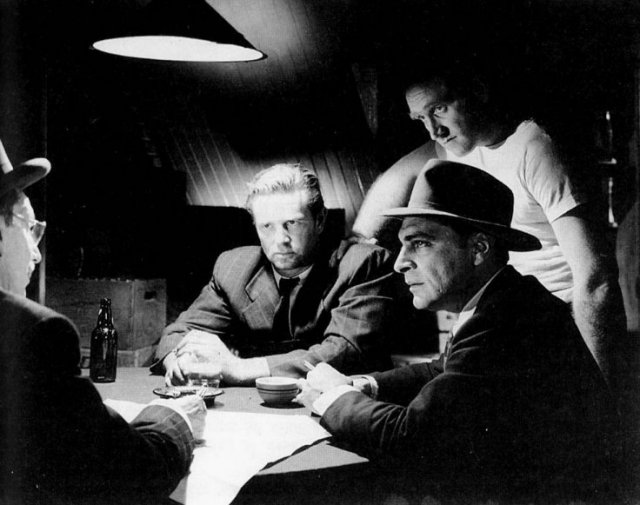
It might be excessive to claim that The Asphalt Jungle (1950) invented the heist thriller (also known as the caper film), but at the very least one could say that it provided the blueprint for the most successful examples of that subgenre that would follow it, including (among others) The Lavender Hill Mob (1951), Rififi (1955), The Killing (1956), Seven Thieves (1960), The Thomas Crown Affair (1968), and Reservoir Dogs (1992) — not to mention such parody versions as Big Deal on Madonna Street (1958) and most of the latter films of Jean-Pierre Melville, including Bob le flambeur (1956), Le deuxième souffle, (1966), and Le cercle rouge (1970). Indeed, The Asphalt Jungle was regarded as such a master text by Melville that one isn’t surprised to find over a dozen references to it in Ginette Vincendeau’s book about him. According to Geoffrey O’Brien, Melville once “declared that…there were precisely nineteen possible dramatic variants on the relations between cops and crooks, and that all nineteen were to be found in [John Huston’s masterpiece].”
In short, the reverberations in this MGM A-feature are multiple, although that doesn’t prevent it from still seeming fresh today. Read more
From the Boston Phoenix (September 15, 1989). — J.R.
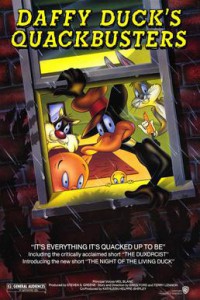
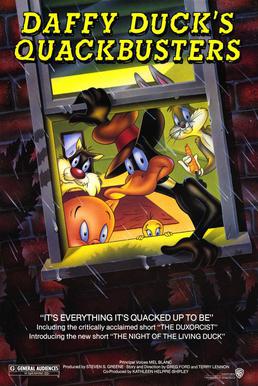
Recyclings of Hollywood history are very much with us, but this postmodernist conflation of seven vintage Chuck Jones cartoons, one each by Friz Freleng (Hyde and Go Tweet) and Robert McKimson (Prize Pest), and with 60 percent new animated material masterminded by Greg Ford and Terry Lennon, succeeds where such previous compilations as Bugs Bunny, Superstar and Daffy Duck’s Movie fail. In an attempt to revive the long-dormant Warners cartoon tradition, Ford and Lennon wrote two new Daffy Duck cartoons, Night of the Living Duck and Duxorcist. Drawing on the currently popular horror genre, they expand these two with vintage Warners cartoons deftly woven together. And so, in lieu of Ghostbusters, they offer Quackbusters.

The new material suggests they may have been a little anxious about tampering with the sacred Warners animation vaults. Daffy inherits the fortune of millionaire I.B. Cubish and starts a ghostbuster business, hiring Bugs Bunny and Porky Pig as “associates” (read: “dupes”) to carry out all the dirty work, with Porky’s cat Sylvester brought along as an office pet. But Cubish’s ghost expects Daffy to be an honest businessman (businessduck?) and public benefactor, so every time Daffy displays unethical, venal behavior, the cash in his Acme safe dwindles. Read more
From the Chicago Reader (July 19, 1996). — J.R.


Special Effects
Rating * Has redeeming facet
Directed by Ben Burtt
Written by Susanne Simpson, Burtt, and Tom Friedman
Narrated by John Lithgow.
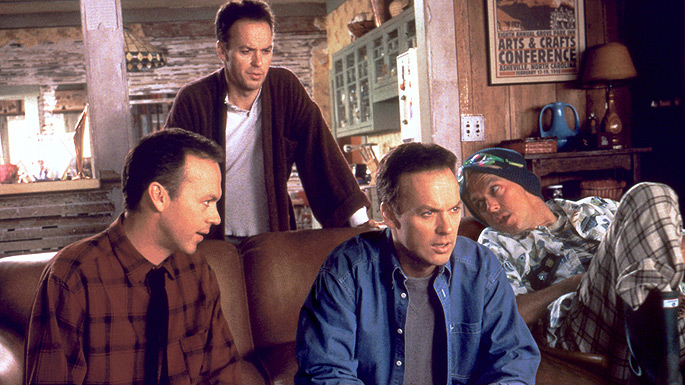
Multiplicity
Rating * Has redeeming facet
Directed by Harold Ramis
Written by Ramis, Chris Miller, Mary Hale, Lowell Ganz, and Babaloo Mandel
With Michael Keaton, Andie MacDowell, and Harris Yulin.
The Frighteners
Rating — Worthless
Directed by Peter Jackson
Written by Fran Walsh and Jackson
With Michael J. Fox, Trini Alvarado, Peter Dobson, John Astin, Jeffrey Combs, Dee Wallace Stone, and R. Lee Ermey.
The Nutty Professor
Rating ** Worth seeing
Directed by Tom Shadyac
Written by David Sheffield, Barry W. Blaustein, Shadyac, and Steve Oedekerk
With Eddie Murphy, Jada Pinkett, James Coburn, Larry Miller, Dave Chappelle, and John Ales.
Looking around at the big summer movies, I see reason to assume that the state of the art of film art now equals the state of the art of special effects. The belief in capitalist growth as spiritual progress that permeates this culture seems to have been given particular currency: as film technology becomes more and more sophisticated, the art of film can only rise accordingly.
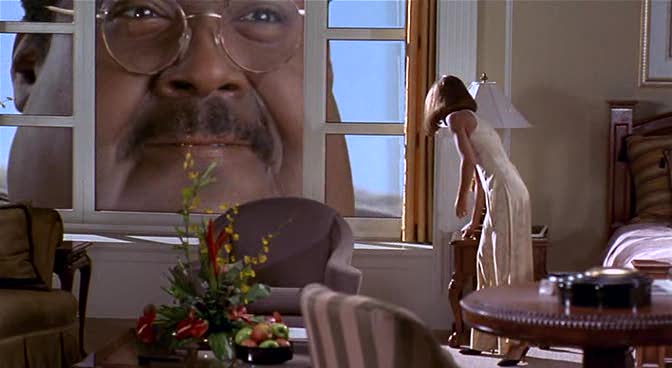
But does the development of morphing automatically make the Eddie Murphy Nutty Professor more artistic than the Jerry Lewis Nutty Professor (1963)? Read more