Images Of The World And The Inscription Of War

From the February 1, 1992 Chicago Reader. — J.R.
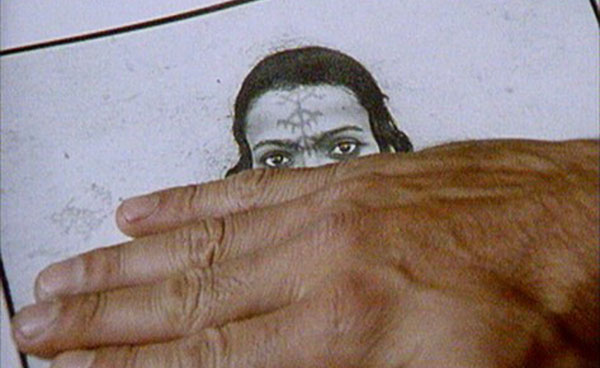
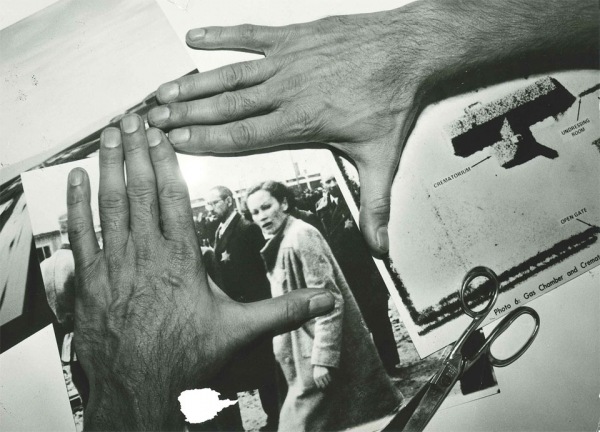
A fascinating 1988 film essay about photography by Harun Farocki, one of Germany’s most interesting independent filmmakers. Farocki combines the freewheeling imagination of Chris Marker with the rigor of Alexander Kluge, and his materialist approach to editing sound and image suggests both Fritz Lang and Robert Bresson. Central to the argument of this film are some aerial photographs of Auschwitz taken by American bombers looking for factories and power plants and missing the lines of people in front of the gas chambers — which are contrasted with Nazi photographs and images drawn by an Auschwitz prisoner, Alfred Kantor. Farocki’s provocative reflections on these and related matters and his highly original manipulation of music make this an excellent introduction to his work, which has seldom been visible in this country. In German with subtitles. 75 min. (JR)
Read more

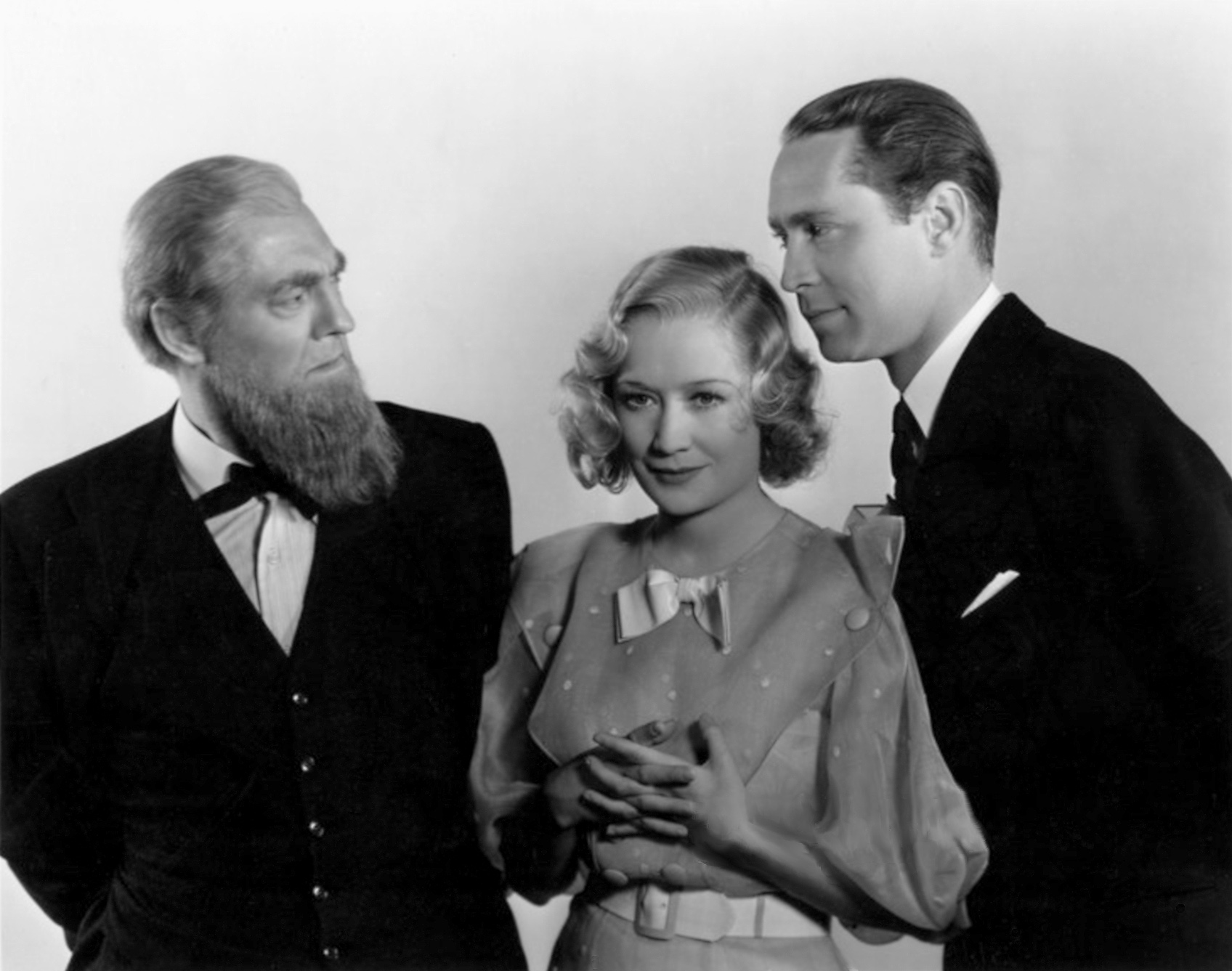
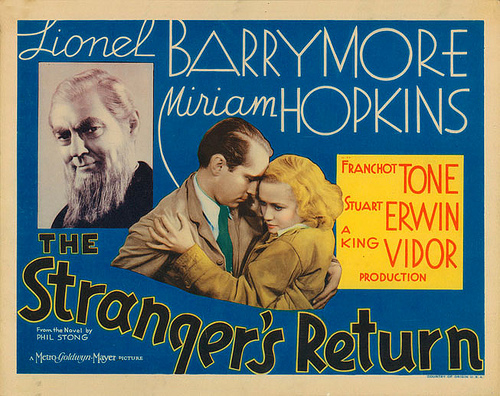
THE STRANGER’S RETURN (1933)

What a pleasurable experience it is to pass directly from a slew of end-of-the-year screeners, most of which I can’t watch to the end, to a 1933 King Vidor opus that still isn’t commercially available on DVD. (According to Scott Simmon, Raymond Durgnat’s coauthor on King Vidor, American [1988], this is Vidor’s most underrated movie; Durgnat opts for Ruby Gentry.) A characteristic virtue of this character-driven adaptation of a Phil Stong novel set in farming country is a shot devoted to a dog wandering into a Sunday morning church service during the sermon, noticing that the place is full, and gradually sitting down under one of the pews. It’s the sort of inessential detail that I wouldn’t expect to find in any contemporary movie. I have no way of knowing whether or not this was scripted, but considering how little it has to do with the plot, I suspect it wasn’t—that Vidor happened on such a shot as an afterthought. Apart from the economy of 30s features, this sort of meandering poetry seems increasingly rare in today’s movies. [12/20/08] Read more

A Nest Of Gentry

From the Chicago Reader (July 1, 1988). — J.R.

ANestofGentry

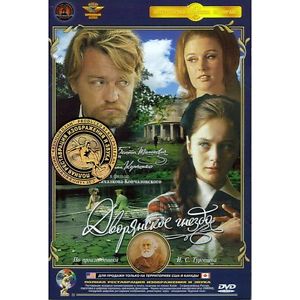
Andrei Konchalovsky’s follow-up to his 1967 Asya’s Happiness was a much safer literary adaptation of a Turgenev novel about a cuckolded member of the Russian aristocracy of the mid-19th century who is the son of a servant girl and a nobleman and who struggles unsuccessfully to find a place for himself in society. Ambitious but rather slow, using a variety of camera techniques that suggest the influence of the French New Wave, this is a respectable if unexciting work by a talented filmmaker. Attractively filmed in color, and certainly more interesting than A Handful of Dust as a treatment of fading aristocracy, it nonetheless lacks the sense of discovery conveyed in Konchalovsky’s best Soviet and American work (1969). (JR)
Nest-0f-Gentry Read more

The Man Who Wasn’t There

From the Chicago Reader (November 1, 2001). — J.R.

manwhow2

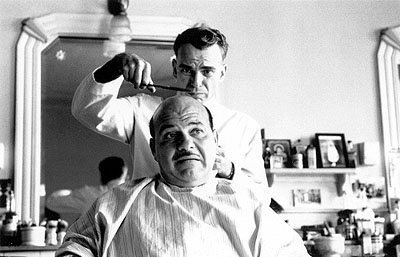
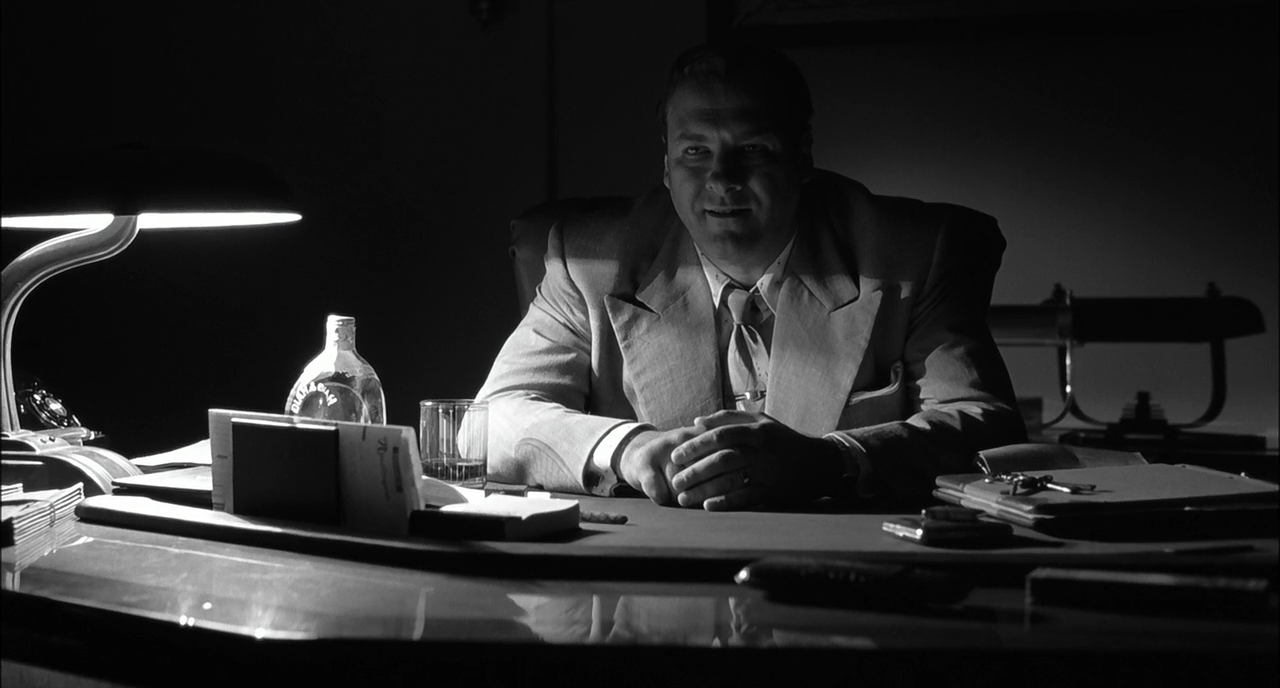
Joel and Ethan Coen stay true to their bent for dense heroes and neonoir, and to their unshakable conviction that life usually turns out to be splendidly horrific. Here they’ve cast Billy Bob Thornton as a self-effacing small-town barber in the late 40s who’s slowly enmeshed in a doomed crime plot. Apart from a couple of screwy Coen-style flashbacks, several fancy plot twists, and a few other postmodern indulgences, this is straight out of James M. Cain, though the high contrasts of Roger Deakins’s glorious black-and-white cinematography suggest at times Fellini’s 8 1/2 more than noir classics. Thornton seems born to play the sort of slow-witted poet of the mundane that the Coens find worthy of their condescending affection. It’s a story that’s easier to rent than buy, but it does look good on the big screen. Others in the cast, all pretty effective, include Frances McDormand (in the Barbara Stanwyck part), Michael Badalucco, Richard Jenkins, Scarlett Johansson, Jon Polito, Tony Shalhoub, and James Gandolfini. 116 min. (JR)

themanwhowasntthere5 Read more

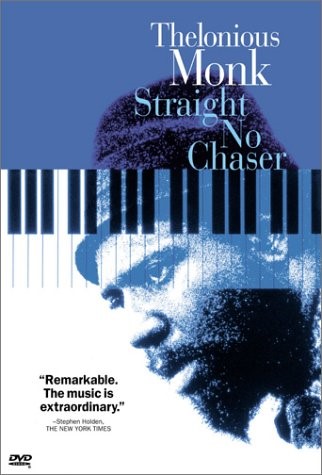
Thelonious Monk: Straight No Chaser

From the Chicago Reader (December 15, 1989). — J.R.

TM

The core of Charlotte Zwerin’s exciting if vexing documentary about the great jazz pianist and composer — brought to us through the courtesy of Clint Eastwood as executive producer — is drawn from 14 hours of footage of Monk, in performance and offstage, shot by Michael and Christian Blackwood over six months in 1968. The musical value of this footage is so powerful that nothing can deface it, despite the best efforts of Zwerin to do so: all the worst habits of jazz documentaries in treating the music, from cutting off numbers in midstream to burying them under voice-overs (which also happens on the sound track album), are routinely employed; and, adding insult to injury, the film also takes pains to give us two Monk tunes performed only adequately by a contemporary piano duo (Tommy Flanagan and Barry Harris) in unabridged form. The offstage footage of Monk and the accounts (by friends and family) of the mental illness that accompanied his last years are usually not very illuminating — although here the film at least has the virtue of not presuming to tread beyond the limits of its understanding — and there is virtually no analysis of the importance of Monk’s music on a technical level. Read more

Stormy Waters

From the September 23, 2005 Chicago Reader. — J,.R.

Dave Kehr has rightly called Jean Gremillon Jean Renoir’s only serious rival in the prewar French cinema, largely on the basis of Gueule d’amour (1937), Gremillon’s first film with Jean Gabin. But the director released three comparably impressive features during the occupation, starting with this 1941 drama, Remorques, about a gruff, married salvage-boat captain in Brittany (Gabin) falling for the recently estranged wife (Michele Morgan) of a ruthless captain whose merchant ship he’s towing to safety. Gabin and Morgan may have been the hottest couple this side of Bogart and Bacall, and despite some awkward use of miniatures in the early stretches, this benefits from stormy atmospherics, masterful characterization, and expressive use of sound. The script was adapted successively by Charles Spaak, Andre Cayatte, and Jacques Prevert from a novel by Roger Vercel. With Madeleine Renaud. In French with subtitles. 81 min. (JR)

Read more

The Last Days Of Disco

From the Chicago Reader (May 13, 1998). — J.R.

thelastdaysofdisco2

It’s remarkable how over the course of just three nightlife features — Metropolitan, Barcelona, and this comedy set in the early 1980s — writer-director Whit Stillman has created a form of mannerist dialogue as recognizable as David Mamet’s, a kind of self-conscious, upper-crust Manhattan gab reeking of hairsplitting cultural distinctions. Fortunately, this time around the Ivy League characters project less of a glib sense of entitlement, making them more fun to watch, and Stillman himself gives more evidence of watching rather than simply listening. The characters include two young women in publishing (Chloe Sevigny and Kate Beckinsale) who find a flat together, their roommate (Tara Subkoff), an employee at the club where they hang out (the always interesting Chris Eigeman), a fledgling ad executive (Mackenzie Astin), a junior assistant district attorney (Matt Keeslar), and a lawyer (Robert Sean Leonard). Stillman does interesting things with all of them. 113 min. (JR)

TheLastDaysofDisco Read more

Jackie Brown

From the Chicago Reader (June 16, 1998). — J.R.

Jackie-Brown

Adapting Elmore Leonard’s novel Rum Punch for his third feature, Quentin Tarantino puts together a fairly intricate and relatively uninvolving money-smuggling plot, but his cast is so good that you probably won’t feel cheated unless you’re hoping for something as show-offy as Reservoir Dogs or Pulp Fiction. A flight attendant (70s blaxploitation queen Pam Grier, agreeably treated here like a goddess) gets caught smuggling gun money for an arms dealer (Samuel L. Jackson in his prime) and has to work out her loyalties to him, her bail bondsman (Robert Forster, agreeably treated like a noir axiom), the law (including Michael Keaton), and her own interests. Robert De Niro does a fine character part, and Bridget Fonda is very sexy. Biograph, Burnham Plaza, Chatham 14, Esquire, Ford City, Gardens, Hyde Park, Lake, Lawndale, Lincoln Village, Norridge, 62nd & Western.

— Jonathan Rosenbaum

Jackie Brown3 Read more

Don’t Bother To Knock

DontBotherToKnock

Unusually seedy and small-scale for a Fox picture of 1952, this black-and-white thriller is set over one evening exclusively inside a middle-class urban hotel and the adjoining bar. The bar’s singer (Anne Bancroft in her screen debut) breaks up with her sour pilot boyfriend (Richard Widmark), a hotel guest. He responds by flirting with a woman (Marilyn Monroe) in another room who’s babysitting a little girl (Donna Corcoran), but the babysitter turns out to be psychotic and potentially dangerous. Daniel Taradash’s script is contrived in spots, and the main virtue of Roy Ward Baker’s direction is its low-key plainness, yet Monroe — appearing here just before she became typecast as a gold-plated sex object — is frighteningly real as the confused babysitter, and the deglamorized setting is no less persuasive. With Jim Backus as the girl’s father and Elisha Cook Jr. as Monroe’s uncle, the hotel elevator operator. 76 min. (JR)

DontBotherToKnock2

  Read more

The Ballad Of Jack And Rose

From the Chicago Reader (April 1, 2005). — J.R.

the-ballad-of-jack-and-rose

The third feature by writer-director Rebecca Miller (Personal Velocity), daughter of playwright Arthur Miller, doesn’t succeed in everything it sets out to do. But as a statement about the death rattle of 60s counterculture it’s thoughtful and affecting, and Daniel Day-Lewis is mesmerizing as a defiant yet ailing idealist who once helped found a commune on an eastern seaboard island and now lives on the isolated property with his sheltered 16-year-old daughter (Camilla Belle). This arrangement becomes more troubled after he invites a lover (Catherine Keener) and her two teenage sons (Ryan McDonald and Paul Dano) to move in, and all five people begin to come unglued. With Beau Bridges. R, 111 min. (JR)

MV5BMTIyMDA1NTY4OF5BMl5BanBnXkFtZTYwNTcwODgz._V1_SX640_SY720_ Read more

The Deer Hunter

TheDeerHunter

A disgusting account of what the evil Vietnamese did to poor, innocent Americans stands at the center of this Oscar-laden weepie about macho buddies from a small industrial town (Robert De Niro, Christopher Walken, John Savage, and John Cazale, wasted in his last screen performance). It begins with an extended wedding sequence cribbed from Visconti and ends with a world-weary rendition of God Bless America. While the results are far from unprofessional — the cast is uniformly good, including a characteristically slapped-around Meryl Streep, and the two deer-hunting sequences mark director Michael Cimino as an able student of Disney’s Bambi and Riefenstahl’s The Blue Light — the male self-pity is so overwhelming that you’ll probably stagger out of this mumbling something about Tolstoy (as many critics did when the film first came out in 1978) if you aren’t as nauseated as I was. I much prefer Cimino’s Heaven’s Gate. 183 min. (JR)

thedeerhunterrussianroulette Read more

Taipei Story

From the Chicago Reader (November 1, 1997). — J.R.

taipei-story

A turning point in the history of Taiwanese cinema, Edward Yang’s 1985 masterpiece suggests a rough parallel with Abbas Kiarostami’s Close-up in relation to Iranian cinema by virtue of featuring the other key Taiwanese filmmaker, Hou Hsiao-hsien, in a leading role, much as Mohsen Makhmalbaf is featured in Kiarostami’s film. Hou, who also collaborated on the script, plays an alienated businessman working for a textile manufacturer who was an ace baseball player in his youth; when his girlfriend (pop star Tsai Chin) loses her job at a computer firm, their relationship begins to crumble. But this couple’s malaise is only part of a multifaceted sense of confusion and despair that affects three generations of Taipei residents during a period of economic boom, and Yang’s mastery in weaving together all his characters and subplots against a glittering urban landscape anticipates the major themes of his subsequent works. Essential viewing. (JR)

taipei-story2 Read more

Schizopolis

From the Chicago Reader (December 1, 1997). — J.R.

schizopolis-mirror

Writer-director Steven Soderbergh (Sex, Lies, and Videotape, Kafka, King of the Hill, The Underneath) tries his hand at outrageous screwball comedy, with very mixed results. Playing the lead part himself and shooting with a cast of unknowns in Louisiana, where he grew up, he proceeds largely by peppering his dialogue with various non sequiturs and stretches of nonsense (pacifist cottage . . . Belgian disregard . . . nose army . . . Vienna dog is one fair sample) and bad puns (I may vote Republican, says a dentist, but I’m a firm believer in gum control) and throwing in irreverent asides (No fish was harmed during the making of this film, reads an opening title, and one sign posted to a tree reads, Idea missing). Given the audacity, it would be a pleasure to report that the results are hilarious, but most of it isn’t even funny, and the sense of anything goes hangs heavy over the film as it develops. An authentic curiosity, but proceed at your own risk. (JR)

Schizopolis Read more

The Devil, Probably

From the Chicago Reader (February 2, 1996). — J.R.

The-Devil-Probably

Robert Bresson’s penultimate feature (1977) — his only original script apart from his early short Les affaires publiques and his masterpiece Au hasard Balthazar — is a ringing indictment of the modern world, centered on the suicide of a disaffected 20-year-old Parisian. There’s something mannered and at times even freakish about Bresson’s handling of well-clothed adolescents and his multifaceted editorializing — which improbably recalls Samuel Fuller in its anger and dynamic energy — but the power and conviction of this bitter, reflective parable are remarkable. Not a masterwork perhaps, but certainly the work of a master, and, judging from the work of many of his young French disciples (including Leos Carax), one of his most influential features. Facets Multimedia Center, 1517 W. Fullerton, Friday, February 2, 7:00 and 9:00; Saturday and Sunday, February 3 and 4, 3:00, 5:00, 7:00, and 9:00; and Monday through Thursday, February 5 through 8, 7:00 and 9:00; 281-4114.  — Jonathan Rosenbaum

TheDevilProbably Read more

Bottle Rocket

From the Chicago Reader (February 23, 1996). — J.R.

br2

A fresh, character-driven, often funny, and unfashionably upbeat (as well as offbeat) first feature by Wes Anderson, this film — written by one of the lead actors (Owen C. Wilson) in collaboration with Anderson — focuses on three young and immature male friends and aspiring thieves in Texas. Two of Wilson’s brothers, Luke and Andrew, also act in the film, the former playing another of the leads; the third friend is played by Robert Musgrave, and Like Water for Chocolate‘s Lumi Cavazos and Hollywood veteran James Caan also play significant roles. The film has all the benefits that come from a relaxed cast largely consisting of friends, and the presence of such producers/godparents as Polly Platt, James L. Brooks, and L.M. Kit Carson probably helps as well. This isn’t a movie that beats you over the head, which in industry terms may make it a hard sell, but I found its Kerouac-like goofiness both charming and sustaining. Pipers Alley, Evanston. — Jonathan Rosenbaum

bottle-rocket Read more