From the Chicago Reader (August 23, 2002). — J.R.
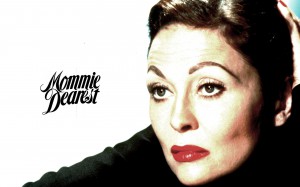
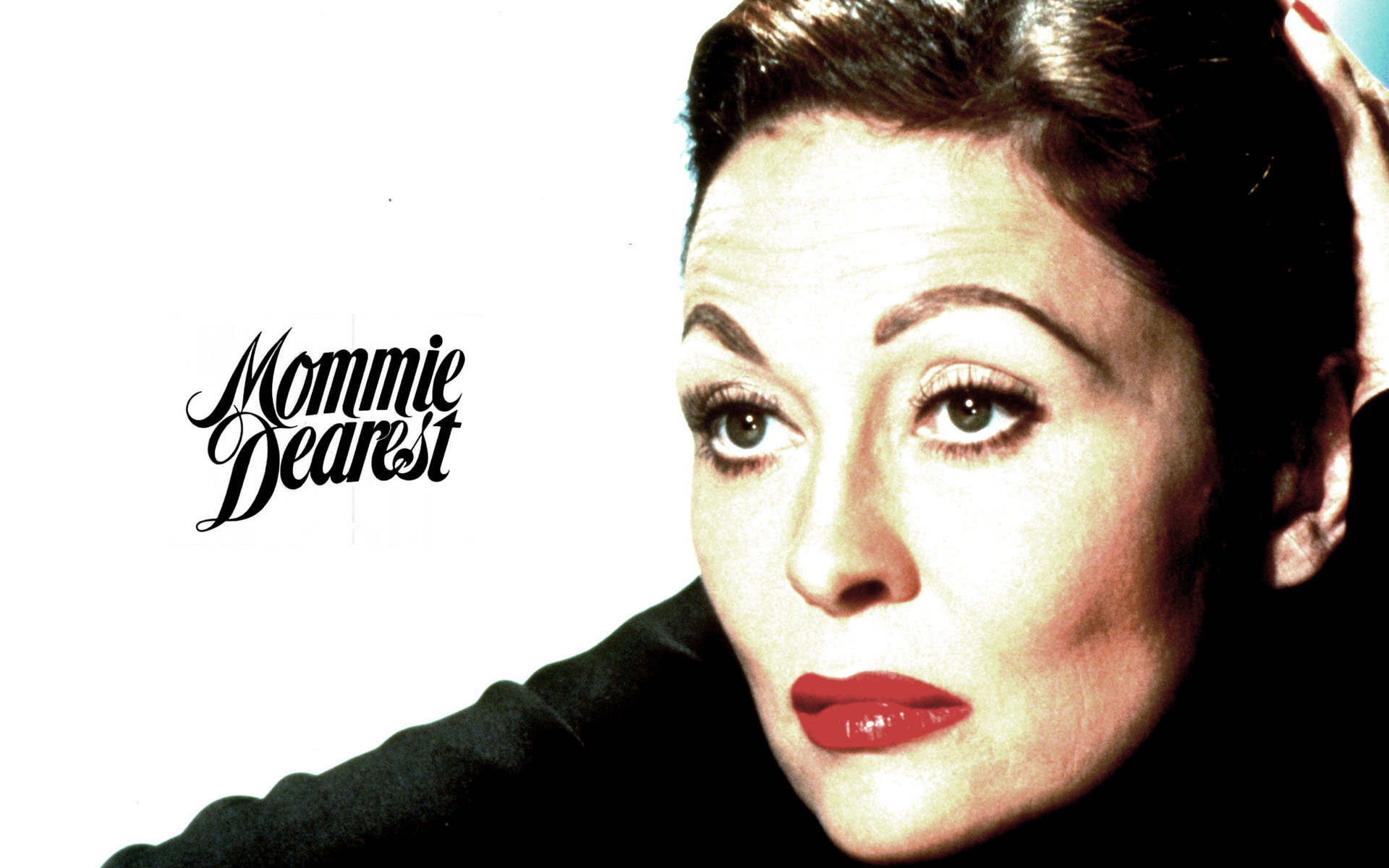
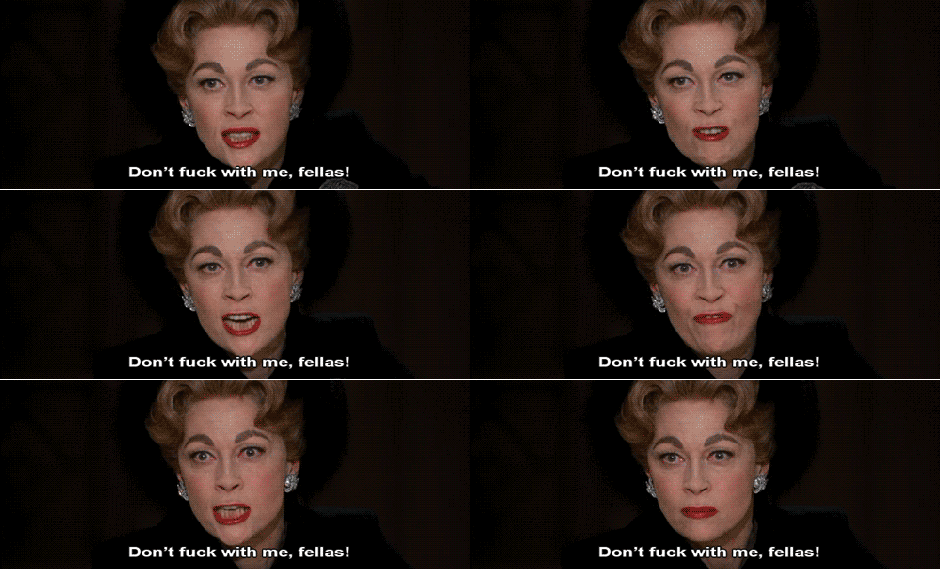
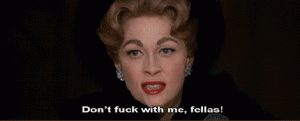
In spite of its reputation, and thanks in part to Faye Dunaway’s remarkable performance as Joan Crawford, this 1981 adaptation of Christina Crawford’s memoir about her driven, abusive mother is arguably too good to qualify as camp, even if it begins (and fitfully proceeds) like a horror film. Director Frank Perry, who collaborated with three others (including producer Frank Yablans) on the script, gives it all a certain crazed conviction. With Diana Scarwid, Steve Forrest, and, as Louis B. Mayer, Howard da Silva. PG, 129 min. (JR)
 Read more
From the Chicago Reader (July 1, 2002). — J.R.
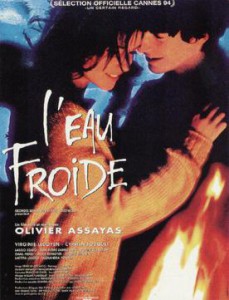
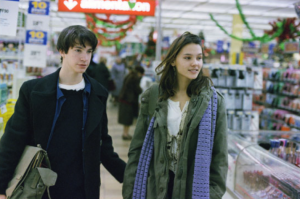
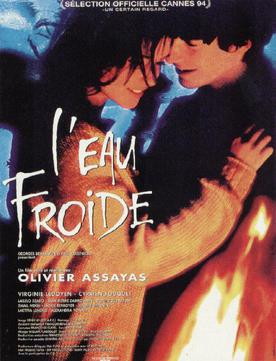
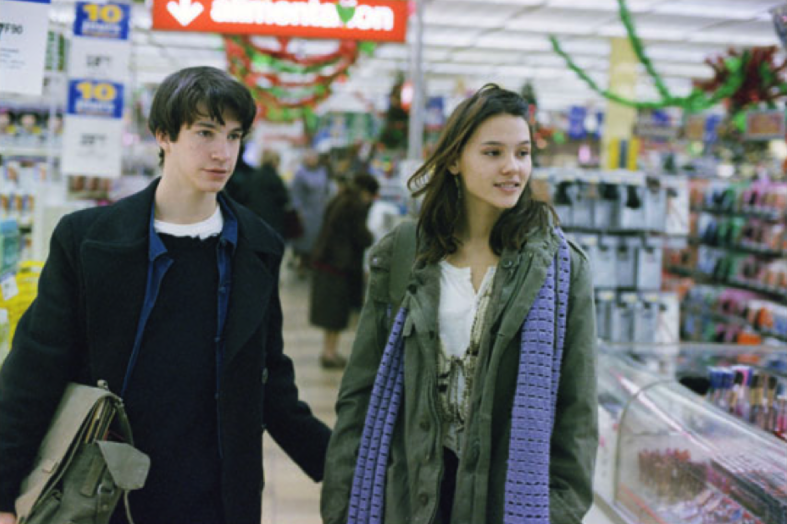
Not long before embarking on his comedy Irma Vep, Olivier Assayas directed this powerful 1994 feature about doomed teenage love as part of the excellent French TV series All the Boys and Girls in Their Time, in which various filmmakers (including André Téchiné, Chantal Akerman, and Claire Denis) dramatized stories set during their teenage years, scoring them with the pop music of the period. Assayas’s contribution, perhaps the most affecting in the whole series, takes place on the outskirts of Paris in 1972. (Having lived in France during that period, I can report that his grasp of its countercultural lifestyles is uncanny.) Virginie Ledoyen and Cyprien Fouquet are letter-perfect as two 16-year-old delinquents from broken homes — the former periodically sent to an asylum by her Scientologist mother and boyfriend, the latter raised by a single father (New Wave regular Laszlo Szabo) — and when they run away together, one can’t imagine that they have anywhere else to go. The beautiful and heartbreaking plot culminates in a party at and around a country house, and Assayas’s sustained treatment of this event — the raging bonfire, the dope, the music and dancing — truly catches you by the throat. Read more
From the Chicago Reader (November 21, 2003). — J.R.
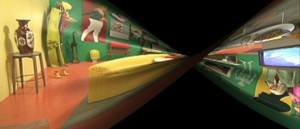
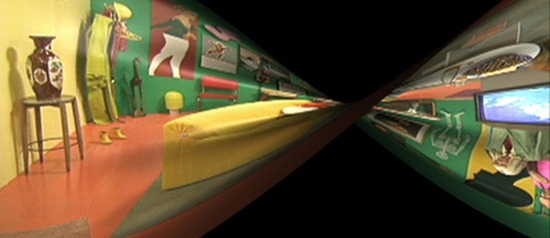
This stunning 93-minute video (2002) by Canadian conceptual artist Michael Snow might be his greatest work since La region centrale over 30 years ago. Almost certainly his most accessible feature, it combines elements from virtually all his previous films: the inexorable camera movement of Wavelength, Back and Forth, and La region centrale; the encyclopedic cataloging of Rameau’s Nephew; the playful self-reflexivity of So Is This. This is also his first encounter with digital video, and it explores all the things DV can do to stretch, compress, and distort bodies, a subject Snow explores formally, comically, and at times even ideologically. (There’s a lot of dialectical play in the film between two distinct spaces: a very contemporary row of staffed computer stations, backed by windows overlooking a cityscape, and a completely sealed-off bomb shelter of a living room filled with 50s kitsch and inhabited by an all-American family, in which a TV set clearly “rhymes” with the computer screens.) Not counting the asterisk, the title refers to the tissue connecting the hemispheres of the brain, an apt reference given the prodigious and joyful inventiveness on display. Univ. of Chicago Doc Films. Read more
From the Chicago Reader (January 3, 2003). I was very touched when, over a dozen years later, in Lisbon, Nicoletta Braschi (who was performing Samuel Beckett’s Happy Days there), Begnini’s partner, thanked me for this piece. — J.R.
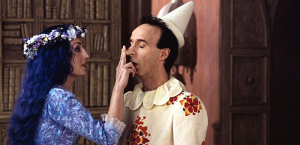
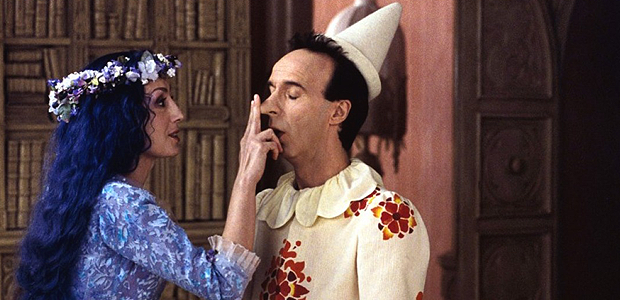
The worst movie I saw all year was the dubbed and recut version of Roberto Benigni’s Pinocchio, hastily released by Miramax on Christmas Day. Yet I could easily have placed Benigni’s subtitled original in my top 50, if not top 40.
The late-19th-century source novel, Carlo Collodi’s The Adventures of Pinocchio, is so quintessentially Italian that adaptations lose flavor and meaning if they don’t include that aspect. Walt Disney’s 1940 animated feature also failed to include the original’s sense of poverty, its cosmic vision of brutality, and many other disturbing elements, then heaped on the sentimentality; the studio got away with it because the film at least had a style and an occasionally disturbing vision of its own.
Benigni’s adaptation replicates more of the Disney sentimentality than I would have liked, but it returns to the Italian original, altering it mainly to fit Benigni’s irreverent and very Italian sense of comedy. (Federico Fellini had hoped to adapt the story with Benigni as the lead, and this film reflects some of Fellini’s broadness and comic-strip floridity.) Read more
From the Chicago Reader (January 1, 1998). — J.R.
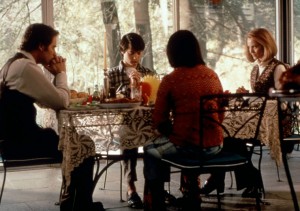
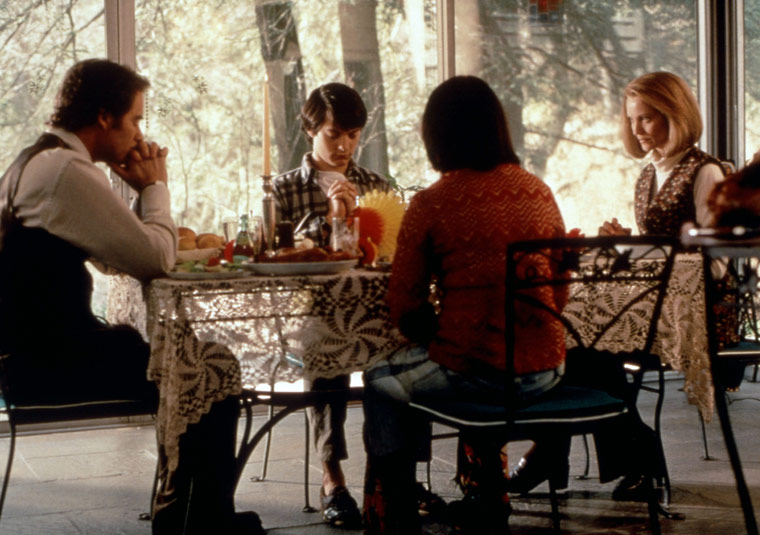
Onetime independent producer James Schamus adapted this 1997 feature from Rick Moody’s novel about sexual confusion and hypocrisy in Connecticut, set during Thanksgiving 1973. Existentially speaking, this is puritanical Hollywood yuppie-think, right down to its inevitable retribution reel. Its characters ride the same commuter trains as Whit Stillman’s, but the higher forces placing them there are less up-front about their neocon refusal to see beyond their own class-bound hides. I can’t deny director Ang Lee’s sensitivity with actors or the fine cast strutting its stuff (including Kevin Kline, Joan Allen, Christina Ricci, and Sigourney Weaver); some of the period details are fun, and Lee offers some nicely observed moments. But the tragic and highly “symbolic” death toward the end, which is supposed to illustrate the sins of the parents being visited upon their children, barely resonates at all, because most of the insights are strictly incidental. The film elicits guilty, lascivious chuckles, not analysis. (JR)
 Read more
Commissioned by the Chicago Reader in September 2016. — J.R.

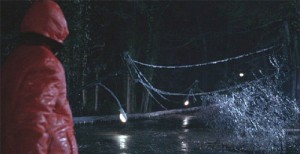
This gripping Iranian melodrama by writer-director Asghar Farhadi (the Oscar-winning A Separation) focuses on a couple acting in a Tehran production of Arthur Miller’s Death of a Salesman. One should probably resist the temptation to read some subtle message into this exotic premise, because Farhadi (unlike Abbas Kiarostami) is neither a modernist nor a postmodernist but something closer to Elia Kazan: topical, sharp with actors, mildly sensationalist (this is about the consequences of a woman being attacked by a stranger while taking a shower), alert to moral nuances, but lacking a full-blown vision of his own. As in A Separation, Farhadi privileges a woman’s viewpoint without either sharing or exploring it. (Jonathan Rosenbaum)
 Read more
From the October 24, 1997 Chicago Reader. — J.R.
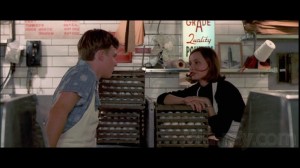
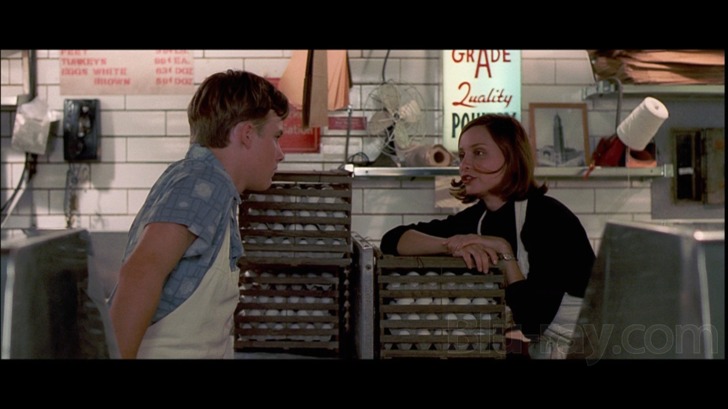
Small, quiet virtues are rare enough in American movies these days, but to find them in a bittersweet autobiographical script by none other than Joe Eszterhas — about growing up as a green Hungarian immigrant in early 60s Cleveland — is a genuine shock. Yet I have to admit that earlier Eszterhas-scripted movies such as Basic Instinct and Showgirls, for all their grotesqueries, have gradually become guilty pleasures of mine; there’s something touching about his honest primitivism. When the grotesquerie’s removed — as it has been under the thoughtful direction of Guy Ferland (whose only previous feature is The Babysitter) — what emerges is solid and affecting. Brad Renfro plays a shy, 17-year-old compulsive liar who goes to work for a master, a payola-happy rock DJ (Kevin Bacon in his prime) named Billy Magic. What the kid winds up discovering — like the hard discoveries in Elia Kazan’s America, America — is more nuanced than you might think. The period detail is mostly perfect and the casting of certain minor parts (such as Luke Wilson as an egg-market manager) sublime, and the purity of feeling recalls exercises in nostalgia on the order of The Last Picture Show. Read more
From the Chicago Reader (August 24, 1989). — J.R.

SEX, LIES, AND VIDEOTAPE
*** (A must-see)
Directed and written by Steven Soderbergh
With Andie MacDowell, James Spader, Laura San Giacomo, and Peter Gallagher.
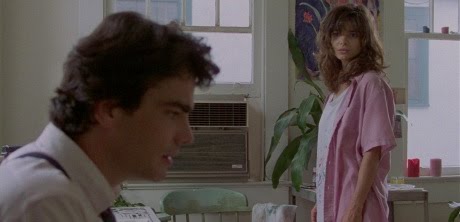
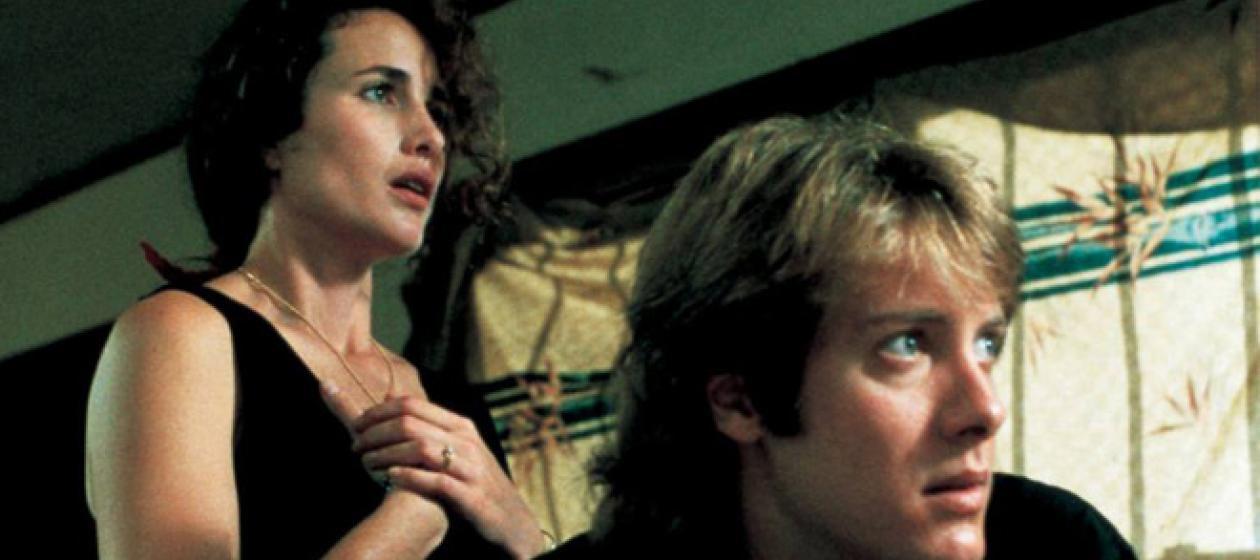
As its lowercase title suggests, sex, lies, and videotape is an example of lowercase filmmaking: lean, economical, relatively unpretentious (or at least pretentiously unpretentious), and purposefully small-scale. Its having walked off with the Cannes film festival’s Palme d’Or — making first-time writer-director Steven Soderbergh at 26 the youngest filmmaker ever to win that prize — saddles it with more of a reputation than it can comfortably live up to. In a time of relative drought, it’s certainly a small oasis, but the attention it’s been getting befits something closer to a breakthrough geyser.
All the fuss may be a sign of panic over more than just movies. Sexual repression is reflected in various ways in current pictures, but this is the only one that deals with it forthrightly as its central subject — specifically, as the main preoccupation of its two leading characters — and broaches sexual problems such as impotence and frigidity in the bargain. I haven’t heard such giddy, unnatural-sounding laughter in a movie theater since The Decline of the American Empire hit the art-house circuit a few years ago — the same sort of forced, hyped-up hilarity at the mere mention of words like “fucking” and “penis” and “getting off.” Read more
From the Chicago Reader (June 12, 1992). — J.R.
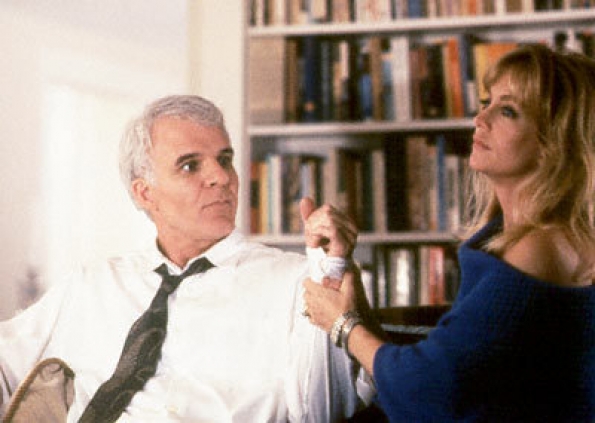
HOUSESITTER
** (Worth seeing)
Directed by Frank Oz
Written by Mark Stein and Brian Grazer
With Steve Martin, Goldie Hawn, Dana Delany, Julie Harris, Donald Moffat, Peter MacNicol, Richard B. Shull, Laurel Cronin, Roy Cooper, and Christopher Durang.
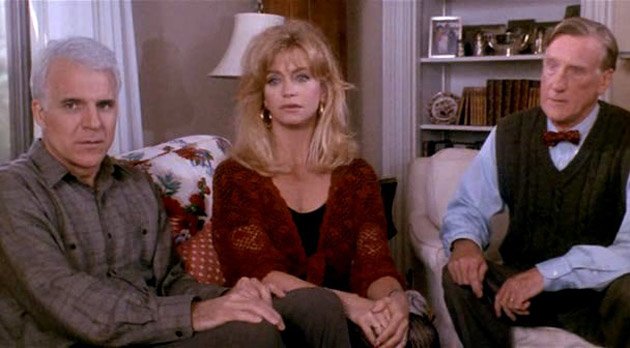
I’ve seen previews of two summer comedies so far — Sister Act and Housesitter — that have elicited gales of hysterical laughter from their mainly young audiences. In both cases the hysteria and volume of the laughter seemed a bit out of proportion. The one-joke premise of Sister Act — that there’s something indescribably hilarious about nuns behaving slightly irreverently — smacks more of quiet desperation growing out of repression than of something to feel happy about. I suspect that if I were a Catholic I’d feel more offended than charmed by the complacency of this running gag, whatever Emile Ardolino’s efficiency as a director. There’s a certain darkness behind many of the laughs in Housesitter, too, but at least they relate to a zeitgeist I can feel part of.
The main comic staple of Housesitter, apart from the enjoyable physical clowning of Steve Martin and Goldie Hawn, is a theme I associate especially with the comedies of Billy Wilder: the baroque complications that grow out of elaborate lies. Read more
These exceptional personal documentaries add up to a potent double bill; of the nonfiction films in the festival that I’ve seen, these are in many ways the best. Deborah Hoffman’s Complaints of a Dutiful Daughter, which deals only in passing with the fact that the director’s a lesbian, is a beautifully precise, acute, intelligent, practical, touching, and even (at times) comic record of how she copes with her discovery that her mother has Alzheimer’s disease. Using video and audio recordings of her interactions with her mother and some on-camera statements of her own, Hoffman charts in haunting detail precisely what memory loss entails, not only for her mother but for herself as she adjusts to the situation. Full of wisdom and insight, this 44-minute essay film is far from depressing. The same is true of Gregg Bordowitz’s 54-minute, deconstructive Fast Trip, Long Drop (1993), an autobiographical essay about the filmmaker’s 1988 discovery that he’d tested HIV-positive and his subsequent life, including his decision to quit drugs and drinking and come out to his mother and stepfather. Making semi-ironic use of silent found footage and Jewish music, Bordowitz speaks about his late father and his sex life; he also includes conversations with various friends (including filmmaker Yvonne Rainer), his own documentary footage of AIDS rallies, a tour of his bookshelves, and a bitter parody of the way the media have treated AIDS. Read more
From the Chicago Reader (June 21, 2002). — J.R.

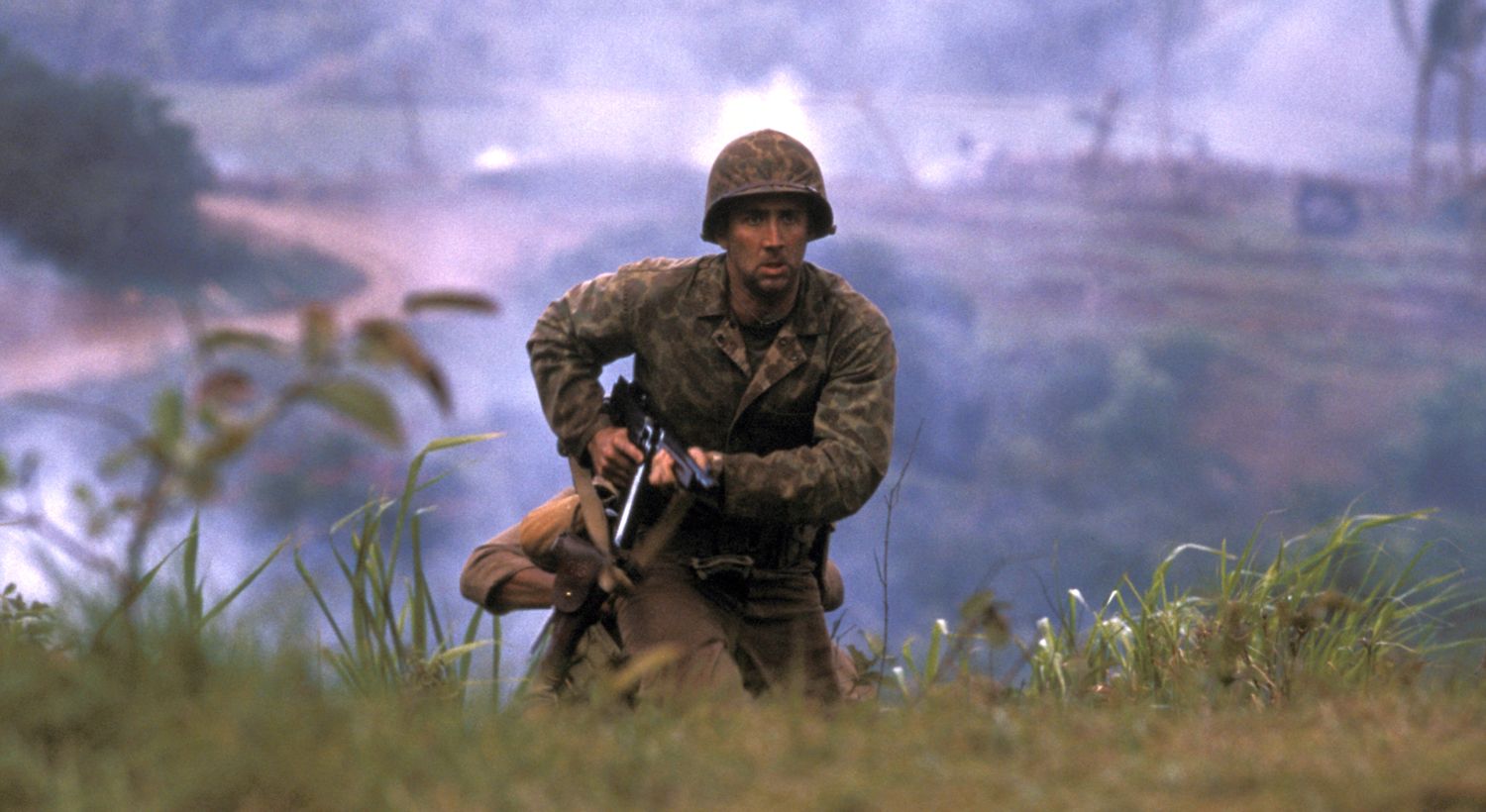
I haven’t been much of a John Woo fan, and war films aren’t my cup of tea, but this World War II epic made me reconsider both biases. The masterful storytelling, which doesn’t seem overextended even at 134 minutes, focuses on the unlikely friendship between a shell-shocked marine (Nicolas Cage) returning to combat in time for the battle of Saipan in 1944 and the Navajo Indian he’s assigned to guard (Adam Beach of Smoke Signals), who’s been trained to transmit messages in a code based on his native language. The material yields a powerful story more realistic in premise and treatment than Woo’s usual fare (the depiction of American wartime racism is especially sharp), yet it’s clearly a personal project that gratifies his penchant for both male bonding and dramatic action sequences. Despite some of the sentimentality that is also Woo’s stock-in-trade, I was moved and absorbed throughout. Written by John Rice and Joe Batteer; with Peter Stormare, Noah Emmerich, Mark Ruffalo, Martin Henderson, Roger Willie, Brian Van Holt, Frances O’Connor, and Christian Slater. Century 12 and CineArts 6, City North 14, Crown Village 18, Esquire, Ford City, Gardens 7-13, Golf Glen, Lake, Lincoln Village, Norridge, Three Penny, Village North. Read more
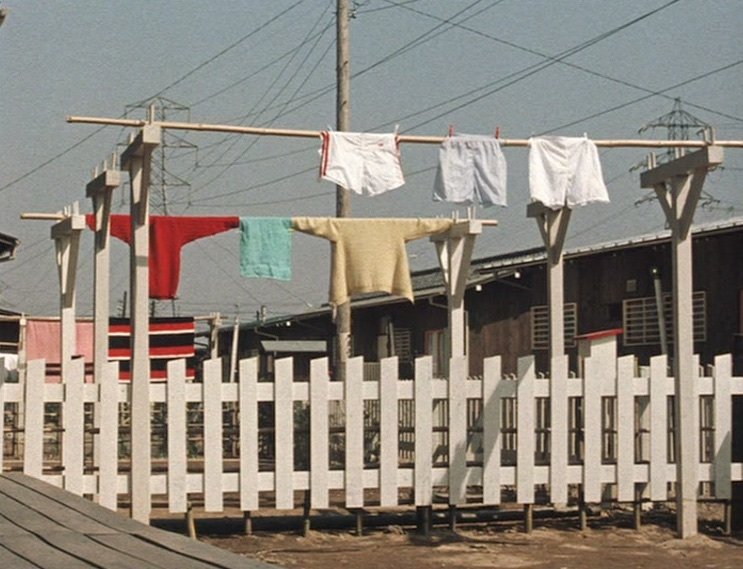
Unfortunately, Richie’s division of Ozu into successive stages of ‘creation’ inevitably leads to the erection of a Platonic ideal, an all-purpose model of ‘the’ Ozu film — an unrigorous model indeed when what one concretely has to contend with are films, each with its own peculiar set of conditions and stresses. Since Richie has more production details about the later films, these tend to dictate most of the dimensions of the model, and the lost films implicitly become subsumed in the same homogenising process whenever Richie speaks about the entire body of the work. The usual approach is to lump together examples of certain aspects or procedures, leading to the formulation of such generalities as ‘the Ozu family’. This results in a profusion of catalogues, some quite nonsensical in presumed meanings and applications: ‘Another pastime to which the Ozu family is addicted is toenail cutting, an activity which seems worth mentioning because it occurs possibly more often in Ozu’s pictures (Late Spring, Early Summer, Late Autumn) than in Japanese life.’ In the long run, individual works are made to seem important or unimportant insofar as they help or fail to exemplify the hypothetical model.
Problem No. Read more
For the beginning of this article, go here.
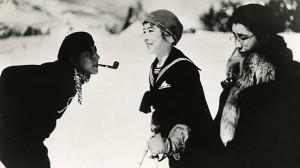
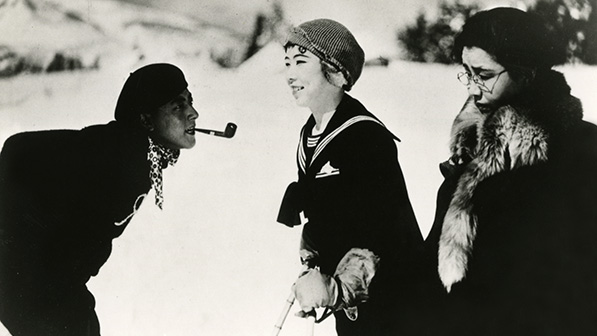
While one could hardly claim that Days of Youth is a major work, it is at the very least an arresting one, and some of its comedy is on a par with the wonderful opening sequence of Passing Fancy (1933) at a naniwabushi recital (when a stray purse gets surreptitiously picked up, investigated, and tossed around like a beanbag by various spectators until the. entire assemblage, reciter included, is dancing about from an attack of lice). One would expect, then, that any serious Ozu scholar would pay some heed to it. Yet all that Richie has done in Ozu — apart from noting at one point that, like all of Ozu’s subsequent films, it shows actors directly facing the camera — is to expand his original commentary on the film (in Film Comment, Spring 1971) from five words (‘A student comedy about skiing’) to seven: ‘Another student comedy, this one about skiing.’ And if one searches in his book for something about Tatsuo Saito — an actor who went on to play the father in I Was Born, But . . . (1932), and figured centrally in several of the twenty other Ozu films where he appeared — one finds that he isn’t even listed in the index; in fact, the only reference to him in the entire book is the observation that he ‘keeps rubbing his hip during various scenes’ in Tokyo Chorus. Read more
From Monthly Film Bulletin, May 1976 (Vol. 43, No. 508). — J.R.

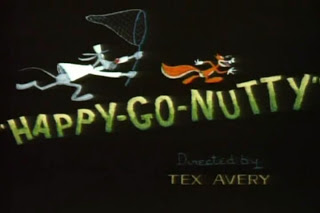
Happy-Go-Nutty
U.S.A.,1944
Director: Tex Avery
Cert–U- dist–Ron Harris. p.c—MGM. p–Fred Quimby. story–Heck AIIen. col–Technicolor. anim–Ed Love, Ray Abrams, Preston Blair. m–Scott Bradley. 260 ft. 7 mins. (16 mm.).
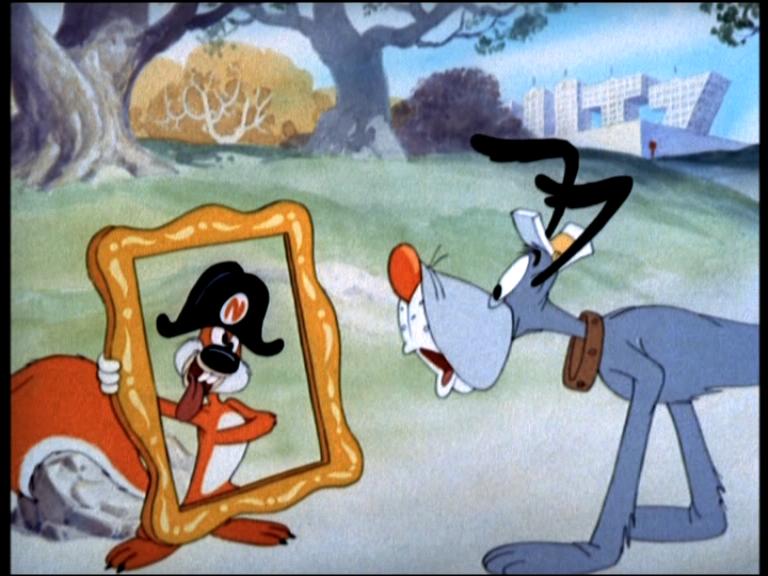
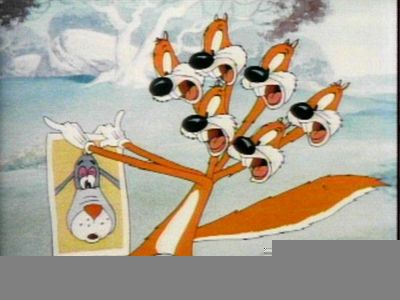
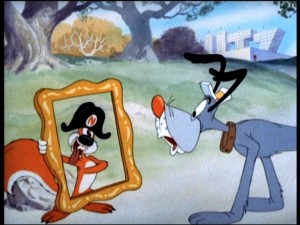
Breaking out of the confines of Moron Manor and deliberately rousing Meathead the watchdog, Screwy Squirrel flees from him through a series of violent adventures Running past the cartoon’s end title, the antagonists return to discuss other possible endings until Meathead goes mad himself, bursts through the end title, and runs away; Screwy praises this ending for its silliness. A little less impired than Screwball Squirrel, its immediate predecessor, Happy-Go-Nutty nevertheless registers as a kind of ode to dementia, particularly of the gibbering and Napoleonic-complex variety. After beglnning with its hero in a loony bin (“Through these portals pass the screwiest squirrels in the world”), it proceeds spiritedly through some familiar gags (a bomb momentarily turning Meathead into a pickaninnv), some more inventive surreal ones (Meathead goes over a cliff. only to be handed a newspaper by Screwy when he lands, with the headline “SUCKER!!” over a photograph of Meathead going over a cliff), and odd throwaway details (a trashcan labeled “for extra squirrels”). If it fails to scale the summits of imagination displayed by Avery’s team at MGM, it does allow everyone involved more scope for their talents than most cartoons. Read more

Russ Limbaugh on Rick Santorum (after explaining that Newt Gingrich and John Kerry were once on the same panel where they sort of agreed that global warming exists): “Nobody is innocent. Everybody is guilty on [sic] some transgression somewhere against conservatism. Except Santorum.”
Rick Santorum on Western Europeans (speaking to the conservative Pennsylvania Leadership Conference in 2006): “Those cultures are dying. People are dying. They’re being overrun from overseas…and they have no response. They have nothing to fight for. They have nothing to live for.”
Clearly, Rick Santorum can’t be guilty of any transgression against any European conservatives, secular or religious, responsive or otherwise. How could he be, because they don’t exist? Or at least have no reasons to live, or anything to fight for, anywhere. Or somewhere.
Thanks, Russ and Rick, for clarifying that we must be the only folks in the world who exist, or deserve to, or want to — at least one of those things, or maybe, if they can have their way, all three. [2/10/12]
 Read more