From the Chicago Reader (April 20, 1999). — J.R.
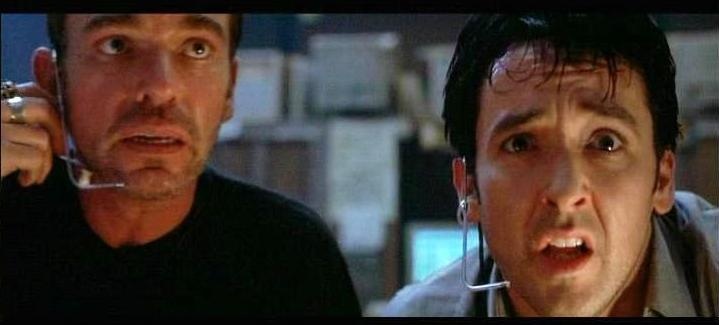
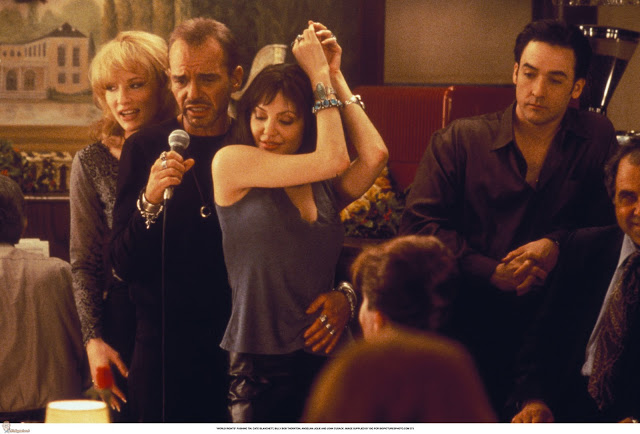
Though this comedy-drama about a macho feud between two New York air-traffic controllers (John Cusack and Billy Bob Thornton) is never entirely believable, it’s consistently lively, offbeat, and unpredictable, suggesting at times the improbable fusion of Howard Hawks and Sigmund Freud. Inspired by an article by Darcy Frey in the New York Times Magazine, the screenplay by brothers Glen and Les Charles (creators of the TV show Cheers) piles hyperbole on top of frenzy in spelling out the heroes’ frenetic lifestyle. In particular, it focuses on the putative wife swapping (involving Cate Blanchett and Angelina Jolie) that emerges from the rivalry. Cusack may be called upon to hog too much of the limelight, if only because the story is mainly told from his point of view, but director Mike Newell’s flair for mixing and matching his entire cast seldom falters. (JR)
 Read more
From the Chicago Reader (July 1, 1994). — J.R.

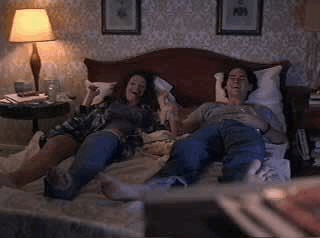
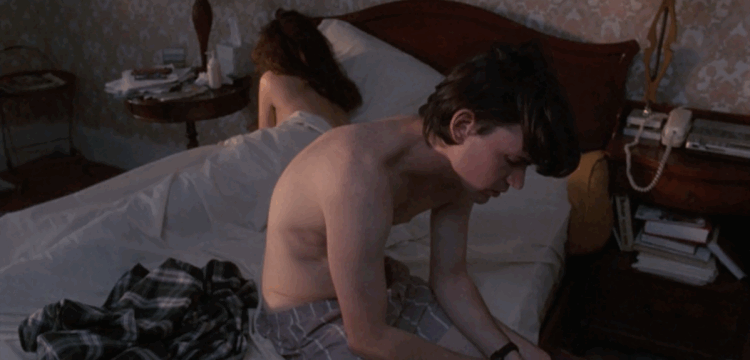
A first feature by American independent writer-director David O. Russell, this traps its hero, a premed college freshman, in his family’s suburban home for the summer. Forced to give up an internship to take care of mother (laid up with a broken leg) while his philandering father, a traveling video salesman, is out on the road, the not very likable hero finds himself in one tragicomic mishap after another involving his father’s convoluted instructions, care of the family dog, making out with a high school senior, and a growing sexual involvement with his desperate mother. Despite a certain originality, the movie isn’t really a success, not only because the plot bites off more than it can chew (the film doesn’t conclude; it simply stops), but also because, like its hero, it has some trouble distinguishing between petty irritations and cataclysmic traumas. But at least the performances are fresh and fairly nuanced. With Jeremy Davies, Elizabeth Newitt, Benjamin Hendrikson, Alberta Watson, Carla Gallo, and Richard Husson (1994). (JR)
 Read more
From the August 15, 2003 Chicago Reader. — J.R.
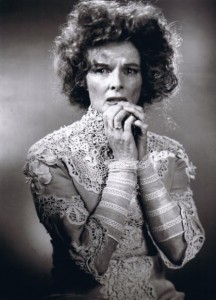
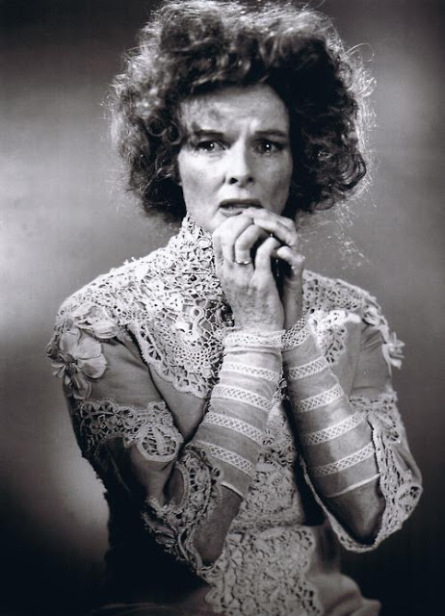
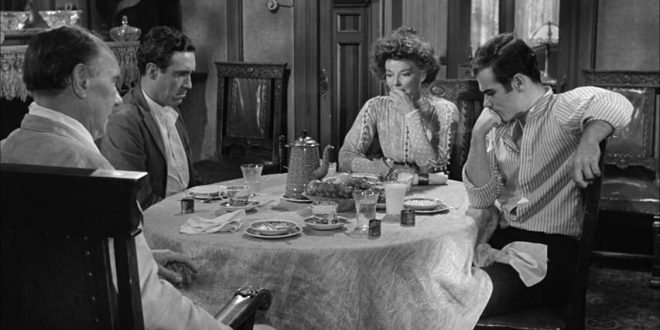
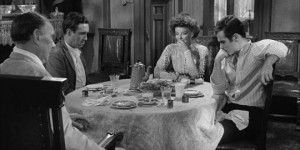
Eugene O’Neill’s greatest play — written in 1940, but published only posthumously, in 1956 — is a frankly autobiographical look at his own doomed family, set in 1912, when he was in his early 20s. Sidney Lumet rightly retained the entire text for this 1962 black-and-white feature, which runs for 174 minutes. It’s as close to a definitive version as we’re likely to get, and it includes what is probably Katharine Hepburn’s greatest noncomic performance. The other three actors — Ralph Richardson as the father, Jason Robards Jr. as the older son, and Dean Stockwell as the younger son (O’Neill’s self-portrait) — keep pace with her every step of the way. (JR)
 Read more
From the Chicago Reader (August 1, 2001). — J.R.
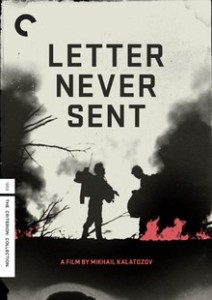
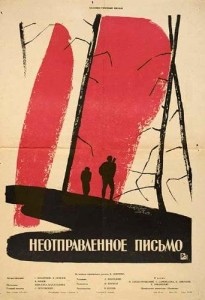
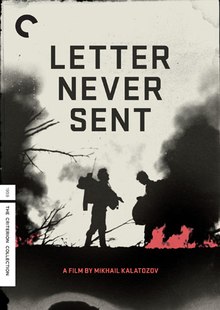
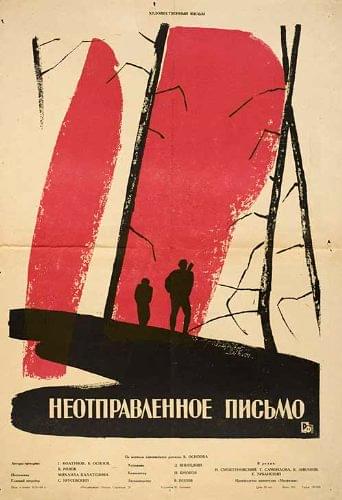
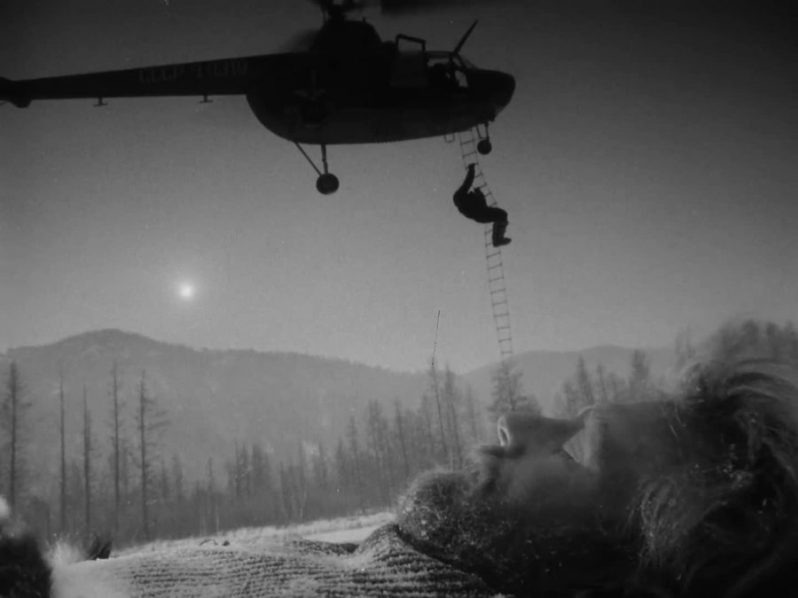
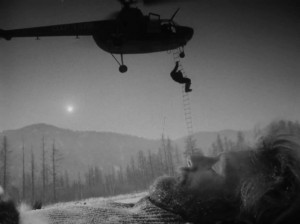
Two years after his internationally famous The Cranes Are Flying and five years before his internationally scorned I Am Cuba, Mikhail Kalatozov directed this strange 1959 adventure story about four geologists (three men and one woman) hunting for diamonds in Siberia. The title letter is being written by the narrator to his wife in Moscow, and while the explorers eventually find their treasure, they have to endure forest fires and snowstorms as they struggle back toward civilization. Though shot on location and reportedly based on a true story, the film is distanced considerably from realism, at least in any conventional sense, by its exciting and volatile camera style and its metaphysical atmosphere (sparked in particular by one line of dialogue, Nature is taking revenge); they’re less delirious than in I Am Cuba but sufficiently ravishing to have brought charges of formalism against the filmmakers. Pictorially, the double exposures and silhouette effects recall some of the glories of silent cinema. in Russian with subtitles. 98 min. (JR)
 Read more
From the Chicago Reader (February 1, 1991). — J.R.
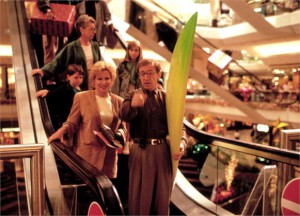
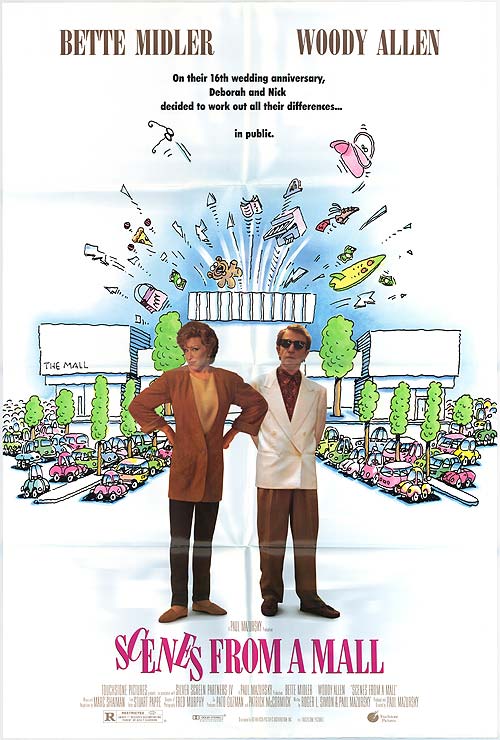
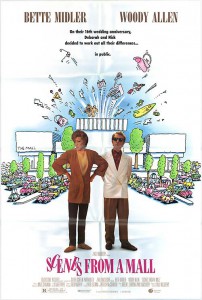
A middle-aged couple (Woody Allen and Bette Midler) in southern California celebrating their 15th anniversary go to a shopping mall, and they proceed to decompose and recompose their relationship on the basis of various revelations. Although this only runs for about 90 minutes, it’s the emptiest and most long-winded movie Paul Mazursky (working here with his frequent cowriter Roger L. Simon) has ever made, a disappointingly steep descent after his Enemies, a Love Story. The characters never come to life, and restricting almost all of the action to a gigantic mall only makes the narrowness and boredom of the movie more obvious. Mazursky has returned with a vengeance to his special universe where the upper middle class is the only thing that exists, and this time he has absolutely nothing to say about it. (JR)
 Read more
From the Chicago Reader (January 7, 1994). — J.R.
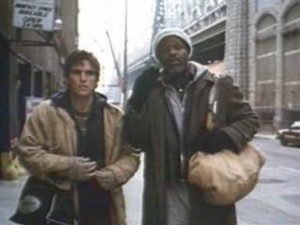
It would appear that many of my colleagues have been trashing this powerful and moving look at friendship among the homeless in New York — directed by Tim Hunter (River’s Edge) from a script by Lyle Kessler (Orphans) and starring Danny Glover and Matt Dillon at their rare best — simply because of its subject matter and authenticity; apparently, contemporary man-made tragedies are inappropriate topics for the big screen, unlike ghosts, dinosaurs, mythical serial killers, and former holocausts. But if epic grandeur is what you’re looking for, this movie gives you glimpses of the Fort Washington Armory, which currently shelters 700 people nightly, that recall the famous shot of the Confederate wounded in Gone With the Wind, and if noir finality is your meat, this movie tells you things about New York’s potter’s field that easily might have found their way into Pickup on South Street. This isn’t a perfect movie, and it may occasionally err on the side of Dickensian sentiment, but I it has so much to say about the world we live in and says it with such grace, wit, and raw feeling that I recommend it without qualification. Read more
From the Chicago Reader (September 1, 2001). — J.R.
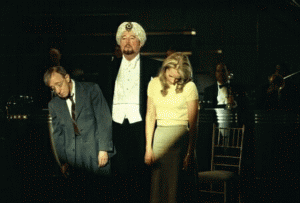
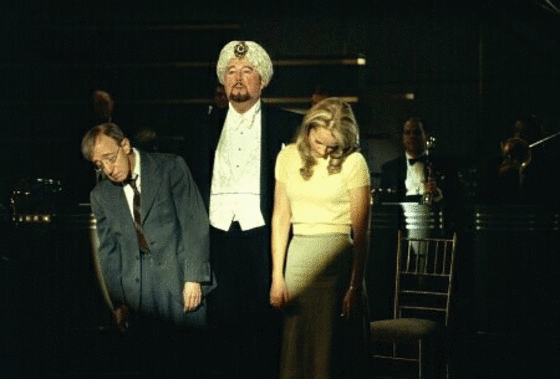
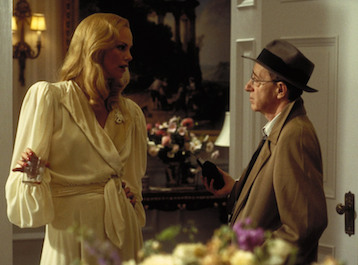
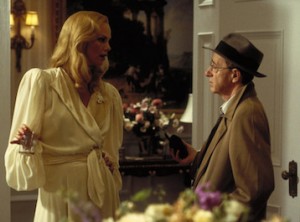
As a rule, my favorite Woody Allen films are those select few that (a) warmly acknowledge Allen’s working-class roots, (b) steer clear of European influences, and (c) seek mainly to entertain. Manhattan Murder Mystery did the latter two wonderfully, and Broadway Danny Rose did all three, as does this charming throwaway, set in 1940. One thing I especially like about it, apart from the flavorsome 40s decor in color, is that it’s silly in much the same way that many small 40s comedies were. Allen is an insurance investigator and Helen Hunt an efficiency expert working for the same company; they hate each other with a passion — until they’re hypnotized during a nightclub act into not only loving each other madly but also stealing jewels whenever posthypnotic suggestions are delivered. Others in the cast include Dan Aykroyd, Elizabeth Berkley, Brian Markinson, Wallace Shawn, David Ogden Stiers, and Charlize Theron. 104 min. (JR)
 Read more
From the Chicago Reader (October 17, 1997). — J.R.
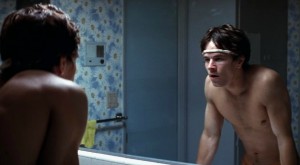
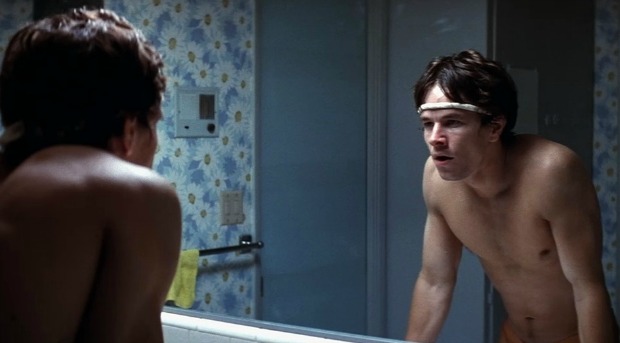
Writer-director Paul Thomas Anderson’s second feature (after Hard Eight) is a two-and-a-half-hour epic about one corner of the LA porn industry during the 70s and 80s — a seemingly limited subject that becomes the basis for a suggestive and highly energetic fresco. The sweeping first hour positively leaps with swagger and euphoria as an Orange County busboy (Mark Wahlberg) is plucked from obscurity by a patriarchal pornmeister (Burt Reynolds at his near best) to become a sex star. Alas, this being the American cinema, tons of gratuitous retribution eventually come crashing down on practically everybody in mechanical crosscutting patterns, and because Anderson has bitten off more than he can possibly chew, a lot of his minor characters are never developed properly. Moreover, just as Hard Eight at times slavishly depended on Jean-Pierre Melville’s Bob le flambeur, Anderson’s idea of a smart move here is to “outdo” Tarantino (in a fabulous late sequence with Alfred Molina) and to plagiarize a sequence from Raging Bull that itself quotes from On the Waterfront, rather than come up with something original. But notwithstanding its occasional grotesque nods to postmodernist convention, this is highly entertaining Hollywood filmmaking, full of spark and vigor. Read more
These questions were sent by Maya Bogovejic on April 17 for her Eastern European, online film journal Camera Lucida. — J.R.
1. How has the Coronavirus pandemic affected your creative work/project/film (in its different phases)?
I’m troubled as well as delighted by the fact that the pandemic has been good for my web site, the center of my creative activities, insofar as more people currently visit this site every day. But what does it mean to say that anything that’s bad for humanity can be good for something else? Surely this must be the ultimate logic of capitalism — the same logic as saying that Donald Trump is “good” for “television” (meaning, I suppose, the few billionaires who control television) but “bad” for “America” (meaning far more than a few of the people living in the U.S.)
All this means that the Coronavirus pandemic is forcing to the surface contradictions, inequalities, and injustices that have been around for some time but were much easier to ignore or rationalize when the state of things was simply “business as usual”.
2. How damaging (long-lasting…) will the consequences be for film art, film festivals, cinemas, coproductions, film centres, various film events…?
Read more
From the May 27, 2005 Chicago Reader. — J.R.

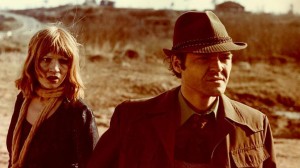
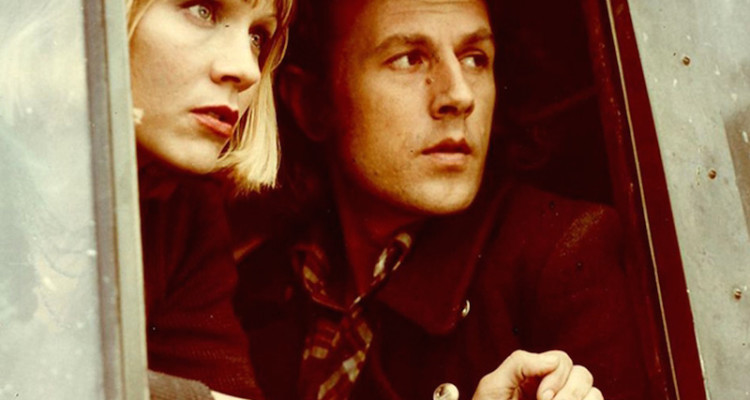
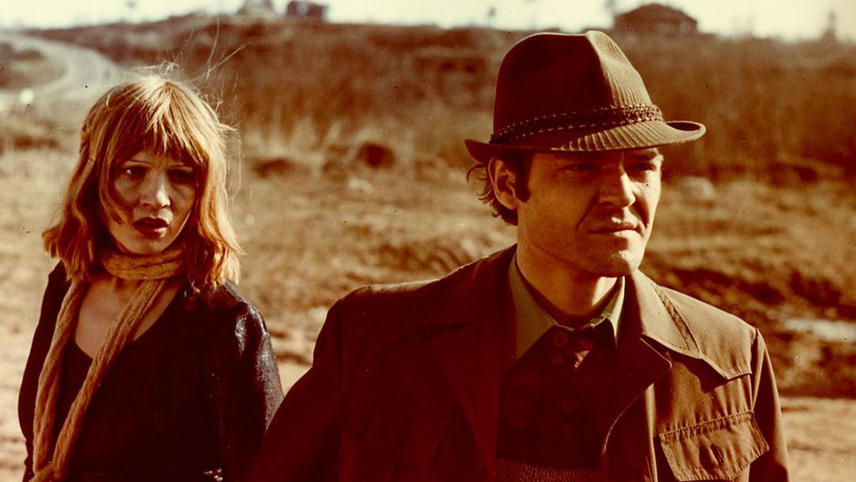
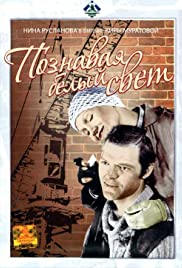
Kira Muratova’s flaky 1978 feature, said to be her favorite, also goes by the title Understanding Life, but as often happens with her movies, appreciation ultimately triumphs over understanding. A loosely plotted comedy about a romantic triangle, set in and around a rural wasteland, it alternates between silence and sound, stopping and starting, with the cheekiness of 60s Godard. The relative chaos of the construction-site location, like the ones in Alexander Dovzhenko’s Ivan and Aerograd, is what Muratova seems to like most about this. As usual with her movies, the actors — including regulars Nina Ruslanova and Sergei Popov — are wonderful. In Russian with subtitles. 80 min. (JR)
 Read more
From the June 1, 1991 Chicago Reader. — J.R.
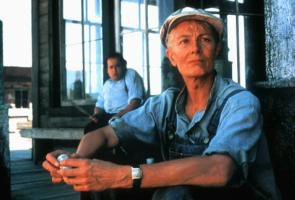
For his filmmaking debut, writer, actor, and stage director Simon Callow has taken on the celebrated novella of Carson McCullers, making some use of Edward Albee’s stage adaptation but paring away much of its dialogue, including the use of an onstage narrator. The grotesque plot, set in a southern mill town during the Depression, concerns a circle of unrequited love: an eccentric bootlegger and folk doctor (Vanessa Redgrave) dotes on a hunchbacked dwarf (Cork Hubbert) who in turn loves an embittered convict (Keith Carradine), once the bootlegger’s husband. The pain of all this builds to an excruciating and violent fist fight between the bootlegger and the convict, witnessed by the entire town. The three leads are superb, and Rod Steiger and Austin Pendleton are fine in small roles. If Callow accords his stars a few too many close-ups, he still does a creditable job of trying to get us to believe in a tale that is difficult to imagine without the fragile weave of McCullers’s prose (Callow evidently sees it as a fairy tale with elements of magical realism). His stage background helps as well as hinders: one never believes in the town as anything but a set populated by actors, but the concentration of his direction certainly solicits the utmost from his cast. Read more
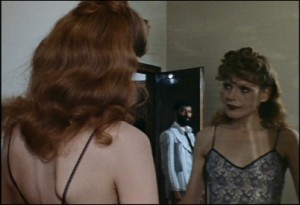
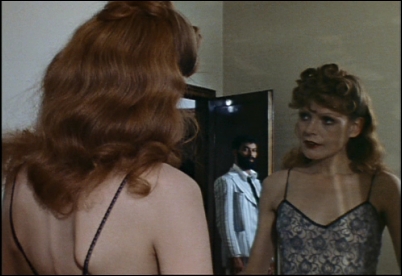
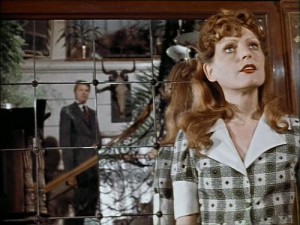
My favorite Fassbinder feature (1973; not shown in the U.S. for years because of problems involving the rights to the Cornell Woolrich source novel) is a horrific black comedy — a devastating view of bourgeois marriage rendered in a delirious baroque style. Vacationing in Rome, a virgin librarian in her 30s (Margit Carstensen) meets a macho architect (Peeping Tom‘s Karlheinz Bohm) and winds up marrying him. It’s a match made in heaven between a masochist and a sadist, with the husband’s contempt and absurdly escalating demands received by the fragile heroine as her proper due. Suspenseful and scary, excruciating and indigestible, this is provocation with genuine bite — though the manner often suggests a parody of a 50s Douglas Sirk melodrama. (JR)
 Read more
From the Chicago Reader (September 1, 2000). — J.R.
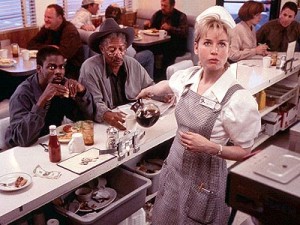
It isn’t surprising that John C. Richards and James Flamberg won the prize for best screenplay at the 2000 Cannes film festival; this offbeat and unpredictable comedy-thriller throws so many curveballs, one right after another, that I doubt I’ve had more fun at an American movie this year. You should know as little in advance about the plot as possible, so let’s just say that the title heroine (Renee Zellweger), a poorly treated housewife in a small town in Kansas who’s addicted to a daytime soap and smitten with one of its main characters (Greg Kinnear), drives out west to find him, with a couple of bickering hit men on her tail. The latter are played by Morgan Freeman and Chris Rock — who may be the most exciting tragicomic duo to come along since Martin and Lewis and at the very least deserve a sitcom or comic strip detailing their further exploits. There’s a lot going on in this movie about fantasy fulfillment and folie a deux in general, and one of the most remarkable things about it is that it was directed by Neil LaBute, the writer-director of the highly misanthropic In the Company of Men and Your Friends & Neighbors; this starts out with a similarly nasty edge and then turns warmer, funnier, and perhaps even wiser by the minute. Read more
From the Chicago Reader (February 1, 1989). — J.R.
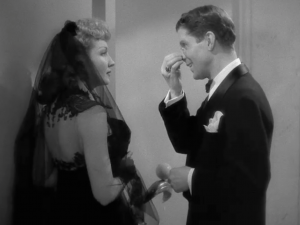
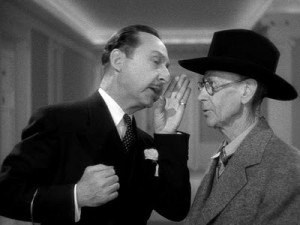
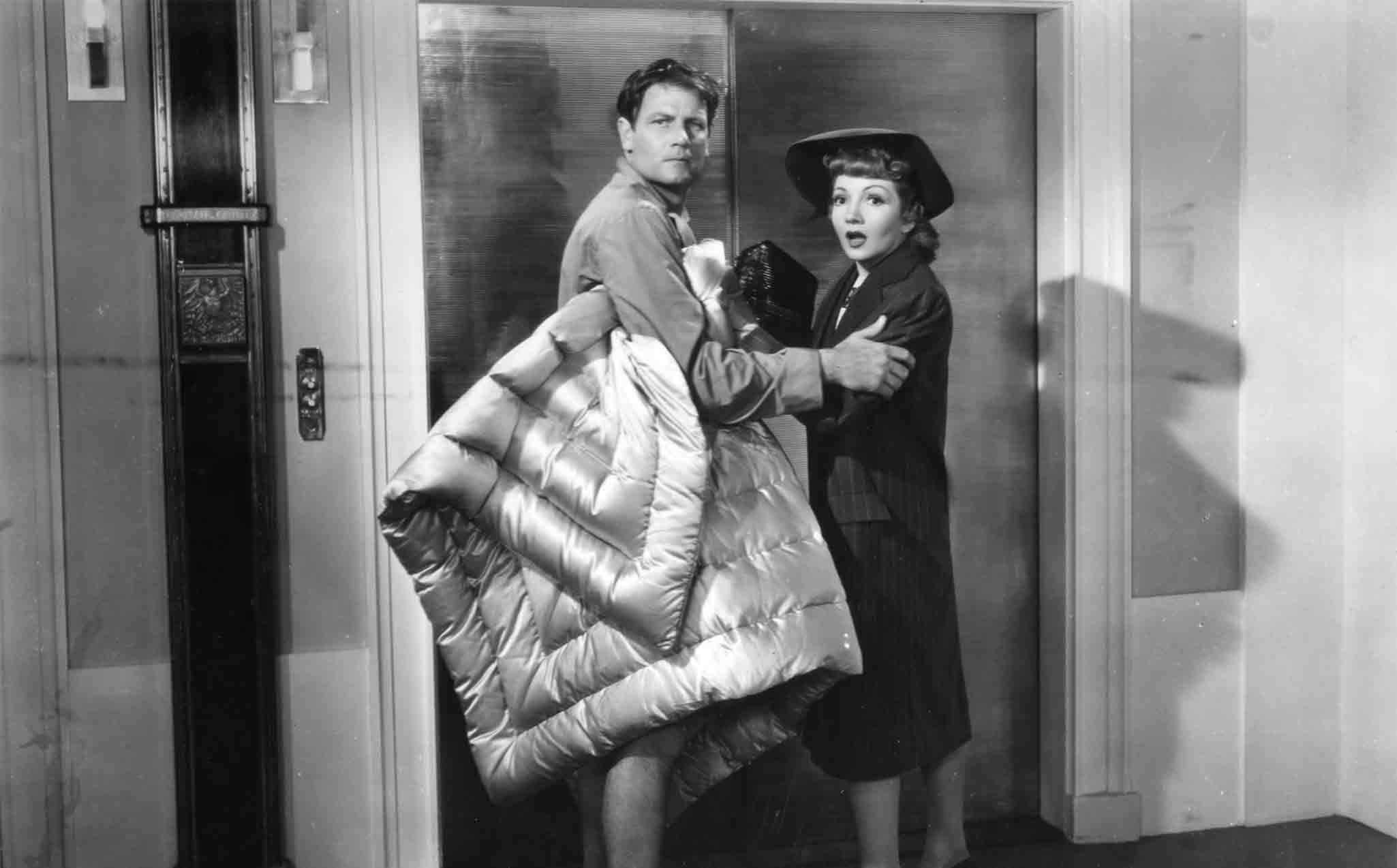
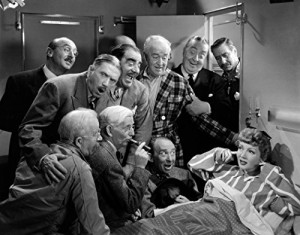
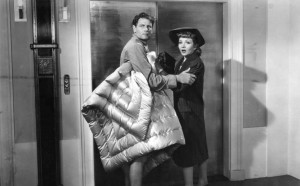
Rudy Vallee turns in his best performance as a gentle, puny millionaire named Hackensacker in this brilliant, simultaneously tender and scalding 1942 screwball comedy by Preston Sturgesone of the real gems in Sturges’s hyperproductive period at Paramount. Claudette Colbert, married to an ambitious but penniless architectural engineer (Joel McCrea), takes off for Florida and winds up being wooed by Hackensacker. When McCrea shows up she persuades him to pose as her brother. Also on hand are such indelible Sturges creations as the Weenie King (Robert Dudley), the madly destructive Ale and Quail Club, Hackensacker’s acerbic sister (Mary Astor), and her European boyfriend of obscure national origins (Sig Arno). The Hackensacker character may be the closest thing to self-parody in the Sturges canon, but it’s informed with such wry wisdom and humor that it transcends its personal nature (as well as its reference to such tycoons as the Rockefellers). With William Demarest, Jack Norton, Franklin Pangborn, and Jimmy Conlin. 90 min. (JR)
 Read more
From the Chicago Reader (March 1, 1990). — J.R.
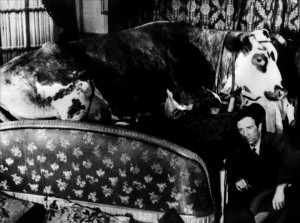
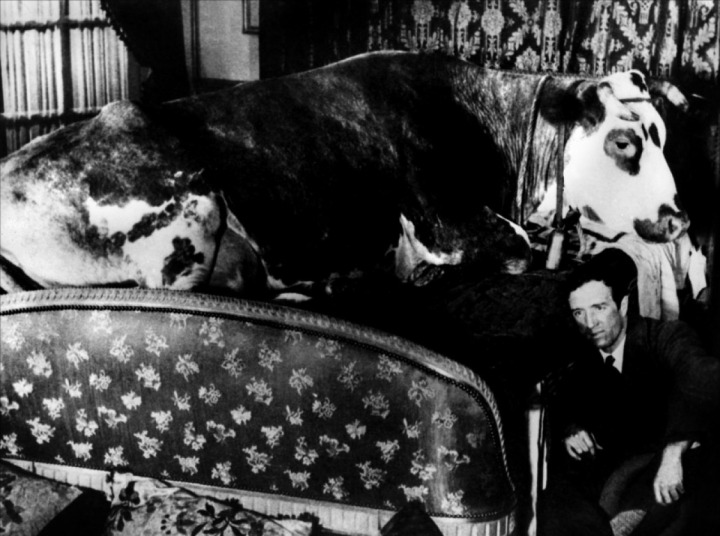
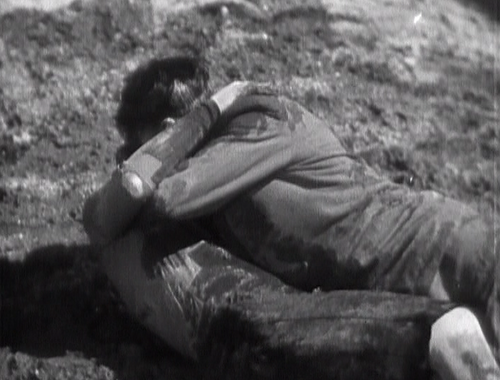
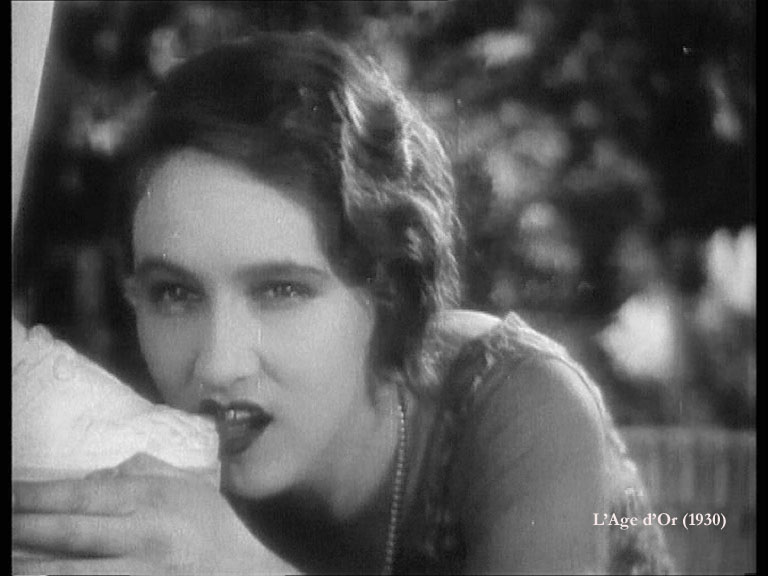
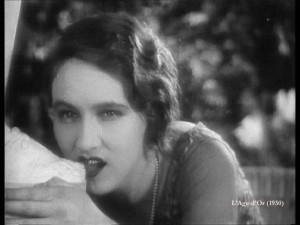
Luis Buñuel’s first and most radical feature (1930) was banned for decades, and it continues to pack a jolt. Forsaking consecutive plot, the film is more like an anarchist bomb, starting off as a documentary before assaulting church, state, and society —particularly high society — in the name of eros. Funny, blasphemous, sexy, strange, subtle, and evocative in its use of sound, it’s also thoroughly Buñuelian, though without the bittersweet sense of resigned acceptance that characterizes some of his later works. Except for his 1932 documentary Las Hurdes, this ferocious act of revolt kept Buñuel virtually unemployed as a director for 17 years; when he finally returned as a narrative filmmaker, he delivered something quite different from the wild poetry of his first three films. In French with subtitles. 60 min.
Read more