Five Best Digital Releases, 2020 (for Sight and Sound)

Submitted on October 29, 2020. — J.R.

Five Best Digital Releases

Jonathan Rosenbaum

Rachel Bloom and Aline Brosh McKenna’s Crazy Ex-GirlfriendThe Complete Fourth Season (Warner Archive, four DVDs)


The Complete Films of Agnès Varda (Criterion, fifteen Blu-Rays).


Shivendra Singh Dungarpur’s CzechMate: In Search of Jiří Menzel (Second Run Features, two Blu-Rays)
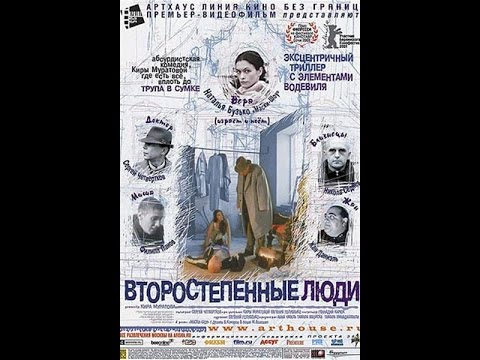

Kira Muratova’s Second Class Citizens (one Russian DVD).
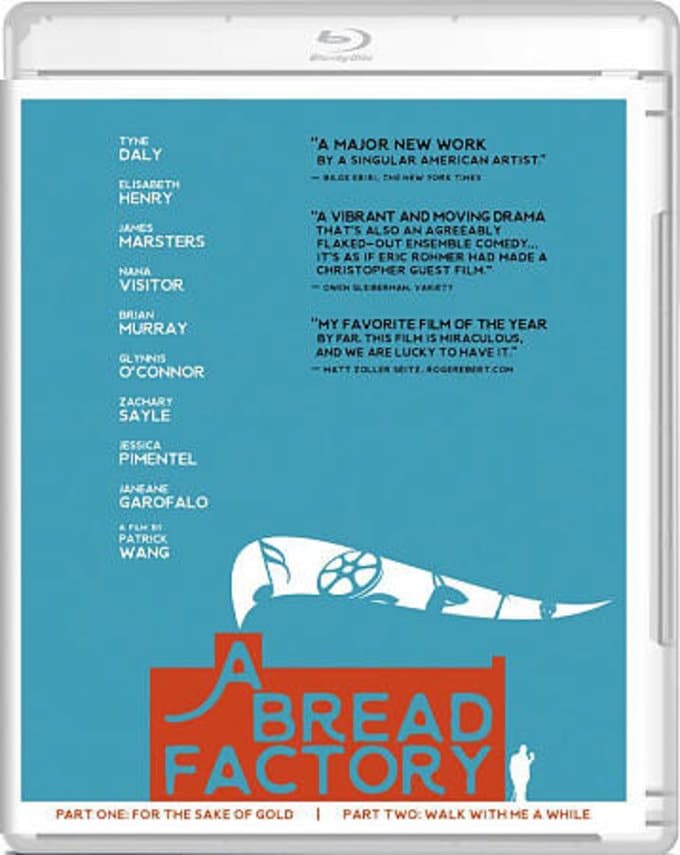

Patrick Wang’s A Bread Factory (Grasshopper Film, one Blu-Ray, one DVD)


I’ve ignored precise dates because Johnson-Trump have brought history to an impasse, and one country’s 2019 release might not even arrive in the mail before 2020. I’ve included A Bread Factory even though it includes my own public interview with its writer-director. Teaching a course in Varda made me appreciate that she knew how to generate her own best extras (none of which, alas, I could show on Zoom). The final season of Crazy Ex-Girlfriend deserves recognition for resurrecting the Hollywood musical to serve the specific needs of the present while triumphantly proving that sitcom characters can actually grow. English subtitled Muratova is most easily tracked on YouTube, and I can’t even identify the Russian label of this welcome DVD release.

Read more

The Best Video Essays of 2020 (for SIGHT AND SOUND)

Best Video Essays (alphabetical order):     


  1. L’Année Dernière à Dachau (Mark Rappaport, France)
  2. Her Socialist Smile (John Gianvito, U.S.A.)
  3. A House is Not a Home: Wright or Wrong (Mehrnaz Saeed-Vafa, U.S.A.)*
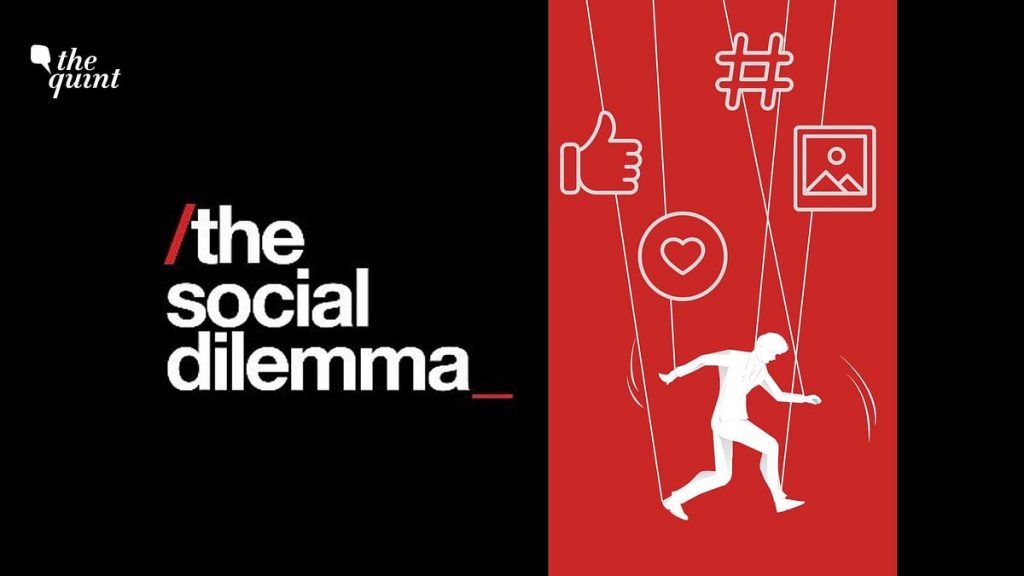
  4. The Social Dilemma (Jeff Orlowski, U.S.A.)
  5. Sportin’ Life (Abel Ferrara, Italy)
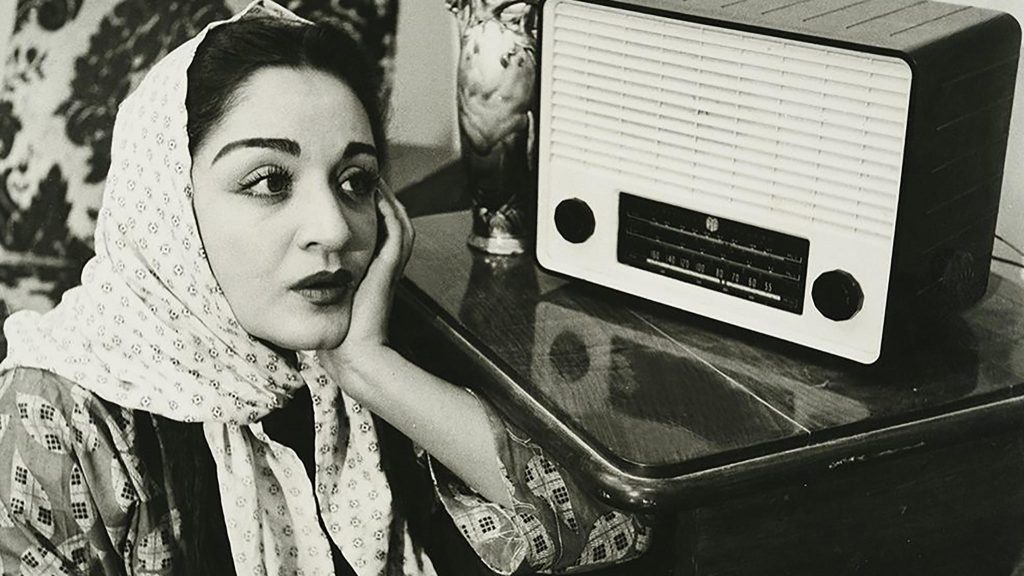
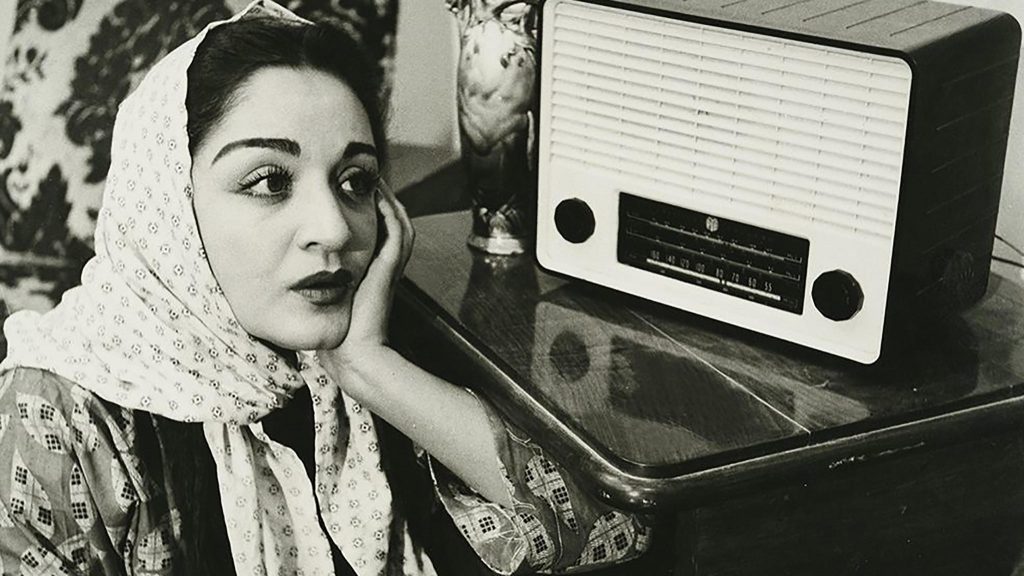
  6. Women According to Men (Saeed Nouri, Iran)


*I worked on this film in various capacities–as interview subject, consultant, and camera assistant. Read more

Culture in the Year of 2020

Written in response to the following invitation from Diego Moldes Gonzalez (whom I’ve never met) in Madrid: “What is the definition of ‘culture’ for you? How is the culture of the 21st century similar and different from the culture of the 20th century?” — J.R.

As a beneficiary of both Internet culture and the imperial culture of the United States (which becomes imperial whenever it vainly calls itself American culture, which is often, thus implicitly appearing to enfold much of North America and all of South and Central America as secondary satellites), I continue to be subject to the market-driven capitalist culture that strives to pick the pocket of my unconscious and thereby invisibly steer my purchases (or, more precisely, the events that constitute my being purchased), defined as my existential identity. Thus, because I’m defined as an anti-Trumpian, the media fills me with anti-Trump rather than the desired absence or disappearance of Trump. In other words, Trumpians and anti-Trumpians get served two alternate versions of the same exclusive diet of Trump and daily coronavirus casualty figures, popularly known as the daily news, and choosing between these two unvarying diets is being deceptively labeled a form of democratic choice and a representative form of “American culture”. Read more

My Ten-Best List for SIGHT AND SOUND (2020)

Submitted to Sight and Sound on October 26, 2020. — J.R.

Alphabetical order:


1. L’ANNÉE DERNIÈRE À DACHAU (Mark Rappaport)

2. BOTTLED SONGS: MY CRUSH WAS A SUPERSTAR (Chloé Galibert-Laîné)

3. CENOTE (Oda Kaori)

4. FIRST COW (Kelly Reichardt)

5. LA FRANCE CONTRE LES ROBOT(Jean-Marie Straub)

This image has an empty alt attribute; its file name is theater-quote-1024x576.png

6. HER SOCIALIST SMILE (John Gianvito)

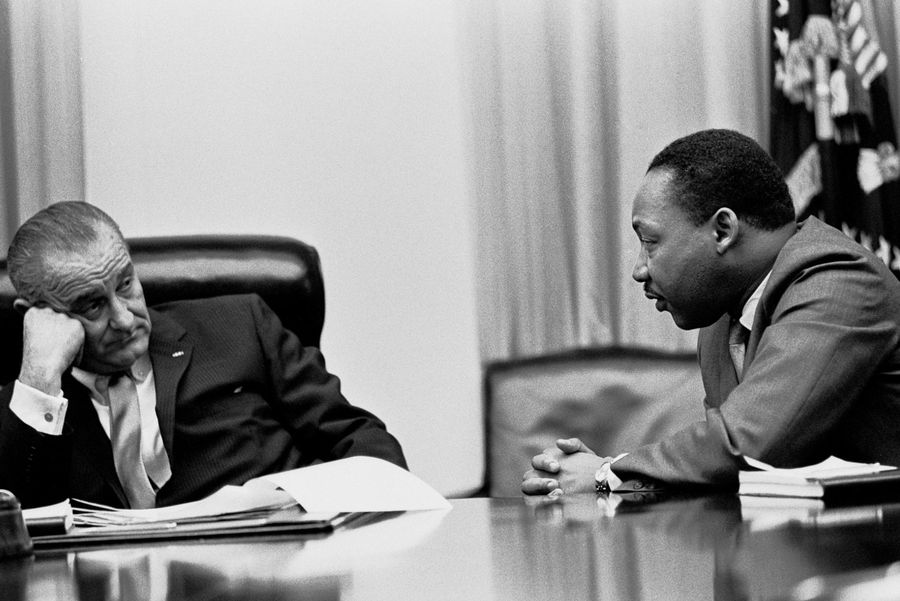
7. MLK/FBI (Sam Pollard)

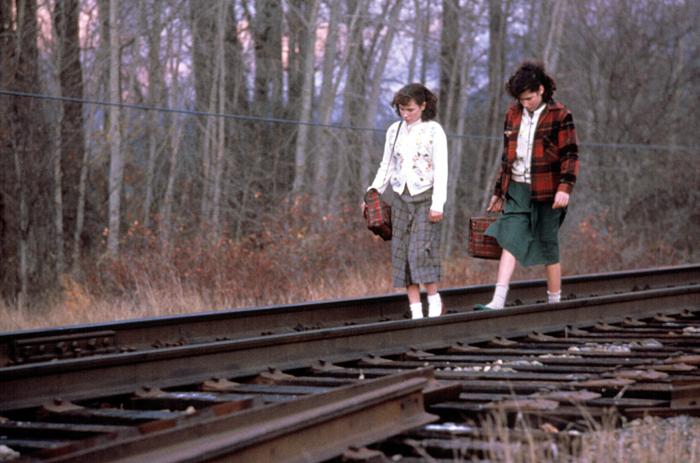
8. SCHOOLGIRLS (Pilar Palomero)

9. VITALINA VARELA (Pedro Costa)

10. WOMEN ACCORDING TO MEN (Saeed Nouri)

Comment: The meditative and solitary aspects of film watching have  increased during the pandemic, when many of us are exiled to our laptops, but fortunately, online platforms for post-screening discussions have grown as well.  Read more

Dassin as Fashion

Commissioned but not published by a Europeanfilm festival and collection in early 2026.

Jonathan Rosenbaum

There isn’t an entry for Jules Dassin in Richard Roud’s two-volume, 1121-page Cinema: A Critical Dictionary (1980), and criticism of his work in other Anglo-American publications has been sparse. That he was unfashionable in many cinephile circles for most of his career can be attributed to several factors, which this essay will attempt to explore. Foremost among them is his having been blacklisted in Hollywood and moving to Europe in the mid-1950s, thus splitting his filmography into two—a fate that made John Berry and Cy Endfield virtually invisible and Dassin—far more visible due to such European hits as Rififi and Never on Sunday—widely resented. Only Joseph Losey managed to attain over time both visibility and critical respect, thanks in part to the prestige of his frequent screenwriter Harold Pinter and many of his actors.

The question of what makes an artist fashionable or unfashionable—such as what led to Andy Warhol being praised for doing some of the same things that
Frank Tashlin was condemned for—is far from a simple matter, but it is always inflected by both ideological
climates and marketplace practices. And the Cold War’s impact on Dassin’s artistic profile can’t be
overestimated. Read more

Reading: The (Remote) Glass House That Jerry Built (1988)

An unpublished essay written in June 1988 for the Chicago Reader. One of my few regrets about my 20 years at the Reader, unlike the year and a half I spent (1979-1981) at New York’s Soho News, was that whereas the latter allowed me to review books and movies concurrently, the Reader was interested in me only as a film reviewer, so any attempt to write about books for them was discouraged. I did make a point of reviewing two of Thomas Pynchon’s late novels for them (Vineland and Against the Day) –- having previously reviewed Gravity’s Rainbow for the Village Voice and having much later reviewed Mason & Dixon for In These Times between the two Reader reviews (all four of these reviews, incidentally, plus my earlier review of The Crying of Lot 49 for a college newspaper, can be accessed on this site).

I wrote the piece below on spec when Michael Lenehan was the paper’s editor and he told me I’d have to do a lot of rewriting before it could be published, so I bowed out. Read more

A Year at the Movies [1988]

From the Chicago Reader (December 23, 1988). — J.R.

MSDHOUS EC015

The Puttnam Problem

Some of the year’s most ominous film-industry developments followed directly from the forced departure of David Puttnam as head of Columbia Pictures. During his brief and controversial tenure at Columbia, Puttnam — the outspoken Englishman who produced Chariots of Fire and other “quality” films — had attempted to reverse the overall trend in Hollywood of assigning more power and artistic control to stars and less to directors and writers by developing low-budget projects that weren’t completely subject to the whims of stars and their agents.

After Puttnam’s departure, the desire to discredit his strategies at Columbia was so pronounced that most of his projects were deliberately sabotaged through a flagrant lack of promotion — demonstrating once again that the major aims of Hollywood are often not so much the making of money as the fulfillment of various personal forms of vanity. (Bill Forsyth’s Housekeeping is a good example of the sort of serious Puttnam project that was virtually foredoomed at the box office by the pressure of anti-Puttnam sentiments.) Adding insult to injury, a series of anti-Puttnam articles appeared in the trade magazine Variety, which attempted to appease Puttnam’s enemies by demonstrating that his films were commercially unsuccessful, conveniently overlooking the fact that very few of them were given even a sporting chance to succeed. Read more

Black-And-White World [BLACK GIRL]

From the Chicago Reader, April 21, 1995. It’s lamentable that, although Black Girl is now available on DVD from New Yorker, the color sequence in it appears in black and white. (In fact, I only saw this sequence in color for the first time when I showed this film in a course on world cinema of the 60s that I taught in Chicago in 2008.) To see this sequence in color, order the film’s BFI edition from Amazon UK. — J.R.

Black Girl

Rating **** Masterpiece

Directed and written by Ousmane Sembène

With Mbissine Thérèse Diop, Momar Nar Sene, Anne-Marie Jelinck, Robert Fontaine, Ibrahima Boy, and the voices of Toto Bissainthe, Robert Marcy, and Sophie Leclerc.

If you trace African film back to its first fiction feature, it is only 30 years old. Yet far from being underdeveloped, it begins on a more sophisticated level than any other cinema in the world. By some accounts Ousmane Sembène’s hour-long Black Girl was made in 1965, by others 1966, a characteristic ambiguity when it comes to African movies. Do you date them according to when they were made or when they were first shown? And given the scant and largely unreliable print sources that we have to check, how can we be sure about either date? Read more

Why I Like TOUGH GUYS DON’T DANCE: A Conversation with Justin Bozung

The following is a slightly revised and rearranged dialogue recorded for a podcast in January 2014 and reworked a little over a year later for a  book by Justin Bozung about Norman Mailer’s films, then cut from the book due to a lack of space the following year. –- J. R.

 Mailer in Provincetown

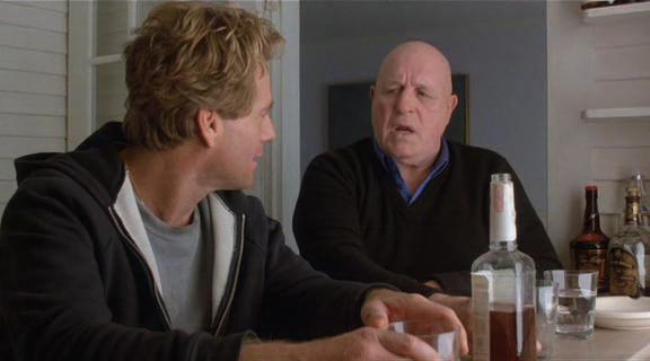
Tough-Guys-Dont-Dance

JUSTIN BOZUNG: My first question for you is, Why in the hell are you and I the only two people in the world that love this film?

JONATHAN ROSENBAUM: Well, we aren’t quite the only two — there’s also my friend Mark Rappaport, who, like Mailer, is both a filmmaker and a writer. But it’s true, there aren’t many others. And I can’t speak authoritatively about why other people don’t like the film, but I will say that I’ve never been a fan of Mailer’s three previous films. And I use the word “film” deliberately and advisedly, because Tough Guys Don’t Dance is above all a movie; it’s the only thing of his that has some resemblance to Hollywood. And he has a flair for it.

I saw what I believe was one of its first screenings, soon after it was (probably) shown at Telluride, at the Toronto Film Festival. Read more

Wholesale Memories [TOTAL RECALL]

From the Chicago Reader (June 8, 1990). — J.R.

TOTAL RECALL

*** (A must-see)

Directed by Paul Verhoeven

Written by Ronald Shusett, Dan O’Bannon, Jon Povill, and Gary Goldman

With Arnold Schwarzenegger, Rachel Ticotin, Sharon Stone, Ronny Cox, Michael Ironside, Mel Johnson Jr., and Marshall Bell.

The most influential SF movies of the past two decades are still very much with us, not only as landmarks but as continuing influences on newer release. 2001: A Space Odyssey (1968) gave us a whole slew of standbys, from the use of familiar brand names in outer space to a sense of visual design that, as critic Annette Michelson once put it, dissolved the very notion of the “special effect” as it was previously understood. In 1977 Star Wars popularized the notion of SF adventure as continuous action; and Close Encounters of the Third Kind the same year brought a certain pop religiosity (or perhaps one should say pseudoreligiosity) back to the genre, a combination of De Mille and Disney that sanctified Spielberg lighting as a means of bestowing halos on deserving characters, creatures, or locations.

Alien (1979) revitalized the claustrophobic horror-film dynamics of The Thing (1951), internalizing the monstrous and echoing David Cronenberg’s feature of 1975, They Came From Within. Read more

Memories of Béla

Jonathan Rosenbaum

This essay was commissioned by the Indian arts journal The Riveraine Muse (based in West Bengal) and published in their Spring 2026 issue (vol. 3, no. 1). I’ve added a few parenthetical notes to identify the photos. –J.R.

I’ve spent most of my life in search of communities I can join without compunction — decidedly not the small town in Alabama where I grew up, and at most only two of the schools I chose to attend as a student: Highlander Folk School in Tennessee (summer 1961), cradle of the civil rights movement in the U.S., and Bard College in New York (1962-66), where my professional and vocational involvements in film and literature took shape. But the only such community that I was invited to join, as a teacher, was film.factory in Sarajevo, over four two-week periods, 2013-2015, and this was entirely due to Béla Tarr (1955-2026), a filmmaker I discovered in Chicago via Almanac of Fall (1984) and Damnation (1988) in 1990, who became a friend around the time of the international premiere of Sátántangó (1994). I had been on the New York Film Festival’s selection committee that had chosen the film, had arranged for its showing at the Chicago International Film Festivalas as a “critic’s choice” of mine, and had found its first American distributor. Read more

WILL THE REAL NORMAN MAILER PLEASE STAND UP (1975 review)

From Monthly Film Bulletin, September 1975, Vol. 42, No. 500.

It’s good to see Norman Mailer’s first three features just out in a two-disc DVD set from Eclipse (it would be great if Criterion could eventually do the same for Susan Sontag’s three fiction features), even though I regret that my two favorite Mailer films — his untitled, ten-minute experimental short from 1947 (recently discovered by archivist Michael Chaiken, who wrote the excellent and provocative notes for the Eclipse set, and which I saw last July at Il Cinema Ritrovato) and Tough Guys Don’t Dance (1987) — aren’t included. (Admittedly, I haven’t yet seen all of Maidstone, which Chaiken makes the most claims for, so these rankings on my part are still subject to revision.)…In his Eclipse notes, Chaiken describes Will the Real Norman Mailer Please Stand Up? [sic] as “a filmed counterpart to The Armies of the Night“, which parallels my own observation here. Read more

Critical Consensus: Kent Jones and Jonathan Rosenbaum Discuss Robert Bresson and Jean-Luc Godard

Posted on Indiewire on January 6, 2012, with different illustrations. — J.R.

Critical Consensus: Kent Jones and Jonathan Rosenbaum Discuss Robert Bresson and Jean-Luc Godard

By Kent Jones, Eric Kohn and Jonathan Rosenbaum | Indiewire January 6, 2012 at 11:20AM

pickpocket

 bfi-Bresson

Editor’s note: Critical Consensus is a biweekly feature in which two critics from Indiewire’s Criticwire network discuss new releases with Indiewire’s chief film critic, Eric Kohn. Here, Jonathan Rosenbaum (formerly of the Chicago Reader) and Kent Jones (executive director of the World Cinema Foundation and editor-at-large at Film Comment) discuss two legendary filmmakers: Robert Bresson, the subject of a retrospective beginning at New York’s Film Forum today, and Jean-Luc Godard, whose “Film Socialisme” comes out on DVD and Blu-ray on January 10. More details on films opening this week follow after the discussion.

ERIC KOHN: There’s no easy way to have a short conversation about Robert Bresson without shortchanging a career spanning 13 films and widely considered paramount to 20th-century film history. Bresson’s Catholicism, his narrative precision, use of non-actors and painterly formalism have been analyzed many times over.

However, the Bresson retrospective that begins at Film Forum today ahead of a national tour, and includes 35mm prints of 11 films, is the first one in 14 years. Read more