Recommended Reading: AUDIENCE OF ONE

AudienceofOne


The central and irreducible insight of James Poniewozik’s brilliant book — making it for me the only account I’ve read of Donald Trump that makes his poisonous career both legible and explicable — is to view that trajectory as part of the tainted history of television, and to see Trump as a hapless victim of that history as well as a sinister perpetrator.

This is an insight that I’ve already had glimmers of whenever I’ve blanched at how much ungodly fun Rachel Maddow has been deriving from the cornucopia of Trumpian horrors, and how creepily her nightly boasts about what a “big” show she has in store for us replicates the weekly promises of Ed Sullivan on his variety show between 1948 and 1971. But the fact that I’ve never watched “reality TV” means that I need someone like a New York Times TV critic to show me how dutifully and consistently Trump has replicated its gestures, assumptions, and attitudes as President, and how doggedly both Fox TV and MSNBC have remained in sync with and in thrall to its very fibers.

hate-inc


This is also part of the persuasive thrust of Matt Taibbi’s recent Hate Inc.: Why Today’s Media Makes Us Despise One Another, which claims to be inspired by Edward Herman and Noam Chomsky’s Manufacturing Consent. Read more

Global Discoveries on DVD: Flukes & Flakes

My column for the Spring 2019 issue of Cinema Scope. — J.R.

rabbitrunmovie

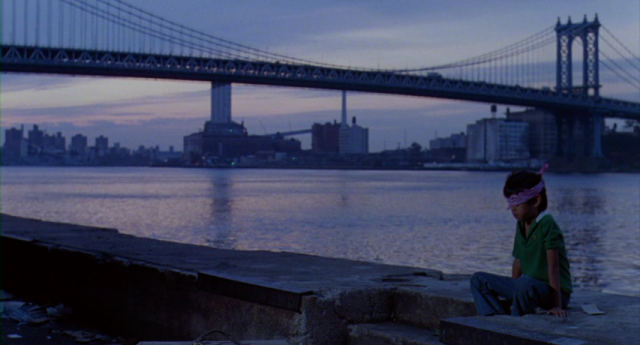
In retrospect, I’m sure that an important part of what excited me about John Updike’s second novel, Rabbit, Run, when I read it in high school circa 1960, was the fact that it was recounted in the present tense, thus giving it some of the immediacy of a movie—rather like the thrill of the opening chapter of William Faulkner’s Light in August, which I first encountered around the same time. As Updike himself later noted, the movieness of his present tense was a conscious strategy — he even thought of subtitling the novel A Movie — although ironically, it’s precisely this sense of now and its location in the Eisenhower era that is most conspicuously absent from Jack Smight’s flatfooted 1970 movie adaptation (available on DVD from Warner Brothers’ Archive Collection), which doggedly tries to be “faithful” in its own misguided fashion, even to the point of updating the action from 1959 to the present, but only comes across as conventionally shopworn as a consequence. What’s clearly lost isn’t only Updike’s sense of history, pop-culture references and all, but the vibrant weight of the eponymous hero’s existential decision-making. Read more
An Encyclopedia of Nuanced Gestures: NELLY AND MONSIEUR ARNAUD

 Written for the Kino Lorber Blu-Ray of this film, released in September 2019. — J.R.

NellyandMonsieurArnaud2

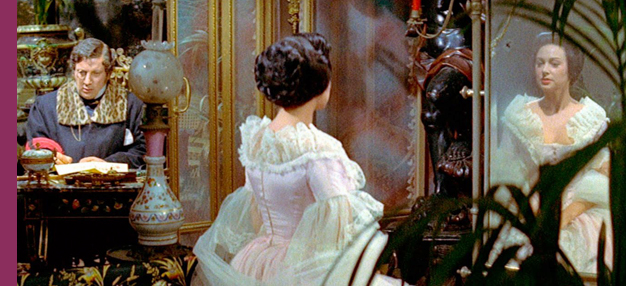
Let me start with a confession about the ways that both fashion and one’s age can affect one’s taste. My first acquaintance with writer-director Claude Sautet (1924-2000) came when I was a hippie and cinephile in my late 20s living in Paris in the early ‘70s, a follower of Cahiers du Cinéma in my viewing preferences more than a follower of its leading monthly competitor, Positif, although I usually purchased both magazines. Back then, Sautet’s The Things of Life (1970), and César and Rosalie (1972) struck me as the epitome of well-crafted, genteel yuppie navel gazing, especially for what I took to be their uncritical embrace of the upper middle class. He was clearly a skilled director of actors, but the overall whiff of his milieu seemed complacent to a fault. Consequently, I steered clear of his 1974 Vincent, Francois, Paul and the Others, one of his biggest hits, and when, five years later, back in the U.S., I wrote an article about Chantal Akerman, Jean-Luc Godard, and the team of Jean-Marie Straub and Danièle Huillet for the mainstream and middlebrow American Film, I was mortified when my editors condescendingly changed my title to “Jean-Luc, Chantal, Danièle, Jean-Marie, and the Others,” which led Akerman herself to reproach me for the piece, assuming that I’d dreamed up that title myself. Read more

What (Do) We Mean by Frank Cinema–and is That a Question or a Statement?

Commissioned by MUBI Notebook for November 18, 2019. — J.R.

pull-my-daisy

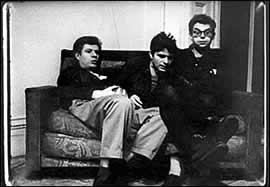
“How much of this film is composed, and how much is improvised?” The obvious question posed by Robert Frank’s first film (coauthored by painter Alfred Leslie), Pull My Daisy (1959), is also posed, sometimes less obviously, by the authored and coauthored Frank films that follow it—an unwieldy filmography that has on occasion become even harder to access because of the unwieldy ways it was financed or put together. (Most notoriously, Cocksucker Blues, produced by the Rolling Stones to chronicle their own 1972 North American tour, has been banned by them from most venues.) To wonder whether they’re Frank or frank is arguably another way of interrogating their relative degrees of sincerity or subterfuge, non-fiction or fiction, single or collective authorship. And it’s ultimately our call whether any given shot in a Frank film corresponds to a declarative statement or a question—something that might also apply to his better known, more celebrated, and noncollaborative still photography. “After seeing these pictures,” wrote Jack Kerouac of The Americans, “you end up finally not knowing any more whether a jukebox is sadder than a coffin.” But whereas most or all the Frank photographs I’ve seen are recognizably his, each successive Frank film is a reinvention of what the art of film might consist of. Read more

Global Discoveries on DVD: Compulsively Yours (including a few real-life confessions/admissions)

From the Autumn 2019 Cinema Scope (https://cinema-scope.com/columns/global-discoveries-on-dvd-compulsively-yours-including-a-few-real-life-confessions-admissions/). — J.R.

Although I’m no longer a member of Il Cinema Ritrovato’s DVD jury, two other visitors to Bologna in June who are familiar with this column presented me with new DVDs:

LOLAMONTEZ


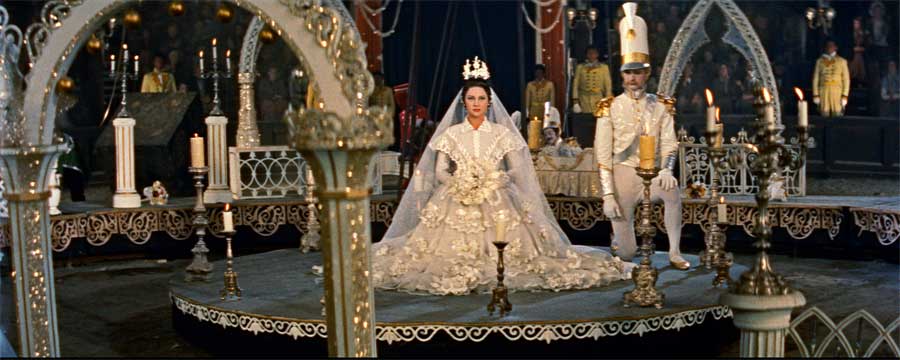
1. A year ago in this column, while celebrating Edition Filmmuseum’s PAL DVD release of Max Ophüls’ Liebelei (1933) and the German version of his 1955 Lola Montez (which I misspelled as Lola Montès, the title of the French version), I registered the minor complaint that the “bilingual” booklet, which I hoped would explain how and why Marcel Ophüls finally withdrew his obscure objection to the German version (which I regard as the best version, above all for its colours), was only in German. It turns out that this lapse was just a printing error, and the corrected bilingual version of this two-disc set is now available. (Furthermore, I gather that the withdrawn objections of Ophüls fils were basically a matter of money.) Combined with the recent and long-overdue publication of François Truffaut’s Chronique d’Arts Spectacles 1954-1958 — Gallimard’s collection of his texts for a prominent right-wing weekly that, in the opinion of some French cinephiles, are superior to his reviews for Cahiers du Cinéma, and which includes some rapturous writing about Lola Montès (the French version), including praise for its “[un]natural” colours — this makes me want to re-see the German version yet again. Read more

TRAFIC

Written in 2013 for a 2019 Taschen publication. — J.R.

Trafic

Trafic poster

trafic jam

1. The Reluctant Return of Monsieur Hulot

“On the basis of my intentions, Trafic could have been shot before PlayTime,” Tati said to me in late 1972, when I met him for the first time, only a couple of weeks before Trafic opened in the U.S. And the reason why he felt that way about his fifth feature was directly related to his most famous character, Monsieur Hulot.

As far as his own intentions were concerned, Hulot was a character he had invented strictly for the purposes of a single feature, Les Vacances de Monsieur Hulot. The main reason why he reappeared in Tati’s next three features was public demand. If it had been left up to Tati and his own inclinations, Hulot would have vanished after that one film, but the audience’s affection for that figure wouldn’t allow it; Hulot, after all, was better known and more familiar to the public than Tati himself was.  So his creator reluctantly brought him back in Mon Oncle, and even gave him the title role a second time. But on this second occasion, one might say that Hulot existed again only as a function and contrast to the other characters — an eccentric relative of the Arpel family, and in some ways an alternative father figure for a little boy. Read more

The Shanghai Gesture

From the Chicago Reader (November 1, 1991). — J.R.

the-shanghai-gesture-cages

22411-the-shanghai-gesture-0-230-0-345-crop

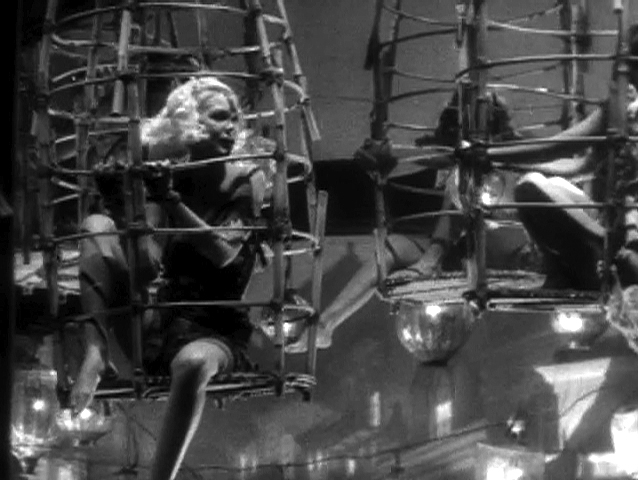
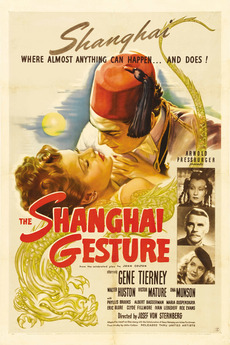
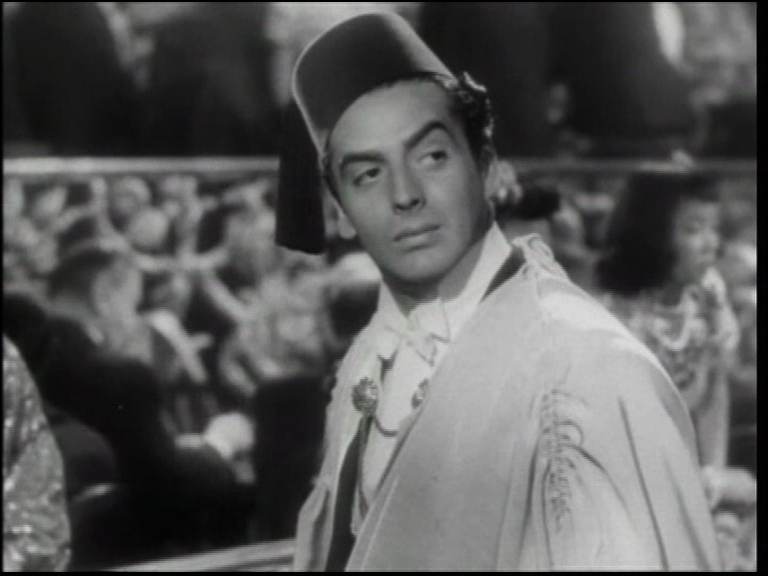
Not exactly Josef von Sternberg in his heyday (1941), but still choice goods — a perverse dream bubble adapted by Sternberg, Jules Furthman, and others from a creaky but serviceable John Colton play about the madam of a Shanghai brothel (Ona Munson) taking revenge on a British official and former lover (Walter Huston) by corrupting his daughter (Gene Tierney). Victor Mature is also around, and surprisingly effective, as a decadent bisexual; other exotic cameos are doled out to Maria Ouspenskaya, Albert Bassermann, Eric Blore, Phyllis Brooks, and Mike Mazurki. Given the censorship of the period, much of the decadence is implied rather than stated. But Sternberg’s adept handling of claustrophobic space and sinister atmospherics made this melodrama an understandable favorite of the Surrealists, and the icy tone cuts through the funk like a knife. (JR)

theshanghaigesture

tsg-vm Read more

Coilin & Platonida (1976 review)

From Monthly Film Bulletin, December 1976 (Vol. 43, No. 515). — J.R.

Coilin & Platonida

Great Britain, 1976
Director: James Scott

The 1920s. Thrown out of the house by her uncle, Aksinya marries her lover, a sexton, and five months later gives birth to a son, Coilin. After the sexton drowns in a stream, she works as a servant to nuns, introducing and dressing Coilin as a little girl. Entering school at the age of twelve, Coilin is expelled for backwardness, and finds work as an apprentice to various craftsmen. After three years in the army, he returns to find his mother dead and is turned away from his uncle’s house. Visiting two orphaned boys who are distant relatives and finding them hungry and maltreated, he takes them under his wing and persuades his cousin Platonida to give them clothes. Settling in with the children in an unused room at Granny Rochovna’s cottage, he sells home -made polishand ink, does odd jobs, and applies unsuccessfully for work at the postoffice. Given an island by the town council, he builds a hut and teaches the boys to read. Four years later, Platonida’s husband dies, and her father-in-law promises to leave her his fortune. One night, she finds her father-in-law crouching outside her bedroom window; after she lets him in and he tries to rape her, she strikes at him with a cleaver and runs away, believing that she has killed him. Read more

TONI (1974 review)

From Time Out (London), September 13-19, 1974. –- J.R.


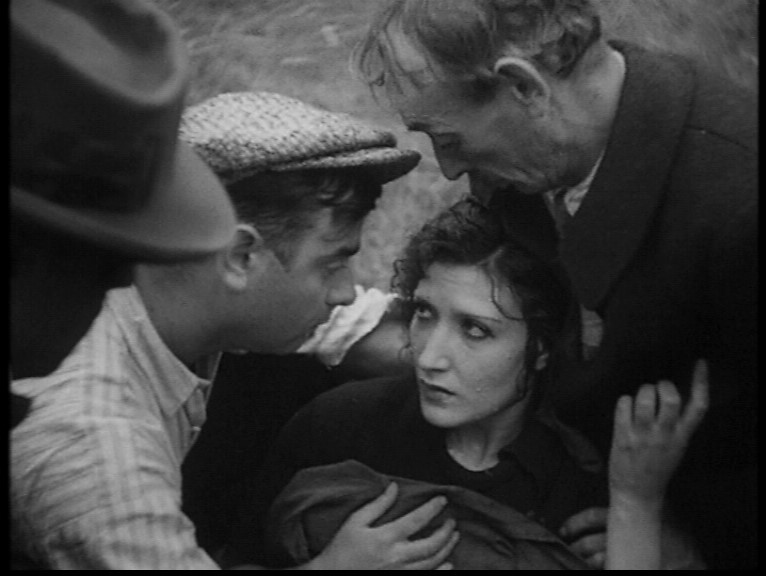
For Godard, French neo-realism was born with Jacques Tati’s ‘Jour de Fete’ in 1947. An even likelier candidate might be Jean Renoir’s ‘Toni’ (Everyman to Saturday), shot in southern France in 1934 with a cast of unknowns, and dealing with a community of immigrants who work in a stone quarry. Actually, it’s a melodrama about love and sex, jealousy and murder -– the sort of staples that have kept the cinema going for seventy years or so -– but Renoir invests it with a sense of character and place that gives it an unusually blunt and sensual impact. Neither romanticizing his workers nor turning them into rallying points, he accepts them as they are and follows them where they go. The plot is based on a real crime that occurred in Martigues (where the film was shot) in the early Twenties, Jacques Morier, an old friend of Renoir’s who was the local police chief, assembled the facts, and Renoir wrote the script with another friend, art critic Carl Einstein. The results are both stark and gentle, as well as sexy: Toni sucking wasp poison from Josefa’s lissome neck is a particularly fine moment. Read more

A WOMAN UNDER THE INFLUENCE (1976 review)

From Monthly Film Bulletin, Vol. 43, No. 504, January 1976. As with some of my other reviews from this magazine reproduced on this site, the credits and synopsis are omitted.– J.R.

Woman Under the Influence, A

U.S.A., 1974
Director: John Cassavetes

Beginning with Shadows, the films of John Cassavetes have been at once limited and defined by their anti-intellectual form of humanism, an unconditional acceptance of the social norms of his characters that exalts emotion and intuition over analysis and, in narrative terms, looseness and approximation over precision. Used as an instrument for delivering a thesis (as in Faces) and/or allowing actors to indulge themselves in fun and games (as in Husbands), it is a style which characteristically operates like a bludgeon, obscuring at least as much as it illuminates while confidently hammering home its proud discoveries. But when it serves as a means for exploration, as in Shadows or A Woman Under the Influence –- however halting or incomplete a method it may be for serving that function — it deserves to be treated with greater credence. Read more

Letter from London (1977)

From American Film (April 1977). I got this assignment because I had just left two and a half years of London employment at the British Film Institute when I wrote it, so that I had been directly involved in some of the events described, having prepared the U.K. pressbook for Celine and Julie Go Boating, written about the Edinburgh Film Festival’s Screen events for Sight and Sound, and also written the programme notes for the National Film Theatre’s Altman retrospective.

For better and for worse, I suspect that the main interest of this piece today, 43 years later, is as a time capsule. -– J.R.

It sounds like hyperbole, but London seems well on its way toward becoming a livelier haven for “serious” film buffs than New York City. How did it happen? After all, the world’s third largest city has never seemed like the most bustling of movie towns.

Despite the celebrated resources of the British Film Institute and the prestige of some of the film schools, theater has always had a much firmer grip on the cultural life here; a casual look at any of the three television channels will prove it. This fact hasn’t been altered in the slightest by what’s been happening lately within the filmgoing community — a sharp increase in activity. Read more

THE LAND THAT TIME FORGOT (1975 review)

From Monthly Film Bulletin, February 1975 (Vol. 42, No. 493). — J.R.

Land that Time Forgot, The

Great Britain, 1974
Director: Kevin Connor

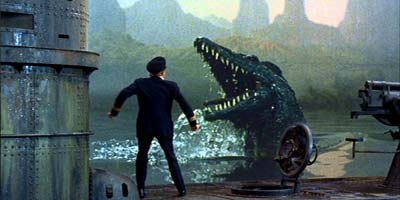
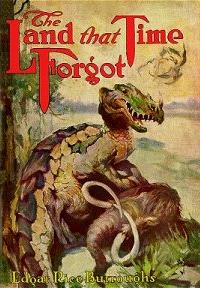
A canister is tossed into the sea and discovered on the coast of Land’s End, containing a manuscript by the American Bowen Tyler which relates the following story: 1916. A British supply ship is sunk by a German submarine; the survivors include Bowen, biologist Lisa Clayton and a few members of the crew. Together they take over the submarine from Captain von Schoenvorts and Dietz and head for the U.S., but lose their way after their radio is destroyed in an attack by a British warship and their compass rigged by von Schoenvorts; Bowen orders the sinking of a German supply ship, only to discover that their last source of rations is destroyed in the process. Finally coming upon an island with an inhospitable coastline surrounded by icebergs — identified by von Schoenvorts as the legendary Caprona — they find an underground river and Bowen charts their path to dry land.

There they discover a prehistoric world occupied by dangerous beasts, early evolutionary forms of man, and a variety of curious life-forms in the river. They capture a primitive man who calls himself Ahm, conveys to them in signs that Caprona has large deposits of oil — needed for the submarine in order to leave the island — and reluctantly takes them north to the spot; on the way, after they are attacked by the Sto-Lu and encounter other, progressively more ‘developed’ tribes of ape-men, Ahm is killed and carried off by a pterodactyl. Read more

Vive la différence! A Guide to French Films on Cassette

The article from the October 1982 issue of American Film is so quaintly and absurdly dated now that I can’t resist reproducing it. -– J.R.

The prospect of choosing ten French movies that I’d like to own on videocassette is pretty hard to resist –- even for someone who still doesn’t own a cassette recorder. And when I consider the losses that any great film is bound to suffer on a home screen, I find myself consoled by the opinion of Jean-Luc Godard, expressed, twenty years ago:

”Even with films like Lola Montès and Alexander Nevsky, something comes through on television, despite the distortion, the rounded screen, the lack of definition, the absence of color. . .With Lola Montès, what you lost visually you often gained by having your attention focused on the dialogue. If only part of the film survives. It will be enough to bring it across.”

Admittedly, Godard was speaking here about old-fashioned network transmission — and French television at that, which offered a higher visual definition, and no time-slotting cuts or commercial breaks. Still, the overall thrust of his point, is true. Reproducing a classic film on cassette may do something drastic to its original purpose and format, but something essential remains. Read more

Blood for Dracula & The Wedding

From Oui (July 1974). I was able to make my dislike of Blood for Dracula more apparent here than I could when I interviewed Paul Morrissey around the same time in Paris (and for the same magazine), for what proved to be the March 1975 issue. -– J.R.

Blood for Dracula. A Dracula movie by the director

of Flesh, Trash, and Heat (all of which, incidentally,

are currently playing in Paris)? That’s what the credits

say. Blood for Dracula, a grisly number shot in Italy

by Paul Morrissey and coproduced by Andy Warhol,

combines Factory superstar Joe Dallesandro with a

host of authentic European weirdos, including a Count

Dracula (Udo Kier) who puts a lot of greasy stuff in his

hair and sets off for Italy in search of virgin blood.

Unfortunately, the first two damsels he samples aren’t

exactly chaste, leading to a couple of spectacular

vomiting fits. Dallesandro plays a revolutionary peasant

with a a Brooklyn accent who filches most of the available

feminine goodies before the count can get to them, and

then turns hatchet man for the Grand Guignol finale.

Directors Vittorio De Sica and Roman Polanski are also on

hand for comic cameos. Read more

A Slightly Pregnant Man

From Oui (April 1975). –- J.R.

The Slightly Pregnant Man is the English title of Jacques Demy’s latest film, although a literal translation of the French would be more appropriate — The Most Important Event Since Man Walked on the Moon. The event is pregnancy, and what makes it so important is that its baby’s carrier is not Catherine Deneuve, who plays the mother, but Marcello Mastroianni, who plays Poppa.

The first question you or I might ask is how Mastroianni manages to get pregnant in the first place, which is something Demy declines to answer. Instead, he tries to coast along on a jaunty score by Michel Legrand (who composed the music for Demy’s Umbrellas of Cherbourg). Without the basic question answered, The Slightly Pregnant Man doesn’t really work, but it is a weird kind of fun. We get to watch Mastroianni get sick in a movie theater, rush to the doctor and receive the wonderful-terrible news. He gets exhibited to a medical convention, marries Deneuve (in order to save the child embarrassment) and –as you can see — begins to model male pregnancy clothes for a maternity firm. The clothing manufacturers are overjoyed — they’ve just discovered a great new market for their products.

Mastroianni gives up his job as a driving instructor, since he’s forced to model full time. Read more