
Daily Archives: May 26, 2024

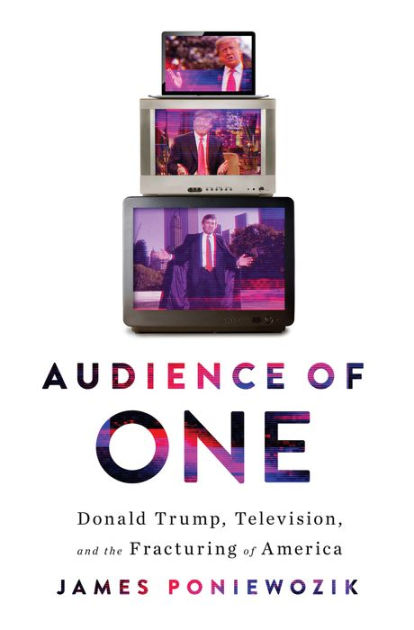
Recommended Reading: AUDIENCE OF ONE
AudienceofOne


The central and irreducible insight of James Poniewozik’s brilliant book — making it for me the only account I’ve read of Donald Trump that makes his poisonous career both legible and explicable — is to view that trajectory as part of the tainted history of television, and to see Trump as a hapless victim of that history as well as a sinister perpetrator.

This is an insight that I’ve already had glimmers of whenever I’ve blanched at how much ungodly fun Rachel Maddow has been deriving from the cornucopia of Trumpian horrors, and how creepily her nightly boasts about what a “big” show she has in store for us replicates the weekly promises of Ed Sullivan on his variety show between 1948 and 1971. But the fact that I’ve never watched “reality TV” means that I need someone like a New York Times TV critic to show me how dutifully and consistently Trump has replicated its gestures, assumptions, and attitudes as President, and how doggedly both Fox TV and MSNBC have remained in sync with and in thrall to its very fibers.
hate-inc


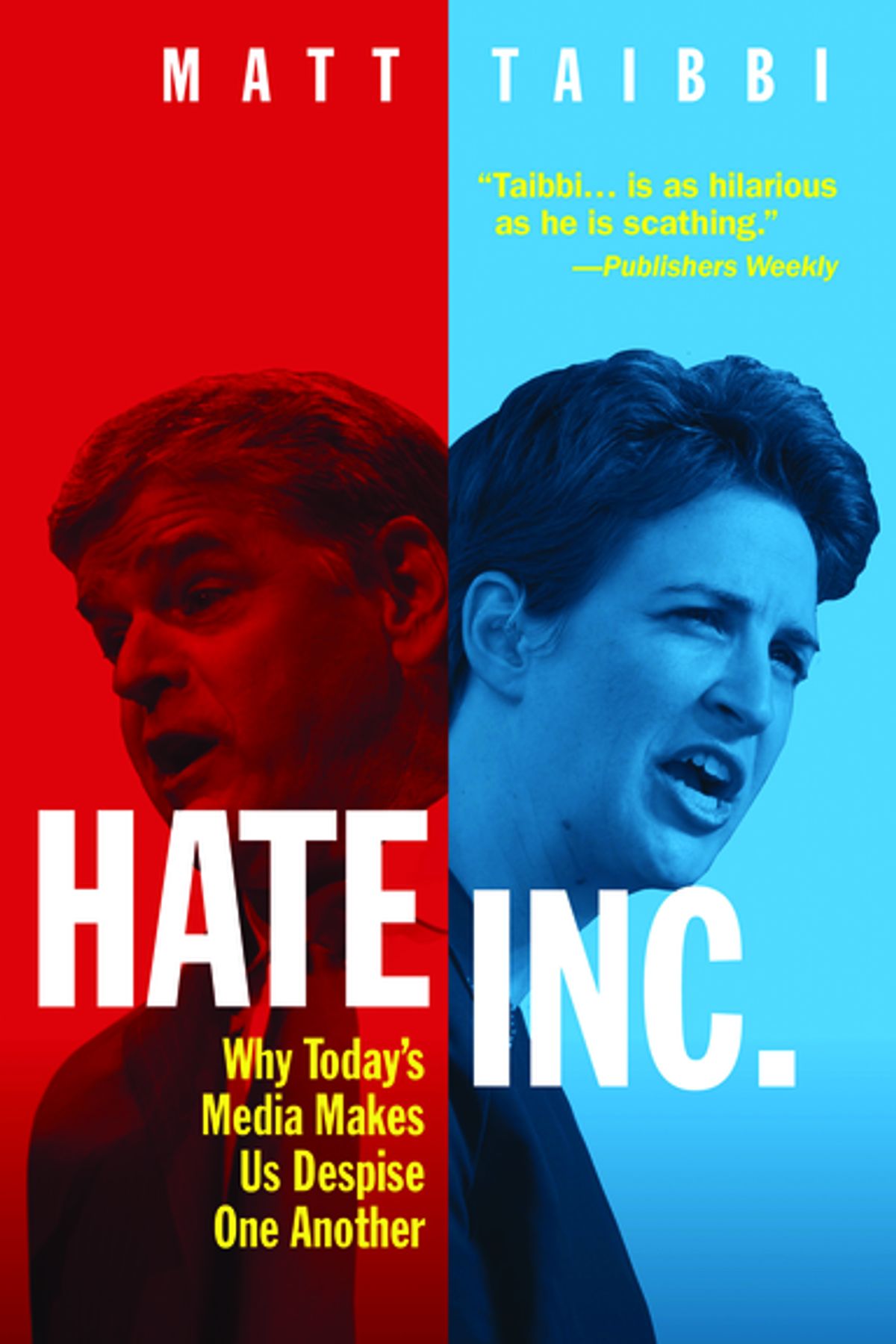
This is also part of the persuasive thrust of Matt Taibbi’s recent Hate Inc.: Why Today’s Media Makes Us Despise One Another, which claims to be inspired by Edward Herman and Noam Chomsky’s Manufacturing Consent. Read more

Global Discoveries on DVD: Flukes & Flakes

My column for the Spring 2019 issue of Cinema Scope. — J.R.

rabbitrunmovie

In retrospect, I’m sure that an important part of what excited me about John Updike’s second novel, Rabbit, Run, when I read it in high school circa 1960, was the fact that it was recounted in the present tense, thus giving it some of the immediacy of a movie—rather like the thrill of the opening chapter of William Faulkner’s Light in August, which I first encountered around the same time. As Updike himself later noted, the movieness of his present tense was a conscious strategy — he even thought of subtitling the novel A Movie — although ironically, it’s precisely this sense of now and its location in the Eisenhower era that is most conspicuously absent from Jack Smight’s flatfooted 1970 movie adaptation (available on DVD from Warner Brothers’ Archive Collection), which doggedly tries to be “faithful” in its own misguided fashion, even to the point of updating the action from 1959 to the present, but only comes across as conventionally shopworn as a consequence. What’s clearly lost isn’t only Updike’s sense of history, pop-culture references and all, but the vibrant weight of the eponymous hero’s existential decision-making. Read more