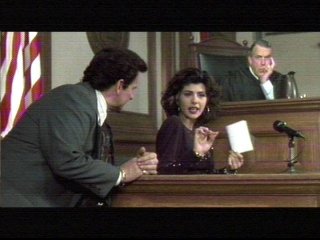
With Joe Pesci, Marisa Tomei, Ralph Macchio, Mitchell Whitfield, Fred Gwynne, Lane Smith, and Austin Pendleton.
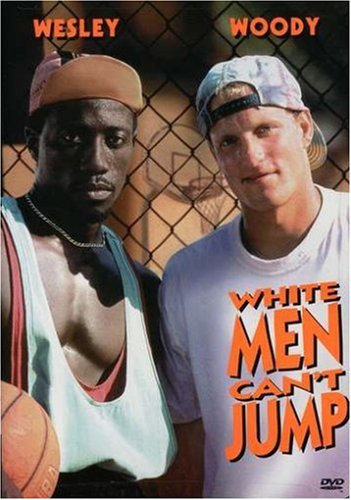
WHITE MEN CAN’T JUMP
*** (A must-see)
Directed and written by Ron Shelton
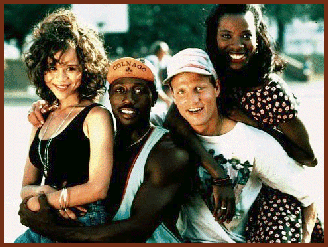
With Wesley Snipes, Woody Harrelson, Rosie Perez, Tyra Ferrell, Cylk Cozart, and Kadeem Hardison.
“Why is this film so popular?” Michael Sragow asked a little plaintively about My Cousin Vinny in the New Yorker last week. Then he suggested an answer: “Perhaps because it gives Pesci a chance to combine his commercial signature, pop scabrousness, with old-fashioned virtues like ‘heart.'” This hypothesis implies that audiences go to comedies for highly esoteric reasons — just like some film critics.
Personally, I’d rather believe that My Cousin Vinny is popular for reasons that have more to do with reality and recognition — specifically, with an appreciation of American regionalism that most contemporary American movies never even attempt, much less convey. Read more
A watershed in the history of Chinese cinema, this first feature (1998) directed by Lu Yue — the remarkable cinematographer of Xiu Xiu: The Sent Down Girl and several recent features of Zhang Yimou, including Shanghai Triad — is an eye-opening comedy about adultery in contemporary Shanghai. Much of the dialogue is improvised by the talented actors — Shi Jingming as the husband, a professor of traditional Chinese medicine; Zhang Zhihua as his factory-worker wife; and Chen Yinan as his mistress and former student — and both the shooting style and the emotional directness of the performances suggest the filmmaking of John Cassavetes. Though this is unquestionably one of the key films of the 90s from mainland China, it unaccountably disappeared from sight after winning the Golden Leopard at the Locarno film festival in 1998, and as far as I know this [in August 1999] is its first commercial run. Viewers requiring the validation of the New York Times or the New Yorker before making their cultural decisions will therefore have to take a pass on this, and it will be their tough luck. (JR) Read more
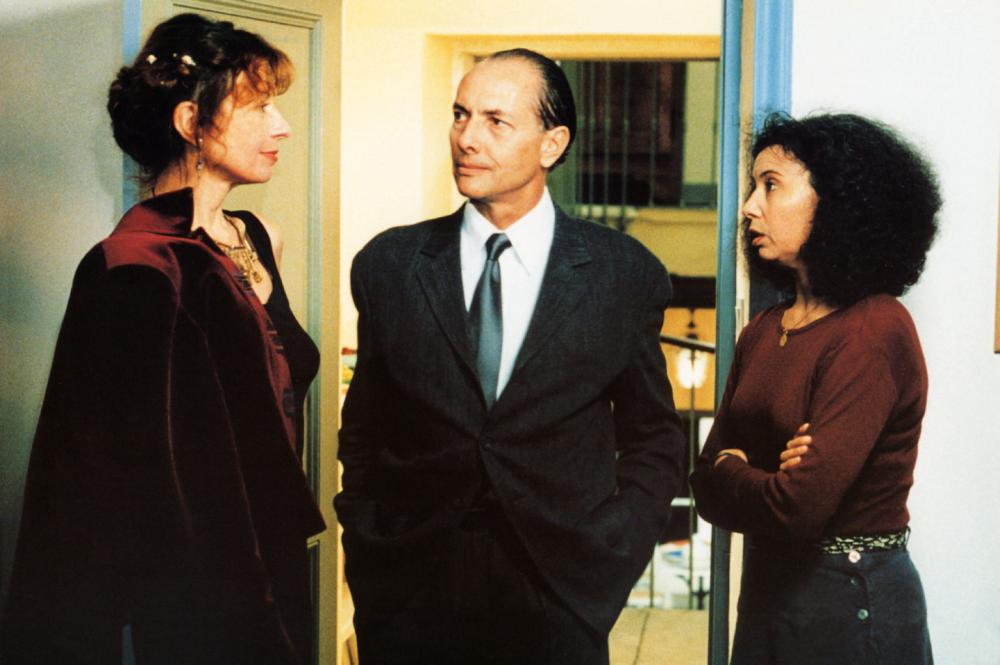
At once complex and gentle, this 1998 feature concludes Eric Rohmer’s Tales of the Four Seasons series and is one of the best films of his career. It’s about the perils and rewards of rediscovering love in middle age, though, characteristic of Rohmer, it has important young characters as well. Beautifully capturing the southern Rhone valley, it focuses on lifelong best friends — a bookseller (Marie Riviere) and a wine grower (Beatrice Romand) — and the efforts of the bookseller and a young friend of the wine grower (Alexia Portal) to find their friend a lover. Riviere and Romand are both seasoned Rohmer actors, and even played together once before in Summer (1986); the charisma generated by them and Alain Libolt — one of the prospective boyfriends, who looks like Charles Boyer — is central to the film’s success, along with the casual precision and growing momentum of Rohmer’s script and direction. In French with subtitles. 112 min. (JR)
With Maryam Parvin Almani, Nargess Mamizadeh, Fatemeh Naghavi, Fereshteh Sadr Orafaei, and Mojhan Faramarzi.
By Jonathan Rosenbaum
Last month I was taken aback by an E-mail from a colleague that said, “I thought, as an apparent defender of the Islamic Republic of Iran, that you should read this.” Before I accessed the link–an AP story about a woman stoned to death by court order for appearing in porn movies–I wrote back to say I was insulted by the implication that my regarding Iranians as human beings meant I supported a totalitarian regime. He promptly sent back an apology, but added, “It’s just that sometimes it sounds as if you regard their regime as ‘better’ than ours. Perhaps I’m misreading you.”
His second E-mail upset me even more than the first. The first could be rationalized as a sick joke–reminding me of being called a “nigger lover” when I was an Alabama teenager (an epithet sometimes followed by “Just kidding!”)–but the personal pronouns of the second revealed a blood-chilling us-versus-them mentality. That kind of either-or thinking is surely the most primitive as well as the most dangerous of cold war legacies, and it only reinforces this country’s isolationism. Read more
I’ll concede that Todd Solondz’s absorbing 134-minute epic of sexual disgruntlement in the New Jersey suburbs (1998) is worth seeing, and not only for shock value. But I don’t think it deserves all the high marks it’s been getting for compassion and understanding, especially given its campy use of elevator music whenever the misery of its large cast of characters gets too close for comfort. Everyone who likes this movie calls it disturbing, but what disturbs me most is the self-loathing laughter it provokes, similar to what one often hears at Woody Allen and Michael Moore comedies. So even if I’m touched by the treatment of a child molester who loves his son, I don’t like that I’m also supposed to sympathize with the molester when he’s working as a therapist who doesn’t listen to his clients. An obsessive primitive with a clodhopper sense of excess, Solondz has already proved in Welcome to the Dollhouse (a better film overall) that he can carry dark obsessions further than most. But he still stoops to teenage gross-out antics like those of the Farrelly brothers, calling it art rather than entertainment and knowing that the media eagerly charting Clinton’s semen flow will go along. Read more
On balance, Dogma 95 probably has more significance as a publicity stunt than as an ideological breakthrough, judging from the first two features to emerge under its ground rules, Lars von Trier’s The Idiots and Thomas Vinterberg’s The Celebration. Both films are apparent acts of rebellion and daring that are virtually defined by their middle-class assumptions and apoliticism. Von Trier’s movie boasts one good scene surrounded by a lot of ersatz Cassavetes; Vinterberg’s work, even more conventional in inspirationthink Ibsen, Strindberg, Bergmanis genuinely explosive because it’s so powerfully executed. Shot with the smallest and lightest digital video camera available, The Celebration (1998) chronicles the acrimonious and violent family battles that ensue at a country manor where the 60th birthday of the family patriarch is being observed, not long after the eldest son’s twin sister has committed suicide. In Danish with subtitles. 105 min. (JR) Read more
Jia Zhang-ke’s second feature (2000) may well be his best work to date and one of the greatest of all Chinese films. Its subject is the great theme of Chinese cinema, the discovery of history, which links such otherwise disparate masterpieces as The Blue Kite, Blush, Actress, The Puppet Master, and A Brighter Summer Day. The story charts the course of the Cultural Revolution’s aftermath for about a decade, noting shifts in values and lifestyles, culture and economy, as China moves inexorably from Maoism to capitalism, as witnessed by five actors in a provincial traveling theater troupe. Many episodes unfold in single long takes, with offscreen sound playing an important role, and the beautifully choreographed mise en scene recalls the fluid Hungarian pageants of Miklos Jancso in the 60s and 70s. Originally 192 minutes long, the film was recut by Jia to its current 155 minutes and improved in the process. In Mandarin with subtitles. (JR)
Possibly from the October 26, 1995 issue of Chicago Reader. I’m only guessing, because the Reader itself dates this review a decade earlier, about seven years before the film was made. — J.R.
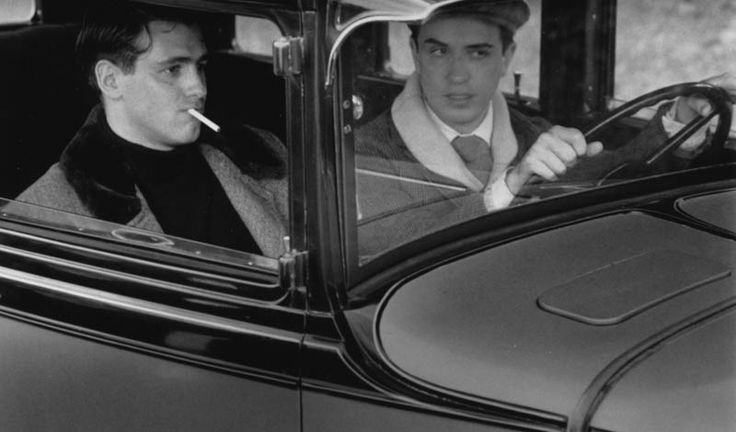
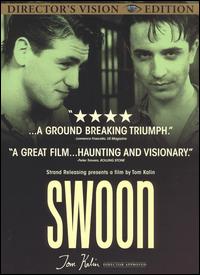
Tom Kalin’s 1992 first feature is a postmodern retelling of the Leopold and Loeb story, playing up the suppressed gay subtext (at their murder trial in 1924 and then in prison) and playing down more familiar aspects of the case, such as Clarence Darrow’s role. Strikingly shot in black and white by Ellen Kuras and generally well acted, the film is a bit pedantic and mechanical in its revisionism and not always persuasive in its treatment of the period, yet it still carries some interest—if you can accept its polemical stance of treating the men’s crime as a secondary issue. With Daniel Schlachet, Craig Chester, Ron Vawter, Michael Kirby, Michael Stumm, and Paul Schmidt.
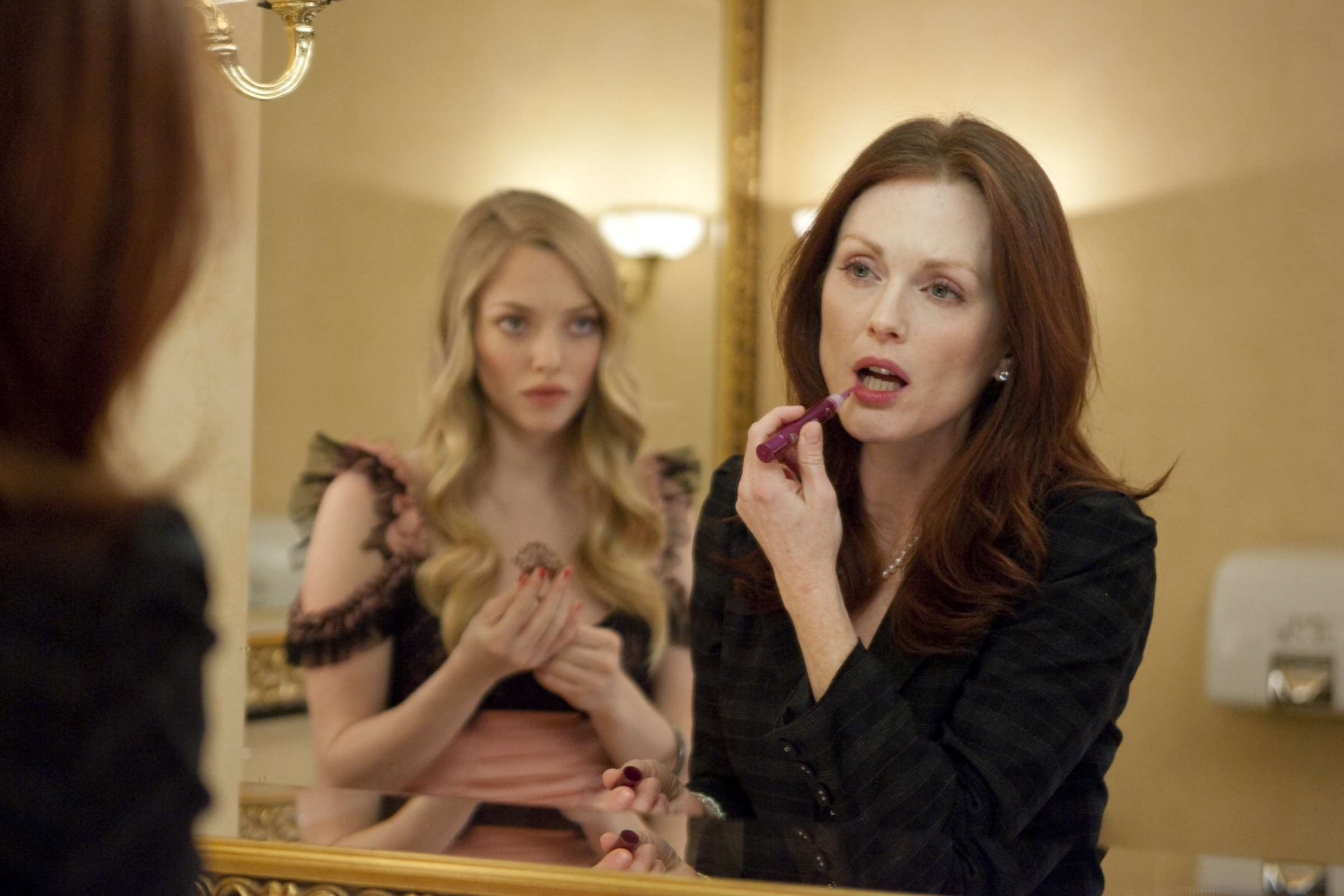
I’d like to suggest that the theme of Atom Egoyan’s Chloe –- a woman’s midlife crisis –- hasn’t been identified by any of the film’s reviewers that I’ve read so far. Many of them have been calling the movie a hoot (Jim Hoberman, meet Anthony Lane) and perhaps just as many have been reaching for Fatal Attraction as their principal point of comparison and abuse. Since that crude shocker isn’t a film about a woman’s midlife crisis, I assume they’re misreading Chloe, which is easy enough to do if you’re mainly restricting the story to — that is, viewing most of it through — its bombastic penultimate scenes.
Disregarding the Anne Fontaine movie that served as this movie’s basis, which I haven’t seen, I think what’s sneaky and deliberately misleading about the story is that it starts off pretending to be a movie about a husband’s midlife crisis and then winds up as a movie about his wife’s midlife crisis. (If this constitutes a spoiler, tough luck; all I can say as a rejoinder is that comparing the movie to Fatal Attraction is a spoiler as well.) Read more
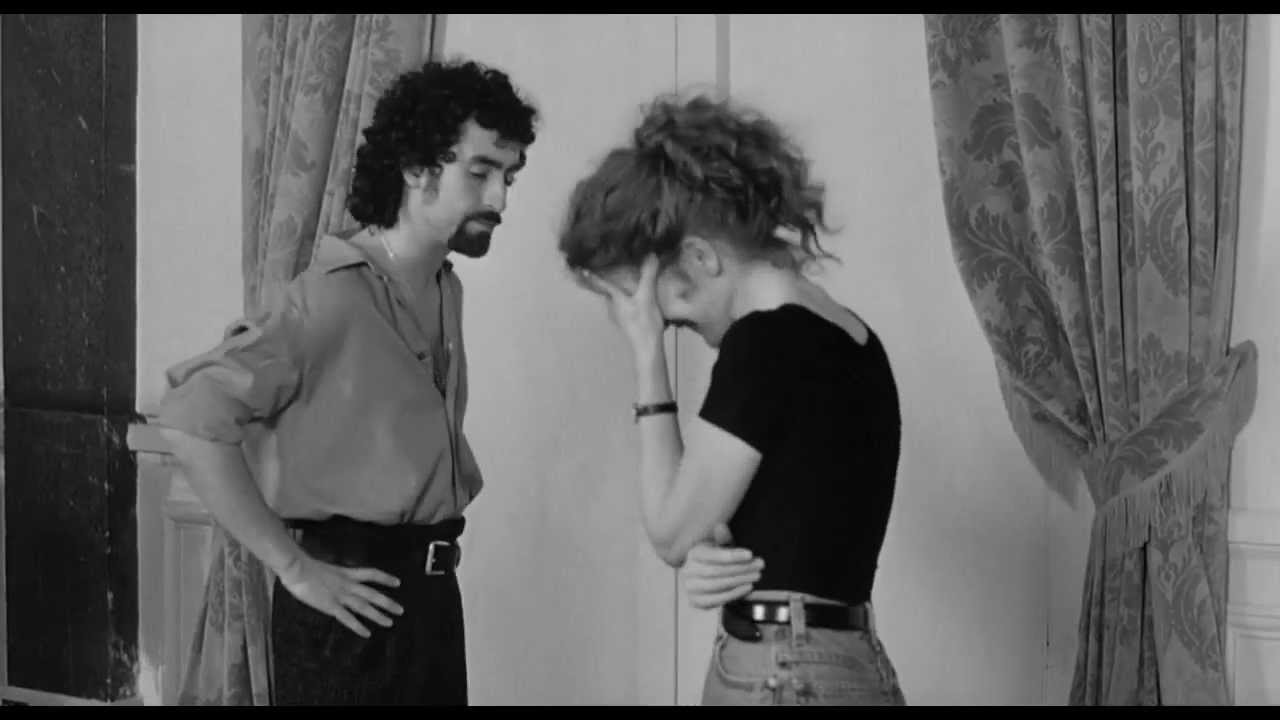
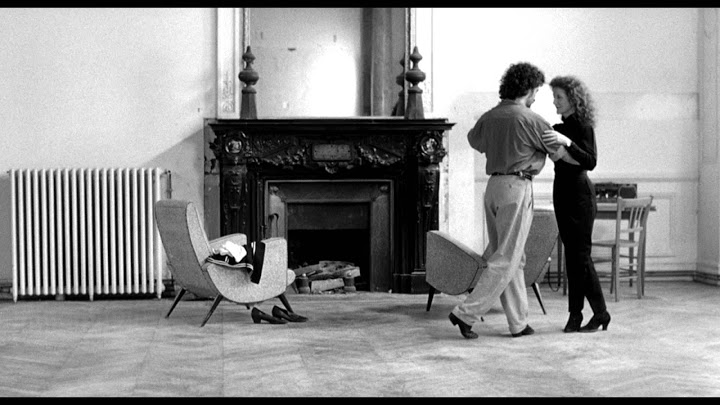
If James Cameron (Titanic) is entitled to risk making a fool of himself, why not Sally Potter? The writer-director of the wonderful if much-reviled The Gold Diggers (her first black-and-white musical) and the mediocre if much-praised Orlando plays herself in this second black-and-white musical, a wistful pipe dream set in Paris, London, and Buenos Aires, about learning the tango from a master (Pablo Veron, also playing himself). She’s always dreamed of being a dancer, he’s always dreamed of being in a film, and the main problem between them in this joint enterprise is who gets to lead — a metaphorical premise that?s milked for everything it’s worth, and then some. Meanwhile Potter is seen writing a script for what appears (in color snatches) to be a god-awful film combining the worst elements of her first two features, and there’s some enigmatic material about both characters supposedly being Jewish. The film’s division into 12 “lessons” might at times seem a little arch, but when Potter and Veron are dancing — which is at least half the time — the movie becomes rapturous and joyful, so who cares if she’s being presumptuous? Read more
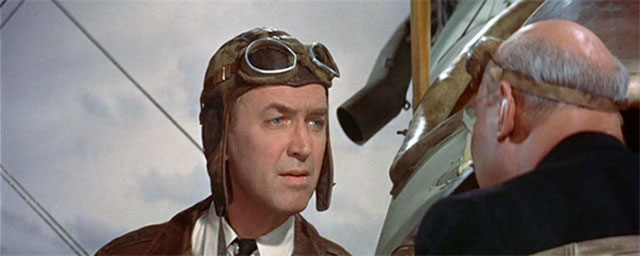
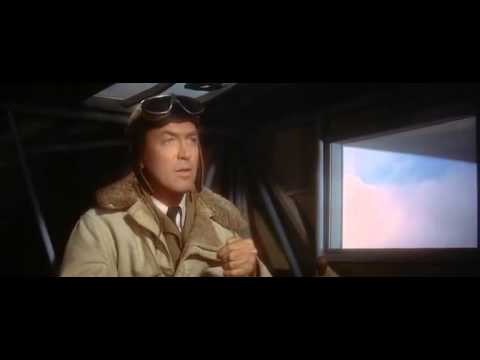
Not one of Billy Wilder’s best efforts (I wonder if it was motivated by his desire to show his ideological “correctness” during the Red Scare, by celebrating a much-beloved antisemite), this lengthy 1957 account of Lindbergh’s flight across the Atlantic, shot in CinemaScope, still has some interest because of James Stewart’s performance, which is very nearly a one-man show. With Patricia Smith, Murray Hamilton, Marc Connelly, and a score by Franz Waxman. 138 min. (JR)
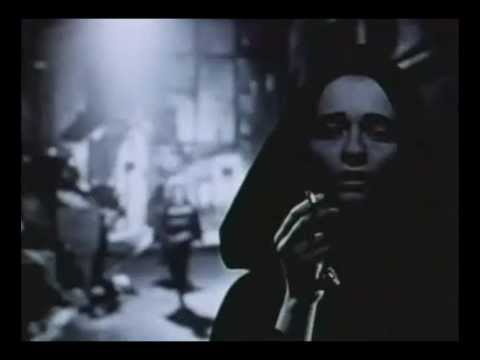
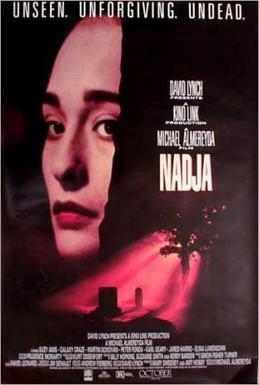
Dracula’s daughter — and more specifically, Lambert Hillyer’s Dracula’s Daughter (1936) — comes to Manhattan’s East Village in a quirky, lyrical independent feature by writer-director Michael Almereyda. It’s shot in luscious, shimmering black and white, with prismatic, pointillist interludes shot with a toy Pixelvision camera (also used by Almereyda in Another Girl, Another Planet, his previous feature), transferred to 35-millimeter without letterboxed framing. Produced by David Lynch, who turns up in a cameo, this offbeat horror item works much better as a dreamy mood piece with striking poetic images and as a semicomic appreciation of a few quintessential low-budget actors than as straight-ahead storytelling. In some ways it’s a throwback to the pathos of Twister, Almereyda’s first feature — a black comic treatment of various dysfunctional family members yearning for normality. With Elina Lowensohn, Martin Donovan, Peter Fonda, Galaxy Craze, Suzy Amis, Karl Geary, and Jared Harris. (JR)
My 1995 liner notes for the Voyager/Criterion laserdisc of Orson Welles’ Othello in its original, untampered-with form. — J.R.
There are two ways of viewing the film career of Orson Welles which have tended, by and large, to be mutually exclusive. One can regard it as a fascinating but largely frustrating attempt to make mainstream Hollywood movies — an effort that yielded one indisputable triumph (Citizen Kane) and five other brilliant if uneven studio releases (The Magnificent Ambersons, The Stranger, The Lady from Shanghai, Macbeth, and Touch of Evil) hampered by dealings with studio management. Or one can regard it as the career of a restless independent making pictures whenever and however he could, a pursuit yielding not only the aforementioned half-dozen features, but seven more — Othello, Mr. Arkadin, The Trial, Chimes at Midnight, The Immortal Story, F for Fake, and Filming Othello, not to mention substantial portions of at least half a dozen unfinished pictures as well.
These two opposing views of Welles’s career were in effect even before he got to Hollywood; in the mid-’30s, he was illegally funneling his sizable earnings as a radio actor into his state-funded stage productions with John Houseman — much as he would later help to finance his own Othello, shot piecemeal and on the run, by concurrently acting in several mainstream pictures that were being made in Europe. Read more
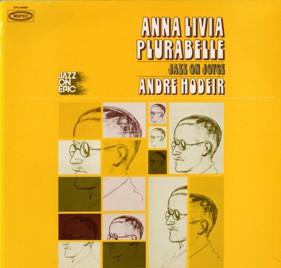
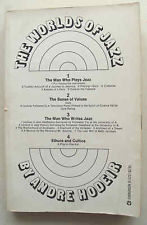
I’m very grateful to Adam Shatz for drawing my attention to Tom Perchard’s After Django: Making Jazz in Postwar France [NYR, July 9]and for offering, along with Perchard, a provocative and useful introduction to a neglected subject. But I was brought up short by the following grotesque sentence: “[André] Hodeir eventually gave up jazz criticism to write novels for children.” In fact, this collapses and distorts a phrase from Perchard: “From the beginning of the 1970s to his death in 2011, Hodeir would devote himself to writing novels and children’s books, often with a musical theme.”
Indeed, to account for the two or three books for children and the half-dozen or so books of fiction that Hodeir published at the end of his career, and the singular evolution and development this represented from his former jazz composing, one has to factor in not only his last collection of jazz criticism in English, The Worlds of Jazz, but also his last two major musical works, Anna Livia Plurabelle (which is discussed over five pages by Perchard, but which Shatz fails to mention) and Bitter Ending, each drawn from and built around passages from Finnegans Wake.
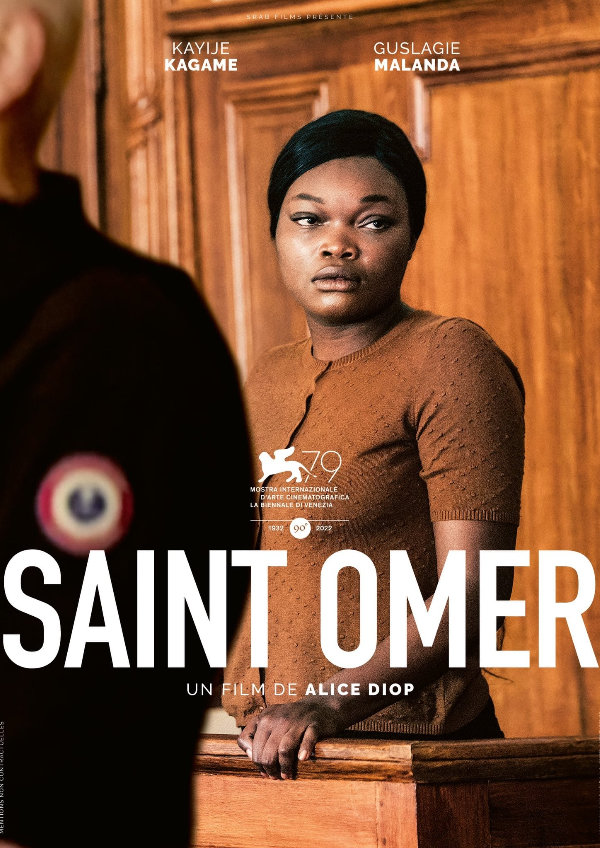
Like almost every other year within recent memory, I wind up seeing a masterpiece after I can vote for it or include it in any poll. Alice Diop’s first fiction feature is a classical example of a film that asks questions more than provides answers, and one of its best ways of posing or suggesting questions is not cutting to a reverse angle whenever you’re expecting it to. This is a film carried largely by its close-ups and its dialogue, and many of its reverse angles are between its two protagonists, two young and black Senegalese women in France who never meet, although they do exchange glances at one climactic, privileged moment. It’s a film devoted to a trial whose outcome is never recorded, but it has generated enough questions by the end to make a verdict seem either impossible or superfluous. Consciously or not, it carries more than one echo of Ousmane Sembene’s great La noire de… (Black Girl, 1966). [1/3/2023]