Originally published in the May-June 1973 issue of Film Comment; it’s reprinted, along with my 2002 Afterword, in my latest collection, Goodbye Cinema, Hello Cinephilia. (The following paragraphs are now slightly out of date, but I’ve retained them as records of where things stood at the time.)
Reprinting this piece has been prompted by two exciting pieces of news: the relaunching of a Raymond Durgnat website, thanks to the efforts of one of Durgnat’s old friends, Sue Ritchie, and the long, long overdue second edition of Durgnat’s irreplaceable 1970 book A Mirror for England: British Movies from Austerity to Influence, which the British Film Institute is bringing out next month, thanks to the efforts of another old friend, Kevin Gough-Yates, who provided a new Introduction (and has also been behind the earlier creation and the recent recreation of the Durgnat website).
The website, at raymonddurgnat.com, currently includes a biographical sketch, a very detailed, hefty, and rather awesome bibliography, four poems by Ray (all of them veritable collectors’ items), four “additional resources and links,” a Raymond Durgnat Forum that awaits commentary from visitors, and nine full-length articles that can be linked through the bibliography. One hopes that many more attractions, especially texts, can be added in the future, for a world is still waiting to be found in Durgnat’s writing. Read more
From the Chicago Reader (March 18, 2005). — J.R.
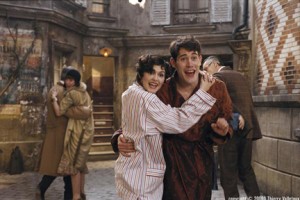
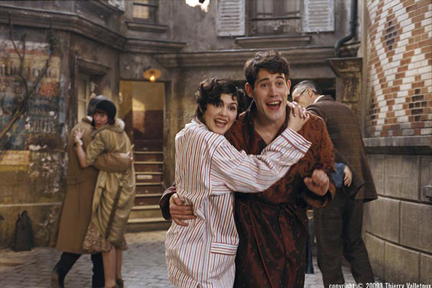
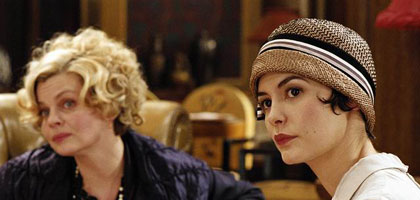
Alain Resnais’ best work since Mélo (1986) is, like that film, an eccentric and highly personal adaptation of a 1920s French stage hitin this case, a farcical 1925 operetta with a jubilant and inventive score by André Barde and Maurice Yvain. A happily married society lady (Sabine Azema) is terrified that her industrialist husband (Pierre Arditi) will discover that his new American business partner (Lambert Wilson) was her first husband; a subplot charts the coming together of two other couples (including Audrey Tautou and Jalil Lespert). The actors do their own singing, and the theatrical trappings of the original — including lavish sets and asides to the audience — are embraced rather than avoided. As lush as an MGM musical, this 2003 feature is both moving and very strange, with one of the funniest ever French portraits of a prudish American. In French with subtitles (often rhyming couplets). 117 min. (JR)
 Read more
From the Chicago Reader (March 1, 1997). — J.R.
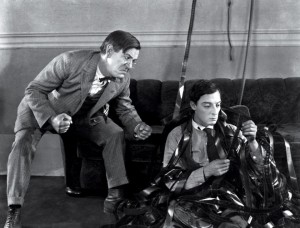
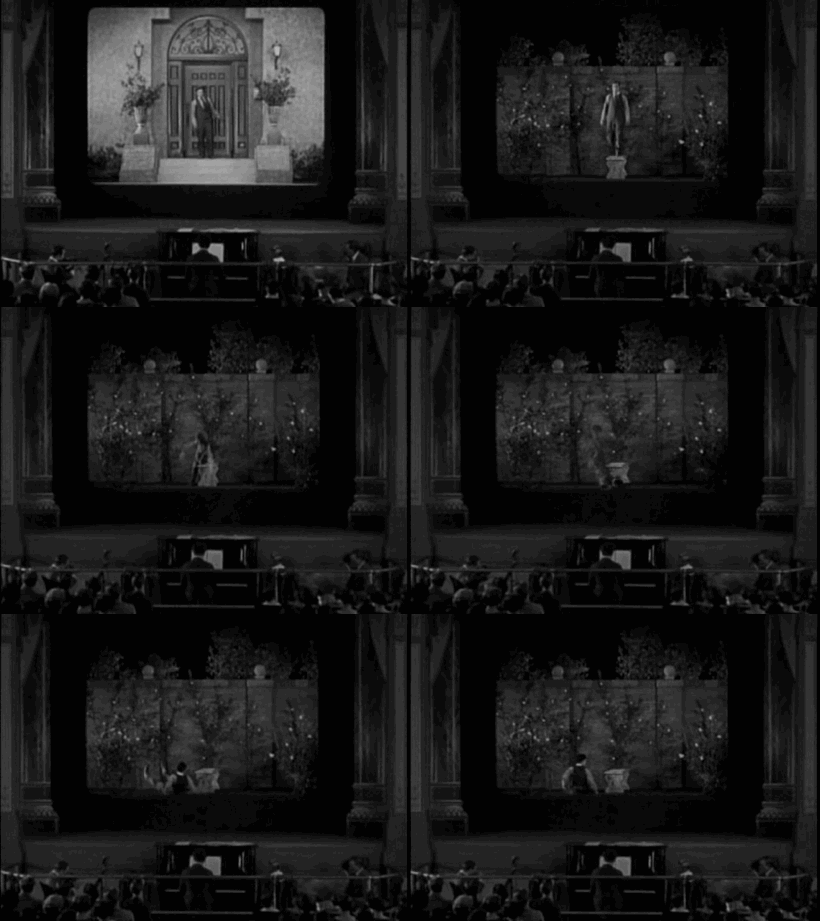
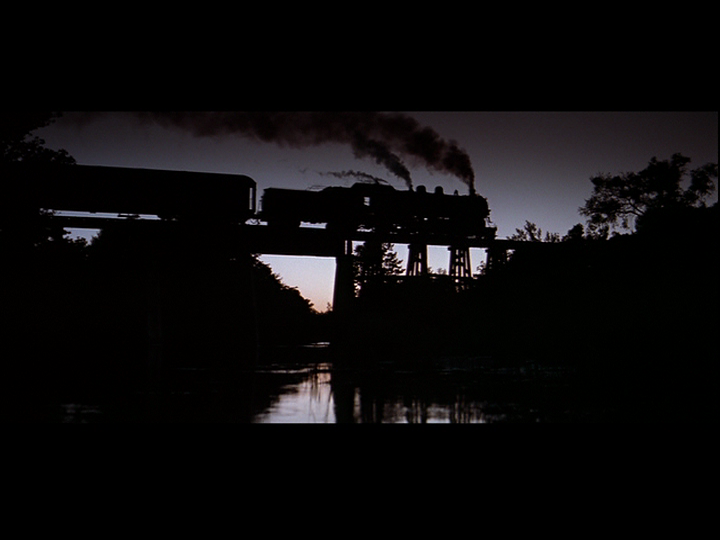
A rare chance to see Buster Keaton’s two greatest features on the same program. In Sherlock Jr. (1924) — his most imaginative and freewheeling work, as well as one of his funniest — he plays a movie projectionist who falls asleep during a detective movie and dreams that he literally walks into the screen, with surreal and bewildering consequences. In The General (1926), probably his most beautiful effort, he plays a railroad engineer during the Civil War whose train is stolen by Union soldiers, who also kidnap his girlfriend (Marian Mack); Clyde Bruckman codirected. Both are indispensable viewing.

 Read more
From Monthly Film Bulletin, March 1975 (Vol. 42, No. 494). — J.R.
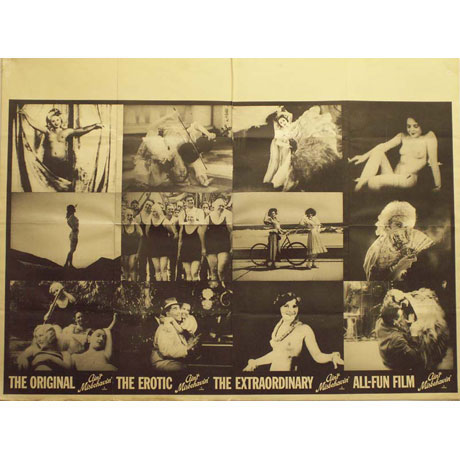
Ain’t Misbehavin’
Great Britain, 1974 Directors: Peter Neal, Anthony Stern
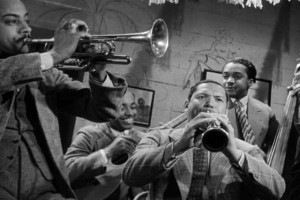
Cert–X (London). dist–Focus. p.c–Al0K Pictures Ltd. p–David
Speechley. ed–Peter Neal, Misha Norland. m/songs–“Please Be Kind”
performed by Django Reinhardt; “The Man I Love” by George Gershwin,
Ira Gershwin, performed by Django Reinhardt; “Honeysuckle Rose”,
“Ain’t Misbehavin'” by and performed by Fats Waller; “Adagio in G
Minor” by Albinoni; “Don’t Be a Baby” performed by Ahmed Rai,
Betty Underwood; “Ain’t Gonna Be Your Dog” by and performed by
Meade Lux Lewis; “Cabaret Echoes” performed by Anthony Parenti’s
Famous Melody Boys; “Charlie Is My Darling” performed by Black
Dyke Mills Band; “No One But the Right Man Can Do Me Wrong”
performed by Sophie Tucker; “Animals’ Ball” performed by Lizzie
Miles; “My Canary’s Got Circles Under His Eyes” performed by Elsie
Carlisle; “Shy Guy” performed by Nat Cole Trio; “Londonola”
performed by Roy Fox; “Boogie Woogie at the Civic Opera” by and
performed by Albert Ammons; “My Old Man” performed by Lilly
Morris; “With My Little Ukelele in My Hand” performed by George
Formby; piece by Ivy Benson Orchestra. titles–Ray Cowell, Freeman
May Studio Ltd.
Read more
From Monthly Film Bulletin , September 1976, vol. 43, no. 512. — J.R.
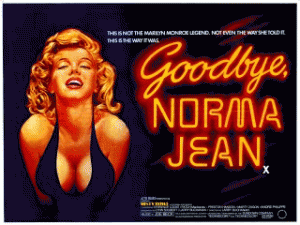
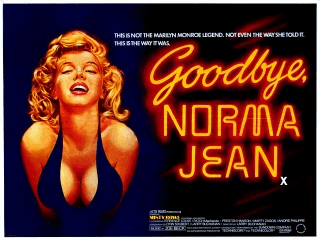
Goodbye, Norma Jean
U. S.A./Australia, 1975
Director: Larry Buchanan
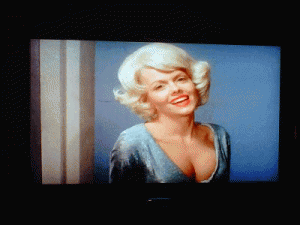
Hollywood, 1941. Ogled by her foster father and despised by her foster mother, Norma Jean Baker is thrown out by the latter and takes work in a factory. Raped by a policeman whom she earlier persuaded not to give her a speeding ticket, she is comforted by Corporal Ralph Johnson. He prompts her on how to behave when she enters the Miss Whammo-Ammo contest (which she wins), photographs her in cheesecake poses, and advises her in her efforts to become a movie star. They drive to Tijuana and make love, although she admits that her former experiences with men have prevented her from enjoying sex. He next introduces her to model agent Beverly, who finds her work posing for pulp magazine illustrations and introduces her in turn to agent Irving Ollbach, who takes her to a party in Palm Springs. There she is sneered at by casting director Ruth Latimer, raped by actor Randy Palmer (who first offers to give her a screen test), and mocked by the party’s host, the wealthy Hal James, who none the less later arranges for her to have an interview at Lion-Rampant pictures. Read more
The following was commissioned by and written for Asia’s 100 Films, a volume edited for the 20th Busan International Film Festival (1-10 October 2015). I’m delighted that this prompted Adilkhan Yerzhanov to send me a very kind email along with a fresh link to his film. — J.R.
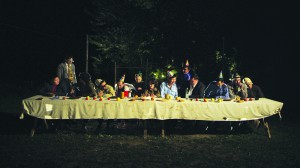
I’ve seen Adilkhan Yerzhanov’s The Owners (2014) only once, and if I dwell on my inability to see it a second time for this review, this is only to pay tribute to the issues and complications of ownership, which are so basic to the film’s universal relevance.

One year ago, I wrote the following as part of my bimonthly column for the Spanish film magazine Caimán Cuadernos de Cine: “12 June (Chicago): As preparation for serving as a ‘mentor’ to student film critics at the Edinburgh Film Festival, I watch online a film they’re assigned to write about, Adilkhan Yerzhanov’s The Owners from Kazakhstan. This is quite a revelation — at least for me, if not, as I later discover, for most of the students. Three city siblings arrive in the county to claim the ramshackle hut they’ve inherited from their deceased mother, and the tragicomic misadventures and forms of corruption that they encounter oscillate between grim realism, absurdist genre parody, and dreamlike surrealism, culminating in a doom-ridden yet festive dance in which both victims and victimizers participate….Yerzhanov’s Read more
From the Chicago Reader (January 14, 2000). — J.R.
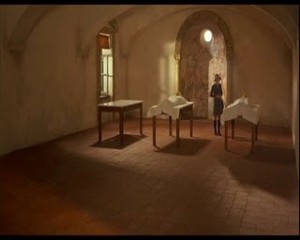
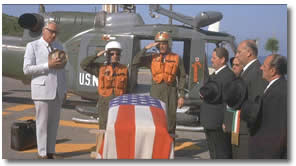
This 1972 release is the most underrated of all Billy Wilder comedies and arguably the one that comes closest to the sweet mastery and lilting grace of his mentor, Ernst Lubitsch. Jack Lemmon arrives at a small resort in Italy to claim the body of his late father, who perished in a car accident, and there he meets Juliet Mills, whose mother died in the same accident and, as it turns out, had been having an affair with the father. The development of Mills and Lemmon’s own romance over various bureaucratic complications is gradual and leisurely paced; at 144 minutes, this is an experience to roll around on your tongue. Wilder and I.A.L. Diamond adapted a relatively obscure play by Samuel A. Taylor, and the lovely music is by Carlo Rustichelli; with Clive Revill and Edward Andrews. A new 35-millimeter print will be shown. Film Center, Art Institute, Columbus Drive at Jackson, Saturday, January 15, 3:30, 312-443-3737
 Read more
From the Chicago Reader (April 10, 1998). — J.R.
The Newton Boys
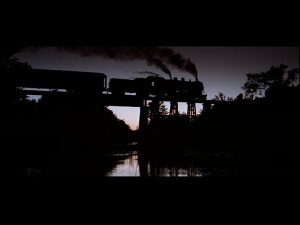
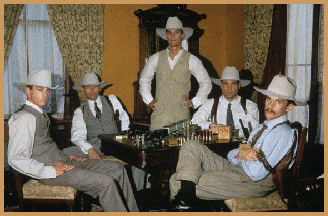
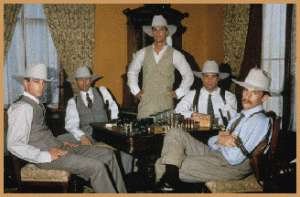
Not to be hyperbolic, but Richard Linklater’s first big-budget movie may be the Jules and Jim of bank-robber movies, thanks to its astonishing handling of period detail and its gentleness of spirit, both buoyed by a gliding lightness of touch. Linklater, Clark Lee Walker, and Claude Stanush (who also worked on the script of Nicholas Ray’s The Lusty Men) have adapted Stanush’s oral history about the Texas-born Newton brothers, who between 1919 and 1924 became the most successful bank robbers in the U.S. The film may occasionally bite off a few more narrative strands than it can chew, but that’s merely the flip side of its generosity and energy. You can keep your L.A. Confidential; here’s a vision of the American past that I’m ready to climb inside. Matthew McConaughey, Skeet Ulrich, Vincent D’Onofrio, and Ethan Hawke play the brothers; with Dwight Yoakam and Julianna Margulies. 600 N. Michigan. — Jonathan Rosenbaum
 Read more
My favorite online film magazine

I’m a frequent contributor to Rouge, so I hope nobody thinks I’m tooting my own horn if I come right out and say that I regard it as the best film magazine going that’s exclusively online. It’s been around since 2002, and it happens to be based in Australia, but you might not even notice this if you were scanning the table of contents of any issue, because it’s far and away the most international of film magazines in English. The latest issue, number ten, has contributors from Australia, Brazil, France, Hungary, Japan, Portugal, Russia, and the U.S., including some filmmakers (Pedro Costa and Mark Rappaport) as well as critics writing about films from most of those countries plus England, India, and Bosnia. About half of the 16 contributors are writing in English, about a third are translated from French, Japanese, or Portuguese, and a couple more express themselves exclusively in the form of a photograph or film frames. In fact, one of the most fascinating of Rouge‘s former issues, number five (2004), devoted itself exclusively to images selected by 52 contributors.
It’s fairly highbrow, and relatively austere in spite of its ingenious uses of images, so I can’t pretend that Rouge is geared to every taste.
Read more
The following is from the [London] National Film Theatre’s program guide in December-January 1975-76, introducing a retrospective that I curated. If the valuation that I placed on Altman seems more idealized to me now than it did at the time, the fact that it came shortly after his best run as a filmmaker explains much of my enthusiasm. But my disillusionment with the media support of Altman already began to sour after I described at length the use of sound in a particular sequence from California Split to a BBC-Radio interview, only to discover that the broadcast version blithely substituted a different sequence from the film to illustrate my point, thereby reducing my analysis to gibberish. -– J.R.
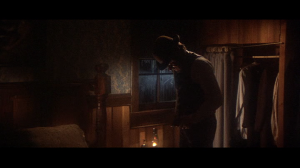
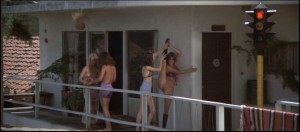
While most commercial American streamliners turn all members of an audience into second-class passengers following the same route from an identical vantage point, Robert Altman’s multilinear adventures oblige us to take some initiative in charting out the trip -– supplying one’s own connections, and pursuing one’s own threads and interpretations in order to participate in a game where everyone, on-screen and off, is entitled to a different piece of the action.
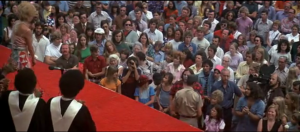
Admittedly, this is a somewhat idealized description of an approach that is still in a state of development, and not every Altman film conforms precisely to this model. Read more
From Cineaste, Summer 2008 (Vol. XXXIII, No. 3). It’s gratifying that Such Good Friends has finally come out on DVD. — J.R.
The World and its Double: The Life and Work of Otto Preminger
by Chris Fujiwara. New York: Faber & Faber, 479 pp., illus. Hardcover: $35.00.
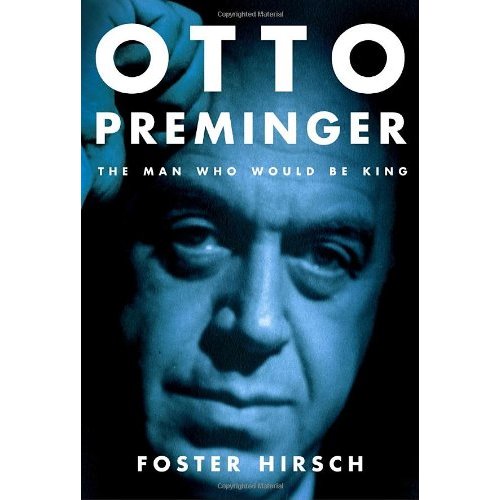
Otto Preminger: The Man Who Would Be King
by Foster Hirsch. New York: Alfred A, Knopf, 573 pp., illus. Hardcover: $35.00
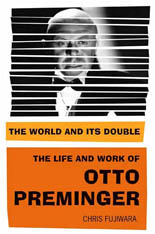
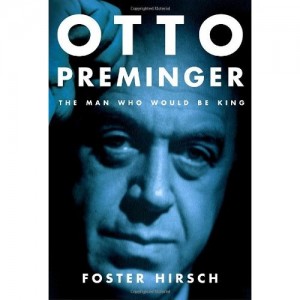
Few film directors resist critical biography as much as Otto Preminger, given all the puzzling and intractable mismatches one encounters as soon as one tries to reconcile his very public life with his no less private body of work as an auteur. This is a difficulty acknowledged in the title and subtitle of Chris Fujiwara’s book, and one he essentially tries to resolve by splitting most of his chapters into two sections. But the overall disassociation of Preminger’s life and work, even though it’s addressed by this structure, still becomes a kind of structuring absence that haunts this biography as well as Foster Hirsch’s, which tries to integrate the two concerns more conventionally. Read more
From the Chicago Reader (February 23, 1996). — J.R.

Rumble in the Bronx
Directed by Stanley Tong
Written by Edward Tang and Fibe Ma
With Jackie Chan, Anita Mui, Francoise Yip, and Bill Tung.
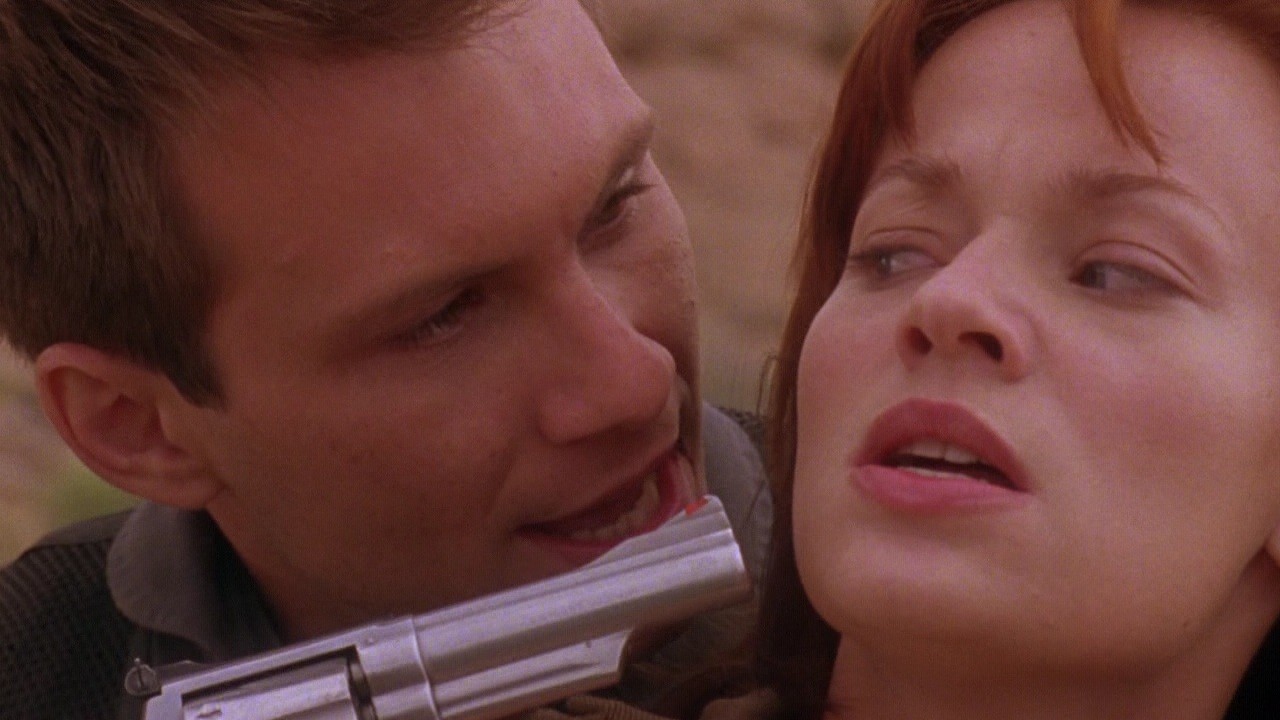
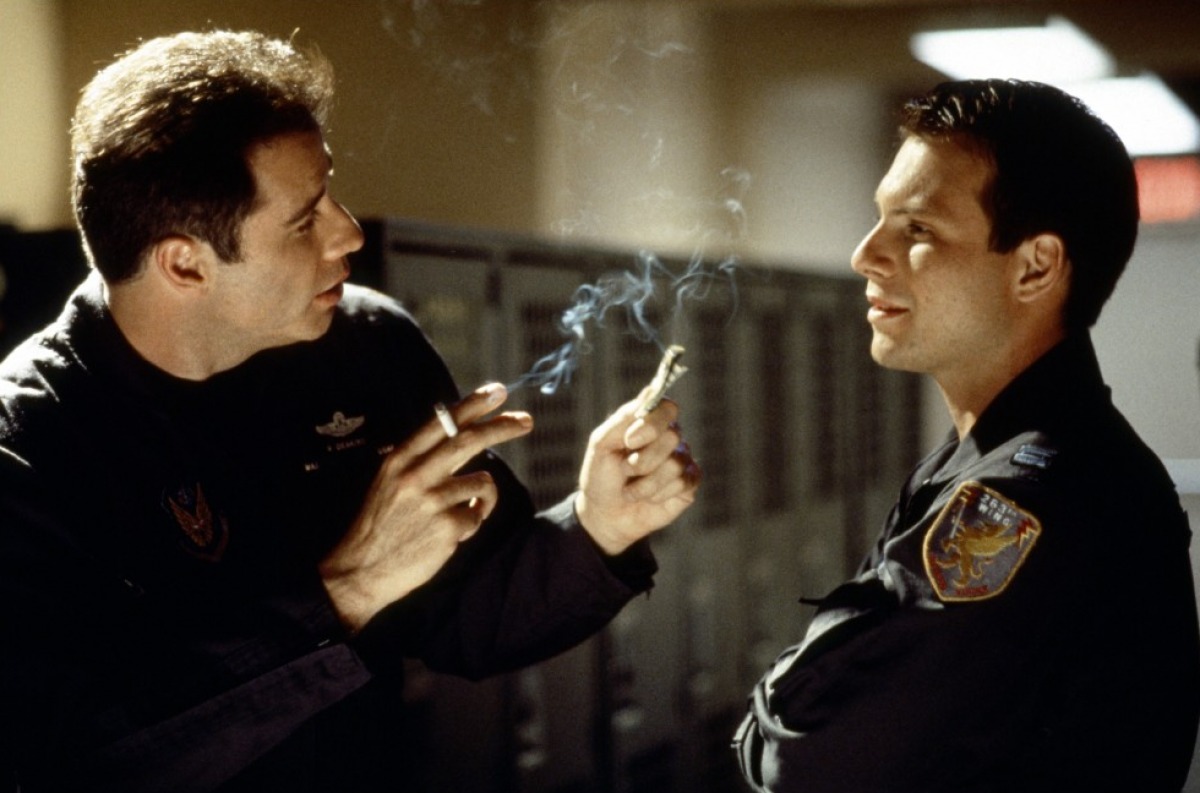
Broken Arrow
Directed by John Woo
Written by Graham Yost
With John Travolta, Christian Slater, Samantha Mathis, Delroy Lindo, Bob Gunton, and Frank Whaley.
Many people who’ve seen Saturday Night Fever probably remember the poster of a bare-chested Sylvester Stallone as Rocky in the bedroom of Tony (John Travolta), the king of Brooklyn disco. But how many recall the poster of a bare-chested Bruce Lee as well? In the nearly two decades since Saturday Night Fever was released, the dream of wedding Hong Kong action pyrotechnics with Hollywood production values to conquer the American mainstream has surfaced periodically, but until recently the results have seemed halfhearted at best.
I haven’t seen any of the earlier Jackie Chan vehicles with American settings — films like The Big Brawl (1980) and The Cannonball Run (1981) — but it’s clear that none of these succeeded in turning Chan into an American household word. At most he’s become an alternative action hero for some passionate aficionados — especially in Chicago, where Barbara Scharres’s efforts at the Film Center to honor his work, climaxing in an in-person appearance a few years back, have helped to foster a growing cult. Read more
From the Chicago Reader (June 17, 2005). –J.R.
This fascinating oddity from Alain Corneau (Tous les matins du monde) adapts Amelie Nothomb’s autobiographical novel about the office life of a young Belgian (Sylvie Testud) working for a huge corporation in Tokyo. Though she’s spent her childhood in Japan and speaks fluent Japanese, a string of cultural blunders leads to one humiliating demotion after another. Testud took a two-month crash course in the language to play this part, and though the notations on cultural difference are far richer and subtler than anything in Lost in Translation, I can’t help but wonder what Japanese viewers might think of this film’s blistering critique of some of their hierarchies and protocol. The unconventional take on power and freedom, enriched by a deft use of Bach’s Goldberg Variations, remains that of an outsider. In Japanese and French with subtitles. 102 min. Music Box. Read more
The year before I started my Paris Journal for Film Comment, in late 1970 and/or early 1971, I wrote a couple of prototypes for it for a short-lived magazine, On Film, that didn’t survive long enough to print either one of them. In fact, On Film never made it past its lavishly glossy first issue, which was devoted mainly to Otto Preminger. Not all of either of these columns has survived either, but here is the first entry in the second of these columns, which did. — J.R.
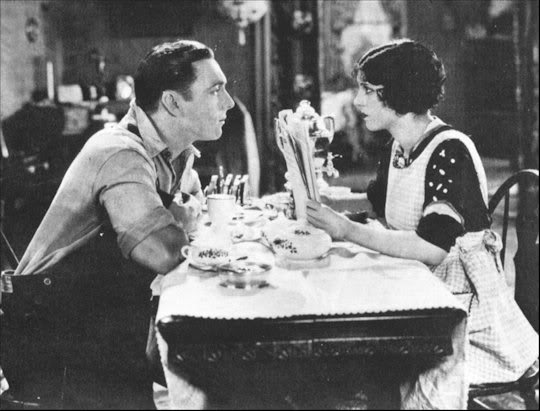
November 6: Howard Hawks’s FIG LEAVES at the Cinémathèque.
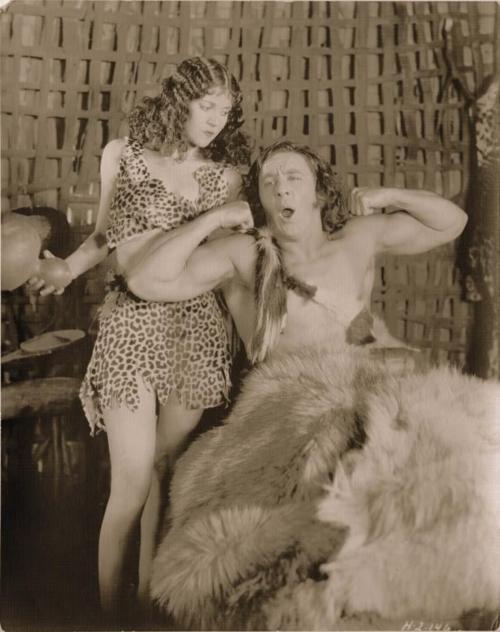
Twenty days ago, I concluded my previous column with remarks about Ozu’s TOKYO STORY. Since then, I’ve seen or reseen a dozen films; Mizoguchi’s SISTERS OF THE GION and THE CRUCIFIED WOMAN, Franju’s THOMAS L’IMPOSTEUR, Kramer’s ICE, Malraux’s L’ESPOIR, Tati’s PLAYTIME, Demy’s THE YOUNG GIRLS OF ROCHEFORT, Minnelli’s CABIN IN THE SKY, Mankiewicz’s THERE WAS A CROOKED MAN, Godard’s MASCULIN-FEMININE, Ray’s BIGGER THAN LIFE, and now Hawks’s second film, a comedy made in 1926. Read more
From the January 17, 2003 issue of the Chicago Reader. For those who care about such things, there are spoilers ahead. — J.R.
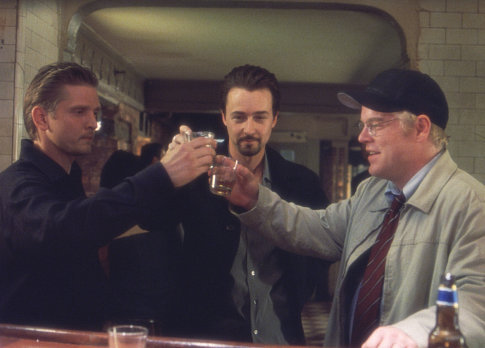
25th Hour
**** (Masterpiece)
Directed by Spike Lee
Written by David Benioff
With Edward Norton, Philip Seymour Hoffman, Barry Pepper, Rosario Dawson, Anna Paquin, Brian Cox, Tony Siragusa, and Levani.
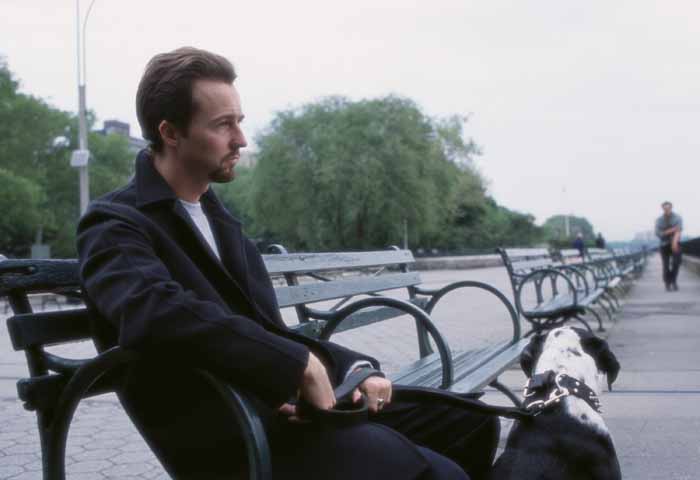
I’ve complained a lot about Spike Lee as a filmmaker, before he made his remarkable Do the Right Thing (1989) and after. But the only time I’ve been tempted to accuse him of falling back on the tried and true was when he made Malcolm X and attempted to adapt his subject’s autobiography as if he were Cecil B. De Mille or David O. Selznick. I don’t mean that Lee hasn’t stubbornly stuck to the same stylistic tropes and mannerisms throughout most of his career — leaving them behind only when the occasion demanded it, as in his expert filming of Roger Guenveur Smith’s powerful performance piece The Huey P. Newton Story — but the stylistic consistency is his own. Moreover, taking on dissimilar projects he has always moved in exploratory directions, showing a lot of courage and initiative in his creative choices — even when they’re half-baked (as some are in Get on the Bus) or overblown (as in Bamboozled). Read more