How to Read a Movie [STONE READER]
From the Chicago Reader (July 18, 2003). — J.R.
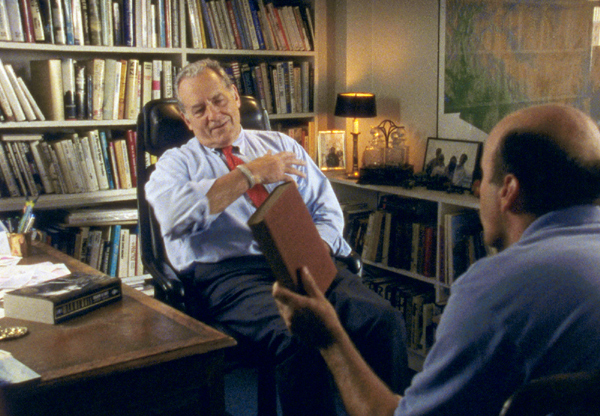
Stone Reader
*** (A must-see)
Directed and written by Mark Moskowitz.
Cinema has traditionally been regarded as the art that encompasses all the other arts. But start considering how successfully cinema encompasses any particular art form and the premise falls apart.
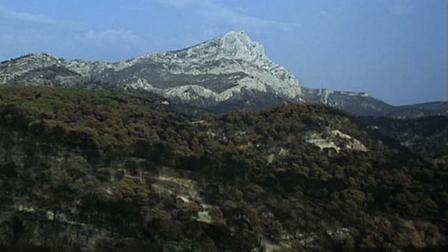
Filmed theater, opera, ballet, and musical performance omit the existential and communal links between performer and audience that their live equivalents rely on. Paintings can be filmed, but films that allow us even some of the freedom viewers have in galleries, museums, and other public and private spaces are rare enough to seem like aberrations. Jean-Marie Straub and Danièle Huillet’s 1989 Cézanne [see above] — which has the nerve to give us extended views of C
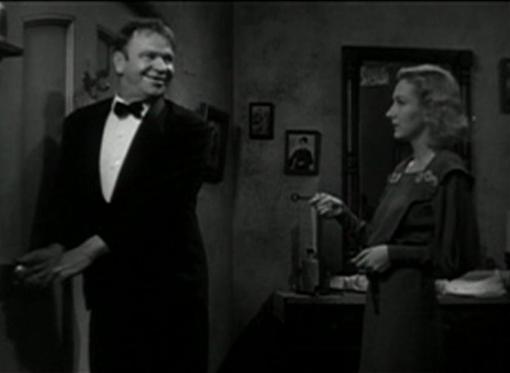
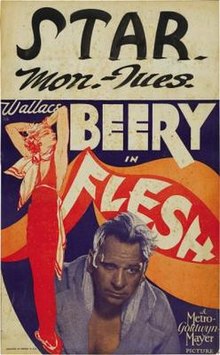
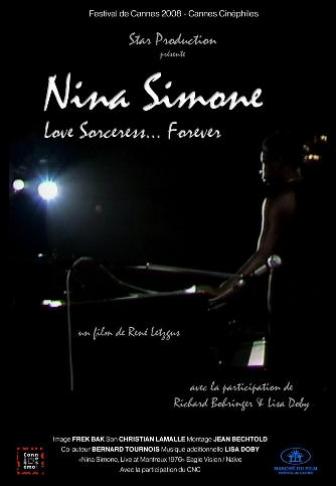
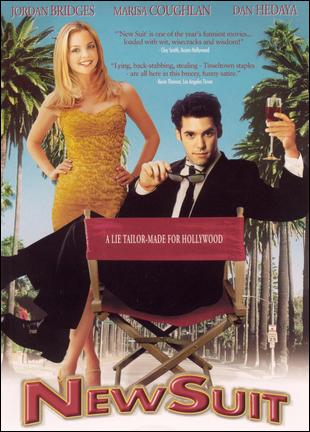
From the January 17, 2003 Chicago Reader. — J.R. Rene Letzgus’ 1998 French documentary of a 1976 concert is hampered by a few distractions such as shots from inside a car cruising through Paris and actor Richard Bohringer in a studio muttering comments in unsubtitled French. (To all appearances these intrusions are simply efforts to paper over gaps in the visual continuity.) But the event being documented is so riveting and so eccentric in its own right that the interruptions hardly matter. The only time I’ve seen Simone live was when she sang “Mississippi Goddam” on the last lap of the Selma-Montgomery march, and although she doesn’t reprise that fiery anthem here, she’s just as unforgettable. This isn’t so much a concert as a work of performance art — one of the best I’ve seen since Richard Pryor–Live in Concert — in which Simone’s divalike behavior is as much a part of the show as her Juilliard-trained piano playing and her stupendous untrained voice. Whether she’s performing “Little Girl Blue” and a Langston Hughes tribute, alternately barking at or complimenting the audience (or getting them to sing with — or instead of — her), making cryptic comments to herself about show business or life in general, or dancing in high heels to African drums (when she isn’t simply listening to them, or adding a piano riff), she’s such a commanding and powerful presence that I was mesmerized for most of the film’s 75 minutes. Read more From the Chicago Reader (November 28, 2003). — J.R. New Suit ** (Worth seeing) Directed by Francois Velle Written by Craig Sherman With Jordan Bridges, Marisa Coughlan, Heather Donahue, Dan Hedaya, Mark Setlock, Benito Martinez, Charles Rocket, and Paul McCrane. As the opening narration makes clear, New Suit — a satirical comedy about Hollywood suits — is loosely based on “The Emperor’s New Clothes.” Kevin Taylor, a 24-year-old script editor and frustrated screenwriter, is already jaded after 18 months working in the office of has-been producer Muster Hansau. Taylor (Jordan Bridges) gets especially irritated one day after hearing some of his hotshot coworkers spout bullshit at the studio commissary. He gets up from the table and buys a strawberry ice cream cone from a guy named Jordan, then returns and starts talking about an imaginary hot new script called “New Suit” by an imaginary writer named Jordan Strawberry that he says his bosses are excitedly pursuing. His tablemates simultaneously claim they’ve already heard about the script and pump him for more information. Before long the whole town is talking about this promising property — especially after Kevin’s former girlfriend Marianne, a rising agent, overhears him saying that Strawberry is “unrepresented.” She promptly claims to be representing him, which starts a bidding war between two studios. Read more From the April 25, 2003 Chicago Reader. — J.R. Blackboards *** (A must-see) Directed by Samira Makhmalbaf Written by Mohsen and Samira Makhmalbaf With Bahman Ghobadi, Said Mohamadi, and Behnaz Jafari. I don’t know why it’s taken three years for Samira Makhmalbaf’s second feature to reach Chicago. It was finished in 1999 and won the jury prize at Cannes the following year. The Iranian director was only 17 when she finished her remarkable first feature, The Apple, which also screened in competition at Cannes and made her one of the youngest directors ever to gain an international reputation. Since then, she has made the 11-minute “God, Construction and Destruction,” about the responses of Afghan refugee children in Iran to the attacks on the World Trade Center, which is part of the 2002 international episodic feature 11/09/01 (still unscreened in the U.S.). She has also made the feature At Five in the Afternoon, about a young woman in post-Taliban Afghanistan, which is expected to premiere at Cannes in May. All of her features to date have been produced, edited, and written or cowritten by her father, Mohsen Makhmalbaf. But the three films of hers that I’ve seen are significantly different from his in that they deal with communities more than individuals, and I happen to like The Apple more in some respects than any film directed by him. Read more From the Chicago Reader (May 23, 2003). — J.R. Neil LaBute (In the Company of Men, Nurse Betty) delivers his most interesting and powerful film to date, though it’s also his most unpleasant and disturbing. Set at a small college, it concentrates on the evolving relationship between a shy nerd (Paul Rudd) and a brazen artist (coproducer Rachel Weisz), as well as his best friend (Frederick Weller) and the latter’s fiancee (Gretchen Mol) — and the less said about the plot the better. LaBute originally wrote this as a play while directing Possession (its opposite in every respect), and it often betrays its theatrical origins, though never to its disadvantage. LaBute has a lot of troubling things to say about both relationships and artists, and the writing and ensemble playing are so ruthlessly focused they hurt. 97 min. Century 12 and CineArts 6, Esquire, Landmark’s Century Centre. From the Chicago Reader (March 14, 2003). — J.R Reeking with allegory, Andrew Wyeth landscapes, undigested Flannery O’Connor, variable performances, and all kinds of ambition and pretension, this 1990 first feature by English writer-director Philip Ridley is an American gothic melodrama set in the Idaho prairies. It’s typical of the overall conception that mass murderers and child molesters figure as incidental characters and as a collective deus ex machina for a plot already so full of grotesqueries that they’re barely noticed. The plot centers on an eight-year-old boy whose playmates are abused and murdered and who thinks a neighboring English widow is a vampire; his father is a weakling with a homosexual incident in his past who commits suicide, his mother is a borderline psychotic, and the local sheriff is a veritable catalog of mutilations. The story opens with an exploding frog and also makes room for an alcoholic religious fanatic and stillborn child that the hero uncovers and thinks is one of his murdered playmates. With Viggo Mortensen, Lindsay Duncan, Jeremy Cooper, and Sheila Moore. 95 min. (JR) Read more From the Chicago Reader (March 14, 2003). — J.R. David Cronenberg isn’t credited often enough for his literacy, which anchors him as a filmmaker much as Method acting can anchor some performers: he seems to immerse himself so deeply in the warped visions of certain writers that he re-creates their work whereas most literary filmmakers would simply imitate it. This tour de force, which Patrick McGrath adapted from his own novel under Cronenberg’s supervision, draws us into the consciousness of a schizophrenic (Ralph Fiennes) who’s been incarcerated for most of his life and whose boyhood traumas merge seamlessly with his current existence in an east London halfway house; apparently Cronenberg’s model is not only McGrath but Samuel Beckett in his early novels. The film asks us to piece together what really happened in the past, and even after two viewings I haven’t entirely succeeded, but I was floored by Cronenberg’s mastery of the material. Fiennes gives one of his finest performances; Miranda Richardson, playing at least three characters in the protagonist’s twisted vision, is no less impressive; and Gabriel Byrne, Lynn Redgrave, and John Neville do excellent backup work. A lean and densely packed 98 minutes, this minimalist chamber thriller is at once hallucinatory and terrifyingly real. Read more From the Chicago Reader (January 24, 2003). — J.R. Super Sucker * (Has redeeming facet) Directed and written by Jeff Daniels With Daniels, Matt Letscher, Harve Presnell, Dawn Wells, John Seibert, Guy Sanville, Kate Peckham, Sandra Birch, Michelle Mountain, and Will Young. Super Sucker, the second indie comedy feature written and directed by actor Jeff Daniels, is a terrible movie. But that doesn’t prevent it from being interesting and even admirable as a grassroots phenomenon. I haven’t seen its predecessor, Escanaba in da Moonlight (2001) — based on Daniels’s play, which he produced at his own 160-seat theater in Chelsea, Michigan, the Purple Rose (named after the Woody Allen movie The Purple Rose of Cairo, which Daniels has cited as a turning point in his career). The movie version of Escanaba passed through Chicago at some point and received a listing but not a review in this paper. In fact, Escanaba received few reviews anywhere (although the making of the film was the subject of an article in Harper’s in late 2000). The longest notice appeared in the Detroit News, whose Tom Long wrote that the film “is decidedly a Michigan experience, and there are questions as to how it will fly in lands that know nothing of the Mackinac Bridge, pasties, and the Department of Natural Resources.” Read more From the February 21, 2003 Chicago Reader. — J.R. The skillful writer-director Henri-Georges Clouzot is mainly known for his corrosive misanthropy. Yet surprisingly, this accomplished 1947 noir turns that misanthropy precisely on its head without ever resorting to sentimentality or stereotypes. The milieus of a seedy music hall and police station in Paris are delineated with such richness and attentiveness toward the postoccupation climate that when the murder of a licentious film producer brings a police inspector (the great Louis Jouvet) into the music hall, Clouzot is able to reveal a complex and interactive working-class world in which cops and criminals are sometimes difficult to tell apart. The principal epiphanies in this tale emerge from Jouvet’s expressions of kinship with a flirtatious singer (Suzy Delair) and a lesbian photographer (Simone Renant), but there are also memorable portraits of the singer’s mousy pianist husband (Bernard Blier), a music publisher (Henri Arius), and several others. In French with subtitles. 106 min. (JR) This appeared in the January 6, 2006 issue of Chicago Reader. For some reason, it appears to have eluded the Reader’s web site archive, apart from its title, and therefore escaped this web site as well, until I found a way of pasting it in. — J.R. The Best Film of the Past Two Years And 24 more picks from what the industry thought us yokels could handle in 2005 By Jonathan Rosenbaum To choose the best movies of 2005 is to compromise. I limit my list of candidates to films that have screened in Chicago, but I could easily fill it with movies that haven’t screened in the U.S. at all, and God knows what I’ve missed altogether. I’m at the mercy of studio heads, distributors, and publicists, whose decisions about what to release and when defy comprehension. I saw Woody Allen’s Match Point in Madrid in mid- November, believing the distributor’s announcement that it would open in Chicago in December. Surprised at how much I liked it, I decided it probably belonged on my list, but then some industry executives decided that only the people in New York and Los Angeles should get to see it this year (in time for Oscar nominations), not the less discriminating moviegoers in the Chicago boondocks. Read more From the Chicago Reader (March 21, 2003). I’m sorry that I’ve unable to find a single image illustrating The Last Conversation. — J.R. The Murder of Emmett Till * (Has redeeming facet) Directed by Stanley Nelson Written by Marcia A. Smith Narrated by Andre Braugher. Oporto of My Childhood **** (Masterpiece) Directed, written, and narrated by Manoel de Oliveira. The Last Conversation **** (Masterpiece) Directed by Sally Banes Written by Noel Carroll With Galina Zakrutkina and James Sutton Narrated by Patricia Boyette. McLuhan’s Wake *** (A must-see) Directed by Kevin McMahon Written by David Sobelman Narrated by Laurie Anderson. Echelon: The Secret Power *** (A must-see) Directed and written by David Korn-Brzoza Narrated by Francois Devienne. It’s notoriously difficult to evaluate the way most documentaries treat their subject matter, because one has to assess what’s included in light of what’s left out — something we aren’t usually qualified to do. I’m much more comfortable evaluating documentaries on how well they draw us into their subject matter and on how well they work as cinema. On these terms I can confidently say that I’ve seen and heard about a lot of exciting new documentaries recently, including an American work I really want to see, Charles Burnett’s Nat Turner: A Troublesome Property. Read more From the Chicago Reader (January 3, 2003). — J.R. Ernst Lubitsch’s first talkie and first operetta, costarring Maurice Chevalier and Jeanette MacDonald, contains the excitement of movies being reinvented, so that silence as well as sound becomes a brand-new plaything (in contradistinction to silent movies, which usually had musical accompaniment). A study in playfulness, this fantasy about a country preoccupied with its queen getting married actually has a dog barking out half a chorus of one number, perfectly in tune, and the precode erotics and sexual politics seem pretty advanced in spots. Secondary leads Lillian Roth and Lupino Lane offer some acrobatic low comedy as servants whose best song is called “Let’s Be Common”. 110 min. (JR) From the Chicago Reader, July 25, 2003. Having just reseen Coppola’s One From the Heart (1982) for the first time since it came out, I experienced a similar ambivalence to this subsequent anti-musical, for related reasons. — J.R. A Woman Is a Woman ** (Worth seeing) Directed and written by Jean-Luc Godard With Anna Karina, Jean-Claude Brialy, Jean-Paul Belmondo, and Marie Dubois. Even after 40 years I’m still not sure how I feel about A Woman Is a Woman (1961), Jean-Luc Godard’s third feature. The first time I saw it, as a college junior in New York, it was an unmitigated delight. But that had a lot to do with its arrival at a time when it seemed to validate ideas I and other cinephiles had about French and American film culture. It was the fourth Godard feature to open in New York (after Breathless, Vivre sa vie, and Contempt, his first, fourth, and sixth films), and the second in color and ‘Scope (after Contempt). The very notion of someone subverting the way big-budget Hollywood used canvas and palette while also taking pleasure in those elements carried an enormous charge (Contempt had been a bit too close to big-budget Hollywood to look like subversion). Read more From the August 2, 1991 Chicago Reader. — J.R. The last film of F.W. Murnau, who was probably the greatest of all silent directors (he didn’t live long enough to make sound films, as he died in an auto accident only a few days after work on the musical score of this masterpiece was completed). Filmed entirely in the South Seas with a nonprofessional cast and gorgeous cinematography by Floyd Crosby (fully evident in this fine restoration), this began as a collaboration with the great documentarist Robert Flaherty, who still shares credit for the story, though clearly the German romanticism of Murnau (Nosferatu, The Last Laugh, Sunrise) predominates, above all in the heroic poses of the islanders and the fateful diagonals in the compositions. The simple plot is an erotic love story complicated by the fact that the young woman becomes sexually taboo when she is selected by an elder (one of Murnau’s most chilling harbingers of doom) to replace a sacred maiden who has just died. The two “chapters” of the film are titled “Paradise” and “Paradise Lost,” and another theme is the corrupting power of “civilization” — money in particular — on the innocent hedonism of the islanders. Read more From the August 22, 2003 Chicago Reader. — J.R. The screenwriter hero of Barton Fink is assigned to script a Wallace Beery wrestling picture: this 1932 feature — directed by John Ford and scripted by Edmund Goulding, Moss Hart, and an uncredited William Faulkner, among others — is the only real-life movie matching that description. Beery, a good-hearted dope working as a waiter in a German beer garden, falls for an American ex-convict (Karen Morley) linked to a gangster (Ricardo Cortez). They delude and exploit him even after he marries Morley, becomes a big-time wrestling champ, and moves with her to the U.S. Ford was still under the spell of F.W. Murnau’s Sunrise (1928) when asked to take over this project at MGM, and some traces of German expressionism linger in his pictorial style. He wrests a lot of feeling out of Beery’s cheerful dim-wittedness, making his muddle seem almost enlightened and avoiding the masochism an Emil Jannings would have brought to the part. The strong secondary cast includes Jean Hersholt, Vince Barnett, and Ward Bond. 95 min. (JR)
Nina Simone, Love Sorceress…Forever
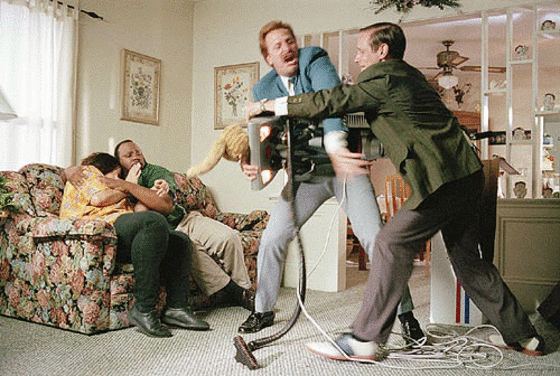
The Empire’s New Clothes [NEW SUIT]
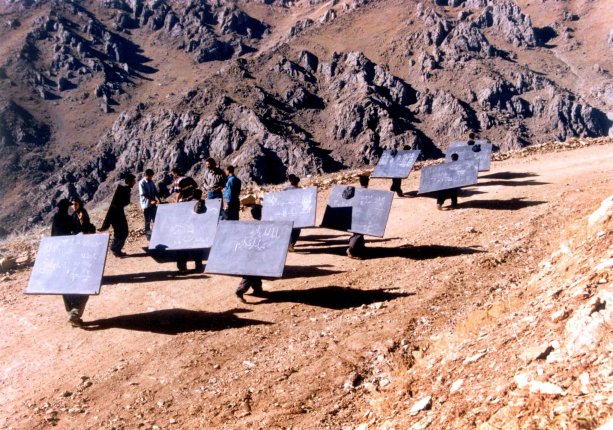
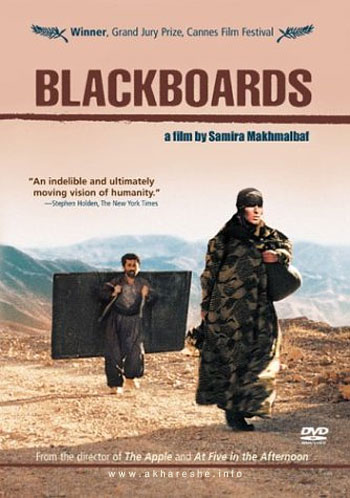
Mythic Mission [BLACKBOARDS]
The Shape of Things
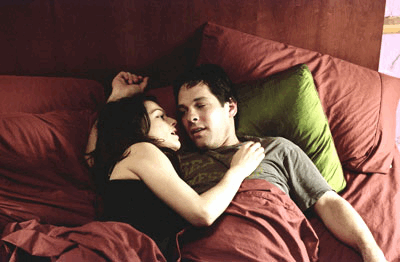
The Reflecting Skin
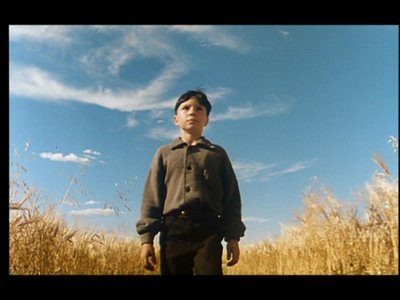
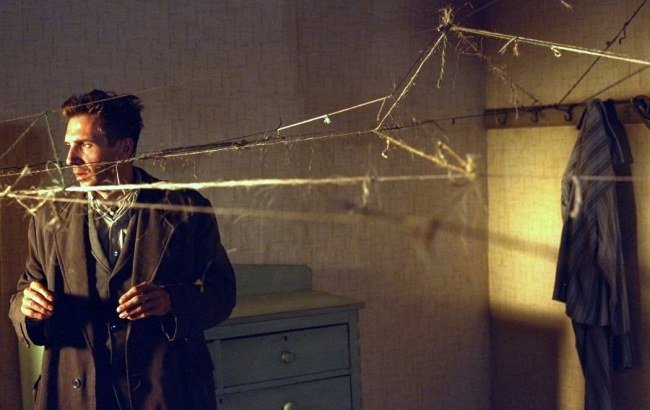
Spider
Buyer Beware

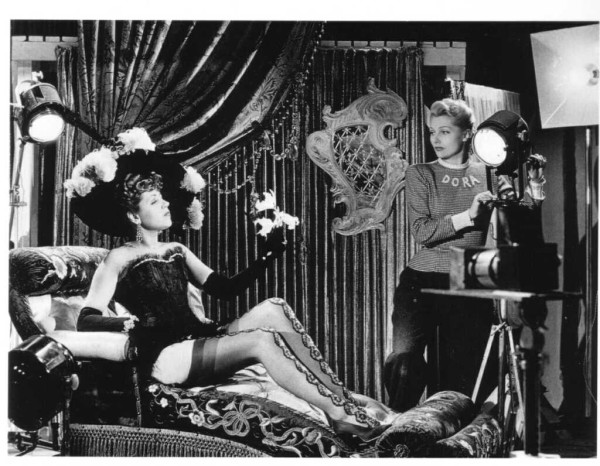
Quai Des Orfevres

The Best Film of the Past Two Years [2006]
What’s Up, Doc? [on several documentaries]


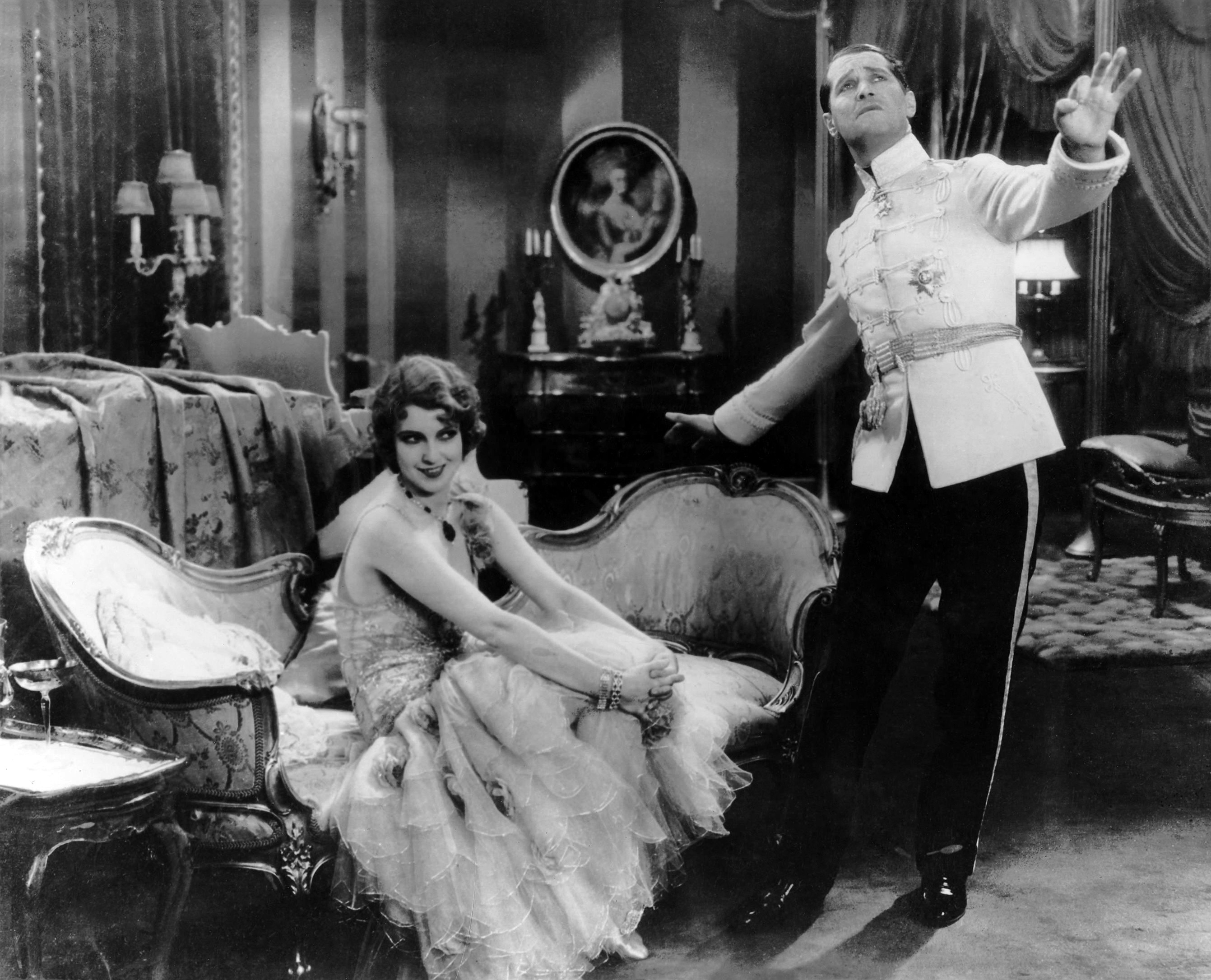
The Love Parade
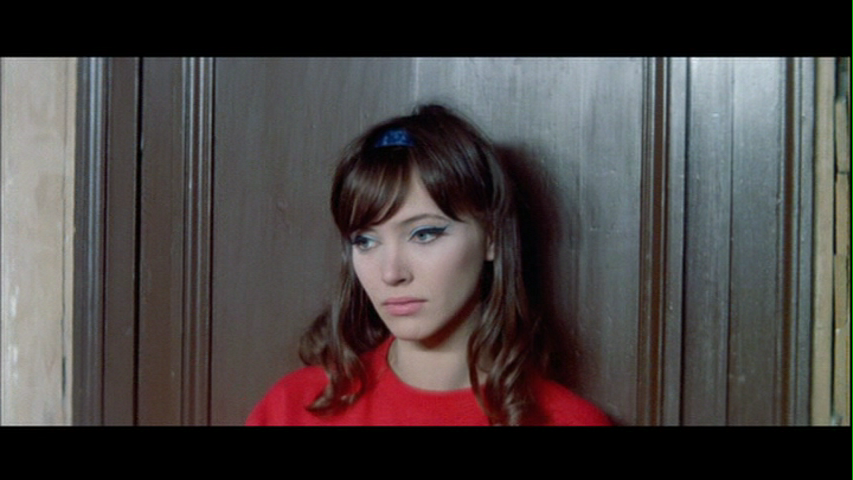
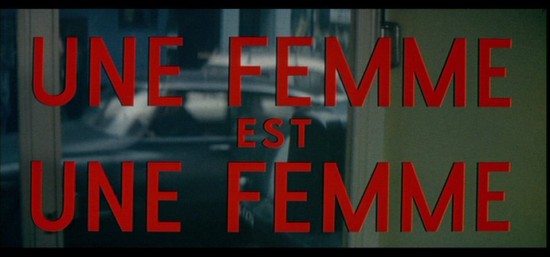
When Is a Musical Not a Musical?
Tabu


Flesh