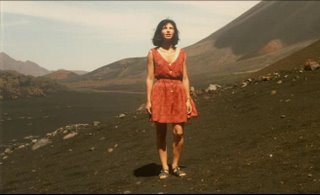
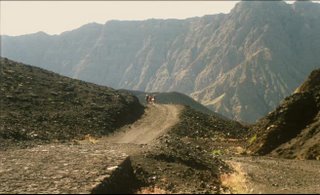
My favorite Pedro Costa feature to date, an inviting “Open, sesame” to all his work, is his second (1994), a very personal remake of Jacques Tourneur’s I Walked With a Zombie (1943). It follows an obscurely motivated Lisbon nurse (Ines de Medeiros) accompanying a construction worker in a coma (Isaach de Bankolé) back to his native village, on a spectacular volcanic island in Cape Verde, once a hub of the slave trade. (The film’s original and much better title is “Casa de Lava,” or “House of Lava”). While she waits for him to wake she gets to know some of the villagers, including another European (the terrific Edith Scob) who unlike her has succeeded in going native. Gorgeously shot, with fabulous Creole music, this mysterious and voluptuous spiritual adventure has afforded me far more pleasure than any new film I’ve seen this year. In Portuguese and Creole with subtitles. 110 min.
THE INVISIBLE DRAGON: ESSAYS ON BEAUTY (revised and expanded edition) by Dave Hickey (Chicago/London: The University of Chicago Press), 2009, 123 pp.
Fellow fans of art critic Dave Hickey should be alerted to the fact that an extensively upgraded edition of his 1993 book The Invisible Dragon has recently appeared that seems to be almost twice as long as its predecessor, with a new introduction and an additional essay, “American Beauty,” that’s considerably longer (over 50 pages) than any of the four essays in the first edition. Even if you find the new introduction, written entirely in the third person, a mite off-putting, the new essay reaffirms Hickey as a major critical voice and terrific prose stylist. I’m not sufficiently well-versed in art history to be able to judge it confidently on those terms, but the erudition on display is pretty daunting, to say the least.
I discovered Hickey thanks to film scholar Dudley Andrew through Hickey’s extraordinary 1997 collection Air Guitar (see below) a radically populist and semiautobiographical look at pop culture that remains a particular favorite–although I subsequently bought Hickey’s two collections of short stories, the 1989 Prior Convictions and the 1999 Stardumb, that I’m still intending to read. Read more
Peter Watkins’s 1999 made-for-TV film about the revolutionary Paris Commune formed in 1871 offers a stunning lesson in understanding the past in relation to the present. Using contemporary talk-show and TV-news reporting techniques, Watkins shot the 345-minute film in only 13 days in an abandoned Paris factory. His cast consisted of 220 Parisians and illegal aliens from North Africa, most of whom had no acting experience, and he got them to do their own research on the Paris Commune and to collaborate in the construction of their characters and dialogue (in late scenes these actors, still in costume, discuss the relevance of the Commune to their own lives and contemporary issues). In some ways this work is more fascinating as an idea than in its execution. But it’s full of exciting moments and very effectively shot, in black and white and with extended mobile takes. In French with subtitles. (JR) Read more
My exposure to Stan Brakhage’s massive oeuvre has been somewhat limited, but these four works made in 1998 are among the most exciting and ravishing I’ve seen, rivaling even Scenes From Under Childhood (1970). Aptly described by J. Hoberman of the Village Voice as scratch-and-stain films, these mainly nonphotographic works are, among other things, a visual analogue to Abstract Expressionism. Reel 1 (22 min.) registers as visual music in its development of motifs and its use of rests to divide the work into discrete sections-a music that pulses, throbs, and sometimes winks on and off like a strobe light. Reel 2 (15 min.) credits Sam Bush as the visual musician and Brakhage as the composer; more staccato, dramatic, and richly orchestrated than the first reel, it occasionally recalls early Stravinsky in its fierce rhythms. Reels 3 (15 min.) and 4 (20 min.) are my favorites: the former uses bursts of photography (water, sky, birds, forest, sand, a nude child, merry-go-round horses), and the latter often suggests animation, with a black field disrupted by tantalizing bursts and smears of color. Also on the program are two Brakhage works I haven’t seenCoupling (1999, 5 min.) and Night Mulch & Very (2001, 7 min.). Read more
From the Chicago Reader (September 2, 2005). — J.R.
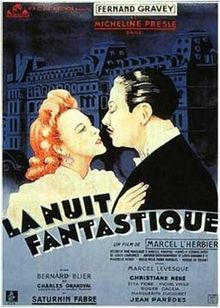
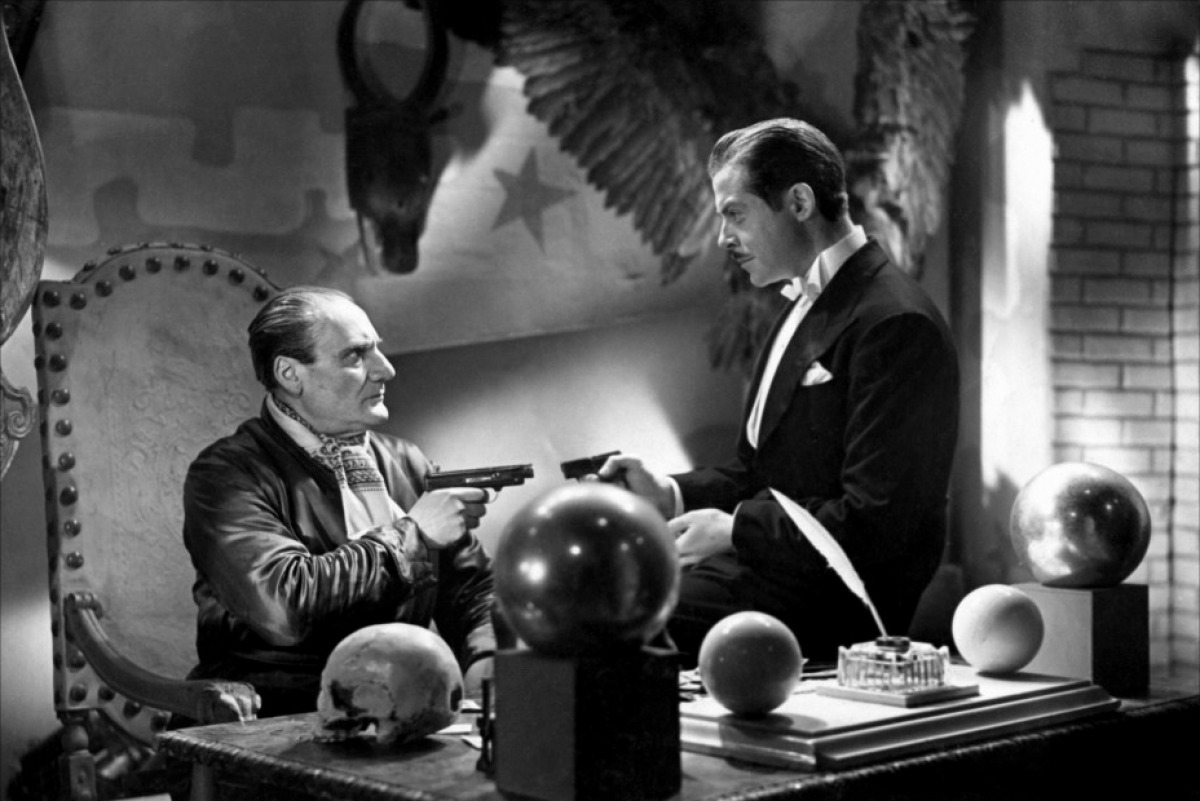
Made during the French Occupation, this 1942 feature by Marcel L’Herbier is a whimsical yet brittle nocturnal fantasy that consists mainly of a nerdy Parisian student’s expressionistic, romantic dream about pursuing an imaginary beauty. It’s the first film scripted by Louis Chavance, editor of L’Atalante and writer of the corrosive Le corbeau, and it oddly evokes both The Cabinet of Dr. Caligari and Eyes Wide Shut in its troubled moods and dreamlike studio settings (e.g., a formal ball at the Louvre, complete with magic show and trapdoors). Its illogical drift seems to convey the creepy collective unconscious of the occupation, so indelibly that even the happy ending turns out to be deeply disturbing. In French with subtitles. 100 min. (JR)
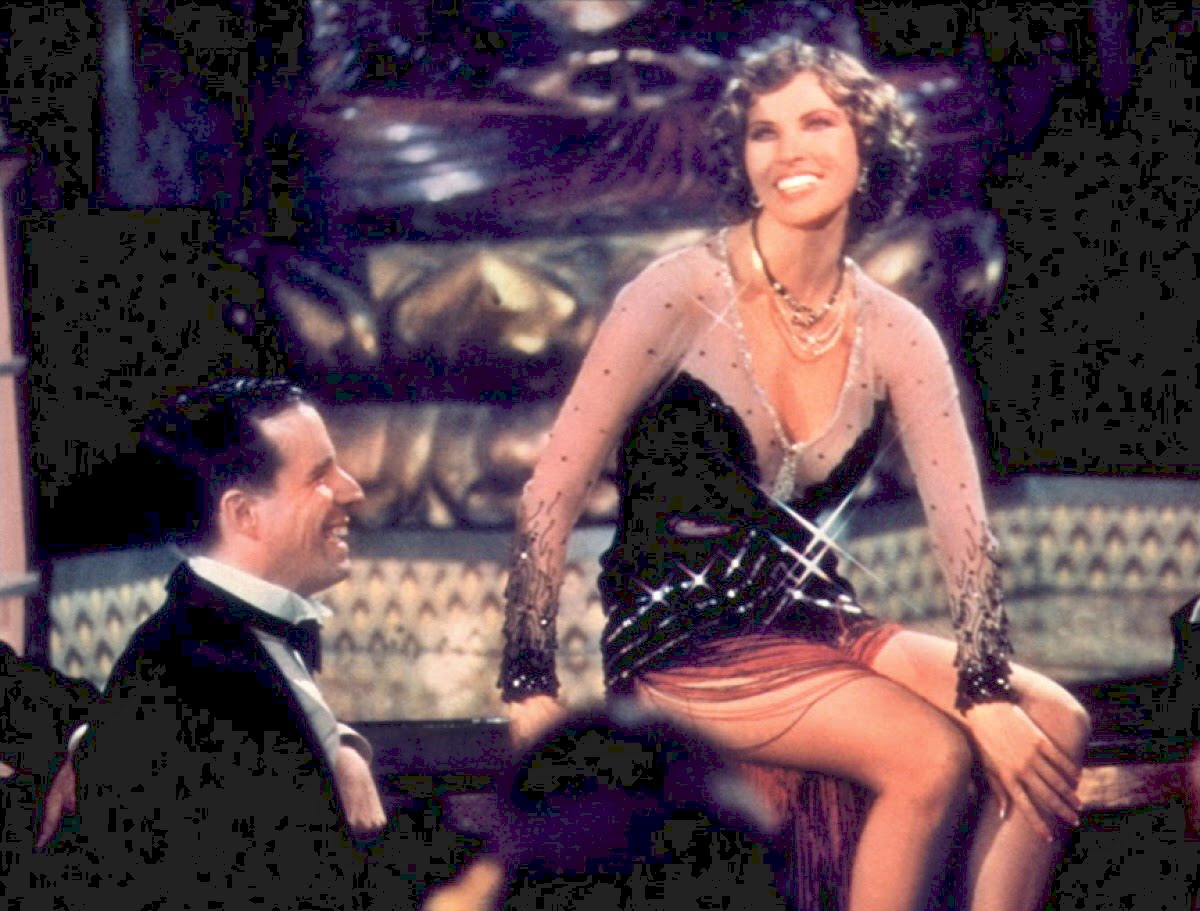
From Monthly Film Bulletin, September 1975 (Vol. 42, No. 500). I can think of two plausible reasons for reposting this now: Raquel Welch and Babylon.
I’m not sure why I neglected to mention Fatty Arbuckle, but obviously I should have. (I also might have mentioned that another long narrative poem by Joseph Moncure March, The Set-Up, provided the basis for a more enduring 1949 Robert Ryan/Robert Wise feature.)– J.R.
U.S.A., 1974
Director: James Ivory
Cert–X. dist–7 Keys. p.c–The Wild Party.A Samuel Z. Arkoff presentation. exec. p–Edgar Lansbury, Joseph Beruh. p-Ismai Merchant. assoc. p—George Manasse.asst. d–Edward Folger. sc–Walter Marks. Based on the narrative poem by Joseph Moncure March. ph–Walter Lassally. col–Movielab. ed–Kent McKinney. a.d–David Nichols. set dec–Bruce David Weintraub. set artist–Pamela Gray. sp. effects–Edward Bash. m/m.d–Larry Rosenthal. dance m–Louis St. Louis. songs–“Wild Partv”, “Funny Man”, “Not That Queenie of Mine”, “Singapore Sally”, “Herbert Hoover Drag”, “Ain’t Nothing Bad About Feeling Good”, “Sunday Morning Blues” by Walter Marks. musical sequences staged by–Patricia Birch. cost–Ron Talsky, Ralph Lauren, Ronald Kolddzie. make-up-Louis Lane. titles— Arthur Eckstein. title poster art–Peter Diaferia. sd. ed–Mary Brown. sd.Read more
This interview with Han Jian, reporter for the Bund Pictorial– a culture and lifestyle weekly based in Shanghai — was conducted for a cover story about American film critics planned for their February 17, 2015 issue. [Feb. 28: Now that I’ve been sent a link, it’s clear that the Chinese version of this piece is somewhat longer, because of an added introduction.]– J.R.
1. How did you become a film critic? Do you still remember your first film review?
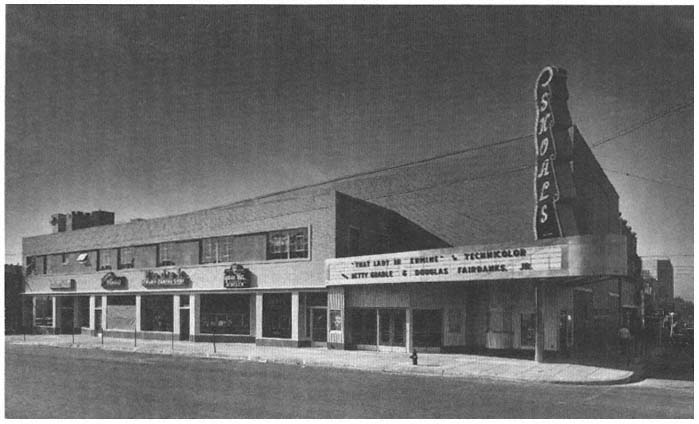
Much of this is described in my first book, an experimental memoir entitled Moving Places: A Life at the Movies (1980; second edition, 1995). I was the grandson and son of movie theater exhibitors in northwestern Alabama, which enabled me to grow up watching a great many movies for free. My father wrote a column for the local newspaper promoting the current releases, and shortly after my 14th birthday, I substituted for him one week, although this wasn’t actually a review. But the following year, I published my first actual film reviews — of The Astounding She-Monster, The Viking Women and the Sea Serpent, The Vikings, and a live TV drama called No Place to Run — in my high school newspaper.Read more
From the Chicago Reader (September 10, 1993). — J.R.
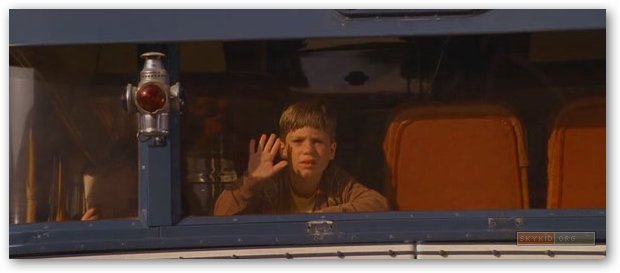
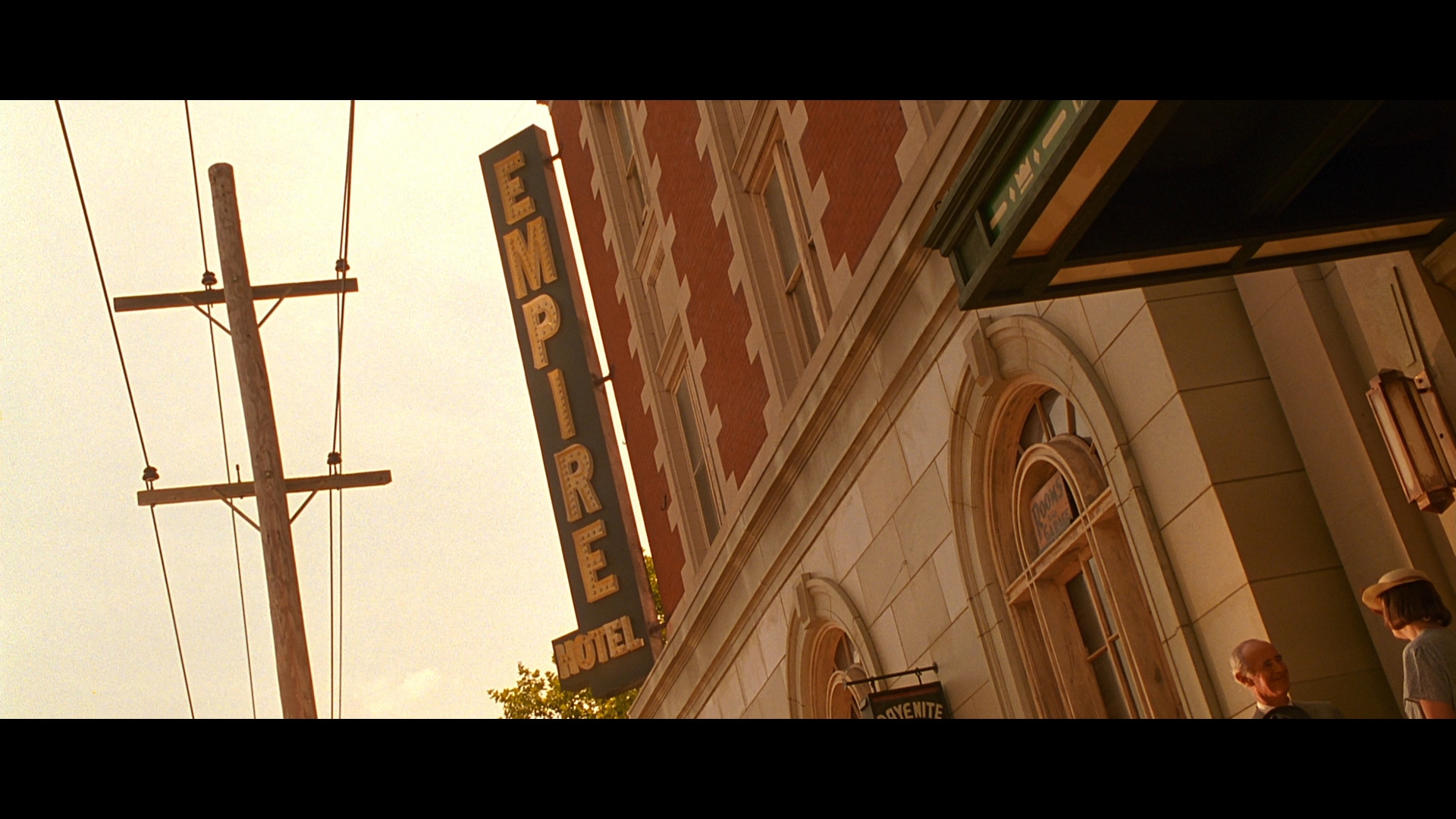
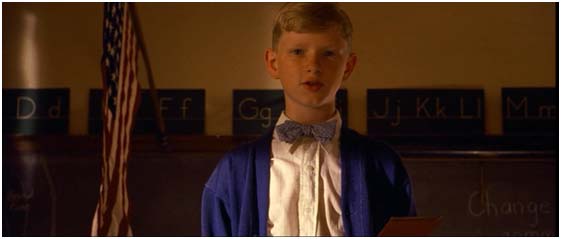
The most impressive thing about Steven Soderbergh’s third feature (after sex, lies, and videotape and Kakfa) — an adaptation of A.E. Hotchner’s childhood memoirs, rich in period flavor — is that it’s set in Saint Louis in 1933, roughly three decades before Soderbergh was born, yet it offers a pungent and wholly believable portrait of what living through the Depression was like. Soderbergh gets an uncommonly good lead performance out of Jesse Bradford as the resourceful 12-year-old hero, living in a seedy hotel and steadily losing the members of his family: his kid brother (Cameron Boyd) gets shipped off to an uncle, his mother (Lisa Eichhorn) to a sanitarium, and then his German father (Jeroen Krabbe) goes off to try to make money as a door-to-door watch salesman. We also learn a fair amount about the hero’s neighbors (Spalding Gray, Elizabeth McGovern, Adrien Brody) and schoolmates, and Soderbergh does a fine job of keeping us interested and engaged without stooping to sentimentality. This is a lovely piece of work. Fine Arts.
FromChris Fujiwara’s 800-page collection Defining Moments in Movies (London: Cassell, 2007).
I’ve just read an advance copy of a terrific new book about this film by Nick Pinkerton, endlessly informative and packed with ideas. Don’t miss it! Fireflies Press is publishing it.– J.R.
Scene
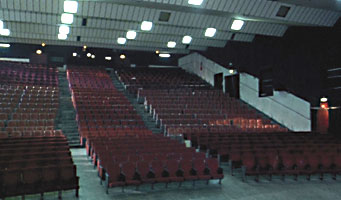
2003 / Goodbye, Dragon Inn – The shot of the empty auditorium near the end.
Taiwan. Director: Ming-liang Tsai. Original title: Bu san.
Why it’s Key: A minimalist master shows what can be done with an empty movie-theater auditorium.
One singular aspect of Ming-liang Tsai’s masterpiece is how well it plays. I’ve seen it twice with a packed film-festival audience, and both times, during a shot of an empty cinema auditorium, where nothing happens for over two minutes, you could hear a pin drop. Tsai makes it a climactic epic moment.
Indeed, for all its minimalism, Goodbye, Dragon Inn fulfills many agendas. It’s a failed heterosexual love story, a gay cruising saga, a Taiwanese Last Picture Show, a creepy ghost story, a melancholy tone poem, and a wry comedy. A cavernous Taipei movie palace on its last legs is showing King Hu’s 1966 hit Dragon Inn to a tiny audience — including a couple of the film’s stars, who linger like ghosts after everyone else has left — while a rainstorm rages outside. Read more
From Cinema Scope (Spring 2005, issue 22). The down side of reproducing my old DVD columns is that many of the links are bound to be out of date and no longer functional; the up side is that they offer some kind of history of what used to be available (or unavailable). — J.R.
With the exception of a few film buffs at some of the more discerning labels, and still fewer at the major studios, decisions about what older films to release on DVD, as well as when or why, are often capricious to the point of absurdity. So asking why some things are readily available and some things aren’t is a bit like asking an illiterate about his or her reading taste. Some time ago, I was contacted about contributing to the extras of an ambitious DVD being planned for Elaine May’s infamous and underappreciated Ishtar — a project developed with loving care by some maverick film buffs at Columbia/Tristar over many months, eventually soliciting the unprecedented cooperation and input of May herself.
It seemed like a golden opportunity for some thoughtful studio revisionism — especially in light of how much this prescient farce has to say about the dangerous blunders of American innocence and stupidity in the Middle East and how blind American reviewers were to this aspect of the movie back in 1987.Read more
From the Chicago Reader (December 22, 2004). — J.R.
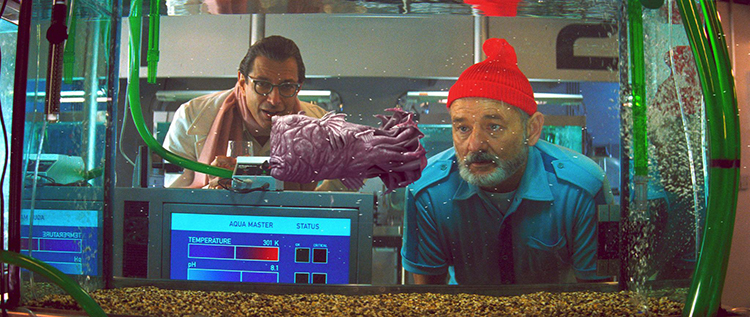
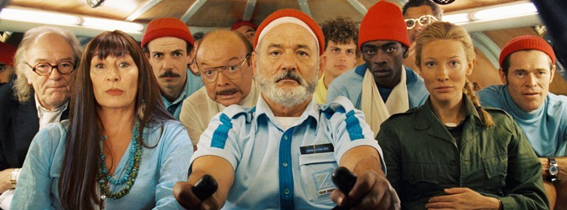
If Rushmore (1998) recalls J.D. Salinger’s The Catcher in the Rye and The Royal Tenenbaums (2001) offers a touch of Franny and Zooey, this Wes Anderson feature suffers from the mannerist self-consciousness of Seymour: An Introduction. Each successive movie seems further removed from real human behavior, though the attitudes here — mainly invested in Bill Murray as the title character, an over-the-hill filmmaker-oceanographer — seem as authentic as ever, and the fantasy trimmings are noticeably more lavish, drawing on the resources of Italy’s Cinecitta studio and recalling Fellini in their cartoon colors. The secondary eccentrics — Owen Wilson, Willem Dafoe, Cate Blanchett, Anjelica Huston, Jeff Goldblum, Michael Gambon, Bud Cort — resourcefully juggle about two character traits apiece, and the climactic rescue sequence is characteristically underplayed. Noah Baumbach collaborated on the arch script, whose bittersweet weirdness leaves a residue even as the narrative disintegrates. R, 118 min. (JR)
From the Chicago Reader (December 1, 1999). — J.R.
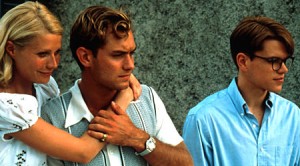
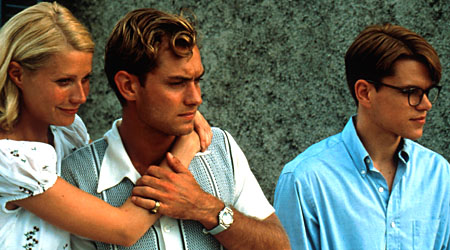
Writer-director Anthony Minghella and critic Frank Rich, both sounding like ventriloquist’s dummies for Miramax’s publicity department, touted this as an uncommercial movie that says something profound about the 90s. Yet their adaptation of Patricia Highsmith’s novel is commercial to the core. Ripley (Matt Damon), a young man on the make, is sent to Europe to retrieve a tycoon’s errant son; he winds up killing the son and assuming his identity, and Damon plays the character as a closeted homosexual and potential serial killer, which makes him about as salable as a movie hero can get these days. Rene Clement filmed Highsmith’s novel in 1960 as Purple Noon; that version was more conventional and derivative of Hitchcock, but at least it didn’t inflate the story, as Minghella does, to the proportions of Ben-Hur. As in Clement’s film, the Mediterranean settings are sumptuous, and Minghella has updated the novel’s action from the early to late 50s and made the errant son (unconvincingly played by Jude Law) a jazz musician, which allows for a pleasant if unadventurous score by Gabriel Yared and many familiar tracks. Familiarity is the watchword of this overblown opus, which neglects holes in the plot to play up its postmodern theme of identity as pastiche — a clear case of the pot calling the kettle black. Read more
From Monthly Film Bulletin, November 1975 (vol. 42, no. 502). This film has also been called The Death Merchants and The Spy Who Never Was. –- J.R.
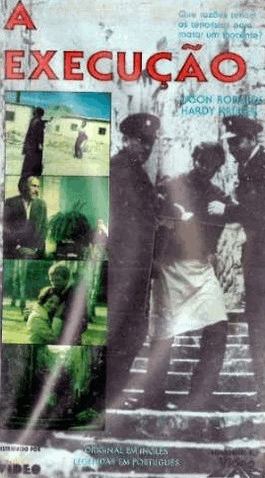
Tod eines Fremden (The Execution)
West Germany/lsrael, 1972
Director: Reza S. Badiyi
Returning to Hamburg from a business trip, corporation lawyer Arthur Hersfeld is mistaken for Baruch Herzog, a non-existent Israeli agent invented by Israeli intelligence, and his cab from the airport is run off the road. He is given a lift into town by Amina, a French journalist calling herself Janine who works in the Arab underground and proceeds to investigate Hersfeld after dropping him off. Meeting her again, Arthur tells her that he knows she’s a spy, but a mutual attraction nevertheless develops between them. After a man named Zui Adam is murdered outside his home, and his office and house are ransacked, Arthur is questioned at the morgue by Inspector Barkan, who has been investigating Arab terrorist activity. Ordered to Berlin to kill Herzog, Amina buys a plane ticket for Hersfeld as well, and they have an affair; she talks about her family having been driven out of their home by Israelis and he tells her about his Jewish background, having been raised in New York after his father was killed by the Nazis. Read more
I’ve never met or communicated with Philip Conklin, who turns 24 today. But his girlfriend, Katrina Santos, wrote me about a week ago, telling me about their new online magazine The Peripheryand his birthday and proposing that I write him about one of his essays and offer some feedback and advice. I’m not sure if I can offer any advice, because he seems to be doing pretty well on his own without my mentoring, but I would like to call attention to three of his film pieces that I especially like, and to The Periphery more generally, which seems well worth checking out: