A review from the May 26, 1989 Chicago Reader. — J.R.

POULET AU VINAIGRE
*** (A must-see)
Directed by Claude Chabrol
Written by Dominique Roulet and Chabrol
With Jean Poiret, Stéphane Audran, Michel Bouquet, Jean Topart, Lucas Belvaux, Pauline Lafont, Jean-Claude Bouillaud, and Caroline Cellier.

In 1985, after seeing Claude Chabrol’s Poulet au vinaigre at the Toronto Festival of Festivals, I remember thinking: At last! The petit-maître is back in form, doing what he knows how to do best; here’s a Chabrol movie that’s sure to get an American release. (At that point it had been about seven years since Violette Nozière — which wasn’t one of my favorite Chabrol films — had opened in the U.S.) Poulet au vinaigre had sex, violence, dark wit, a superb sense of both the corruption and meanness of life in the French provinces, a good whodunit plot, Balzacian characters (including an interesting detective), and very nice camera work by Jean Rabier, Chabrol’s usual cinematographer. It wasn’t a masterpiece, but at the very least it was a well-crafted and satisfying entertainment that surely, I thought, would be enjoyed on this side of the Atlantic. Indeed, it already was being enjoyed by the audience I was seeing it with in Toronto. Read more
I had to retype this longish position paper — published in the November-December 1977 issue of Film Comment — in order to digitize it for the manuscript of my collection, Goodbye Cinema, Hello Cinephilia, to be published by the University of Chicago Press in Fall 2010. Going over every word of it again made me painfully aware of how many typos and other errors it had in its previous appearance. [8/14 postscript: My deepest thanks to Andy Rector at Kino Slang for adding the grubby still that originally ran with this article in Film Comment, thereby allowing me to add it here myself.]
This essay has a literal sequel, “Moullet retrouvé”, also on this site. –J.R.
À la recherche de Luc Moullet: 25 Propositions
1. “Every film by Gerd Oswald deserves a long review.” — LM, 1958.
2. Many of you, perhaps most, have never heard of the man. So much the better. Not all news gets into newspapers, and not all movies get into theaters. The sculptor Paul Thek once proposed an interesting solution to the newspaper problem to me: Get rid of all of them, except for one edition of one daily paper (any would do), and pass this precious object from hand to hand for the next hundred years –- then the news might mean something. Read more
From The Soho News (September 8, 1981); tweaked a little on June 6, 2010. — J.R.
Comin’ at Ya!
Written by Lloyd Battista, Wolf Lowenthal, and Gene Quintano
Directed by Fernando Baldi
Take This Job and Shove It
Written by Jeff Bernini and Barry Schneider
Based on the song by David Allan Coe
Directed by Gus Trikonis
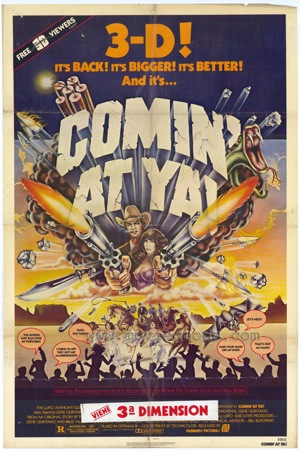
Let’s face facts. When notions of what a “good” movie is shrinks to the level of TV deepthink like Kramer vs. Kramer or Prince of the City, it may be time to bring the glories of the big-screen “bad” movie back again — at least if what we’re out for is fun and adventure. Unlike the most dutiful Oscar winners, whose notions of the good and proper usually revolve around the relatively straight and narrow, or the collected works of a Bergman or a Fellini that are even more consistent about their consistency — beating you into submission as they gradually meld into one all-purpose archetype — certain bad movies can boast range, unpredictability, and singularly distinctive tastes.
Indeed, a fascinating and suggestive literature has been accumulating for some time about bad movies, ranging from Jack Smith on Maria Montez to Myron Meisel on Edgar G. Read more
From the Chicago Reader (May 27, 1994). — J.R.
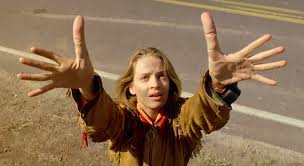
** EVEN COWGIRLS GET THE BLUES
(Worth seeing)
Directed and written by Gus Van Sant
With Uma Thurman, Rain Phoenix, John Hurt, Lorraine Bracco, Noriyuki “Pat” Morita, Angie Dickinson, Sean Young, Keanu Reeves, Crispin Glover, and Carol Kane.

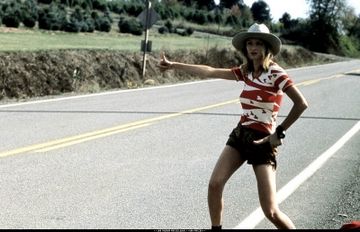
Sissy Hankshaw, born with oversize and decidedly phallic thumbs that inspire her to become a compulsive and virtuoso hitchhiker, never stopping anywhere long enough to pitch a tent, works occasionally as a model for a decadent New York queen known as the Countess, who uses her in feminine-hygiene-spray ads. He wants her to appear in a commercial featuring a flock of whooping cranes that periodically migrate through his dude ranch and beauty salon, the Rubber Ranch, and he sends her there, not realizing that the cowgirls running the place are on the verge of seizing it and turning it into a radical feminist collective with a different set of priorities.
This is the central premise of Tom Robbins’s 1976 hippie novel, though it hardly begins to describe its proliferating characters and issues. For starters, there’s a Mr. Natural sort of guru hiding out in the mountains overlooking the Rubber Ranch — a Japanese American known as the Chink, who periodically has sex with one of the cowgirls, Bonanza Jellybean, and eventually impregnates Sissy, and who maintains a Rube Goldberg sort of timepiece that was bestowed on him by a group of renegade Indians known as the Clock People. Read more
From the August 4, 1995 issue of the Chicago Reader. My thanks to Chris Petit for reminding me (on Memorial Day, 2010) that I wrote this. I’ve heard, incidentally, that Godard prefers the original title of JLG/JLG to its American release title, the one given here. — J.R.
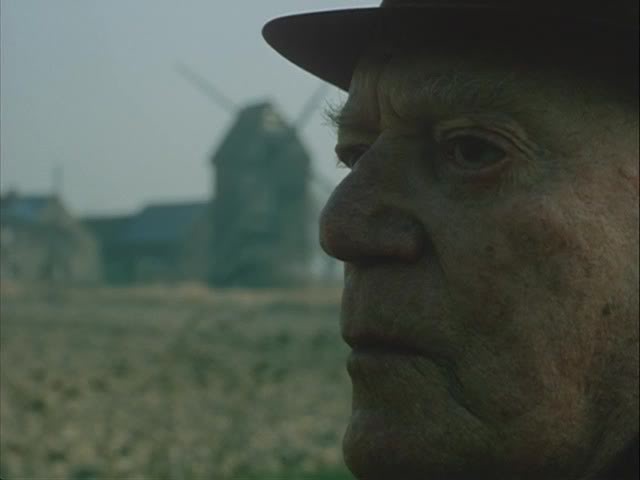

Germany Year 90 Nine Zero
Rating **** Masterpiece
Directed and written by Jean-Luc Godard
With Eddie Constantine, Hanns Zischler, Claudia Michelsen, Andre Labarthe, and Nathalie Kadem.
JLG by JLG
Rating *** A must see
Directed and written by Jean-Luc Godard
With Godard, Andre Labarthe, and Bernard Eisenschitz.
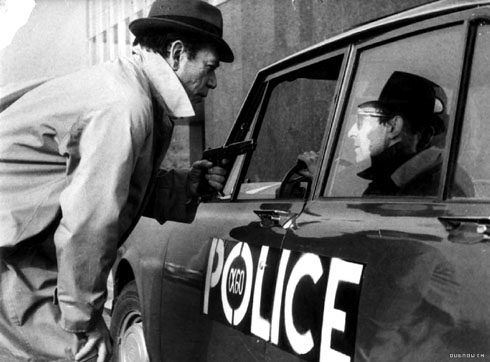
Like most of Jean-Luc Godard’s recent work, Germany Year 90 Nine Zero (1991) and JLG by JLG (subtitled December Self-Portrait, 1994) are annexes to his Histoire(s) du cinéma, a work on video in multiple parts scheduled to premiere in its finished form at the Locarno film festival in Switzerland in early August. (Four portions of this video have already shown at the Film Center.) Like the various parts of Histoire(s) du cinéma, these films (each about an hour long and being shown together at Facets Multimedia) are above all collections of carefully arranged quotations — interwoven anthologies of extracts from prose, poetry, philosophy, films, musical works, paintings. Read more
From the Chicago Reader (March 9, 2007). — J.R.

BAMAKO ****
DIRECTED AND WRITTEN BY ABDERRAHMANE SISSAKO | WITH AISSA MAIGA, TIECOURA TRAORE, HELENE DIARRA, ROLAND RAPPAPORT, AMINATA DRAMANE TRAORE, DANNY GLOVER, AND ELIA SULEIMAN

Before the main title of Abderrahmane Sissako’s startling new feature appears, an elderly farmer arrives at a hearing that’s being held in a shared backyard in a poor section of Bamako, the capital of Mali. He’s there to testify, but when he steps up to the microphone he’s told politely to remove his hat and wait his turn.
What’s on trial in this backyard court is globalization, particularly the high-interest loans of such organizations as the World Bank and the International Monetary Fund and the pressure they put on governments to cut costs by privatizing or ending social services and firing workers. Unlike the seemingly random everyday details that surround the mock trial — small talk, the performances of a pop singer in a club, the illness of the singer’s daughter, a wedding, clothes being dyed or hung out to dry — this public reckoning is obviously staged. A year before he began filming, Sissako hired the judge, prosecutors, and defense attorneys, real lawyers who wrote their own dialogue, mainly in French (we’re often reminded that Mali is a former colony of France). Read more
From the April 6, 2007 issue of the Chicago Reader. — J.R.
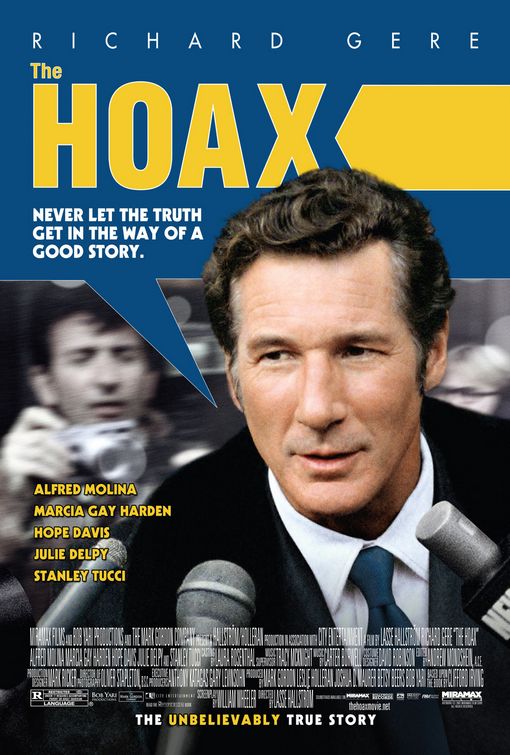

THE HOAX * DIRECTED BY LASSE HALLSTROM
WRITTEN BY WILLIAM WHEELER, FROM A BOOK BY CLIFFORD IRVING WITH RICHARD GERE, ALFRED MOLINA, HOPE DAVIS, MARCIA GAY HARDEN, STANLEY TUCCI, AND JULIE DELPY
THE CATS OF MIRIKITANI*** DIRECTED BY LINDA HATTENDORF
There are ways both official and unofficial to describe “the movies.” There’s the new releases the industry decides to push in the malls, and then there’s everything else, which we’re obliged to root out for ourselves. A schoolteacher I know in the wilds of Argentina selects and projects DVDs on a regular basis, and some of the stuff he shows — old experimental shorts, recent features by Abbas Kiarostami, Alexander Sokurov, and Gus Van Sant — is pretty specialized. But he must know his audience at least as well as any studio, because his screenings draw about 800 people a week.
I’d like to think that kind of niche viewing is the wave of the future, something that will put a lot of mall fare to shame. And applying this notion to a couple of features opening this week, I’d like to think that a quietly precious piece of artfully arranged storytelling like The Cats of Mirikitani and a brassy piece of bluster like The Hoax represent respectively the future and present of movies. Read more
From the Chicago Reader (August 31, 2007). — J.R.
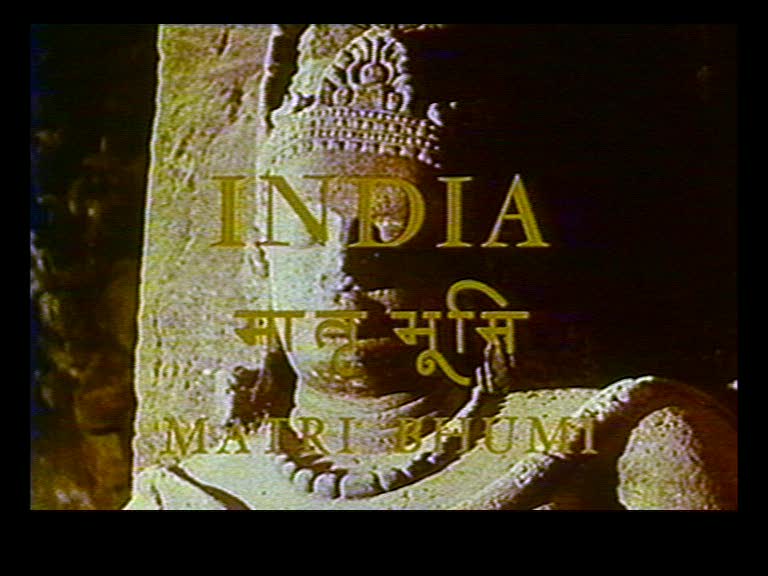
INDIA MATRI BHUMI ****
DIRECTED BY ROBERTO ROSSELLINI
WRITTEN BY ROSSELLINI, SONALI SENROY DAS GUPTA, FEREYDOUN HOVEYDA, AND JEAN L’HOTE
WITH A NONPROFESSIONAL, UNCREDITED CAST
From the beginning film has owed part of its fascination to its ambiguous marriage of documentary and fiction. Just after the war Roberto Rossellini came to prominence as a filmmaker through combinations of this kind. His best-known early works, Open City (1945) and Paisan (1946), are associated with the style popularly known as Italian neorealism, but through the 50s Rossellini experimented with increasingly adventurous mixes of reality and invention, culminating in 1959 with India Matri Bhumi, whose title means “India, Mother Earth.” It’s a sublime symbiosis of fable and nonfiction that poetically inter-relates humans and animals, city and village, society and nature.
At war’s end Rossellini was primarily concerned with the human devastation in Italy and Germany. But once he began working with Ingrid Bergman, with whom he was living after their affair busted up both their marriages, domestic issues started coming to the fore, particularly in such features as Europa 51, Voyage to Italy, and Fear. The Bergman films flopped both critically and commercially, though for the young critics of Cahiers du Cinema they were models of personal independent filmmaking that would help spark the French New Wave. Read more
From the Chicago Reader (March 29, 2007). — J.R.
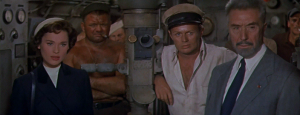
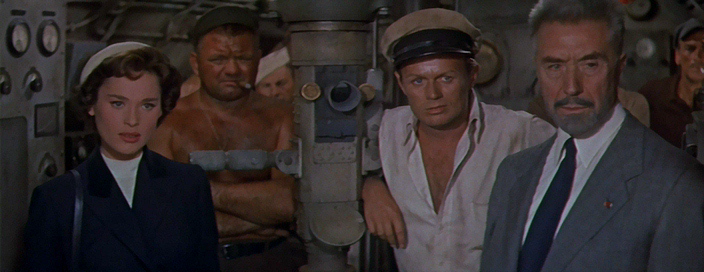
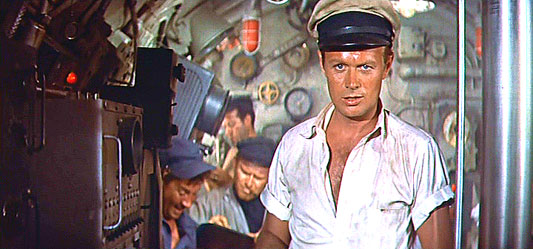
In this propagandistic but well-paced cold-war adventure (1954), a mercenary submarine captain (Richard Widmark) helps foil a Red Chinese plot to drop an atomic bomb on Korea from a U.S. plane. Fox hired director Samuel Fuller to shoot this in a few days, partly to prove that CinemaScope could work in tight spaces and on a limited budget, and he did a pretty good job with it. He even got to rewrite the script, defiantly giving Widmark a variant of the salty, unpatriotic line that J. Edgar Hoover had already tried and failed to get Fuller to delete from Pickup on South Street: “Are you waving the flag at me?” With Cameron Mitchell, David Wayne, Fuller regular Gene Evans, and Bella Darvi, the mistress of studio chief Darryl Zanuck. 103 min. (JR)
Read more
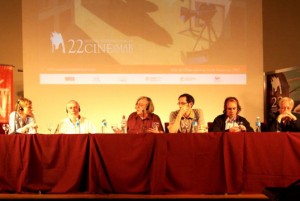
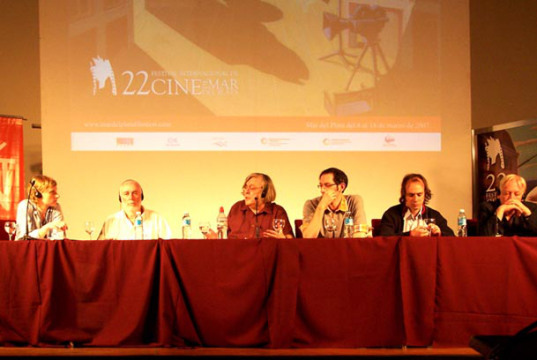
Last night, the final session of “Cinema of Tomorrow,” a symposium held over the last three days at the Mar del Plata International Film Festival, was my own, derived from an article that just appeared in the Spring issue of Film Quarterly: “Film Writing on the Web: Some Personal Reflections.” But as I interjected at one point, a more accurate title might have been, “Film Writing in English on the Web.”
The symposium was effectively organized by my friend Quintin (see photo, second from left) so that the six presentations over three days had a logical flow and development: two rather pessimistic analyses of the way film festivals operate, including Mar del Plata, by Peter van Bueren from Amsterdam and Mark Peranson from Vancouver (whose papers I briefly summarized in former posts); two looks at contemporary trends in films by Emmanuel Burdeau from Paris (who emphasized themes of globalization in films by Abbas Kiarostami, Hou Hsiao-hsien, and Jia Zhangke, among others) and Cristina Nord from Berlin (who offered fascinating comparisons between new Argentinean cinema and new German cinema, both strengthened as well as hampered by the task of coping with a dark political past); and on the final day, two rather optimistic analyses of contemporary cinephilia by Alvaro Arroba from Madrid and myself.
Read more

I miss the relative funkiness of Raul Ruiz’s low-budget films, but this internationally produced feature (2006) is probably the best of his more opulent work since Time Regained (1999). A series of speculative riffs on the Austrian painter Gustav Klimt, it stars John Malkovich in the title role. Unfortunately the Film Center has been able to book only the producer’s cut of the film, which is half an hour shorter than the version shown in France but feels half an hour longer. It’s been cut as if it were a biopic and sometimes registers as a failed one. But it’s still an eyeful. 97 min. (JR)
 Read more
From the Chicago Reader (January 26, 2007). — J.R.
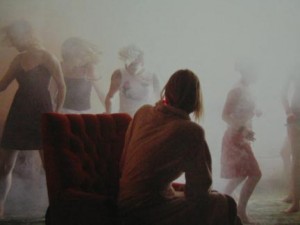
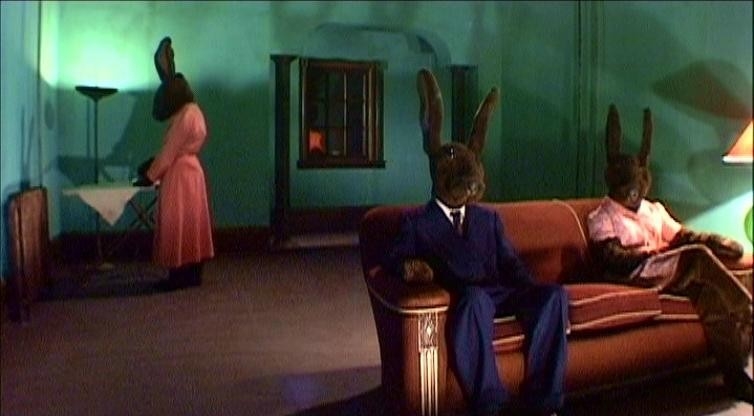
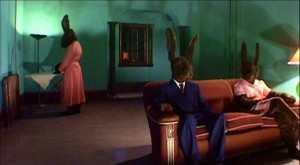
David Lynch’s first digital video is his best and most experimental feature since Eraserhead (1978). Shot piecemeal over at least a year and without a script, this 179-minute meditation builds on Lynch’s Mulholland Drive (2001) as a sinister and critical portrait of Hollywood. But it resists any narrative paraphrase, with several overlapping premises rather than a single consecutive plot. Laura Dern plays an actress who’s been cast in a new feature, as well as a battered housewife and a hooker; there are also Polish characters and a sitcom with giant rabbits in human clothes. The visual qualities include impressionistic soft-focus colors, expressionistic lighting, and disquietingly huge close-ups. With Justin Theroux, Jeremy Irons, Karolina Gruszka, Harry Dean Stanton, and Grace Zabriskie. In English and subtitled Polish. R. (JR)
 Read more
This essay, reprinted in my 2010 book Goodbye Cinema, Hello Cinephilia, appeared in French translation in Le Mythe du Director’s cut (Paris: Presses Sorbonne Nouvelle, 2008), a collection coedited by Michel Marie and François Thomas and adapted from a lecture I gave at a conference about “directors’ cuts” that was held at the Toulouse Cinémathèque in early 2007. I should add that this was written prior to the release of Blade Runner: The Final Cut, which I subsequently reviewed in the November 1, 2007 issue of the Chicago Reader. — J.R.
by Jonathan Rosenbaum
Perhaps the biggest source of confusion regarding the term “director’s cut” is the fact that it can serve both as a legal concept and as an advertising slogan, and both as an aesthetic theory and as an actual aesthetic praxis. In some instances, it can serve all of these functions, but I would argue that most of these instances occur in France —-the only country, to my knowledge, where the legal concept is backed up by an actual law pertaining to les droits d’auteur. And even here, I’ve been told that this law is not always and invariably a guarantee of artistic freedom. A few years ago, while he was working on Le temps retrouvé, Raúl Ruiz told me in effect that in some cases it could function as a law that took on the characteristics of a deceitful advertising slogan—-which is to say, that it doesn’t always function as an enforceable law, especially when larger sums of money are involved and various kinds of coercion are available to producers who want to impose their will on certain creative decisions made by filmmakers. Read more
From the Chicago Reader (November 22, 2007). — J.R.
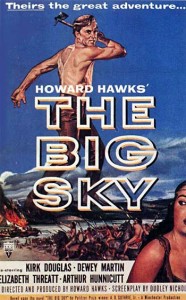
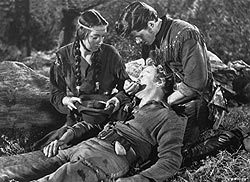
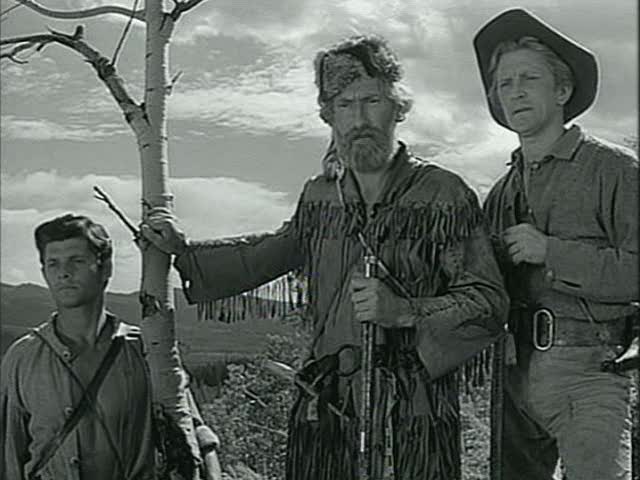
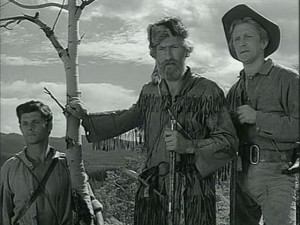
Though this sublime 1952 black-and-white masterpiece by Howard Hawks is usually accorded a low place in the Hawks canon, it’s a particular favorite of mine — mysterious, beautiful, and even utopian in some of its sexual and cultural aspects. Adapted (apparently rather loosely) by Dudley Nichols from part of A.B. Guthrie’s novel, this adventure stars Kirk Douglas and Dewey Martin as Kentucky drifters who join an epic trek up the Missouri River, along with the latter’s uncle (Arthur Hunnicutt), an Indian princess (Elizabeth Threatt), and a good many Frenchmen. The poetic feeling for the wilderness is matched by the camaraderie, yet there’s also a tragic undertone to this odyssey that seems quintessentially Hawksian — a sense of a small human oasis in the center of a vast metaphysical void. 140 min. (JR)
 Read more
The final intertitle of Nina Davenport’s 2007 documentary — “I had hoped for a happy ending . . . now I’m just looking for an exit strategy” — aptly suggests the parallel between the endless string of misjudgments that created the so-called Iraqi war and the ones that created this film about it. Spotting on MTV a 25-year-old Iraqi film student, Muthana Mohmed, whose school in Baghdad had been leveled by American bombs, Hollywood actor Liv Schreiber got the lousy idea of hiring him as a gofer on his lousy first feature as a director, Everything Is Illuminated, which was shot in Prague. Assigned to film Mohmed’s experiences, Davenport (who also had a crew filming his friends and family back home) soon found herself stuck with someone she didn’t like whose need to live his own life was incompatible with hers to finish her film. Nobody comes off well in this tragicomedy, about mutual exploitation by people who don’t know what they’re doing. But the eventual rude awakenings, among them Davenport’s, are thoughtful and enlightening — well worth the wait. 95 min. (JR) Read more