These program notes for a John Cassavetes retrospective in July 1980 were commissioned by the Museum of Modern Art’s Film Department, which as I recall edited them fairly substantially. (My subsequent “review” of the retrospective for The Soho News, “The Tyranny of Sensitivity,” is already available on this site.) I no longer have the unedited version, but I’ve tweaked this version in a few spots for style as well as factual accuracy without altering any of its opinions, some of which I might no longer share. -– J.R.
JOHN CASSAVETES, FILMMAKER AND ACTOR
June 20–July 11, 1980
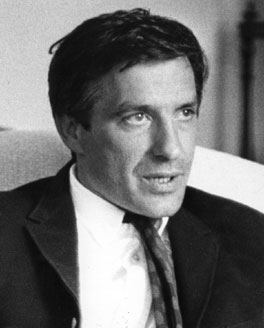
“I Can’t Give You Anything But Love,” the cornball anthem that sounds so memorably through the final moments of Cassavetes’ THE KILLING OF A CHINESE BOOKIE, might be a fair enough theme song for what his contribution to movies is all about: a radical commitment to people that goes beyond mere thought.
His attitude is one that often has been difficult to grasp, for in over three decades as director, writer, and actor, he has seldom encouraged, or even allowed, a detached appraisal.For someone like me, who grew up watching his performances in films and live TV dramas in the fifties before experiencing the raw shock and revelation of SHAD0WS in 1961, a disinterested account of what that shock meant is perhaps impossible. Read more
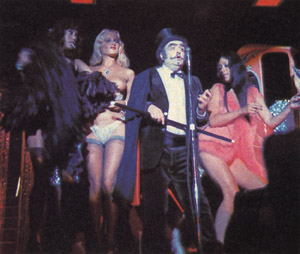
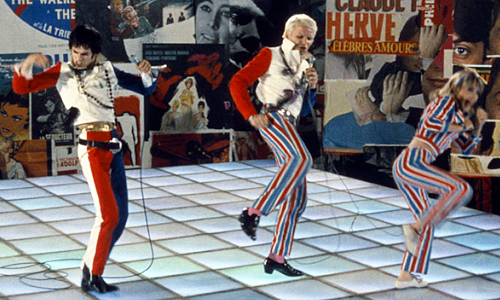
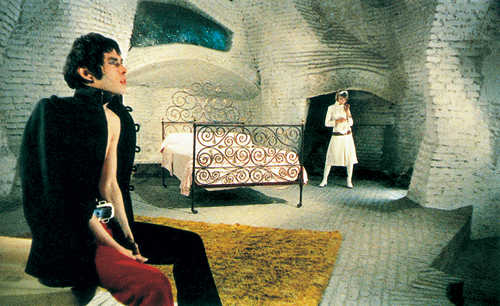
LES IDOLES, Marc’O’s film version of his theater piece, originally opened in Paris in May, 1968, when many of its spectators were out in the street and presumably had other things to think about. It was released again early this year; but after a nominal run in one of several new mini-cinemas that have springing up lately all over the Left Bank, it seemed to vanish into oblivion a second time, only to re-emerge in a neighborhood house in early February, where it is currently playing. Talent does usually seem to find a way to reassert itself. Marc’O’s sarcastic parody about the making and merchandising of pop has nothing particularly profound or original to “say” about its subject, but it happens to have three of the liveliest performances in the modern French cinema.
Bulle Ogier, Jean-Pierre Kalfon, and Pierre Clementi, as the three pop stars, dive into their parts with such enthusiasm and expertise that the screen comes alive with their electric energies, and one can only speculate on how much more spectacular they must have been on the stage. (Despite some clever attempts at adaptation, LES IDOLES stubbornly remains another variant of filmed theater — a good thing to have, under the circumstances, but like Shirley Clarke’s ingenious recording of THE CONNECTION, it cannot really offer an equivalent to the excitements of a live performance.)Read more
With Peter Sellars, Burgess Meredith, Jean-Luc Godard, Molly Ringwald, Norman Mailer, Kate Miller, Leos Carax, and Woody Allen.
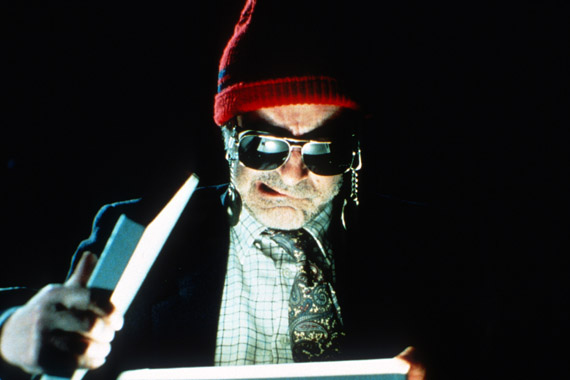
Jean-Luc Godard’s latest monkey wrench aimed at the Cinematic Apparatus — that multifaceted, impregnable institution that regulates the production, distribution, exhibition, promotion, consumption, and discussion of movies — goes a lot further than most of its predecessors in creatively obfuscating most of the issues it raises. Admittedly, Hail Mary caused quite a ruckus on its own, but mainly among people who never saw the film. King Lear, which I calculate to be Godard’s 34th feature to date, has the peculiar effect of making everyone connected with it in any shape or form — director, actors, producers, distributors, exhibitors, spectators, critics — look, and presumably feel, rather silly. For better and for worse, it puts us all on the spot; as Roland Barthes once wrote of Pier Paolo Pasolini’s Saló, it prevents us from redeeming ourselves.
From its birth, a table-napkin contract signed by Godard and producer Menahem Golan of Cannon Films at the Cannes Film Festival in 1985, to its disastrous world premiere at Cannes two years later, the project has always seemed farfetched and unreal, even as a hypothesis. Read more
From the March 1, 2002 issue of the Chicago Reader. — J.R.
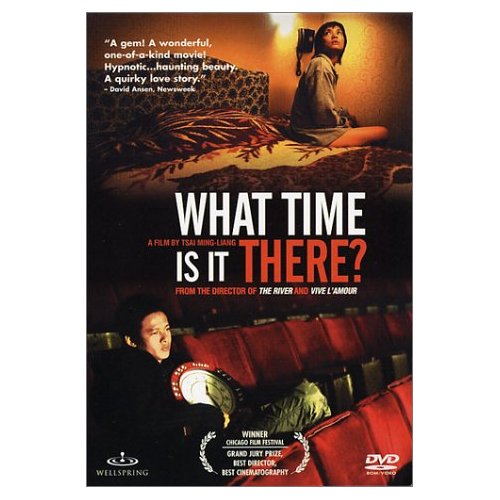
What Time Is It There?
**** (Masterpiece)
Directed by Tsai Ming-liang
Written by Tsai and Yang Pi-ying
With Lee Kang-sheng, Chen Shiang-chyi, Lu Yi-ching, Miao Tien, Cecilia Yip, and Jean-Pierre Léaud.
After hearing the adagio of a Schubert chamber work: there is nothing more beautiful than the happy moments of unhappy men. This might serve as a definition of art. — The Diaries of Kenneth Tynan
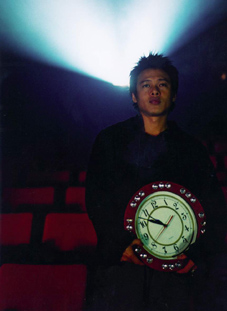
Toward the beginning of his essay “The Crack-Up,” F. Scott Fitzgerald notes that “the test of a first-rate intelligence is the ability to hold two opposed ideas in the mind at the same time, and still retain the ability to function.” That might well describe the agenda of a poetic and philosophical Taiwanese-French feature, Tsai Ming-liang’s glorious two-part invention What Time Is It There?, which premiered at Cannes last year and is opening at the Music Box this week (assuming the theater reopens after some trouble with health inspectors). It feels more contemporary, at least from a global perspective, than any other new movie in town, and central to it is an examination of separateness and togetherness, unity and disparity in two separate countries in two separate parts of the world. Read more
The following was commissioned for and included in the 17th edition of the Time Out Film Guide, (2008), and is being reprinted with the publisher’s permission. Thanks also to John Pym, the book’s editor, who proposed that I write this piece so that it would come out before the Presidential election. –J.R.
BUSHWHACKED CINEMA
by Jonathan Rosenbaum
When the history of American movies during the eight-year reign of George W. Bush (2001-2009) eventually comes to be written, one might hypothesize that the commercial development of the mobile phone during the 1980s and 1990s and the introduction of the iPod during the first year Bush took office were crucial in setting the stage for some of the basic conditions of that era. Arguably for the first time, one could easily sustain one’s ignorance about and indifference to one’s fellow citizens even while sharing the same public space with them–on the street or in other public locations dedicated to some form of transport: terminals, buses, subways, trains, planes, fairgrounds, theme parks, and, above all, cinemas.
So the phenomenon of a U.S. President who, to all appearances, preferred to remain blissfully (and strategically) ignorant about the news and the overall state of the world, and ran his office accordingly, was part and parcel of this growing trend to eliminate the public sphere from American life and subdivide the entire culture and society into `special interest’ groups and niche markets.Read more
Written for the April 2015 issue of Sight and Sound. — J.R.
Jacques Rivette’s preference for longer films over shorter ones has led to many alternate versions over the course of his career, starting with a two-hour version of L’amour fou (1968, 250 min.) that the director disowned, though it premiered in Paris at the same time as the longer one, and attracted fewer spectators. The differences between the 750-minute Out 1 (1970), composed as an eight-part serial, and the 260-minute Out 1: Spectre (1971), designed as a feature, are far more important: the first is a free-form comedy whereas the second, a tightly edited nightmare fashioned out of the same footage, took Rivette a year to put together, with a separate editor. Most fascinating of all is the fact that the same shots sometimes have substantially different meanings and impacts. Fortunately, both versions are now available in a lovely German box set from Absolut Medien in which the serial has optional English subtitles. Together and separately, these two films remain Rivette’s key achievement, along with L’amour fou and the 1974 Celine and Julie Go Boating. (For the latter, Rivette even signed a contract stipulating that his comedy wouldn’t run over two hours, but then everyone who saw the 185-minute work print agreed that it shouldn’t be cut.) Read more
Written forThe Unquiet American: Transgressive Comedies from the U.S., a catalogue/ collection put together to accompany a film series at the Austrian Filmmuseum and the Viennale in Autumn 2009. — J.R.
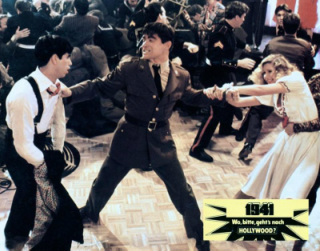
1941 (1979)
One of Steven Spielberg’s most underrated films is
not only a virtuoso piece of filmmaking but a flagrant
piece of mean-spiritedness and teenage irreverence
that underlines aspects of his work that his more popular
and commercially successful works tend to either
disguise or rationalize. Both of these qualities
are partially the contributions of cowriter Robert
Zemeckis –- who exhibits these traits more independently
on such later features as Used Cars (1980)
and Forrest Gump (1994). But there’s also a strain
that one might associate with the more progressive
and Tashlinesque reflexes of a Joe Dante, helping to
explain why John Wayne not only refused indignantly
to play in this comedy but also tried to persuade
Spielberg that making such a movie was tantamount
to spitting on the American flag. In Spielberg’s
hands, much of the comedy here seems to derive
from a desire to see large sets destroyed as if they
were Tinker toy constructions, complete with tuttifrutti
mixtures of splattered paint, and without the
messy inconvenience of either deaths or morals. Read more
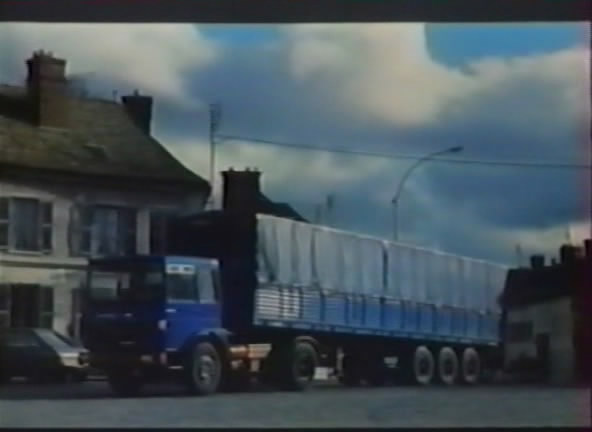
One thing suggested by Sanford Schwartz’s editing of The Age of Movies: Selected Writings of Pauline Kael (Library of America) is that Kael’s editing of her own work is superior to his. I admire his discernment in including her thoughtful and uncharacteristically generous review of Marguerite Duras’ Le camion (The Truck) — even though I regret the suppression of its original context, in the September 26, 1977 issue of The New Yorker, where it was sandwiched between Kael’s eloquent two-paragraph dismissal of Star Wars and a longer mixed review of Short Eyes, in a column pointedly called “Contrasts”.
In her final collection For Keeps (1994), Kael omitted the other two reviews, but she also had the foresight to delete the final sentence of her review of The Truck, which referred to its original context: “At the opposite end from popcorn filmmaking, it’s a demonstration of creative force — which doesn’t always cut as clean as that laser sword in Alec Guinness’s hand.” Schwartz also leaves out the reviews of Star Wars and Short Eyes, yet he retains the final sentence in the review of The Truck, which now reads like a non sequitur coming from left field (or from outer space). Read more
For viewers (and listeners) who feel that the great Dizzy Gillespie didn’t receive his due in Bird, this conventionally made but charismatic and enjoyable documentary by John Holland (1998, 85 min.) about the jazz trumpeter’s concert in Cuba, occasioned by the fifth International Jazz Festival of Havana, goes a long way toward making up the difference. Gillespie’s personality and music shine in this setting, and his contributions to Afro-Cuban music — including his association with Cuban drummer Chano Pozo and many of his best tunes in the 40s — are acknowledged in this congenial context. Fidel Castro makes a cameo. (JR) Read more
From the Chicago Reader (November 1, 1994). — J.R.
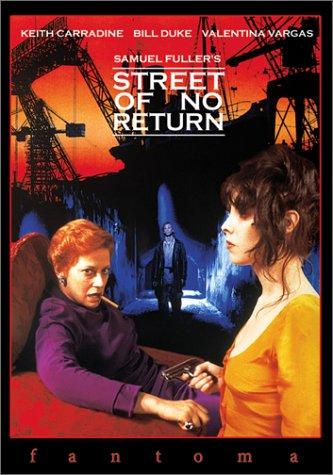
After the extensive recutting of his The Big Red One and the virtual shelving of his White Dog, American writer-director Sam Fuller reluctantly chose creative exile in Paris. In many ways the most elaborate and ambitious of his post-American features is this 1989 noir, an adaptation (by Fuller and producer Jacques Bral) of a David Goodis novel that was shot in Portugal. It stars Keith Carradine as a famous pop singer who winds up on skid row after he falls for a mysterious woman and gets his throat cut by her gangster boyfriend; much of the story is told in flashback after he’s arrested during a race riot. Recognizably (and enjoyably) Fuller-esque in its caustic violence, its punchy yellow-press dialogue, and its campy sensationalism, the movie is hampered — to the point of becoming weirdly discombobulated — by its use of Lisbon locations to stand in for American ones; the experience is every bit as disconcerting as Anthony Perkins’s American accent in Orson Welles’s version of Kafka’s The Trial. The singular vision of Fuller in his late 70s, tied as always to his passionate and radical view of the U.S., Read more
Michael Almereyda’s first feature (1989) as director (he later made Nadja and a likable modern-dress Hamlet) is a daffy and endearing portrait of an eccentric family in Kansas that includes a soda-pop tycoon (Harry Dean Stanton) and a would-be pop singer (Crispin Glover); Lois Chiles plays Stanton’s fiancee, the hostess of a religious TV show for kids. Full of off-center humor and sidelong observations about some bizarre but lovable people and their cultural distractions, it’s marred only by an inappropriate music score by Hans Zimmer. Based on Mary Robinson’s novel Oh!; with Suzy Amis, Dylan McDermott, Jenny Wright, Lindsay Christman, Charlaine Woodard, Tim Robbins, and William S. Burroughs. 93 min. (JR) Read more
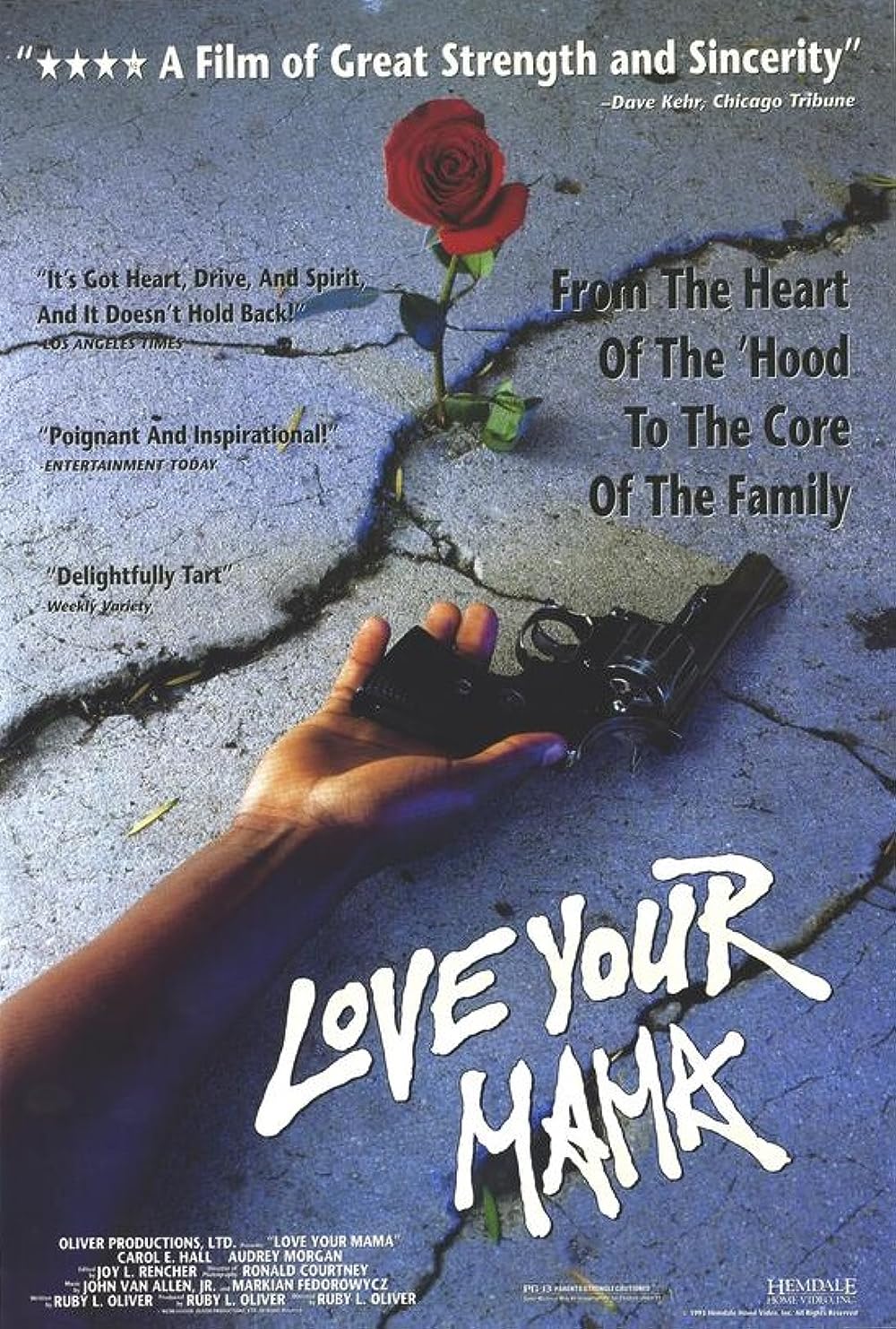
After a long and successful career in day care, Ruby L. Oliver made this, her first feature, originally known as Leola, in her late 40s. It’s a remarkable debut: assured, highly focused, surprisingly upbeat considering the number of problems it addresses without flinching–and the best low-budget Chicago independent feature that I’ve seen. Set in contemporary Chicago, it concerns a 17-year-old girl from the ghetto whose plans for the future are jeopardized when she finds herself pregnant. In addition, her brothers are gradually drifting into a life of crime, her mother is having difficulty maintaining a day-care center without a license, and her stepfather is an alcoholic and philanderer. The plot line is concentrated and purposeful, and the cast–including Carol E. Hall, Audrey Morgan (particularly impressive as the mother), Earnest Rayford, Andre Robinson, and Kearo Johnson–is uniformly fine. In addition to writing, directing, producing, and financing the film, Oliver is also credited with casting, served as set decorator and location manager, and sang as well as wrote the lyrics to the film’s theme song (1989). (Film Center, Art Institute, Columbus Drive at Jackson, Friday, July 27, 6:00 and 8:00; Saturday, July 28, 3:00; Sunday, July 29, 1:00; and Monday through Thursday, July 30 through August 2, 6:00; 443-3737) Read more
Writer-director Michael Roemer’s only well-known feature previous to this was the skillful Nothing but a Man (1964), about the experiences of a black couple living in Alabama. The Plot Against Harry was shot in black and white in 1969 but neither completed nor shown until 1989. A delightful, offbeat comedy, it follows a sad-eyed, small-time New York numbers racketeer named Harry Plotnick (Martin Priest) who has just emerged from prison after many years. Finding that life has passed him by, he gamely tries to buy his way into middle-class respectability, though his wife despises him and he’s a total stranger to his kids. In the course of conducting business, he passes through a picaresque succession of locations and noisy events — bar mitzvah, fashion show, dog-training session, and an endless stream of parties — yet the movie’s pace is leisurely, the humor quiet and affectionate, in striking contrast to the brassy world Harry moves through. Beautifully shot (by coproducer Robert M. Young, a director in his own right) and featuring a wonderful cast of unknowns (including Ben Lang, Maxine Woods, Henry Nemo, Jacques Taylor, Jean Leslie, Ellen Herbert, and Sandra Kazan), this is both a lovely piece of filmmaking and an exquisitely detailed portrait of a milieu and period, like a time capsule recently opened. Read more
Film India: Indian Film Festival Museum of Modern Art, through August 23
Buster Keaton Film Festival Lincoln Plaza, through September 19
Directed for Comedy Regency, through October 17
Honky Tonk Freeway Written by Edward Clinton
Directed by John Schlesinger, opens August 21
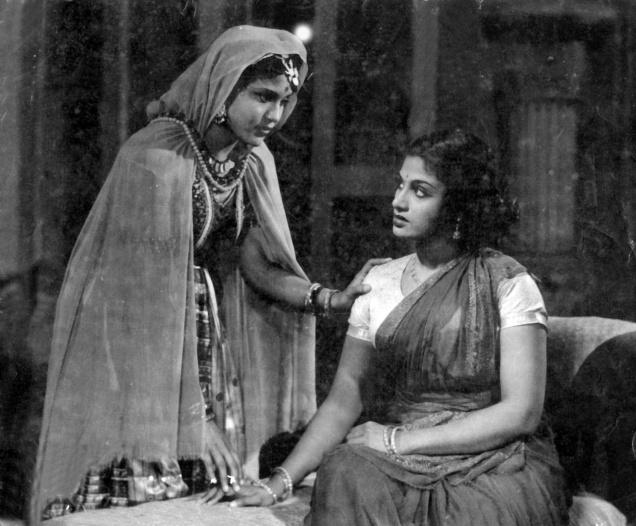
AUGUST 7: The first movie I see for this column isn’t a light comedy, but it sure puts me in a sunny mood. The prospect of a three-hour Indian film in Temil with no subtitles is a little off-putting, I would say -– wouldn’t you? On my way into the sparsely populated auditorium of the Museum of Modern Art this afternoon, I hear not one but two separate senior citizens crack jokes about what a nice opportunity this is for a nap.
And yet, just as Indian film buff Elliott Stein has predicted, I have surprisingly little trouble following the plot and action of Chandralakha (1948). The quaintly illusionistic charm of a black-and-white movie like this, about a good and bad brother vying for the throne in a mythical kingdom – with a large palace protected by a drawbridge –- is part of its primal pull from the beginning. Read more
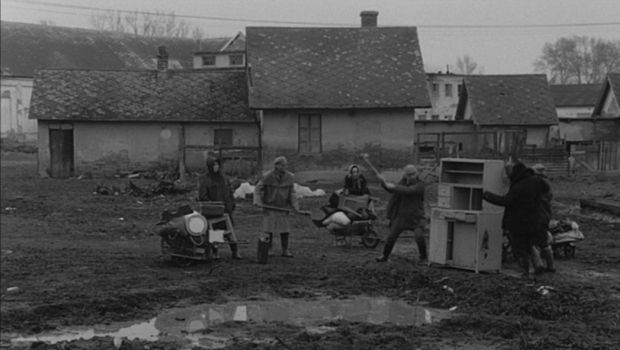
Many friends and colleagues have been moaning about what a bad year 1994 was for movies, but I disagree. The main issue, I think, isn’t so much how we feel about the same movies — though there are a few differences there, including in some cases where and when we happened to see them — as it is what we saw. If you’re lucky enough to be living in Chicago, you had loads of terrific movies to see last year, new as well as old, and if you didn’t see very many of them, it’s possible that you were looking in the wrong places — where the mass media was telling you to look. Because of their running times, my two favorite films, the seven-hour Satantango and the nearly 26-hour The Second Heimat, received only limited exposure, yet I refuse to accept the standard alibi of most critics who neglected to see them — that they were too difficult or esoteric for the general public. I found them easier to sit through and vastly more involving and pleasurable than such overhyped and overattended European monoliths as Germinal and Queen Margot, which to the best of my knowledge gave little enjoyment to most people. Read more