The Human Touch [THE DECALOGUE & FARGO]

From the Chicago Reader (March 29, 1996). — J.R.
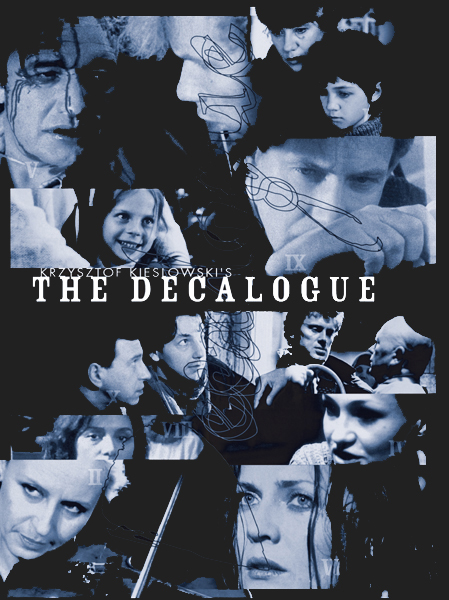
The Decalogue

Directed by Krzysztof Kieslowski

Written by Kieslowski and Krzysztof Piesiewicz

With Henryk Baranowski, Krystyna Janda, Aleksander Bardini, Daniel Olbrychski, Maria Pakulnis, Adrianna Biedrzynska, Janusz Gajos, Miroslaw Baka, Krzysztof Globisz, Jan Tesarz, Grazyna Szapolowska, Olaf Lubaszenko, Anna Polony, Maria Koscialkowska, Teresa Marczewska, Ewa Blaszczyk, Piotr Machalica, Jerzy Stuhr, and Zbigniew Zamachowski.

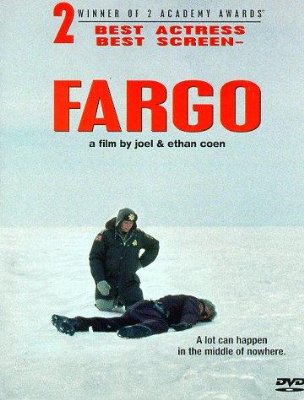
Fargo

Directed by Joel Coen

Written by Ethan Coen and Joel Coen

With Frances McDormand, William H. Macy, Steve Buscemi, Peter Stormare, Kristin Rudrud, Harve Presnell, Steven Reevis, John Carroll Lynch, and Steve Park.

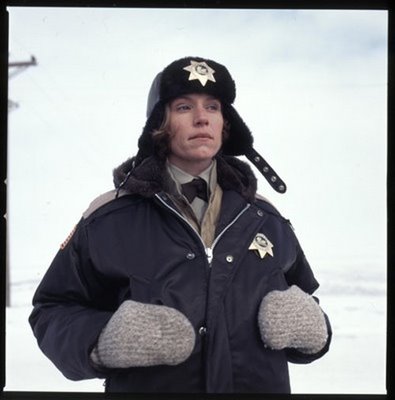
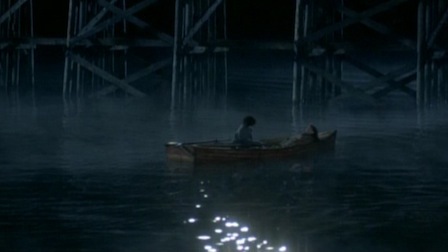
One way of judging the importance of filmmakers is by looking at the kind of talk they generate among their audiences. Since the recent death of the 54-year-old Krzysztof Kieslowski during open-heart surgery, one of the key points of speculation about him is whether he knew when he announced his retirement a couple of years ago that he had a heart condition. As evidence that he did, one could cite the fact that the “twin” Polish and French heroines of his The Double Life of Veronique (1991) suffer from heart conditions, and one ultimately dies from hers; as evidence that he didn’t, one could note that Kieslowski was a heavy smoker and continued to smoke after his announcement (though he may have been simply reckless). Read more
Entries in 1001 MOVIES YOU MUST SEE BEFORE YOU DIE (the second dozen)

These are expanded Chicago Reader capsules written for a 2003 collection edited by Steven Jay Schneider. I contributed 72 of these in all; here are the second dozen, in alphabetical order. — J.R.

The Discreet Charm of the Bourgeoisie

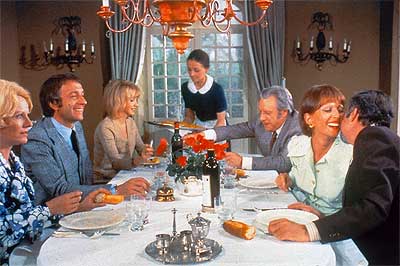
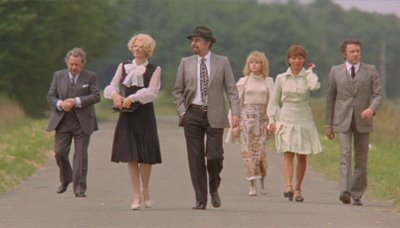
Luis Buñuel’s 1972 comic masterpiece, about three well-to-do couples who try and fail to sit down and have a meal together, is perhaps the most perfectly achieved and executed of all his   late French films. The film proceeds by diverse interruptions, digressions, and interpolations (including dreams, dreams within dreams, and tales within tales) that, interestingly enough, identify the characters, their class, and their seeming indestructibility with the very processes of narrative illusion and narrative continuity themselves — their rewards as well as their compulsions, their pleasures and their frustrations.

Frightening, funny, profound, and mysterious, the various episodes involving these and other characters (including Jean-Pierre Cassel and Paul Frankeur) are like an anthology of Buñuel’s themes, favorite gags, and recurring nightmares. The film was produced by Serge Silberman and coscripted by Jean-Claude Carrière, perhaps the two most essential friends and collaborators in the flowering of Bunuel’s late period, though Buñuel regulars Rey, Frankeur, and Julien Bertheau might also be cited. Read more

Sex and the Single Guy

From the Chicago Reader (November 19, 2004). — J.R.

Alfie

* (Has redeeming facet)

Directed by Charles Shyer

Written by Elaine Pope and Shyer

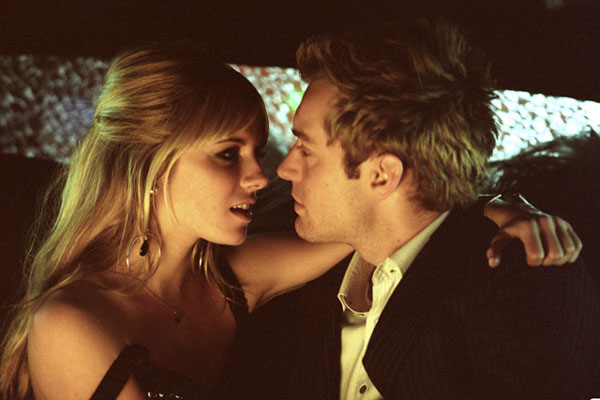
With Jude Law, Marisa Tomei, Omar Epps, Nia Long, Jane Krakowski, Sienna Miller, and Susan Sarandon

After the Sunset

** (Worth seeing)

Directed by Brett Ratner

Written by Paul Zbyszewski and Craig Rosenberg

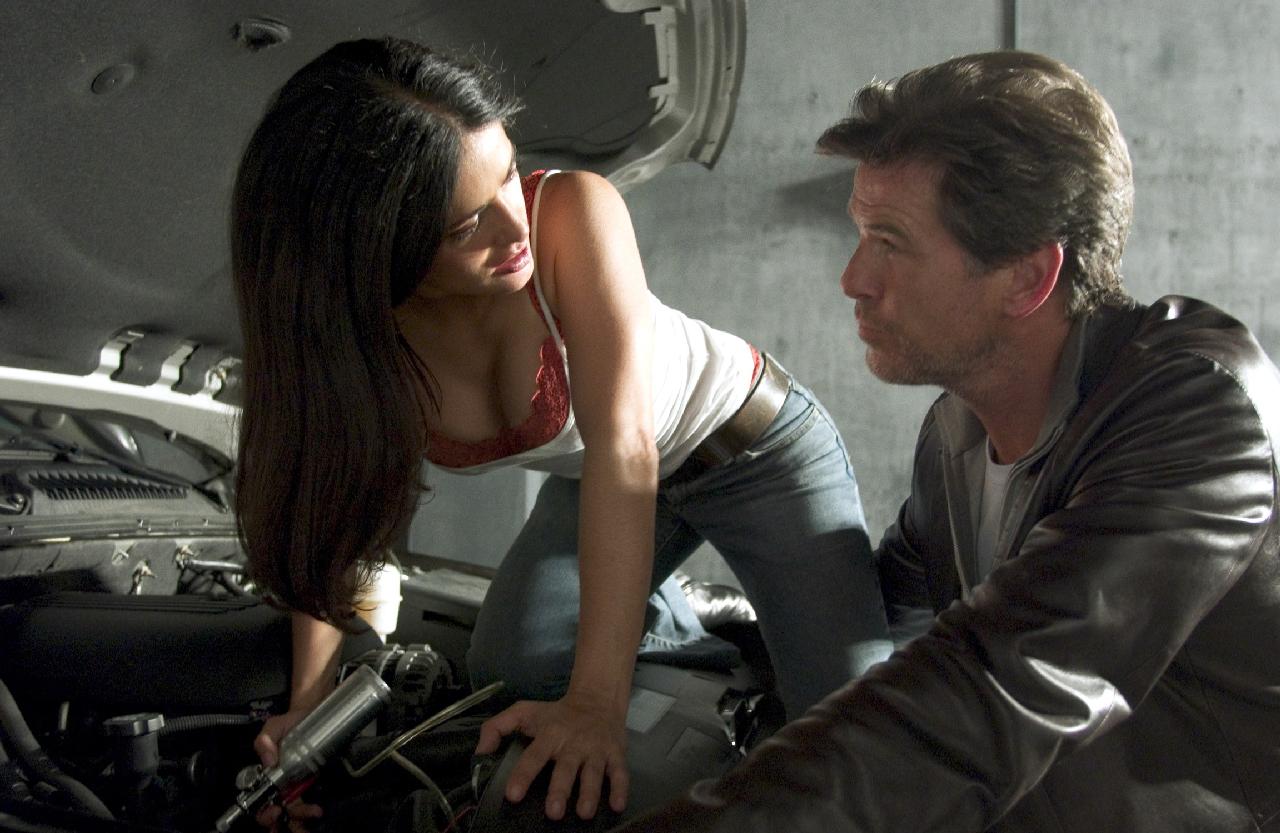
With Pirece Prosnan, Salma Hayek, Woody HArrelson, Naomie Harris, and Don Cheadle

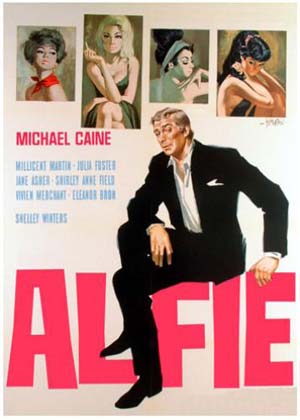
The terrible thing about most remakes is that they downgrade borrowed experience. I’ve never been a big fan of the 1966 Alfie, a precise, bittersweet portrait of a misogynistic cockney lady-killer in a sordidly downscale London. But it’s unequivocally a reflection of things that have been lived, above all by Bill Naughton (adapting his own play) and Michael Caine (whose cockney background helped make the title role indelibly his own). The special kind of music these two make together, under Lewis Gilbert’s efficient direction, matches the brashness of Sonny Rollins’s score and tenor sax solos.

So what would motivate a remake? Director and cowriter Charles Shyer seems to think he’s come up with contemporary counterparts. He also seems to think the class consciousness, cockney accents, English settings, fleshed-out characters, social milieu, and period of the original are all expendable — raising the question of what Alfie is without them. Read more

Social Climbing (THE AGE OF INNOCENCE)

This remains one of the most controversial reviews I ever published in the Chicago Reader (it ran in their September 17, 1993 issue) — occasioning many outcries, especially for my use of the term “drooling paisan” (although many others also quarreled with my point about apostrophes). No one, however, seemed to have had any quarrels with my treatment of Edith Wharton. — J.R.

THE AGE OF INNOCENCE

Directed by Martin Scorsese

Written by Jay Cocks and Scorsese

With Daniel Day-Lewis, Michelle Pfeiffer, Winona Ryder, Stuart Wilson, Miriam Margolyes, Geraldine Chaplin, Mary Beth Hurt, and Norman Lloyd.

Martin Scorsese clearly intends The Age of Innocence — his close adaptation of Edith Wharton’s 1920 novel about wealthy New York society in the 1870s — to earn him a bouquet of Oscars. But the high literary tone was somewhat blown for me by the opening title, immediately following a lush credits sequence of flower blossoms unfurling behind dainty fabric: “New York City, the 1870’s.” That superfluous apostrophe doesn’t exactly inspire confidence that Scorsese is the ideal interpreter of Edith Wharton.

Fortunately the movie improves after that, but never to the point that one can entirely forget that slip at the beginning. If the project winds up a noble failure, testifying throughout to Scorsese’s resourcefulness in plowing through an impossible mission — much better to my taste than Cape Fear, and considerably more likable (if less successful) than GoodFellas — it may be because the subject is diametrically opposed to what he usually does best as a filmmaker. Read more

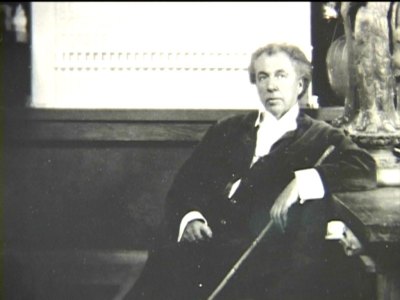
Wright in Japan [Magnificent Obsession: Frank Lloyd Wright’s Buildings and Legacy in Japan]

This originally appeared in the July 22, 2005 issue of the Chicago Reader; I’ve slightly extended it here, pictorially as well as verbally, on February  8, 2010. — J.R.

MAGNIFICENT OBSESSION: **
FRANK LLOYD WRIGHT’S
BUILDINGS AND LEGACY
IN JAPAN

DIRECTED BY KAREN SEVERNS
AND KOICHI MORI
WRITTEN BY SEVERNS
NARRATED BY AZBY BROWN AND
DONALD RICHIE

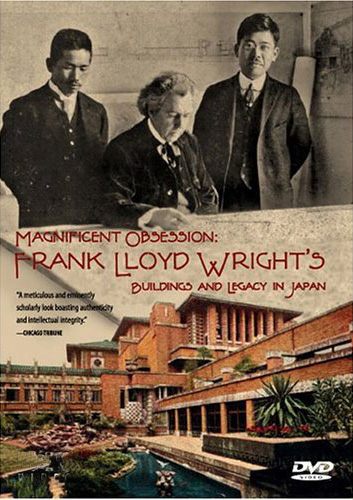
It’s widely known that Japan had a profound influence on the work of Frank Lloyd Wright. But how many of us have the chance to discover that the reverse is also true? According to the commentary written by Chicago native Karen Severns for Magnificent Obsession: Frank Lloyd Wright’s  Buildings and Legacy In Japan — a 128-minute American documentary (2004) she made with her Japanese husband Koichi Mori, which also exists in a Japanese version —- the effort to distinguish between emulations and imitations of Wright in Japanese architecture criticism is no small affair, and “At one point, there were 32 Wright-related terms in the [Japanese] architectural lexicon.”

One could posit a certain analogy between this oscillating cultural exchange and a process set in motion by some young, maverick French film critics in the 50s. Their eccentric enthusiasm for some Hollywood directors produced a new kind of French cinema and French film criticism, and this wound up influencing 60s Hollywood and American film criticism in turn. Read more

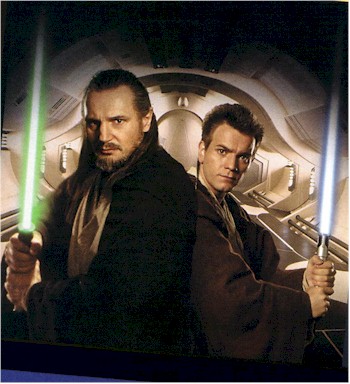
Summer Camp [STAR WARS: EPISODE 1 — THE PHANTOM MENACE & TREKKIES]

As far as I know, this is the only long review of mine for the Chicago Reader that isn’t on the Reader‘s web site, and consequently it wasn’t on this site, either, until I retyped it for inclusion here. It appeared in their May 17, 1999 issue. It’s also one of the pieces selected and translated into Farsi by Saeed Khamoush for the unauthorized collection of some of my Reader pieces that was published in Iran back in 2001. — J.R.

STAR WARS: EPISODE 1—THE

PHANTOM MENACE

**

Directed and written by George Lucas

With Liam Neeson, Ewan McGregor,

Natalie Portman, Jake Lloyd, Ian McDiarmid,

Pernilia August, Ahmed Best, Frank Oz,

Samuel L. Jackson, and Ray Park.

TREKKIES

0

Directed by Roger Nygard

The big question about the Star War series, and The Phantom Menace in particular, isn’t how much you like it but whether you love it. The issue is above all generational, and only secondarily a matter of aesthetic or ideological choices.

If you’re male and were born around 1989, the chances of you loving The Phantom Menace seem fairly high. If you’re male or female and were born around 1967, the chances of you loving it are probably almost as high. Read more

Cult of Personality (LET’S GET LOST)

From the July 21, 1989 Chicago Reader. — J.R.

LET’S GET LOST ** (Worth seeing)

Directed by Bruce Weber.

Can you carry a tune? Is your time all right? Sing! If your voice has hardly any range, hardly any volume, shaky pitch, no body or bottom, no matter. If it quavers a bit and if you project a certain tarnished, boyish (not exactly adolescent, almost childish) pleading, you’ll make it. A certain kind of girl with strong maternal instincts but no one to mother will love you. You’ll make it. The way you make it may have little to do with music, but that happens all the time anyway.

This is jazz critic Martin Williams 30 years ago in a Down Beat review of It Could Happen to You: Chet Baker Sings. By this time, the youthful Baker had already established a reputation as a jazz trumpeter of some promise, and later in the same review, Williams concedes that as an improvising musician, he has a “fragile, melodic talent” that is “his own,” even if he “has hardly explored it.” The same strictures might apply to Let’s Get Lost, Bruce Weber’s spellbinding (if simpleminded) black-and-white documentary about the life, times, and last days of Chet Baker. Read more

An Altman [on A WEDDING]

From the September-October 1978 issue of Film Comment. — J.R.

An Altman

By Jonathan Rosenbaum

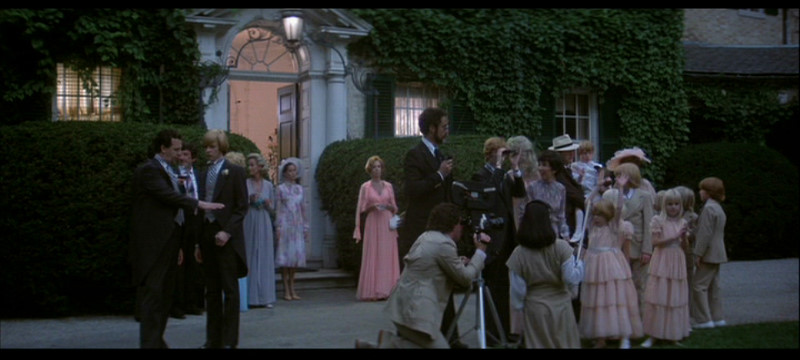
Doubling the number of featured players in Nashville from twenty-four to forty-eight while shrinking the time scale from three days to one, A Wedding offers an extension rather than an expansion of Robert Altman’s behavioral repertory. Variations on the same dirty little secrets, social embarrassments, and isolating self-absorptions that illustrate his last ten movies are trotted out once again -– articulated as gags or tragicomic mash notes, molded into actors’ bits, arranged in complementary or contrasting clusters, orchestrated and choreographed into simultaneous or successive rhythmic patterns, and strategically timed and placed to coincide with unexpected plot or character reversals.

The execution of these pirouettes has never presented critics with much of a problem, for the level of craft is pretty consistent. (Some gags are funnier than others, but all get the same careful/offhand inflection.) What remains a bone of contention is their justification, which shifts more discernibly from film to film. M*A*S*H’s was that war could be fun while Brewster McCloud’s said that escape was impossible; Images and 3 Women depended on shopworn arthouse symbols while Nashville and Buffalo Bill and the Indians put the American flag to comparable use. Read more

Iranian Sights [LIFE AND NOTHING MORE]

From the October 23, 1992 Chicago Reader. This represents my very first attempt to write about Kiarostami’s cinema in a longer review, while I was still beginning to get acquainted with it, and I very much regret my serious underestimation of  Where is The Friend’s House? (whose title I and others also got wrong at the time). On the matter of Tati and Kiarostami, Kiarostami has always denied having heard of him whenever I’ve brought up the name, but his former collaborator Amir Naderi affirmed that Kiarostami certainly knew who he was, having been present at the Children’s Film Festival in Tehran when Tati headed the jury there in the mid-1970s (and in fact, I was reminded by Amir’s remarks that Richard Combs, my boss at the time in London, served on the same jury). In fact, I’ve learned from Ehsan Khoshbakht that this festival was sponsored by Kanun, where Kiarostami was employed at the time. — J.R.


AND LIFE GOES ON . . . (LIFE AND NOTHING MORE)

**** (Masterpiece)

Directed and written by Abbas Kiarostami

With Farhad Kheradmand and Pooya Pievar.

It’s fascinating to consider the ideological factors that influence how film canons are formed, especially when it comes to films that depict unfamiliar cultures. Read more

Huckleberry Fem [HOUSEKEEPING]

This was originally published in the January 22, 1988 issue of the Chicago Reader. — J.R.

HOUSEKEEPING **** (Masterpiece)
Directed and written by Bill Forsyth
With Christine Lahti, Sara Walker, Andrea Burchill, Anne Pitoniak, Margot Pinvidic, and Bill Smillie.

Two or three days and nights went by; I reckon I might say they swum by, they slid along so quiet and smooth and lovely. — The Adventures of Huckleberry Finn

Marilynne Robinson’s novel Housekeeping is virtually defined by its slow, swirling rhythms, but one of the first things that is apparent about Bill Forsyth’s passionate, faithful film adaptation is that, as story telling, it starts out with a hop, skip, and jump; and although an idea of leisurely pacing is sustained throughout, the movie never dawdles, stalls, or grinds to a halt. Like the magical opening of Terrence Malick’s 1973 Badlands and the no less incandescent ending of his 1978 Days of Heaven –- two more films in which the heroine’s offscreen narration plays a musical role in the narrative structure -– the story unfolds with the combined immediacy and remoteness of a fairy tale. An elliptical stream of details and events spanning three generations flows by in minutes, without imparting any feeling of haste. Read more

Looking Down on the Little People [RADIO DAYS]

This is the very first long review I ever published in the Chicago Reader. It was published in their March 13, 1987 issue, about five months before I moved to Chicago from Santa Barbara and started working as their regular film critic, and writing this piece  was part of my audition for the job. (They commissioned two other pieces from me, neither of which they ran, as part of the same audition; both of these reviews — on Oliver Stone’s Platoon and on Bertrand Tavernier’s Round Midnight — are now available on this site.)

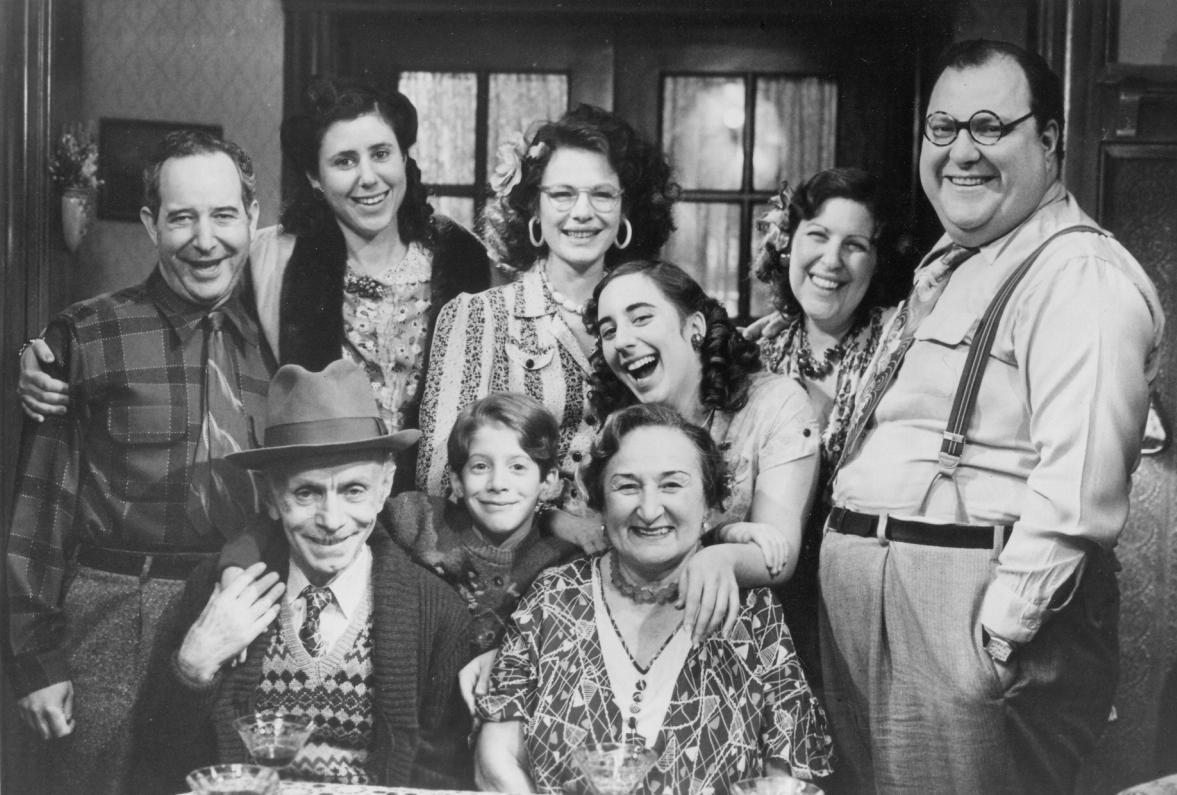
This article has never previously appeared online, on the Reader’s website or anywhere else. It ran originally with the same black and white still reproduced here. Readers familiar with my essay, “Notes Toward the Devaluation of Woody Allen,” written about three years later, may notice that I borrowed a few passages in it from this review. My original title for this review, “Woody’n You,” was rejected by the Reader editors, who didn’t catch or dig the jazz reference. — J.R.

*RADIO DAYS

Directed and written by Woody Allen

With Seth Green, Julie Kavner, Michael Tucker, Mia Farrow, Dianne Wiest, and Diane Keaton.

It’s hard to think of a contemporary American filmmaker who is more universally admired than Woody Allen –- a fact that may say more about us than it says about Woody.  Read more

The Audience is Us (THE TRUMAN SHOW)

From the June 5, 1998 Chicago Reader. — J.R.

The Truman Show

Rating ** Worth seeing

Directed by Peter Weir

Written by Andrew Niccol

With Jim Carrey, Laura Linney, Noah Emmerich, Natascha McElhone, Holland Taylor, and Ed Harris.

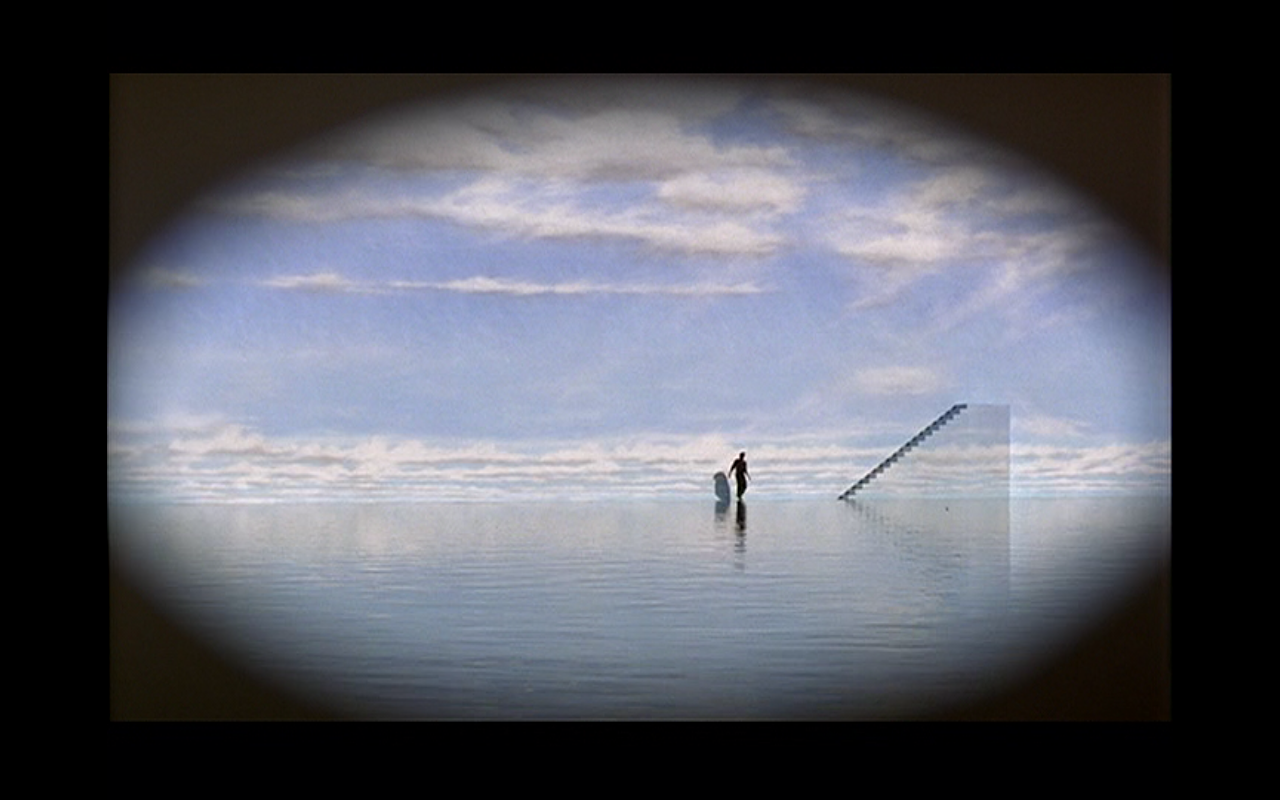
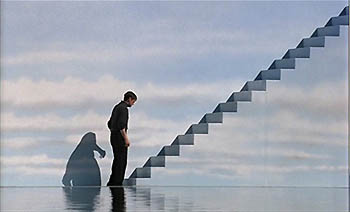
Undeniably provocative and reasonably entertaining, The Truman Show is one of those high-concept movies whose concept is both clever and dumb. Let’s start with the clever part. A 29-year-old insurance salesman named Truman Burbank (Jim Carrey), who lives in a seemingly utopian small town named Seahaven on an island off the coast of somewhere like Florida or California, gradually discovers that he’s the unwitting star of a TV show — a show that’s been running 24 hours a day since his birth. Everyone else on the island is an actor or an extra — including his wife Meryl (Laura Linney), his best friend Marlon (Noah Emmerich), and his mother (Holland Taylor) — and 5,000 hidden cameras are planted all over town to record his every movement. The show has no commercials in the usual sense, subsisting instead on product placements accompanied by advertising patter from Seahaven residents, including Truman’s wife, who extols the virtues of a new gadget she bought at the supermarket or recommends that he try a new brand of cocoa. Read more

Privileged Moments (REMBRANDT LAUGHING)

From the Chicago Reader (September 29, 1989). — J.R.

(

REMBRANDT LAUGHING

Directed and written by Jon Jost

With Jon A. English, Barbara Hammes, Jim Nisbet, Nathaniel Dorsky, Janet McKinley, Kate Dezina, and Jerry Barrish.

“The essence of Jean-Luc Godard’s La femme mariée,” John Bragin wrote in the mid-60s, “is the transmutation of the dramatic into the graphic.” While this formula doesn’t account for everything in Rembrandt Laughing, Jon Jost’s ninth feature, I think it provides a helpful clue to the overall direction taken by this masterful, elliptical account of a little over a year in the lives of a few friends in San Francisco.

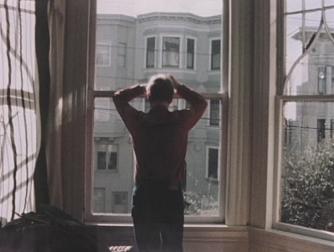
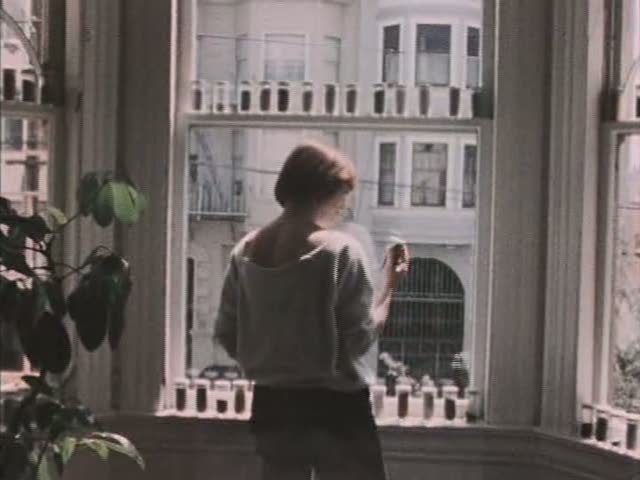
For all his mastery and originality as a maverick independent, Jost has often alienated audiences with the harshness of his themes and the apparent distance from which he views his subjects and his characters. A 60s radical who spent over two years in federal prison for draft resistance, he has lived without a fixed address for most of his 26-year career as a filmmaker, and the alienation as well as the clarity stemming from his wanderlust has seeped into many of his fiction features. These have often centered on isolated individuals: a private detective in Angel City (1977), a drifter out of work in Last Chants for a Slow Dance (1977) [see two images below], a drug dealer in Chameleon (1978), a Vietnam vet in Bell Diamond (1987). Read more
In Stalin’s Shadow (on Dovzhenko)

From The Guardian (July 4, 2003). — J.R.

One of the most neglected major film-makers of the 20th century, Alexander Dovzhenko has never come close to receiving his due. This is in part a problem related to our categories and labels. His fervent, pantheistic, folkloric films develop more like lyric poems, moving from one stanza to the next, than like narratives, proceeding by way of paragraphs or chapters. The world they describe is one of Gogolesque horses that sing or reprimand their owners, noble cows, glistening meadows, wily Cossacks, dancing peasants, declamatory speeches by wild-eyed individuals, sunflowers in sunny close-ups alongside noble women with similarly open faces, vast reaches of empty sky over fields of waving wheat.

Dovzhenko’s vision is of a natural order that paradoxically seems both brutal and harmonious, primitive landscapes bursting with animal and vegetal life. One calls this poetry because it comprises a paean to sheer existence, singing about rather than relating or recounting what it sees. But cinema as it’s generally packaged is understood more in terms of prose narrative, as a string of events. In Dovzhenko’s world, the events often turn out to be the shots themselves.

Furthermore, most accounts we have of Dovzhenko’s work are found in discussions of Russian cinema, but the man wasn’t Russian. Read more

Introduction to DISCOVERING ORSON WELLES

Written in late 2006 and published in Discovering Orson Welles the following year. — J.R.

Discovering Orson Welles

The process-oriented methods that permitted at least four Welles features and a number of short works to be left unfinished are easier to understand than they would be if we adopted the mental habits of producers, which is exactly what more and more critics today seem to be doing; but that is no comfort to those of us eager to understand, and eager as critics always are to have the last word, which we are not about to have with this filmmaker. At least our direction, as always, is laid out for us: as long as one frame of film by the greatest filmmaker of the modern era is moldering in vaults, our work is not done. It is the last challenge, and the biggest joke, of an oeuvre that has always had more designs on us than we could ever have on it.

Bill Krohn’s cautionary words in Cahiers du cinéma’s special “hors série” Orson Welles issue in 1986 offer a useful motto for the present collection of essays, whose own title, Discovering Orson Welles, suggests an ongoing process that necessarily rules out completion and closure — the two mythical absolutes that Welles enthusiasts and scholars seem to hunger for the most. Read more