
Chantal Akerman’s French-Belgian musical, set in a shopping mall, and patterned more after the rondelets of Jacques Demy, such as Lola and The Young Girls of Rochefort, than after Hollywood models. It has a touching score and a likable cast (including Delphine Seyrig, Charles Denner, Fanny Cottencon, Myriam Boyer, John Berry, and Jean-Francois Balmer), but it never ignites to the degree it wants to. Part of the problem is that Akerman’s considerable talents–her eye for composition and her penchant for melancholic moods–are not especially suited to the musical form, and the strain shows. The crisscrossing characters and multiple mini-plots carry some interest and feeling, but the movie aches for the sort of movement and rhythm that is beyond its grasp; the absence of choreography hardly helps. But this is still worth seeing as one of the most ambitious efforts of a strikingly original independent. Script by Akerman, Jean Gruault, Pascal Bonitzer, Henry Bean, and Leora Barish (1986). (JR) Read more
Four Adventures Of Reinette And Mirabelle
Four tales about Reinette (Joelle Miquel), a country girl who paints and operates according to certain principles, and Mirabelle (Jessica Forde), her less rigorous friend from the city; they meet in the country in the first episode and share an apartment in Paris during the remaining three. This feature was shot in 16-millimeter by Eric Rohmer in 1986, shortly before he completed Summer in the same format and with the same method of letting his leading actors improvise dialogue rather than strictly following scripts. Not part of Rohmer’s Comedies and Proverbs series, and deliberately light and nonambitious (very little of consequence occurs in any of the tales), this nevertheless shows the filmmaker at nearly peak formsharply attentive to the sights and sounds of country and city alike and to the temperamental differences between his two heroines. (JR) Read more
A Zed & Two Noughts
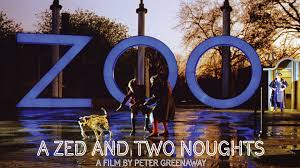
The boldest and arguably one of the best of Peter Greenaway’s fiction features, this extremely odd and perverse conceptual piece (1986) certainly isn’t for every taste, although Sacha Vierny’s cinematography makes it so luscious that you may be mesmerized in spite of yourself. The title refers to a European zoo; the curious plot involves two brothers who work as the zoo’s curators and who lose their wives in a freak auto accident. Only partially a narrative film, this elegant puzzle also involves amputees, painting, a menage a trois, and decomposing animalsalong with many other thingswhich are intricately interrelated thanks to Greenaway’s icy brilliance. Definitely a one-of-a-kind movie. With Andrea Ferreol, Brian and Eric Deacon, Frances Barber, and Joss Ackland. 115 min. (JR) Read more
Next of Kin
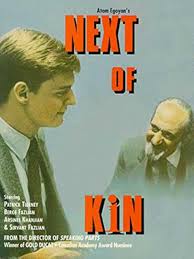
The first feature (1985) of Canadian writer-director Atom Egoyan (Family Viewing, Speaking Parts) is probably his least-known work. But thanks to its dynamic camera style and its bizarre premise, it is in many ways his most immediately engaging. In the course of undergoing family therapy with his parents, a young Canadian WASP (Patrick Tierney) comes across a video of an Armenian family (Berge Fazlian, Sirvart Fazlian, and Egoyan regular Arsinee Khanjian) who put their son up for adoption 20 years ago. Flying to the city where this family lives, the hero poses as the missing son and becomes much better integrated in their family than he is in his own. As in Egoyan’s subsequent films, video not only has an important function in the plot but is also employed metaphorically. Egoyan’s use of realistic details often proves deceptive; just as we’ve settled into accepting his plot on a literal level, he starts unhinging our expectations with ambiguities and details that don’t fit comfortably within a realistic scenario. (One particular ambiguity that is never resolved is the young man’s relationship with his “sister.”) The result is a very impressive debut, beautifully acted by all the leads and engaging and provocative in its treatment of the differences (as well as the similarities) between role-playing and pretending. Read more
Tales from the Vault
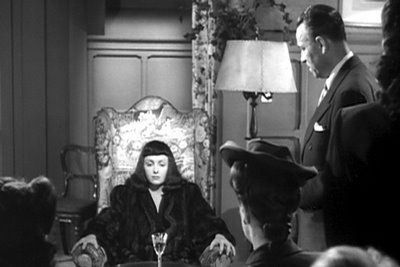
This piece appeared in the Chicago Reader on December 10, 2004. One particular reason for reviving it is the happy news that The Exiles (see first illustration below) and all the Val Lewton horror films, including The Seventh Victim, which were relatively scarce items when they showed back then at the Gene Siskel Film Center, are now readily available on DVD, in excellent editions. Due to its lack of the usual auteurist credentials — specifically, the mediocre reputation of Mark Robson — The Seventh Victim continues to be the most neglected of Lewton’s greatest films, but it’s no longer hard to find. Burn, Witch, Burn is now out on Blu-Ray, and it seems that A Tale of Two Sisters is currently available in multiple editions in the U.S. and elsewhere — J.R.

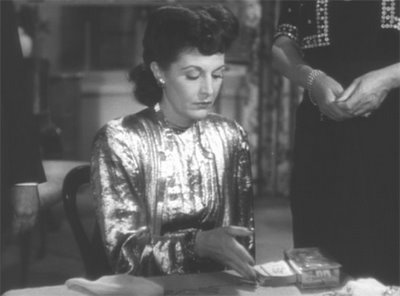
The Exiles **** (Masterpiece)
Directed and written by Kent Mackenzie
With Yvonne Williams, Homer Nish, Tommy Reynolds, and Rico Rodriguez
The Seventh Victim **** (Masterpiece)
Directed by Mark Robson
Written by Charles O’Neal and Dewitt Bodeen
With Kim Hunter, Jean Brooks, Hugh Beaumont, Erford Gage, Tom Conway, and Mary Newton
A Tale of Two Sisters * (Has redeeming facet)
Directed and written by Kim Jee-woon
With Yeom Jeong-a, Im Soo-jung, Moon Geun-young, and Kim Kab-su
Burn, Witch, Burn *** (A must see)
Directed by Sidney Hayers
Written by Richard Matheson and Charles Beaumont
With Janet Blair, Peter Wyngarde, Margaret Johnston, and Anthony Nicholls
By Jonathan Rosenbaum
Few movie-industry executives -– and not just in the U.S. Read more
The Sound of German
From the Chicago Reader (December 2, 1988); also reprinted in my collection Essential Cinema. — J.R.

THE DEATH OF EMPEDOCLES
**** (Masterpiece)
Directed and written by Jean-Marie Straub and Daniele Huillet
With Andreas von Rauch, Howard Vernon, William Berger, Vladimir Baratta, Martina Baratta, and Ute Cremer.
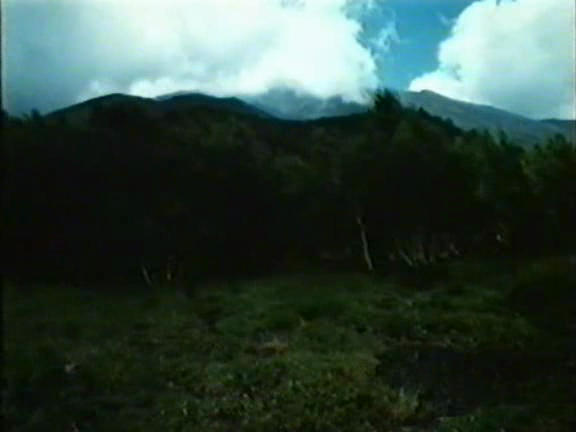
Three pretentious but relevant quotes: “Aesthetics are the ethics of the future” (Lenin). “To make a revolution also means to put back into place things that are very ancient but forgotten” (Charles Peguy). “When the Green of the Earth Will Shine Freshly for You” (Jean-Marie Straub and Daniele Huillet’s subtitle for The Death of Empedocles).
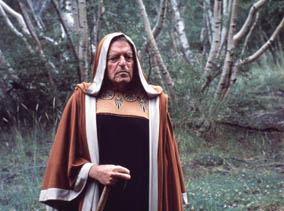
For spectators who don’t know what to do with their films, Jean-Marie Straub and Daniele Huillet offer a rigorous program that’s all work and no play — a grueling process of wrestling with intractable texts, often in languages that one doesn’t understand, without the interest provided by easy-to-read characters or compelling plots. But in fact every one of Straub-Huillet’s 15 films to date (10 features and 5 shorts) offers an arena of play as well as work, and opportunities for sensual enjoyment as well as analytical reflection. To find this arena of play and pleasure, one has to go beyond what we usually associate with the enjoyment of culture–beyond parameters that are usually limited by mutually exclusive notions of “art,” “entertainment,” “education,” and “scholarship,” notions that generally make us smile or groan in advance, regardless of what is placed in front of us. Read more
Nihilism for the Masses [ROGER & ME]
From the Chicago Reader (February 2, 1990). — J.R.
ROGER & ME
*** (A must-see)
Directed and written by Michael Moore.

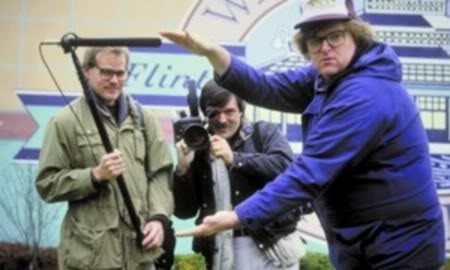
There’s no question that you should see Roger & Me if you haven’t already. Michael Moore’s comic documentary about the devastation of Flint, Michigan, resulting from General Motors’ massive plant closings and job layoffs is the most entertaining American documentary to come along in years. Better yet, Roger & Me is radical in its angry critique of the Reagan era — its legacy of corporate greed and its cheerful heartlessness — in a way that makes contemporary Hollywood movies seem cowardly and conformist.
The story of how Michael Moore, a journalist from Flint with no prior filmmaking experience, financed his first feature is an American success story with an inspirational value all its own. Moore sold his house and furnishings, organized local bingo games, invested his settlement from a wrongful-discharge lawsuit against Mother Jones (where he briefly served as editor), and collected hundreds of small investments from Michigan residents to raise his $160,000 budget. After the film became a popular hit and prizewinner at several film festivals last fall, it was picked up by Warners for $3 million and is already well on its way to becoming an independent sleeper. Read more
Jarmusch in the American Weeds
From The Guardian, August 27, 2004, where this appeared under the title “Independence Day”. — J.R.
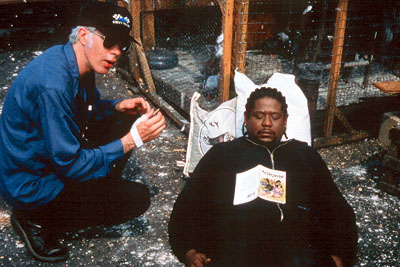
It’s an enduring and endearing paradox of Jim Jarmusch’s art as a writer-director that even though it may initially come across as a triumph of style over content, it arguably turns out to be a victory of content over style. The humanism of this mannerist winds up counting for more than all his stylistic tics, thus implying that his manner may simply be the shortest distance between two points.
Maybe it’s the ultimate paradox of minimalism: the less your work does and is, the more these things matter. In Jarmusch’s case, this partially means that the very notions of hipness and independence that originally defined his stylish filmmaking in the 80s — with Permanent Vacation (1980), Stranger Than Paradise (1984) Down by Law (1986), and Mystery Train (1989) — started working against his public profile in the 90s, especially once being outside the mainstream started being regarded with greater suspicion.
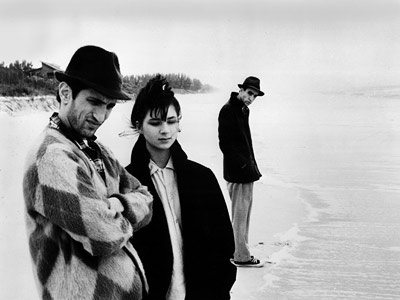
Furthermore, around the time of Jarmusch’s Night on Earth (1992), released the same year as Reservoir Dogs, hipness and independence as values within American culture had both become somewhat muddled and coarsened in the process of becoming mainstreamed. Read more
At War with Cultural Violence: The Critical Reception of SMALL SOLDIERS
Chapter Four of my book Movie Wars. It was originally written for Another Kind of Independence: Joe Dante and the Roger Corman Class of 1970, a critical collection coedited with Bill Krohn for the Locarno International Film Festival in 1999, which came out in French and Italian editions. –– J.R.
During the spring of 1998, not long before the American release of Small Soldiers, I happened upon “The Toys of Peace,” a wise and wicked tale by Saki included in A. S. Byatt’s recent collection, The Oxford Book of English Short Stories. Set in 1914, it recounts the noble and doomed efforts of the hero to interest his two nephews, aged nine and ten, in “peace toys”: models of a municipal dustbin and the Manchester branch of the YWCA, lead figurines of John Stuart Mill, Robert Raikes (the founder of Sunday schools), a sanitary inspector, and a district councillor. Forty minutes later, he looks in on the boys and finds that they’ve converted these objects into war toys: the municipal dustbin punctured with holes to accommodate the muzzles of imaginary cannons, Mill dipped in red ink to approximate an eighteenth‐century French colonel, with a grisly game plan mapped out to yield a maximum amount of bloodshed, including the remainder of the red ink splashed against the side of the YWCA building.
Cinema Stylists, by John Belton
From the Summer 1984 Film Quarterly (Vol. XXXVII, No. 4). I can happily report that some copies of this book are still available on the Internet. — J.R.
CINEMA STYLISTS
By John Belton. Metuchan, N.J. & London: The Scarecrow Press, 1983. $19.50.
From the outset, in his Introduction, John Belton makes the organizing stance of Cinema Stylists admirably clear. Revised auteurism — that is to say, non-vulgar and non-biographical auteurism, an auteurism brought more in line with the qualms of Barthes and Foucault (and subsequently Wollen) about authorship, and tempered with some of the notions about authorial presence in Wayne Booth’s The Rhetoric of Fiction — is the dominant (if not exclusive) mode in this collection of over three dozen pieces, written over the past fourteen years. With the specters and examples of Robin Wood and Andrew Sarris hovering over his shoulders – his right and left consciences, as it were – Belton lacks the stylistic fluidity of either of his mentors, but has certain sound academic virtues which match and occasionally surpass the capacities of both.
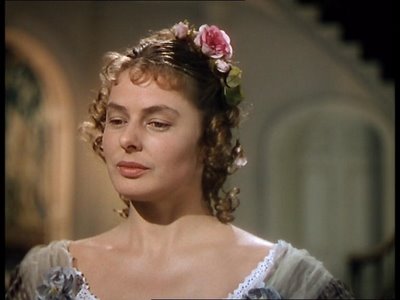
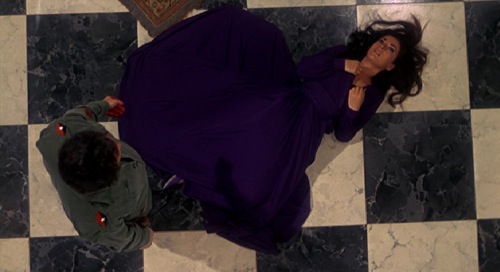
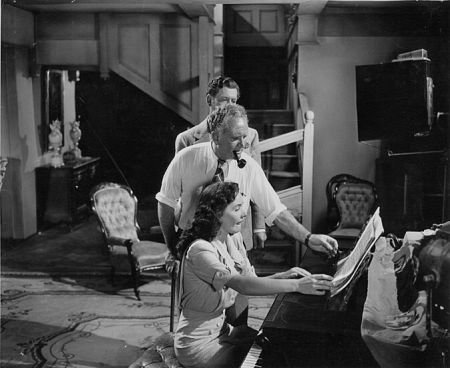

A champion of the underdog film as well as the neglected figure, Belton can be seen going to bat in Cinema Stylists for Robert Mulligan, Edgar G. Read more
Jerks Like Us (GROSSE FATIGUE)
From the Chicago Reader (July 21, 1995). — J.R.
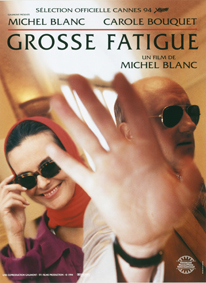
Grosse fatigue
Rating *** A must see
Directed and written by Michel Blanc
With Blanc, Carole Bouquet, Philippe Noiret, Josiane Balasko, Christian Clavier, and Charlotte Gainsbourg.
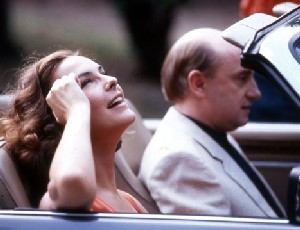
Wonders never cease. When Michel Blanc’s hilarious, vulgar farce Grosse fatigue won the prize for best screenplay at the Cannes film festival last year, the American press generally agreed that its chances of stateside distribution were just about nil. A nasty, abrasively funny insider’s look at contemporary French cinema, it was felt to be far too obscure in its references and far too politically incorrect, with its sexist and homophobic gags about rape, to find much favor among art-house patrons on this side of the Atlantic.
Proving us all wrong, Miramax is releasing the movie this week. I can only applaud their decision: offensive or not, Blanc’s fantasy/comedy qualifies in my book as a satire about the movie business far superior to The Player and Swimming With Sharks — two supposedly scathing looks at Hollywood that squander all their venom on a few west-coast executives with fancy ties and outsize salaries and let the audience that supports them neatly off the hook. Paradoxically, these American-made pictures argue that any system that supports people like these treacherous producer-villains has to be wrong, yet somehow they fail to broach the possibility that we in the audience could have anything to do with such a system ourselves. Read more
Something’s Missing
Last week I congratulated the Chicago International Film Festival for failing to attract more Hollywood studio interest, thereby making it easier for us to see good movies without being pressured by hefty advertising budgets. But this week I feel obliged to point out that the Chicago festival’s organizers probably wouldn’t have minded more Hollywood hoopla. I’ve noticed over the past several years that they tend to hold most of their high-profile events during the opening weekend, reserving many of the less glitzy items for the second week. Perhaps they believe that if they can persuade the public to come to something in the first few days, the remainder of the festival will take care of itself.
As a sworn opponent of this kind of “opening night” snobbery, I can’t help noting that some of the most significant, if less glamorous, movie events occurring in town this week have nothing to do with the festival. Two of Alain Resnais’ lesser-known experiments with musical form are playing at the Film Center; one of them, the 1984 Love Unto Death, has never been shown in Chicago before. Two even more scarce and seminal French experimental films, both from 1968, are playing at Facets Multimedia Center: Jackie Raynal’s Deux fois and Philippe Garrel’s La revelateur–neither of which is likely to come this way again. Read more
Bless Their Little Hearts
Scripted and photographed by Charles Burnett and directed by his former film-school classmate Bill Woodbury, this wonderful neorealist look at a working-class black family in South Central LA (1984) is worthy of being placed alongside Burnett’s Killer of Sheep. Passionately recommended. 80 min. (JR) Read more
Short Films By Michelangelo Antonioni
Even after one factors in the 1985 stroke that left Michelangelo Antonioni mainly paralyzed, the ambiguous degree to which his wife Erica has been responsible for most of his subsequent work (some of which she cosigns), and the overall decline in the quality of most of his films since the 70s, the shorts in this program, all commissioned and showing in excellent prints or on video, are truly all over the map. They range from his beautiful documentaries of the late 1940s (about people working in the Po River valley, Roman street cleaners, the production of popular photographed comic strips called fumetti, superstitions, and the manufacture of rayon clothes) to his more uneven travel sketches of the 1990s (about Rome, Sicily, and the island of Stromboli). In between are so-so works about rock carvings in the Villa Orsini and a cable car (1950) and bathing in the Ganges (1989), plus a truly awful music video from 1984. 110 min. (JR) Read more
The Trials Of Darryl Hunt
Miscarriages of justice involving black men in the south are nothing new, but there seems to be no precedent for the obtuseness of the legal system revealed in this 2005 documentary by Ricki Stern and Annie Sundberg. In 1984 teenager Darryl Hunt was arrested for the rape and murder of a white woman in Winston-Salem; though convicted with flimsy evidence and later proved innocent by DNA testing, he had to wait 19 years before he was freed and exonerated. The police and judiciary’s unwillingness to acknowledge errors and talent for compounding them evoke the current Bush administration, but the most compelling part of this is Stern and Sundberg’s growing acquaintance with and understanding of Hunt, which ultimately gives their narrative some positive spin. 113 min. (JR) Read more