My First Reviews (1958)

Barring only the one time I took over my father’s weekly promotional movie column in my home-town newspaper in March 1957 (briefly excerpted in my first book, Moving Places, on pp. 123-124), which doesn’t exactly count, this must be my first published film criticism, even though my name was misspelled. (The correct spelling was Jonny.) It appeared in The Stimulator, my biweekly high school newspaper (published at Coffee High School in Florence, Alabama), on October 16, 1958, when I was 15, a sophomore. Phil Stanford, incidentally, was a senior and good friend at the time. I’m nearly positive that the title wasn’t my own, and if this “column” had any sequels, I have yet to uncover them. (Esoteric footnote: “The Tri-Cities” in this period consisted of Florence, Sheffield, and Tuscumbia, before Muscle Shoals City grew, thanks to its recording studios, from the size of a modest speed trap, thereby yielding The Quad-Cities.) — J.R.
Front Row Center

By JOHNNY (sic) ROSENBAUM

This column, which will alternate with Phil Stanford’s, is to be devoted to reviews of movies, television programs, and the occasional plays put on in the Tri-Cities. Read more
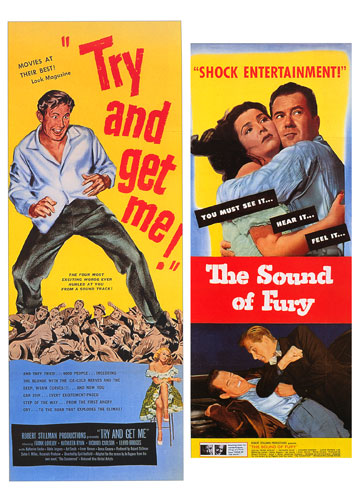
Potent Pessimism [on Cy Endfield]

From the Chicago Reader (July 10, 1992). For more on Endfield, see Brian Neve’s excellent new biography, The Many Lives of Cy Endfield: Film Noir, the Blacklist, and Zulu, as well as my subsequent Reader article about him and my essay “Pages from the Endfield File,” which grew out of the preceding two pieces and is reprinted in my 1997 collection Movies as Politics. This particular piece has been upgraded in terms of illustrations. — J.R.

FILMS BY CY ENDFIELD

The role of a work of art is to plunge people into horror. If the artist has a role, it is to confront people — and himself first of all — with this horror, this feeling that one has when one learns about the death of someone one has loved. — Jacques Rivette in an interview, circa 1967

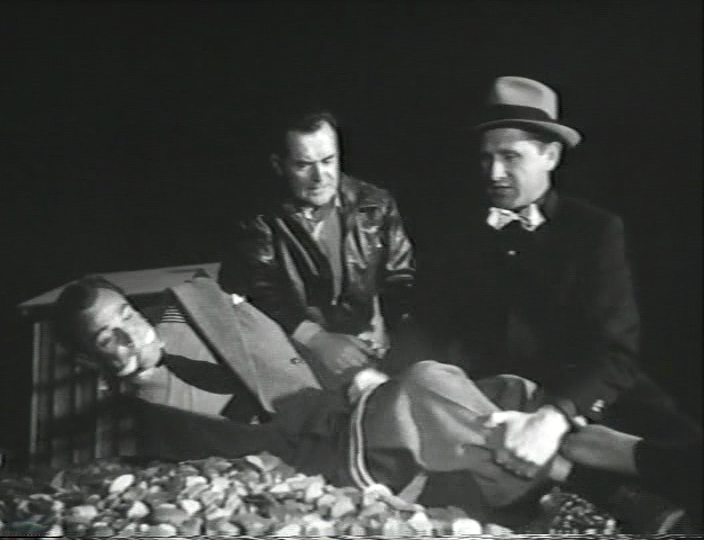
Cyril Raker Endfield, who will turn 78 this November, is the sort of filmmaker auteurist critics like to call a “subject for further research.” To the best of my knowledge, he has directed 21 features — the first 7 in the United States between 1946 and 1951, the remainder in England, continental Europe, and South Africa between 1953 and 1971 — and worked on the scripts for most of them, as well as on the scripts of two Joe Palooka films (apart from the two he directed), a Bowery Boys picture (Hard Boiled Mahoney, 1947), Douglas Sirk’s Sleep My Love (1948), a prison picture called Crashout (1955), Jacques Tourneur’s Curse of the Demon (1958), and Zulu Dawn (1979), a sort of prequel to Endfield’s only hit, Zulu (1964). Read more

Pennies From Heaven

Bing Crosby stars as a carefree troubadour who settles down and helps to open a restaurant in order to keep his little friend (Edith Fellows) out of an orphanage; Madge Evans (Hallelujah, I’m a Bum!) is the skeptical social worker who gradually falls for him. Directed by Norman Z. McLeod, this Depression-era musical (1936) is hokey but likable, its cloying sentimentality made bearable by its casual but sincere populism. Louis Armstrong, who reunited with Crosby on-screen 20 years later in High Society, is just as wonderful here. 81 min. (JR) Read more

Made In Heaven

From the Chicago Reader, November 1, 1987. — J.R.

made-in-heaven

Alan Rudolph’s movie begins promisingly: Mike (Tim Hutton), out of work in the mid-40s (in black and white), dies in an accident and finds himself in heaven (in color), where he’s greeted by his amiable Aunt Lisa (Maureen Stapleton), and shortly falls in love with Annie (Kelly McGillis), an unborn soul. Heaven here is rather like Ray Bradbury’s Mars, a site of nostalgic wish fulfillments, and if Rudolph and screenwriters Bruce A. Evans and Raymond Gideon had only remained there, the movie might have somehow sustained its fragile, otherworldly charm. But Annie leaves to be born on earth, and Mike, who’s allowed to be reborn, is given 30 years to find her again. Inexplicably, the film remains in color as it returns to earth; the new selves of Annie and Mike still look the same, but how they’re supposed to find one another with fresh identities and nearly blank memories is not made clear, and vagueness gradually gives way to muddleheadedness. Although a string of cameos by nonactors (including novelist Tom Robbins and various rock singers) leads to some awkward moments, Rudolph still shows some talent in handling professionals (such as Ann Wedgeworth and Don Murray, as well as the leads), though he’s invariably better off when directing his own scripts (e.g., Read more

Performing Spectators: The Audience as Stray Dogs

Written for Cinema Guild’s Blu-Ray of Tsai Ming-liang’s Stray Dogs, released in mid-January 2015. — J.R.

STRAYDOGS

Stray-dogs-signs

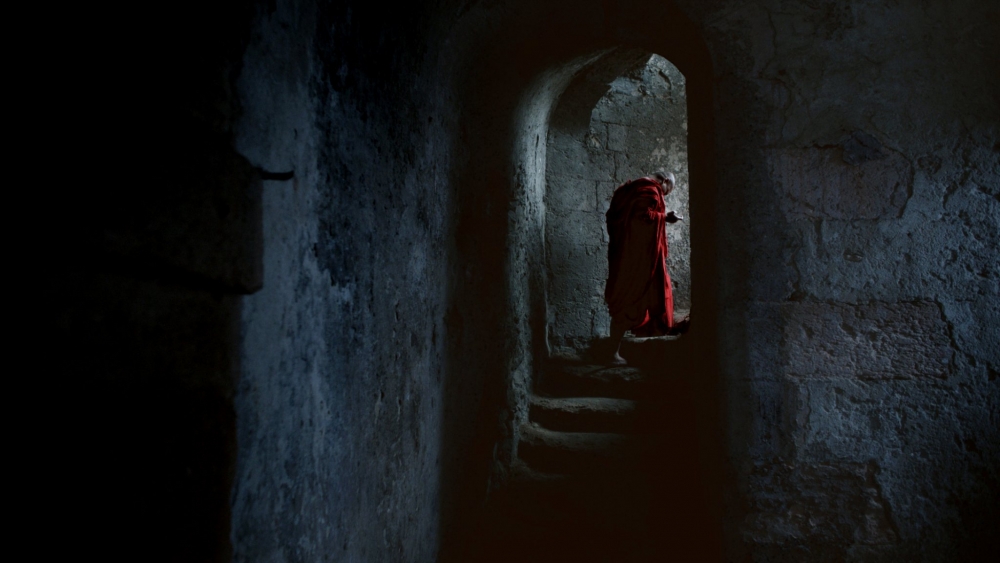
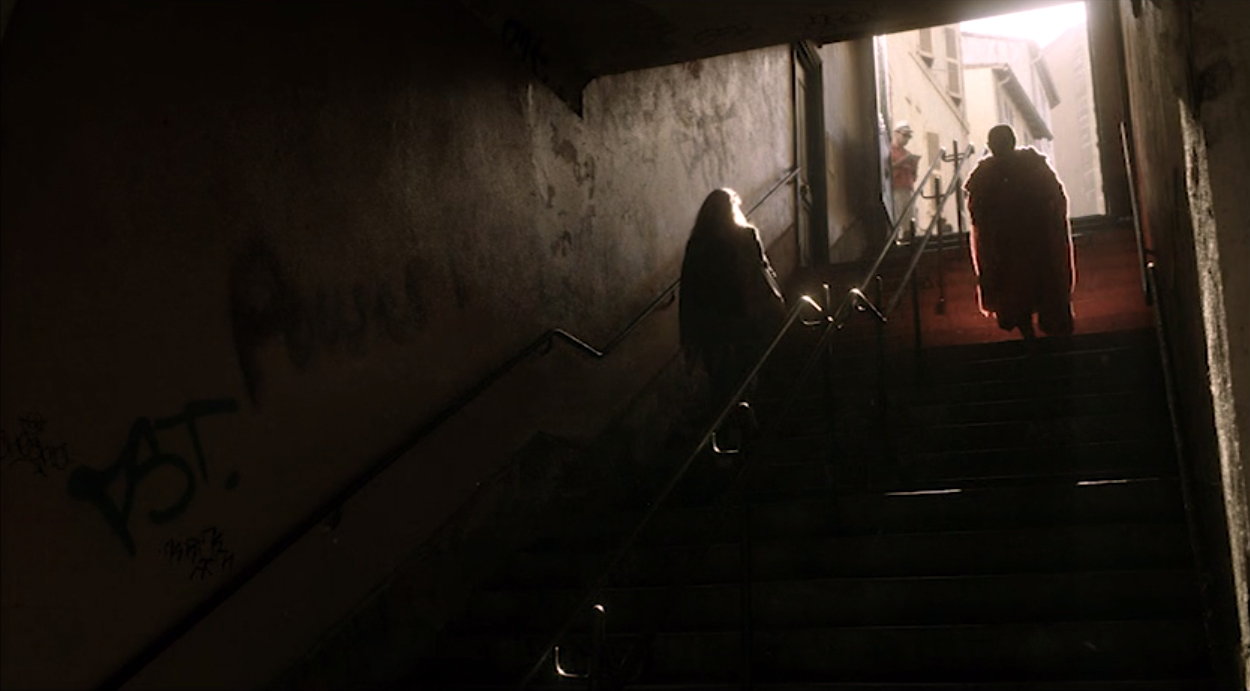
Stray Dogs (2013), winner of the Grand Jury Prize at the 70th Venice International Film Festival, is Tsai Ming-liang’s tenth theatrical feature. It was described by Tsai at its premiere as his last, and in many ways it’s his most challenging. Considered as the apotheosis of his film work to date — which also includes eleven telefilms made between 1989 and 1985, and ten shorts or segments of portmanteau features, culminating in the 2014, 56-minute Journey to the West – it constitutes a kind of nervy dare to the viewer, and to prime oneself for it, it might help to look at Journey to the West first.

journey-to-the-west-monk-climbing-dark-stairs

journey-to-the-west-subway-stairs

Even though both films flirt with stasis, usually in the midst of extremely long takes, they’re also performance pieces that hark back to Tsai’s roots in experimental theater and television. And the performers are not only hired actors but also unsuspecting street pedestrians, places, weather conditions, the camera, and, perhaps most crucial of all, viewers watching the activity of all of the above. If Tsai’s films typically qualify as questions rather than answers, foremost among the questions is how we perform as spectators – a question that we’re obliged to pose in relation to all the materials offered. Read more

DOGS’ DIALOGUE (1984 review)

From Monthly Film Bulletin, December 1984 (Vol. 51, No. 611). In retrospect, I’m rather proud of the synopsis here, which must have been a bitch to put together. -– J.R.

Colloque de chiens (Dogs’ Dialogue)

France, 1977
Director: R
âúl Ruiz

Cert–AA. dist–BFI. p.c–Filmoblic/L’Office de la Création Cinématographique. p–Hubert Niogret. asst. d–Michel Such. sc–Nicole Muchnik, Raul Ruiz. ph—Denis Lenoir, Patrice Millet. In colour. still ph–Patrice Morère, Mario Muchnik. ed–Valeria Sarmiento. m–Sergio Arriagada. cost–Fanny Lebihan, Yves Hersen. sd. rec–Michel Villain. sd. re-rec–Paul Bertaud. English version/English commentary—Michael Graham. French version/French commentary–Robert Darmel. l.p–Eva Simonet, Silke Humel, Frank Lesne, Marie Christine Poisot, Hugo Santiago, Geneviève Such, Laurence Such, Michel Such, Pierre Olivier Such, Yves Wecker, the dogs of the Gramont refuge. 1,938 ft. 22 mins. (35 mm.)

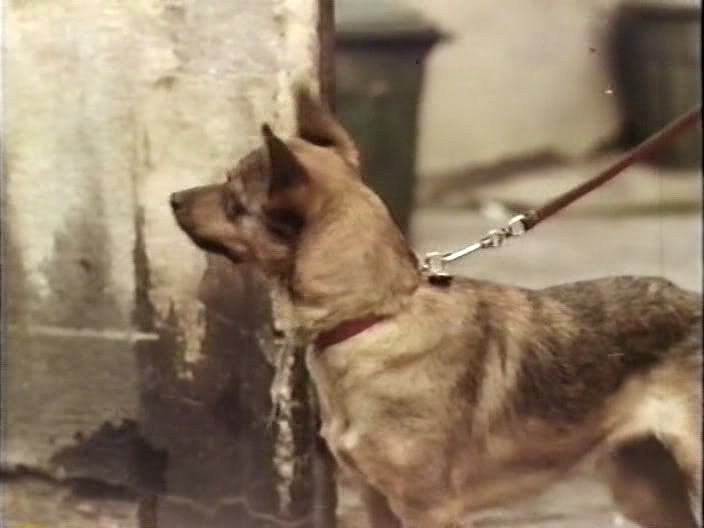
The film alternates three kinds of material: footage of barking dogs, shots of streets and other locations, and the following story, illustrated chiefly by a series of stills (and occasionally by shots in motion) and narrated off-screen: Monique discovers in a school playground that the woman she believes to be her mother isn’t her mother. At home, she learns that her real mother is a woman named Marie, who doesn’t know who her father was. Read more

Open Spaces in Iran and Uganda: Conversations with Abbas Kiarostami

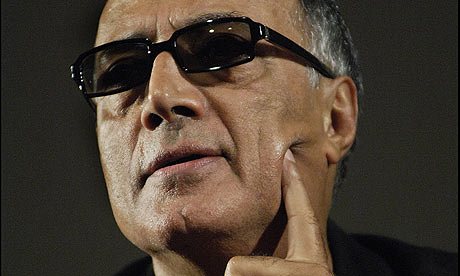
Conversations conducted for Movie Mutations and Abbas Kiarostami (both 2003). — J.R.

Abbas-Kiarostami-001

Open Spaces in Iran and Africa:

Conversations with Abbas Kiarostami

by Jonathan Rosenbaum  and Mehrnaz Saeed-Vafa

tasteofcherry3

1. Taste of Cherry: spring 1998 (Chicago)

The hero of Abbas Kiarostami’s Taste of Cherry is a 50ish man named Mr. Badii contemplating suicide for unstated reasons, driving around the hilly Tehran outskirts in search of someone who will bury him if he succeeds — he plans to swallow sleeping pills — and retrieve him from the hole in the ground he has selected if he fails. Over the course of one afternoon, he picks up three passengers and asks each of them to perform this task in exchange for money — a young Kurdish soldier stationed nearby, an Afghan seminarian who is somewhat older, and a Turkish taxidermist who is older than he is. The soldier runs away in fright, the seminarian tries to persuade him not to kill himself, and the taxidermist, who also tries to change his mind, reluctantly agrees, needing the money to help take care of his sick child. The terrain Badii’s Range Rover traverses repeatedly, in circular fashion, is mainly parched, dusty, and spotted with ugly construction sites and noisy bulldozers, though the site he’s selected for his burial is relatively quiet, pristine, and uninhabited. Read more

Landscape Suicide

From the Chicago Reader (September 18, 1987). — J.R.

landscapesuicide

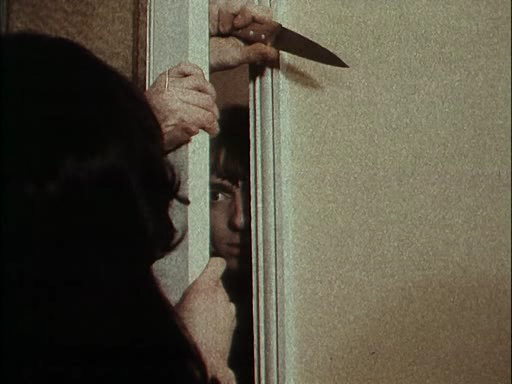
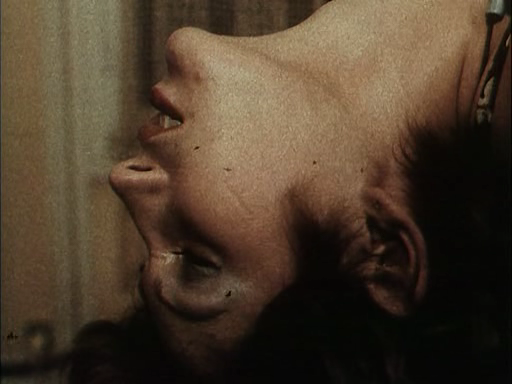
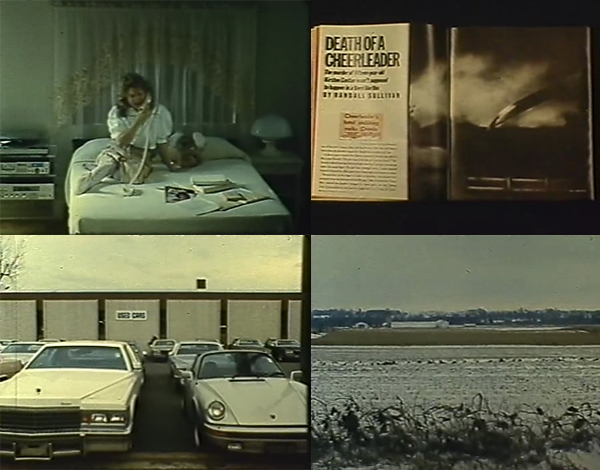
All of James Benning’s features can be regarded as shotgun marriages in which he attempts to wed his distinctive formal talents and interests — framing midwestern landscapes with beauty and nostalgia, using ambiguous offscreen sounds to create narrative expectations — with an intellectual and/or social rationale. Landscape Suicide is almost certainly his most successful and interesting foray in this direction since his One Way Boogie Woogie of ten years ago. Delving into two murder cases — Bernadette Protti’s seemingly unmotivated stabbing murder of another teenage girl in a California suburb in 1984, and Ed Gein’s even more gratuitous mass slayings and mutilations in rural Wisconsin in the late 50s — Benning uses actors to re-create part of the killers’ court testimonies, juxtaposed with the commonplace settings where these crimes took place. Boldly eschewing the specious psychological rhetoric that usually accompanies accounts of such crimes, he creates an open forum for the spectator to contemplate the mysterious vacancy of these people and these places, and their relationships to each other. The performances of both actors, Rhonda Bell and Elian Sacker, are extraordinary achievements, and the chilling, evocative landscapes have their own stories to tell; the fusion of the two creates gaps that not even the film’s confusing title can fill, but the space opened up is at once powerful and provocative. Read more

Dogs In Space

From the Chicago Reader (November 1, 1987). — J.R.

dogsinspace_1372755298

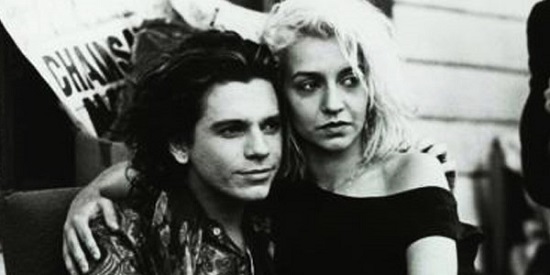
Judging from this interminable Australian punk film, the 1978 freak scene in Melbourne was almost identical to that in London a decade earlier, with one important difference: politics in this motley crash pad are so marginalized that they barely squeak into the movie as incidental comic relief. Writer-director Richard Lowenstein seems as bored with the proceedings as most spectators are likely to be; consequently there’s probably more gratuitous camera movement per square inch here than in any other film of 1986. The house where all the layabouts lay about belongs to Sam (Michael Hutchence), lead singer for the rock band Dogs in Space, and in order to justify the title further, period snatches of TV coverage of astronauts are arbitrarily cut into the proceedings. Boredom is counter-revolutionary, reads a prominently placed placard, but the boredom in this case — scarcely alleviated by the ‘Scope format and a few intermittent flashy visual effects — isn’t even focused enough to seem moderate. The Dolby music in the film is written and performed by Iggy Pop, Brian Eno, the Marching Girls, Chuck Rio, Gang of Four, and Boys Next Door; other actors include Saskia Post, Nique Needles, Deanna Bond, Tony Helou, and Chris Haywood. Read more

The Dead

From the Chicago Reader (October 26, 1987). — J.R.

TheDead

John Huston devoted the better part of his career to a sort of intelligent second-degree cinema predicated on the adaptation of literary worksa practice informed by crafty casting and fluid storytelling, but often limited by the fact that his attraction to heavyweights (The Maltese Falcon, The Red Badge of Courage, Moby-Dick, The Man Who Would Be King, Wise Blood, and Under the Volcano, among others) guaranteed faithful reductions at best. His last film (1987), which adapts the final story in James Joyce’s Dubliners, represents the apotheosis of this position — isolating the story from the rest of Dubliners (which gives it much of its resonance) and most of its perfectly composed language, and then doing his best with what remains. Scripted by his son Tony and starring his daughter Anjelica, the film hews to the original plot and much of the dialogue. The results are leagues ahead of Joseph Strick’s unfortunate Joyce adaptations, but inevitably leagues behind the original story. That said, the film’s concentrated simplicity and purity achieve a kind of perfection. The uniformly superb cast includes Donal Donnelly, Cathleen Delany, Helena Carroll, Ingrid Craigie, Frank Patterson, Dan O’Herlihy, and Donal McCann as Gabriel Conroy; the lilting Irish flavor is virtually decanted, and Fred Murphy’s gliding camera movements are delicately executed. Read more

Keep Your Right Up

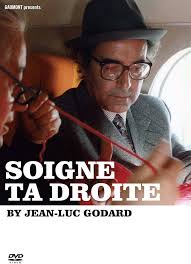
Basically an episodic comedy, Jean-Luc Godard’s Soigne ta droite (1986, 82 min.), a French-Swiss coproduction, features Godard himself as the comic lead, rehearsals of the rock group Rita Mitsouko, a good many gags (some involving golf and travel), and a lot of cameos from well-known French actors, including Jane Birkin, Bernadette Lafont, and Jacques Villeret. The biggest surprise here though is Godard’s modification of his own persona: in contrast to the grumpy, would-be sages of First Name: Carmen and King Lear, his benign and ethereal character is positively Keatonian, with echoes of Tati’s Monsieur Hulot as well. (Early in the film, he executes a surprisingly deft Keaton-like gag of diving through a car window.) The main comic inspiration, by Godard’s own admission, is Jerry Lewis — specifically the airplane sequence in Cracking Up, though what Godard does with it seems even more quizzically eccentric than the model. Godard is also seen grasping a copy of Dostoyevsky’s The Idiot, which may provide some clues about what he’s up to. This isn’t one of Godard’s best features, though it certainly has its moments, and I much prefer it to his more recent For Ever Mozart. (JR)

Read more

Brief Encounters

Made in 1967 but released only in 1986, Kira Muratova’s acclaimed Soviet feature is about two women–a party official (Muratova herself) and the maid she hires (Nina Ruslanova)–who have both loved the same man, a geologist (popular Russian folksinger Vladimir Visotsky). As a huge fan of Muratova’s postglasnost The Asthenic Syndrome (1989) and Three Stories (1997), each an angry, despairing, and extremely stylized work in color, I wasn’t quite prepared for this quiet, touching, and basically realistic black-and-white drama, interesting at least in part for what it conveys about everyday Russian life in the 60s. I haven’t yet determined whether that’s what led to the film’s being banned for almost 20 years. In Russian with subtitles. 96 min. (JR) Read more

A Taxing Woman

Juzo Itami’s third feature–after The Funeral (1984) and Tampopo (1986)–follows the fanatical efforts of a dedicated tax official (Nobuko Miyamoto, Itami’s wife, who also played the female lead in Tampopo) to catch a variety of individuals who cheat on their tax forms, ranging from middle-income businessmen to big-time crooks. Although the action covers about a year and is partially a string of vignettes, much of it concentrates on the official’s attempts to nail down a ruthless real estate speculator who runs a clandestine adult hotel (Tsutomu Yamazaki). Lacking most of the comic gusto of Itami’s previous films, this one has a pretty icy objectivity, and whether the director sympathizes more with his determined heroine or with her various antagonists remains an open question; there’s a fair amount of unpleasantness on both sides. The result is a thoughtful film about a lively subject in Japan–so successful in its native country that a sequel was made–that is still less compelling than Itami’s previous features (1987). (JR) Read more

Ariel

The second part of a loose trilogy by Finnish cult director Aki Kaurismaki, this 1988 feature was preceded by Shadows in Paradise (1986) and followed by The Match Factory Girl (1989). Kaurismaki seems bent at times on remaking a proletarian Warners melodrama of the 30s (as in The Match Factory Girl, his postmodernist models seem to be Bresson and Fassbinder), albeit with rock tunes on the sound track. A taciturn hero (Turo Pajala) leaves Lapland for Helsinki after the mine employing him and his father shuts down; en route he’s mugged and robbed of his savings. He winds up moving in with a divorced meter maid and eventually finds himself edged into a life of crime. Wittily laconic in style and attractively sharp in its images, it’s the kind of low-budget genre movie they don’t make so well anymore, at least not in the U.S. In Finnish with subtitles. 73 min. (JR) Read more

Truth Or Dare

A candid and entertaining look at Madonna’s 1990 Blond Ambition tour that mainly alternates between grainy black-and-white backstage/offstage footage and certain numbers from the touring show that were shot in color. The young director, Alek Keshishian, had been directing music videos since 1986, and this movie looks it, for better and for worse: there’s a nervous tendency to crosscut between scenes and between onstage and offstage footage that keeps things constantly moving but often prevents the numbers and certain documentary segments from being appreciated in their entirety. It generally works better as a mosaic self-portrait (Madonna served as executive producer) than as a concert film, and–not too surprisingly–what comes across is mainly the star’s likable desire to be both naughty and responsible, conscientious and silly: she’s a prima donna who plays mother hen with her troupe, stoutly defends her show against censors (but seems perfectly willing to have it cut to shreds for the purposes of this movie), and is energetically on at every minute. Warren Beatty, Kevin Costner, and Sandra Bernhard are among the brief celebrity walk-ons (1991). (JR) Read more