Some Vagaries of Distribution and Exhibition

Chapter Two of my book Movie Wars: How Hollywood and the Media Limit What Films We Can See (Chicago: A Cappella Books, 2000). The cover  below is that of the U.K. edition published by the Wallflower Press.  — J.R.

MOVIE WARS

How often are aesthetic agendas determined by business agendas? This question is not raised often enough.Terminology plays an important role here. For example, once upon a time, previews of new releases were called “sneak previews” because the titles of these pictures weren’t announced in advance. Most industry people continue to use the term, despite the fact that the titles are announced and even advertised, so that the original meaning gets obfuscated: the only thing “sneaky” is the fact that they’re called “sneak previews.”This is a relatively trivial example of how terminology alienates us from what goes on in the world of movies. A more significant example is how we use an extremely loaded term like “independent.” An independent filmmaker traditionally meant a filmmaker who worked independently, free from the pressures of the major studios. If you believe what the media say about independent films, then the mecca for independent filmmaking would be the Sundance Film Festival, an event where independent films and filmmakers congregate annually. Read more

No Joke [MYSTERY SCIENCE THEATER 3000: THE MOVIE]

From the Chicago Reader (April 19, 1996). — J.R.

Mystery Science Theater 3000: The Movie 0 (no stars)

Directed by Jim Mallon

Written by Michael J. Nelson, Trace Beaulieu, Mallon, Kevin Murphy, Mary Jo Pehl, Paul Chaplin, and Bridget Jones

With Beaulieu, Nelson, Jeff Morrow, Rex Reason, Faith Domergue, and the voices of Mallon and Murphy.

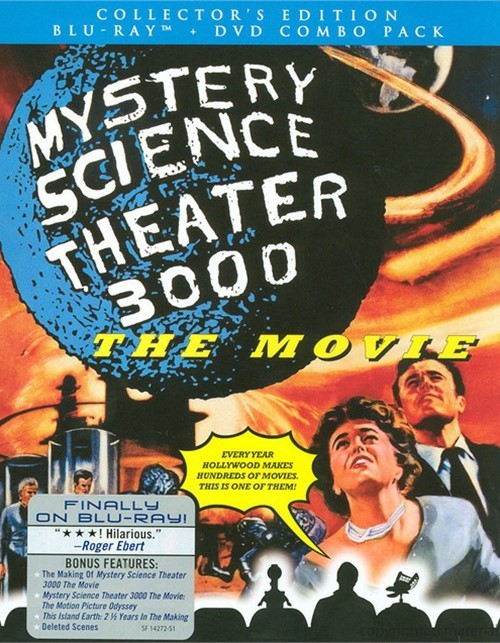
mystery-science-theater-3000-the-movie-blu-ray-dvd-combo-cover-art

The premise of the recently discontinued cable-TV series on which this film is based is more or less as follows: a blustering mad scientist named Dr. Clayton Forrester (Trace Beaulieu) plots to take over the world. His plan? According to the Mystery Science Theater 3000: The Movie press book: “Find the worst movies ever made, show them to the entire population and bring the planet to its knees.” He kidnaps Mike Nelson (Michael J. Nelson) to serve as a guinea pig, takes him to the Satellite of Love, and makes him and his three robot pals — Tom Servo, Gypsy, and Crow — watch the Worst Movies Ever Made. But Mike and his friends confound the experiment by talking back to the screen and making wisecracks. We watch the movies too — or parts of them, since the lower portion of the screen is partially blocked by the silhouettes of Mike and two of the robots. Read more

What Dope Does to Movies

The following essay was commissioned by Toronto filmmaker Ron Mann in 1992 for the book-spinoff of his documentary Grass. I wrote this around the same time that I reviewed Ghost Dog: The Way of the Samurai for the Chicago Reader, which helped to focus my conclusion; for more aspects of this argument, see “International Sampler”.—J.R.

What Dope Does to Movies

By Jonathan Rosenbaum


To the memory of Paul Schmidt

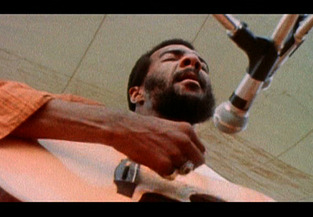
Consider how the camera cuts from Richie Havens’s face, guitar, and upper torso during his second number in Woodstock (1970) to a widening vista of thousands of clapping spectators, then to a much less populated view of the back of the bandstand, where there’s no clapping, watching, or listening — just a few figures milling about near the stage or on the hill behind it. What’s going on? This radical shift in orientation and perspective—a sudden movement from total concentration to Zenlike disassociation — is immediately recognizable as part of being stoned, and Michael Wadleigh’s epic concert film, which significantly has about the same duration as a marijuana high, is one of the first studio releases to incorporate this experience into its style and vision.

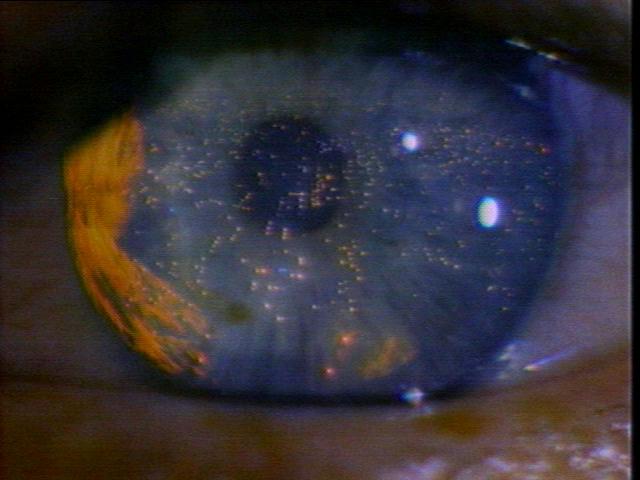
Or think of the way that Blade Runner (1982) starts: a long, lingering aerial view of Los Angeles in the year 2019, , punctuated by dragon-like spurts of noxious yellow flames, with enormous close-ups of a blue eye whose iris reflects those sinister, muffled explosions. Read more

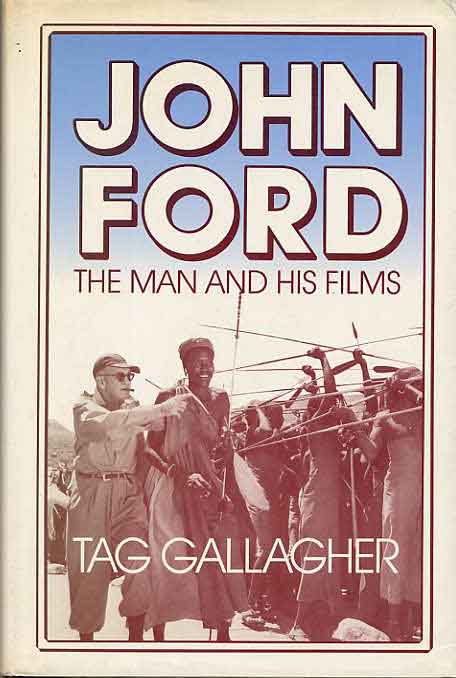
Ford Rambler: Review of Tag Gallagher’s JOHN FORD

From Sight and Sound (Spring 1987). –- J.R.

JOHN FORD: The Man and His Films

by Tag Gallagher

University of California Press/$35

‘I shall almost always be wrong, when I conceive of a man’s character as being all of one piece.’ Appearing at the outset of Tag Gallagher’s massive critical biography of Ford, this quotation from Stendhal serves both as apologia and as fair warning to readers hoping to find a unified portrait of its subject. Written over the past two decades, Gallagher’s exasperating yet invaluable compendium of diverse thoughts and data may lack the coherence of previous Ford studies by Anderson, McBride/Wilmington, Place and Sinclair (among others). Yet in its outsized efforts to do justice to the contradictions and complexities of the man and his work, it still offers a range of information and insight that dwarfs all competitors.

For one thing, Gallagher certainly goes beyond his predecessors in contriving to grapple with all the surviving films, most of which he arranges in four periods: The Age of Introspection (1927 35), Age of Idealism (1935-47), Age of Myth (1948-61) and Age of Mortality (1962-65). Believing Ford’s best films (Pilgrimage, Judge Priest, Stagecoach, Young Mr Lincoln, How Green Was My Valley, Wagon Master, The Quiet Man, The Sun Shines Bright, Mogambo, The Man Who Shot Liberty Valance, The Civil War, Donovan’s Reef and 7 Women) to lie in all four periods, Gallagher is able to tease out a surprising number of threads that recur throughout the oeuvre. Read more

On CHAN IS MISSING and Wayne Wang

From Sight and Sound (Spring 1983). -– J.R.

Wayne Wang: Chinese structures and American economies

Opening with a rousing Cantonese version of ‘Rock Around the Clock’ which is all about inflation — the rising cost of tea and rice — Wayne Wang’s remarkable, offbeat Chan is Missing neatly combines its concern about what it means to be Chinese-American with the current economic crisis. Praised in these pages by Richard Combs after its appearance at the 1982 London festival as a film that ‘answers nothing, but in a way satisfies one’s curiosity,’ this black and white mystery, about two Oriental cab drivers searching for their missing partner through San Francisco’s Chinatown, has done surprisingly well since its U.S. release last fall, especially for an independent feature costing under $20,000. A strong review from the New York Times‘ Vincent Canby, coupled with careful handling by New Yorker Films, helped to turn the film into something of a commercial sleeper. ‘After the first quarterly report, we were already in the black,’ Wang cheerfully told me on the phone from San Francisco early this year, adding that the cast and crew members, who had originally been partially paid off in points, were already just starting to get proceeds for work done in 1980. Read more

A Note on HOLY MOTORS

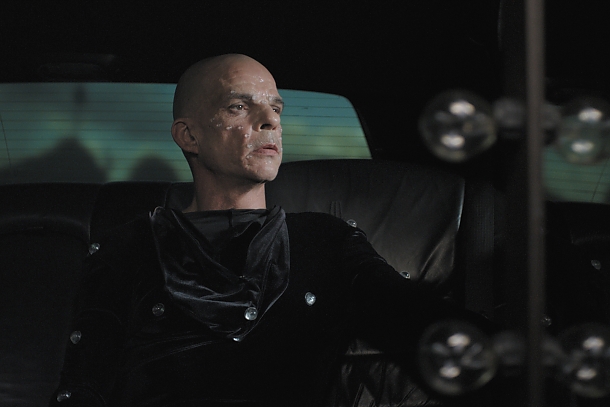
There’s a particular Parisian tradition that seems peculiar to French aesthetics involving a certain license to behave like a depraved lunatic and receive approval, endorsement, and other cultural rewards in return for this boorishness.(Many years back I tried writing about this subject, in a long review of My Life and Times with Antonin Artaud.) I suppose one very bourgeois way of describing this tendency would be to call it the aesthetics of self-indulgence combined with a gift for self-promotion, and though I don’t know French literature well enough to determine what poets might have established this trend (apart from such relatively modern figures as Baudelaire and Rimbaud), there’s no question that Jean Cocteau set down many of the terms and conditions of this tradition in cinema, along with the visiting Spaniards Luis Buñuel and Salvador Dali — including, perhaps, a special talent for hustling up various forms of patronage.

Even though not all artists with these characteristics are French, much less Parisian, it could perhaps be argued that those who are commonly celebrated for these traits are typically appreciated either by French critics (Nicole Brenez writing about Abel Ferrara) or Francophile critics (such as Adrian Martin writing about Philippe Grandrieux, among many others). Read more

FOX AND HIS FRIENDS (1976 review)

From Monthly Film Bulletin, January 1976, Vol. 43, No. 504. — J.R.

Faustrecht der Freiheit (Fox)
West Germany, 1975
Director: Rainer Werner Fassbinder

Ce r t–X. dist–Cinegate. p.c–Tango-Film. p–Rainer Werner Fassbinder. p. manager–Christian Hohoff. asst. d–Irm Hermann. sc—Rainer Werner Fassbinder, Christian Hohoff. ph–Mictrael Ballhaus. col–Eastman Colour. ed–Thea Eymèsz. a.d–Kurt Raab. m–Peer Raben. songs–“One Night” by Pearl King, Dave Bartholomew, performed by Elvis Presley; “Bird on the Wire” by and performed by Leonard Cohen. l.p–Rainer Werner Fassbinder (“Fox” Franz Biberkopf), Peter Chatel (Eugen Theiss), Karl- Heinz Böhm (Max), Harry Bär (Philip), Adrian Hoven (Eugen’s Father), Ulla Jacobsen (Eugen’s Mother), Christiane Maybach (Hedwig), Peter Kern (Florist “Fatty” Schmidt), Hans Zandler (Man in Bar), Kurt Raab (Barman Springer),Irm Hermann (Mlle. Chérie de Paris), Barbara Valentin (Max’s Wife), Walter Sedlmayr (Car Dealer), Ingrid Caven (Singer in Bar), (El Hedi Ben Salem (Moroccan), Brigitte Mira (Shopkeeper),Bruce Low (Soldier), Ursula Strätz, Elma Karlowa, Evelyn Künneke, Marquart Bohm, Liselone Eder, Klaus Löwitsch.

11,077 ft. 123 mins. Subtitles.

/wp-content/uploads/1976/01/10984398_gal.jpg

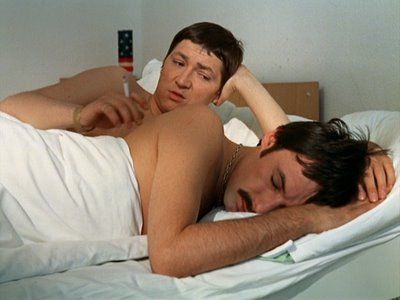
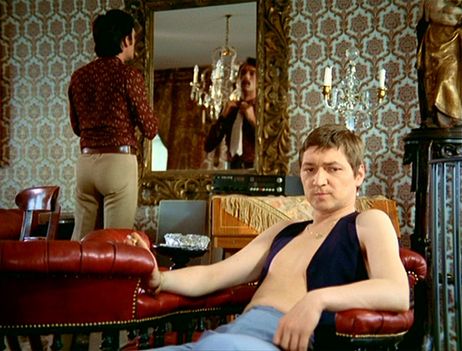
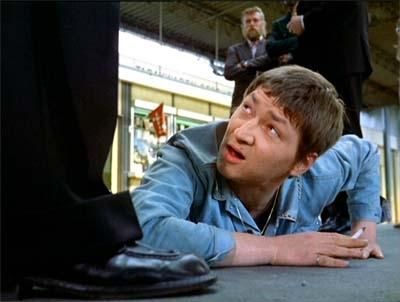
“Fox” Franz Biberkopf, a carnival sideshow performer, loses his job and his lover Klaus (who runs the show) when the latter is arrested. Read more

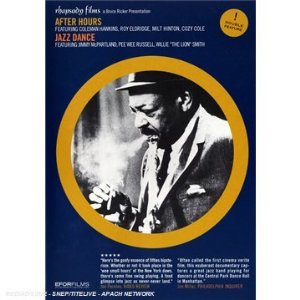
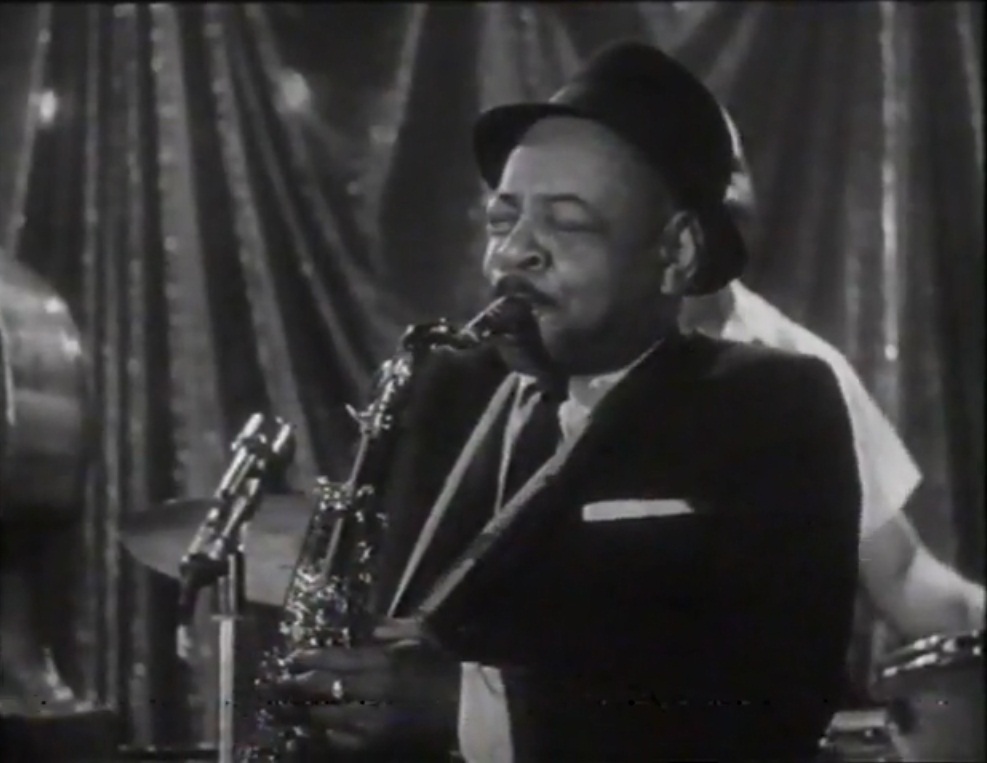
AFTER HOURS

From Monthly Film Bulletin, July 1976 (Vol. 43, No. 510). I’ve made a couple of corrections and added several basic credits, visible now at the end of my VHS copy but not accessible to me back in 1976. (I should add that the pitches made by the coproducer to potential sponsors aren’t on the VHS version.) Thanks to Ehsan Khoshbakht for some help with the illustrations.–- J.R.

After Hours

U.S.A., 1961
Director: Shepard Traube

Dist–TCB. p–Shepard Traube, Arthur Small. sc–Arthur Small. p. sup– George Goodman. ph–Arthur Ornitz. ed–Morton Fallick. sd–Robert Lessner, Frank J. Gaily. m/songs—“Lover Man” by Jimmy Davis, Roger “Ram” Ramirez, Jimmy Sherman, “Sunday” by Chester Conn, Ned Miller, Bennie Krueger, Jule Styne, “Just You, Just Me” by Jesse Greer, Raymond Klages, “Taking a Chance on Love” by Vernon Duke, John Latouche, Ted Fetter, performed by Coleman Hawkins (tenor sax), Roy Eldridge (trumpet, vocals), Johnny Guarnieri (piano), Barry Galbraith (guitar), Milt Hinton (bass), Cozy Cole (drums), Carol Stevens (vocals). l.p— Meredith Gaynes (Cigarette Girl), Albert Minns (Head Waiter), Leon James (Doorman), Richard Blackmarr (Bartender). narrator— William B. Williams. 967 ft. 27 mins. (16 mm.).

A TV pilot which failed to attract sponsors, After Hours carries all the poignance of a noble lost cause. Read more

Cannes, 1997

Adapted from “Cannes, tour de Babel critique,” translated by Jean-Luc Mengus, in Trafic no. 23, automne 1997. –- J.R.


By common agreement, the fiftieth anniversary of the Cannes

Film Festival, prefigured as a cause for celebration, wound up serving

more often as an occasion for complaint. Disappointment in the over-

all quality of the films ran high, even if the arrival over the last four days

of films by Abbas Kiarostami, Atom Egoyan, Youssef Chahine, and

Wong Kar-wai improved the climate somewhat. But I don’t mean to

suggest that the shared feelings of anger and frustration demonstrated

any critical unanimity. On the contrary, the overall malaise of Cannes this

year forced to a state of crisis the general critical disagreement and lack

of communication that has turned up repeatedly, in a variety of forms.

If the pressing question after every screening at Cannes is whether a film

is good or bad (or, more often, given the climate of hyperbole,

wonderful or terrible) — a question that becomes much too pressing, because

it short-circuits the opportunity and even the desire to reflect on a film for

a day or week before reaching any final verdict about it — the widespread

disagreements at the festival derived not only from different and

irreconcilable definitions of “good” and “bad,” but also from different and

irreconcilable definitions of “film.” Read more

CALIFORNIA SPLIT (1974 review)

From Monthly Film Bulletin, December 1974 (Vol. 41, No. 491).

It’s really a pity that the version of California Split that eventually came out

on DVD, due to musical clearances, had to eliminate some of the play with

Phyllis Shotwell’s songs alluded to here. (For a much later consideration of

this film, including these changes, go here.) — J.R.

CALIFORNIA SPLIT


U.S.A., 1974Director: Robert Altman

In a poker game at a gambling casino near Los Angeles, Charlie

Waters, a winner, is accused by Lew, a sore loser, of playing in


cahoots with the dealer, Bill Denny. Bill and Charlie become

acquainted afterwards in a nearby bar and get cheerfully drunk

together; outside, they are beaten up by Lew (with the help of

friends), who makes off with their winnings. Charlie invites

Bill to stay over at his house, which he shares with two

prostitutes, Barbara and Susan. In the morning, Bill returns to

his job on a glossy magazine but is persuaded to take off that

afternoon and join Charlie at the racetrack, where they make

a small fortune on one of Charlie’s hunches. Wanting to celebrate

with Barbara and Susan, they pretend to be policemen in order to

intimidate the girls’ transvestite client “Helen” and persuade

him to leave, then go to a prizefight. Read more

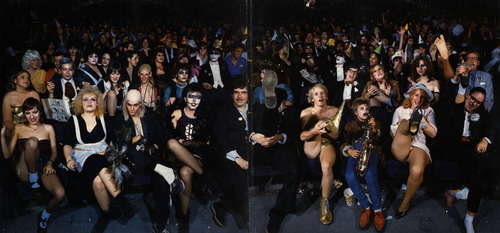
The Rocky Horror Picture Cult

From Sight and Sound (Spring 1980). -– J.R.

Now that criticism and advertising are becoming harder and harder to separate in American film culture, the notion of any genuinely spontaneous movie cult becomes automatically suspect. It implies something quite counter to the megacinema of Cimino, Coppola and Spielberg — a cinema that can confidently write its own reviews (and reviewers) if it wants to, working with the foreknowledge of a guaranteed media-saturation coverage that will automatically recruit and program most of its audience, and which dictates a central part of its meaning in advance.

For a long time in the U.S. (as elsewhere), certain specialized minority interests that get shoved off the screens by the box-office bullies have been taking refuge in midnight screenings, most of them traditionally held at weekends. But what seems truly unprecedented about the elaborate cult in the U.S. that has developed around Friday and Saturday midnight screenings of The Rocky Horror Picture Show, over the past three and a half years, is the degree to which a film has been appropriated by its youthful audience. Indeed, it might even be possible to argue that this audience, rather than allow itself to be used as an empty vessel to be filled with a filmmaker’s grand mythic meanings, has been learning how to use a film chiefly as a means of communicating with itself. Read more

School of Rock

From the Chicago Reader (October 3, 2003). — J.R.

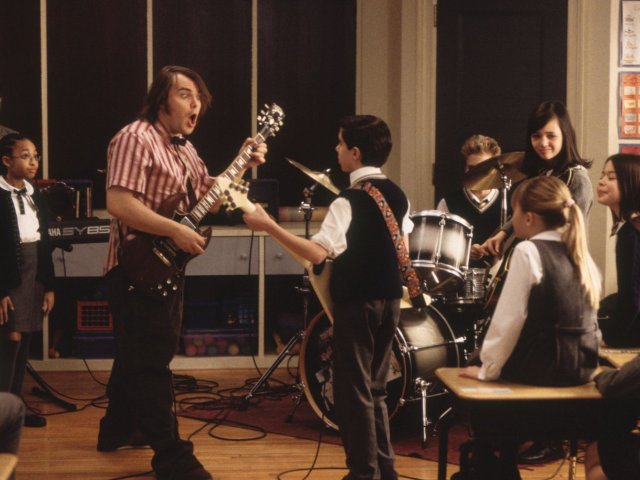
Broadly speaking, this is Richard Linklater’s French Cancan — that is to say, a humanist’s joyful exploration of the musical in which the actors’ personalities resonate as much as the characters they play. Or maybe it’s what Jean Renoir might have come up with if he’d remade Don’t Knock the Rock and cast 12-year-olds as the musicians. Though this seems like a personal film, Linklater was hired to direct a cannily commercial script by Mike White, about a rock ‘n’ roll loser (Jack Black) who, fired from his job and his band, impersonates his wimpy substitute-teacher roommate (White) to land a teaching position at an upscale elementary school. This infantile character hasn’t got a thought in his head except for rock music, but somehow he becomes a model teacher, and through stealth and sheer perseverance he turns his fifth-grade class into an inspired gang of rockers. The kids, all real musicians performing, are wonderful, and so is Black; Joan Cusack is both charming and funny as the principal. 108 min. Century 12 and CineArts 6, Chatham 14, City North 14, Crown Village 18, Ford City, Gardens 1-6, Gardens 7-13, Lawndale, Lincoln Village, Norridge, North Riverside, 600 N. Read more

FAREWELL, MY LOVELY (1975 review)

From Monthly Film Bulletin, December 1975 (Vol. 42, No. 503). — J.R.

Farewell, My Lovely
U.S.A., 1975

Director: Dick Richards

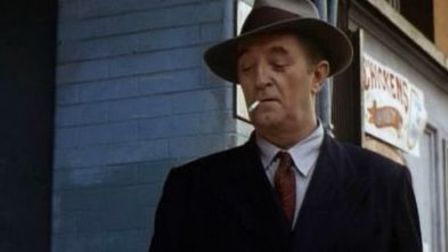
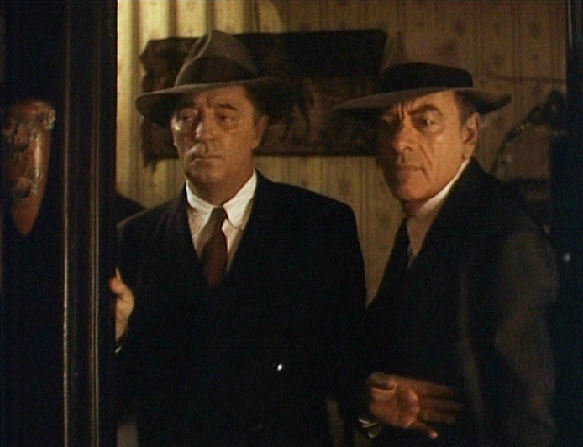
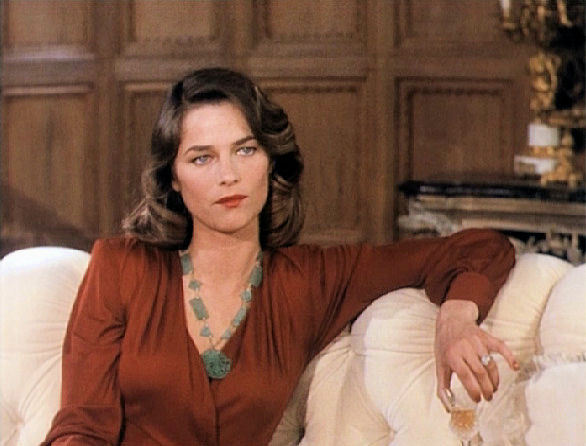
Employing the same production team (Elliott Kastner and Jerry Bick) as The Long Goodbye and the same director of photography (John A. Alonzo) as Chinatown, Farewell, My Lovely resumes the Los Angeles private-eye cycle with a clear grasp of its immediate as well as its more distant precursors. Less individual than either Altman at his most eclectic or Polanski at even his least personal, Dick Richards nevertheless seems to have an almost equally distinct idea about what to do with his material — in this case, to honor it as closely as possible in its own generic terms and not aspire to bring to it any contemporary perspective more distancing than a warm and somewhat glazed-over nostalgia. Some of the consequences — like the wonderfully evocative pastel-like impressions of L.A. at night and a torchy orchestral theme by David Shire behind the opening credits, or the deliberate use of Forties film noir devices (first person voice-over narration, flashbacks framed by blurs, dime-store expressionism to render Marlowe’s loss of consciousness — recalling Dmytryk’s treatment of the same scene thirty years ago) — are immediately apparent. In other cases, including a self- conscious series of period references (DiMaggio’s batting record, Hitler’s invasion of Russia) and recreations (the lovingly detailed and mythically idealized sets), the results are less obvious: a sentimental softening of the Marlowe character throughout is so well integrated with the crisper aspects of his fancy rhetoric that Richards and scriptwriter David Zelag Goodman almost manage to transform the detective into a Sixties liberal who plays catch Fifties-style with a grinning mulatto child without seriously jarring the reverential tone. Read more

Le Trio Infernal, Un Homme Qui Dort, Steppenwolf

From Oui (December 1974). – J.R.

the-infernal-trio

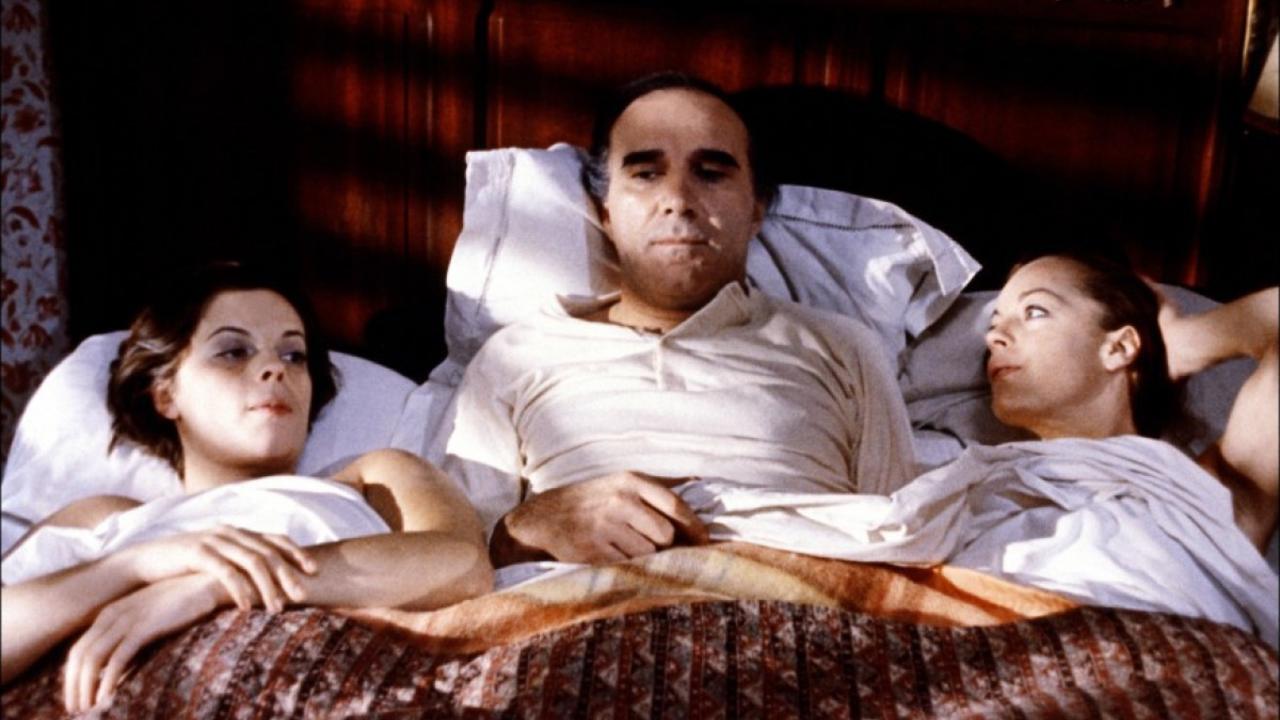
Le Trio lnfernal. It’s the Christmas season and Michel Piccoli shoots

a man in the eye — straight through a newspaper he’s reading — while

downstairs, Romy Schneider is finishing off Andrea Ferreol with

similar dispatch. The bodies are stripped clean and plunked into

adjacent bathtubs,  which Piccoli promptly fills with  sulfuric acid.

Mascha Gomska, Schneider’s sister — who completes the infernal

trio of murderers who slaughter people for their life insurance –

barfs on the living-room carpet, while offscreen, excited by all

these gay and yummy events, Schneider is giving Piccoli an

impromptu blowjob in the bathroom. Later on, after the bodies have

decomposed, Piccoli dons a gas mask, ladles the slop into pails,

then empties the heady stew outdoors while one of the girls is

shown eating spaghetti. Excessive? This Grand Guignol comedy is

nothing but, as it chronicles the exploits of three glamorous

monsters butchering their way to wealth, with lots of kinky sex

on the way. Francis Girod, a producer-turned-director, exhibits an

unusual amount of expertise in his first film.  But most of the show

belongs to Piccoli, who dances through all of the Thirties décor

performing a veritable concerto of comic invention. And for

sound-effects freaks, the bathtub glop is recorded so lovingly as it

gurgles into a pit that you can almost taste it. Read more

Ritwik Ghatak at 21

This beautiful photograph, which I’m told has never been published before, was given to me by his maternal niece Rina Chakravarti in Toronto, at the Lightbox, shortly before I gave an introduction to a restored, gorgeous print of Ghatak’s 1960 masterpiece, The Cloud-Capped Star. It was taken taken in 1946 in Baikunthapur, Madhya Pradesh.

As one can (arguably) see from the photo below, of Niranjan Roy — the male lead of The Cloud-Capped Star, who plays the character Sanat — there’s a certain resemblance. [9-11-12]

Read more