Spirit Stream Storm

From the Chicago Reader (January 26, 1996). — J.R.

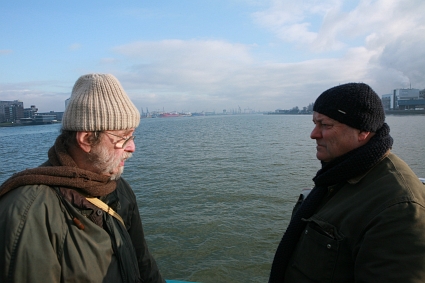
This program of 35-millimeter experimental films selected by Bruce Posner is a mixed bag, though there’s no denying the intensity of the works. That may be part of the problem: including musical interludes between clusters of films is a good idea, but it backfires because two of the interludes are as aggressive as the films, denying us a contemplative moment when we might catch our breath. But I can still think of two good reasons for seeing this show. There’s an awesome eight-minute fragment by Sergei Paradjanov, literally made on his deathbed, called Confession (1990) that easily surpasses his last two features and deserves to be ranked alongside his sublime Sayat Nova; it centers mainly on a long take juxtaposing a group of musicians (whose music is unheard), an apparent funeral, and various ritualistic activities — all happening at once in the same hallucinatory space in a way that recalls juxtapositions in medieval paintings. And then there are the dated but undeniably lively silent abstract expressionist works made between 1967 and 1992 by Stan Brakhage, the best of which are Night Music (1986) and The Dante Quartet (1987), where the tempi are sufficiently varied to justify the poetic and musical analogies implied in the titles. Read more

Anything for a Laugh [THE NAKED GUN: FROM THE FILES OF POLICE SQUAD!]

From the Chicago Reader (December 9, 1988). — J.R.

THE NAKED GUN: FROM THE FILES OF POLICE SQUAD!

** (Worth seeing)

Directed by David Zucker

Written by Jerry Zucker, Jim Abrahams, David Zucker, and Pat Proft.

With Leslie Nielsen, George Kennedy, Priscilla Presley, Ricardo Montalban, O.J. Simpson, and Nancy Marchand.

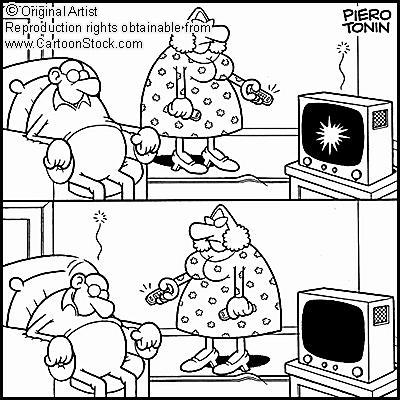
Unlike some of my colleagues, I find the latest comedy by David Zucker, Jim Abrahams, and Jerry Zucker (the ZAZ team) a notch below their previous Airplane! (1980) and Top Secret! (1984). This shouldn’t matter much to anyone looking for an irreverent, anything-goes farce with a fair number of laughs; The Naked Gun is certainly that, and I don’t intend for the following to scare anyone away from it. But I do want to consider what’s been happening to the ZAZ team’s distinctive brand of satire over the past eight years.

All three ZAZ movies use as their point of departure the crystallized form of some bad formula movie. The lead characters wear deadpan expressions through their cliche roles, and the laughs derive largely from non sequiturs in their dialogue and from lunatic gags that surround them as they trudge through their routine plots, impervious to the silliness.

Airplane! stuck to this pattern pretty consistently, lampooning the disaster blockbusters of the 70s like Earthquake, the Airport sequels, and The Towering Inferno. Read more

Film Style And Technology, by Barry Salt

From Wide Angle, vol. 8, no. 3-4, 1986. –- J.R.

FILM STYLE AND TECHNOLOGY:

HISTORY AND ANALYSIS by Barry

Salt, Starword, 3 Minford Gardens,

London W14 0AN, England, 1983:

paper, $ 15.00, 408 pages, lllustrations

It is a sad commentary on the

narrowness and inflexibility of current

academic publishing in film studies

that this major work had to be brought

out at the author’s own expense.

Handsomely produced and generously

priced, Film Style and Technology:

History and Analysis offers what is

conceivably the most detailed account

of film technology that we have had to

date, stretching from 1885 through the

Seventies, with roughly one chapter per

decade, and for this aspect of the book

alone, no comprehensive library devoted

to film history can afford to be without it.

In addition, the book’s innovative use of

statistical style analysis, while

problematical in relation to certain stylistic

issues, nevertheless introduces a new form

of rigor to film analysis that deserves to be

considered in detail.

If, as a “total” view of cinema, Salt’s approach

often seems constricted, it nonetheless yields

a wealth of potentially useful material to many

different kinds of film scholars. As Salt’s title

makes clear, a technological history of film

represents only one part of his enterprise. Read more

Kieslowski’s RED

From the Chicago Reader (December 16, 1994). — J.R.

Red

**** (Masterpiece)

Directed by Krzysztof Kieslowski

Written by Krzysztof Piesiewicz and Kieslowski

With Irene Jacob, Jean-Louis Trintignant, Frederique Feder, and Jean-Pierre Lorit.

A film of mystical correspondences, Red triumphantly concludes and summarizes Krzysztof Kieslowski’s “Three Colors” trilogy by contriving to tell us three stories about three separate characters all at once; yet it does this with such effortless musical grace that we may not even be aware of it at first. Two of the characters are neighbors in Geneva who never meet, both of them students — a model named Valentine (Irene Jacob) and a law student named Auguste (Jean-Pierre Lorit )– and the third is a retired judge (Jean-Louis Trintignant) who lives in a Geneva suburb and whom Valentine meets quite by chance, when she accidentally runs over his German shepherd.

Eventually we discover that Auguste and the retired judge are younger and older versions of the same man (neither of them meet, either). Another set of correspondences is provided when, in separate scenes, Valentine and the judge are able to divine important facts about each other: he correctly guesses that she has a younger brother driven to drug addiction by the discovery that his mother’s husband is not his real father; she correctly guesses that he was once betrayed by someone he loved — which also happens to Auguste during the course of the film. Read more

Off Color [Kieslowski’s WHITE]

From the Chicago Reader (June 17, 1994). — J.R.

http://4.bp.blogspot.com/_fYv3dsEBzEI/SV8T_AtuQBI/AAAAAAAAAOk/sjS6Gy6tgCU/s400/kieslowski_white.jpg

** WHITE

(Worth seeing)

Directed by Krzysztof Kieslowski

Written by Krzysztof Piesiewicz and Kieslowski

With Zbigniew Zamachowski, Julie Delphy, Janusz Gajos, Jerzy Stuhr, Grzegorz Warchol, and Jerzy Nowak.

“Imagine a kind of filmmaking that’s truly in tune with the ways you think and relate to other people. A deeply humane kind of filmmaking, but free from ‘humanist’ lies and sentimental evasions. Not a dry, ‘realistic’ kind of filmmaking, but one in which all the imaginative and creative efforts have gone into understanding the way we are. A kind of filmmaking as sensitive to silence as to speech, and alert to the kind of meanings we prefer to hide away. To my knowledge, only two directors in the world are currently making films like that. One is Krzysztof Kieslowski in Poland. The other is Edward Yang in Taiwan.”

These rousing words by Tony Rayns in the June issue of Sight and Sound were just what I needed to read after returning last month from Cannes, where wonderful films by Yang and Kieslowski about contemporary life were showing in competition. They were the two best competing films that I saw, though neither won any prizes. Read more

Brilliant Inaccuracies [DOWN WITH LOVE & DRACULA: PAGES FROM A VIRGIN’S DIARY

I’ve appended a different title to this Chicago Reader review which ran on July 11, 2003 and restored a few details in my argument as well as phrases that a bleary-eyed editor, foregoing the Reader’s usual writer-friendly protocol, deleted at the last minute without telling me. Down with Love, in particular, continues to be a major revelation and source of pleasure for me. — J.R.

Down With Love

**** (Masterpiece)

Directed by Peyton Reed

Written by Eve Ahlert and Dennis Drake

With Renee Zellweger, Ewan McGregor, Sarah Paulson, David Hyde Pierce, and Tony Randall.

Dracula: Pages From a Virgin’s Diary

*** (A must-see)

Directed and written by Guy Maddin

With Zhang Wei-qiang, Tara Birtwhistle, David Moroni, CindyMarie Small, Johnny Wright, and Brent Neale.

If a more interesting and entertaining Hollywood movie than Down With Love has come along this year, I’ve missed it. Down With Love — which has already closed in Chicago — is entertaining thanks to Eve Ahlert and Dennis Drake’s clever script, Peyton Reed’s mainly assured direction, inventive production and costume design, a musical number behind the final credits I’d happily swap all of Chicago for, and even a miscast Renee Zellweger pulling off a difficult climactic monologue. Read more

Regrouping: Reflections on the Edinburgh Festival 1976

I originally planned to include this essay in one of my collections, but eventually changed my mind. It’s an embattled Sight and Sound piece that appeared in their Winter 1976/77 issue and was written towards the tail end of my two and a half years on the staff of that magazine, shortly before I returned voluntarily to the U.S. to accept a short-term teaching job replacing Manny Farber in a San Diego suburb.

In this piece, I castigated mainstream critics for sneering at both the psychoanalytical film theory being practiced at the time at Screen and experimental filmmaking (the focus of each of the two weeks at that year’s Edinburgh Film Festival), at the same time I castigated the organizers of (and many participants in) those two Edinburgh events for various other kinds of narrowness and conformity. What was consciously if paradoxically intended by me as some form of bridge-building between warring factions was in some ways also a kind of bridge-burning, locating myself in the precise middle of the same makeshift and disintegrating bridge I was supposedly trying to construct. In any case, after going to the trouble of retyping this very lengthy report, I found myself too alienated from most of its approach to reprint it in a collection of mine. Read more
Short Cuts [COFFEE AND CIGARETTES]

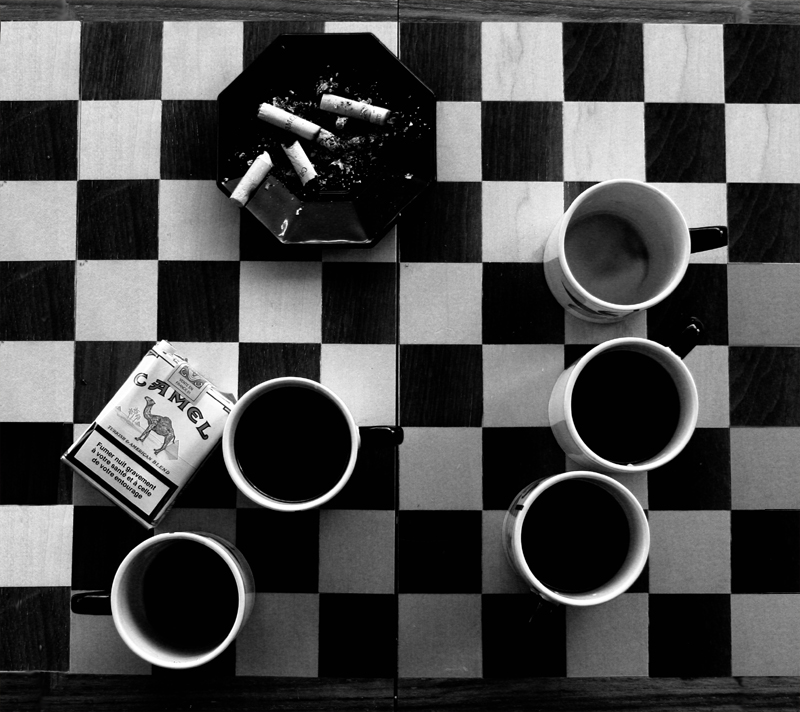
This appeared in the May 28, 2004 issue of Chicago Reader. Coffee and Cigarettes, incidentally, proved to be one of the surprise hits of Jarmusch’s career — not as commercially successful as the subsequent Broken Flowers (though I prefer it to that), but more popular than anticipated. The overhead shots of expresso cups in a more recent Jamusch feature, The Limits of Control, recall those in Coffee and Cigarettes — providing even more of a contrast with some of the weird, transgressive, and uncharacteristic camera angles in the more recent film, starting with the very first shot. (Note: the first photograph below is by Jean-Daniel Beley, who has requested a credit.)—J.R.

Coffee and Cigarettes

*** (A must-see)

Directed and written by Jim Jarmusch

With Roberto Benigni, Steven Wright, Joie Lee, Cinqué Lee, Steve Buscemi, Iggy Pop, Tom Waits, Joe Rigano, Vinny Vella, Vinny Vella Jr., Renee French, E.J. Rodriguez, Alex Descas, Isaach de Bankolé, Cate Blanchett, Jack White, Meg White, Alfred Molina, Steve Coogan, GZA, RZA, Bill Murray, Bill Rice, and Taylor Mead.

At first Jim Jarmusch’s Coffee and Cigarettes, made over a span of 17 years, looks like a departure for him. It consists of 11 entertaining, mainly comic short films in black and white that show people mainly sitting around in coffeehouses mainly drinking coffee, mainly smoking cigarettes, and mainly talking. Read more

Night Moves (1975 review)

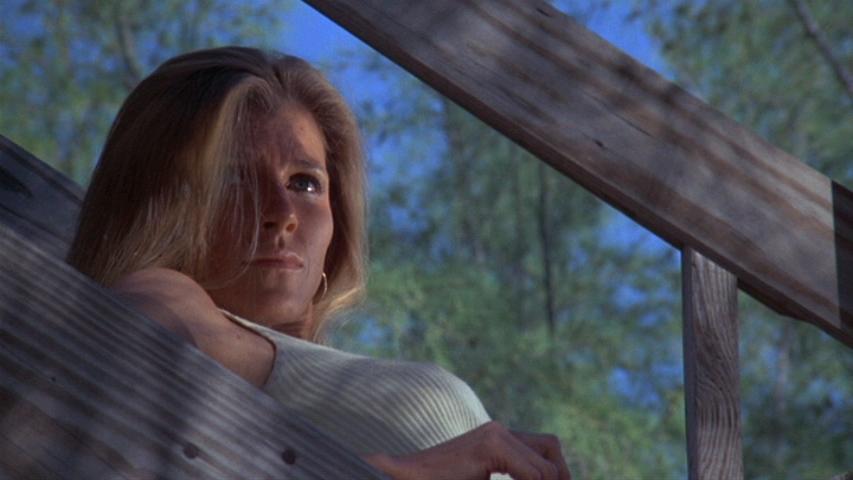
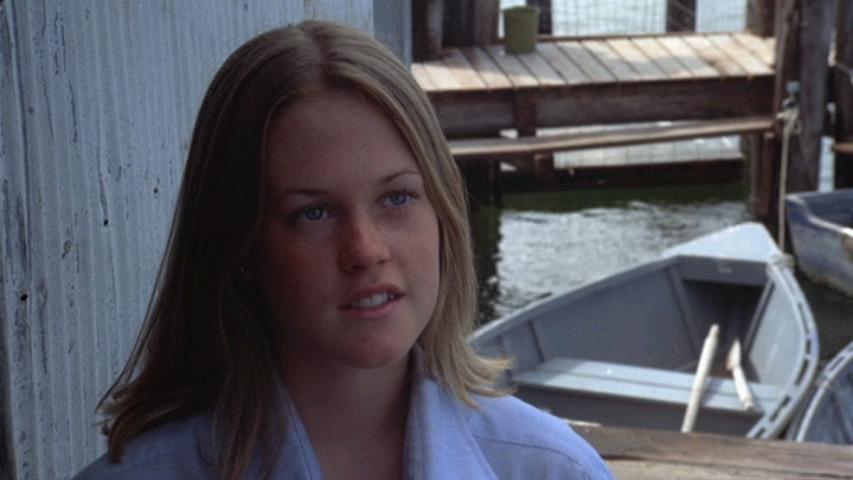
This review of Night Moves appeared in the May 1975 issue of Monthly Film Bulletin. [September 11, 2009 postscript: Having just reseen Night Moves for the first time since it came out, I think it holds up remarkably well, in terms of its script and direction and almost uniformly fine performances. There’s also some additional interest now in seeing Melanie Griffith in her first credited performance and James Woods, less impressive, in one of his earliest after Elia Kazan discovered him for The Visitors. As for Alan Sharp, it would appear that his filmography (which also includes The Hired Hand and Ulzana’s Raid) warrants further investigation — as does Jennifer Warren’s.] — J.R.

Night Moves

U.S.A., 1975                                                 Director: Arthur Penn


Cert—X. dist—Columbia-Warner. p.c—Hiller Productions/Layton. p—Robert M. Sherman. assoc. p—Gene Lasko. p. manager—Thomas J. Schmidt. asst. d—Jack Roe, Patrick H. Kehoe. sc—Alan Sharp. ph—Bruce Surtees. col—Technicolor. underwater ph—Jordan Klein. ed—Dede Allen, Stephen A. Rotter. p. Read more

Lout of Africa [WHITE HUNTER, BLACK HEART]

From the Chicago Reader (September 28, 1990). This is the first time I wrote at length about what is still my favorite Eastwood film; the second time was many years later, and that piece can be found here. — J.R.

WHITE HUNTER, BLACK HEART

**** (Masterpiece)

Directed by Clint Eastwood

Written by Peter Viertel, James Bridges, and Burt Kennedy

With Clint Eastwood, Jeff Fahey, George Dzundza, Alun Armstrong, Marisa Berenson, Timothy Spall, and Mel Martin.

I can’t say that I’ve been one of Clint Eastwood’s partisans. He was amusing as the Man With No Name — the mean, laconic hombre whose supercoolness suggested a hip Gary Cooper — in Sergio Leone’s mid-60s western trilogy (A Fistful of Dollars, For a Few Dollars More, and The Good, the Bad, and the Ugly), and fun in Coogan’s Bluff and Two Mules for Sister Sara shortly afterward. But for me the joke of this ornery, poker-faced, string-bean dude was already running thin as early as Dirty Harry (1971), a right-wing remake of High Noon that amplified Eastwood’s relation to Cooper and marked the point at which he was moving commercially into high gear. (To my mind, the gothic excesses and male hysteria of The Beguiled, made the same year — a Civil War tale in which Eastwood was seduced and unmanned by a bevy of females in a girls’ school — were much more interesting.) Read more

Rendez-vous à Bray (Rendezvous at Bray) (1976 review)

As much as I revere some of the Belgian films of Chantal Akerman, if I had to choose only one Belgian film to take with me to a desert island, I’d have a pretty rough time forsaking this 1971 masterpiece by André Delvaux, which I seriously, even spectacularly, underrated when I reviewed it for the Monthly Film Bulletin (in their April 1976 issue, vol. 43, no. 507) — although paradoxically I seemed pretty well attuned to its special enchantments even when I kept finding ways to undervalue them, perhaps because I couldn’t find adequate ways to account for them. Happily, I’ve been able to rediscover this film thanks to a sublime Belgian box set that I reviewed some time ago.   — J.R.

Rendez-vous à  Bray (Rendezvous at Bray)

France/Belgium/West Germany, 1971
Director: André Delvaux

Cert—A. dist—Essential Cinema. p.c—Parc Films/ORTF (Paris)/Studios Arthur Mathonet/Ciné Vog (Brussels)/Taurus Film (Munich). p—Mag Bodard. assoc. p—Philippe Dussart, Pierre Gout. asst. d—Charlotte Fraisse, Michel Rey. sc–André Delvaux. Based on the story Le Roi Cophétua by Julien Gracq. ph—Ghislain Cloquet. col—Eastman Color. ed—Nicole Berckmans. a.d—Claude Pignot. m—Frédéric Devreese;  excerpts from the works of Brahms (including Intermezzos Nos. Read more

Theory of Film Practice

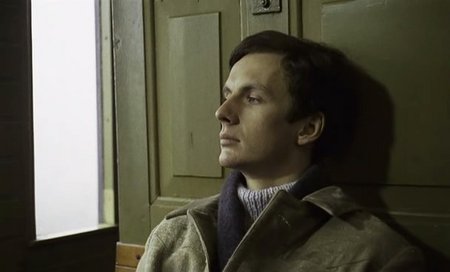
This book review appeared in the Winter 1974/5 issue of Sight and Sound. For illustrations, I’m including a contemporary photograph of the author, Noël Burch (seen here in Rotterdam with the late Allan Sekula) and two stills from Burch’s first and (probably) best film, Noviciat (1964 — only 18 minutes long, but including illustrations of a remarkable number of the formal procedures described in his book.

Shortly after this review appeared, I recall receiving a gratifying fan letter of sorts from James Leahy, a teacher at the Slade School in London and a devoted Burch disciple, at least at the time. — J.R.

Theory of Film Practice

THEORY OF FILM PRACTICE

By Noël Burch

Translated by Helen R. Lane

Secker & Warburg, ₤3.50 (paperback, ₤1.90)

Theory of Film Practice is at every point derived from and confirmed by the perception that film develops not through the contraints and coventions of an industry, but in opposition to them.” Thus Annette Michelson, in her exemplary introduction to this revised and updated English edition of Praxis du cinéma (1969), sets forth one salient fact about Noël Burch’s seminal work that clearly isolates it from the critical mainstream as we know it today.

There are many others: a total rejection of the illusionist principle which was expanded in depth by André Bazin (more precisely, extended into deep focus), and has subsequently been adopted as an unexamined postulate by most of his epigones; a ‘scientific’ approach that rigorously eschews journalism, sociology, literary analysis and the promulgation of moral concerns, however much it reflects Burch’s own aesthetic predilections; above all, an obstinate insistence on regarding films as sounds, images and the formal relationships between them. Read more

One Observation and Three Figures


A reorganized and self-regulated Hollywood bounced back in 1935, but times were different then. Movies were America’s universal culture. Now, they’re not even close. Like then, the technology is changing—-but in a far different way. Movies are expendable. Folks will give up $12 tickets, cancel Netflix, and cut cable to save their high-speed Internet connection. With the president’s fireside chats posted online, the new Hoovervilles will certainly have broadband. Is there a downsized future for Katzenberg’s product? As one bankrupt mogul said to another, “YouTube?!”–J. Hoberman, “Why Hard Times Won’t Mean Good Times at the Movies Again,” The Village Voice, February 3, 2009

Average number of hours of television watched per week by Americans aged 43 to 61: 19 Average number watched by those aged 26 to 42 and those aged 14 to 25, respectively: 15, 11–“Harper’s Index”, Harper’s Magazine, March 2009 [2/13/09]

Read more

THE GOLD DIGGERS Reconsidered

Written for the BFI DVD release of The Gold Diggers in 2009. — J.R.

A quarter of a century after its initial unfriendly reception, it’s worth puzzling over why a film as beautiful, as witty, as imaginative, and as brilliant as Sally Potter’s first feature could have given so much offense to certain spectators in 1983. The recoil was so unforgiving in some quarters that Potter, after touring extensively with the film, came to seriously question it herself — or at least the wisdom of having made it, insofar as it was already threatening to end her ambitious career in filmmaking almost before it had properly started, thereby eventually persuading her to withdraw the film from circulation. (By contrast, the exceptional success of her 34-minute Thriller in 1979, an unpacking of Puccini’s La Bohème, made with many of the same collaborators — most notably Colette Laffont, Lindsay Cooper, and Rose English — had clearly heightened her expectations.) Now that it’s belatedly becoming available again on DVD, it’s more than entitled to a fresh look — including a consideration of what originally perturbed some people about it.

Even after one totes up all of the most obvious of the possible objections that could be raised against The Gold Diggers — boredom, anti-feminist backlash, envy of other independent filmmakers for Potter’s lavish funding from the National Film Board, pretentiousness, allegorical and metaphorical density, sheer difficulty (as Ruby Rich, a sympathetic analyst, put it in her 1998 book Chick Flicks, `Its commitment to narrative [is] minor’) — the inability or refusal of many viewers to grasp or even notice The Gold Diggers’ no less obvious and unassailable strengths continues to confound me. Read more

Blackmail (1974 review)

This appeared in the October 1974 issue of Monthly Film Bulletin. This was long before the silent version of Blackmail was rediscovered and restored. — J.R.

Blackmail

Great Britain, 1929                                 Director: Alfred Hitchcock

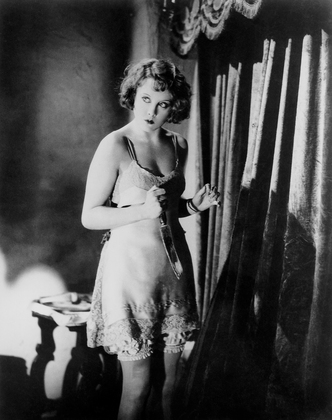
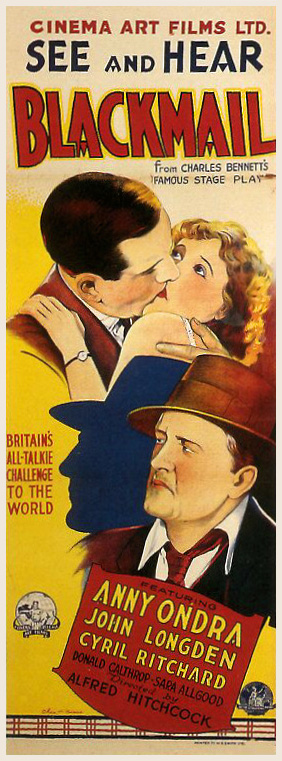
The extraordinary plateau attained by Hitchcock’s first sound film in relation to his overall development is the sum of many accomplishments: above all, a decisive mastery in moving back and forth between objective and subjective narrative modes. If the point-of-view is one of the cornerstones in Hitchcockian syntax, the film quite likely represents the first time in the director career that it is woven so seamlessly into a plot that all notions of stylistic “touches” gives way to a sustained psychological density. Beginning virtually like a documentary, Blackmail provides a quick foretaste of subjective truth in its early glimpses of the anonymous criminal, which subtly veer from the police’s viewpoint to his own – shifting, that is, from one kind of fear and apprehension to another. The complex overtones and ambiguities of the film are informed throughout by this kind of duplicity and intimacy, which oblige us to identify with rapist along with potential victim, murderer along with corpse, and detective along with blackmailer, at the same time as we are asked to regard them all with a certain amused skepticism. Read more