Recommended: THE BEST YEARS OF OUR LIVES by Sarah Kozloff

The Best Years of Our Lives by Sarah Kozloff, London: BFI/Palgrave Macmillan, 2011, 110 pp.

Part of my admiration for this intelligent and judicious contribution to the BFI Film Classics — a series that by now may qualify as the most successful and title-heavy book series in the history of film criticism, perhaps in any language — is my conviction, which I share with Kozloff, that William Wyler’s 1946, 171-minute masterpiece about returning American soldiers after the end of WW2 is, existentially speaking, a rare and almost unprecedented act of witness and social conscience for a Hollywood feature.

Many of the best American film critics have been either divided (James Agee and Manny Farber) or chiefly negative (Robert Warshow) about this picture. Interestingly enough, Farber went all the way from an almost unqualified rave in 1946 to calling the movie “a horse-drawn truckload of liberal schmaltz” nine years later – maybe because by then he was rebelling against the Oscar-laden mainstream approval – but I think he was right the first time. (In 1957, he was using his disdain to illustrate the maxim, “No one asks the critics’ alliance to look straight backward at its `choices,’” without clarifying that he was part of that original alliance.)

Read more

Merry Widow [THE WIDOW OF SAINT PIERRE]

From the Chicago Reader (March 30, 2001). — J.R.

The Widow of Saint-Pierre

**

Directed by Patrice Leconte

Written by Claude Faraldo

With Daniel Auteuil, Juliette Binoche, Emir Kusturica, Philippe Magnan, and Michel Duchaussoy.

http://parkcircusblog.files.wordpress.com/2011/06/la-veuve-de-saint-pierre.jpg?w=415&h=220

I find that some movies change more than others over repeated viewings, and after three screenings Patrice Leconte’s The Widow of Saint-Pierre slid all the way from near masterpiece to effective piece of distraction. I saw it three times only out of professional duty — after seeing it at a press screening several weeks ago, I led two discussions about it for the “Talk Cinema” film series. I would have been happier seeing it only once, and if you don’t intend to spend a lot of time reflecting on it afterward, The Widow of Saint-Pierre could add up to one good evening.

That may sound condescending, but some moviegoers — including, on occasion, myself — have the attitude that “I don’t like to think when I go to movies; I want to have fun.” It’s depressing that there are people who are willing to say they can’t have fun while they’re thinking — that is, if they’re telling the truth, since I suspect some of them are fibbing, even if they don’t know it. Read more

Phantom Interviewers Over Rivette (with Gilbert Adair and Lauren Sedofsky)

This originally appeared in Film Comment (September-October 1974).

I was shocked in December 2011 to learn of the death of Gilbert Adair, a close friend during the mid-70s (when both of us were living in Paris, and then for some time later, after I moved to London ahead of Gilbert). Although I can’t swear to this, it’s possible that this collaborative interview may be the first thing that Gilbert ever published; at least it’s the earliest piece of his that I know about. With Michael Graham — also, alas, no longer alive — Gilbert and I had subsequently collaborated on a lengthy production piece for Sight and Sound about Rivette’s Duelle and Noroît, recently reprinted in Arrow’s DVD box set devoted to Rivette, available here and here. — J.R.

.

Last June, I invited two of my friends — Gilbert Adair and Lauren Sedofsky — to join me in an interview with Jacques Rivette. All three of us had been dazzled by Céline et Julie vont en Bateau (Celine and Julie Go Boating), to the point of considering it the most important new film we’ve seen in years, and it seemed exciting to extend our folie à trois to a meeting with the director. Read more

Love to Hate (THE BELIEVER)

From the Chicago Reader (June 14, 2002). — J.R.

The Believer

*** (A must-see)

Directed by Henry Bean

Written by Bean and Mark Jacobson

With Ryan Gosling, Summer Phoenix, Theresa Russell, Billy Zane, A.D. Miles, Glenn Fitzgerald, Elizabeth Reaser, and Dean Strober.

The Believer, an independent feature, premiered on cable nearly three months ago, after failing to get a distributor. But it was recently picked up and is opening this week at Landmark’s Century Centre. It’s already created a good deal of buzz, most of it justified.

Inspired by the real-life story of a 28-year-old Jew in Queens named Daniel Burros, who became a high-ranking member of the American Nazi Party and then of the New York chapter of the Ku Klux Klan before fatally shooting himself when the New York Times ran a front-page story revealing that he was a Jew, the film makes a few educated guesses about the possible origins of such a divided identity, yet it’s entirely to the credit of Henry Bean, the writer-director, and Mark Jacobson, who collaborated on the story, that satisfying psychological explanations aren’t what the film is after. As Bean, a Reform Jew, has suggested in various statements, the film is more precisely an exploration of what it means to be Jewish and what it means to hate — two separate subjects that happen to overlap in this case. Read more

Declarations of Independents: History Lessons

From The Soho News (February 25, 1981). One can trace some updates on my thoughts about Symbiopsychotaxiplasm: Take One over 17 years later and Killer of Sheep over 26 years later by following the links provided here. — J.R.

Feb. 16: A double feature of two class-conscious films directed by Carol Reed , The Stars Look Down (1939) and Kipps (1940), at Theater 80 — my first look at either movie. Trying to arrive at a plausible reverse-angle for the first movie — that is, a precise sense of its audience and context in early 1940, when Graham Greene wrote for The Spectator, “Dr. Cronin’s mining novel has made a very good film — I doubt whether in England we have ever produced a better” — I find myself hopelessly hamstrung, stuck in a narrow sort of timewarp called the present.

The problem is, I can only come up with a romantic, movie version of an English movie audience three years before I was born, a Thomas Pynchon fantasy à la Gravity’s Rainbow (whose sexy, existential London is itself very much a pungent blend of remembered movies from that period). Admittedly, Greene’s oddly familial use of first person plural tells me a little something, too. Read more

SCARFACE

A capsule review requested by and written for MUBI’s Notebook in conjunction with an ongoing series at New York”s Film Forum. — J.R.

scarface

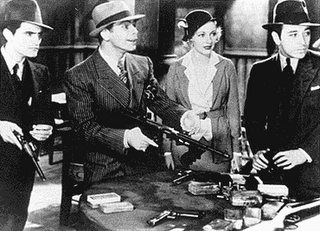
Scarface (Howard Hawks, 1932): A surprising amount of Howard Hawks’ unstable, weirdly graceful universe is informed by the imminence of death and the proximity of offscreen space, tied to the risks of tangling with sudden impulses. Few of his films are more aware of this encroaching void than Scarface, where X is made to mark the offscreen spot around every narrative corner. This frighteningly brutal black comedy, the least romantic of his crowd-pleasers — a much better gangster film than any of the Godfathers, especially when it comes to confronting reality — was made when people were far less deluded than they are today about the fact that their lives and destinies were being controlled by crooks. What makes it bleaker than Only Angels Have Wings and Rio Bravo is the small and indecisive role friendship is allowed to play in holding back the darkness; perhaps only Land of the Pharaohs betrays a comparable nihilistic bleakness. — Jonathan Rosenbaum
http://media.tumblr.com/tumblr_ln28nyzWSs1qhqg0d.png Read more

Beautiful Moments [MEN DON’T LEAVE]

From the Chicago Reader (March 2, 1990). — J.R.

MEN DON’T LEAVE ** (Worth seeing)

Directed by Paul Brickman

Written by Barbara Benedek and Brickman

With Jessica Lange, Chris O’Donnell, Charlie Korsmo, Arliss Howard, Joan Cusack, and Kathy Bates.

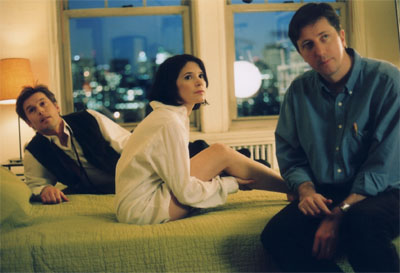
A central part of Paul Brickman’s talent as a director, apart from his skill with actors, is the use he’s made in his two features of the throbbing, semieuphoric rhythmic monotony of New Age music as a kind of figured bass to the melodic flights of his mise en scene. A master in orchestrating precise cuts, unorthodox camera angles, and camera movements that propel or embellish his story telling, Brickman may depend in part on slightly shopworn plots and familiar generic characters, at least as putative starting points. But he scores almost every time he articulates a fancy transition or highlights a telling detail, occasionally setting the story slightly adrift as he draws us into these lyrically abstract interludes. And the musical regularity of his scores — by Tangerine Dream in Risky Business (1983) and by Thomas Newman (son of Alfred and cousin of Randy) in Men Don’t Leave — tends to protect these well-crafted maneuvers, providing them with a kind of safety net (or, to alter the metaphor slightly, trampoline) from which he can make his expressive leaps. Read more

The Ten Best Films Directed by Women

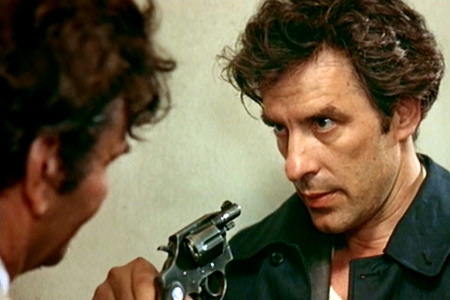
The most conspicuous absence in the following list of  “the ten best films directed by women” requested by the BBC is Elaine May; clearly I should have included either Mikey and Nicky or The Heartbreak Kid.

mikeynicky-falk-gun-jc


theheartbreakkid-grodin-berlin

BBC: The best films directed by women:


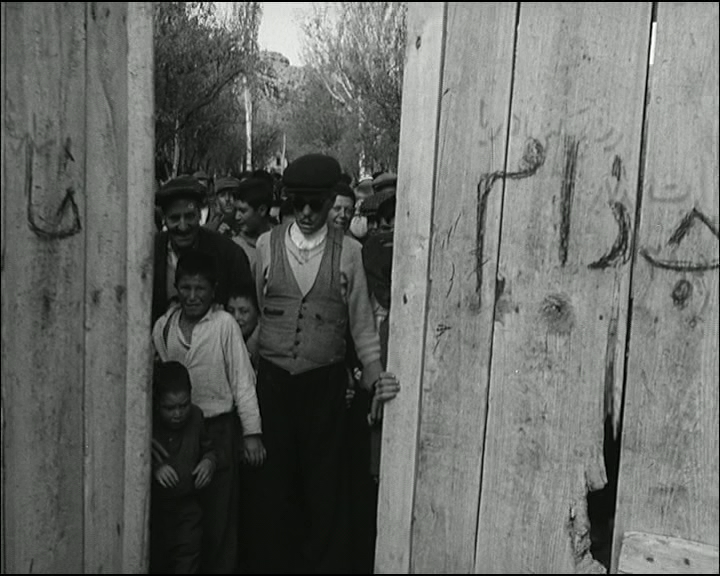
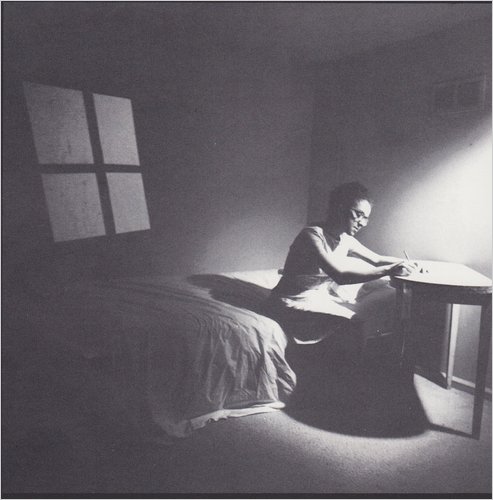
1.The House is Black (Forugh Farrokhzad, 1963)

The-House-is-Black4
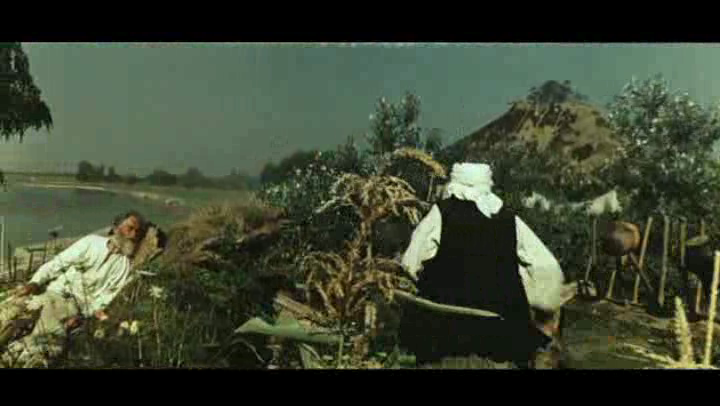
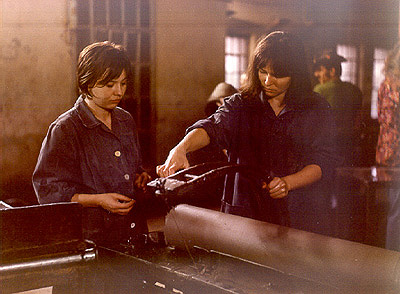
2. The Enchanted Desna (Yulia Solntseva, 1964)

TheEnchantedDesna
3. Mix-up ou Meli-melo (Françoise Romand, 1986)

mixup
4. Vagabond (Agnès Varda, 1985)

vagabond
5. The Asthenic Syndrome (Kira Muratova, 1989)

asthenicsyndromestalin
6. Sweetie (Jane Campion, 1989)

sweetie_1
7. From the Other Side (Chantal Akerman, 2002)

fromtheotherside3
8. You Are Not I (Sara Driver, 1981)

YouAreNotI-Sister
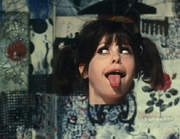
9. Daisies (Vera Chytilová, 1966)

daisies7
10. Aragane (Kaori Oda, 2015)

aragane-still03

Read more

Elephant Walk

From the Chicago Reader (January 1, 1994). — J.R.

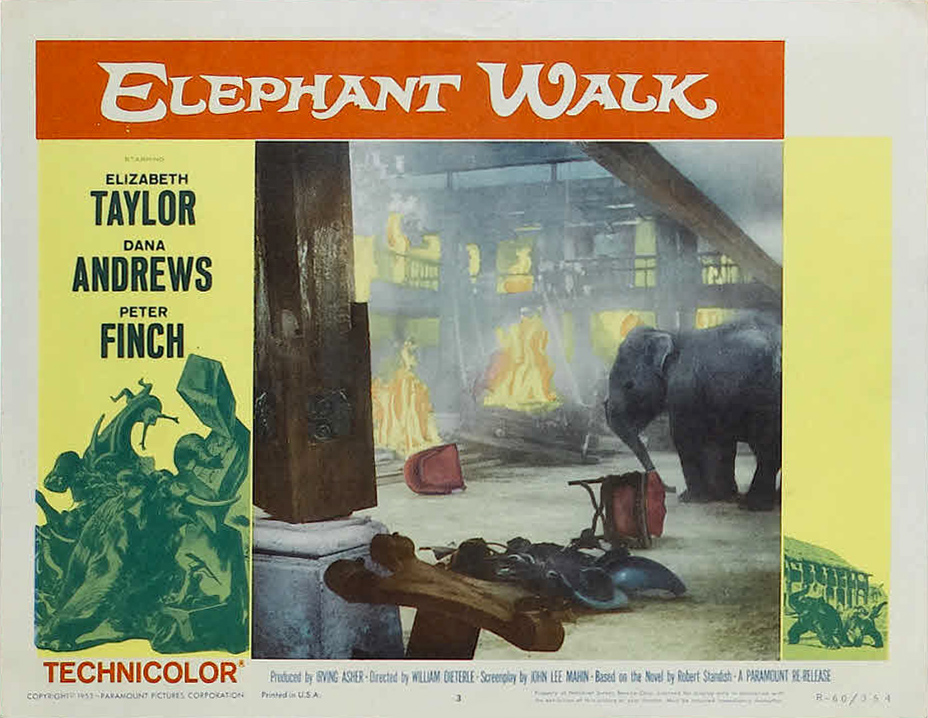
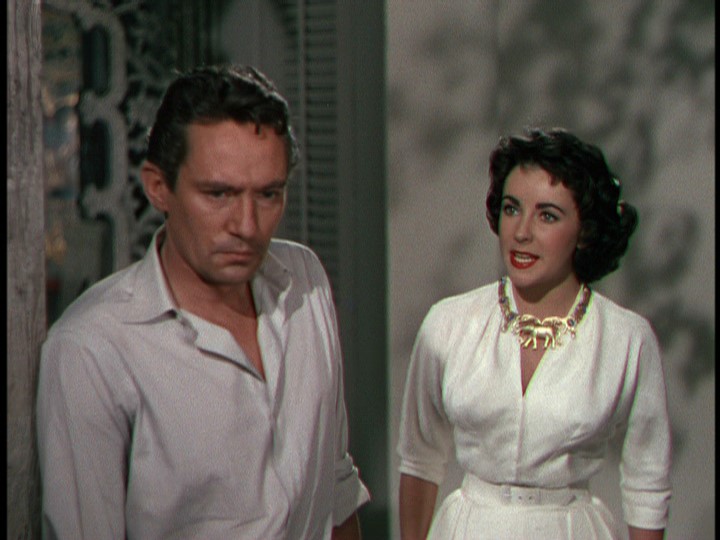
I was 11 when I saw William Dieterle’s 1954 adaptation of the Robert Standish novel Elephant Walk, which was apparently aimed at the female market, and I loved it, though I don’t know what I’d think today. A sort of gothic melodrama in Technicolor about a young bride (Elizabeth Taylor) adjusting to life on a Ceylon tea plantation and the weirdness of her husband (Peter Finch), it climaxes in an elephant stampede. Dana Andrews costars; John Lee Mahin wrote the screenplay. Vivien Leigh was originally cast in Taylor’s part; reportedly you can see her in a few long shots. 103 min. (JR)

Read more

THE HUNTER

Written for the January/February 2012 Film Comment. — J.R.

The Hunter
(Rafi Pitts, Germany/Iran)
A Separation, equally pleasing to mullahs and Western viewers, got all the prizes for its clever manipulations, but Pitts’s singular puzzle thriller, which also strategically withholds narrative information and can never be shown in Iran, is the one I keep thinking about. (Class warfare is the true, undeclared subject of both films.) Pitts plays a Tehran night watchman who starts shooting cops at random after losing his wife and child just before the country’s stolen election. The film’s second act shifts radically in style, locale, and focus, like On Dangerous Ground. —Jonathan Rosenbaum

From Cinema Scope #46 (Spring 2011). — J.R.

The-Hunter-collage

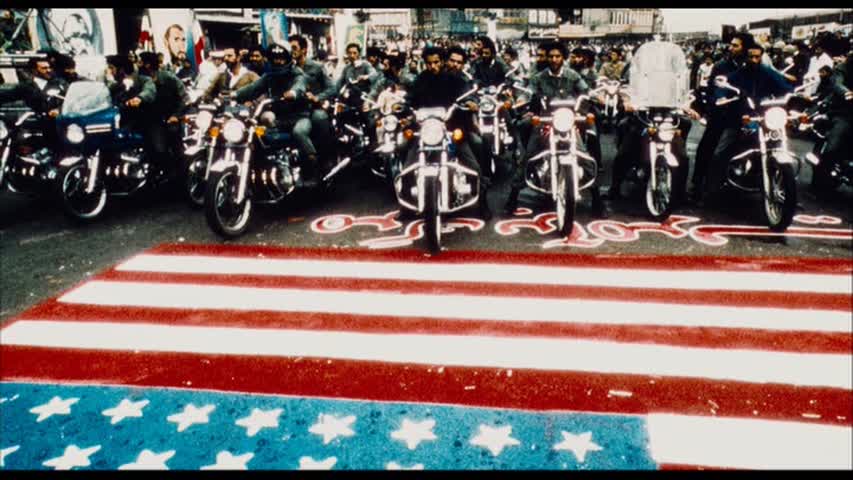
Underneath the Persian credits, over heavy metal music, the camera roams around inside a colour photograph, grazing over pointillist surfaces and male faces — finally pulling back to reveal the Islamic Revolution Guard Corps in 1983, getting ready to drive their motorcycles over a huge replica of the American flag on the pavement in front of them. Cut to black and the film’s title, The Hunter.

TheHunter-1st shot

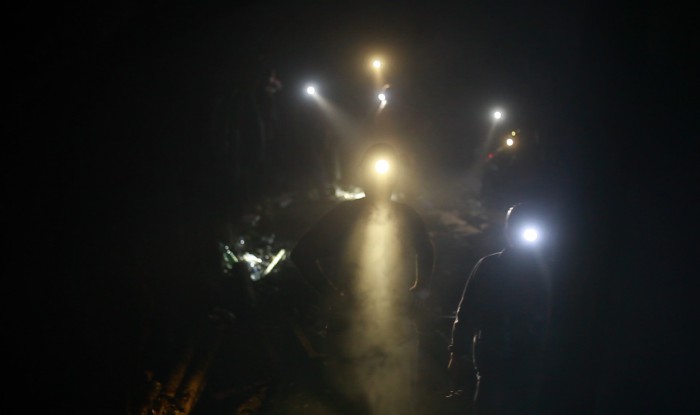
Cut to a highway tunnel, then to a rifle being loaded in the woods, then to the same title hero (played by the writer-director, Rafi Pitts) holding the rifle in front of a raging campfire at night. Read more

Declarations of Independents: A Dozen Art Movies

From The Soho News (March 25, 1981). — J.R.

March 10: Permanent Vacation — a punk art film by Jim Jarmusch, with Chris Parker, visible in the Bleecker Street Cinema’s James Agee Room every weekend this month. A semi-promising beginning offers alternately deserted and busy city streets (crisply shot by Tom DiCillo), and a skinny existential drifter reflecting on the “newness” of rooms in his travels that fades away, replaced each time by dread: “The story is how I got from there to here — or maybe I should say here to here.”

The problem is, while trekking dutifully through enough architectural (and cultural) rubble to furnish at least a dozen other art movies, the movie mainly gets from there to nowhere, at a fairly leisurely crawl. Along the way are a few good ideas and jokes, most of them literary and underdeveloped (like affectless Beckett/beat conceits which evoke Wurlitzer’s Nog), one of them actorly (Frankie Faison), some of them musical (John Lurie of the Lounge Lizards). Chances are, if this is the sort of thing you like, you’ve already found your way there.

March 11: Marta Meszaros’ Nine Months, a Hungarian feature made in color five years ago, now on at the Cinema Studio 2.  Read more

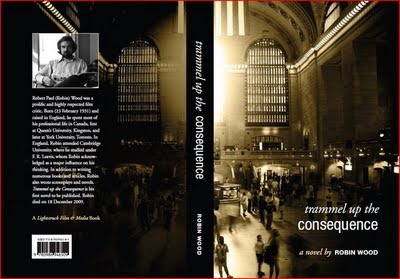
On Robin Wood’s TRAMMEL UP THE CONSEQUENCE

Now that I’ve finally read Robin Wood’s fascinating posthumous novel, an odd thriller involving amnesia, I’m pleased to report that it’s much better than I expected it to be, both as a page-turner and as what I would describe as a critic’s novel — even though the latter quality only became fully clear to me in the book’s closing pages.

The story as a whole can be described as a shotgun marriage or as a conversation — or perhaps as some of both — between a model of prose fiction that is literary, high- modernist, and intellectual and another model that is nonliterary, populist, and nonintellectual. These models and positions are represented by the novel’s two leading characters, a man and a woman respectively, the latter of whom is the story’s principal narrator and thus represents Wood’s own preferred position. It would be difficult to say much more about this without introducing spoilers — an especially heinous crime according to the nonintellectual model, and one that should clearly be avoided when it comes to the gradual revelations in this plot — but the degree to which the story as a whole represents a running debate between these positions reflects many of Wood’s own positions and tastes as a critic, which ran all the way from modernist art films to exploitation horror films — both of which are reflected, in different ways, in Trammel Up the Consequence.

Read more

Party Girl

From the Chicago Reader (February 1, 1988). — J.R.

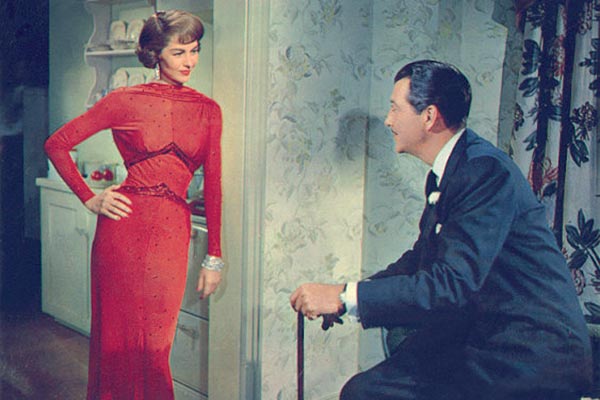
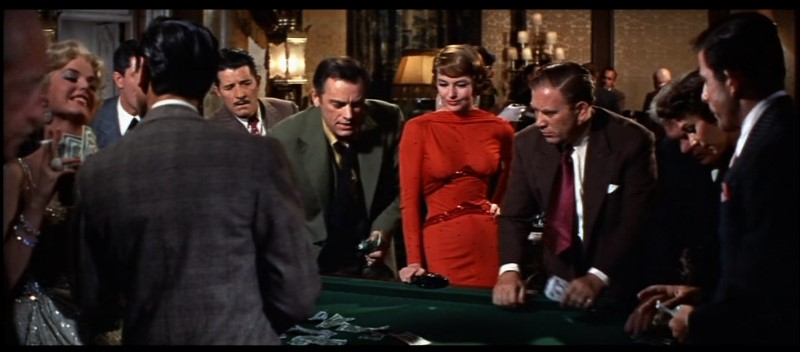
A film that might be regarded as Nicholas Ray’s farewell to Hollywood (if not commercial filmmaking), as well as his tribute to Chicago in the 20s, this 1958 feature is also one of his most affecting love stories. An unlikely alliance between a crippled and crooked lawyer (Robert Taylor) and a dancing showgirl (Cyd Charisse), both of whom try to escape the power of a tyrannical mobster (Lee J. Cobb), forms the basis for a flamboyant poem in delirious color and ‘Scope that is treated with a mixture of violence and lyricism unique to Ray. This is the only movie he made at MGM, and he makes the most of the production resources available; Taylor and Charisse have never been better, and rarely has Ray’s theme of two flawed individuals trying to strike a symmetrical balance achieved a more beautiful and convulsive expression. With John Ireland and Kent Smith. 99 min. (JR)

Read more

Carnal Capital [MASCULINE FEMININE & THE GIRL FROM MONDAY]

From the Chicago Reader (April 15, 2005). — J.R.

Masculine Feminine

** (Worth seeing)

Directed and written by Jean-Luc Godard

With Jean-Pierre Léaud, Chantal Goya, Marlene Jobert, Michel Debord, and Catherine-Isabell Duport

The Girl From Monday

*** (A must see)

Directed and written by Hal Hartley

With Bill Sage, Sabrina Lloyd, Titiana Abracos, Leo Fitzpatrick, and D.J. Mendel

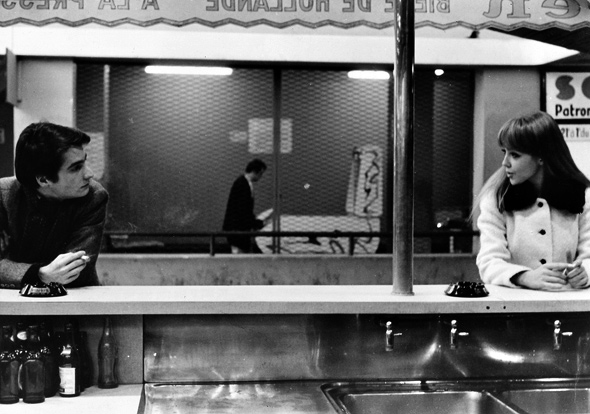
After Jean-Luc Godard’s 11th feature, Masculine Feminine, opened in New York in 1966 I was ready to defend it uncategorically against all detractors, of whom there were quite a few. It was a kind of contemporary newspaper presented from the perspective of a character in his early 20s (Jean-Pierre Léaud), my own age at the time, and the episodic narrative was full of interruptions and tangents, some relating to leftist concerns such as the war in Vietnam and French labor disputes.

But the curse of influential work is that it becomes dated after its innovations have been absorbed. Here and there the film’s style and content are still too flinty to prompt imitation, but other aspects have become all too familiar. Read more

Smoke and Mirrors

From the Chicago Reader (December 3, 2004). — J.R.

Bright Leaves

*** (A must-see)

Directed and Written by Ross McElwee

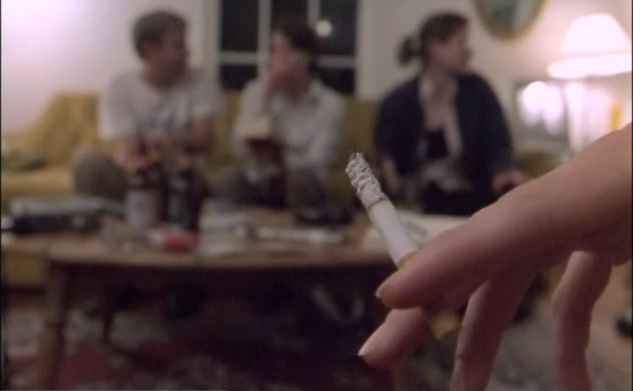
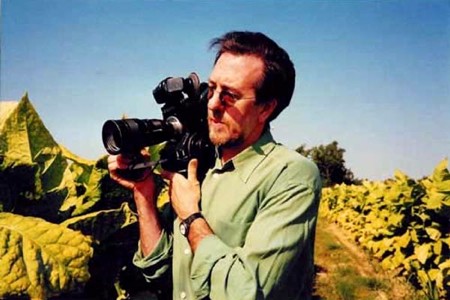
As a filmmaker who’s always philosophizing about his family, his southern heritage, and the meaning of life, Ross McElwee can get a little high-flown at times. The funniest shot in the latest installment of his autobiographical saga, Bright Leaves, brings him down to earth a bit — and shows that McElwee actually may have learned something from the deflation. The shot occurs toward the end of the film and there are several reasons it’s so funny.

(1) A noisy dog is following McElwee as he threads his way through a kitschy sculpture garden, whose relevance to the story remains obscure. Is it cemetery statuary? Whatever it is, it’s a visual and narrative non sequitur that only adds to the screwball ambience.

(2) The growling dog, seen near the lower edge of the frame, recalls a smudgy, minimalist black-and-white comic strip drawn by David Lynch between 1983 and ’92, The Angriest Dog in the World. (The graphics of the four panels in each strip were almost identical — the same dog angrily pulling at the same chain in a fenced-in backyard — but the introductory words and the balloons of dialogue coming from someone unseen inside the house were always different.) Read more