Luis & Sam

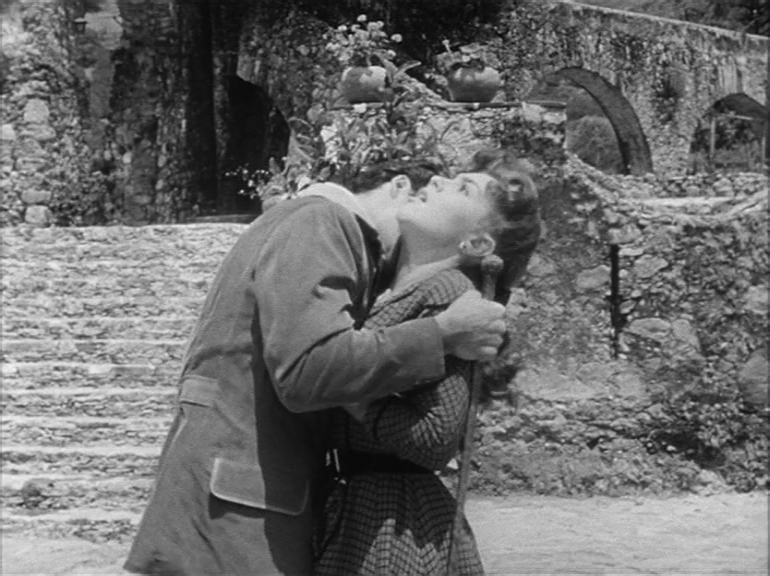
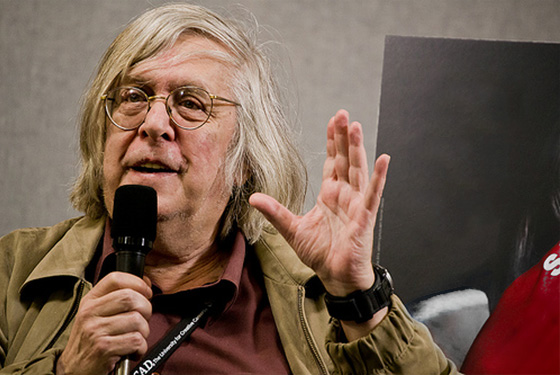
Christa Fuller, who took this picture in 1967 in Buñuel’s house in Mexico City, has invited me to place it here; it shows Buñuel with her late husband, Sam. The first time I ever met Sam, in the summer of 1980, I interviewed him at the Plaza Hotel in New York about The Big Red One for the Soho News. He was being courted at the time by Serge Silberman about possibly directing a French best seller called The Tunnel, and Sam let out a rebel-style holler when I said something like, “Isn’t that Buñuel’s producer?” “Yaaah! That why I had a hard-on for him, boy, he puts all the loot up for Buñuel, and I love that man.” (8/17/08)

Read more

Ernest Borneman

TOMORROW IS NOW by Ernest Borneman (London: Neville Spearman), 1959, 205 pp. There are few careers more fascinating and multifaceted than that of Ernest Borneman (1915-1995), a German-born psychotherapist and non-fiction writer who also wrote several novels (all in English), and whose other professions at various stages in his career included playwright, cameraman, screenwriter, writer for TV and radio, film director, prolific journalist, and jazz musician. I’ve tried to encapsulate a few things about him, including his work with Orson Welles and his discovery of Eartha Kitt, in a long footnote on pp. 3-4 of my book MOVIE WARS, where I quote from a brilliant 1947 essay of his, “The Public Opinion Myth,” in order to counter many of the assumptions underlying the test-marketing of movies. I’ve now read only two of his novels, all of which are out of print: THE FACE ON THE CUTTING-ROOM FLOOR (1937), his first and best known (though published under the pseudonym of Cameron McCabe), a flavorsome murder mystery that I treasure mainly for its dialogue as well as its 24-page Afterword about Borneman–written by the book’s editors, though containing a lot of interview material and a letter from Borneman, dating from 1979 and 1981, respectively. Read more

Charles Fort/Vladimir Mayakovsky

Recommended Reading:

CHARLES FORT: THE MAN WHO INVENTED THE SUPERNATURAL by Jim Steinmeyer, New York: Jeremy P. Tarcher/Penguin, 332 pp.

NIGHT WRAPS THE SKY: WRITINGS BY AND ABOUT MAYAKOVSKY, edited by Michael Almereyda, New York: Farrar, Straus and Giroux, 2008, 272 pp.

Technically these are a biography and an anthology, but both are in effect delightful samplers of the work of two very singular and controversial men who were roughly contemporaries, although they were born 19 years apart: Charles Fort (1874-1932) and Vladimir Mayakovsky (1893-1930). I’m far from completing either book at this point, but both make for very pleasurable summer reading.

Fort was a late bloomer, especially regarding his public profile, which essentially consisted of the last four of his five published books–The Book of the Damned (1919), New Lands (1923), Lo! (1931), and Wild Talents (1932), all very witty, imaginative, and provocative forays into debunking science. These were preceded only by several short stories published only in magazines and a 1909 novel that has never been reprinted, as well as some other creative non-fiction, all unpublished, that Steinmeyer quotes from liberally. Steinmeyer is a specialist in stage magic with whom I once had the pleasure of doing a lengthy phone interview. Read more

Pastor Carroll Pickett/Steve James/Peter Gilbert,

AT THE DEATH HOUSE DOOR (Steve James and Peter Gilbert, 2008, 94 min .)

This remarkable Katemquin documentary is showing at 8 PM tonight on the IFC channel (I saw it last night, at a free public screening), but if you miss it there, you’ll have plenty of other chances to see it–you can even screen it online. It wouldn’t quite do the film justice to say that it’s about capital punishment and miscarriages of justice in Huntsville, Texas, although these topics are certainly part of its fabric. It’s really a character study of Carroll Pickett, a quiet, undemonstrative man who served as the death house chaplain for over 95 executions, including the world’s first lethal injection, and gradually went from believing to disbelieving in capital punishment in the process. You might say that he’s someone who discovered the truth about his activity the hard way, which may also be the best way.

By the same token, as I believe Peter Gilbert pointed out at the screening I attended, this isn’t a “political” film in the usual sense, and it doesn’t preach, even though it’s about a preacher. Steve James and Gilbert put it across with so much power because they know how to tell stories, as their previous films–including James’s HOOP DREAMS, STEVIE, and REEL PARADISE, and Gilbert’s VIETNAM: LONG TIME COMING–amply demonstrate. Read more

The Grifters

From the December 1, 1990 Chicago Reader. — J.R.


A mannerist thriller (1990, 114 min.) that doesn’t begin to work despite the number of talented hands involved: Donald E. Westlake adapting a Jim Thompson novel, Stephen Frears directing, Martin Scorsese coproducing, and a more than capable cast. A small-time con artist (John Cusack) in Los Angeles meets up with his mother (Anjelica Huston), a hardened criminal working for a sadistic big-timer (Pat Hingle) who despises the crooked tart (Annette Bening) her son has as a lover; many double crosses later, the incestuous underpinnings in this uneasy triangle come to the fore. While the filmmakers manage to keep things interesting (sexy, kinky, and ambiguous) much of the time, the self-conscious piety that Frears lavishes on this material places it in an uncertain netherworld that prevents it from ever becoming fully convincing, even as a stylistic exercise. The time is apparently the present, but the style nudges us so insistently back into the 40s and 50s that the characters seem cut adrift, without a stable world to support them. Nevertheless, if one can overlook Elmer Bernstein’s irritating ricky-tick score and forget After Dark, My Sweet (a much superior Thompson adaptation), there are plenty of compensations: sleek cinematography by Oliver Stapleton, and, in addition to the aforementioned actors, nice turns in smaller roles by Henry Jones and J.T. Read more

THE GREEN FOG and the Maddin Mist

From the March 2019 issue of Found Footage. — J.R.

As a critical commentary on cinematic depictions of San Francisco, Guy Maddin’s The Green Fog, conventional match cuts that approximates Scotty’s tailing of Madeleine as various cars follow various other cars down assorted San Francisco streets, sometimes passing locations that are familiar from Vertigo or other movies, we’re getting the bare bones of thriller and mystery mechanics without any of the thrills or mysteries, in contradistinction to all the musical signals. And when we see Karl Malden enter a florist shop, and converse (again wordlessly) with the florist, it seems appropriate that the piece of paper that the florist shows to him shows us the green fog yet again, Maddin’s signifier of the genre’s rhetoric of mystification. 

For some of the Hitchcock aficionados who helped to replace Citizen Kane with Vertigo in the last ten-best poll of Sight and Sound, the affectionate ridicule of The Green Fog may seem like an act of sacrilege, especially when we get a panoply of San Francisco cathedrals that are treated as interchangeably as all the cars and streets. But it might also be argued that Maddin’s apparent scorn is in fact a kind of impious critical appreciation for all the tricks of romantic mystification that he and Hitchcock have in common. Read more

Poetry in Motion [THELMA & LOUISE]

From the June 7, 1991 Chicago Reader. Try hitting the second and fourth photos here with your cursor. — J.R.
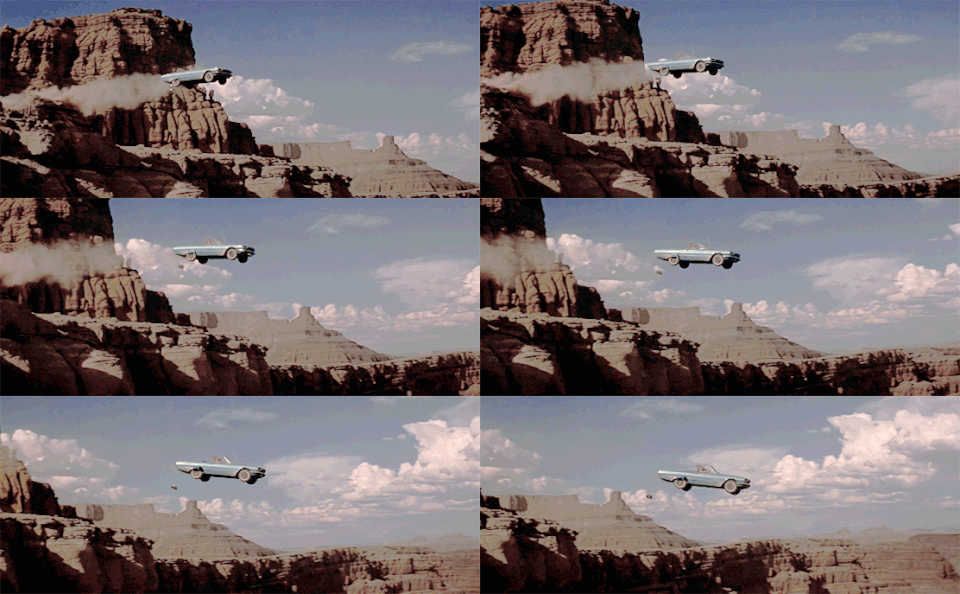
THELMA & LOUISE

*** (A must-see)

Directed by Ridley Scott

Written by Callie Khouri

With Susan Sarandon, Geena Davis, Harvey Keitel, Michael Madsen, Christopher McDonald, Stephen Tobolowsky, Brad Pitt, Timothy Carhart, and Lucinda Jenny.

I’m not quite sure precisely when Thelma & Louise kicks into high gear. Does it happen when Thelma (Geena Davis) holds up a convenience store, or much earlier, when Louise (Susan Sarandon) shoots a rapist (Timothy Carhart)? Does it happen when Thelma’s tyrannical husband (Christopher McDonald) steps on a pizza, or when Louise divests herself of her watch and jewelry in exchange for an old coot’s sun hat?

Whenever it happens, something starts to click, and the movie becomes mythical — mutates into a sort of classic before one’s eyes. This isn’t to say that it can thenceforth do no wrong; the flashback shots that punctuate the final credits are lamentable, a cheap attempt to add uplift to an ending that doesn’t need it. But the movie does take on a certain charmed existence, persuading one to forgive such lapses. After a rather slow beginning, this prosy film turns poetic; and when that happens, we’re no longer passive bystanders but active participants, along for the ride morally as well as physically. Read more


Ten Skies

From the April 20, 2005 Chicago Reader. More recently, 16 years later, Erika Balsom, a Canadian film critic and teacher based in London, has just published a brilliant short book about this film, a sort of tour de force that I’ve liked enough to blurb. — J..R.

This 16-millimeter experimental feature (2004) by James Benning consists of ten upward views from a stationary camera, each ten minutes long and filmed with sync sound from his backyard in southern California. I expected something minimalist, but in fact this is remarkably full — a mesmerizing study in time, light, movement, and moisture that traces the shifting relations between clouds and earth, nature and people. Benning is so attentive that he teaches us how to look and listen, and once we adjust our plot-driven expectations, things that might have seemed static at first are revealed as constantly changing. If you’re expecting a test or an ordeal, you could be as surprised by this masterpiece, and as grateful for it, as I was. 101 min. Presented by Chicago Filmmakers. Sat 4/30, 8 PM, Cinema Borealis.

Read more

By The Bluest Of Seas

/wp-content/uploads/2004/02/73boris_bluest1.png

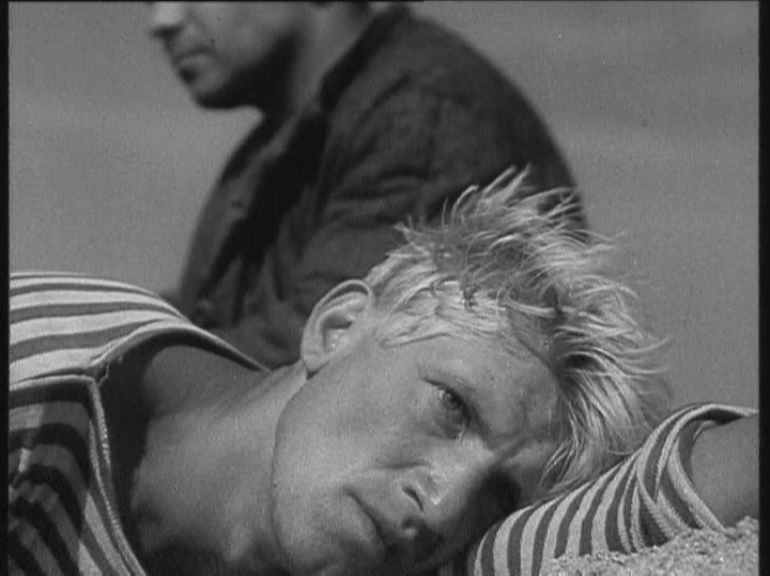
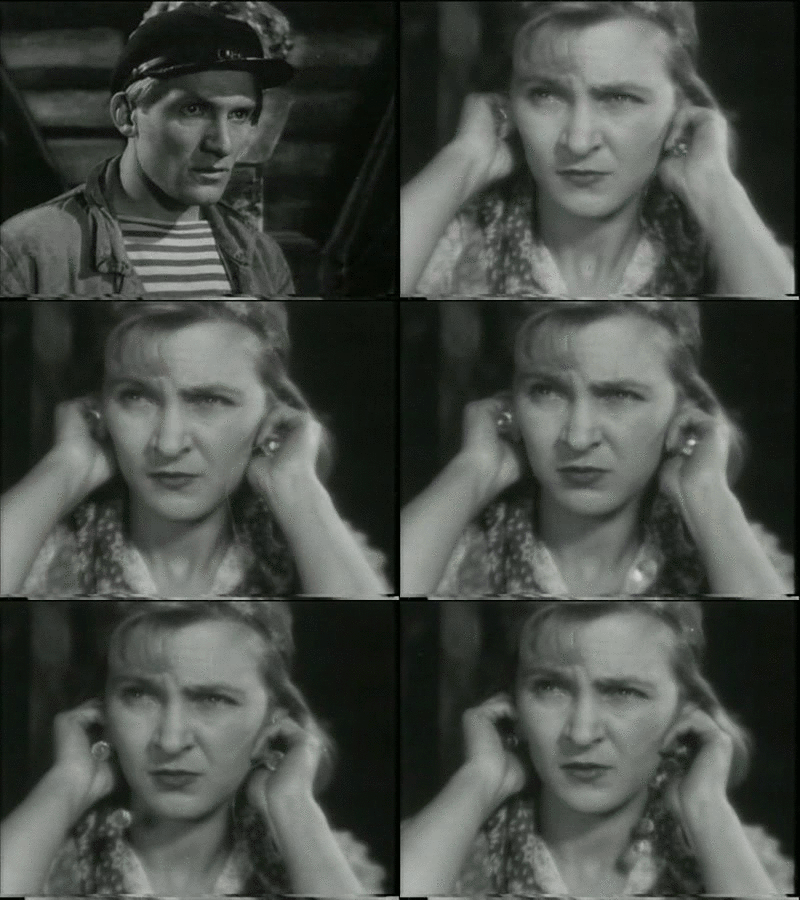
One of the very best features of the neglected Russian filmmaker Boris Barnet, this 1935 feature is, like some of his other talkies, a glorious musical of sorts. Codirected by S. Mardanov, it’s about two buddies, a sailor and a mechanic, who, shipwrecked on an island in Soviet Azerbaijan, both try to woo the same young woman, who runs a fishing co-op. Though seemingly light, it’s as intensely physical as Barnet’s preceding masterpiece, Okraina, and its melancholic undertow makes it distinctly different from the early sound comedies of Raoul Walsh that it sometimes resembles. In Russian with subtitles. 71 min. (JR)


Read more

All By Myself

From the January 1, 1991 Chicago Reader. — J.R.


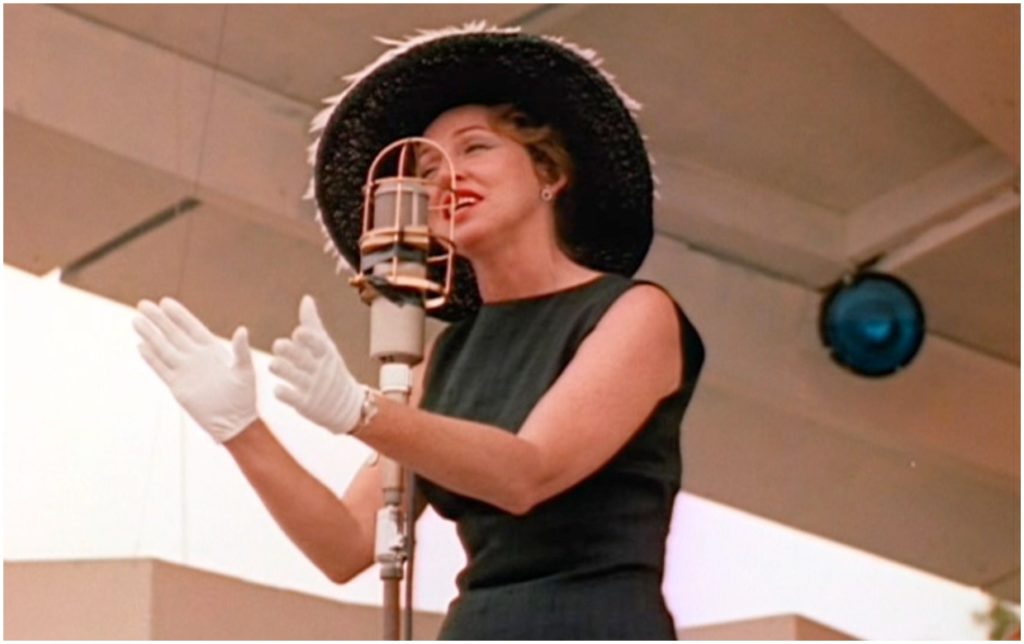
Christian Blackwood’s fascinating documentary portrait of Eartha Kitt not only offers a multifaceted sense of its subject — as professional entertainer, private individual, political activist, and self-commentator — but also treats each of these facets in a kaleidoscopic manner. The relationship between Kitt’s champagne-and-furs persona and her traumatic deep-south upbringing is especially suggestive; by the end of the film, one may not be sure how much of Kitt is self-invented, but the sense of dialectical exchange between the aspects of her personality keep all of them intriguing (1982). (JR)

Read more

Death as a Foreigner

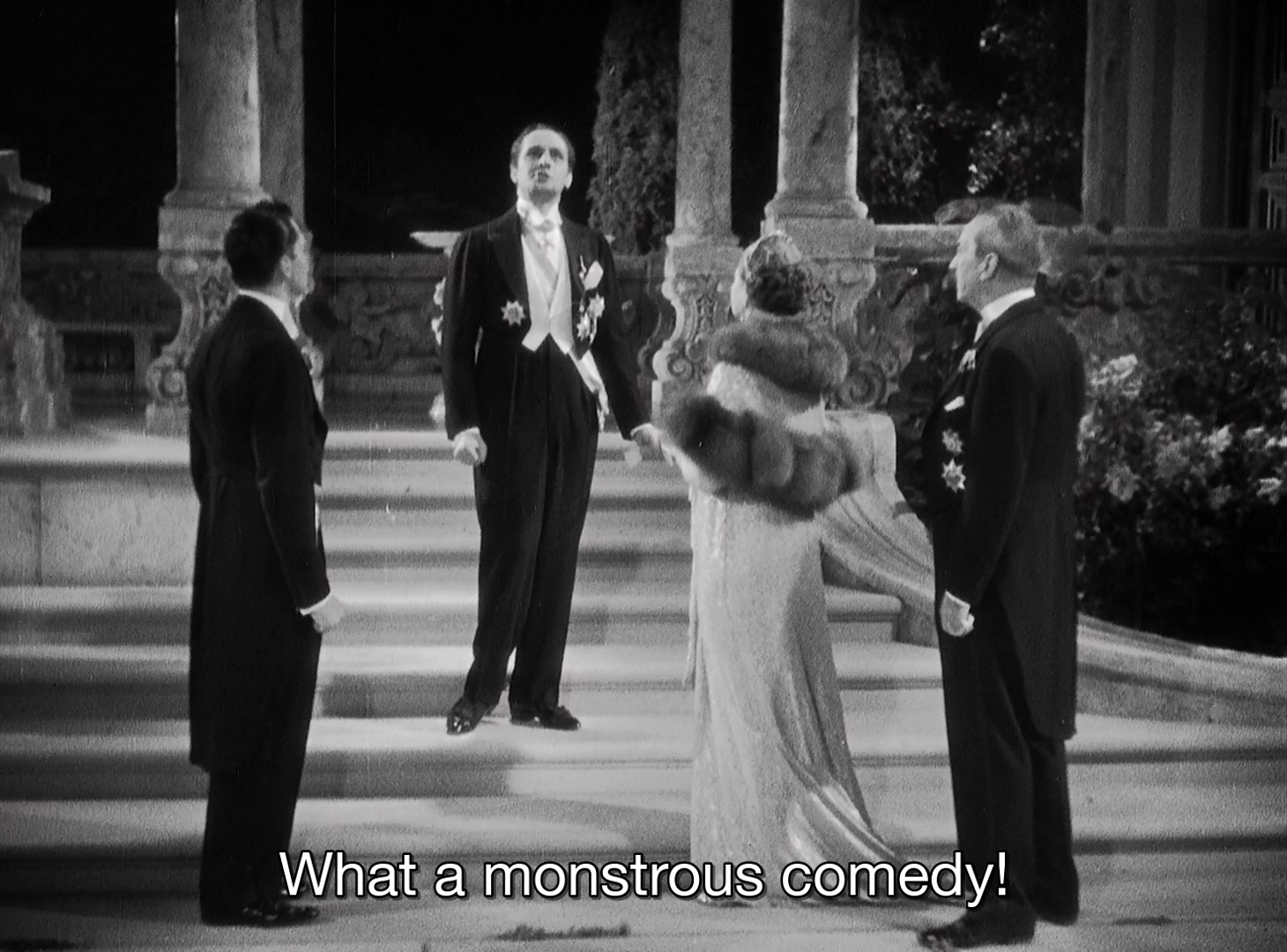
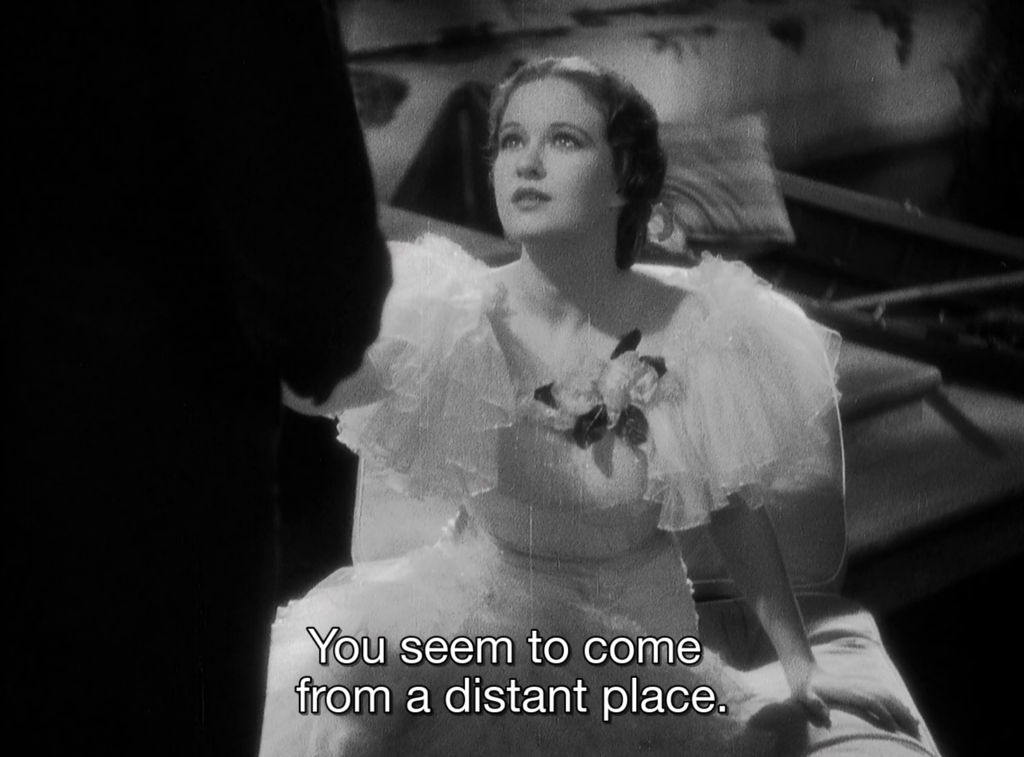
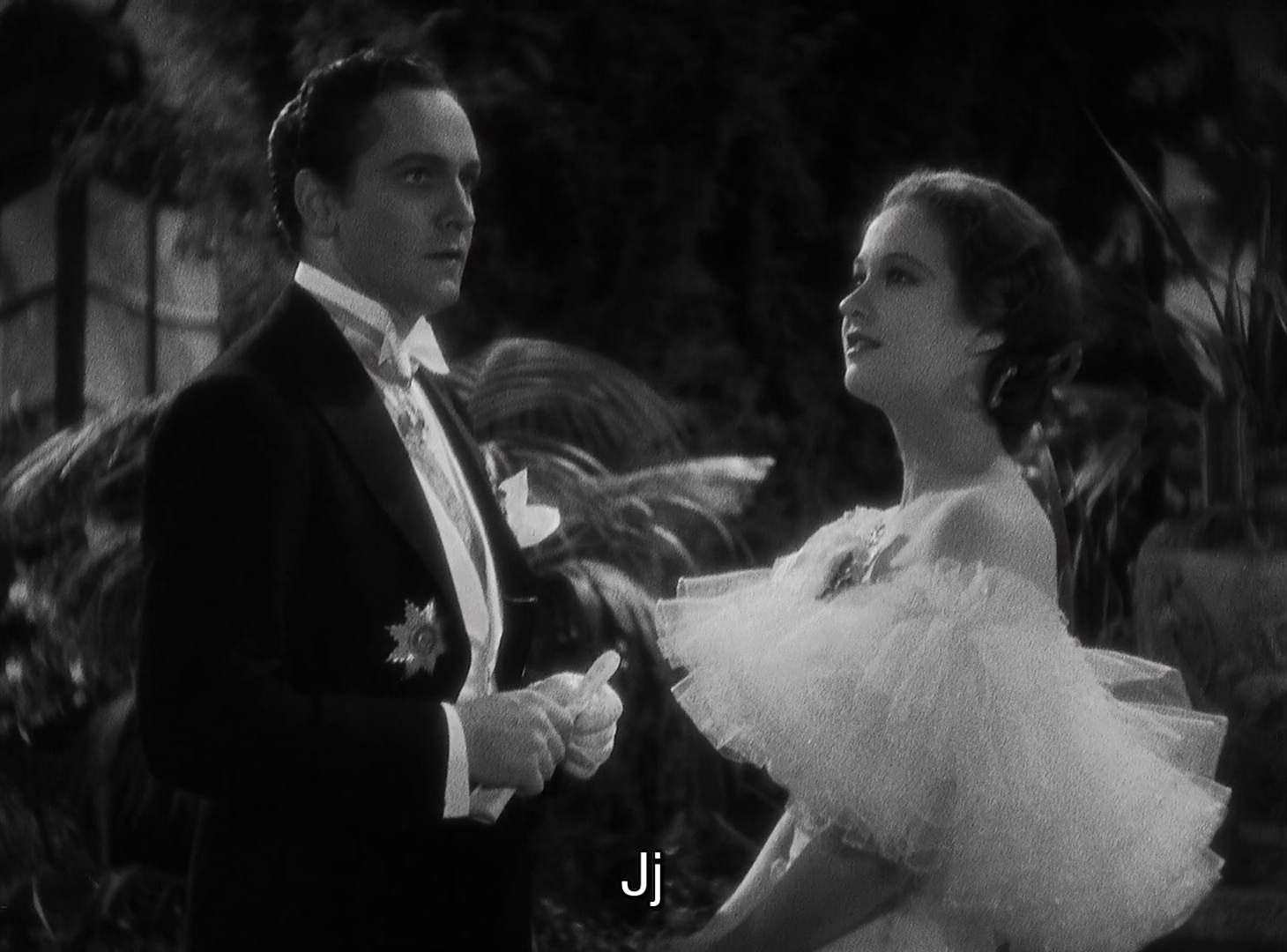
Mitchell Leisen’s 1934 Death Takes a Holiday, based on a 1924 Italian play hy Alberto Cassella, doesn’t regard itself as a comedy. But its realization is founded on what I take to be an unconsciously comic premise: the notion that Death, as played by Fredric March–who comes to Earth as a human for three days to enjoy a holiday in a mansion full of wealthy guests–is a foreigner. Admittedly, Death is actually impersonating a deceased foreigner, Prince Sirki,, in order to consort with humans, but March already has a foreign accent even before he assumes this disguise.

This image has an empty alt attribute; its file name is Death-distant-1024x757.png

Why? Arguably this is because Death as a metaphysical reality is both exotic and romantic in the movie’s terms, which is apparently part of what makes the Prince so alluring to Grazia (Evelyn Venable). By the same token, whenever March seems to periodically lose his foreign accent and become as American or as pseudo-English as the other swells is when we’re asked to perceive him as a mortal.

In short, Death taking a holiday gives our mortality a reprieve and Death returning is something like a foreign invasion. [3/20/21] Read more

Mark Rappaport

Recommended: LE SPECTATEUR QUI EN SAVAIT TROP by Mark Rappaport, translated [from English to French] by Jean-Luc Mengus, Paris: P.O.L, 2008, 240 pp.

There are 16 pieces here -– including a Preface, a concluding essay entitled “Confessions of a Latent Heterosexual (Complete with Illustrations),” and four sections in between consisting of a Hitchcock Cycle (three stories) and an Eisenstein Cycle (three stories, with Marlene Dietrich playing a significant role in one), interspersed with two sections of four stories each. Some of the topics: The son of Madame de…, Jean Seberg, “The Tourist Who Knew Too Much,” “My Life with Catherine Deneuve,” Gilda’s gloves, Silvano Mangano and Capucine, The Creature from the Black Lagoon, Marcel Proust in Marienbad. Whether these are autobiographical fictions, fictional essays, and/or stories about other stories is a matter directly addressed in the Preface. (Don’t expect any conclusive answers.)

I can’t wait for this to come out somewhere in English [2021: you can ccess it now online in English here, and both parts of Rappapot’s The Secret Life of Moving Shadows are also available on Amazon]–even though P.O.L, publisher of the quarterly film magazine TRAFIC (as well as the French translation of my own first book, MOVING PLACES, also done by Jean-Luc Mengus), has done a very handsome job with it. Read more

En movimiento: Two picks from Elaine May

A column for Caiman Cuadernos de Cine, submitted in May 2021. — J.R

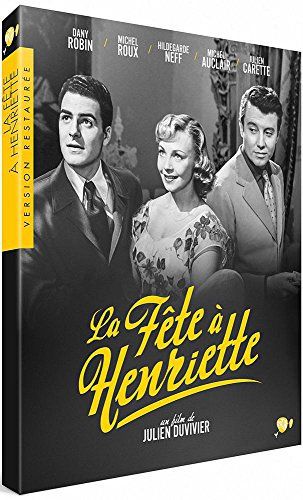
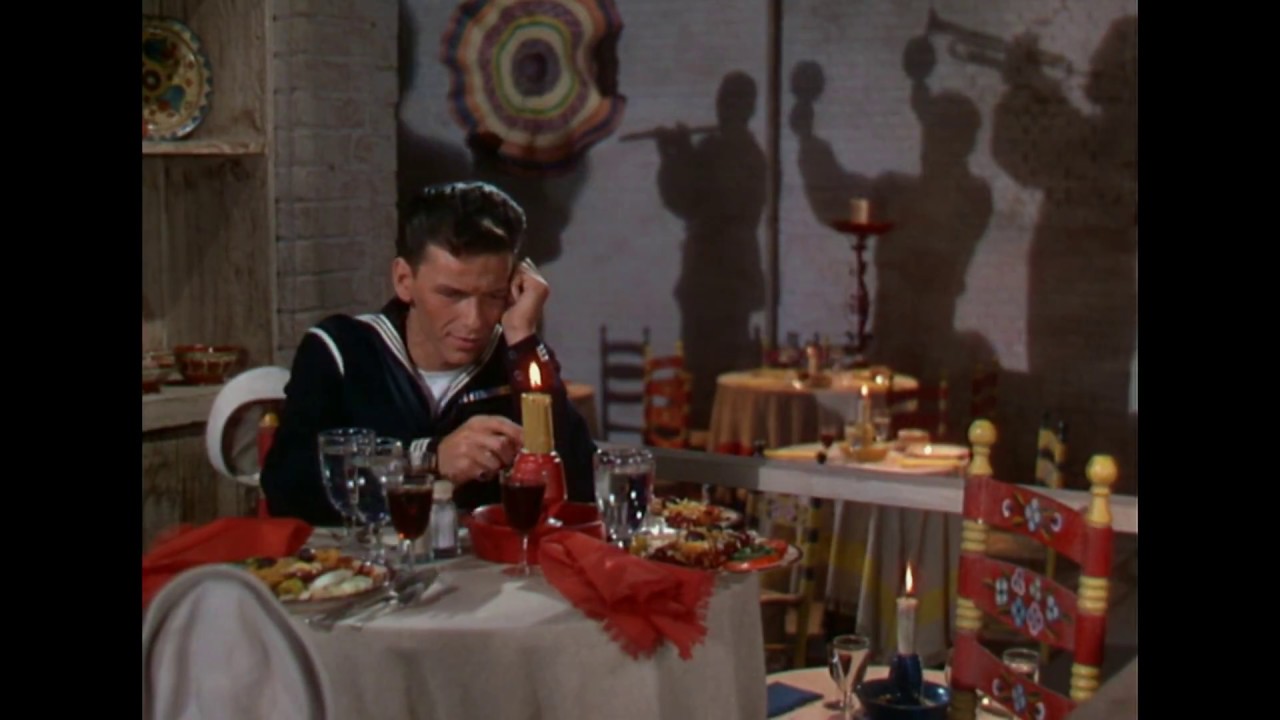
One of my major recent activities, probably shared by most of my readers during the pandemic, is finding “new” (that is to say, unfamiliar) films to watch online. So, after reading a 1970 interview with the usually publicity-shy Elaine May in the New York Times, where she cited “Holiday for Henrietta” (La fête à Henriette, 1952), a film I’d never heard of, and Anchors Aweigh (1945), an MGM musical I only dimly recalled from childhood, as particular favorites, along with The Wizard of Oz (1939), I treated the first two of these idle references as recommendations, meanwhile wondering if they might also provide certain clues to or predictions of May’s own filmmaking practices in A New Leaf (1971), The Heartbreak Kid (1972), Mikey and Nicky (1985), and/or Ishtar (1987).

Well, Anchors Away at least offers some predictions. It costars Gene Kelly and Frank Sinatra as sailors on leave in San Diego and Hollywood—Kelly a brash extrovert and womanizer, Sinatra a shy introvert, anticipating the respective male duos of Nicky (John Cassavetes) and Mikey (Peter Falk) in May’s third feature, and even the blatant casting-against-type of Chuck (Dustin Hoffman) and Lyle (Warren Beatty) in her fourth. Read more

Wuthering Heights

From the Chicago Reader (February 1, 1988). — J.R.

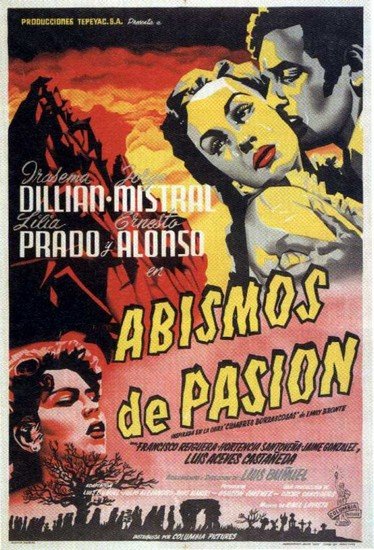
Like William Wyler’s 1939 adaptation of the Emily Bronte novel, as well as Jacques Rivette’s Hurlevant, Luis Buñuel’s 1954 Mexican version discards the original novel’s framing strategy of telling the story from the viewpoint of two outsiders—a regrettable elision in all three cases, because much of the novel’s power and meaning stem from this crucial distancing strategy. Yet Buñuel’s low-budget melodrama has a certain gothic ferocity that’s missing in the other versions; the results are mixed, but seldom unworthy of the master. With Iraseme Dilian, Jorge Mistral, and Lilia Prado; in Spanish with subtitles. 91 min.

Read more

London Journal (including an interview with Geraldine Chaplin in Britanny about NASHVILLE) [1975]

From Film Comment (September-October 1975). Some of this article, especially the early stretches, embarrasses me now for its pretentiousness, but I think it still has some value as a period piece.

A few brief footnotes to my interview with Chaplin: (1) We shared a joint at one point while doing it; (2) her comments about working with Rivette made it seem a lot less fun and more difficult, at least for her, than working with Altman (she described it at one point as having to show Rivette various kinds of acting like a rug merchant to see which one he liked); and in fact (3) a few decades later, when I met her again at a film festival, reminded her of our interview, and asked her what she thought of Noroit, she told me that she’d never seen it. — J.R.

London Journal

Or should I call this my NASHVILLE Journal? On March 19, I saw a monaural print in London at a private screening. Writing over three months later, shortly after its New York opening and a projected five before it’s supposed to surface in the rural West End, I can only wish it well on its way. Regular readers of this column may froth at the mouth if I drag Tati and Rivette into the case once more; in that case, froth away, folks — I’m sorry, but it’s Altman’s doing, not mine. Read more