Letter to Harper’s (May 2021)

The following letter was published in the May 2021 issue of Harper’s magazine. Violet Lucca, the Letters editor, invited me to respond to the March issue’s cover story, by Martin Scorsese, “on Fellini and the lost magic of movies”. — J.R.

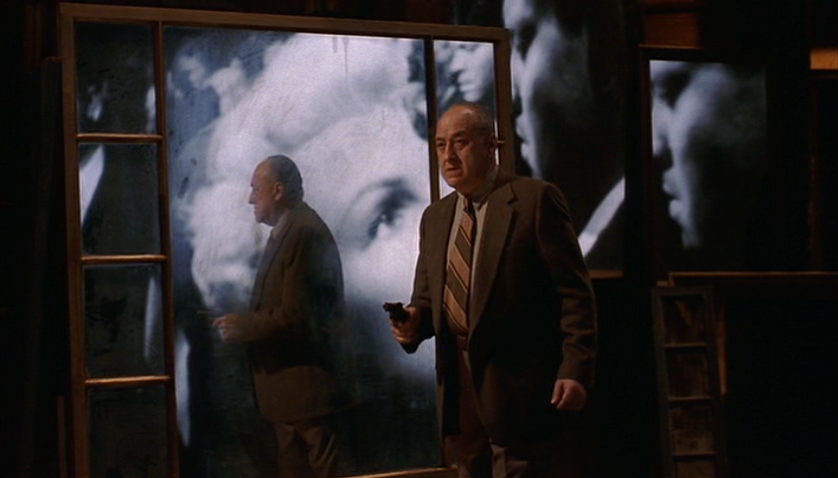
The moment cinephilia links up with personal nostalgia, as it does in Martin Scorsese’s “Il Maestro,” intellectual distinctions become tenuous. He laments the devaluing of art as “content” by his dumb employers and people accessing cinema in their homes, yet he has no trouble admitting that he first saw La strada on TV with his parents. Moreover, he grew up with movies as an art form before having to wrestle with it as a business, whereas I grew up in a family of Alabama exhibitors and eventually underwent the reverse trajectory, discovering film art in New York around the same time he did. 

Scorsese’s clearly a cinephile who has done extraordinary and generous work in making world cinema more widely available, but you’d never guess this from reading him on the subjects of Fellini and contemporary film culture. Here he seems to confuse personal choices and predilections with history, but my choices as a consumer aren’t his.

For me film culture remains as vital in some ways as it was in the 60s when Jonas Mekas could put out a magazine plausibly pretending to celebrate all of it. Read more

True Crime

From the Chicago Reader, 1999. — J.R.
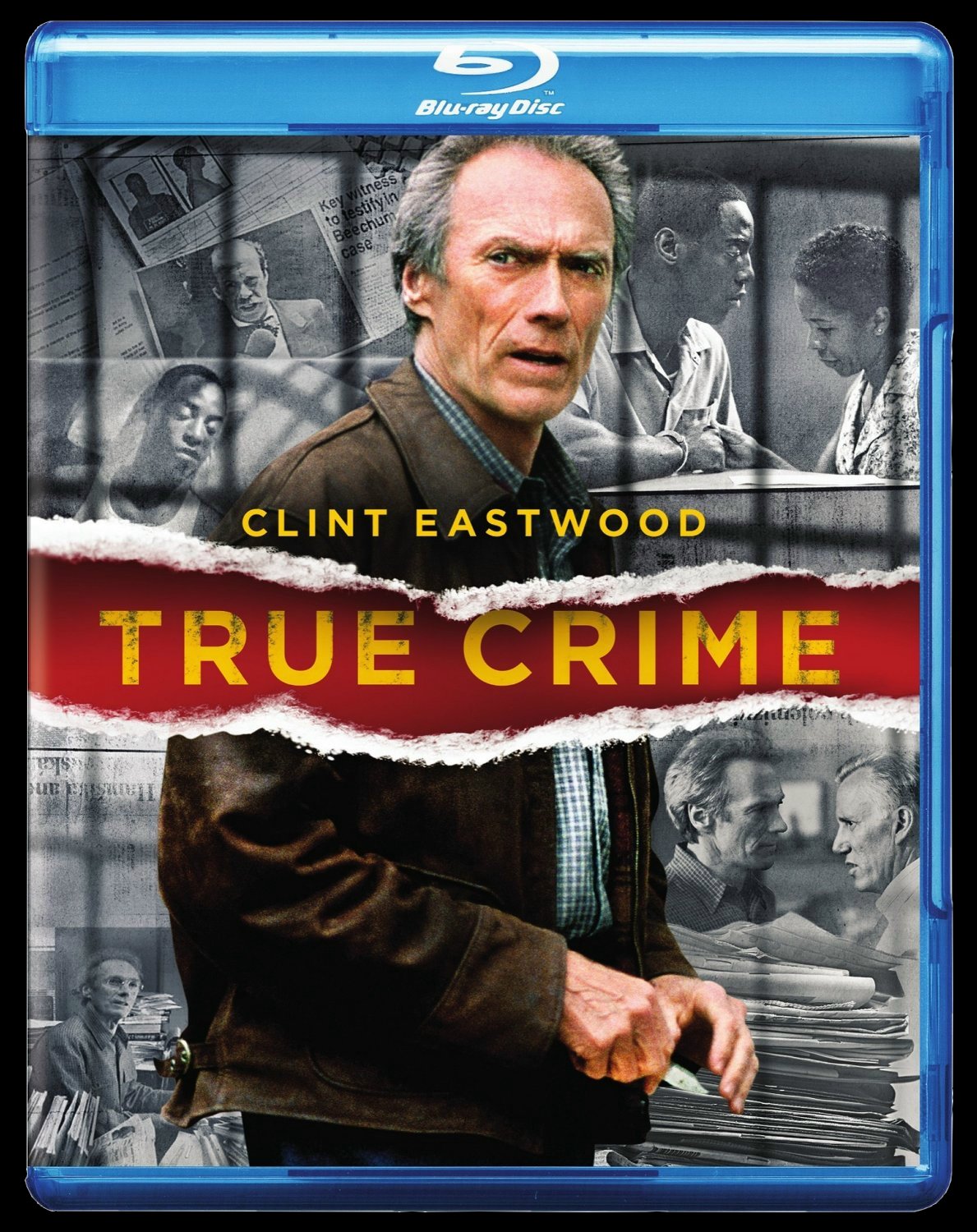
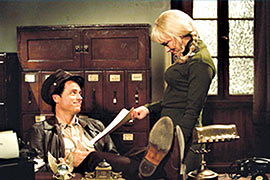
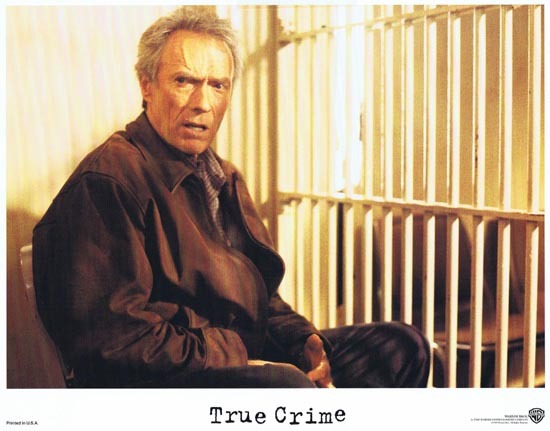
An adulterous, womanizing investigative journalist (director Clint Eastwood), on the wagon and somewhat over the hill, inherits an assignment to interview a man convicted of murder (Isaiah Washington) hours before he’s slated to be executed at San Quentin, and he becomes convinced that the man is innocent. Eastwood as a director generally alternates more adventurous projects (Bird, White Hunter, Black Heart) with bread-and-butter fare like the Dirty Harry movies, and this hokey thriller, reeking with 30s prison-movie stereotypes and High Noon countdowns, may be the price we have to pay for Midnight in the Garden of Good and Evil. The storytelling is as crafty and streamlined as ever, but the story itself, adapted from a novel by Andrew Klavan, is so shopworn that not even three better-than-average screenwriters (Larry Gross, Paul Brickman, Stephen Schiff) can overcome the cynical and absurd contrivances. Eastwood himself, pushing 70 but cruising women in their early 20s, counts on more goodwill than I can muster. I wasn’t bored, but my suspension of disbelief collapsed well before the end. With Denis Leary, Lisa Gay Hamilton, and James Woods. (JR)
This image has an empty alt attribute; its file name is TRUECRIMELC3.jpg

 
Read more

The Wild One

This book review appeared in the July 7, 1991 issue of Newsday. More recently (Christmas eve, 2014), I’ve read Susan L. Mizruchi’s instructive Brando’s Smile: His Life, Thought, and Work (Norton), which finds far more coherence in Brando’s career than Schickel did. — J.R.

BRANDO: A Life in Our Times, by Richard Schickel. Atheneum, 271 pp., $21.95

“Of the many illusions celebrity foists upon us the illusion of coherence, the senses that these are privileged people in the world who somehow know what they are doing in ways that we do not, is the largest, and possibly the most dangerous. But Marlon Brando has kept faith with his incoherence.”

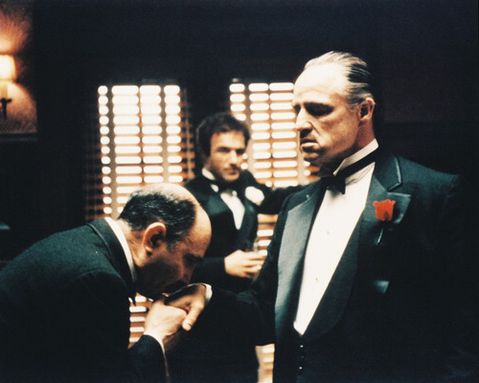
Arriving at this judgment toward the end of a head-scratching appraisal of the logic and meaning of Marlon Brando’s career, critic Richard Schickel seems to be breathing a sigh of relief, and some readers may feel like joining him. It’s an honorable and instructive admission of defeat, and while one may disagree by finding some coherence where Schickel does not — I happen to relish Brando’s modest and earthy performance in The Freshman as a refreshing autocritique of his posturing role in The Godfather (which Schickel considers his last “real” performance) — it’s still a premise that one can hang an exploratory book on. Read more

En movimiento: Welles in Woodstock

A column for the Spanish magazine Caimán Cuadernos de Cine. I believe it was written circa May 2014-.  J.R.

En movimiento: Welles in Woodstock

Jonathan Rosenbaum

woodstock-banner

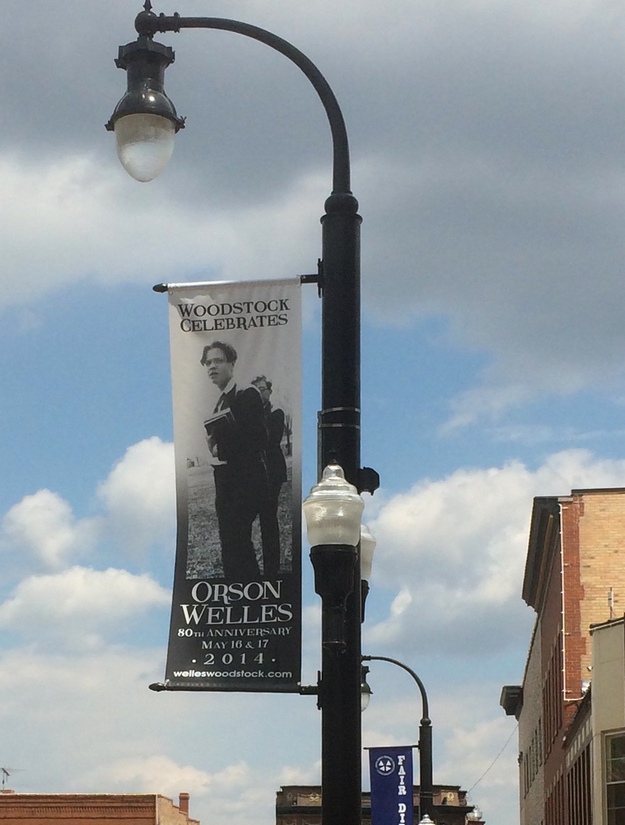
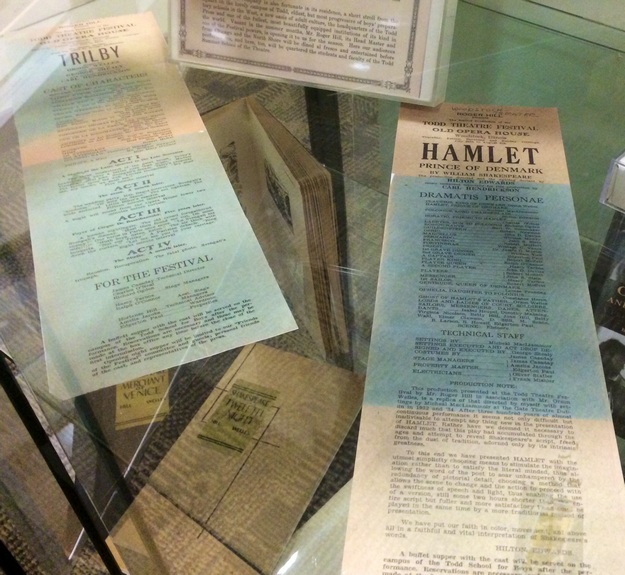
I’ve recently returned from Woodstock Celebrates Orson Welles, a delightful two-day event in Illinois (16-17 May) organized by Kathleen Spaltro and commemorating the 80th anniversary of the Todd Theatre Festival held at the Woodstock Opera House in 1934, orchestrated by Welles at the age of 19 and sponsored by his mentor and one of his lifelong best friends, Roger Hill — headmaster of the Todd School for Boys, which Welles attended from 1926 to 1930.

Woodstock display

When Welles graduated from Todd, Hill wanted him to attend Harvard while Welles’ guardian, Dr. Maurice Bernstein (whom Everett Sloane’s character in Citizen Kane was named after), hoped he would go to Cornell. But Welles, still under the spell of an article published by one of Chicago’s leading drama critics, Ashton Stevens (who wrote for the Chicago Herald-American, a Hearst newspaper, and was the model for Jed Leland in Kane), predicting that the young genius was destined to become a major actor, didn’t want to go to college. So a compromise was struck:  Welles would travel to Scotland, Ireland, and England on a sketching tour before embarking on any formal education, writing letters home to chart his progress and his adventures. Read more

Tribute to Jancsó Miklós

The great Hungarian filmmaker Jancsó Miklós  (or Miklós Jancsó, as he is known in the West) died peacefully in his sleep on January 31, 2014. Mehelli Modi, who has released excellent DVD editions of some of his films on Second Run in the U.K. (and has more recently brought out a Blu-Ray of his remarkable 1974 Electra, My Love), emailed me a couple of weeks later, asking, on behalf of Jancsó’s sons Nyika and David, if I could write something to be read at his memorial service on February 22. Here is what I sent back. — J.R. 

redpsalm6

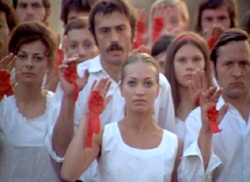
It would hardly be an exaggeration to say that I regard Jancsó Miklós as one of the great lost continents of world cinema, especially outside Hungary — and largely, I suspect, because Hungarian history, which forms a major part of his oeuvre, is another lost continent from the vantage point of the West.  With the possible exception of Sergei Eisenstein, I suspect that Jancsó remains the supreme example of a film artist who views history as a multilayered and passionate form of pageantry, something to be sung and danced, by the camera as well as by the actors, and, speaking more figuratively, by the audience. Read more

Auto Focus

From the Chicago Reader, June 1, 2002; slightly tweaked in 2014. — J.R.

auto_focus_l

One reason Paul Schrader’s Calvinist obsessions have become tiresome — even when someone else is partially responsible for the writing, as is the case here — is that he seems more invested in their perpetuation and exploitation than in their exploration. Yet I have to concede that he’s become an unusually skillful and sensitive director of actors, and the inventive performances — Greg Kinnear as Bob Crane (the wholesome star of Hogan’s Heroes who became a sex addict) and Willem Dafoe as his seedy sidekick and fellow pornographer — keep this story interesting in spite of its puritanical framework. Watchable, but not very insightful (2002, 107 min.). Written by Michael Gerbosi; with Rita Wilson and Maria Bello. (JR)

autofocus Read more

Footnotes to Out 1 [Chicago Reader blog post, 5/28/07]

Log Out

Posted By on 05.28.07 at 07:39 PM


 If I’d had my druthers, I would have seen Jacques Rivette’s masterpiece Out 1 for the third time this past weekend, at the Gene Siskel Film Center. It’s still one of my all-time favorites, offering far more pleasure, enlightenment, and sheer stimulation over its dozen and a half hours than any dozen routine commercial releases (which would cumulatively last twice as long, and most of which I wouldn’t dream of seeing if my job didn’t require it). Thanks to work, I had to content myself with about three of the eight episodes, #3, #7, and #8. Still, it was  gratifying to see this much of it with such an appreciative and good-sized audience (about 140) who laughed in all the right places and seemed to enjoy it as much as I did. (The experience was enhanced by a superb job of “soft subtitling” supervised by Sally Shafto, director of the last Big Muddy Film Festival.)

I realize this is the third post about Rivette in the past couple weeks (see Pat Graham’s Celine & Julie: The Typeface and One Sings, the Other Doesn’t), but he’s the kind of filmmaker who fosters obsessiveness of various kinds.

Read more

Rotterdam #2 [Chicago Reader blog post, 2007]

A post on the Chicago Reader‘s blog, Bleader. — J.R.

Still-Life

Film Rotterdam #2: Another venue, another timetable

Posted By on 01.29.07 at 06:11 PM

Still-Life-hole

It’s hard at many festivals apart from the biggest ones to determine whether a film is really “new” or not: “new” in relation to where? I was fortunate enough to attend the world premiere of Jia Zhangke’s Still Life in Venice last year and then resee it in Toronto a week or so later. It’s playing in Rotterdam now, and perhaps it will reach Chicago a year from now, or maybe a little sooner. In the busy cafe-bar of the Lantaren/Venster, the oldest of the festival’s three multiscreen multiplexes (where virtually the entire festival was taking place the first year I attended, 1984), between two programs, I buy a Chinese DVD of this film, priced around $10 in Euros from a clerk who assures me that this version has English subtitles, even though they aren’t mentioned on the box — something I may not be able to confirm until I’m back in Chicago next month. But then, just before a Chinese indy film called Weed starts a few minutes later, I find I’m sitting a row away from Chinese film expert and sometime Reader reviewer Shelly Kraicer, who assures me that (1) this version is subtitled, and (2) it can be bought on the streets of Beijing for about $1.10 — or 80 cents if it’s from a pirated source. Read more

Godard in the Nineties: An Interview, Argument, and Scrapbook (Part 2)

From Film Comment (September-October 1998).  This is a restructured and substantially revised, updated, and otherwise altered version of my “Trailer for Histoire(s) du cinéma,” which appeared originally in French in the Spring 1997 issue of Trafic. Among the more important changes are a suppression of virtually all of my multiple comparisons of Histoire(s) du cinéma with Finnegans Wake in the original (which, paradoxically, seemed more appropriate in a French publication than in an American one), an expansion of much of the interview material, and an extended quotation from Godard’s review of Rob Tregenza’s  Talking to Strangers.

My apologies for some format irregularities that I wasn’t able to fix. -– J.R.

histoire(s)2

GODARD AS CRITIC


JLG (at press conference): I still look at movies the same way today than I did [at the time of the New Wave], but I know it’s not the same world, exactly. Even if we enter the theater the same way, we don’t go out the same way.             

                                                                                                                                                         Q: How is it different?                                                                                                            Read more

Godard in the Nineties: An Interview, Argument, and Scrapbook (Part 1)

From Film Comment (September-October 1998).  This is a restructured and substantially revised, updated, and otherwise altered version of my “Trailer for Histoire(s) du cinéma,” which appeared originally in French in the Spring 1997 issue of Trafic. Among the more important changes are a suppression of virtually all of my multiple comparisons of Histoire(s) du cinéma with Finnegans Wake in the original (which, paradoxically, seemed more appropriate in a French publication than in an American one), an expansion of much of the interview material, and an extended quotation from Godard’s review of Rob Tregenza’s  Talking to Strangers.

My apologies for some format irregularities that I wasn’t able to fix. -– J.R.


histoire(s)

histoire(s)3

Part of the following derives from two film festival encounters — a panel discussion on Godard’s Histoire(s) du cinéma held in Locarno in August 1995, and some time spent with Godard in Toronto in September 1996. I participated in the first event after having seen the first four chapters of Godard’s eight-part video series; unlike my co-panelists, I’d been unable to accept Godard’s invitation to view chapters 3a and 3b, devoted to Italian neorealism and the New Wave, in Rolle a few days earlier. Read more

Whose Cinema? (From Marketplace to Community)

Written for Whose Cinema?, a Critics’ Choice Slow Criticism Project booklet published at the Rotterdam International Film Festival, January 27 — February 7, 2016, and in the February 2016 issue of the online Filmkrant. — J.R.

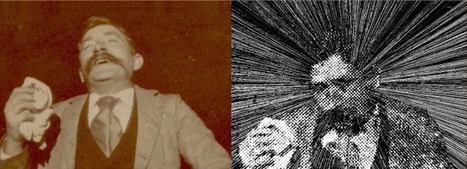
Sneeze in Notfilm

a-kino-essay

12401827_10156359110390006_6975309027002033493_o

“Back then [in Hungary in the late 1970s], it was the censorship of the politics, and now we have the censorship of the market. What has changed? The climate is the same. If you are a filmmaker, it is always fucked up.”

                              –Béla Tarr at the Walker Art Center (Minneapolis), 2012

“Piracy isn’t a victimless crime,” is what we read at the beginnings of an inordinate number of DVDs and Blu-Rays — to which I’m often tempted to reply that capitalism isn’t always or invariably a victimless crime either, especially when the victim turns out to be the consumer. And the fact that piracy is usually regarded as a crime and capitalism usually isn’t should mark the beginning of any clear-headed discussion of who (or what) cinema should belong to.

If “Whose cinema?” is a question that needs to be answered, we first have to add another question, and an even thornier one — “What cinema (or whose cinema) are we talking about?” Read more

THE HOUSE IS BLACK

The following was commissioned by and written for Asia’s 100 Films, a volume edited for the 20th Busan International Film Festival (1-10 October 2015). — J.R.

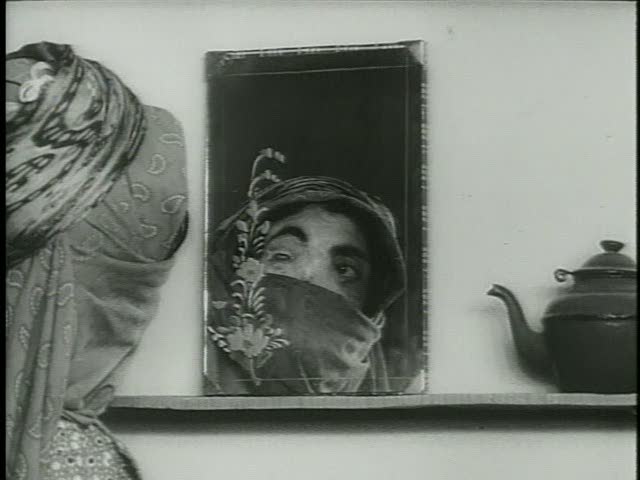
thehouseisblack-mirror

The House is Black is the most acclaimed of all Iranian documentaries. It was directed by Forough Farrokhzad (1935-1967), widely regarded as the greatest of all Iranian women poets and the greatest Iranian poet of the 20th century, who died in a car accident when she was only 32. It was Farokhzad’s only film, produced in 1962 by her lover Ebrahim Golestan (an important filmmaker in his own right, for whom she also worked as an editor, and who serves as one of the film’s narrators). The film observes the tragic life of lepers in an isolated leprosy hospital (a hell on earth and a nest of suffering and death) near Tabriz in northwestern Iran. The Society for Assisting Lepers commissioned the film, and the director’s intention was “to wipe out this ugliness and to relieve the victims.”

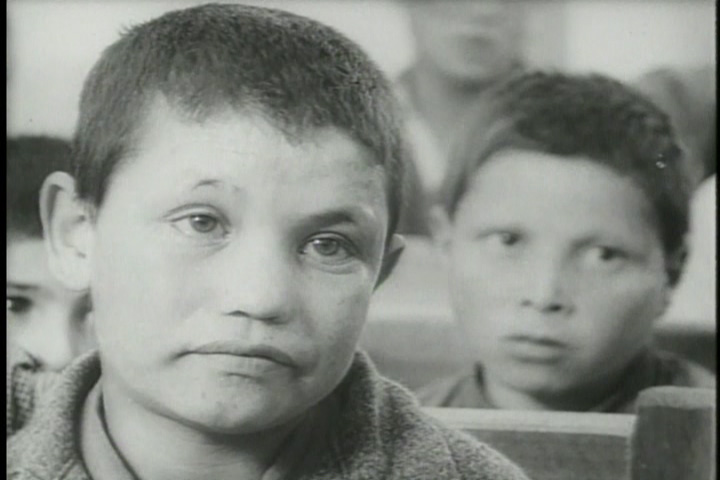
thehouseisblack2

Farrokhzad avoids infringement by creating a close relationship with the lepers, and by searching for the seeds of joy and vitality within the hopelessness. She depicts the inhabitants in their daily occupations, having meals, praying, the children playing ball and attending school. Read more

Sátántangó (Film and Novel) as Faulknerian Reverie

In most respects, I’m delighted and honored that a version of the following essay was published in Issue Two of the journal Music & Literature, which is devoted to László Krasznahorkai, Béla Tarr, and Max Neumann, In fact, this essay was commissioned by the editors of this handsome special issue, and my only reason for posting my original version is that a few stylistic edits were made, in what I’m sure were sincere efforts to clarify some of the entanglements in my lengthy sentences, that unfortunately yielded some embarrassing factual errors in the piece, as well as a few significant cuts. (It now appears that I read portions of the French translation of Krasznahorkai’s novel before I ever saw Tarr’s film and that Erich Auerbach’s great book Mimesis now includes an analysis of Light in August that no one has previously read; and the remarkable observation from Dan Gunn that I quoted has been deleted.) So, just to keep the record straight, here, for better and for worse, is exactly what I wrote. More recently, in mid-January 2015, I belatedly received a copy of this article with the above Introduction reprinted in Scalarama, a publication put together by Stanley Schtinter to accompany a tour of Sátántangó in the U.K. Read more

Response to Patrick McGilligan’s Woody Allen Poll [slightly updated]

Preparing a book about Woody Allen, biographer Patrick McGilligan sent out a poll to me and many others, and here are my responses to his questions:

THE WOODY ALLEN POLL

1.  What five Woody Allen films do you hold in the highest regard?  

(List the five in any order.   One equal point will be assigned to each of your choices for the cumulative total to be listed from 100 participating critics and scholars.)

whatsuptl3

annie-hall

broadwaydannyrose

1989-oedipus-wrecks

mmm3

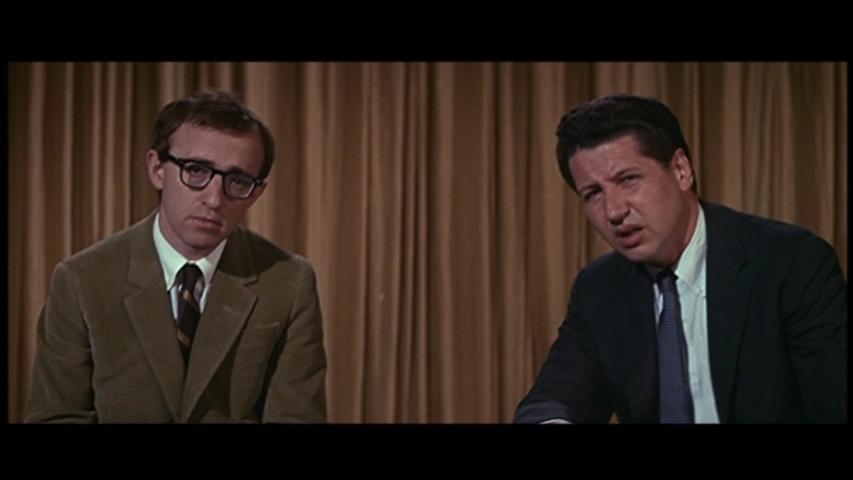
What’s Up, Tiger Lily?

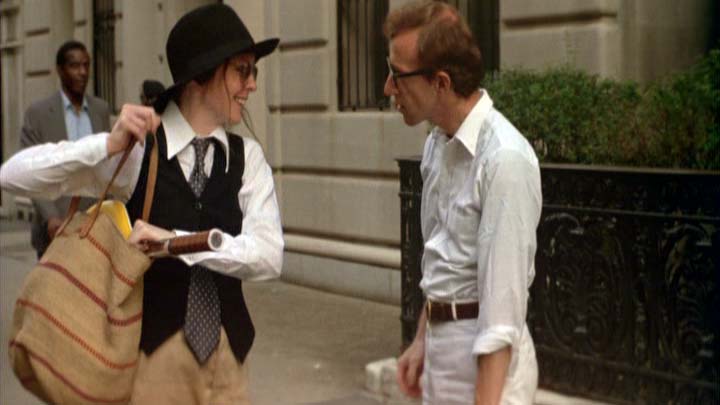
Annie Hall

Broadway Danny Rose

Oedipus Wrecks 

Manhattan Murder Mystery

2.  What do you believe about the allegation by Dylan Farrow, Allen’s adopted daughter, that he sexually molested her?   

            c.  Undecided.

3.  Have the Dylan Farrow allegations, or his marriage to Mia Farrow’s adopted daughter Soon-Yi Previn – either or both – affected your view of his film?

No.

4.  How has his over-all legacy been affected?  Comments are welcome.

I’ve always thought he was overrated (cf. my “Notes Toward the Devaluation of Woody Allen”). If his reputation and legacy as an artist have been tarnished by these unconfirmed charges or his marriage, this only illustrates the public’s lack of seriousness about art. I find Allen’s far more confirmable shame and embarrassment about his working-class origins and his middle-class values far more relevant to the importance and (lack of) depth of his work.  Read more

TOUCH OF EVIL: From Program Picture to Classic (2002)

Published as “Classic Touch” in the January 2002 issue of AMC: American Movie Classics Magazine….The last photo reproduced here is of the whole crew of the re-edit team at the Cannes Film Festival in May 1998. — J.R.

touch of evil

Considering all the rereleases in recent years of studio classics that are
labeled “director’s cut,” it must seem like every studio picture has one.
But the phrase is often a marketing term, and therefore potentially
misleading. There are some movies, including a few great ones, that can’t
be released in “director’s cuts” because the director was never accorded
final cut in the first place. At least five of Orson Welles’s European films
and three of his Hollywood features have director’s cuts, but Touch of
Evil (1958), his last Hollywood movie, isn’t one of them. (For the record,
his three director’s cuts are all in the 1940s: Citizen Kane and two
separate edits of his Macbeth.)

TOE-timebomb

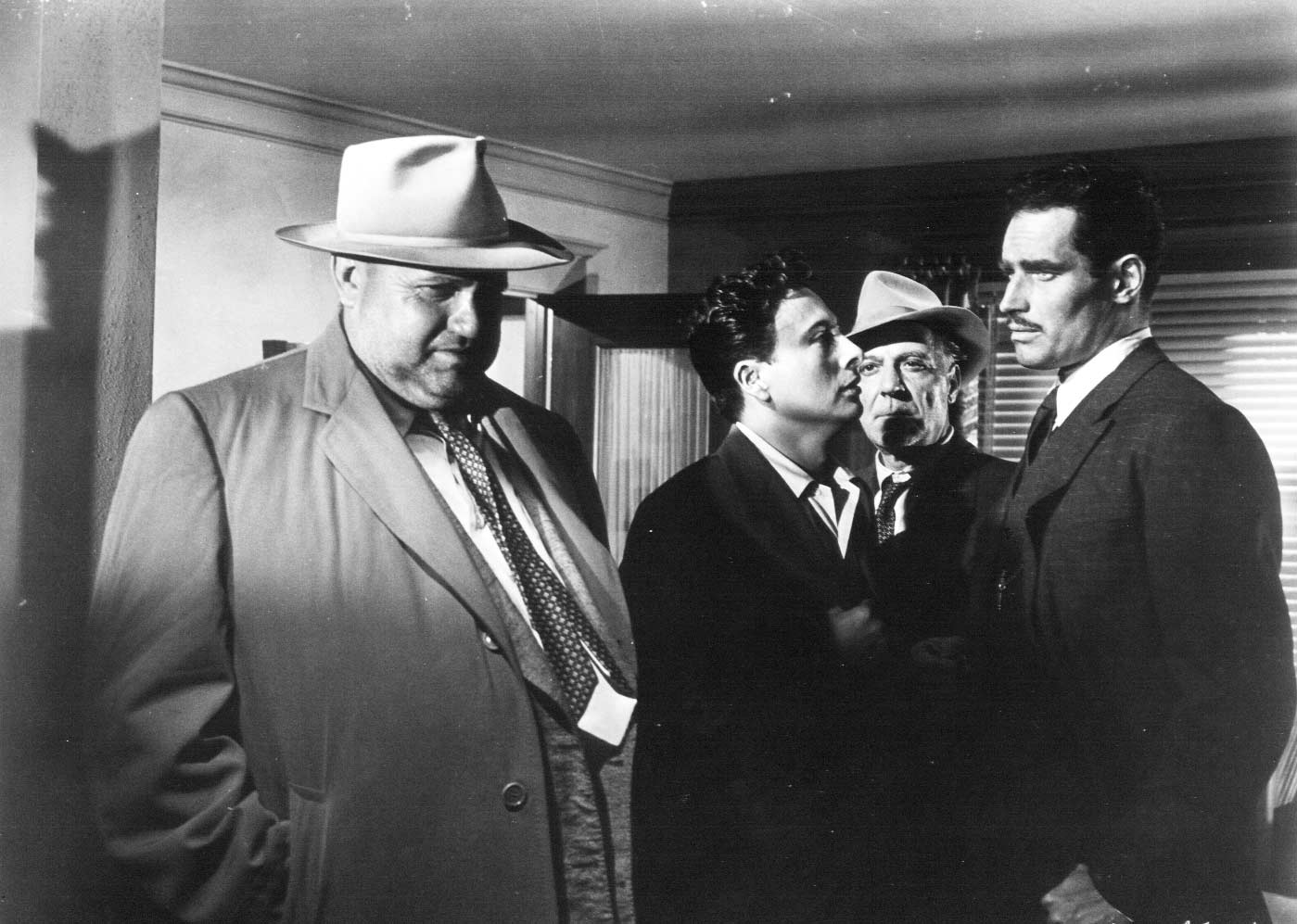
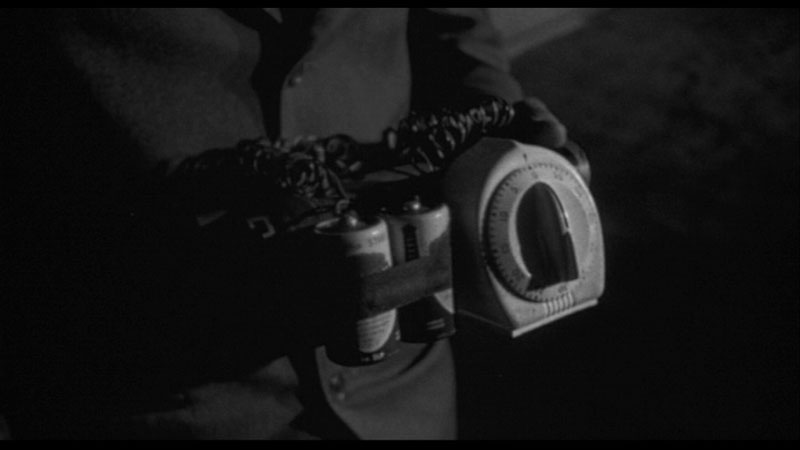
Admittedly, there was less studio interference on this noir thriller than
there had been on Welles’s The Magnificent Ambersons, The Stranger,
and The Lady from Shanghai. Welles was allowed to direct and rewrite
the script only after he’d been cast as the heavy, a crooked cop — mainly
through the intervention of lead actor Charlton Heston, who played an
honest Mexican cop. Read more