Welcome to my newsletter, a monetized site you can subscribe to for $5 a month to receive posts a few times a week. I plan to write one new post, as well as share two related (or sometimes unrelated) archival posts.
Next week I will have a review of Disclosure Day, the new Spielberg, as well as four separate reviews I wrote of A.I. Artificial Intelligence over a 23-year period. New posts will only be accessible to paid subscribers.
This won’t supplant jonathanrosenbaum.net — an archival site launched eighteen years ago, in May of 2008, which features over 8800 separate items, including most of my published work, which will remain freely accessible to everyone.
Rather, it offers an upgraded and selectively enhanced version with greater currency and occasional surprises, featuring new reviews of movies and books, occasional news items, and my reactions to other posts.
Paid subscribers will also be able to comment on posts with questions and expect to find them answered in future posts.
From Tikkun, November/December 1990, Vol. 5, No. 6. This was my second and (to date) final contribution to this magazine. As I recall, I wasn’t too happy with the way I was edited on this one (although the published version — which they called “Out to Lynch,” and is only slightly altered here — is the only one I have now); I was much happier working with Peter Cole on my previous article for Tikkun, “Notes Towards the Devaluation of Woody Allen“. -– J.R.
“All I know for sure is there’s already more’n a few bad ideas runnin’ around loose out there.” — Sailor to Lula in Barry Gifford’s Wild at Heart: The Story of Sailor and Lula
I couldn’t care less about changing the conventions of mainstream television. — David Lynch, November 1989
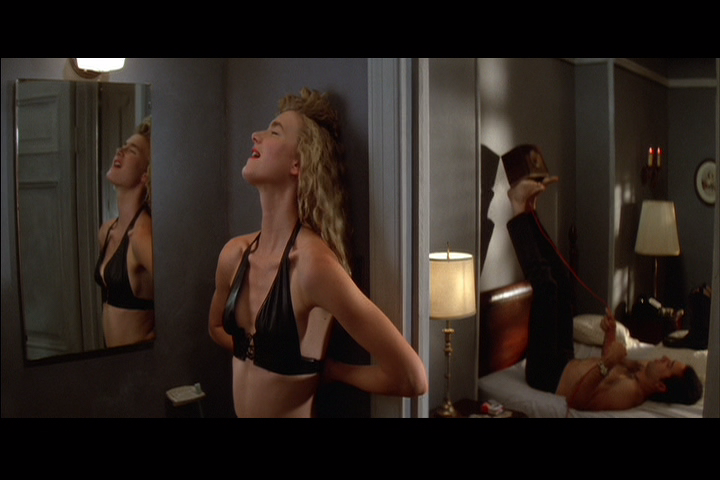
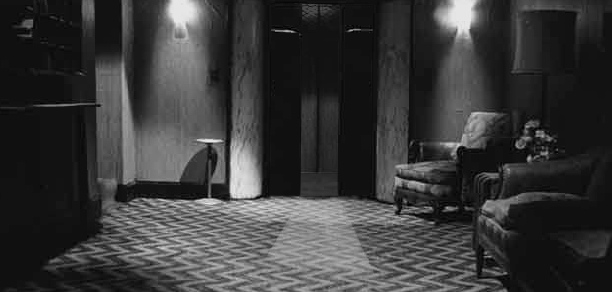
From The Birth of a Nation to Fatal Attraction, puritanism and political naïveté have frequently turned out be a winning combination in American movies. The recent popularity of David Lynch, however, puts a new spin on this formula. Sailor’s line — repeated in Lynch’s new movie based on Gifford’s novel — in a way summarizes Lynch’s work to date: an oeuvre that has recently expanded from paintings, movies, and a weekly comic strip to include two new TV series (Twin Peaks and American Chronicles, both coproduced by Mark Frost), an opera, a pop record album, commercials for Calvin Klein, a coffee-table book due out next fall, and undoubtedly other enterprises as well. Read more
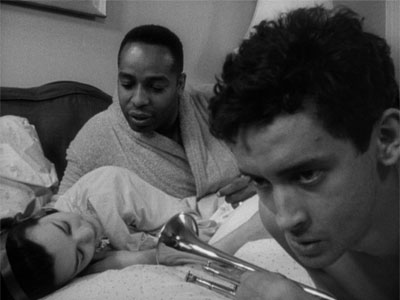
The following is a chapter from my book Film: The Front Line 1983 (Denver, CO: Arden Press) — which I’m sorry to say is only available now at ridiculously inflated prices (one copy at Amazon currently sells for $989.90). It probably remains the least well known of my books.I’m immensely grateful to Jed Rapfogel and Stephanie Gray at New York’s Anthology Film Archives for furnishing me with a document file of this essay so that I could post it here, originally to help promote their Mark Rappaport retrospective in March 2011, prior to the updated version of this held earlier this year. Readers should also consult my separate articles about Rappaport’s Rock Hudson’s Home Movies and From the Journals of Jean Sebergas well as my interview with Rappaport about the latter, all of which are also available on this site, along with a more recent piece about two of his videos. — J.R.
When the critic of a narrative film is feeling desperate, the first place that he or she is likely to turn to is a plot summary. Feeling rather desperate about my capacity to do justice to the last two features of the remarkable Mark Rappaport, I looked up the synopses and reviews of The Scenic Route and Impostors in the usually reliable Monthly Film Bulletin, which appeared precisely three years apart (February 1979 and February 1982), only to discover that each critic, Geoffrey Nowell-Smith and Simon Field, respectively, starts off with the admission that his own synopsis is misleading. Read more
Written for the Il Cinema Ritrovato catalogue for June 2018, although they wound up not using this entry because the film got canceled. — J.R.
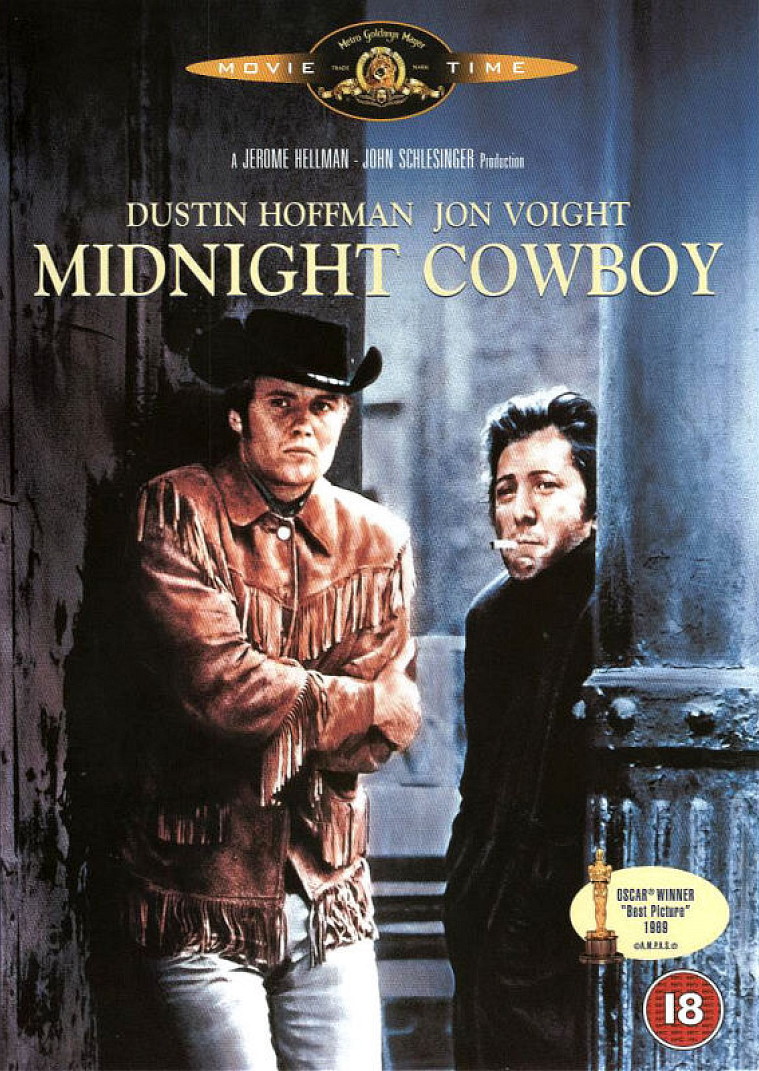
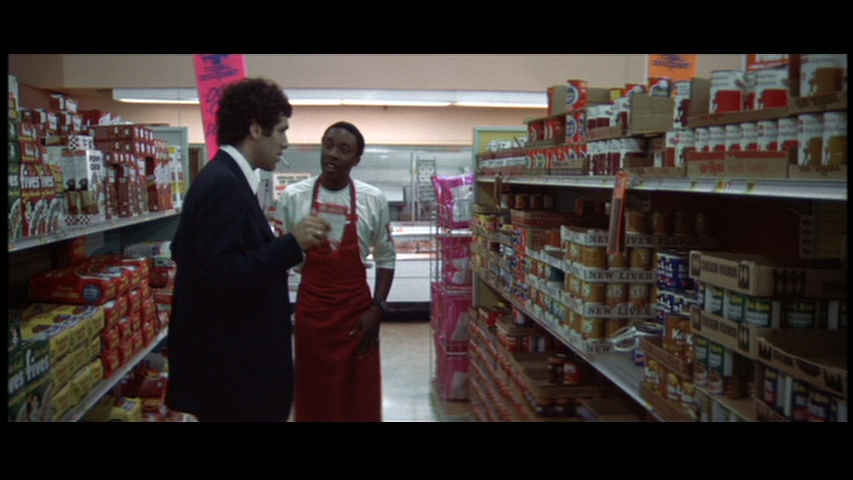
An expert piece of machinery highlighting two gifted actors — Jon Voight in his screen debut and Dustin Hoffman in the immediate aftermath of The Graduate, playing an antithetical role as a crippled street rodent named “Ratso” — Midnight Cowboy actually looks better to me now than it did in 1969. Even back then, I was impressed by the jubilant energy of the film’s opening: our introduction to Voight’s Joe Buck, the title hero, to the strains of Nilsson’s “Everybody’s Talkin’” was every bit as galvanizing as our first look at John Travolta’s Tony Manero would be eight years later in Saturday Night Fever, strutting to his own music.And much of what followed, after this Texan dishwasher boarded a bus for New York with dreams of becoming a first-class gigolo, impressed me with its deft storytelling and its eye for flavorsome detail. But English director John Schlesinger, in spite of his skill with actors, was designated as a bad object by Anglo-American auteurists such as myself — crassly derivative of the French New Wave in his flashy effects and a tireless trend-monger. Read more
Published under a pseudonym in the August 1985 issue of High Times. As I recall now, the main reason for the pseudonym was my unhappiness with the editor’s thoughtless editing; I’ve tried to repair a little of the damage here, and also added a few details.
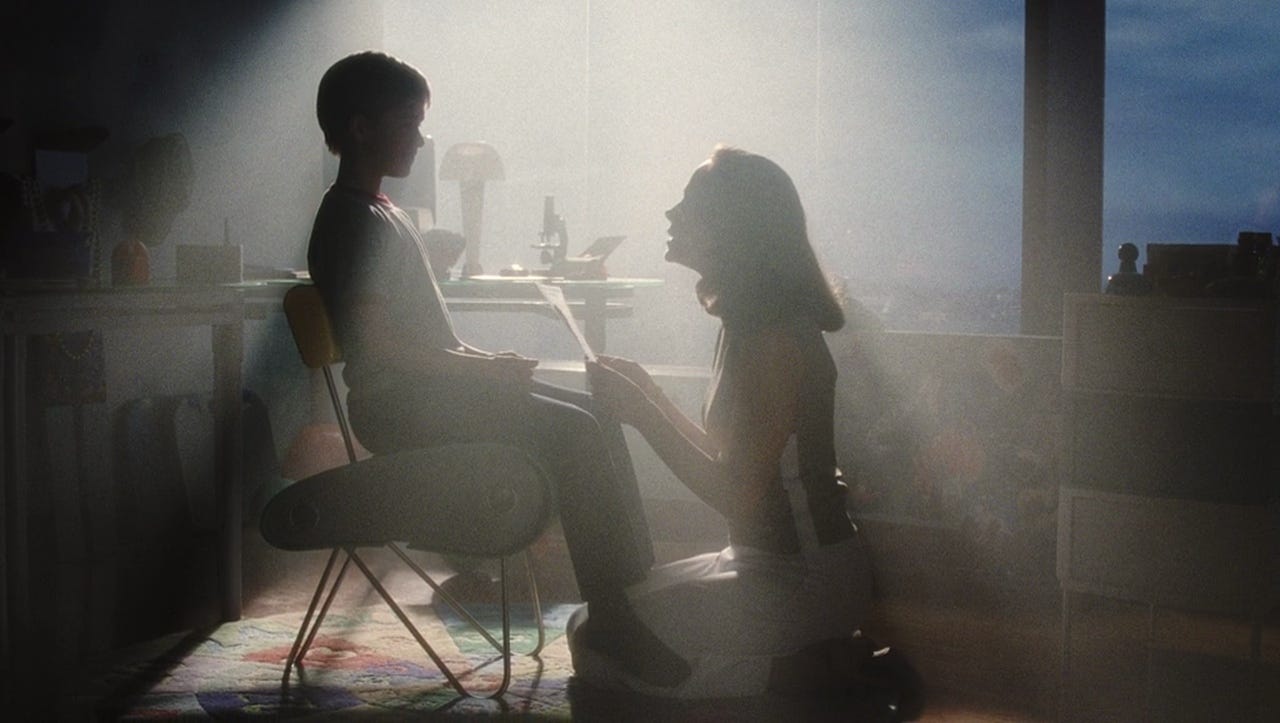
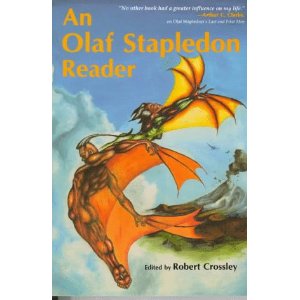
I can happily report that Stapledon’s work has garnered a lot more attention since 1985, including a book-length study by Leslie Fiedler, and all the fiction discussed here is currently in print (or was when I last posted this), which wasn’t true back then. (Dover has excellent editions pairing Last and First Men with Star Maker and Odd John with Sirius, and An Olaf Stapledon Reader, edited by Robert Crossley, which Syracuse University Press published in 1997, includes all of The Flames and samplings from the others.) Although I don’t have much to say here about Odd John, this novel may actually serve as the best single introduction to Stapledon’s work. Although having just seen the late Jóhann Jóhannsson’s original and powerful experimental feature [see still below] loosely based on Last and First Men, released earlier this year [2020], I wonder if that might also serve the same function.
One anecdotal epilogue to Jorge Luis Borges’s interest in Star Maker, cited at the end of this piece: I was lucky enough to attend a public discussion with Borges at the University of California, Santa Barbara shortly before his death, and asked him at the time to comment on this book.Read more
For the past eighteen years, ever since I retired from my post as the main film critic for the Chicago Reader, this web site, jonathanrosenbaum.net, has been offering free access to most of my writings from the last half-century, receiving close to a thousand visits from readers around the globe every day. To keep it going and myself going as well, expanding its offerings in the process as a Substack resource, I find I need to monetize it, and for this I need help, expertise, and online savvy.
For anyone willing and able to help me make this transition and profit from it, I can offer a revenue share as 20% of the first years’ profit, or if you’d like to help build this publication together, or think you might be, email me your thoughts about how you’d like to partner in this venture. We can take things from there and I look forward to hearing your thoughts about this. jrosenbaum2002@yahoo.com Read more
We already know from his imaginary conversations with his very own “Orson” in The Eyes of Orson Welles (2019) that the presumptions of Mark Cousins respect no natural boundaries apart from those of his own hubris. So he doesn’t even need to credit himself as the writer of the 14-hour marathon Women Make Film: A New Road Movie Through Cinema(2018)—available on four Region B Blu-rays from the BFI containing ten chapters apiece—even when his text is being dutifully delivered by Tilda Swinton (as in the first chapters), or Jane Fonda, or another high-profile woman, because he knows that his credit as director and his characteristically friendly stream-of-condescension have already registered his fingerprints on every frame—which is literally true, insofar as his series’ widescreen aspect ratio reconfigures the compositions and frames of many of the films he claims to be celebrating. (Though I have to admit that Julia Solntseva’s The Golden Gates (1971), a tribute to the director’s late husband Alexander Dovzhenko, reconfigures the aspect ratios of Dovzhenko’s masterpieces no less ruthlessly and systematically than Cousins does with other filmmakers.) Meanwhile, the patter he assigns to Swinton et al defines the significance, meaning, and value of every clip before we can begin to respond to it on our own—indeed, it precludes any sort of response from us apart from passive assent before we move on to the next clip. (Cousins Read more
From the February 1, 1991 Chicago Reader. I subsequently decided that the explanation for this movie’s highly profitable sickness was the then-current and no less “profitable” first gulf war and its own indiscriminate slaughter. — J.R.
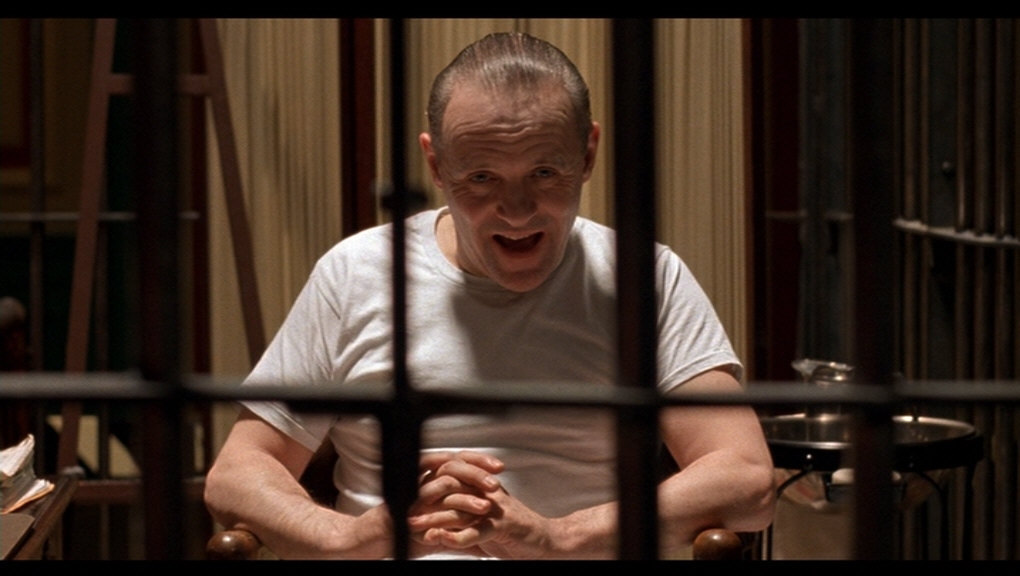
An accomplished, effective, grisly, and exceptionally sick slasher film (1991) that I can’t with any conscience recommend, because the purposes to which it places its considerable ingenuity are ultimately rather foul. Like Thomas Harris’s novel, which screenwriter Ted Tally adapts here, Jonathan Demme’s film proposes that the psychotic serial killer is the essential religious figure of our time: saint, guru, seer, and soothsayer rolled into one. In fact, this characterization applies literally to only one of the two serial killers here, a psychiatrist (Anthony Hopkins) who cannibalizes his victims and is now held in maximum security. The heroine (Jodie Foster), an FBI trainee, appeals to him for insight in tracking down another mad killer (Ted Levine), who flays his victims (and is a transvestite to boot, allowing Demme to cash in on the homophobia market). In the course of parceling out his wisdom, the psychiatrist also analyzes the trainee, becoming an even more commanding father figure to her than the boss (Scott Glenn) who sends her on this mission. Read more
Commissioned by MUBI Notebook and posted there on June 19, 2020. — J.R.
There’s a lot of confusion about what improvisation in movies consists of — when it is or isn’t used, and sometimes what it means when it is used. Those who think that the dialogue in Orson Welles’ The Other Side of the Wind is improvised don’t realize that the screenplay by Welles and Oja Kodar with that dialogue was published years ago, long before the film’s posthumous completion. It’s worth adding, however, that the film’s mise-en-scène was improvised by Welles on a daily basis. Similarly, those misled by director Robert Altman’s dreamy pans and seemingly random zooms in The Long Goodbye into concluding that the actors must be inventing their own lines are ignoring the careful work done by screenwriter Leigh Brackett, not to mention Raymond Chandler.
Many of those who associate improvisation with John Cassavetes — ever since he brazenly concluded his first feature, Shadows, with the printed title, “The film you have just seen was an improvisation” — don’t seem to realize that, long after the actors did their initial improvs in Cassavetes’ Manhattan acting workshop, most of the lines were set and even written down before the cameras started rolling. Read more
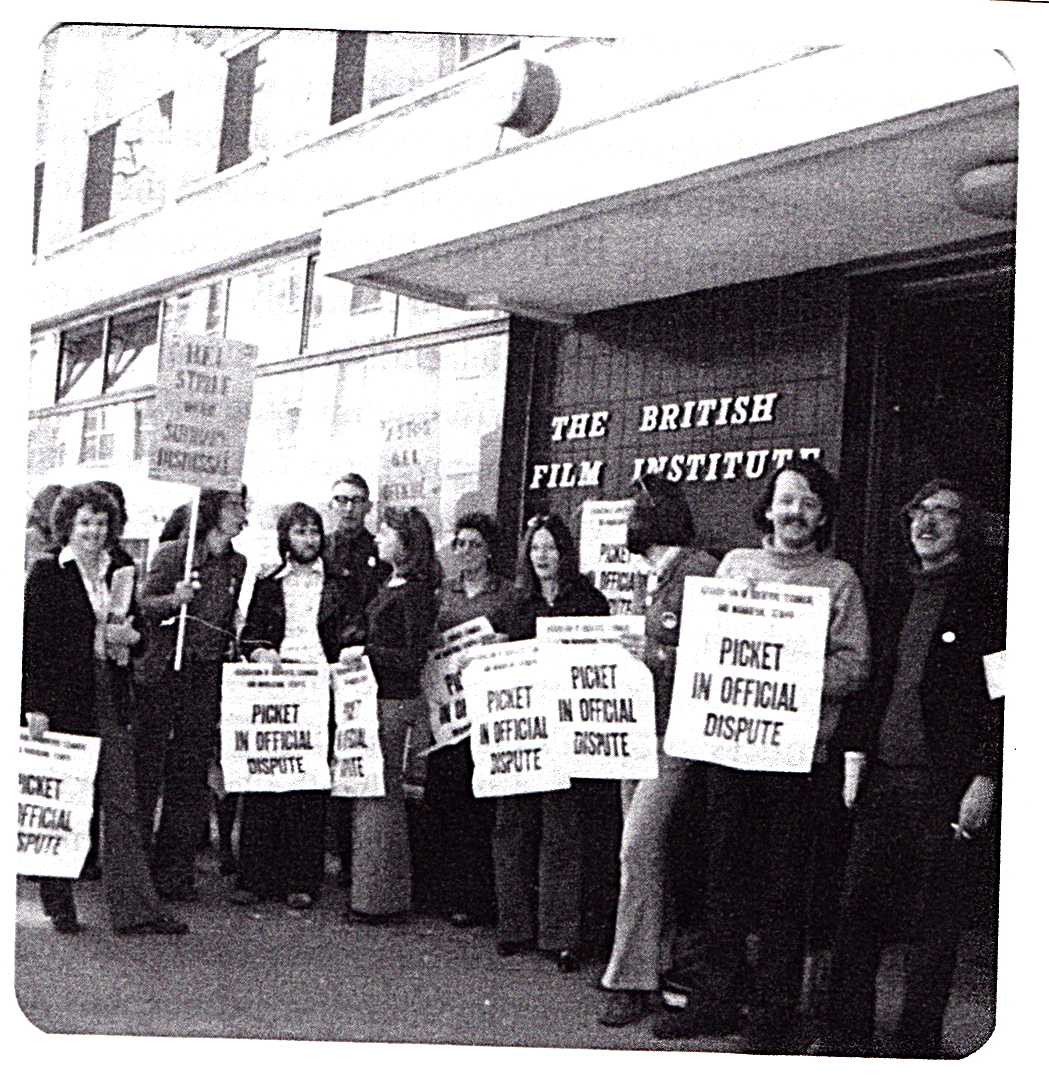
That’s me on the extreme right, next to my new boss at the time, Richard Combs. The address is 81 Dean Street, the main headquarters at the time of the British Film Institute. I’d started my new job there as assistant editor of Monthly Film Bulletin on August 5, working under Richard, and had joined the staff’s trades union, ASTMS, around the same time. But only a week or so later, after the National Film Archive’s acting curator, Kevin Gough-Yates, was summarily sacked, I attended my first union meeting, and seconded the motion that we go on strike to protest management’s refusal to follow proper procedures.
Our strike lasted a couple of weeks, and, as I recall, it was mainly successful. For me, it was an ideal way to get to know many of my fellow staffers at the BFI, and I also successfully collared Otto Preminger, emerging from an editing studio next door, where he was working on Rosebud, to sign our petition. (I had watched a morning’s shoot on Rosebud in Paris a month or so earlier and had been part of Preminger’s lunch party, so he remembered me.) According to Geoffrey Nowell-Smith in The British Film Institute, the government and film culture, 1933-2000, a recent book from Manchester University Press that he coedited and partially wrote (which is where this photo comes from), “Preminger sent a message from his suite at the Dorchester Hotel”. Read more
The following, a revision and substantial expansion of liner notes that I wrote for the Criterion DVD of Day of Wrath several years ago, was written for the Australian DVD, which came out in 2008 on the Madman label — as did my essay on Ordet. (One can order DVDs from Madman’s site, and by now they have quite a collection.) My thanks to Alexander Strang for giving me permission to reprint this. — J.R.
Figuring Out Day of Wrath by Jonathan Rosenbaum
I first encountered Carl Dreyer’s work in my teens, but it wasn’t until my 40s that I started to be ready for it. I mainly had to rely on lousy 16-millimeter prints, so ruinous to the sounds and images of Day of Wrath that I could look at that film only as a form of painterly academicism, a repressed view of repression. The film defeated me with its unalleviated Danish gloom and its dull pacing, which I associated with Dreyer’s strict Lutheran upbringing. Most of this was sheer nonsense, as I discovered once I had access to better prints, information, and reflexes. For one thing, contrary to many would-be reference works, Dreyer’s upbringing was neither strict nor Lutheran, and he was born a Swede, even if he grew up in Denmark. Read more
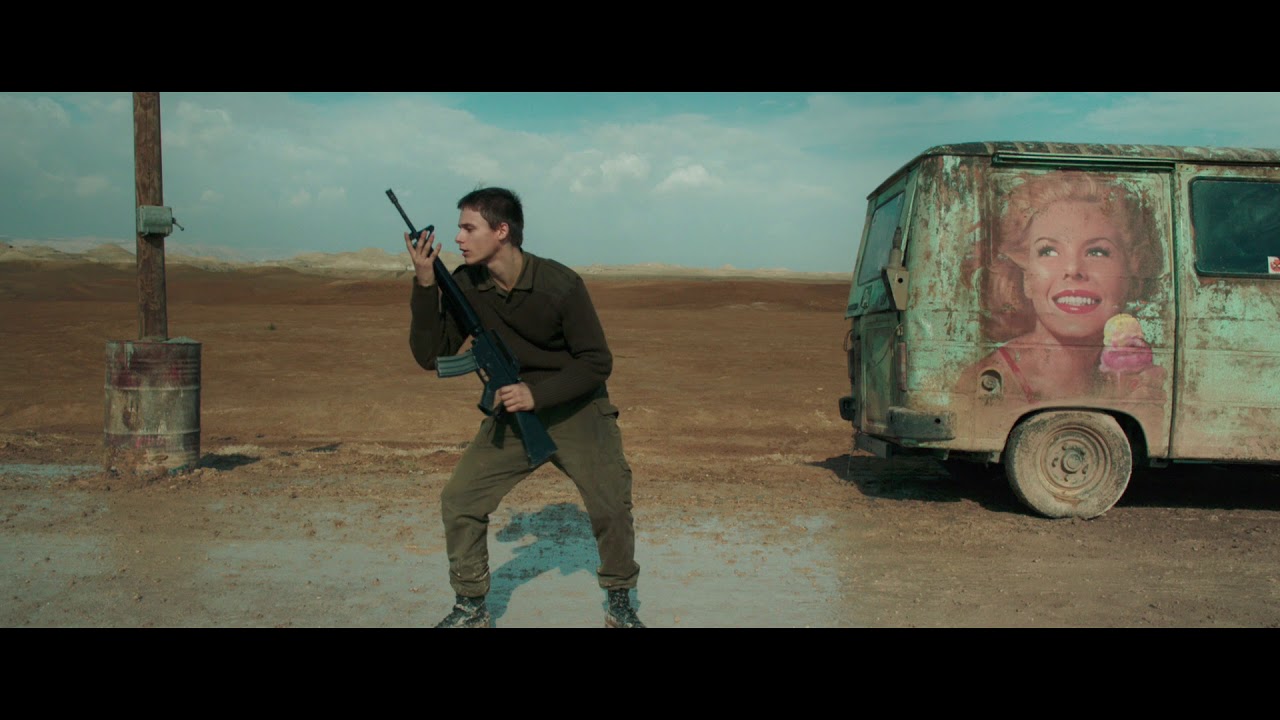
I face the same dilemma every year: multiple requests for lists of my favorite films of the year, all of them due before I’ve had a chance to see all the contenders. And it looks like the biggest casualty of this process in this year’s roundup has to be Samuel Maoz’s provocative, original, and creatively vexing (at once hilarious and devastating) Israeli feature, FOXTROT, which for me very easily surpasses many of the more popular favorites such as THREE BILLBOARDS… and NORMAN, which I find quite dull, unchallenging, and conventional in comparison. [12/27/17]
Jurors: Lorenzo Codelli, Alexander Horwath, Lucien Logette, Mark McElhatten, Paolo Mereghetti, and Jonathan Rosenbaum. Chaired by Paolo Mereghetti.
PERSONAL CHOICES
Lorenzo Codelli: Norman Foster’s Woman on the Run (1950, Flicker Alley, Blu-ray). A lost gem rescued by detective Eddie Muller’s indefatigable Film Noir Foundation
Alexander Horwath: Déja s’envolé la fleur maigre (Paul Meyer, 1960, Cinematek/Bruxelles, DVD) and Il Cinema di Pietro Marcello: Memoria dell’immagine (2007-2015, Cinema Libero/Cineteca di Bologna, DVD). Regarding the latter: with this cinematheque-style DVD, subtitled in English and French, one of the greatest contemporary filmmakers, whose work is still under-appreciated outside Italy, receives his rightful chance for global recognition.
Lucien Logette:
Tonka Šibenice (Karel Anton, 1930, Czech Republic, Národní filmový archiv/Filmexport Home Video, DVD)
One of the first Czech sound films. Like many great films of that era, it reflects several influences: expressionism, social realism, Kammerspielfilm, the art of Soviet photography, all used remarkably, without imitation. It contains all the great themes of the end of the silent period: the opposition between the city and the countryside, the misdeeds of modern society, frustrated loves ending in drama, themes served by an astonishing visual beauty.
Mark McElhatten: Kafka Goes to the Cinema (Munich, 4 DVD box set, Edition Filmmuseum). Read more
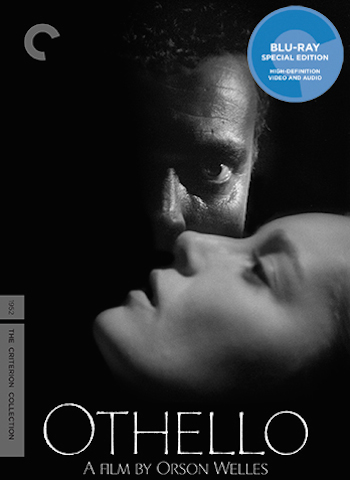
A major reason for listing Criterion’s Othello first is that it includes the digital premieres of not one and not two but three Orson Welles features: both of his edits of Othello available with his own soundtracks, heard for the first time in the U.S.Read more