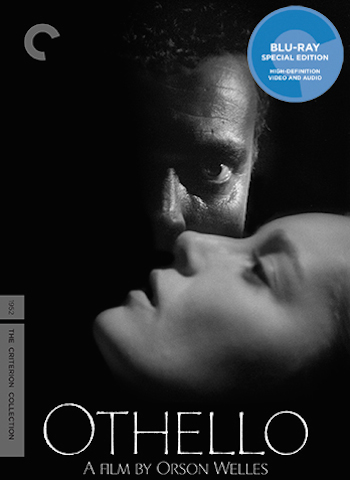
A major reason for listing Criterion’s Othello first is that it includes the digital premieres of not one and not two but three Orson Welles features: both of his edits of Othello available with his own soundtracks, heard for the first time in the U.S.Read more
An updated revision of a 1999 essay, commissioned by and posted on Slate on May 24, 2017. — J.R.
One of the paradoxes of conspiracy thrillers is that seeing the world as if it were as orderly and coherent as a work of art is both satisfying and terrifying. If everything makes sense, then it’s hard to avoid the premise that someone somewhere is creating that coherence–either God or an equally unseen puppet master. And the fact that we don’t see the strings being pulled means that our imaginations are invited to sketch them in, making us co-conspirators in the process: And opting out of this creative participation means accepting chaos: “If there is something comforting—religious, if you want—about paranoia,” declares Thomas Pynchon in Gravity’s Rainbow, “there is still also anti-paranoia, where nothing is connected to anything, a condition not many of us can bear for long.”
It’s a tradition that harks back to Louis Feuillade’s silent serial of 1915-1916, Lesvampires, about a gang of ingenious working-class criminals headed by a beautiful woman and preying on the rich—a crime thriller evoked in Olivier Assayas’ 1996 dark comedy about a contemporary remake, Irma Vep.Read more
Who could it be at Vinegar Syndrome Films in the U.S. and/or Powerhouse Films in the U.K. who decided I was an aficionado of Mexican and/or Canadian wrestling? I haven’t been able to discover if Vinegar Syndrome and Powerhouse are distantly or closely related to one another—or if, on the contrary, separate publicists at each company arrived independently at the notion that I was an actual or potential wrestling buff. But the fact remains that unrequested check discs of Santo vs. Evil Brain and Santo vs. Infernal Men (both 1961) along with two more unrequested check discs devoted to an Italian Western with an equally unidiomatic, pidgin-English title (The BigGundown, 1966), all from Powerhouse, turned up in my mailbox early this year, and these were soon followed by a finished Blu-Ray wrapped in cellophane of the no less unrequested and undesired Hitman Hart:Wrestling with Shadows, a 1998 Canadian documentary from Vinegar Syndrome.
Even if I accept the more probable and less paranoid explanation that much of our planet is currently undergoing a collective nervous breakdown over identity politics, leading to many mistaken surmises and false assumptions that each of us is making about the identities and interests of everyone else, I can’t fathom what might have inaugurated this trend in “restored” digital releases.Read more
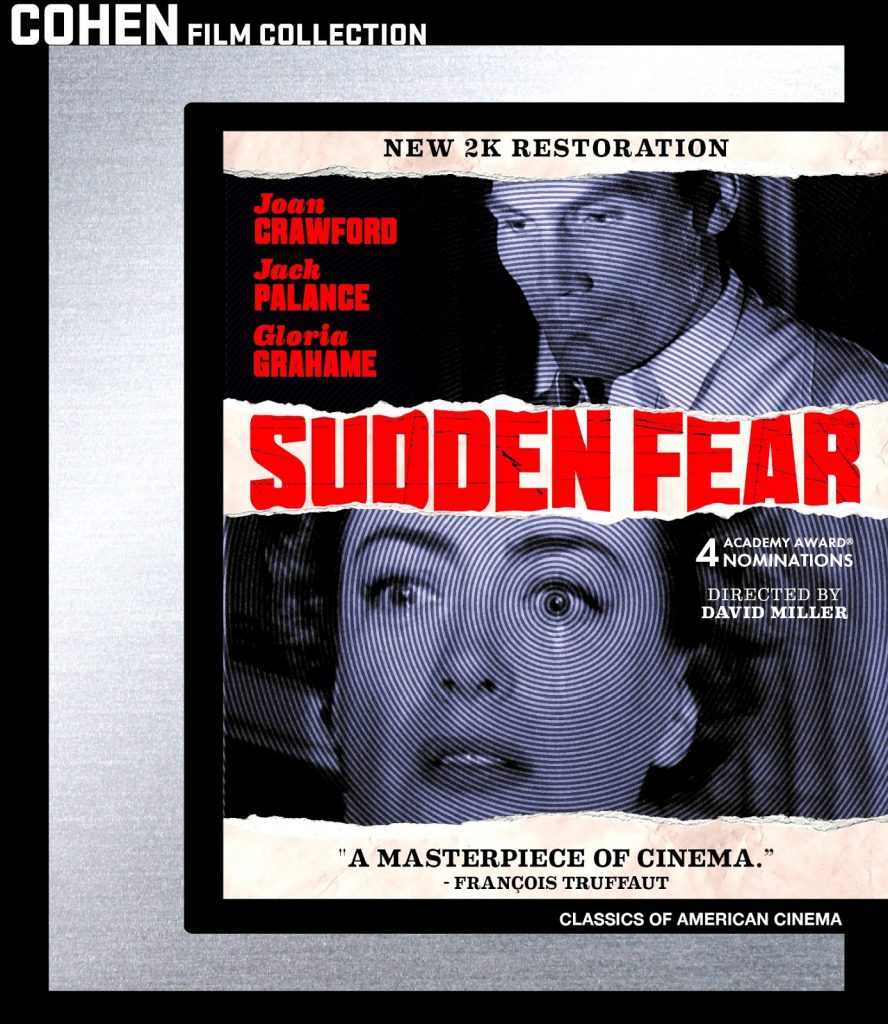
1. Sudden Fear Cohen Film Collection (my mistake–this was released in 2017) 2. Showboat Criterion 3. A Bread Factory Grasshopper Films (includes 1 DVD, 1 Blu-Ray)
Top Box sets of 2020
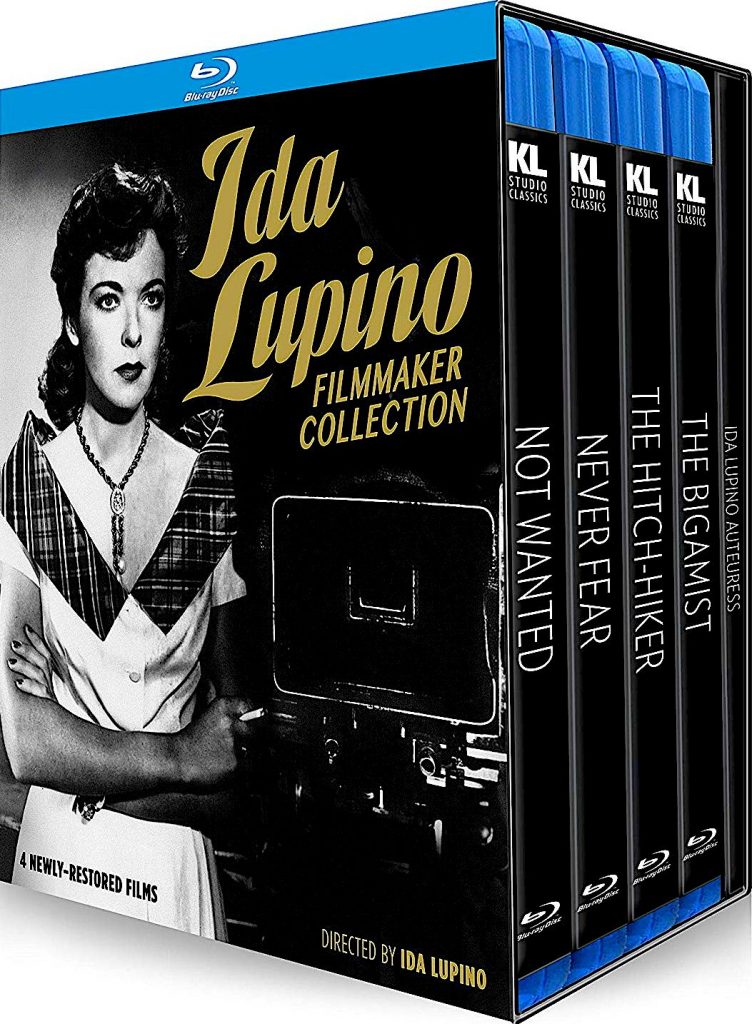
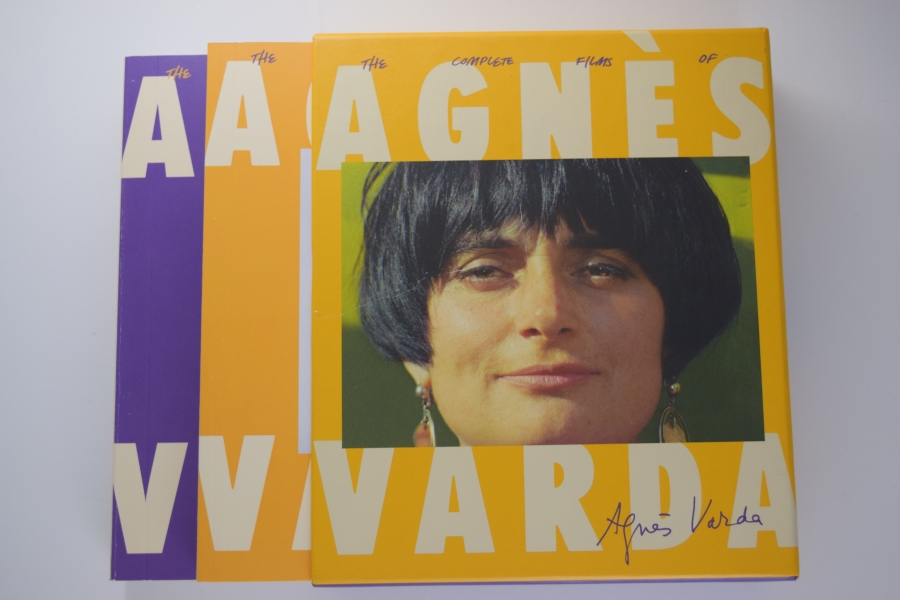
1. Ida Lupino: Filmmaker Kino Lorber 2. The Complete Films of Agnes Varda Criterion 3. Crazy Ex-Girlfriend: The Complete Fourth Season (Warner Archive)
FAVORITE LABEL: Arrow Academy
FAVORITE Commentary of 2020 (or commentaries): Jeremy Arnold, Sudden Fear, Cohen Film Collectiomn
Best Cover Design Nominations: The Complete Films of Agnes Varda, Criterion
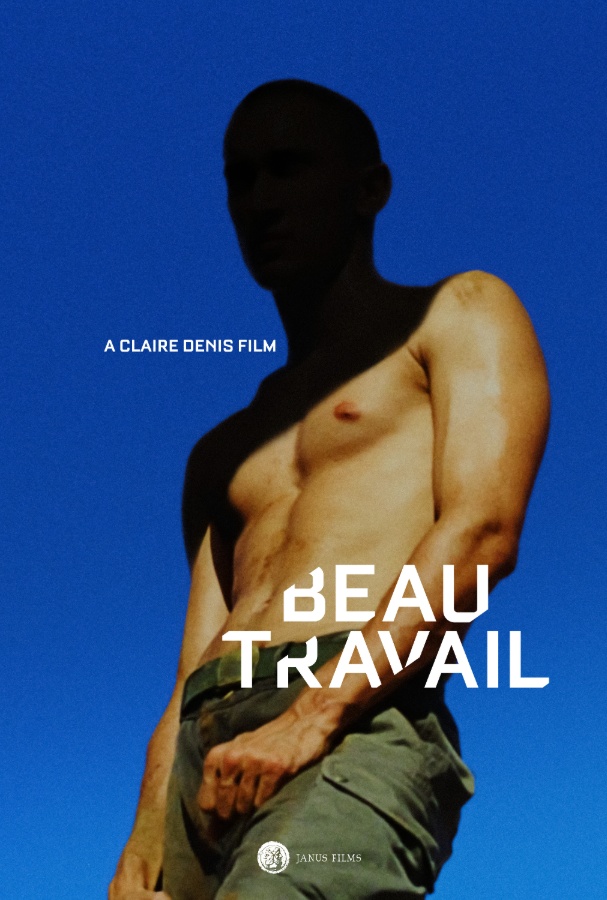
Favorite DVD of the Year: Beau travail, Criterion Read more
This obviously wouldn’t be an appropriate time to revive my negative review of Hopper’s Colors in the Chicago Reader 22 years ago, which can easily be accessed by anyone who might be interested. But I’d like to reproduce a couple of short paragraphs from it about my favorite Hopper film, which I continue to cherish:
To make sure my memory wasn’t playing tricks on me, I recently took another look at Hopper’s previous film, Out of the Blue (1980). Here was proof, if any is needed, that a celebrated burnt-out case came back to establish himself as the legitimate American heir to the cinema of Nicholas Ray — a cinema of tortured lyricism and passionate rebellion that reached its fullest flower in the 50s, as if to match the action painting that was roughly contemporary with it. Hopper managed to remake Ray’s Rebel Without a Cause (the film in which Hopper made his acting debut) in terms of a working-class punk (Linda Manz), an androgynous heroine whose grim fate suggested an Americanized version of Robert Bresson’s Mouchette. Casting himself, moreover, as her dissolute father, Hopper gave himself a disturbing part that seemed to update his role as Billy in Easy Rider. Read more
Rachel Bloom and Aline Brosh McKenna’s Crazy Ex-Girlfriend: The Complete Fourth Season (Warner Archive, four DVDs)
The Complete Films of Agnès Varda (Criterion, fifteen Blu-Rays).
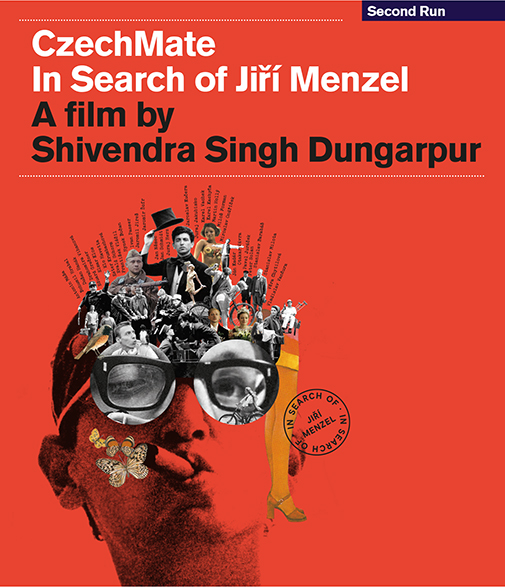
Shivendra Singh Dungarpur’s CzechMate: In Search of Jiří Menzel (Second Run Features, two Blu-Rays)
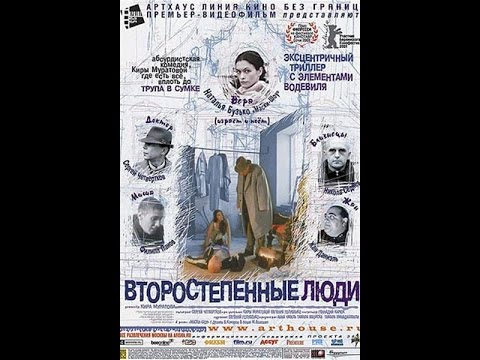
Kira Muratova’sSecond Class Citizens (one Russian DVD).
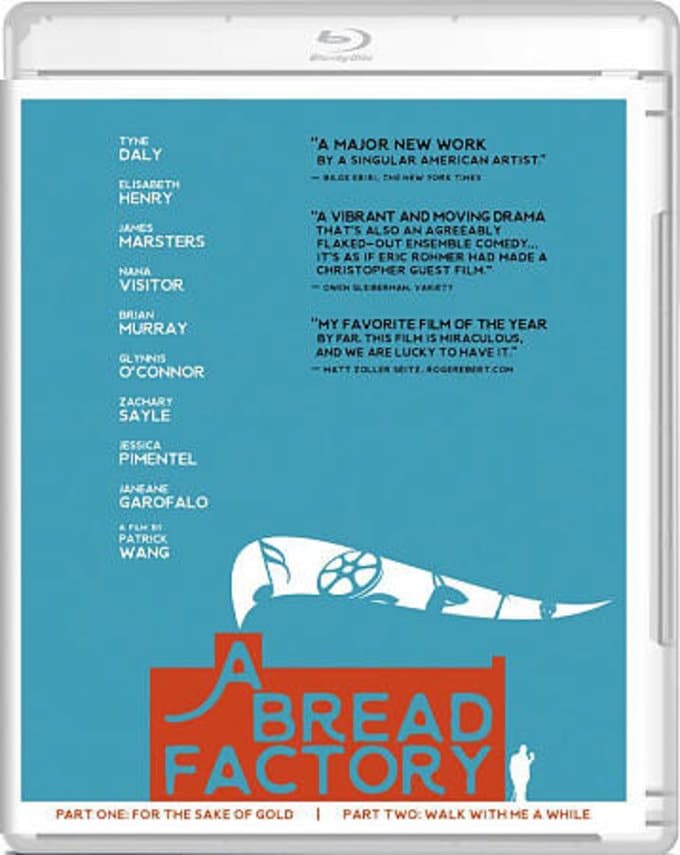
Patrick Wang’s A Bread Factory (Grasshopper Film, one Blu-Ray, one DVD)
I’ve ignored precise dates because Johnson-Trump have brought history to an impasse, and one country’s 2019 release might not even arrive in the mail before 2020. I’ve included A Bread Factory even though it includes my own public interview with its writer-director. Teaching a course in Varda made me appreciate that she knew how to generate her own best extras (none of which, alas, I could show on Zoom). The final season of Crazy Ex-Girlfriend deserves recognition for resurrecting the Hollywood musical to serve the specific needs of the present while triumphantly proving that sitcom characters can actually grow. English subtitled Muratova is most easily tracked on YouTube, and I can’t even identify the Russian label of this welcome DVD release.
Written in response to the following invitation from Diego Moldes Gonzalez(whom I’ve never met) in Madrid: “What is the definition of ‘culture’ for you? How is the culture of the 21st century similar and different from the culture of the 20th century?” — J.R.
As a beneficiary of both Internet culture and the imperial culture of the United States (which becomes imperial whenever it vainly calls itself American culture, which is often, thus implicitly appearing to enfold much of North America and all of South and Central America as secondary satellites), I continue to be subject to the market-driven capitalist culture that strives to pick the pocket of my unconscious and thereby invisibly steer my purchases (or, more precisely, the events that constitute my being purchased), defined as my existential identity. Thus, because I’m defined as an anti-Trumpian, the media fills me with anti-Trump rather than the desired absence or disappearance of Trump. In other words, Trumpians and anti-Trumpians get served two alternate versions of the same exclusive diet of Trump and daily coronavirus casualty figures, popularly known as the daily news, and choosing between these two unvarying diets is being deceptively labeled a form of democratic choice and a representative form of “American culture”. Read more
5. LA FRANCE CONTRE LES ROBOTS (Jean-Marie Straub)
6. HER SOCIALIST SMILE (John Gianvito)
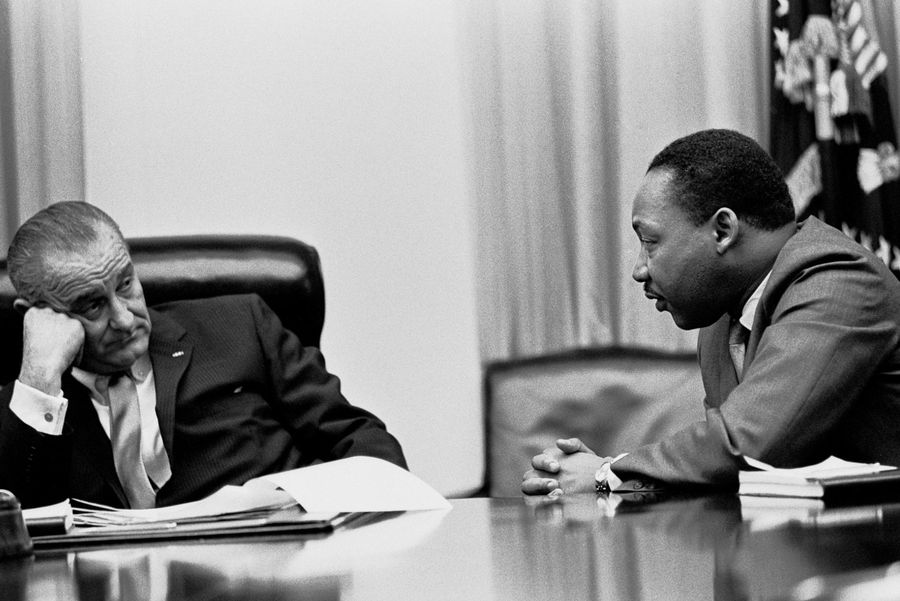
7. MLK/FBI (Sam Pollard)
8. SCHOOLGIRLS (Pilar Palomero)
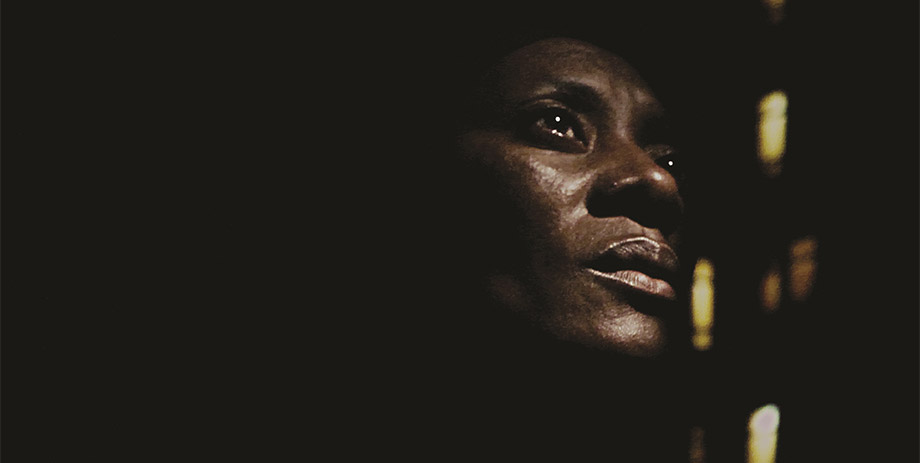
9. VITALINA VARELA (Pedro Costa)
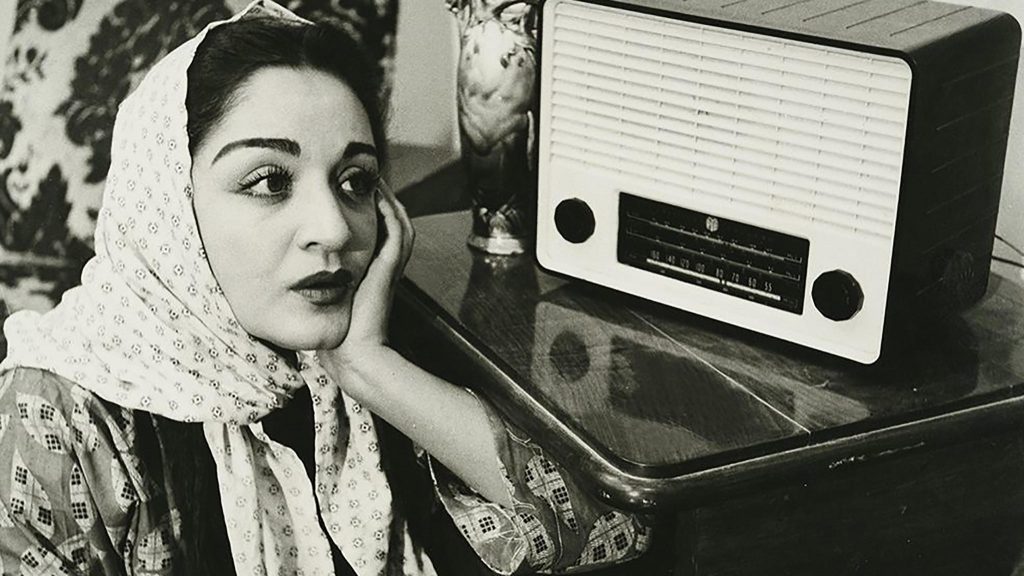
10. WOMEN ACCORDING TO MEN (Saeed Nouri)
Comment: The meditative and solitary aspects of film watching have increased during the pandemic, when many of us are exiled to our laptops, but fortunately, online platforms for post-screening discussions have grown as well. Read more
Commissioned but not published by a Europeanfilm festival and collection in early 2026.
Jonathan Rosenbaum
There isn’t an entry for Jules Dassin in Richard Roud’s two-volume, 1121-page Cinema: A Critical Dictionary (1980), and criticism of his work in other Anglo-American publications has been sparse. That he was unfashionable in many cinephile circles for most of his career can be attributed to several factors, which this essay will attempt to explore. Foremost among them is his having been blacklisted in Hollywood and moving to Europe in the mid-1950s, thus splitting his filmography into two—a fate that made John Berry and Cy Endfield virtually invisible and Dassin—far more visible due to such European hits as Rififi and Never on Sunday—widely resented. Only Joseph Losey managed to attain over time both visibility and critical respect, thanks in part to the prestige of his frequent screenwriter Harold Pinter and many of his actors.
The question of what makes an artist fashionable or unfashionable—such as what led to Andy Warhol being praised for doing some of the same things that Frank Tashlin was condemned for—is far from a simple matter, but it is always inflected by both ideological climates and marketplace practices. And the Cold War’s impact on Dassin’s artistic profile can’t be overestimated. Read more
An unpublished essay written in June 1988 for the Chicago Reader. One of my few regrets about my 20 years at the Reader, unlike the year and a half I spent (1979-1981) at New York’s Soho News, was that whereas the latter allowed me to review books and movies concurrently, the Reader was interested in me only as a film reviewer, so any attempt to write about books for them was discouraged. I did make a point of reviewing two of Thomas Pynchon’s late novels for them (Vineland and Against the Day) –- having previously reviewed Gravity’s Rainbow for the Village Voice and having much later reviewed Mason & Dixon for In These Times between the two Reader reviews (all four of these reviews, incidentally, plus my earlier review of The Crying of Lot 49 for a college newspaper, can be accessed on this site).
I wrote the piece below on spec when Michael Lenehan was the paper’s editor and he told me I’d have to do a lot of rewriting before it could be published, so I bowed out.Read more
From the Chicago Reader (December 23, 1988). — J.R.
The Puttnam Problem
Some of the year’s most ominous film-industry developments followed directly from the forced departure of David Puttnam as head of Columbia Pictures. During his brief and controversial tenure at Columbia, Puttnam — the outspoken Englishman who produced Chariots of Fire and other “quality” films — had attempted to reverse the overall trend in Hollywood of assigning more power and artistic control to stars and less to directors and writers by developing low-budget projects that weren’t completely subject to the whims of stars and their agents.
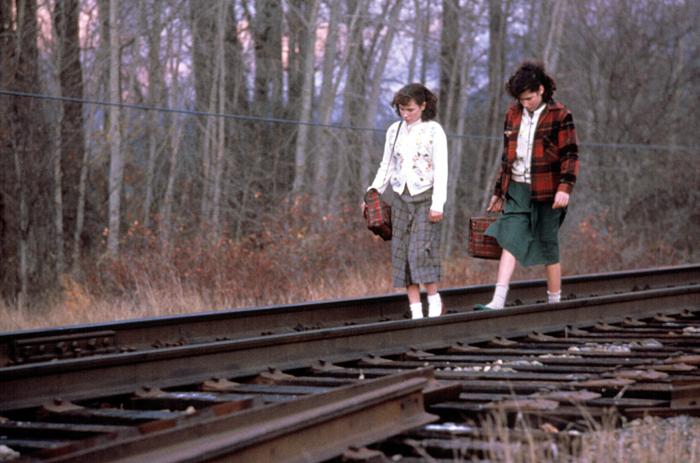
After Puttnam’s departure, the desire to discredit his strategies at Columbia was so pronounced that most of his projects were deliberately sabotaged through a flagrant lack of promotion — demonstrating once again that the major aims of Hollywood are often not so much the making of money as the fulfillment of various personal forms of vanity. (Bill Forsyth’s Housekeeping is a good example of the sort of serious Puttnam project that was virtually foredoomed at the box office by the pressure of anti-Puttnam sentiments.) Adding insult to injury, a series of anti-Puttnam articles appeared in the trade magazine Variety, which attempted to appease Puttnam’s enemies by demonstrating that his films were commercially unsuccessful, conveniently overlooking the fact that very few of them were given even a sporting chance to succeed. Read more