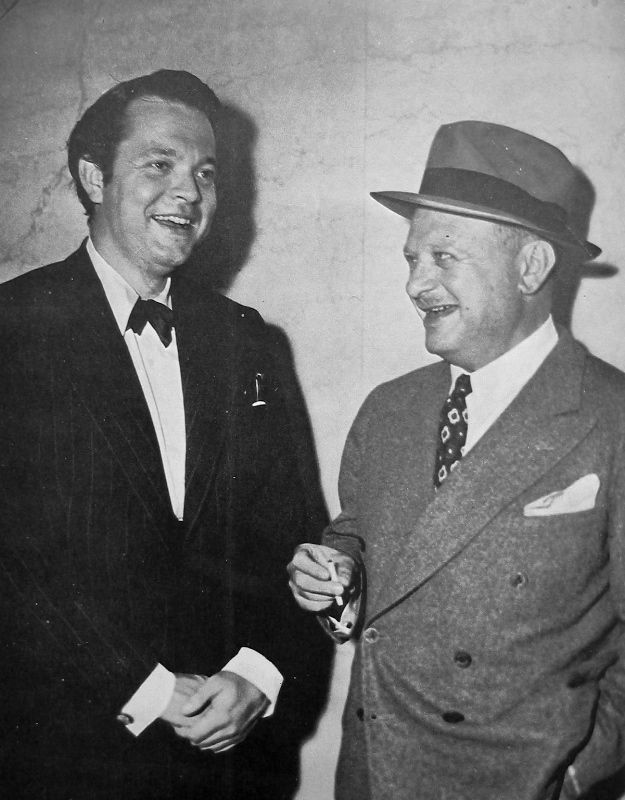
Ben Kenigsberg emailed me a few questions on November 27 for a story about the authorship of the Citizen Kane screenplay, tied to the upcoming commercial release of David Fincher’s Mank, for the New York Times. Since I regarded this as a fake issue designed to make a piece of infotainment sound more ‘serious’ than it actually was (which is why I refuse to include a still from Mank here), and despite my knowing that the Times will never print criticisms of its own positions, I responded as follows: :
1. Have you seen “Mank”? If so, what did you think? And if not, what do you think of the idea of the project?
2. How would you explain to readers who know nothing about “Raising Kane,” “The Kane Mutiny” or even “Citizen Kane” itself why the authorship of the screenplay matters (assuming it matters)? Movies drawn from real events take liberties all the time, but what’s different about “Mank,” which implies (with maybe a bit of plausible deniability) that Mankiewicz deserved sole credit for the script, is that it resurrects a debunked idea that has a history and a subtext. Read more
James Naremore, Cinema Then and Now: Conversations with Craig S. Simpson, New York: Sticking Place Books, 2025, 254 pp., $20 cloth, $16 paper.
JONATHAN ROSENBAUM
Many book-length interviews with film critics have been appearing in vertically-shaped volumes from the highly energetic Sticking Place Books over the past couple of years, starting with Michel Ciment and already including Joseph McBride, Patrick McGilligan, Leonard Maltin, James Naremore, Gerald Peary, Pierre Rissient, myself, and David Sterritt so far — even more by the time this review reaches print. Thanks to an inclusive policy that allows Maltin, Naremore, and Rissient to rub shoulders, there’s also a variety of lengths ranging from Rissient’s (167 pages) to McBride’s (730 pages), suggesting a welcome freedom from standardized formats and a willingness to let each volume establish its own rules and priorities. It appears that the critics have been invited to pick their own interviewers. Naremore selected Craig S. Simpson, a former colleague and former manuscript archivist at Indiana University’s Lilly Library, and part of what makes this book an enjoyable page-turner in spite of its boilerplate title are the relaxed and sometimes playful discussions between these friends, even when they disagree (Simpson, for instance, likes both Robert Altman and Pauline Kael, unlike Naremore). Read more
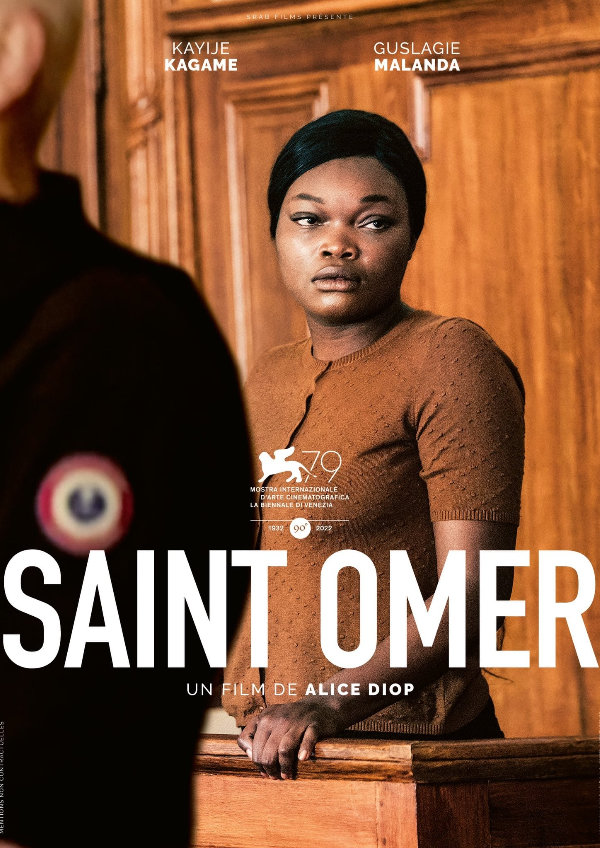
Like almost every other year within recent memory, I wind up seeing a masterpiece after I can vote for it or include it in any poll. Alice Diop’s first fiction feature is a classical example of a film that asks questions more than provides answers, and one of its best ways of posing or suggesting questions is not cutting to a reverse angle whenever you’re expecting it to. This is a film carried largely by its close-ups and its dialogue, and many of its reverse angles are between its two protagonists, two young and black Senegalese women in France who never meet, although they do exchange glances at one climactic, privileged moment. It’s a film devoted to a trial whose outcome is never recorded, but it has generated enough questions by the end to make a verdict seem either impossible or superfluous. Consciously or not, it carries more than one echo of Ousmane Sembene’s great La noire de… (Black Girl, 1966). [1/3/2023]
I’ll concede that Todd Solondz’s absorbing 134-minute epic of sexual disgruntlement in the New Jersey suburbs (1998) is worth seeing, and not only for shock value. But I don’t think it deserves all the high marks it’s been getting for compassion and understanding, especially given its campy use of elevator music whenever the misery of its large cast of characters gets too close for comfort. Everyone who likes this movie calls it disturbing, but what disturbs me most is the self-loathing laughter it provokes, similar to what one often hears at Woody Allen and Michael Moore comedies. So even if I’m touched by the treatment of a child molester who loves his son, I don’t like that I’m also supposed to sympathize with the molester when he’s working as a therapist who doesn’t listen to his clients. An obsessive primitive with a clodhopper sense of excess, Solondz has already proved in Welcome to the Dollhouse (a better film overall) that he can carry dark obsessions further than most. But he still stoops to teenage gross-out antics like those of the Farrelly brothers, calling it art rather than entertainment and knowing that the media eagerly charting Clinton’s semen flow will go along. Read more
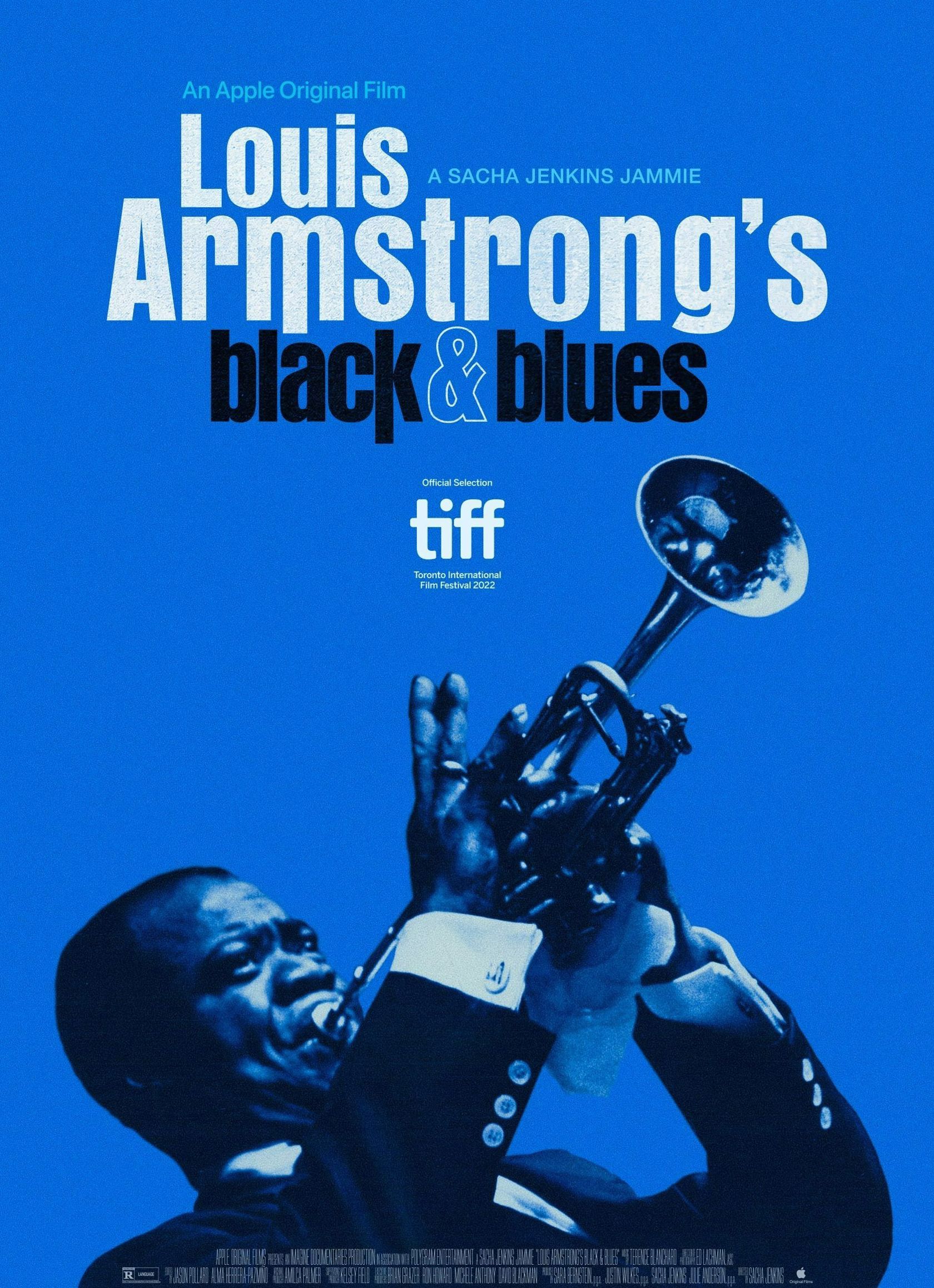
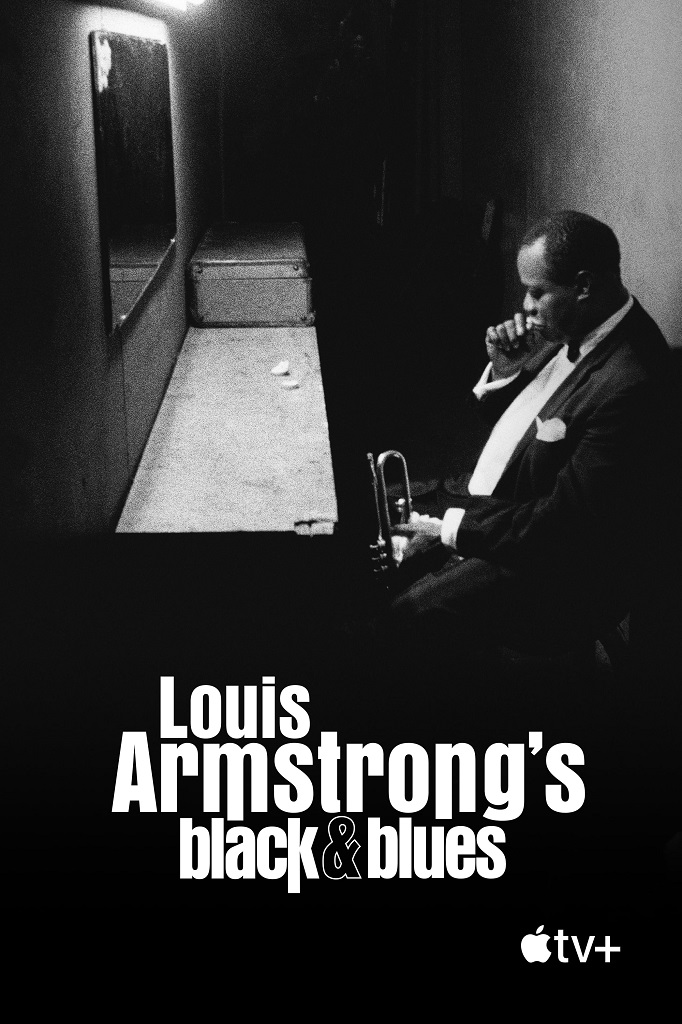
For me, the two best talking heads in Sacha Jenkins’ recent documentary, Louis Armstrong’s Black & Blues, are those of Orson Welles and Ossie Davis, both of whom significantly started out as performers and theater people. Welles — whom we hear as the film begins, warmly introducing Armstrong as a friend on a TV talk show, explaining that he once planned to make a film that would recount the history of jazz through Armstrong’s life — insists on his preeminence as a performer “not on the principle of escapism but on the principle of affirmation.” Given that the entire career of Armstrong as a blazing maestro of the cornet and trumpet can be summed up by the word “affirmation”, Welles’s introduction couldn’t have been more apt.
Written for the first paper issue of New Lines Magazine, January 15, 2023.(Note: The version posted here is somewhat different.)
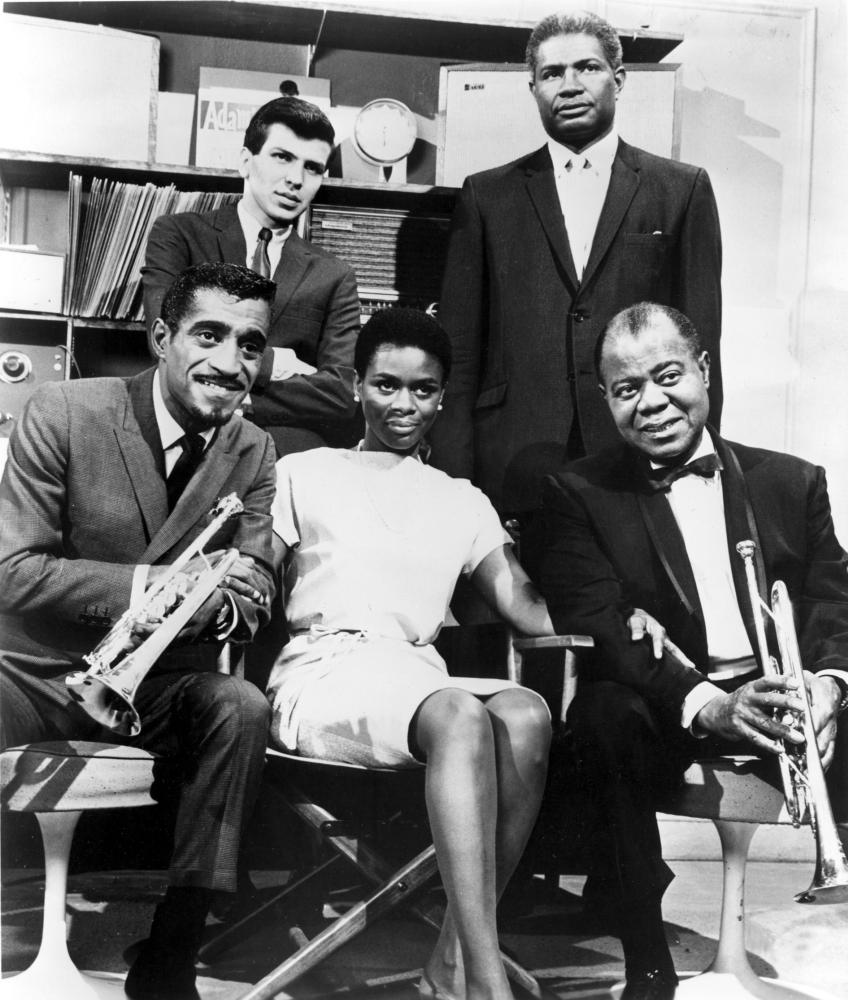
A MAN CALLED ADAM, Sammy Davis, Jr., Frank Sinatra, Jr., Cicely Tyson, Ossie Davis, Louis Armstrong, 1966
Ossie Davis, who once had a character in his play Purlie Victorious say to someone, “You’re a disgrace to the Negro profession,” recalls that he and his friends used to laugh derisively at Satchmo’s performing antics and clowning as a creepy form of Uncle Tomism until the two of them worked together on a movie, A Man Called Adam (1956). Read more
This fascinating oddity from Alain Corneau (Tous les matins du monde) adapts Amelie Nothomb’s autobiographical novel about the office life of a young Belgian (Sylvie Testud) working for a huge corporation in Tokyo. Though she’s spent her childhood in Japan and speaks fluent Japanese, a string of cultural blunders leads to one humiliating demotion after another. Testud took a two-month crash course in the language to play this part, and though the notations on cultural difference are far richer and subtler than anything in Lost in Translation, I can’t help but wonder what Japanese viewers might think of this film’s blistering critique of some of their hierarchies and protocol. The unconventional take on power and freedom, enriched by a deft use of Bach’s Goldberg Variations, remains that of an outsider. In Japanese and French with subtitles. 102 min. Music Box. Read more
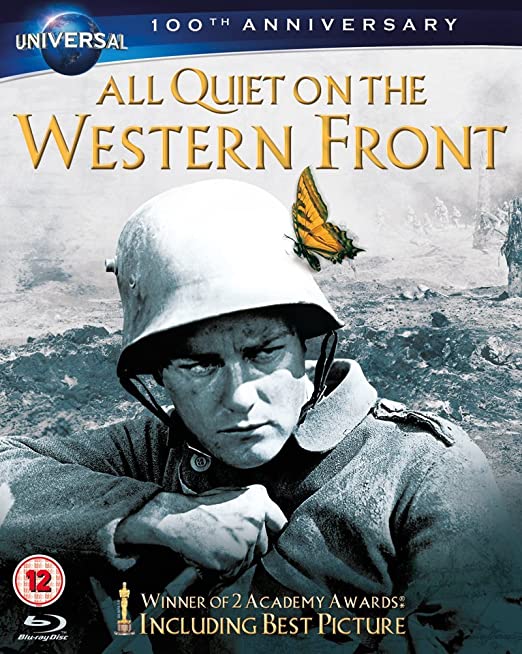
Lewis Milestone’s powerful 1930 adaptation of Erich Maria Remarque’s antiwar novel, starring Lew Ayres and Louis Wolheim, deserves its reputation as a classic. The sound version originally ran 140 minutes, though ultimately (and unfortunately) the studio eliminated about 35 of them. Most of the missing footage was subsequently restored in a combined effort by various archives, and at 132 minutes the film can now be seen for the remarkable work that it is. Milestone’s other 30s work (e.g., Hallelujah, I’m a Bum!) is sorely in need of reappraisal. (JR)
Written for Cineaste Vol. XLVIII, No. 2 but published online due to space limitations .–J.R.
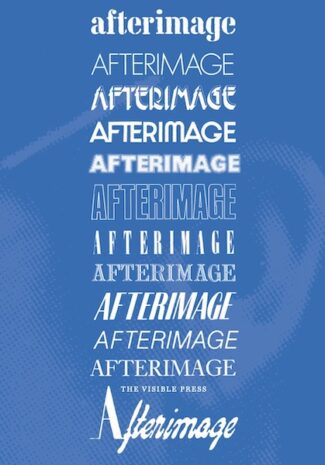
Edited by Mark Webber. London: The Visible Press, 2022. 349 pp., illus. Hardcover: $60.
I can think of at least three reasons why the independent British film journal Afterimage (1970-1987)isn’t better known in the U.S.: 1. It shares the name of a still-existing U.S. bimonthly devoted to digital media, 2. It only lasted for thirteen issues, and 3. Although it was supported by state funding, like the far better-known Screen, its nature and its influence were (and still are) far less institutional.
The third reason requires some elucidation. The seventeen years of Afterimage’s existence corresponded fairly closely to the founding of academic film studies in both the U.S. and the U.K. Screen sprang from the British Film Institute’s Education Department during the same period, and its pedagogical mission has always been inseparable from its institutional armor, including its dull boiler-plate design and the virtual equation of the positioning of its armchair Marxism with institutional protection. Afterimage was far more independent, exploratory, and eclectic, stemming largely from the passions of a single individual, Simon Field (seven of whose editorials are included, along with his interview with Hollis Frampton) and shifting its focus and aspects of its design with each successive issue. Read more
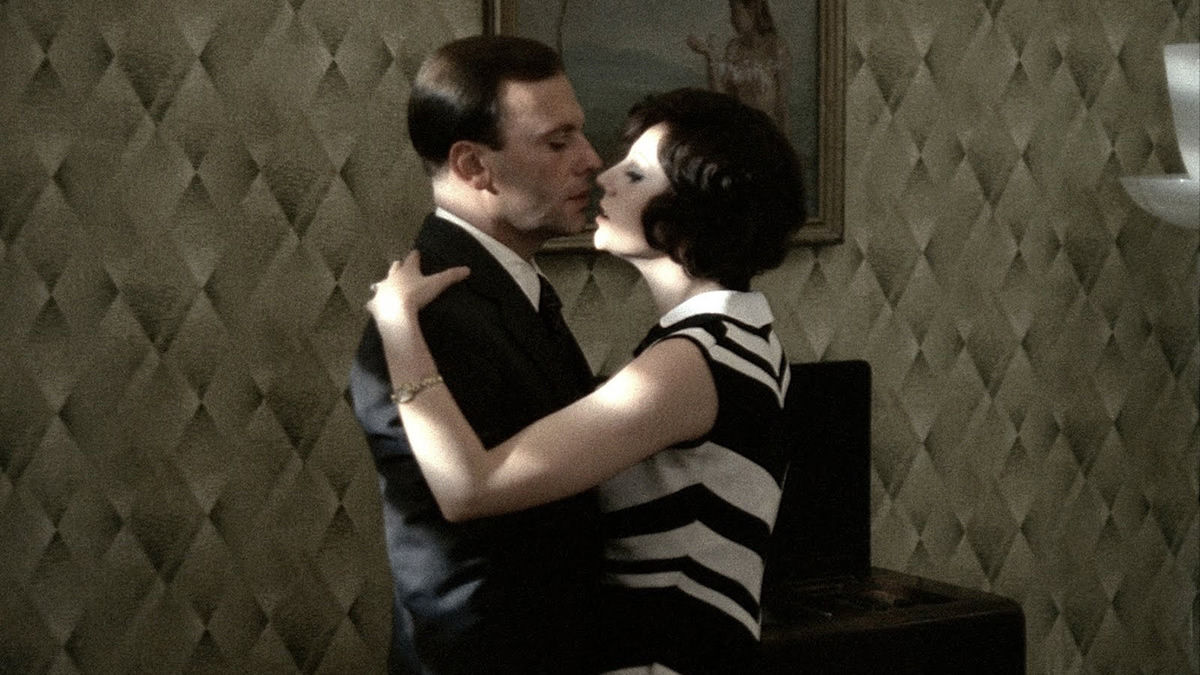
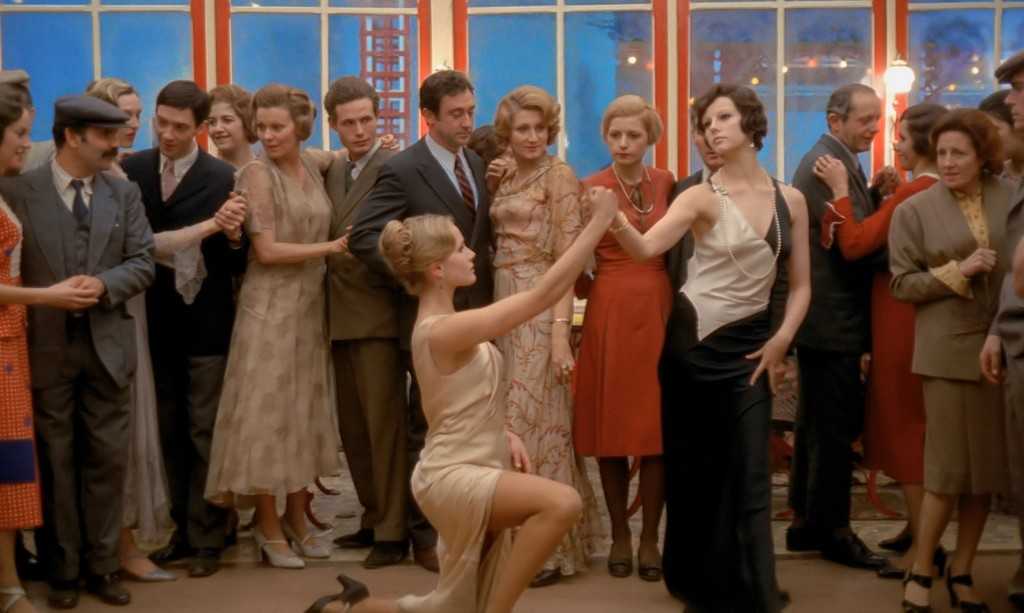
In retrospect, Bernardo Bertolucci’s highly influential fifth feature (1969) — ravishing to the eye but less than fully satisfying to the mind — can be regarded as the lamentable turning point in an extremely promising career that ultimately chose stylishness over style and both over content. Following on the heels of his much superior The Spider’s Strategem and adapted from an Alberto Moravia novel set in 1938, this political thriller follows an Italian professor (Jean-Louis Trintignant) who’s recoiling from his own homosexual impulses as he agrees to work as a police agent during his honeymoon in Paris and assist in the assassination of his former mentor, now a dedicated antifascist. With Stefania Sandrelli, Dominique Sanda, Gastone Moschin, and Pierre Clementi. In Italian and French with subtitles. 115 min. (JR)
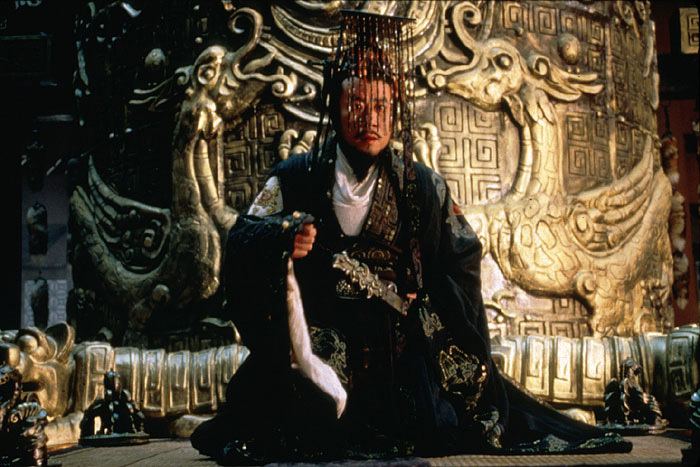
Historical spectaculars tend to fall into two broad categories: myths of origin (Cecil B. De Mille’s 1923 and 1956 versions of The Ten Commandments) and more ponderous inquiries into the hero’s personality (Eisenstein’s Ivan the Terrible, Lean’s Lawrence of Arabia). Chen Kaige’s massive 161-minute epic (1999) about the unification of China, accomplished by its first emperor during the third century BC, attempts an impossible synthesis of these two categories, beginning with Ying Zheng (Li Xuejian), the king of Ch’in, as a charismatic hero and ending with him as a murderous villain, the mantle of heroism having passed to his former mistress (Gong Li) and the mysterious assassin she enlists to kill him (Zhang Fengyi). Though there’s no physical resemblance, it’s impossible to follow the development of Ying Zheng without thinking of Mao — in some respects the last Chinese emperor — but even without that parallel this is a powerful story and a splendid spectacle. Compared with Maggie Cheung, Gong Li is arguably more an iconic star than an actress, but on this outing she gives a pretty impressive performance. (JR)
My column for Caimán cuadernos de cine, submitted in April 2023.
One of the limitations of auteurist criticism is its overlooking of certain remarkable film directors who lack clear auteurist profiles, such as Alfred E. Green, Mervyn LeRoy, and Roy Rowland.
To consider them in reverse order: My work as consultant on the 1998 re-editing of Orson Welles’ Touch of Evil enabled me to become acquainted with Janet Leigh, and when I once asked her whom her favorite director was among those she worked for, her answer was neither Welles nor Hitchcock, both of whom she revered, but the much lesser known Rowland, the first one who directed her (in TheRomance of Rosy Ridge, 1947), because he was kind enough to teach her certain basics about moviemaking. When Samuel Fuller cited LeRoy along with John Ford as a role model, I suspect he was thinking not only of LeRoy’s versatility but of his particular distinction in directing such powerful social dramas as I Was a Fugitive from a Chain Gang (1932) and They Won’t Forget (1937).
Alfred E. Green (1889-1960), a favorite of mine, started out as a silent actor and a director of two-reelers and ended his career directing TV episodes.Read more
This brooding chamber piece (2000) about a love affair that never quite happens is so minimalist that it succumbs to the law of diminishing returns–yet for some reason it sticks in my gut. Director Wong Kar-wai, Hong Kong’s most romantic filmmaker, is known for his excesses, and in that sense the film’s spareness represents a bold departure. Claustrophobically set in adjacent flats in 1962 Hong Kong, where two young couples find themselves sharing space with other people, it focuses on a newspaper editor and a secretary at an export firm (Tony Leung and Maggie Cheung, the sexiest duo in Hong Kong cinema) who discover that their spouses are having an affair on the road. Wong, who improvises his films with the actors, endlessly repeats his musical motifs (including a melancholy violin theme and three familiar ballads sung in Spanish by Nat “King” Cole) and variations on a handful of images, rituals, and short scenes (rainstorms, cab rides, stairways, tender and tentative hand gestures), while dressing Cheung in some of the most confining (though lovely) dresses imaginable, with collars like neck braces. This isn’t among my favorite Wong Kar-wai features (in a pinch I’d pick Days of Being Wild, Chungking Express, Ashes of Time, and Happy Together), but that doesn’t mean my eyes weren’t glued to the screen. Read more
GEORGE WASHINGTON David Gordon Green, U.S.A., 2000
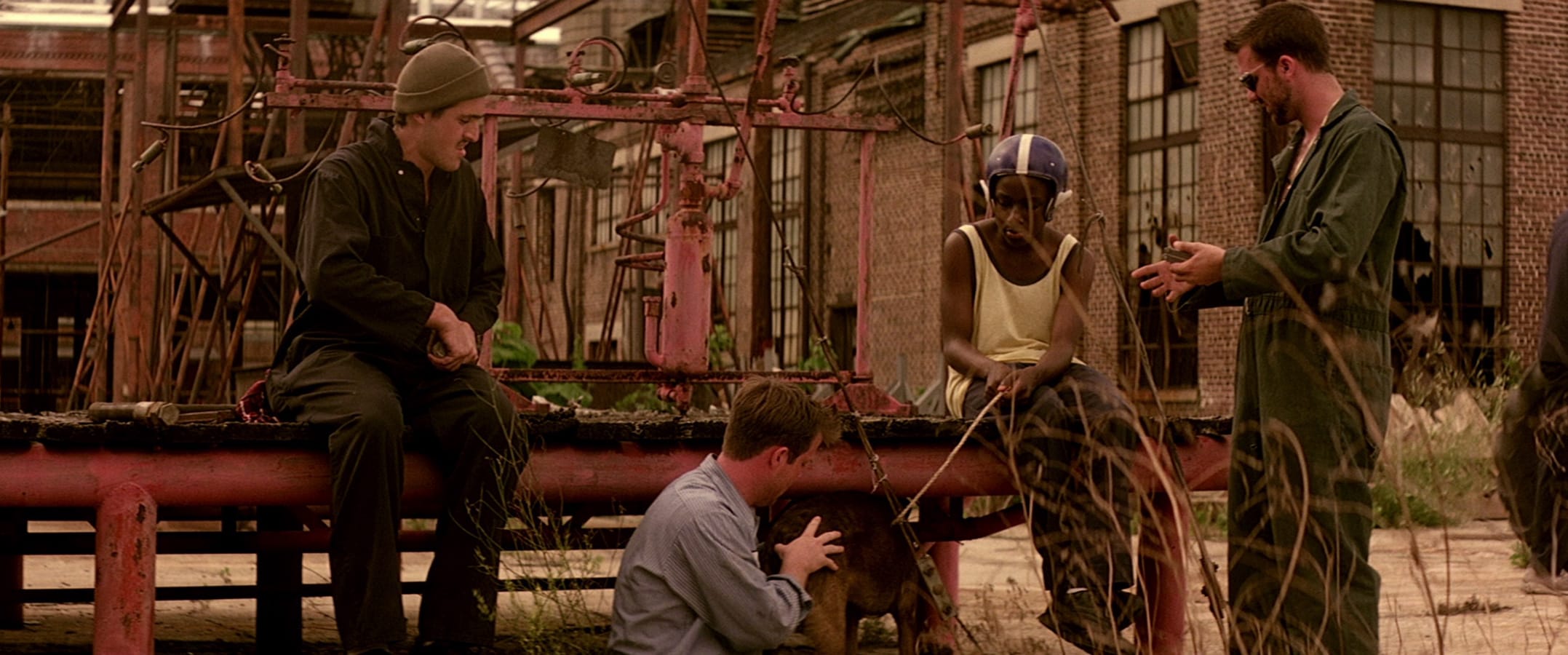
“A Terrence Malick rethink of Gummo “? That’s how one reviewer celebrated the curious first feature of 24-year-old David Gordon Green, a Texas-born independent, when it premiered at Berlin — a grim reminder of how closely critics can resemble both publicists and aspiring filmmakers pitching their projects to producers. If we assume that the audience is so jaded it merely wants to mix and match what it already knows, then it’s a logical (if unflattering) label for something new. Or if one’s simply stymied by the challenge of describing a fresh sensibility, some familiar points of comparison are perhaps inevitable. (For me, it would be Thomas Pynchon’s plaintive boys’ tale, “The Secret Integration”, despite some telling differences in class and regional setting.) But the fact is, whatever Green’s misjudgments — starting with the movie’s misleading title and ending with a kid’s cutesy/ unlikely list of favorite heroes for an offscreen shrink — the writer-director should mainly be credited with making nobody’s mistakes but his own.
One can see the sort of thing that prompted the wisecrack: Malick’s poetic Americana and adolescent female narrators, Gummo as a Southern working-class geek festival featuring the wanton murder of pets.Read more
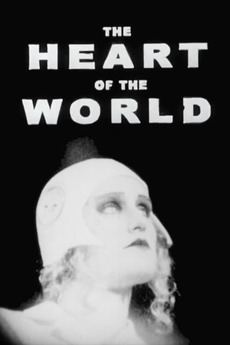
The title of this 64-minute video by Guy Maddin (Dracula: Pages From a Virgin’s Diary) refers to its having been commissioned as a gallery installation for the Rotterdam film festival, to be watched through a succession of arcade-style peep-show machines. Screening here as a self-contained work, it seems like Maddin’s most personal project yet: the hero is a hockey player named Guy Maddin; his mother, like Maddin’s, runs a beauty salon; and Maddin even casts some of his own family members. But the overall feel is phantasmagoric–pitched, like most of Maddin’s work, in the style of a half-remembered late silent feature or early talkie. Also on the program are Maddin’s justly celebrated six-minute short The Heart ofthe World (2000), showing in 35-millimeter, and his five-minute Odilon Redon, or the Eye Like a Strange Balloon Mounts Towards Infinity (1995). Gene Siskel Film Center.
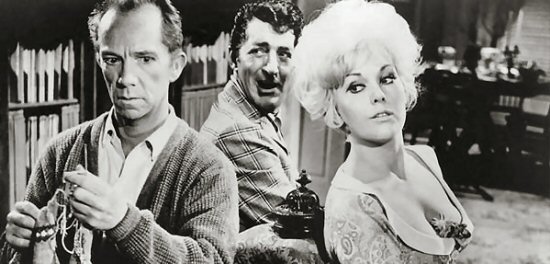
This vulgar Billy Wilder comedy scandalized the Legion of Decency and large segments of the American public when it came out in 1964. At the time Wilder pointed out that the film is about human dignity and the sanctity of marriage, but its undisguised contempt for the American hinterlands and the success ethic makes the sexual element seem dirtier than it actually is. Dean Martin plays a carousing parody of himself, stranded in the godforsaken town of Climax, Nevada, while a desperate songwriter (Ray Walston), hoping to sell him a tune, tries to get him shacked up with a prostitute (Kim Novak) impersonating the songwriter’s wife (Felicia Farr). This restoration includes the original ending, which originally played only in Europe, followed by the forced ending that played in the U.S. Both Martin and Novak are at their near best, and the undertone of small-town desperation in Wilder and I.A.L. Diamond’s script is effectively captured by Walston and his sidekick, Cliff Osmond. Shot in black-and-white ‘Scope. 126 min. (JR)