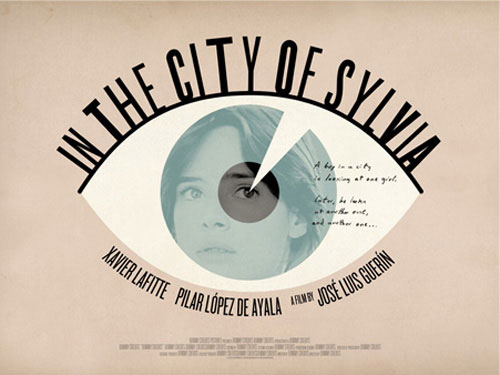
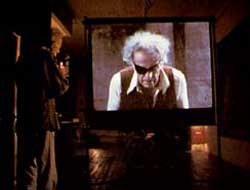
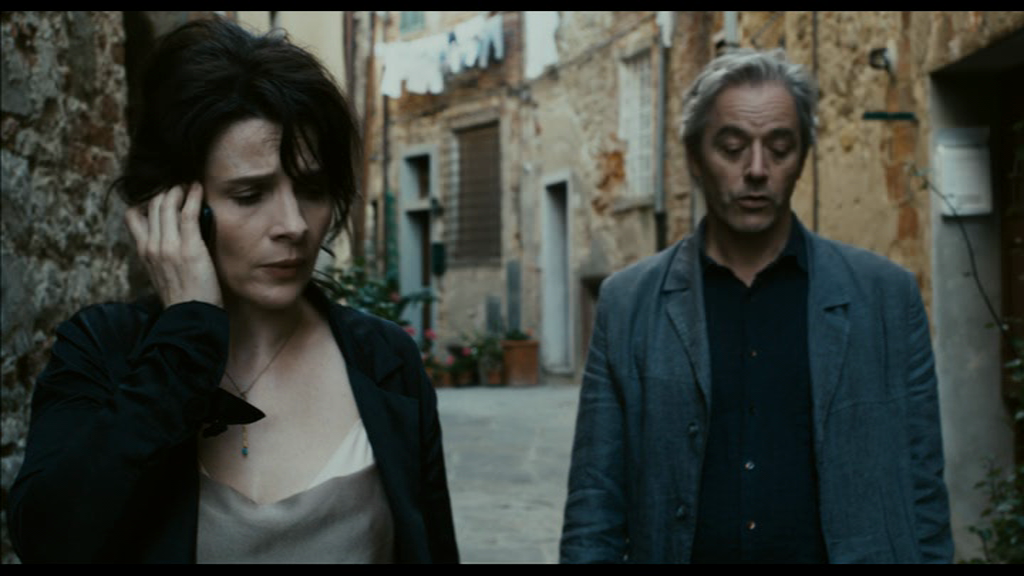
Two hypnotic and haunting 2007 features by Spanish experimental filmmaker Jose Luis Guerin, about the same romantic obsession. (The reference points are W.G. Sebald’s novel Vertigo and Alfred Hitchcock’s film of the same title.) The silent Some Photos in the City of Sylvia (65 min.) uses black-and-white stills with English intertitles to recount an unseen artist’s return to Strasbourg to search for a young woman he met briefly 22 years earlier while making a Goethe-related literary pilgrimage. The far more elliptical In the City of Sylvia (84 min.) tells the same story with color, carefully articulated sound, and minimal, subtitled French dialogue; in this film the artist returns only six years after his pilgrimage. Both works are mysterious, beautiful, and primal. It’s a pity the first, an intimate study and scenario for the second, is being shown after only one screening of its more languid successor. (JR)
I had to retype this longish position paper — published in the November-December 1977 issue of Film Comment — in order to digitize it for the manuscript of my collection, Goodbye Cinema, Hello Cinephilia, to be published by the University of Chicago Press in Fall 2010. Going over every word of it again made me painfully aware of how many typos and other errors it had in its previous appearance. [8/14 postscript: My deepest thanks to Andy Rector at Kino Slang for adding the grubby still that originally ran with this article in Film Comment, thereby allowing me to add it here myself.]
This essay has a literal sequel, “Moullet retrouvé”, also on this site. –J.R.
À la recherche de Luc Moullet: 25 Propositions
1. “Every film by Gerd Oswald deserves a long review.” — LM, 1958.
2. Many of you, perhaps most, have never heard of the man. So much the better. Not all news gets into newspapers, and not all movies get into theaters. The sculptor Paul Thek once proposed an interesting solution to the newspaper problem to me: Get rid of all of them, except for one edition of one daily paper (any would do), and pass this precious object from hand to hand for the next hundred years –- then the news might mean something.Read more
According to Wikipedia, this English-America MGM release about an American teenager (Elizabeth Taylor at 17 playing someone a year older) falling in love with and marrying a 40ish British officer (Robert Taylor) whom she belatedly discovers is a Communist spy — effectively directed by Victor Saville, and recently shown on TCM — lost the studio over $800,000, but it doesn’t say or suggest why. I would guess that this was because, intentionally or not, the film manages to persuade us to identify with the tormented middle-aged spy more than with the tormented patriotic heroine. This isn’t a matter of ideology but a function of how the story gets told. The screenplay by Sally Benson (whose stories provided the basis for MGM’s Meet Me in St. Louis) focuses more on the inner conflicts and secret meetings of the spy than those of the callow girl that he falls for and marries, and the fact that the movie literally ends with her agreeing to lie to everyone about her husband’s suicide to support her own country makes his own deceits seem less reprehensible. It’s a funny paradox that a rabid right-winger like Robert Taylor should make us care so much for a Communist spy, but he does. Read more
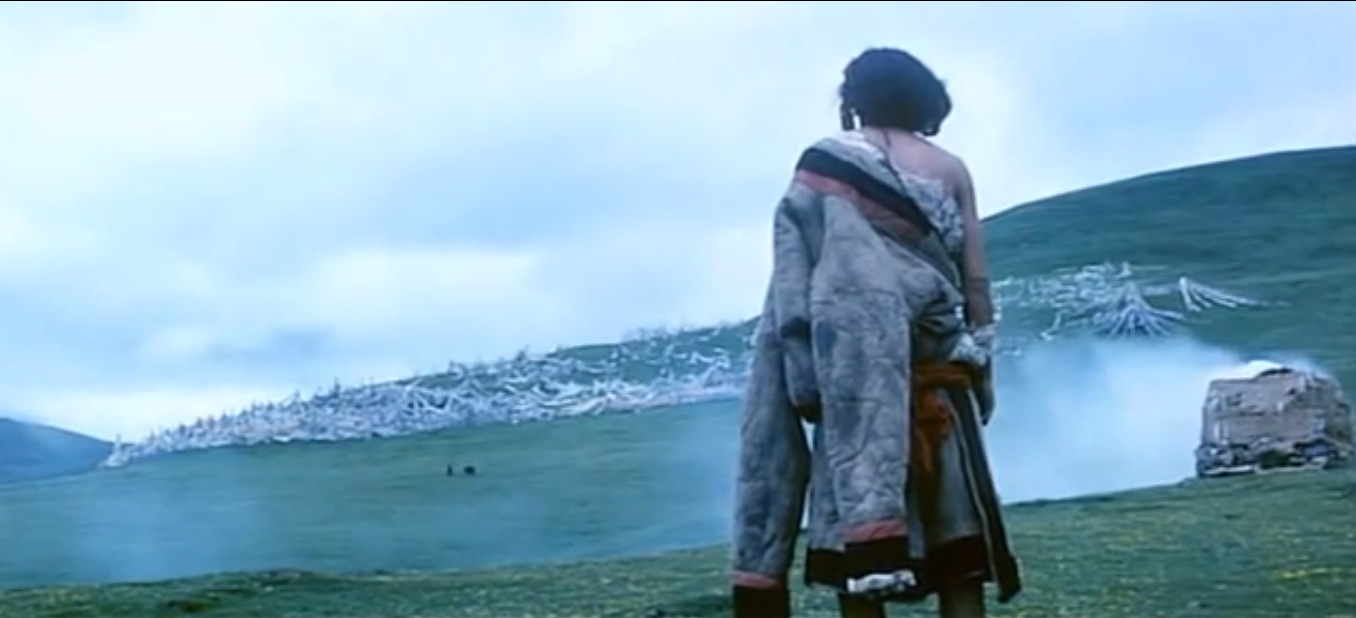
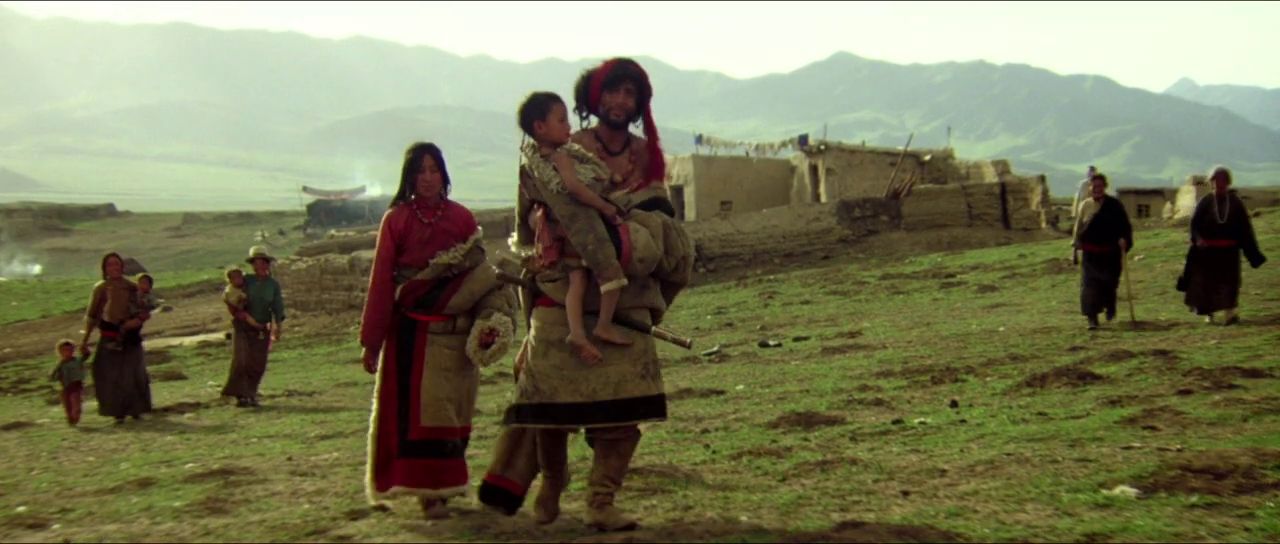
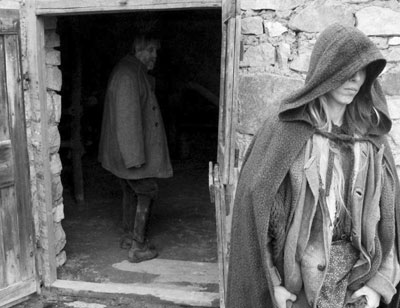
I truly regret not being able to illustrate this early piece for the Reader, published in September 1987, with the sort of illustrations its awesome landscapes deserve. In fact, the only other film by Tian Zhuangzhuang (see photo above) that I’m aware of that’s comparably impressive from this standpoint is his extraordinary Delamu (or, in Chinese, Cha ma gu dao xi lie), a 2004 documentary that’s even more neglected, at least in this country (see the photo below, immediately after the absurdly small landscape photo from The Horse Thief).[2023 postscript: Happily, illustrations are now more readily available, and even though the film doesn’t seem to be currently available on DVD or Blu-Ray, it can be seen letterboxed and subtitled in all its widescreen glory at https://www.youtube.com/watch?v=LZSjjOQUtHY.] –J.R.
It’s worth adding that one can now obtain The Horse Thief inexpensively, letterboxed and with English subtitles, at www.yesasia.com/us/1005182257-0-0-0-en/info.html. And see the previous link for a Blu-Ray.–-J.R.
THE HORSE THIEF
**** (Masterpiece)
Directed by Tian Zhuangzhuang
Written by Zhang Rui
With Cexiang Rigzin and Dan Jiji.
By Jonathan Rosenbaum
If the two aesthetically richest decades in the history of cinema have been the 1920s and the 1960s, it is in no small part due to the fact that it was during these two golden ages that film came closest to becoming a universal language. Read more
There’s something fraudulent about writer-director-star Alan Alda’s implicit claim to be giving us the straight lowdown on midlife crises, in a story about a divorced middle-aged couple (himself and Ann-Margret) embarking on new relationships, when the gist of his message boils down to the usual Hollywood standbys: meeting Mr. (or Ms.) Right, facing up to one’s shortcomings, exercising self-improvement, steering clear of transsexuals in singles bars, and, above all, living one’s life as if Joseph Turrin’s tacky adaptations of baroque music were constantly playing on the sound track. The real trouble, as usual with Alda, is the auteur’s limitless self-absorption, which makes all the other characters elusive shadow figures, including those who are supposed to matter. Ann-Margret, for instance, makes a game try at bringing some reality to the hero’s ex-wife, who, like him, is having an affair with someone nearly half her age, but the material offered to her and her boyfriend John Shea is so elliptically threadbare that they have to build their performances in quicksand; Veronica Hamel as the doctor who becomes Alda’s second wife, and Hal Linden as his best friend and partner at the New York Stock Exchange, suffer from similar undernourishment. Read more
Try to imagine Siskel and Ebert not as Chicago film critics but as a heterosexual couple in Baltimore, both of them general interest reporters whose combative instincts and political and temperamental differences become the focus of a TV show, and you more or less have the premise of this romantic comedy. Kevin Bacon and Elizabeth Perkins play the leads, and a real-life couple (Ken Kwapis and Marisa Silver) direct the separate versions of their story (both scripted by Brian Hohlfeld). The attempt to tell the same story twice from separate viewpoints a la Rashomon or Les Girls doesn’t always yield as much ambiguity or complexity as one might wish. But on the whole, this is an honorable attempt to revive the feeling and ambience of a Hoilywood comedy of the 50s, complete with sumptuous romantic music (score by Miles Goodman), ‘Scope framing, and a magical last-minute resolution, and, as such, it’s pretty pleasurable to watch. With Sharon Stone. (Esquire, Norridge, Old Orchard, Webster Place, Ford City, Lincoln Village)
For a special section devoted to the 1930s, the Spanish magazine Miradas de Cine, conducting a poll for its 89th issue, asked me to select my 15 favorite films of that decade and also to pick five that I thought were overrated. Here are my choices (listed chronologically):
favoritas:
Laughter (d’Arrast) • City Lights (Chaplin) • M (Lang) • La nuit du carrefour (Renoir) • Ivan (Dovzhenko) • Umarete wa mita keredo (Ozu) • Love Me Tonight (Mamoulian) • Scarface (Hawks) • Trouble in Paradise (Lubitsch) • Hallelujah, I’m a Bum (Milestone) • L’Atalante (Vigo) • Judge Priest (Ford) • King Kong (Cooper & Schoedsack) • Make Way for Tomorrow (McCarey) • Zangiku monogatari (Mizoguchi)
sobrevaloradas:
The Front Page (Milestone) • 42nd Street (Bacon) • Swing Time (Stevens) • Bringing Up Baby (Hawks) • Ninotchka (Lubitsch) [8/11/09]
Postmortem, July 13, 2023: How could I have left out Man’s Castle (Borzage), my favorite Depression movie, not to mention Queen Christina (Mamoulian) — both recently seen in fine restorations at Il Cinema Ritrovato in Bologna? Well, in the latter case, I’d already picked my favorite Mamoulian feature. so another one, even a concerto for Garbo. would have seemed a mite excessive.And Read more
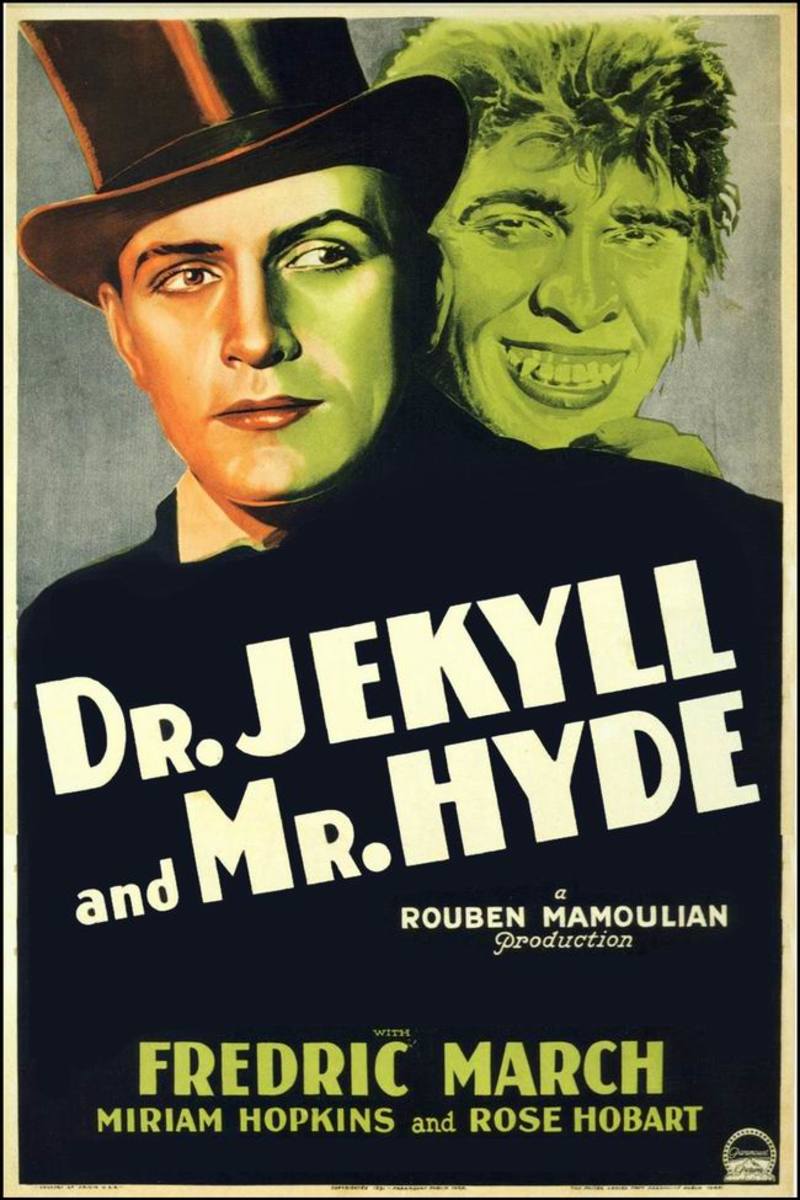
Directed by Rouben Mamoulian, this 1932 screen adaptation of the Robert Louis Stevenson classic is a remarkable achievement that deserves to be much better known. Fredric March won a well-deserved Oscar for his performance as the lead, and Miriam Hopkins and Rose Hobart play the two women who match the opposite sides of the hero’s nature. The transformations of Jekyll are a notable achievement for March and Mamoulian alike, and the disturbing undercurrents of the story are given their full due (as they weren’t in the much inferior 1941 Victor Fleming version with Spencer Tracy, Ingrid Bergman, and Lana Turner). Mamoulian was at his peak in the early 30s, as this film shows. 97 min. (JR)
My response to a survey in Framework (Volume 50, No. 1 & 2, Spring & Fall 2009). I’ve retained only the first part — the question part — of Jonathan Buchsbaum and Elena Gorfinkel’s Introduction to the survey:
This dossier on cinephilia gathers responses to the following question:
“What is being fought for by today’s cinephilia(s)?
At the end of La Cinéphilie (2003), Antoine de Baecque wrote that classical cinephilia died in 1968, following the failure of cinema to film the political events of that year. Since that time, still according to de Baecque, the terrain of cinephilia changed radically as television and publicity/ advertising ‘invaded the domain of images.’ The proliferation of images has only accelerated with technological change ever since, hurtling through the internet and telecommunications.
Whatever the current status of cinephilia, certainly there are new cinephiles, even if they no longer hone their passion primarily in film theaters. But what is being fought for in this new generation of cinephilia? What causes animate cinephilia today and how are these new modes different from the ‘classical cinephilia’?
If, in particular, the Cahiers du Cinéma critics won their battles for auteurism, now part of most critics’ lingua franca, are there new critical paradigms of emergent polemics to complement, replace, or contest the earlier cinephilia?Read more
Three brief entries commissioned by Chris Fujiwara and submitted in March 2009 for the updated Italian edition of his stupendous 2007 collection Defining Moments in Movies, entitled Cinema: 1000 Momenti Fondamentali. — J.R.
Key Event
Rossellini goes to India
Roberto Rossellini’s extended trip to India comes at the end of his richest period as a filmmaker in which his various staged encounters between fiction and non-fiction were most adventurous. At the war’s end he was primarily concerned with the human devastation in Italy and Germany, but once he began working with Ingrid Bergman, with whom he was living after their affair busted up both their marriages, domestic issues came to the fore, particularly in such features as Europa 51, Voyage to Italy, and Fear. Other bold forays during this period include a feature about Saint Francis of Assisi, a comic fantasy called The Machine That Killed Bad People (about a still camera that turns its subjects into statues), and a direct-sound recording of a play starring Bergman, made at a time when all films in Italy were dubbed.
When he traveled to India at age 51, Rossellini worked concurrently on his masterpiece India Matri Buhmi (1959), a set of interlocking tales and commentaries which Jean-Luc Godard once called “the creation of the world,” and a ten-part television miniseries that was broadcast in both France and Italy the same year. Read more
Written for the New York Times‘ online “Room for Debate: The Polanski Uproar” on September 29, 2009, in response to the following question:
“The recent arrest of Roman Polanski, the film director who fled to France from the United States in 1978 on the eve of sentencing for having unlawful sex with a 13-year-old girl, has caused an international ruckus. The French culture minister, Frédéric Mitterrand, and the French foreign minister, Bernard Kouchner, both issued statements of support for Mr. Polanski. But many others in France have expressed outrage at that support and said he should face justice for the crime.
“While it’s clear that the film industry forgave Mr. Polanski long ago, should society separate the work of artists from the artists themselves, despite evidence of reprehensible or even criminal behavior?”
Jonathan Rosenbaum:
I’m not at all in favor of giving artists free passes when it comes to their personal morality. But in the case of Roman Polanski, anyone who’s bothered to follow the history of his case in any detail is likely to conclude that (a) he’s already paid a great deal for his crime, (b) the interests of journalism and the entertainment industry in this matter usually have a lot more to do with puritanical hysteria and exploitation than any impartial pursuit of justice. Read more
From the December 1981 issue of American Film. I was quite unhappy with the way this article was edited at the time, but having discovered my original submitted draft quite recently (in mid-November 2011, 30 years later), I’ve decided to resurrect it here, including my own title. (Theirs was “Looking for Nicholas Ray”.)
My working assumption in restoring original drafts on this site, or some approximation thereof, isn’t that my editors were always or invariably wrong, or that my editorial decisions today are necessarily superior, but, rather, an attempt to historicize and bear witness to my original intentions. It was a similar impulse that led me to undo some of the editorial changes made in the submitted manuscript of my first book, Moving Places: A Life at the Movies (1980), when I was afforded the opportunity to reconsider them for the book’s second edition 15 years later (available online here) — not to revise or rethink my decisions in relation to my subsequent taste but to bring the book closer to what I originally had in mind in 1980.— J.R.
By and large, the last three decades in the life of film director Nicholas Ray can be divided fairly evenly into three distinct parts. Read more
From the Chicago Reader (May 6, 2005). In 2013, Twilight Time brought out a two-disc Blu-Ray of both versions of the film. — J.R.
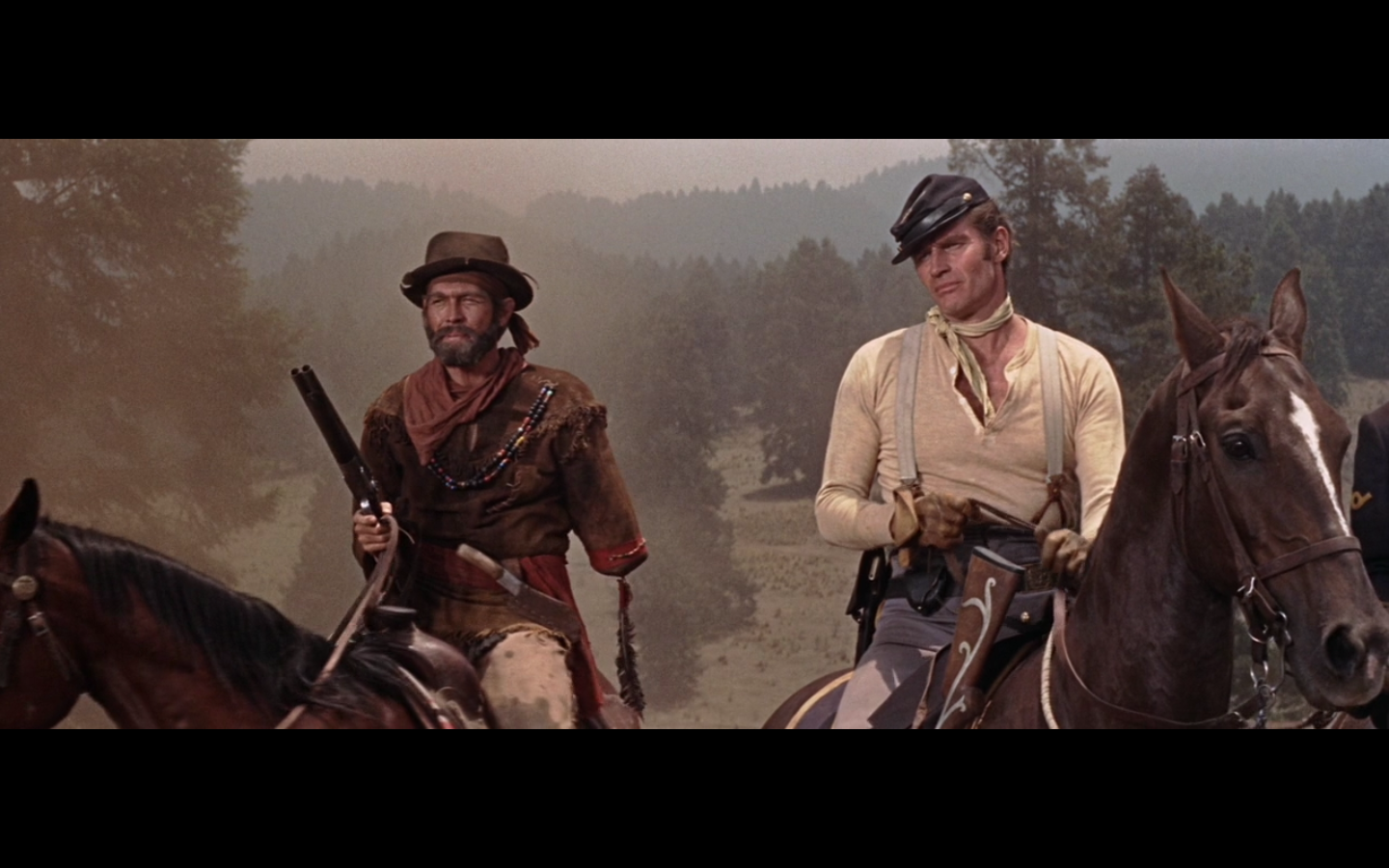
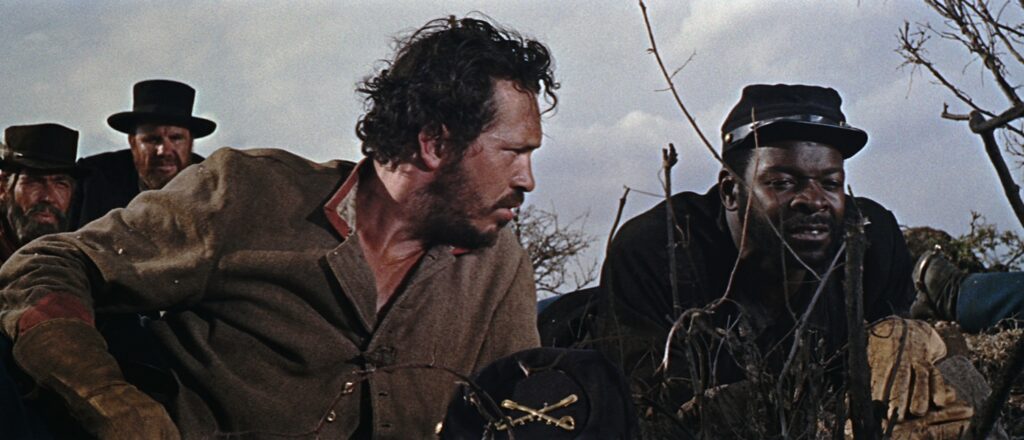
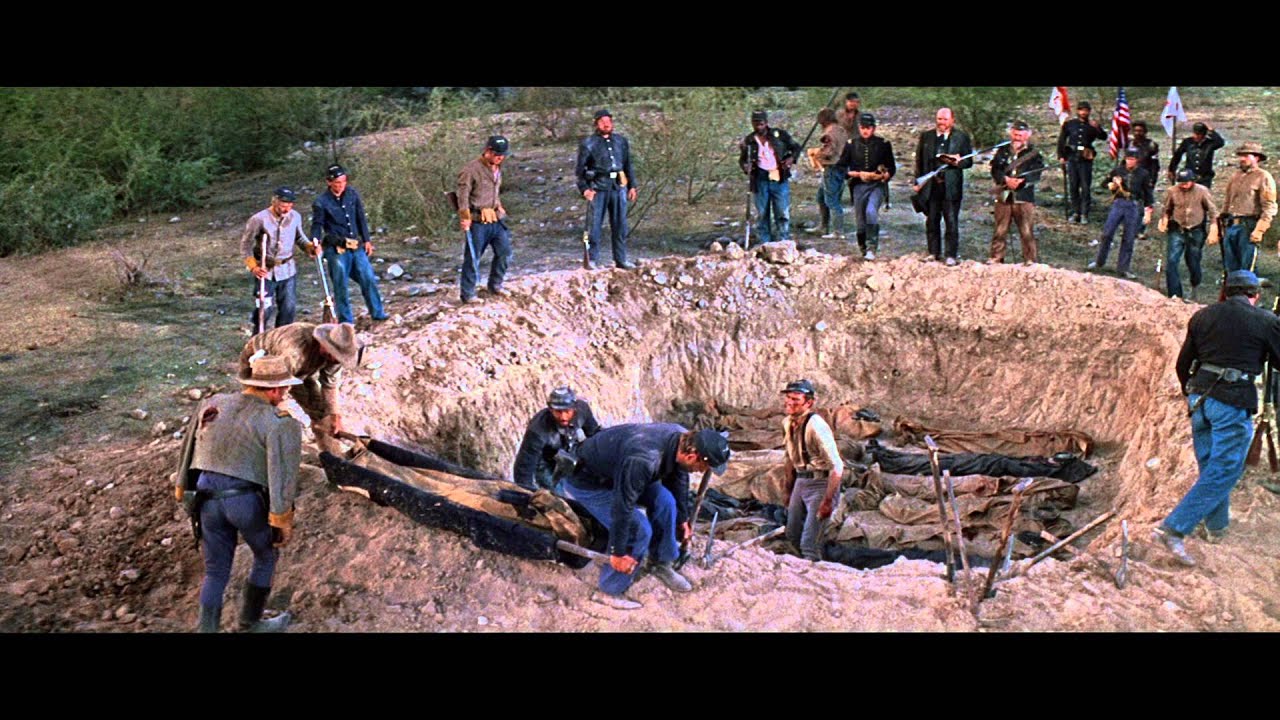
Director Sam Peckinpah went over budget during production of this 1965 epic western and was fired, so this restoration, based on a scholarly assessment of his intentions, can’t really be considered a director’s cut. But it’s 12 minutes longer, its story is easier to follow, and its score is closer to what Peckinpah had in mind. Still as flawed as its title hero and a bit out of control, it’s a powerful and provocative account of a disgraced Union officer (Charlton Heston) reluctantly joining forces with Confederate prisoners (including Richard Harris) to kill or capture an Apache who led a massacre in New Mexico. It may not approach The Wild Bunch, but after the soldiers cross into Mexico the film takes on weight and flavor that suggest major Peckinpah, and both Harris and Heston (who gamely gave up his salary to keep Peckinpah on board, at least for a while) contribute some of their finest work. With Senta Berger, James Coburn, Warren Oates, and Ben Johnson. PG-13, 136 min. Music Box.
From Cinema Scope, Winter 2005, issue 21.Much of this column is out of date — starting with the URL in the first sentence, which none the less does take you somewhere that’s related. — J.R.
My most fruitful recent discovery for ordering rare films on DVD is www.superhappyfun.com — a mysterious U.S.company whose name sounds oddly Japanese and who makes its own Region 0 DVD-Rs (“a movie that’s been ported over from VHS, tweaked with a time-based corrector, and recorded onto a consumer-grade DVD”), packed in envelopes rather than boxes to save costs and usually priced at $13 apiece. The prints used vary in quality and are ranked in their catalogue entries between 10 (best) and 4 (worst); I’ve found so far that anything below 7 borders on the dubious (such as my blotchy albeit subtitled copy of Jacques Rivette’s Paris Belongs to Us, assigned a 6).
Among the treasures I’ve recently acquired are Edward Yang’s A Brighter Summer Day (the full version, with English subtitles, on two discs, for $15), The Exterminating Angel subtitled, The Girl Can’t Help It letterboxed, a couple of restored Ernst Lubitsch musicals (Monte Carlo and One Hour with You), Joseph Losey’s M, Jacques Tourneur’s Nightfall, Kinugasa’s A Page of Madness (which has no intertitles, so subtitles aren’t needed), Fuller’s Park Row, and Antonioni’s The Passenger. Read more