The following is taken from my “Cannes Journal” in the September-October 1973 issue of Film Comment and corrected in a few particulars in April 2016, after seeing the restored 128-minute director’s cut on a wonderful new Blu-Ray from Olive Films. — J.R.
In theory, the Marché du Film is merely one division of the festival out of many (official selections, Directors’ Fortnight, Critics’ Week, etc.); in practice, every film and every person attending is on the marketplace, to purchase or to be purchased, and all the rest is journalistic euphemism. It was there, at any rate, that I came across Samuel Fuller’s latest film.
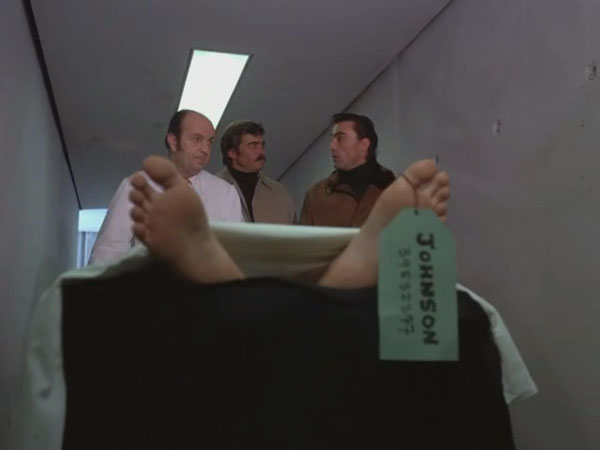
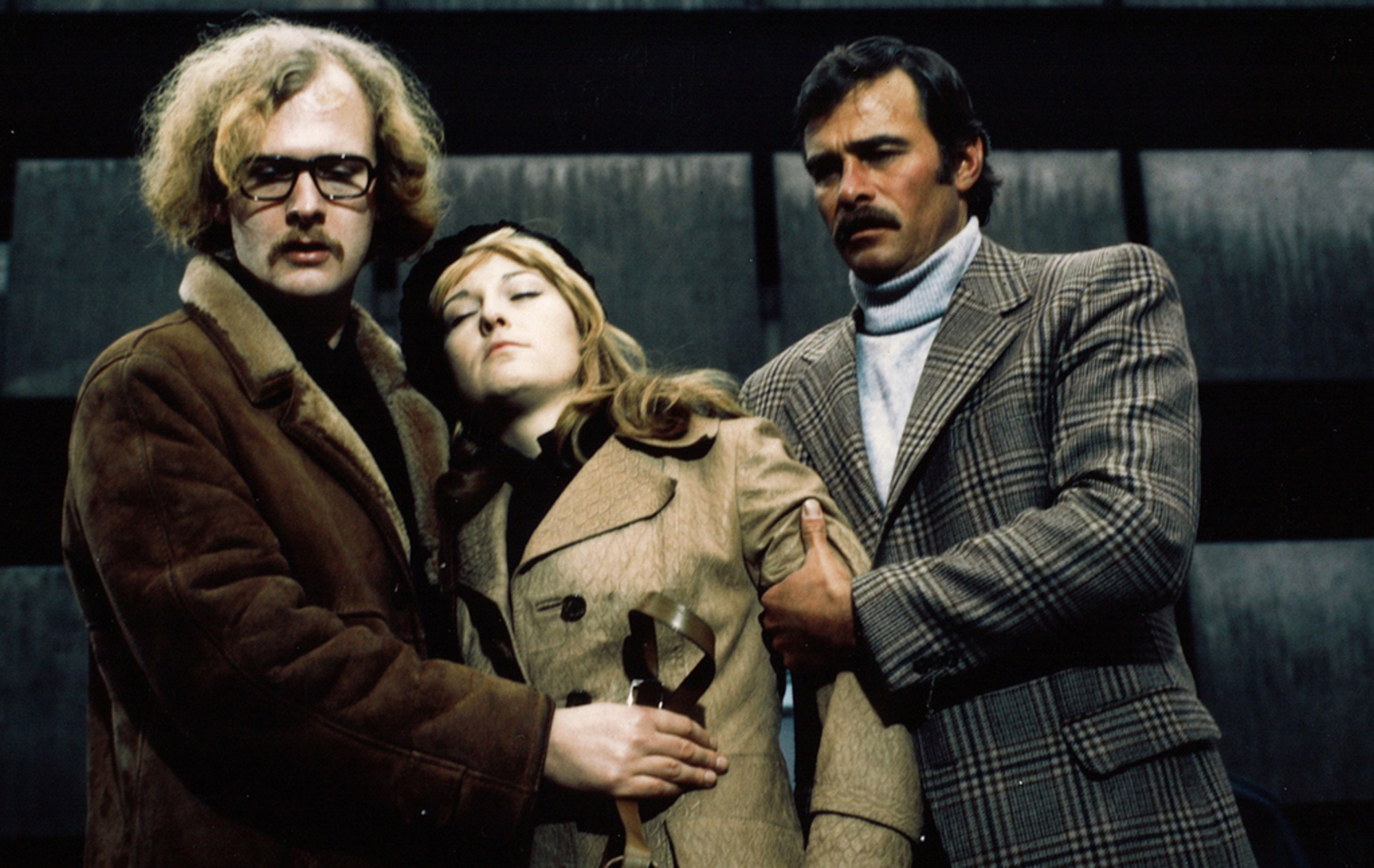
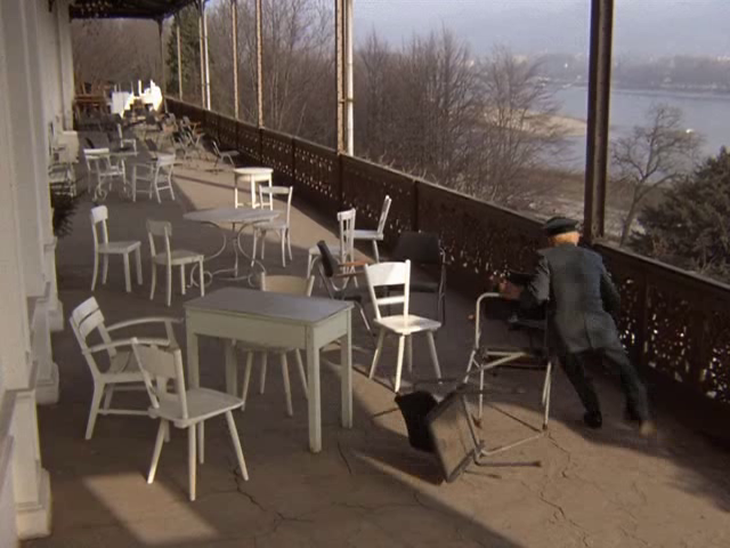
Not all of DEAD PIGEON ON BEETHOVEN STREET is peaches and cream, but the beginning is extraordinary — a brilliant burst of action that illustrates the title in lightning flashes — and the mad finale in a weapons room is not far behind. Fuller’s habitual obeisance to the title composer reaches an apogee of sorts in a scene set in the Beethoven Museum, where the head of one of the leads (Glenn Corbett) is cut off by the top of the frame in order to give one of the Master’s pianos a privileged place in the composition. Read more
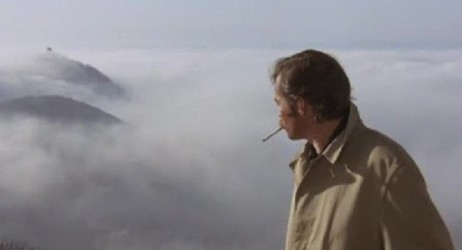
A soporific road movie about a runaway girl (Greer Robson) and a rebellious worker in flight from the law (Peter Phelps) who team up during the Depression, this New Zealand film, despite some picturesque locations, is essentially defeated by colorless acting and a mediocre script. Directed by Sam Pillsbury, with a screenplay by Grant Hinden Miller which adapts his owen novel, The Dream Monger. (JR) Read more
These liner notes were written for Home Vision Entertainment circa 1997. —J.R.
Drôle de drame
The English release title of Drôle de drame (1937) —- set in London circa 1900, and based on J. Storer Cloutson’s English novel His First Offense — is Bizarre Bizarre. This curious label derives from a conversation between Irwin Molyneux (Michel Simon) — a horticulturist who’s been writing crime novels on the sly, under the pen name of Félix Chapel, at the insistence of his wife Margaret (Françoise Rosay), to raise money to keep up their social appearances —- and Archibald Soper, the Bishop of Bedford (Louis Jouvet), Margaret’s hypocritically prudish cousin, who’s been publicly denouncing Chapel’s novels, and has just invited himself over for dinner due to his partiality for Margaret’s orange duck.
Unfortunately, Margaret’s cook and butler have just quit, leaving Margaret in a state of a panic—-because her servants are as necessary to her public image as the money brought in by Irwin’s moonlighting. So she prepares the duck herself while hiding in the kitchen, gets Irwin’s assistant Eva (Nadine Vogel) to serve it, and asks Irwin to come up with a story explaining Margaret’s absence.
In response to the Bishop’s prying questions, Irwin impulsively comes up with two explanations — that Margaret left for the country to visit friends and that she had to leave suddenly due to the measles —- and then tries to reconcile them by adding that it’s her friends who have the measles. Read more
From the June 5, 2002 issue of the Chicago Reader. — J.R.
The Naked Spur
**** (Masterpiece)
Directed by Anthony Mann
Written by Sam Rolfe, Harold Jack Bloom
With James Stewart, Janet Leigh, Robert Ryan, Ralph Meeker, and Millard Mitchell.
Man of the West
**** (Masterpiece)
Directed by Anthony Mann
Written by Reginald Rose
With Gary Cooper, Julie London, Lee J. Cobb, Arthur O’Connell, Jack Lord, John Dehmer, Royal Dano, and Robert Wilke.
Q: What is the starting point for The Naked Spur?
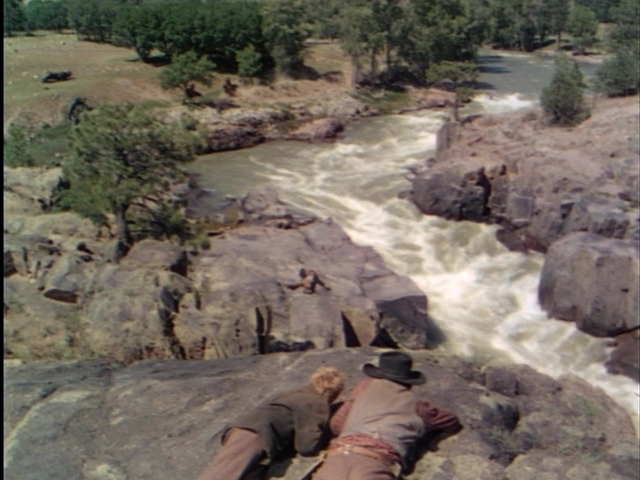
A: We were in magnificent countryside — in Durango — and everything lent itself to improvisation. I never understood why almost all westerns are shot in desert landscapes! John Ford, for example, adores Monument Valley, but I know Monument Valley very well and it’s not the whole west. In fact, the desert represents only one part of the American west. I wanted to show the mountains, the waterfalls, the forested areas, the snowy summits — in short to rediscover the whole Daniel Boone atmosphere: the characters emerge more fully from such an environment. In that sense the shooting of The Naked Spur gave me some genuine satisfaction. –Anthony Mann in a 1967 interview
This seems to be landscape week at the Gene Siskel Film Center, with Abbas Kiarostami’s sublime Where Is the Friend’s House?Read more
FromMonthly Film Bulletin, October 1984 (Vol. 51, No. 609). This was published long after I left the MFB staff in early 1977, and by this time, over seven years later, the magazine had finally abandoned its highly dubious practice of restricting all its reviews to single paragraphs. –- J.R.
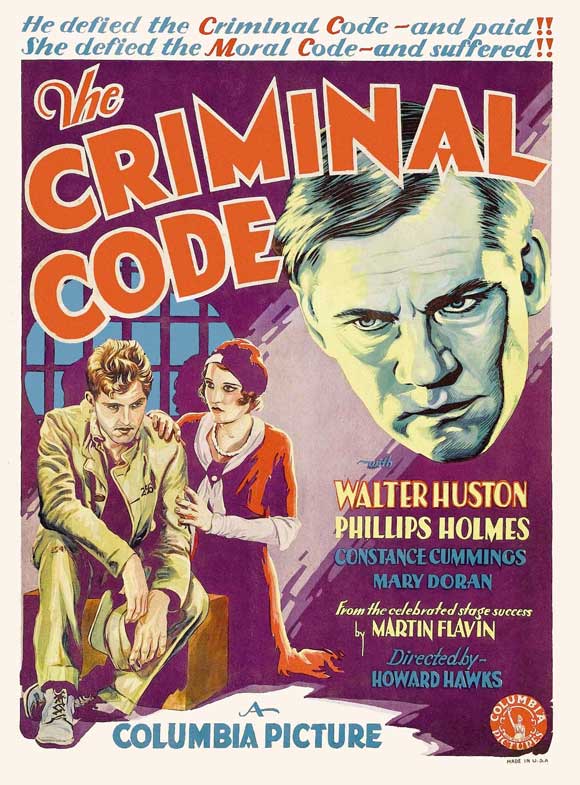
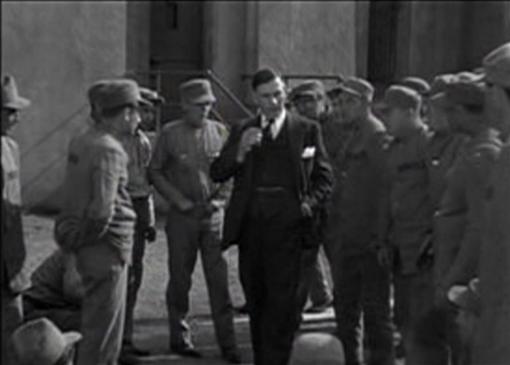
The Criminal Code
U.S.A.,1930
Director: Howard Hawks
Cert–A.dist—Filmfinders. p.c–Columbia. A Howard Hawk production. p–Harry Cohn. sc–Seton I. Miller, Fred Niblo Jnr. Based on the play by Martin Flavin. ph–Teddy Tezlaff, James [Wong] Howe, (uncredited) William O’Connell. ed–Edward Curtiss. a.d–Edward Jewell. m–(not credited). sd. rec–Glenn Rominger. l.p–Walter Huston (Warden Martin Brady), Phillips Holmes (Robert Graham), Constance Cummings (Mary Brady), Mary Doran (Gertrude Williams), De Witt Jennings (Gleason), John Sheehan (MacManus), Boris Karloff (Galloway), Otto Hoffman (Jim Fales), Clark Marshall (Runch), Ethel Wales (Katie), lohn St. Polis (Dr. Rincwulf), Paul Porcassi (Spelvin), Hugh Walker (Lew), Andy Devine (Prisoner), Jack Vance (Reporter), Arthur Hoyt (Nettleford), Nicholas Soussanin, James Guilfoyle, Lee Phelps. 3,245 ft.n90 mins. (16 mm.) Original running time–97 mins. Read more
Movies Plus One by William S. Pechter, 246 pp., index, Horizon Press, $14.95.
Ever since certain American film critics have taken to collecting their own reviews and/or commanding their own screenings, the solipsistic nature of their profession has tended to grow. It is a tendency that crosses cult boundaries, characterizing the Neros of the profession as well as the Babbitts, the scarlet empresses as well as the Sylvia Scarletts. In her celebrated and lengthy attack on Pauline Kael in the New York Review of Books two summers ago, Renata Adler indirectly broached this problem by singling out the distressing evidence of one very gifted intelligence having run amok — a charge largely made on stylistic and rhetorical grounds, and persuasively shaped around the assumption that what was really at stake was not movies at all, but prose and the relation between writers and readers. The greatest, lasting value of Adler’s remarkable piece was its illumination of this sticky problem as a general tendency — not its ostensible project of bringing the reader the head of Pauline Kael, which gave it all its publicity.
For a wider application of what Adler was talking about, one need only turn to Kael’s arch-rival Andrew Sarris — a critic so adroit at exposing his own solipsistic stances that he’s never needed an Adler to point them out.Read more
This is the very first long review I ever published in the Chicago Reader. It was published in their March 13, 1987 issue, about five months before I moved to Chicago from Santa Barbara and started working as their regular film critic, and writing this piece was part of my audition for the job. (They commissioned two other pieces from me, neither of which they ran, as part of the same audition; both of these reviews — on Oliver Stone’s Platoon and on Bertrand Tavernier’s ‘Round Midnight — are now available on this site.)
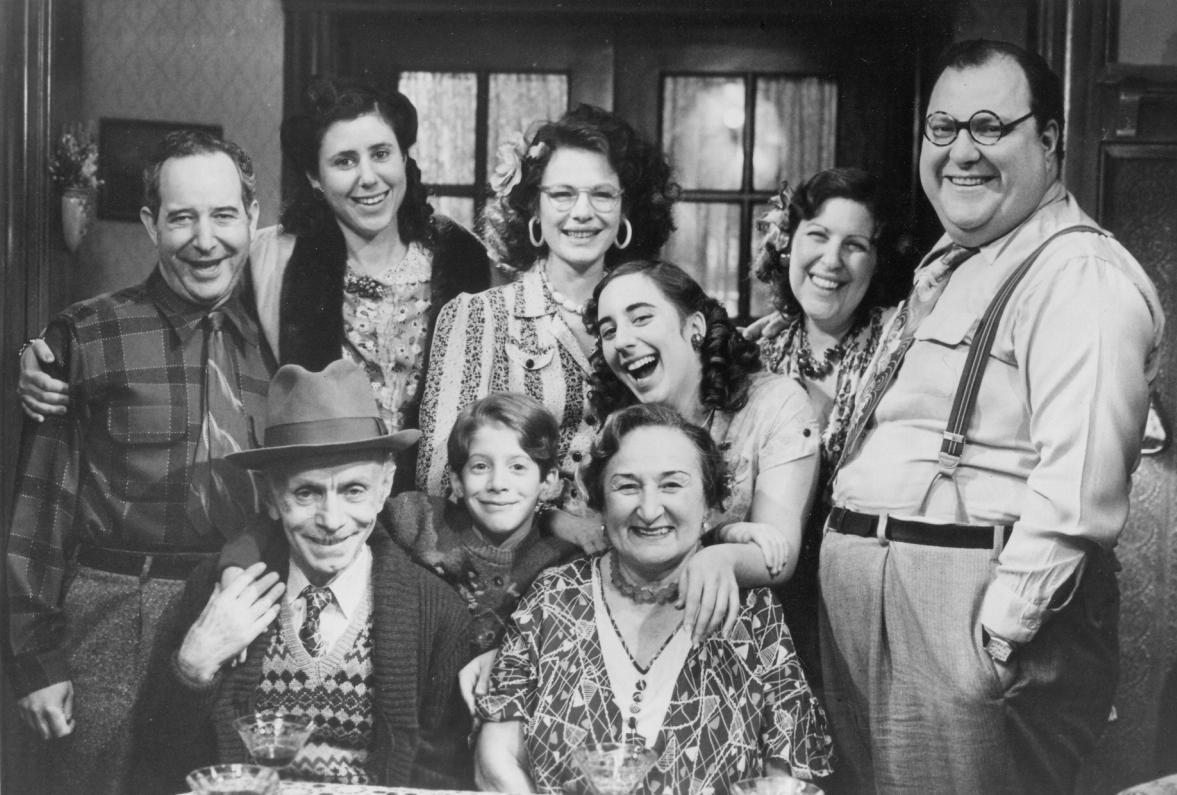
This article has never previously appeared online, on the Reader’s website or anywhere else. It ran originally with the same black and white still reproduced here. Readers familiar with my essay, “Notes Toward the Devaluation of Woody Allen,” written about three years later, may notice that I borrowed a few passages in it from this review. My original title for this review, “Woody’n You,” was rejected by the Reader editors, who didn’t catch or dig the jazz reference. — J.R.
*RADIO DAYS
Directed and written by Woody Allen
With Seth Green, Julie Kavner, Michael Tucker, Mia Farrow, Dianne Wiest, and Diane Keaton.
It’s hard to think of a contemporary American filmmaker who is more universally admired than Woody Allen –- a fact that may say more about us than it says about Woody. Read more
1) Has Internet criticism made a significant contribution to film culture? Does it tend to supplement print criticism or can it actually carve out critical terrain that is distinctive from traditional print criticism? Which Internet critics and bloggers do you read on a regular basis?
1) a. Significant and profound. Because the changes it has wrought are ongoing and unfolding, it’s still hard to have a comprehensive fix on them.
1) b. It can and does do both. By broadening the playing field in terms of players, methodologies, audiences, social formations, and outlets, it certainly expands the options. The interactivity of almost immediate feedback, the strengths and limitations of being able to post almost as quickly as one can think (or type), the relative ease of making screen grabs — these and many other aspects of Internet discourse are bringing about changes in content as well as in style and form, shape and size.
1) c. Here’s just a sample: To varying degrees (some much more regularly than others), I like to read Acquarello, David Bordwell, Zach Campbell, Fred Camper, Roger Ebert, Flavia de la Fuente, Filipe Furtado, Michael E.Read more
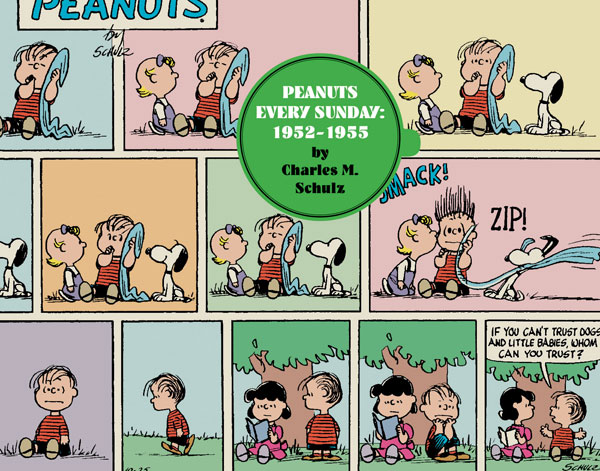
Gary Groth of Fantagraphics Books commissioned me to write this Introduction to the first volume of Charles Schulz’s Sunday color strips of Peanuts, covering the early 1950s, which was published in November 2013. — J.R.
“…I’ve made a lot of mistakes down through the years doing things I
never should have done. But fortunately, in a comic strip, yesterday
doesn’t mean anything. The only thing that matters is today and tomorrow.”
— Charles Schultz to Gary Groth (“At 3 O’clock in the Morning,” Comics Journal #200, December 1997)
It was one thing to read Sunday color Peanuts comic strips from 1952 to 1955 at the rate of one per week, when they came out — and not only because they would have wound up in the trash like the rest of the Sunday paper, long before my brothers and I went to sleep that night. And it’s quite another thing to read them all today, piled together in the present volume, one after the other, seven or eight panels at a time, as if they’re the successive chapters of an ongoing serial — or maybe just the latest portions of an endless white picket fence that stretches towards some version of infinity or eternity (or at least roughly half a century of dependable continuity, in any case). Read more
This piece had a somewhat tortured history. Commissioned but rejected by Artforum (for reasons that were never explained) circa 1982, it first appeared in a special issue of New Observations (#36, 1983) edited by the late Gilberto Perez, entitled “Horses, Hegel and Film,” where by necessity the illustrations were relatively sparse. In its present form, it first appeared in the 12th issue of the online journal Rouge in 2008. Two excerpts from it are reprinted in a superb recent collection, Manny Farber: Paintings and Writings, that I’m proud to be part of. — J.R.
1. Manny Farber, Negative Space (New York: Da Capo, 1998), p. 361.
‘The brutal fact is that they’re exactly the same thing’, Manny Farber replied in 1977 to an interviewer inquiring about the relationship between his dual activities as a painter and film critic. (1) The remark points to a two-part obsession that by now has persisted for more than four decades. A master at perceiving the delicate nuances of brutal facts, Farber has always had an uncanny knack for hitting on truths in a language of wisecracking braggadocio that eliminates any possibility of a dispassionate or precise scientific observation. With his feet firmly planted in the anonymous turf of an underground termite (to conflate two of his favourite terms), Farber paradoxically aims at a notion of bull’s-eye that can exist only in a marketplace context where objects and ideas compete for our attention.
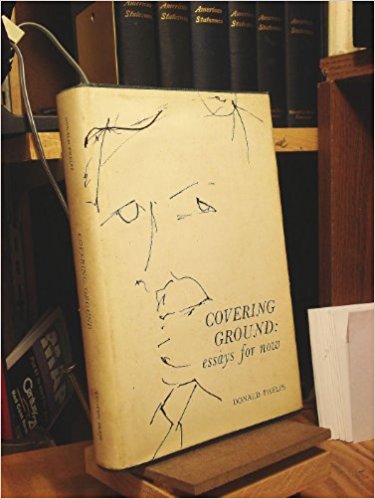
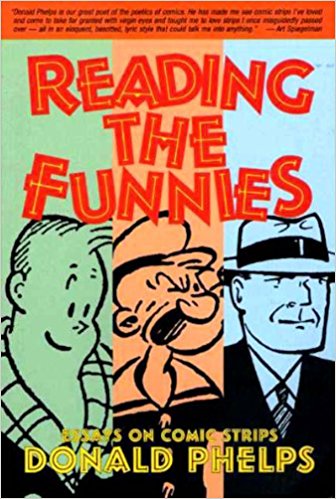
For those of you who might be wondering what has become lately of film critic Donald Phelps — the most gifted and exacting of Manny Farber’s disciples, especially when it comes to low-key acting and pictorial nuance — you should proceed at once to the web site of Comics Journal, where he’s been flourishing in his recent commentaries on movies, prose fiction (ranging from the science fiction of Henry Kuttner and Theodore Sturgeon to the mysteries of Fredric Brown to Calder Willingham’s first novel), and comic strips. I’m especially impressed by parts one and two of his majestic “Like a Mechanical Bird: The Peculiar Stoicism of David Wayne,” posted earlier this month — a detailed and rather astonishing appreciation of one of the most overlooked of Hollywood and TV actors, whose special qualities seemed to flourish in such relatively unsung and/or out-of-reach works as Joseph Losey’s remake of M (1951), a couple of black and white sketch films at Fox in 1952 (O. Henry’s Full House and We’re Not Married, where he costars respectively with Charles Laughton and Marilyn Monroe), Henry King’s Wait Till the Sun Shines, Nellie (1952), which inspires some of Phelps’ best prose, and Down Among the Sheltering Palms (“an amiable bargain-counter South Pacific,” 1953).Read more
In some ways, the saddest deaths are those we only hear about accidentally. For me, Donald Phelps was one of the very greatest of American critics — not just literary critic and film critic, but comics critic as well — even though only two collections devoted solely to his written work exist (see above). I would love to imagine that many more will follow, because it’s clear that anyone who tracks down obscure journals, including his own (ForNow), looking for Phelps’ insightful and highly original prose, will discover an unending bounty. But it seems like he never had much money, and even before the advent of Trump, Phelps appears to have lived his entire life in the shadows.
I learned of his death by ordering another collection — Sparring with Gil Kane: Debating the History and Aesthetics of Comics — from Fantagraphics Books, chiefly because it boasted having a dialogue with Phelps, and it was only upon reading editor Gary Groth’s introduction that the demise I’d already suspected was confirmed. But at least Donald survived until his mid-80s. Several years earlier, after the stupidity and intolerance of a new Film Comment editor had summarily turned him from an invaluable regular contributor into a non-contributor, I had started to communicate with Donald by letters and by phone as a way of funneling his genius into the precincts of an Australian online film journal named Rouge that managed to publish half a dozen texts of his over its 13 precious issues. Read more
Despite (or is it because of?) the disorderly quirks of commerce, ideology, and opportunity, we all occupy disparate time frames, so I’ve unapologetically cited, in alphabetical order, five imperishable films that I happened to encounter for the first time in 2015, all of them in digital editions worthy of their achievements.
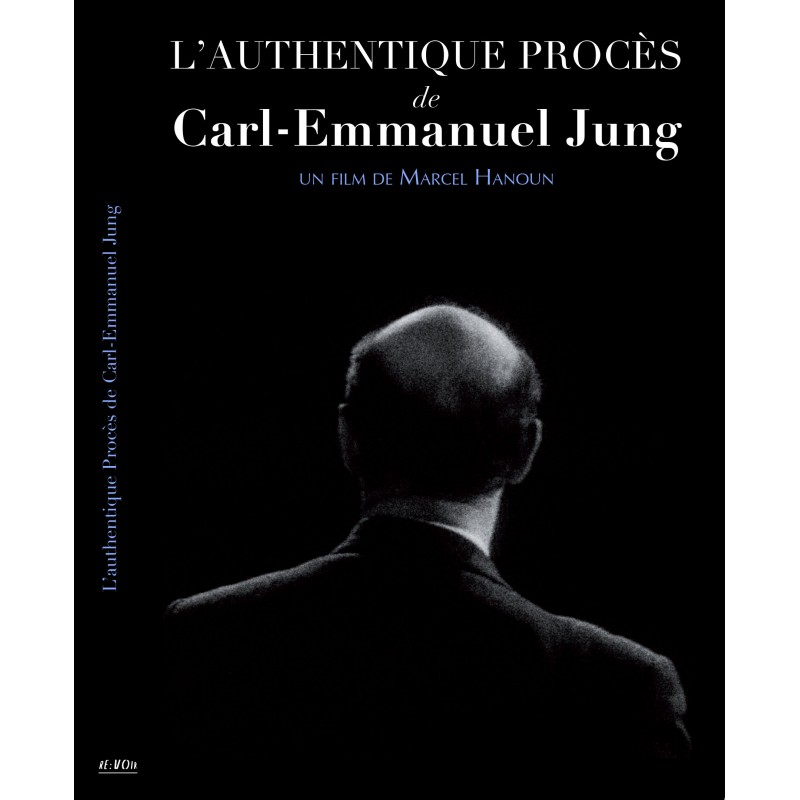
Dwoskin’s last film – a satisfying conclusion to a remarkable career – comes from the same label that afforded me my first look at Marcel Hanoun’s remarkable 1966 L’authentique procés de Carl-Emmanuel Jung with English subtitles.
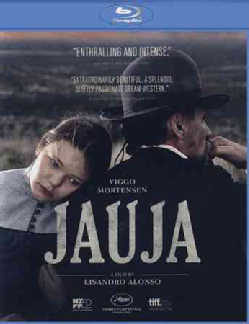
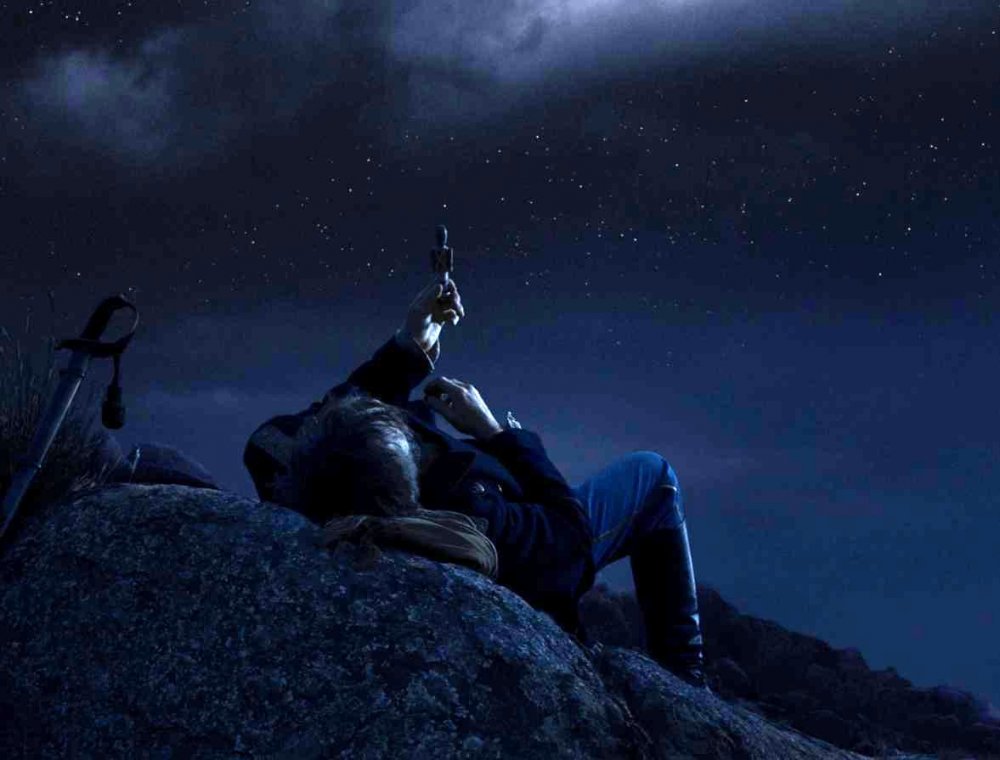
Army is a wartime propaganda feature subverted into a pacifist lament, Jauja a haunting medieval western (or southern) time-bent into a luscious advance in Alonso’s art.
Letter from Siberia, even without the benefit of the French version promised on its jacket, is a delightful early essay film showing its author’s wit, literary gifts, and photojournalistic richness in optimal form, enhanced by a superb Roger Tailleur essay.
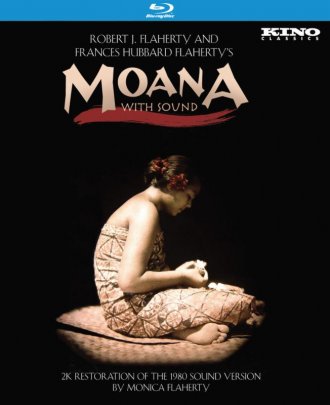
And Moana with sound is a seemingly unpromising but beautifully realized re-edition and further enrichment of the Flahertys’ early masterpiece, launched by their daughter Monica and restored by their great-grandson Sami van Ingen and Bruce Posner. Read more
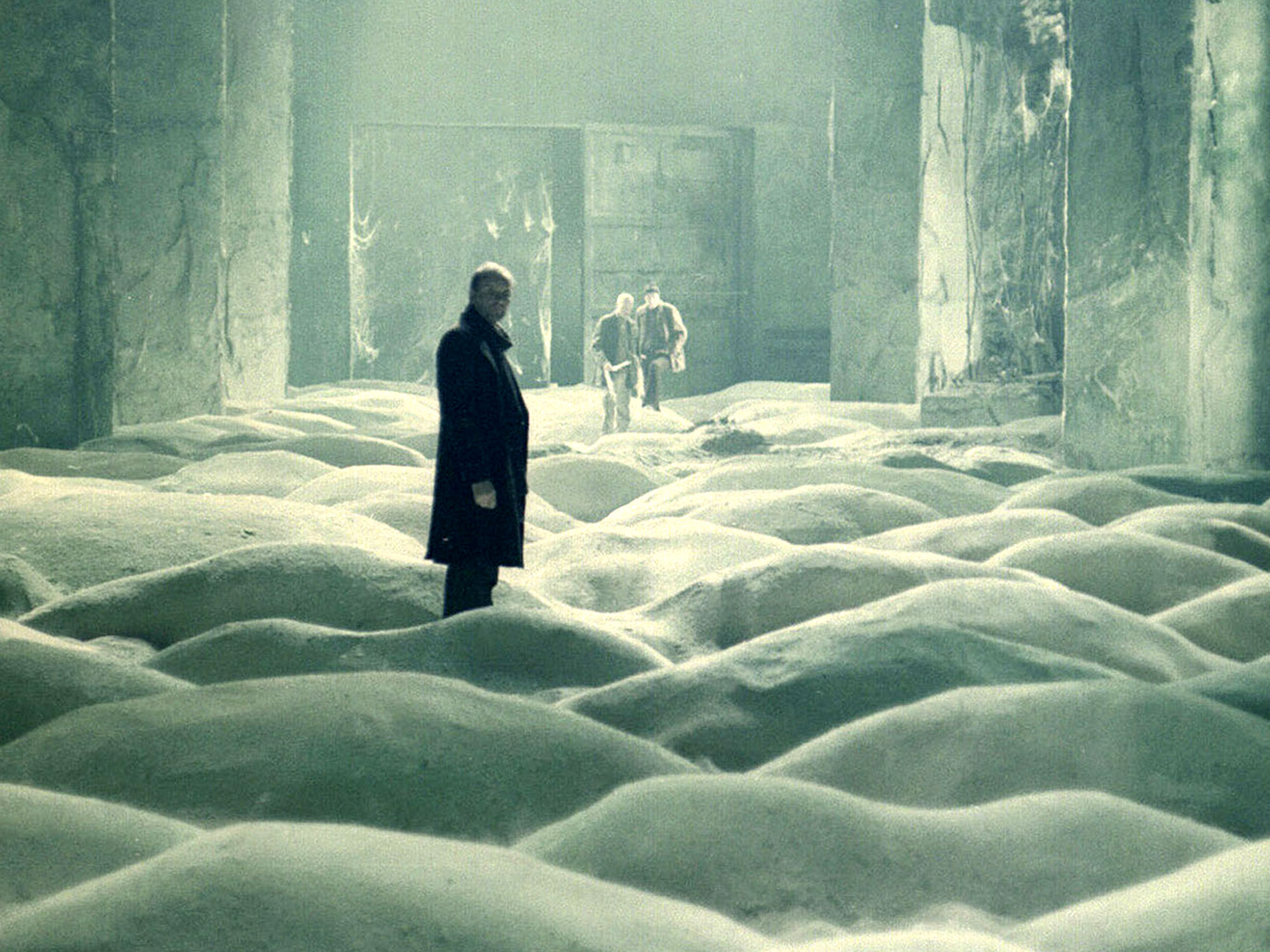
1. Are Tarkovsky’s movies still new (by “NEW” I mean do you find new things in recent viewing of the films or surprised by them)? Can viewers/filmmakers still learn from them?
I find that all of Tarkovsky’s films remain new and full of surprises for me. They don’t “date” at all.
2. Should we look at Tarkovsky movies as spiritual movies, religious movies or modern films?
I would say that they’re both spiritual and modern. If they’re also religious, I can’t easily identify them as such.
3. Who/what influenced Tarkovsky’s cinema and which contemporary filmmakers are influenced deeply by his cinema?
Tarkovsky’s cinema, by his own account, was influenced by his father’s poetry, and most likely by other Russian poetry as well. I haven’t reread his book Sculpting in Time recently, but I recall that he had a great deal of reverence for Dovzhenko and Bergman, among others; I don’t know whether or how much they may have influenced him directly.
As for the influence of Tarkovsky on other filmmakers, I could cite Béla Tarr and, more recently, Alex Garland in his film Ex Machina, which is clearly indebted to Solaris. There are undoubtedly many others, but these are the first names that spring to mind.Read more
Ben Kenigsberg emailed me a few questions on November 27 for a story about the authorship of the Citizen Kane screenplay, tied to the upcoming commercial release of David Fincher’s Mank, for the New York Times. Since I regarded this as a fake issue designed to make a piece of infotainment sound more ‘serious’ than it actually was (which is why I refuse to include a still from Mank here), and despite my knowing that the Times will never print criticisms of its own positions, I responded as follows: :
1. Have you seen “Mank”? If so, what did you think? And if not, what do you think of the idea of the project?
2. How would you explain to readers who know nothing about “Raising Kane,” “The Kane Mutiny” or even “Citizen Kane” itself why the authorship of the screenplay matters (assuming it matters)? Movies drawn from real events take liberties all the time, but what’s different about “Mank,” which implies (with maybe a bit of plausible deniability) that Mankiewicz deserved sole credit for the script, is that it resurrects a debunked idea that has a history and a subtext. Read more