From Film Comment, July-August 2000; slightly tweaked in April 2023.
MADADAYO Akira Kurosawa, Japan, 1993
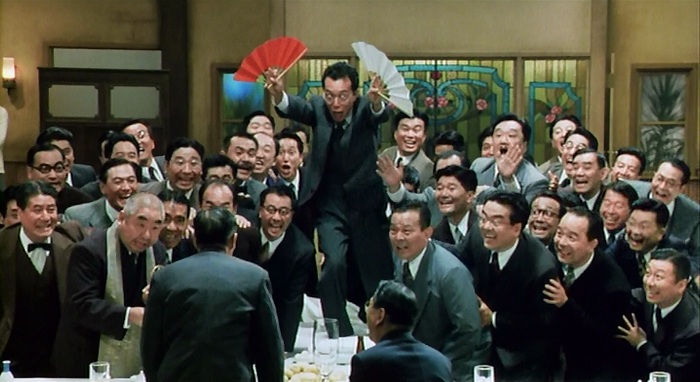
Given the unwarranted abuse that has greeted the final works of so many major filmmakers – an honor roll stretching from Anatahan to Eyes Wide Shut that also takes in the precious, misunderstood last features of Dreyer, Ford, Hitchcock, Ivens, Lang, Renoir, Preston Sturges, and Tati – one shouldn’t be too quick about dismissing Kurosawa’s curious swan song, released when he was 83, five years before his death. Based on several books by the popular sketch and essay writer Hyakken Uchula and parcelled out in a series of separate episodes, Madadayo focuses on the declining years of a retired German professor (Tatsuo Matsumura) and his interactions with his adoring former students (all male), his wife (Kyoko Kagawa), and two household cats. The title literally means “not yet” – a child’s teasing, sing-songy reply to the question “Are you ready?” is a game of hide-and-seek. And by essentially saying this for 134 minutes, not once but many times, and at a snail’s pace, all the way up through the concluding dream sequence, this limpid octogenarian’s film is bound to try some people’s patience. For those who locate Kurosawa’s achievement exclusively in the samurai action films he made with Toshiro Mifune in the Fifties and Sixties, it may be an outright insult.Read more
My review of Thomas Pynchon’s lamentable Inherent Vice, for Slate (August 3, 2009). Much less lamentable — actually quite good in spots — is Pynchon’s more recent Bleeding Edge, which I prefer to everything of his since Vineland. But even more lamentable, in my opinion, is Paul Thomas Anderson’s adaptation of Inherent Vice, which even after a second viewing strikes me on most counts as his worst film to date. (I’d been hoping for something more transformative, such as Norman Mailer’s superb film adaptation of his own worst novel, Tough Guys Don’t Dance.) Despite a few glancing virtues (e.g., Josh Brolin’s Nixonesque performance) and the (so far) unsubstantiated enthusiasm of many of my smarter colleagues, Anderson’s film strikes me as being just as cynical as its source and infused with the same sort of misplaced would-be nostalgia for the counterculture of the late 60s and early 70s, pitched to a generation that didn’t experience it, as Bertolucci’s The Dreamers. [Postscript, January 27, 2015: The first semiplausible defense of the film that I’ve read can be found here.] [A second postscript, January 23, 2023: It’s too bad that it’s impossible for most of us now to know whether Pynchon has retired or if he has another book in the works.]Read more
From the Chicago Reader (February 11, 1994). — J.R.
*** BLUE
(A must-see)
Directed by Krzysztof Kieslowski
Written by Kieslowski and Krzysztof Piesiewicz
With Juliette Binoche, Benoit Regent, Florence Pernel, Charlotte Very, Helene Vincent, Emmanuelle Riva, and Philippe Volter.
Indisputably the work of a master, to a much greater degree than anything else around at the moment, Krzysztof Kieslowski’s first feature without reference to his native Poland is sufficiently contemporary and allegorical to take the future of Europe, and a “unified” Europe at that, as one of its themes. Palpably concerned with loss and regeneration, suffering and transcendence, Blue calls to mind some of the better late works of Ingmar Bergman in its powerful sense of dramatic concentration; it doesn’t have quite the undertow of neurosis that presumably made those films so exemplary for Woody Allen, but it does have a much bolder grasp of the movements and vagaries of consciousness.
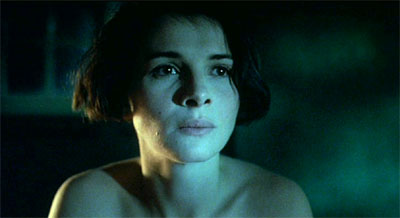
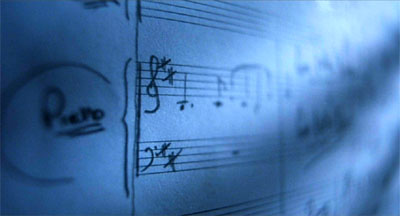
In the opening moments of Blue the leading character, Julie (Juliette Binoche), loses both her husband, a famous French composer, and her five-year-old daughter in a car crash; the remainder of the film charts her mental and spiritual recovery. The film’s remarkable economy is already apparent in the opening shot — a close-up of the spinning right front wheel of the car, seen from behind, as it speeds down a highway. Read more
From the Summer 2018 issue of Cinema Scope. — J.R.
1. Second Thoughts First
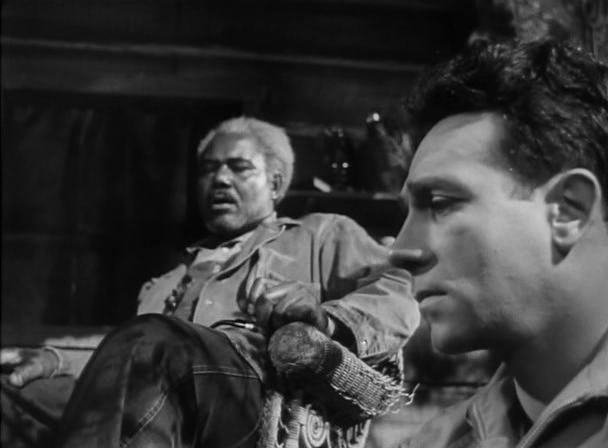
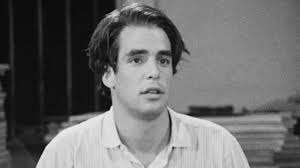
In the introduction to my forthcoming collection Cinematic Encounters: Interviews and Dialogues, I make the argument that although Truffaut’s book-length interview with Hitchcock doesn’t qualify precisely as film criticism, it nonetheless had a decisive critical effect on film taste. By the same token, on Criterion’s very welcome Blu-ray edition of Frank Borzage’s Moonrise (1958), Peter Cowie’s interview with Borzage critic/biographer Hervé Dumont — whose book on the director should be shelved and considered alongside Chris Fujiwara’s book for the same publisher (McFarland) on Jacques Tourneur — primed me perfectly for my second look at this masterpiece, and made it register far more powerfully this time. It certainly performs this task better than Philip Kemp’s accompanying essay, which, in spite of much useful information, falters in its insistence on framing Moonrise through the lens of film noir, and even more when, while rightly praising the character of Rex Ingram’s Mose, the author remarks that “It would be hard to think of another American film of the period where a black man acts as adviser and mentor to a white Southerner.” It’s not so hard, really, if one thinks of Clarence Brown’s Intruder in the Dust (1949) and/or Tourneur’s Stars in My Crown (1950); and it’s even quite easy if, following Dumont’s lead on Moonrise, one regards the Tourneur masterpiece neither as a noir (a lazy escape hatch) nor as a western (as Jacques Lourcelles does), but as a discreet form of German Expressionism, implicitly favouring thoughtful philosophy and metaphysics over simple gloom and doom. Read more
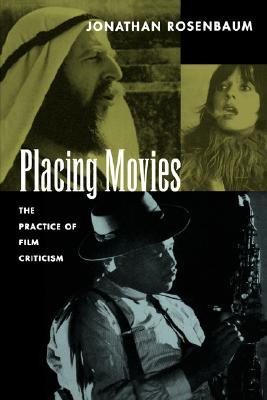
This is the Introduction to the fifth section of my first collection, Placing Movies: The Practice of Film Criticism (University of California Press, 1993). I’ve taken the liberty of adding a few links to some of the pieces of mine mentioned here which appear on this web site. — J.R.
From a journalistic standpoint, what movies are about is always important, but the roles that should be played by content in criticism are not always easy to determine. Ever since I started writing regularly for the Chicago Reader in 1987, my principal professional safety net — what helps to guarantee that I’ll remain interested in my work on a weekly basis, even if the movies of a given week are not interesting — is my option of writing about the subject matter of certain films. This almost invariably involves a certain amount of short-term research, because even if I already know the subject fairly well, a refresher course in certain specifics is generally necessary. (A good example of this would be the reading and listening I had to do in order to nail down many of my facts and examples for “Bird Watching,” in spite — or should I say because? Read more
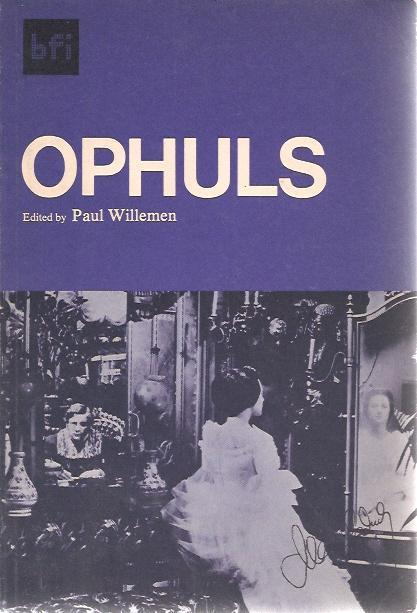
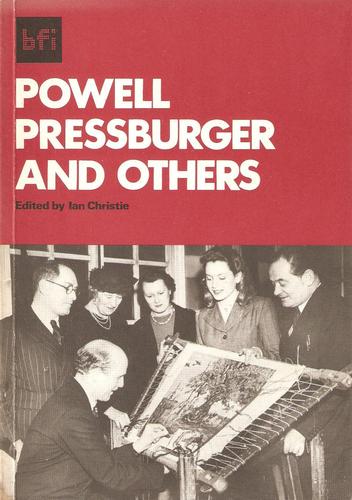
From Film Quarterly (Summer 1979). Sad to say, the Aldrich and Ophüls books are now so scarce that I couldn’t even find their jacket illustrations on the Internet until a reader, Luke Aspell, generously furnished them to me. –- J.R.
ROBERT ALDRICH. Edited by Richard Combs. London: British Film lnstitute, 1978. $3.25.
POWELL, PRESSBURGER AND OTHERS. Edited by Ian Christie. London: British Film lnstitute, 1978. $4.50.
OPHÜLS. Edited by Paul Willemen. London: British Film lnstitute, 1978. $3.50.
Perhaps the most striking difference between the current batch of British Film Institute monographs and the previous series issued under the now-defunct aegis of Cinema One (a joint effort of the BFI and the English publisher Secker & Warburg) is the relation of each to academic film studies. The Cinema One books, designed as popular laymen’s introductions to relatively obscure subjects, were lavishly illustrated with stills and frame enlargements, appeared both in paperback and hardcovers, and rarely proceeded beyond the format of one critic per subject.
The new line of BFI books, which appear only in paperback, are much closer to academic “casebooks”: the texts are usually longer, illustrations are omitted (apart from black-and-white stills on the covers), and the critical perspectives in most cases are multiple. Read more
My column for Caíman Cuadernos de Cine, submitted on March 21, 2019. — J.R.
It’s tiresome to keep hearing from several American colleagues what a lousy year 2018 supposedly was for movies — “movies” being virtually equated with Hollywood crap in much the same way that “the world” is often equated with the U.S. (with Cuarón, Farhadi, Pawlikowski, and a few others occasionally accorded the dubious status of honorary Americans, usually on the basis of their Oscars). Given how much non-American cinema one can see nowadays via streaming, this is an inexcusable way of allowing the big companies to keep their stranglehold on what passes for film culture, making it easier than ever to miss out on what matters.
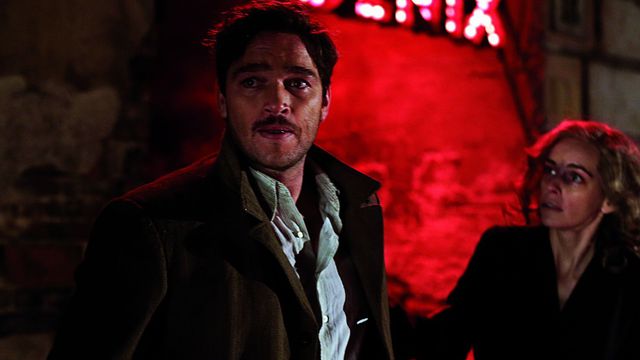
Even so, I’m embarrassed to admit that I didn’t recognize the brilliance of Christian Petzold until recently, when I saw Transit (2018) — having previously seen only his Ghosts (2005) and Barbara (2012). Having now accessed, in swift succession, his Phoenix (2014), Yella (2007), Jerichow(2008), and Barbara again — I feel that it’s the dreamlike, hallucinatory surfaces (both aural and visual) of Yella, Phoenix, and Transit more than the literal places and spaces of Jerichow and Barbara that best capture Pertzold’s investigations into historical and existential identity. Read more
`Commissioned by Re:Voir in France in 2021 for a currently available DVD. — J.R.
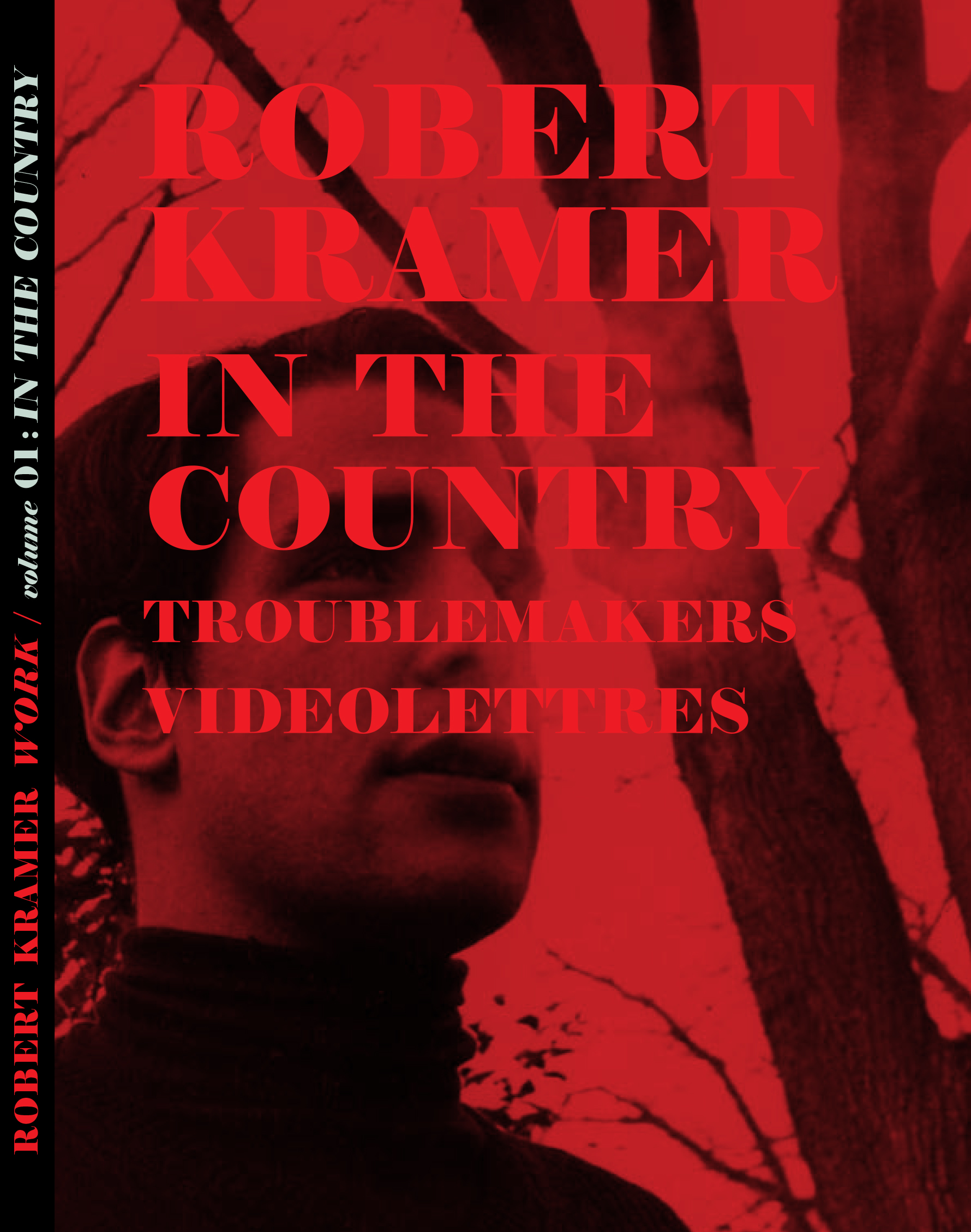
Seen as a troubled diptych, Troublemakers(filmed in Newark during the fall of 1965, two years before the riots) and In the Country(1966)offer, respectively, public and private glimpses of the political frustrations faced by young white radicals in the United States during this volatile period. Robert Kramer–producer, writer, and director of the second film–receives no credit on the first, but he’s one of the more vocal radicals appearing in it, expressing some of the same disillusionment with mainstream, workaday politics that the second film is also wrestling with. The son of a Park Avenue heart specialist and a textile designer, Robert attended private schools, Swarthmore College, and Stanford, carrying around his privilege like an albatross, as a guilt-ridden handicap to overcome.
The implicit hope that led members of the SDS (Students for a Democratic Society) — including the very young Tom Hayden, Kramer, and filmmakers Norman Fruchter (sound) and Robert Machover (camera and editing) — to join and/or recruit the efforts of black activists in their Newark ghetto and the explicit bitterness of a nameless, fictional white radical couple (William Devane and Catherine Merrill) retreating to and brooding within their privileged rural isolation need to be viewed as reverse sides of the same countercultural coin. Read more
As pointed out by Elena Gorfinkel in a provocative recent polemic, the end-of-the-year movie lists that so many of us promulgate and live by are actually the handmaidens — or maybe we should say the whores — of consumerist capitalism. It’s possible that we’re always too eager to follow their bidding rather than our own (or, more precisely, to make their bidding our own).
One of the most obvious injustices of institutional dictates in this process is to demand “best” lists from many of us, perhaps even all of us, before any of us can properly comply in an educated manner. In my case, the following worthy contenders (among others) were all seen by me after I had to turn in a list of the best films of the year (in roughly descending order of presumed merit):
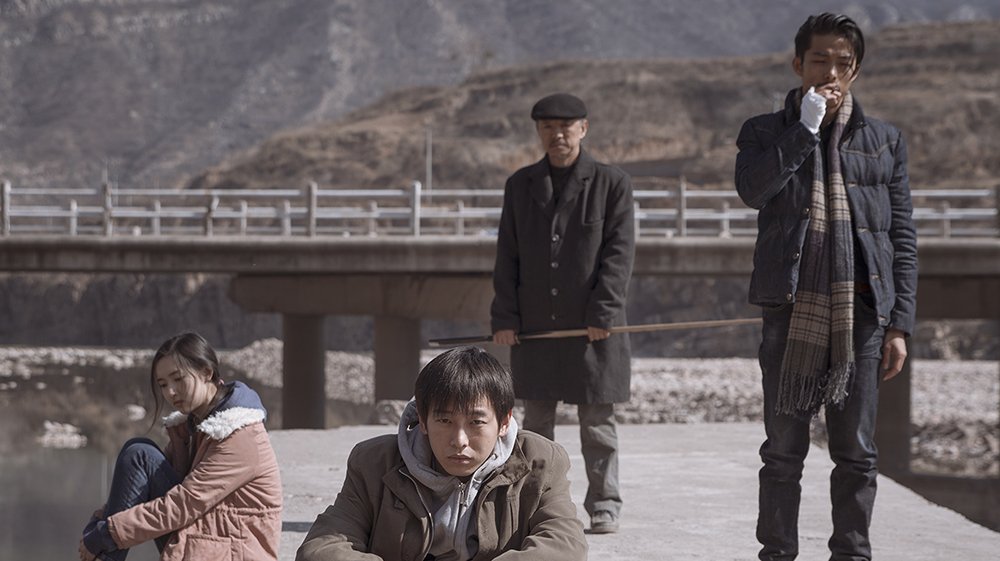
An Elephant Sitting Still
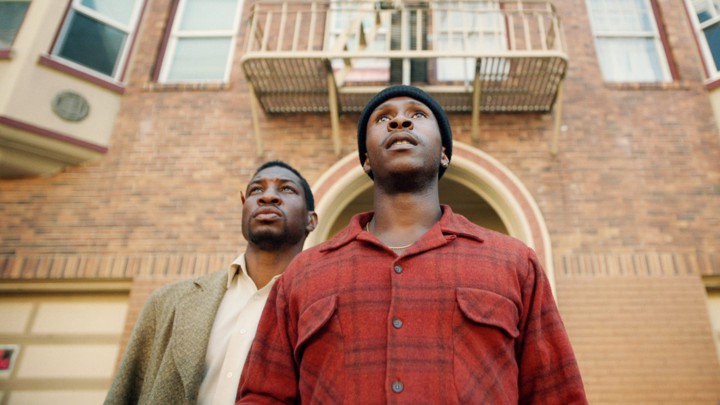
The Last Black Man in San Francisco
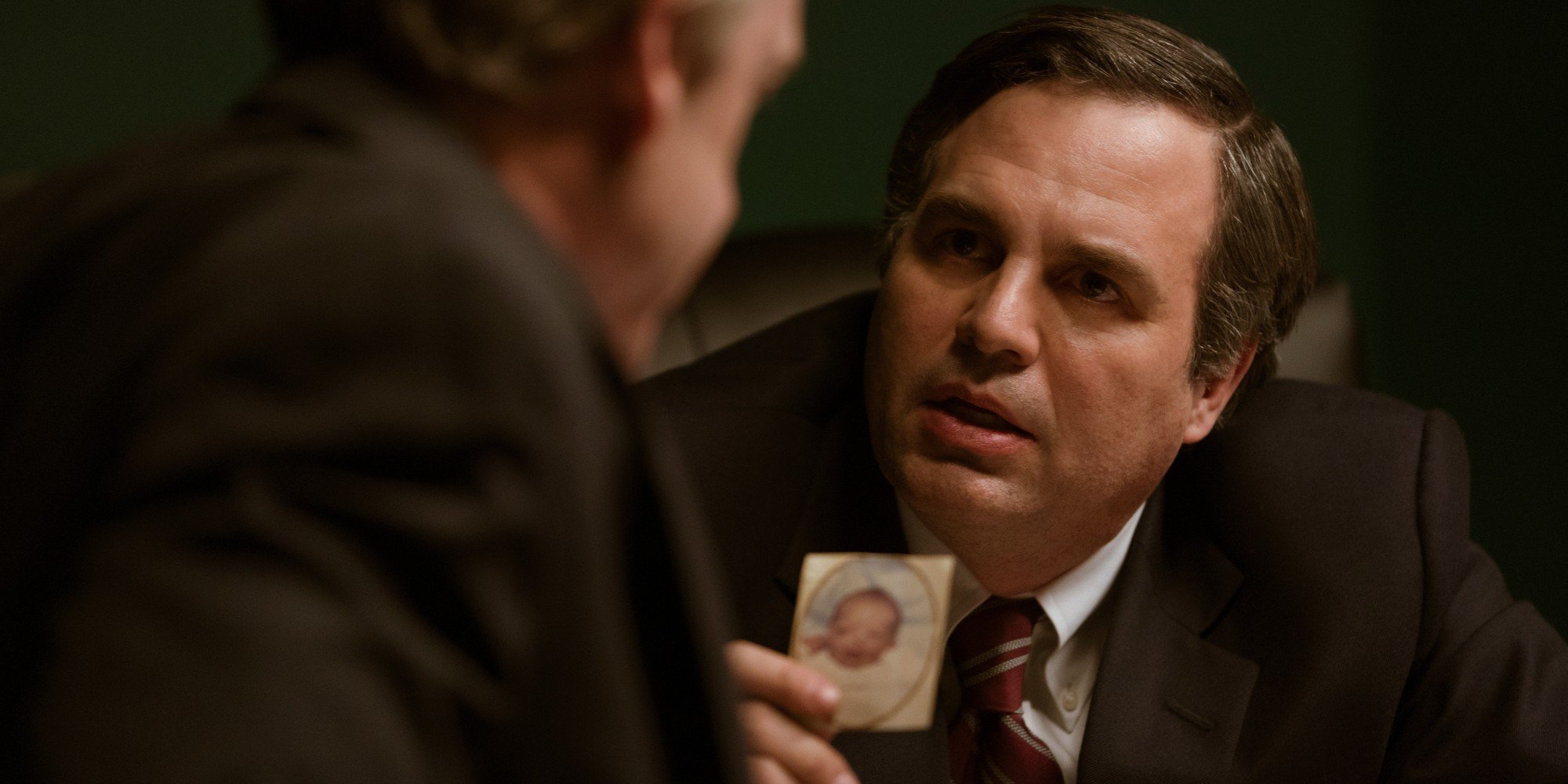
Dark Waters
Marriage Story
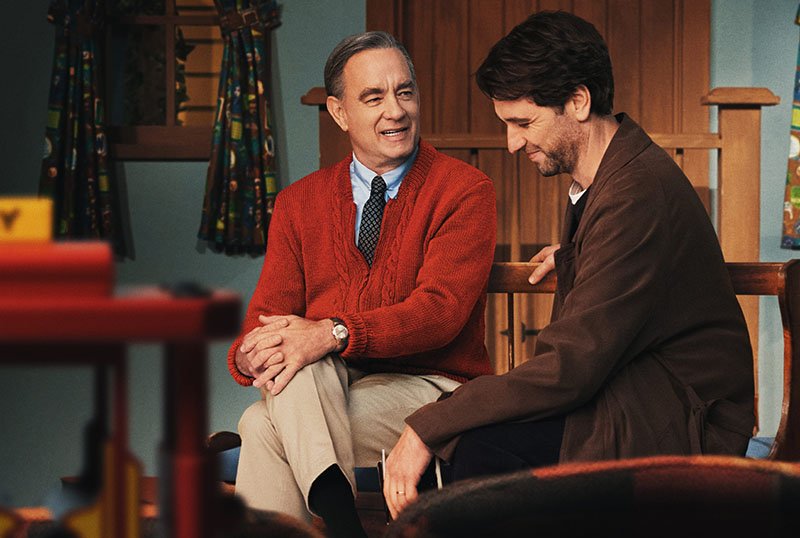
A Beautiful Day in the Neighborhood
I hasten to add that this is still near the end of November. I’m expecting to receive and access even more Academy screeners and Vimeo links to consider over the days to come.
Last year, the same thing happened. I only caught up with my favorite film of 2018 — Patrick Wang’s A Bread Factory, ignored by most of the official gatekeepers — long after all the lists had been due. Read more
Commissioned by Indiewire and posted on February 7, 2019. — J.R.
Looking back today at the legacy of Jonas Mekas (1922-2019) as a pioneer of American independent filmmaking, we like to think that he paved the way for us to enjoy our current freedom as spectators. When he was arrested for screening Jack Smith’s Flaming Creatures in New York City in March 1964, along with Ken Jacobs and Florence Karpf, we tend to suppose that this was eventually to ensure that we wouldn’t be penalized for watching the film today.
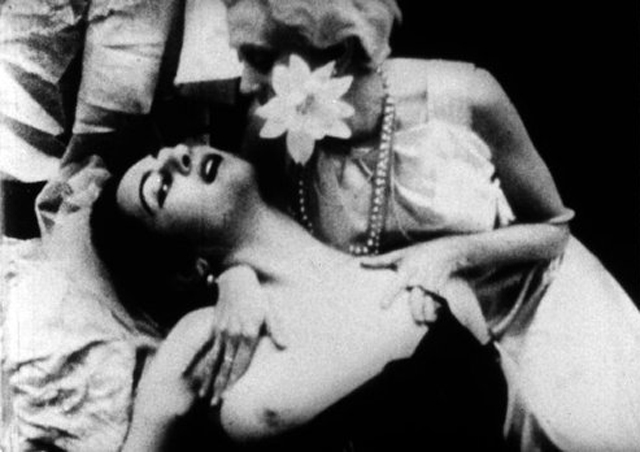
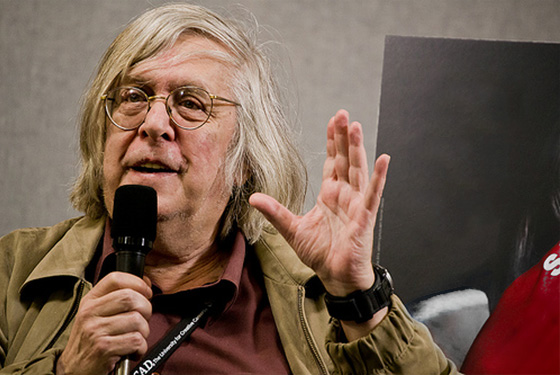
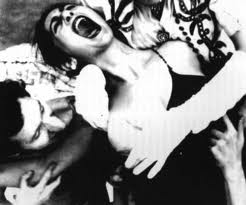
But maybe we haven’t advanced quite as far in our freedom and sophistication as we like to suppose. Such, at any rate, was my thought when I found myself censored on Facebook last week and banned from posting anything there for 24 hours when I tried to post the following two images:
I assume it was the second image rather than the first that led to the censorship, but given the usual arbitrariness of what gets banned and why, how can I be sure? All I was doing was advertising the reposting of my own 1998 review of the film in the Chicago Reader (www.jonathanrosenbaum.net/2019/02/sweet-outrage/), and this unexpected glitch raised the question of whether Facebook’s objections were to the single bare nipple being exposed or to the fact that one (apparent) woman was amorously clutching another (apparent) woman. Read more
Published on Artforum‘s web site on April 18, 2019, under the title “Leaven Learn”. — J.R.
“The justification for [a] pretense to disengagement,” writes Dave Hickey in Air Guitar, “derives from our Victorian habit of marginalizing the experience of art, of treating it as if it were somehow ‘special’—and, lately, as if it were somehow curable. This is a preposterous assumption to make in a culture that is irrevocably saturated with pictures and music, in which every elevator serves as a combination picture gallery and concert hall . . . All we do by ignoring the live effects of art is suppress the fact that these experiences, in one way or another, inform our every waking hour.”To some extent, Patrick Wang’s dazzling two-part, four-hour comedy A Bread Factory (2018) — shot over twenty-four days in Hudson, New York, after ten days of rehearsal with well over sixty professional or semiprofessional actors — is an epic anthology of performance art, filmed both inside and outside a Hudson art center housed in a former bread factory. What makes it special are the peculiar dots connecting “inside” and “outside.” Inside the eponymous, fictionalized forty-year-old Bread Factory we find theater, film, music, sculpture, and poetry, and inside a trendy, new rival art center with corporate financing is a pseudo-Chinese couple called May Ray doing minimalist, rebus-like performance pieces with prerecorded laughter and applause. Read more
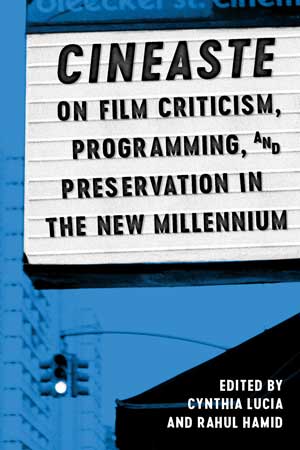
From “Film Criticism in America Today: A Critical Symposium,” Cineaste 26, no. 1, 2000. This is the first of several symposia gathered in a new collection edited by Cynthia Lucia and Rahul Hamid,Cineaste on Film Criticism, Programming, and Preservation in the New Millennium, Austin: University of Texas Press, 2017. –- J.R.
Here are my replies to the following questions from Cineaste:
1. What does being a film critic mean to you? (More specifically, why do you write film criticism? Whom do you hope to reach, and what do you hope to communicate to them?)
2. What qualities make for a memorable film critique? (Do you think such critiques tend to be positive or negative in tone? Is discussing a film’s social or political aspects as important to you as its cinematic qualities and value as art or entertainment?)
3. How would you characterize the relationship between film critics and the film industry? Do you think film critics could be more influential in this relationship? How?
4. What are the greatest obstacles you face in writing the kind of film criticism you wish to write? (For example, does your publication require delivery of your copy on a short deadline after only one screening, limit the space available for your reviews, or dictate which films you should review?Read more
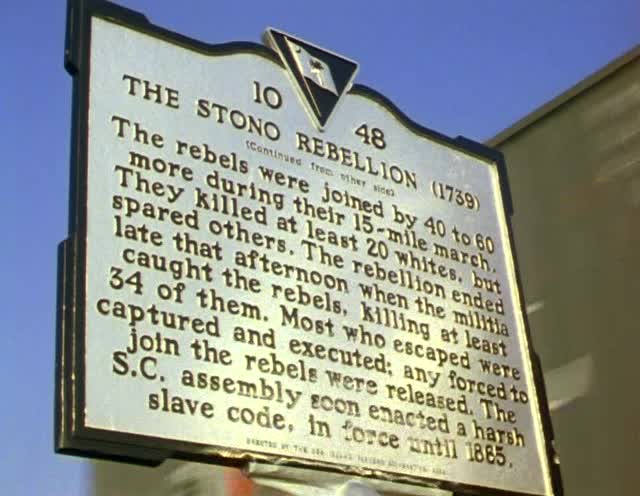
Let’s start with the title — a shotgun marriage between two omnipresent yet far from equally featured players in these unremarked, meditative spaces: an abstract impulse that supposedly keeps our American republic healthy and vital (while producing a lot of junk along with more helpful items) and a concrete force softly caresses everything in its path, keeping us alive and alert. More specifically, an encounter between the cause of many of the deaths that are being commemorated here — especially those relating to the genocide of Native Americans and many of the massacres occasioned by slave revolts and labor protests — and what D.W. Griffith lamented he found missing from modern cinema, the wind in the trees, found in the vicinity of most of the dozens of gravesites visited.
Arguably, according to the poetic rhetoric proposed by this 58-minute film of 2007, beautifully restored by Mark Rance, these diverse and scattered gravesites — hidden in the woods or identified by plaques on busy highways or next to prominent buildings in towns or cities — belong to heroes rather than martyrs, yet also to moving air more than what we usually recognize today as history. Read more
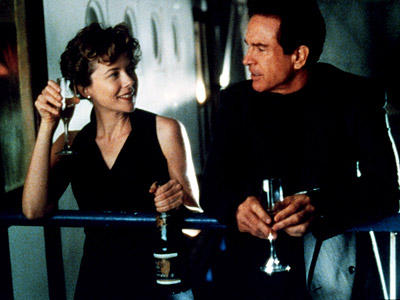
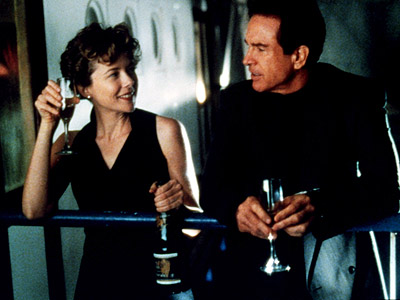
From the Chicago Reader (October 28, 1994). Thirty years later, it’s hard to decide whether this stinker is as bad as Beatty’s Rules Don’t Apply or perhaps even worse. That some of the ads for Love Affair renamed it Perfect Love Affair sounds to me like an act of desperation. — J.R.
* LOVE AFFAIR
(Has redeeming facet)
Directed by Glenn Gordon Caron
Written by Robert Towne and Warren Beatty
With Beatty, Annette Bening, Katharine Hepburn, Garry Shandling, Chloe Webb, Pierce Brosnan, and Kate Capshaw.
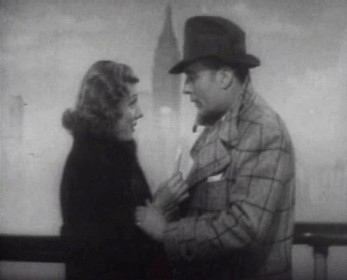
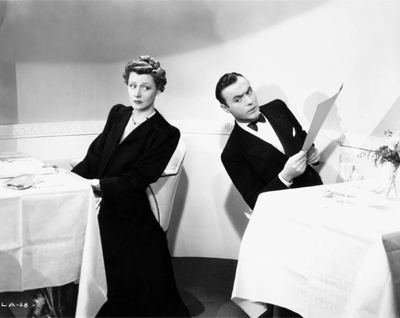
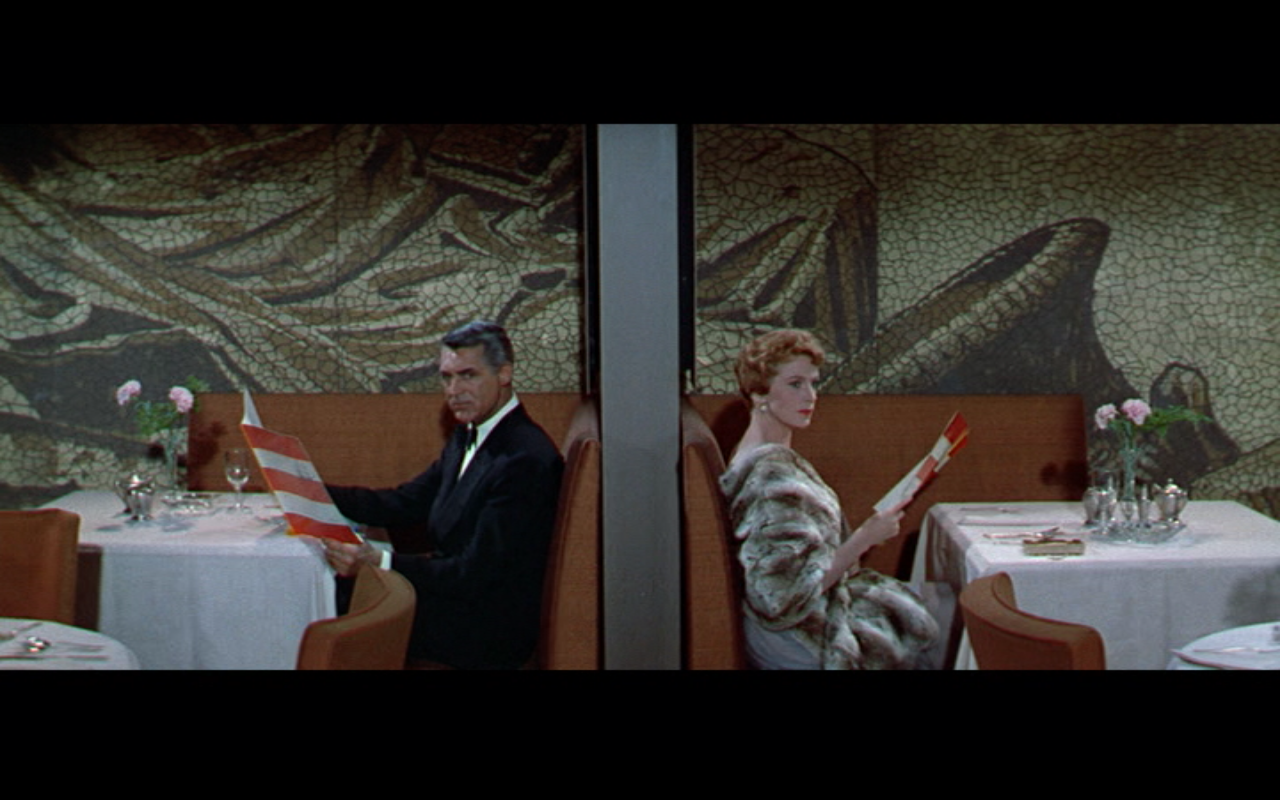
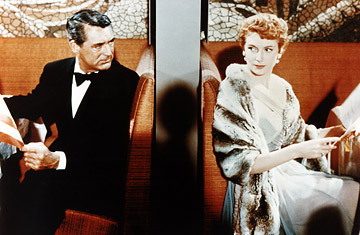
The writing and directing credits for Love Affair are legally correct but historically, aesthetically, and ethically wrong. A more accurate account of where the movie comes from, in terms of characters, plot, dialogue, and even camera placement, would have to cite the story written by Leo McCarey and Mildred Cram for Charles Boyer and Irene Dunne, inspired by an extended trip McCarey and his wife took to Europe. According to McCarey, seeing the Statue of Liberty slide into view as the ship approached the New York harbor gave birth to the plot: a man and a woman, each engaged to someone else, meet on such a liner, bound for Europe from New York, and fall in love. Read more
From the Spring 2018 issue of Cinema Scope. — J.R.
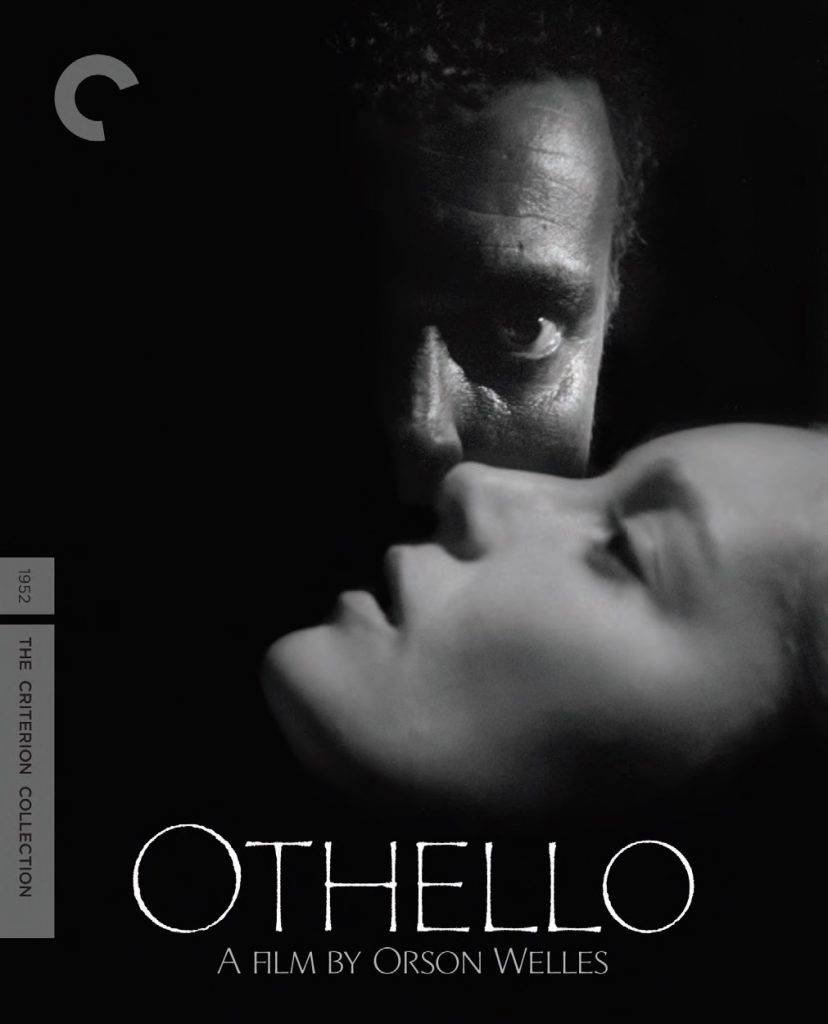
Let me start by paraphrasing and slightly expanding a comment of mine appended to my 2017 ten-best list for DVD Beaver. A major reason for listing Criterion’s Othello first is that it includes the digital premieres of not one, not two, but three Orson Welles features: both of his edits of Othello available with his own soundtracks, carried out respectively in 1952 and 1955 and heard for the first time in the US in several decades, and Filming Othello (1979), his last completed feature.
Fans of Mudbound (2017) like myself who want to get acquainted with Dee Rees’ previous work should check out the second of her three previous features, Pariah (2011), available inexpensively in both DVD and Blu-ray formats. This autobiographical look at the tribulations of a gay black teenager and her family, shot in a very different style from Mudbound (much more documentary-like), is beautifully and richly acted by its lead, Adepero Oduye — though I wonder if the use of Brooklyn rather than Rees’ native Nashville as a location (occasioned, I would guess, by the services of Spike Lee as executive producer) made any significant differences in terms of Rees’ script and/or characters. Read more




![220px-Flaming_Creatures_thumb[2]](https://www.jonathanrosenbaum.net/wp-content/uploads/2019/02/220px-Flaming_Creatures_thumb2.jpg)